
Simple portfolios. Data-driven • Windmill Capital Private Limited • SEBI-regd RA: INH200007645 • SEBI-regd PMS: INP000009852 • Dsclsr: l.smlc.se/wnd-dsc
Joined May 2021
- Tweets 2,814
- Following 14
- Followers 15,298
- Likes 178
615 Photos and videos
Pinned Tweet

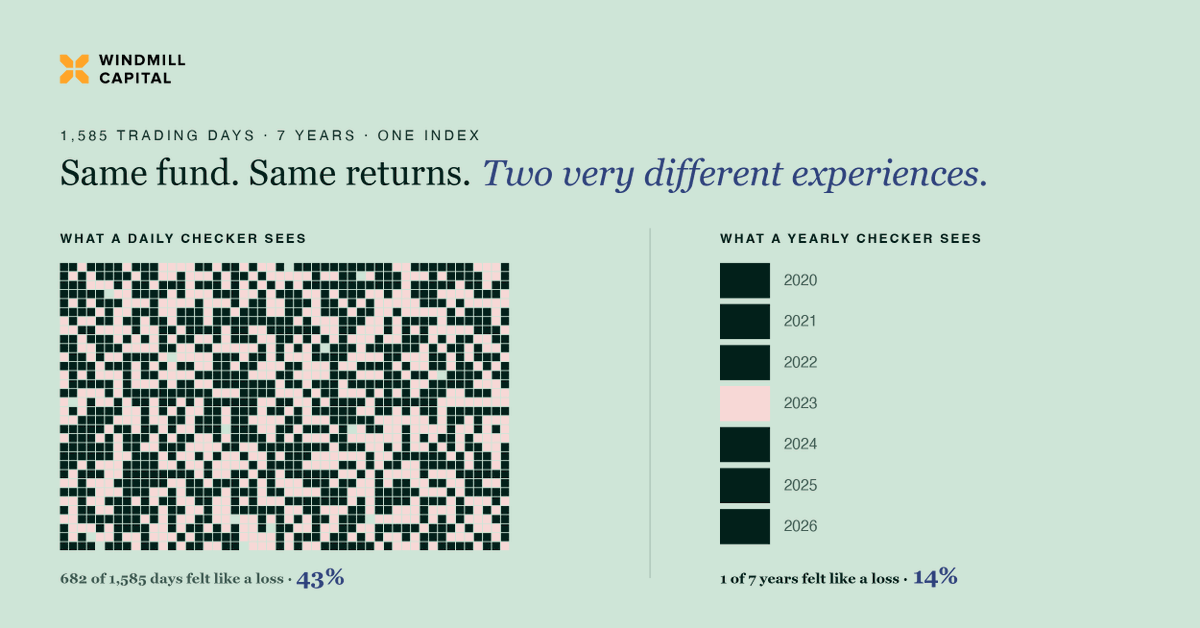
Same fund. Same six years. Identical returns.
One investor enjoyed the ride. The other found it unbearable.
The thing that separated them? A habit so small it sounds trivial.
1,585 days of Nifty 500 data tell the story 🧵
1
1
2
334
South Korea's top 5 stocks gained 152% YTD. Samsung and SK Hynix are riding the AI chip supercycle.
Taiwan & Korea's broader markets rose too: their entire supply chains plug into AI, not just one or two names.
The US, Germany, France? Only the names at the top. The rest shrank.
1
1
85
Nvidia alone: $5.21 trillion.
FTSE 100 (all of UK): $3.60 trillion.
CAC 40 (all of France): $2.90 trillion.
DAX (all of Germany): $2.32 trillion.
Europe's largest stock markets fit inside a single balance sheet.
1
1
63
This isn't a bull market. It's 100 stocks and 9,900 bystanders.
Durable as long as earnings hold. If AI capex stalls, the narrow leadership unwinds with nothing to cushion it.
Concentration is a feature right now. It could become a risk.
56
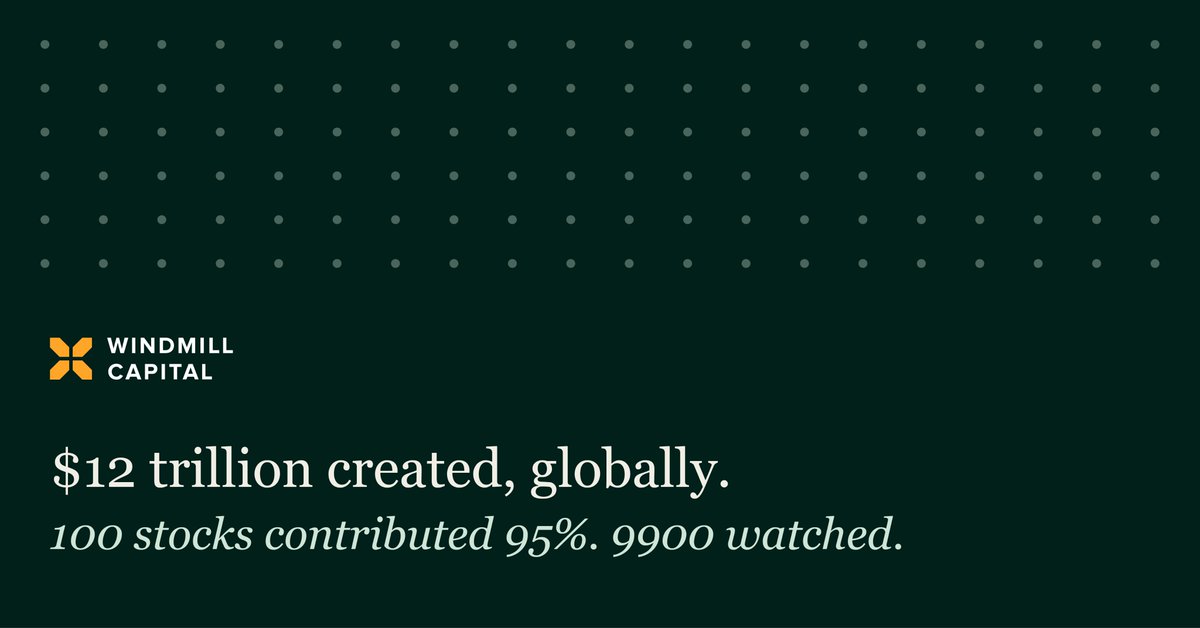
$12 trillion in global market cap was created this year.
100 companies accounted for $11.4 trillion of it.
The other 9,900? $600 billion. Combined.
1
1
396
The US market rallied. The average US stock lost value.
53 names added $7.4 trillion. The broader US market declined 3.2%.
The S&P gains you read about fit inside roughly 50 company names.
1
212
This isn't broad optimism. It's one theme: AI.
Information Technology alone drove 66% of all gains globally. Energy, industrials, and communications are in the top 100 because they power the AI buildout. Not because the economy is booming.
1
360
Same fund. Same six years. Identical returns.
One investor enjoyed the ride. The other found it unbearable.
The thing that separated them? A habit so small it sounds trivial.
1,585 days of Nifty 500 data tell the story 🧵
1
1
2
334
Psychologists call this myopic loss aversion.
Losses hurt about twice as much as equivalent gains feel good.
Even in a rising market, daily noise creates stress that frequent checkers absorb. Unnecessarily.
1
86
The lesson isn't to ignore your investments.
It's that discipline around how often you check can improve your investing experience.
Without changing your returns by a single rupee.
81
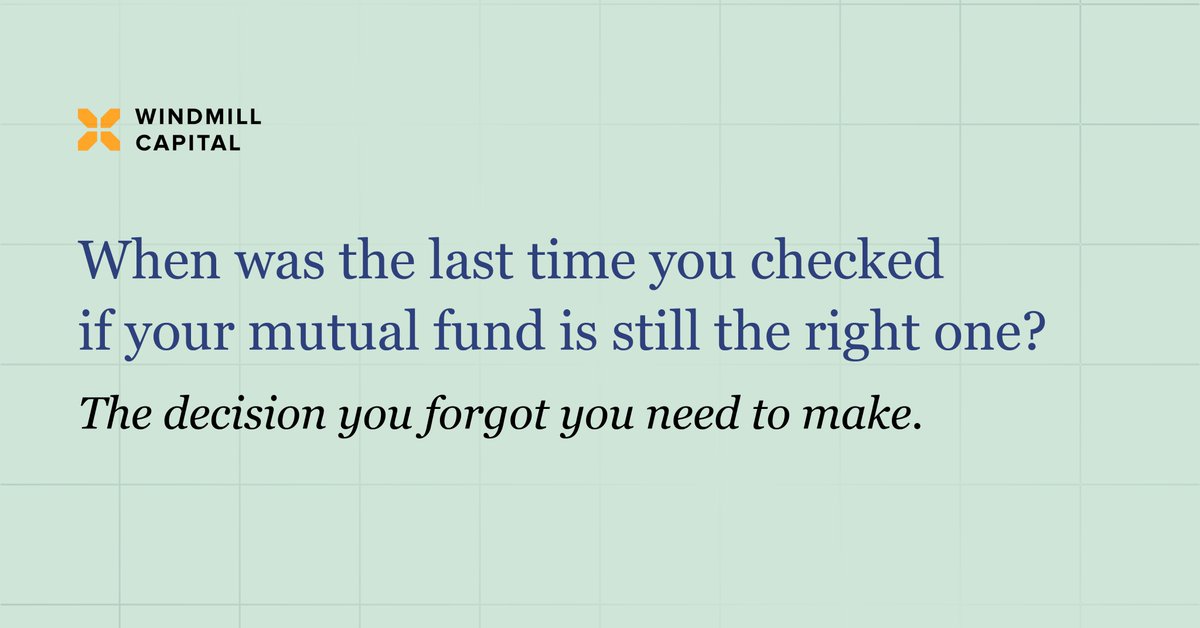
Every mutual fund investment is actually two decisions.
The first: which fund to buy. You research, compare, and choose.
The second: whether to still own it, three years later.
The first feels like a decision. The second feels like nothing, which is exactly the problem.
1
1
256
The shift that helps:
Stop asking which fund has done well.
Start asking which fund is positioned to do well from here.
It's a question you have to keep asking. Not once. Continuously.
1
1
126
Windmill Capital's Mutual Fund smallcases do exactly that.
A focused basket of 3–4 funds within a category. Monitored against ten factors with consistent predictive power. Rotated when the evidence shifts.
The second decision, handled: windmillcapital.smallcase.co…
84
India “fell” from #4 to #6 in global GDP rankings.
Sounds like bad news.
It isn’t.
Here’s what actually happened 👇
1
1
537
Even within GDP, the mix changed.
Some sectors look bigger.
Others look smaller.
That’s not decline. That’s recalibration.
1
123