Econo-optimist - ❤️ Common Pooled Resources & Regenerative Agriculture🌱 - Founder: @grassecon (a/yeye)
Joined December 2007
- Tweets 5,300
- Following 2,097
- Followers 3,658
- Likes 6,044
1,013 Photos and videos




Pinned Tweet

3 Feb 2025
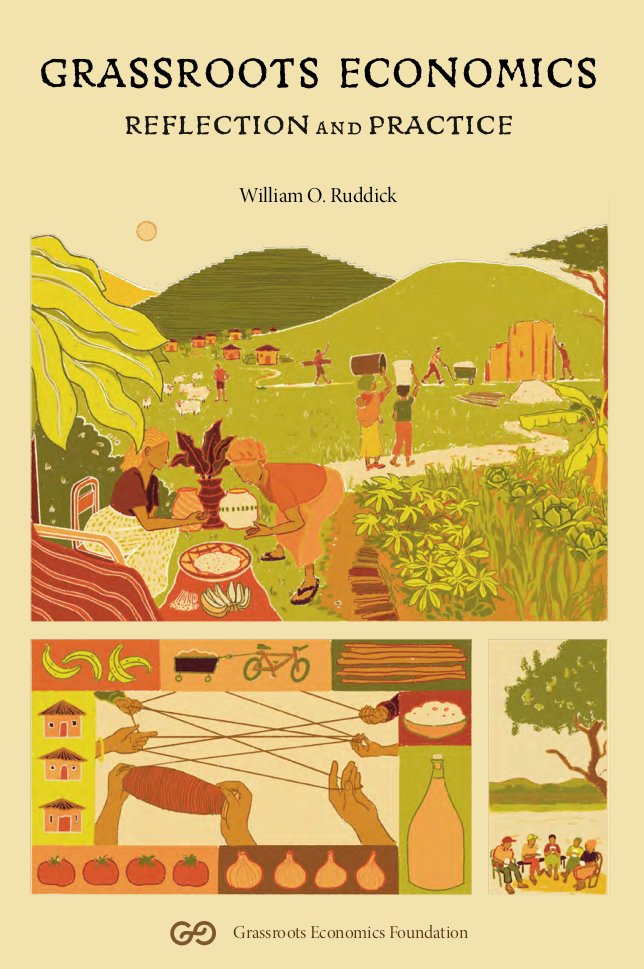
🌱 Grassroots Economics - Book Published!🌱
After years of learning, listening, and working alongside incredible communities, I’m thrilled to share Grassroots Economics: Reflection and Practice—a book exploring how we can rebuild trust, pool commitments, and create resilient economies from the ground up.
This journey has been made possible by the generosity of countless teachers, communities, and supporters. Special thanks to Kevin Owocki (Allo.capital & Gitcoin) and Béla & Ellen Hatvany (Mustardseed Trust) for believing in this work.
📖 Read more and download the book here: open.substack.com/pub/willru…
15
30
119
7,512
Jun 11
The smell of semen....
🚨A Note to the Reader. Before proceeding, I owe an apology to a portion of humanity. This essay assumes familiarity with a particular odor commonly associated with human semen. If you have never encountered this smell, cannot recall it, or belong to the substantial minority of people whose olfactory receptors do not readily detect it, parts of this article may seem oddly specific or entirely fictional.
Please be assured that neither the title nor the central premise is metaphorical.
Many plants, fungi, and biological materials genuinely produce scents that numerous people describe as remarkably similar to the smell of semen. This observation has generated confusion, embarrassment, horticultural debates, and countless awkward walks beneath flowering trees.
Should this be your first exposure to the phenomenon, I apologize in advance.
Should you already know exactly what I am talking about, I apologize for reminding you.
...
This strange biological fact sent me down an unexpected path involving chemistry, language, signaling, evolution, and eventually why I became more interested in commitment pooling than currency.
Full article: The Smell of Semen: The Language of Life (on will ruddick dot substack dot com)
1
66
Jun 11
Subscription as Commitment: To subscribe originally meant to write one’s name underneath something, to assent, to bind oneself, to promise a contribution.
I love that. A subscription is a name placed beneath the work so it can keep standing.
When someone subscribes to my writing, especially as a paid subscriber, something happens. A little trust enters the room.
It says: I have received something from this work. I want it to continue. I am willing to help carry it.
Much of what I make is shared openly: books, software, games, field notes, protocols, papers, tools, experiments, mistakes, revisions, and the occasional sentence that should probably have been a diagram.
But open does not mean weightless.
Open work still needs food, rent, servers, legal care, community visits, translation, listening, maintenance, writing, debugging, and courage.
Out of the thousands of people who subscribe, read the books, play the games, and use the materials, only a handful become paid subscribers. That is okay. Truly. I want the work to stay open enough that people can use it even when money is scarce.
Comments, field stories, translations, testing, careful disagreement, and quiet practice also feed the work.
And because paid subscriptions are few, each one carries a lot. They help keep the door open for many others.
So to everyone who subscribes, comments, restacks, sends personal messages, tests tools, shares stories, or tells me exactly where this work touched your life: thank you.
This is not just me writing into the glowing cave of the internet. There is a community of practice here.
My prayer is that one day we can all subscribe to each other more beautifully: artists, farmers, coders, caregivers, teachers, healers, stewards, and communities supporting the people whose work supports life.
Until then, this little subscription is already a beginning.
A small promise. A small basket.
A small flash of mutual recognition.
And when I see your names, comments, messages, and subscriptions arrive, the basket comes back full.
Please subscribe if you can.
(X won't like me sharing this but you can subscribe at ...
will ruddick at sub stack dot com)
3
77
Jun 9
What is a gift? I have been rereading Robin Wall Kimmerer with gratitude, especially The Serviceberry, and I keep returning to one question: What is a gift?
Part of me still hears “gift” as a wrapped package under a tree. No invoice. No repayment schedule. Nothing owed. Santa does not usually ask you to weed the neighbor’s maize field in March.
But that kind of “free gift” is very different from the gift economies Kimmerer, Mauss, and many living traditions point toward.
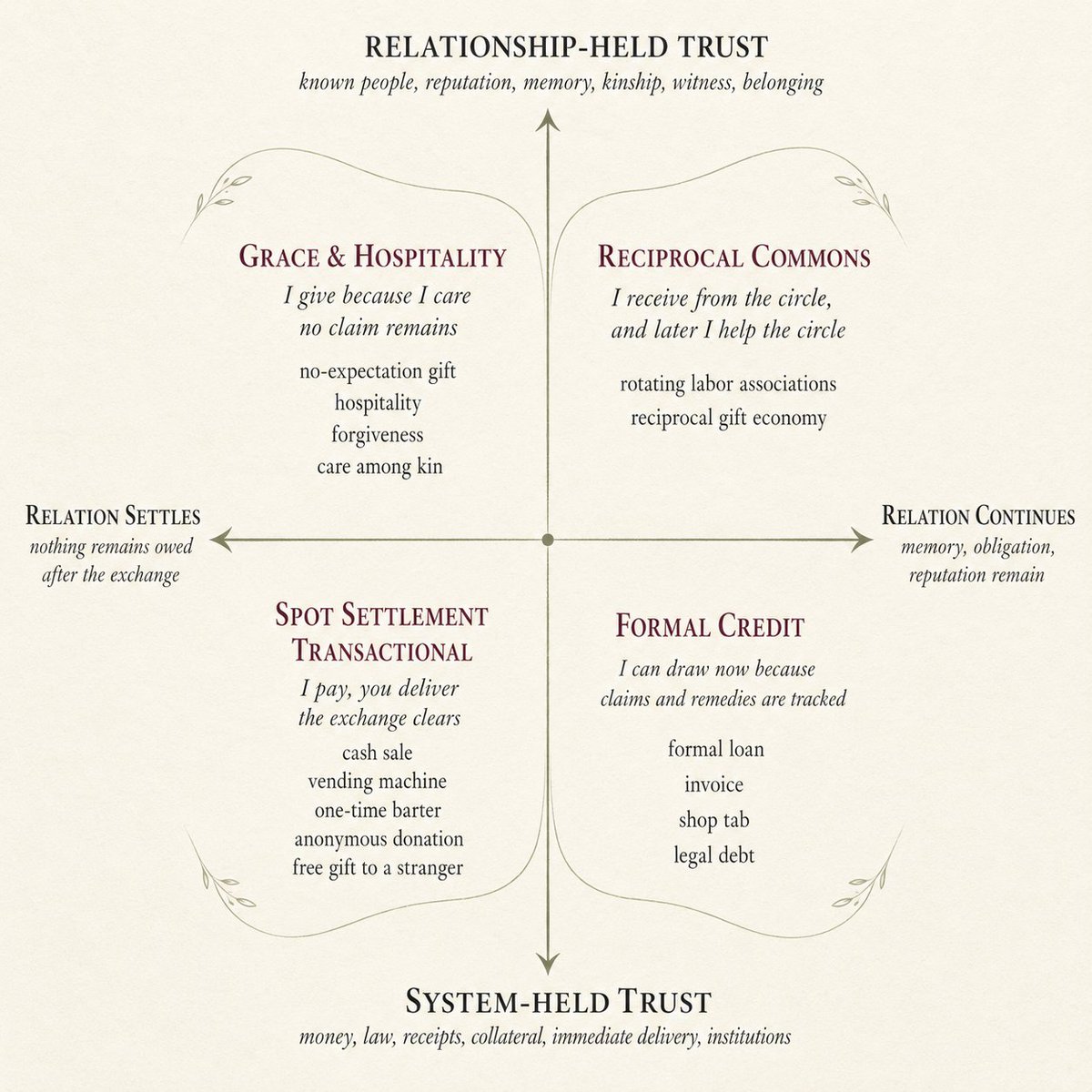
A free gift, a one-off barter, and a spot cash payment can all do the same thing structurally: they can settle the relationship. I give. You receive. Or I pay. You deliver. Nothing remains owed.
That is not necessarily bad. It just does not, by itself, build ongoing trust.
The reciprocal commons are different. In traditions like Mweria in Kenya, a household may receive help from the circle, and later that household helps others in the circle. The return does not always go back to the original giver. It returns to the living relationship.
@DamarisNjambiN2 recently shared another image with me from Kikuyu: kiheo, the gift carried in a kiondo basket when visiting someone’s home. When you leave, the host fills the basket with another kiheo. The basket does not go home empty.
That helped me see the distinction more clearly.
Some gifts end with “thank you.”
Other gifts begin a cycle.
So I am no longer asking only, “What is a gift economy?”
I am asking:
When does the basket come back full?
N.B. Commitment pooling was inspired by the top-right quadrant (reciprocal commons). But it is a protocol, not a virtue. Depending on governance and use, it can support any quadrant.
2
7
143
Jun 5
I’m excited to share Cellular, a new open-source puzzle and arcade game from @grassEcon .
Cellular is a game about building living circuits of resource flow.
Each cell has something it produces, something it needs, and limits on what it can hold. Place cells near the right neighbors, and resources begin to move. Needs are met. Cells glow. Circuits come alive.
Can you create trustworthy circulation?
Can flow meet real needs? Can pressure be reduced? Can strained parts of the network be repaired?
For me, Cellular is a small playable model of commitment pooling: what can enter, how it is valued, how much can safely move, and how exchange settles.
It is an experiment in learning economic coordination through play.
Please play it, break it, and help improve it!
5
6
13
541
Jun 3
A "millipede knot" can form when several individuals are responding to the same pheromone trail.
Gongolo (Giriama) Jongoo (Kiswahili) Jongololo (Kids)
Good morning!
2
120
Jun 1
I’ve been sitting with two fish. 🐟 🎣
Two fish, five people who need them, fifty people who want to learn how to fish, one tired nervous system, and several incomplete theories.
At first it sounds like an allocation problem.
Who gets the fish?
Highest price? First come, first served?
Loudest voice? Most guilt? Most excitement? My inbox plays these bad little games with me every day.
....the old proverb: teach a person to fish......
I still love it a little. But teaching someone to fish also takes fish.
Not the swimming kind. The attention kind. The patient kind.
The kind that listens when the knot is wrong for the seventh time.
This is where I keep returning to commitment pools, stewardship, and the games we practice at Grassroots Economics. The question is not only where the fish goes. It is also how the fisher is honored, how learning happens, how limits are held, and how we repair what we miss.
I do not know the whole picture. I am in the picture.
Still, the fish are here. Someone is hungry. Someone wants to learn.
So I listen, choose, leave room for correction, and try again tomorrow.
Maybe we learn not only how to catch fish, but how to decide together what...
... fish are for.
( 🐟 deeper fishing on willruddick dot sub-stack dot com 🎣 )
2
8
250
May 30
I just compiled some reflections on C. Thi Nguyen, games, scores, and Grassroots Economics.
The global economy is not a game in Nguyen’s sense. Too much of it is involuntary. But local economies, mutual aid circles, savings groups, baskets, restoration groups, and commitment pools can become bounded spaces where communities practice different ways of valuing, exchanging, limiting, repairing, and settling.
I am reading Nguyen not as asking us to abolish scores, but to design them with care.
A score can help us coordinate. It can also capture our attention and slowly replace the value it was meant to serve.
At @grassecon, this matters because we are building tools, games, vouchers, value indexes, receipts, and commitment pools. So the question becomes: can our scores stay humble, local, plural, revisable, and answerable to real fulfillment?
I also reflect on delegation. I welcome it deeply, but I am learning that this work cannot be delegated from enthusiasm alone. It needs a community of practice.
Practice first, then responsibility.
With gratitude to C. Thi Nguyen for helping me see these questions more clearly.
(see my sub-stack for more)
1
6
126
May 29
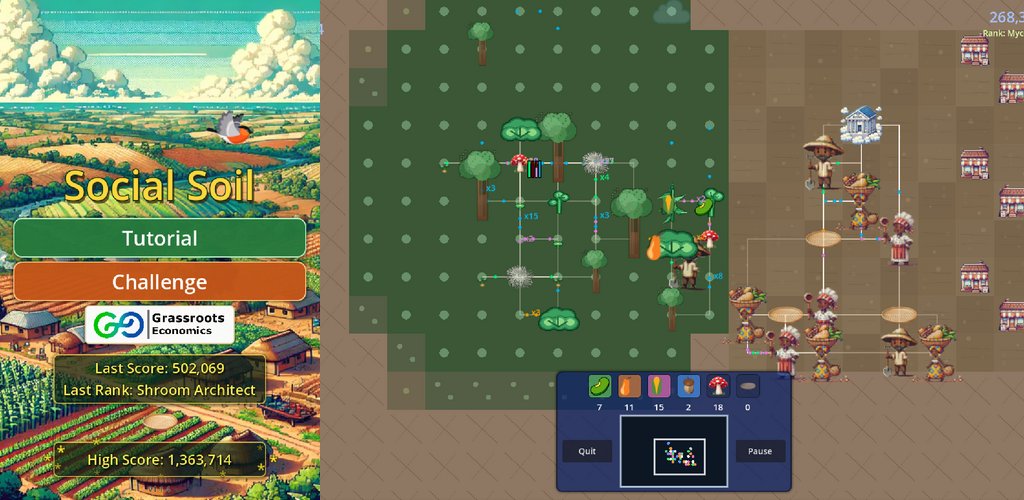
Social Soil Game!
Now free on Play store for Android play.google.com/store/apps/d…
&
this will work on computer or iPhones play.grassecon.org
Let me know what you and your kids think!
2
3
7
459
May 29
I appreciate the many offers and references to technologies, tokens, protocols, and products.
I also feel I need to keep asking myself is I am starting from the tool, or from the living system?
Am I trying to fit a community into a protocol, or am I really listening to how care, labour, trust, memory, repair, production, and future commitments already move?
This work keeps reminding me to slow (the f*ck) down.
Before asking whether a technology can be integrated, I want to better understand the underlying patterns.
What is the economy here, in practice? What obligations already exist? What should be measured, and what should not be reduced? Where might a tool help? Where might it distort, extract, or capture attention?
I am much more interested in alliances than integrations.
And I need to hold that standard for my own work too.
The question I want to keep returning to is not:
Can this community use this protocol?
But:
Can I be of service to a living settlement system without making my tool, model, or theory the center?
May 29

I didn’t mention Holochain because the protocols are meant to be tech-agnostic and, in a sense, ancient.
The important layer is not one specific stack, but the capacity to curate, value, limit, exchange, relay, and repair commitments across pools. That can use blockchains, pool relays, peer-to-peer architectures, local ledgers, or witnessed agreements depending on context.
I’d be very happy to see these patterns implemented on @Holochain . The point is not to make communities fit the technology, but to let the technology serve living settlement systems.
For now they work quite well on @ethereum thank you!
1
3
8
411
May 28
What does health look like for a society?
Maybe it is the ability to coordinate care, food, labour, trust, repair, memory, and future commitments without collapsing into panic when cash is scarce.
ROLA-like traditions (rotating labour associations), such as Latsab in Bhutan or Mwerya and related traditions in Kenya, show that value can move through memory, obligation, labour, care, and repair.
A household receives help. Later, that household helps another. The circle remembers. The circle repairs.
Money can help. Money can also interrupt.
At best, money is a bridge.
It should not become the root.
...
In recent Sarafu Network analysis, looking at subset of 73 village-run community pools in Kenya:
Over 1,200 producer commitments were accepted into those pools.
More than 5,000 exchanges happened where one local commitment was exchanged for another.
In the most recent 90-day window, more than 80% of pool exchanges were commitment-to-commitment exchanges rather than only exchanges into cash-like assets.
More than 1,300 verified community reports were connected to farming, cleaning, construction, training, permaculture, lending, and education.
These numbers do not prove regeneration.
But they show that local commitments can become visible, circulate, return, and help coordinate settlement.
... and even a gift can become a trap.
Philanthropic capital can create breathing room in these systems. But if external capital is too large, too central, too frequent, or too disconnected from local production, it can capture attention.
Then the question shifts from: What can I offer, receive, fulfill, repair?
to: How do I unlock the next money?
I am beginning to think of this as settlement attention capture.
Does capital help local commitments circulate?
Or does it become the center around which the whole system must turn?
I do not want finance that replaces our reciprocity and care for each other. I want finance that helps communities need less external finance over time.
Regenerative finance cannot simply be more injected capital.
It is capital within the carrying capacity of a settlement commons.
Medicine that knows when it stops being medicine.
A bridge that does not become the village.
Liquidity that helps a community recover its own future.
............
A more formal version of this work, with data, simulations, and clearer limits, is coming soon.
1
6
16
475
May 26
NEWS: A farmer who hired diggers and bulldozers to illegally rip up trees along the banks of a river has been jailed for 12 months.
bbc.com/news/uk-england-here…
1
2
4
85
May 24
"What does it take to restore a sacred forest?" - Aude Péronne
grassecon.substack.com/p/res…
3
4
110
May 19
Presume consciousness with epistemic humility. QTreat all beings with ethical care.
1
3
98
May 19
I can recover from misplaced empathy more easily than from normalized absence of empathy.
3
61
Will Ruddick retweeted

May 19
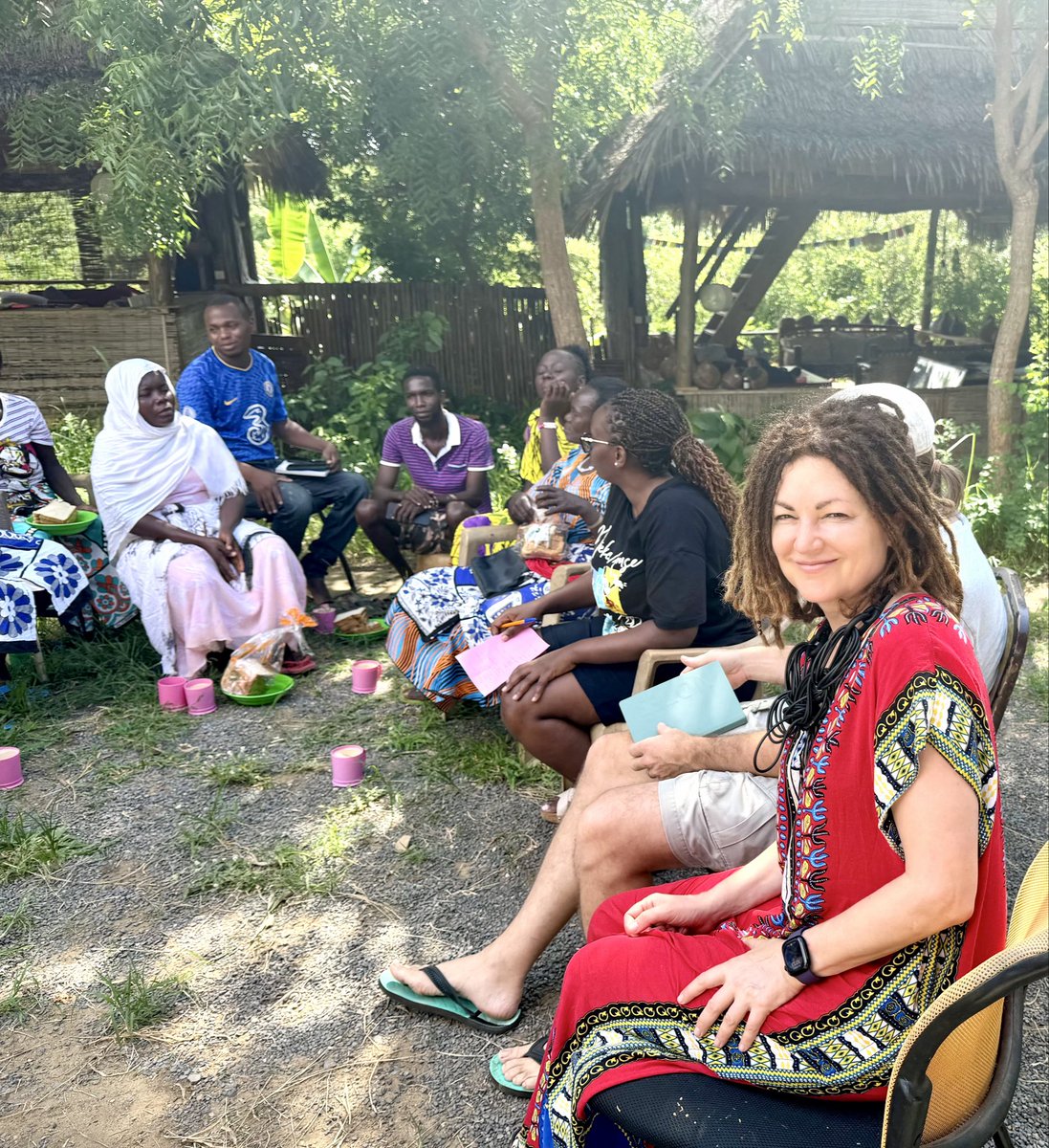
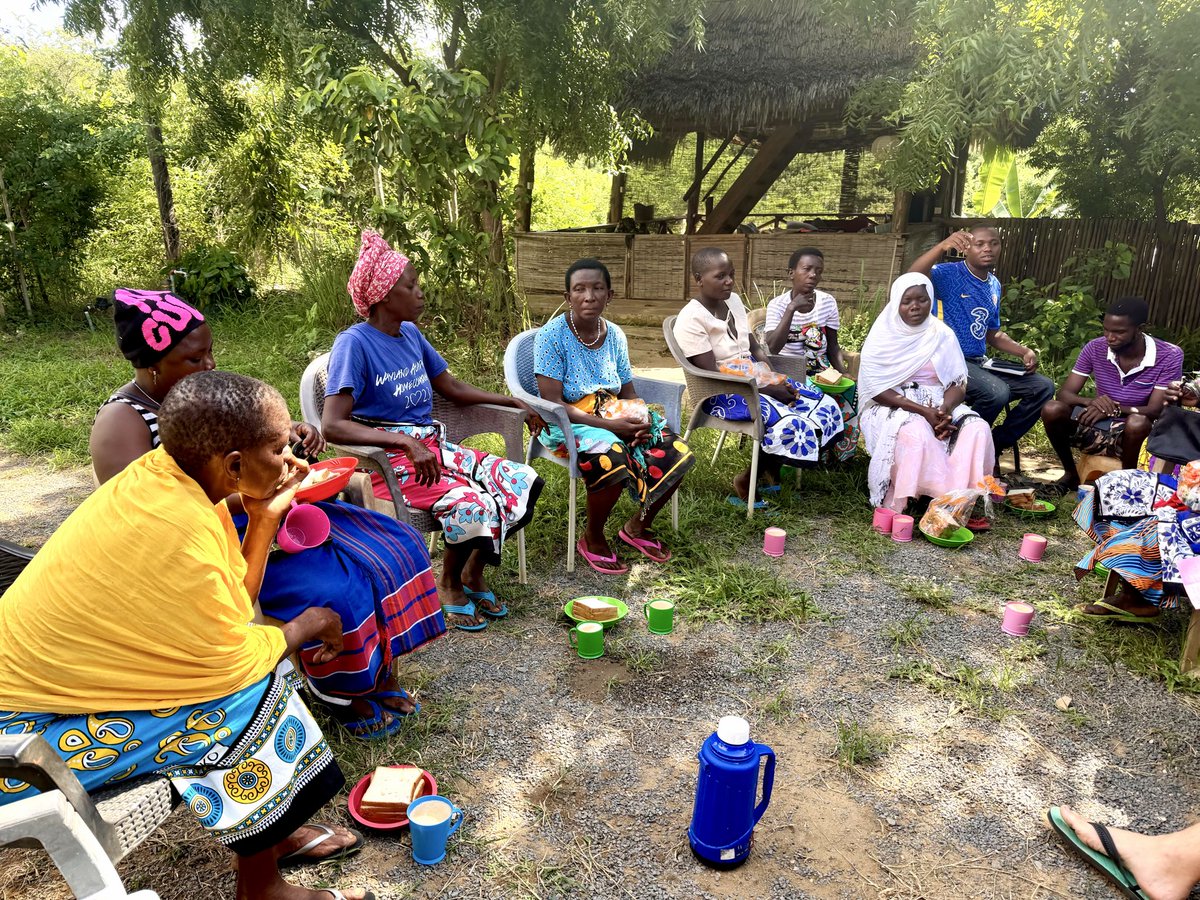
Thank you to Grassroots Economics and to @wor for allowing me to join the weekly meeting of one of the (80!!) groups that, thanks to their blockchain project, have managed over several years to return to traditional practices of collectively sharing resources.
What struck me was that the women in the group said they still remember how their grandparents lived this way: building houses together, sharing tools, helping each other harvest crops. But later the government made two decisive moves: it introduced taxes and compulsory education, both of which required money (even if schooling was formally free, people still had to pay for uniforms, books, and other costs).
People had to start taking paid jobs to get money, and their time became structured differently. There was simply no time left for the collective way of doing things — even though it was both more efficient and created the social glue that held communities together.
In an important sense, the transformation of Kenyan peasant life is not so different from the fate of the American middle class, where families not only pay high property taxes to live in “good school districts,” but also take out enormous loans to send their children to college.
8
18
1,895