
Enterprise software VC in NYC helping early-stage startups conquer GTM. Get our playbooks & tactics weekly ➡️ workbench.substack.com
Joined November 2012
- Tweets 8,958
- Following 1,563
- Followers 7,701
- Likes 15,346
1,545 Photos and videos

Work-Bench retweeted

Mar 27
The story of Datadog’s first enterprise deal, one with Capital One, is incredible:
- Datadog’s early pull was from engineers managing the cloud transition. Many CIOs were already bought into AppD, Dynatrace, New Relic at the time
- Capital One was in the midst of their cloud transition: their CIO had made a statement that they were going all cloud & they had just bought 13,000 servers from AWS. They were a $600 ARR customer for Datadog at the time, but - on the verge of getting their first production application set up - weren’t seeing success with other vendors (SignalFx, AppD, etc)
- Datadog’s SEs / CRO Dan Fougere sensed opportunity and on a Sunday night, made sure Datadog’s product worked for them when others didn’t
- Worked their way up from there —> Capital One was their first big enterprise deal and a $1.4M contract
Terrific execution to turn an instance of product usage (that many would’ve overlooked) into an early enterprise win.
1
43
7,073
Work-Bench retweeted
Mar 23
Palo Alto Networks was founded in 2005. It took them 3 years to reach $3M ARR, but they grew rapidly after that:
2008: $3.1M rev
2009: $13.4M rev
2010: $48.8M rev
2011: $118.6M rev
2012 (IPO): $255.1M rev
2013: $396.1M rev
2014: ~$600M rev
Went from $3M to $600M in 6 years!
1
8
785
Work-Bench retweeted
Mar 11
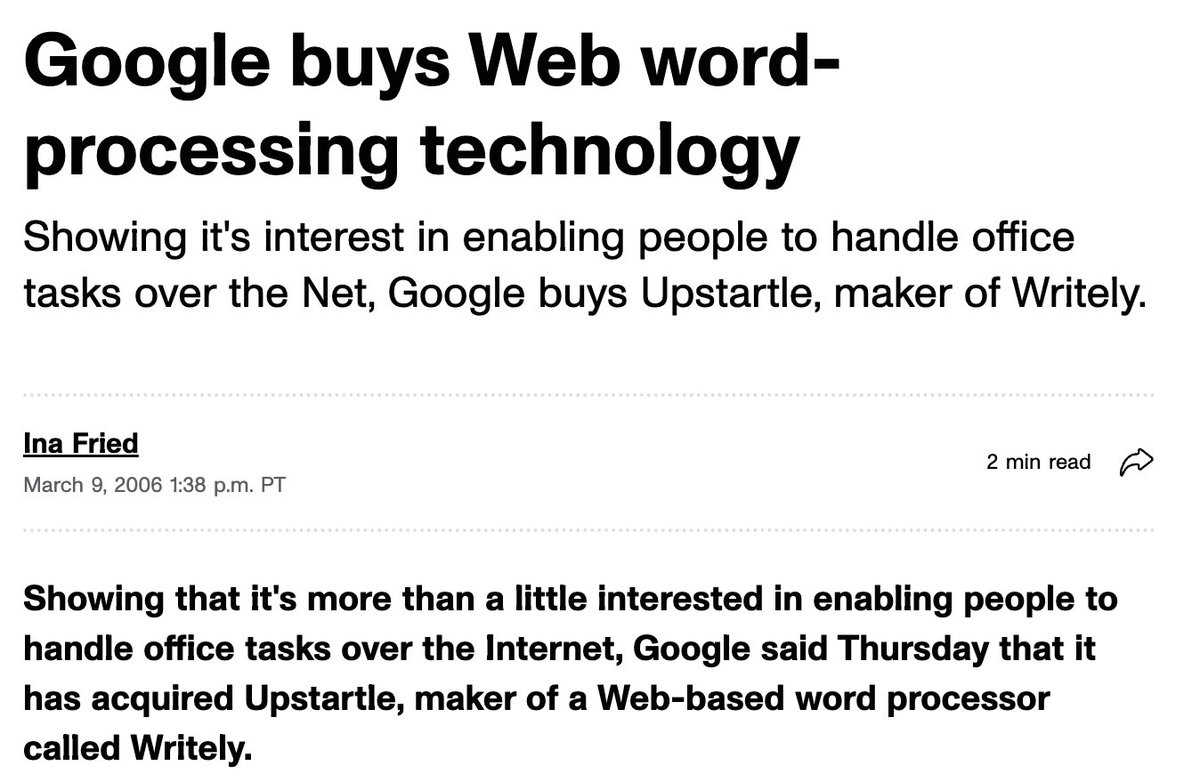
Nearly 20 years ago to the date, Google bought a company called Upstartle. Upstartle made Writely, a collaborative word processor that ran in a web browser.
What would that turn into? Google Docs.
1
1
313
Work-Bench retweeted
The rise of the podcast is something that needs to be thoroughly studied and investigated.
- 25 years ago, the concept didn't exist
- emerged in 2004. the name originated by combining "iPod" and "broadcast"
- 2025: 1B people listen to podcasts on Youtube every month
1
2
233
Work-Bench retweeted

Mar 5
Most startup ideas don’t fail because they can’t be built. They fail because the founder misunderstood the market.
Who the real buyer is.
Where the actual pain lives.
Whether the problem is even worth solving.
Historically, figuring that out required weeks or months of research and dozens of conversations.
Now AI can dramatically accelerate that process - if you know how to use them properly.
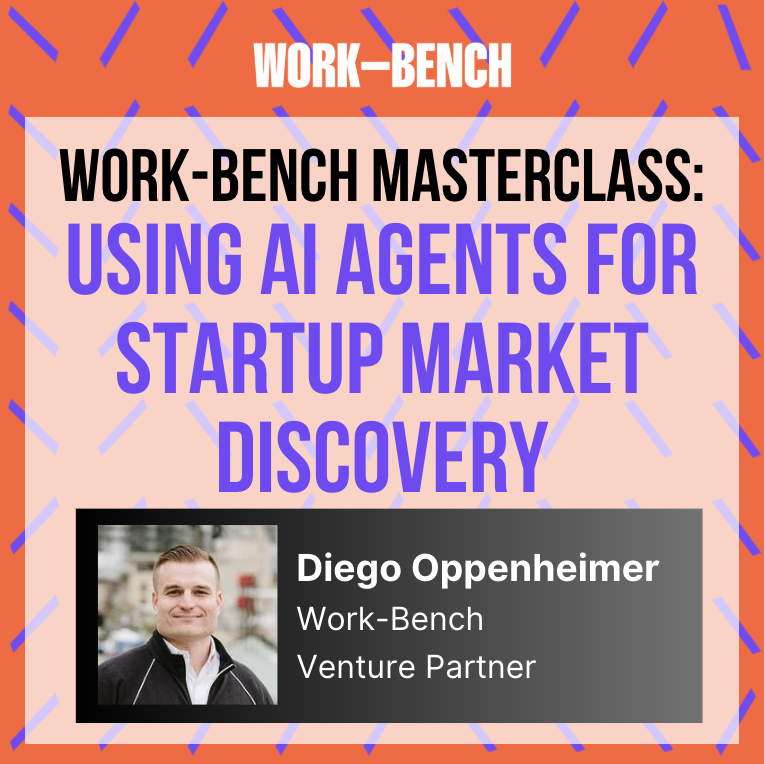
Next week we’re hosting a @Work_Bench Masterclass with Diego Oppenheimer (@doppenhe) on how founders can use AI to research markets and evaluate startup ideas.
⚡Diego will also share the exact AI prompts that he uses for market research.⚡
The session will cover a practical framework for:
• Choosing the right industry “haystack” to explore
• Using AI to map a market and identify stakeholders
• Uncovering real problems worth solving
• Testing solution hypotheses before writing code
🗓️ Wednesday, March 18th
⏰ 1:30-2:30PM ET
💻 On Zoom
If you're exploring startup ideas or researching a new market, this should be useful.
Diego previously founded Algorithmia (acquired by DataRobot) and now teaches at Stanford on Research-Driven Inspiration.
RSVP link in the next tweet 👇
2
3
6
688
Work-Bench retweeted
Random thought: the world of AI demands a next-gen Linkedin.
When people were using basic keyword search capabilities, the current form factor with rigid parameters was fine-- where you worked, how long you worked there for, etc. But now as LLMs expand the range and depth of possible semantic queries, people search has to evolve with it.
If I'm looking for a candidate or new person to meet, it's not just their phenotype I care about. I care about their genotype-- how they think, the mental models they use, their depth of care for various problem spaces, various interests, etc etc. Search in an age of AI opens the door to queries that index on this, but platforms like Linkedin don't offer the affordances, the hooks, for someone to a) put that data out there and b) even if it's there (ie I often post about my Substack articles & they used to be in my bio), they are not easily discoverable by a generative engine. Maybe platforms like Juicebox and Harmonic will evolve with their retrieval to enable such "needle-in-a-haystack" queries (ie find me the people that have written about xyz topic in the last n days) but I don't think it's there right now.
What's interesting is that if you take a given person and aggregate their "digital breadcrumbs" across all platforms (LI, X, Substack, Curius, Goodreads, etc), it massively increases the resolution of picture on the given individual (and their genotype). Obviously resolution is ultimately a function of one's online activity and the exhaust that leaves (no bread, no breadcrumbs), but platforms that a) create a unified profile graph of a given person and b) have affordances for people to express attributes about themselves that may not be captured on a Linkedin or Twitter might be increasingly interesting in a world of AI-native search.
Food for thought! Curious what others think
2
1
10
1,519
Work-Bench retweeted
Feb 20
Wild stat from StepStone about emerging managers:
In 2021/2022 there were 938 managers who raised a Fund I
Since then, only 190 subsequent funds have been raised by this group
29
30
438
167,608
Work-Bench retweeted

Feb 17
Crazy how much aura Thrive has right now
It feels like they’ve taken the crown for most desired multistage fund for founders and VCs
Not to mention every 20 year old college dropout YC founder worships them
Feb 17

We are pleased to announce the close of Thrive X. Exceeding $10 billion, Thrive X comprises $1 billion designated for early-stage investments and $9 billion designated for growth-stage investments. We do not view this as a milestone, but as a commitment to the long work ahead.
We view Thrive as a company. Our product is partnership - the willingness to commit deeply to a small number of founders, and to stand with them through momentum and adversity. This is the discipline we bring to our work, and the responsibility we accept when founders partner with Thrive.
We do not hedge. Concentration demands loyalty to the founders and missions we back. In this moment, exposure alone is not a strategy. Judgment without commitment is not enough. Advantage will accrue to those who choose deliberately, commit deeply, and endure through difficult moments.
Thrive was founded to be an enabling technology for the world we want to see. We are deeply aware that we are not the main character. The founders that we are fortunate enough to partner with are the artists. Our role is to help create the conditions where great work can come to life.
We take a long view grounded in the belief that category-defining companies tend to create structural compounding advantages over long arcs. This fund reflects the continuity of our approach and the ways our work has deepened alongside the founders we support.
We are grateful for the trust our Limited Partners place in us, and for the opportunity to work alongside those who are building with purpose, integrity, and courage.
thrivecap.com/thrive-x
5
2
197
23,185
Work-Bench retweeted
Feb 17
"There’s a tough topic that it’s time to be honest about in 2026: PE is no longer coming to the rescue for your average B2B / SaaS startup at $20m ARR. There's no point in pretending anymore."
Important real talk from @jasonlk that all founders and VCs should be aware of...

1
11
5,348
Work-Bench retweeted
Feb 10
VMWare grew fast en route to their 2007 IPO:
- founded 1998
- 2002: $31M in revenue
- 2003: $74M in revenue
- 2004: $219M in revenue
- 2005: $387M in revenue
- 2006: $704M in revenue
Never underestimate compounding!
1
2
386
Work-Bench retweeted
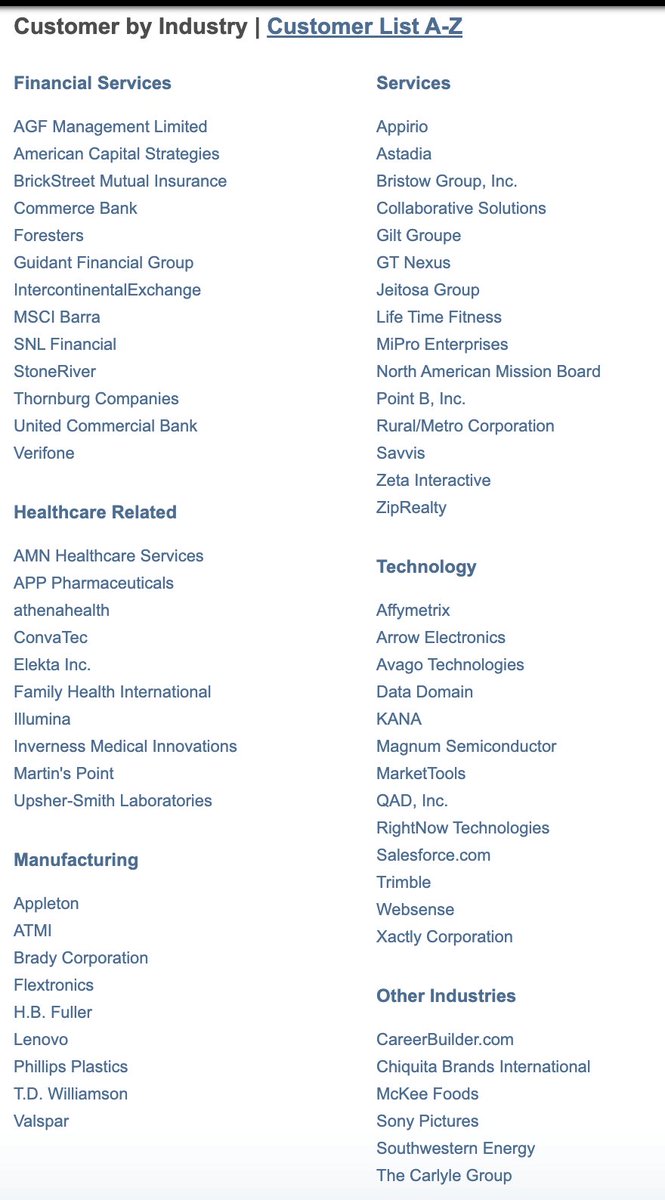
Workday's customers circa Feb 2010. The company launched in November of 2006.
Interesting how much adoption they got from non-tech companies - financial services, healthcare, etc. At the time, they were doing $68M of revenue...large ACVs and 6-figure deals early on!
4
2
5
966
Work-Bench retweeted
Feb 2
What part of the cycle are we in?!
A founder raising Seed funding showed a slide saying they had 50 customers.
When we asked about a few of them, it turned out that *none* were customers.
I get that people are trying to make experimental AI budgets sound more recurring than they may be...
But to outright lie about customers... 🤥
Never a good look, and unfortunately it may be a sign of the wacky times we're in.

4
1
9
1,037
Work-Bench retweeted

Jan 29
Awesome work from @VmaxAI @withmartian pushing the boundaries of RL infra and automated task generation

RL progress is bottlenecked by infra for training and evaluation. @VmaxAI is excited to be partnering @withmartian, generating environments for the Agentic Research and Evaluation (ARES) framework

1
2
6
370
Work-Bench retweeted
Jan 28
While you're here, check out Chamelio, the context layer for in-house legal teams
We just led their seed round and they're already trusted by over 100 customers like Wiz, Socure, Fiverr, Global-e, Cellebrite, Lightricks, and more
chamelio.ai/
1
2
9
2,087
Work-Bench retweeted
Jan 28
Fun to think about the heterogeneity in approaches to building a public enterprise software company. DigitalOcean, Atlassian, and Crowdstrike were all at a little over ~$300M run rate at IPO time:
- DigitalOcean: 570K customers $588 ACV
- Atlassian: 48K customers, $6.6K ACV
- Crowdstrike: 2.5K customers, $124K ACV
1
3
299
Work-Bench retweeted
Jan 22
This is a huge issue. Also the related point is that this is an option call check for them. No biggie for the VC if it doesn't work, but for the founder they're usually in a tougher spot than had they gone with their initial raise plan...
Jan 22

VC's serving their own needs is why early-stage round valuation caps often balloon. e.g.
> Company Y in market for $2M raise on $12M post. Assume $1M already committed
> Round heats up
> $250M Fund X (writing no smaller than $2.5M checks targeting 10% ownership) wants to get into the round
> Investing $1M for ~8% (i.e. remaining allocation) doesn't work for the Fund X economics
> To make it work, they'll invest $2.5M on $25M (i.e. they can ration it matches their check size and ownership mandate)
> Company Y's price is now $25M post
2
2
11
2,827
Work-Bench retweeted

15 Jul 2025
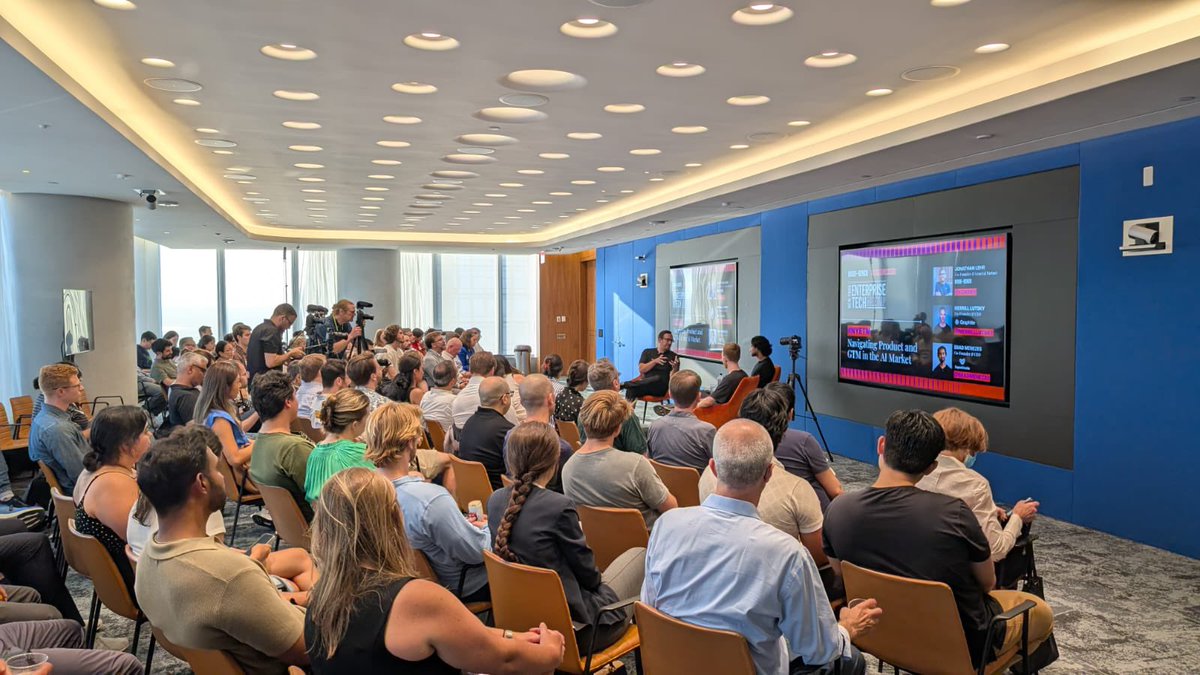
3 major lessons from @bradmenezes @MerrillLutsky:
1. Serving individuals vs. enterprises - and the balance there
2. Better to go slow and then go fast - going deep and focus first
3. Taking page from Palantir playbook with Forward Deploy Engineers - since it’s all about getting customers into production!
1
4
7
1,551
Work-Bench retweeted
15 Jul 2025
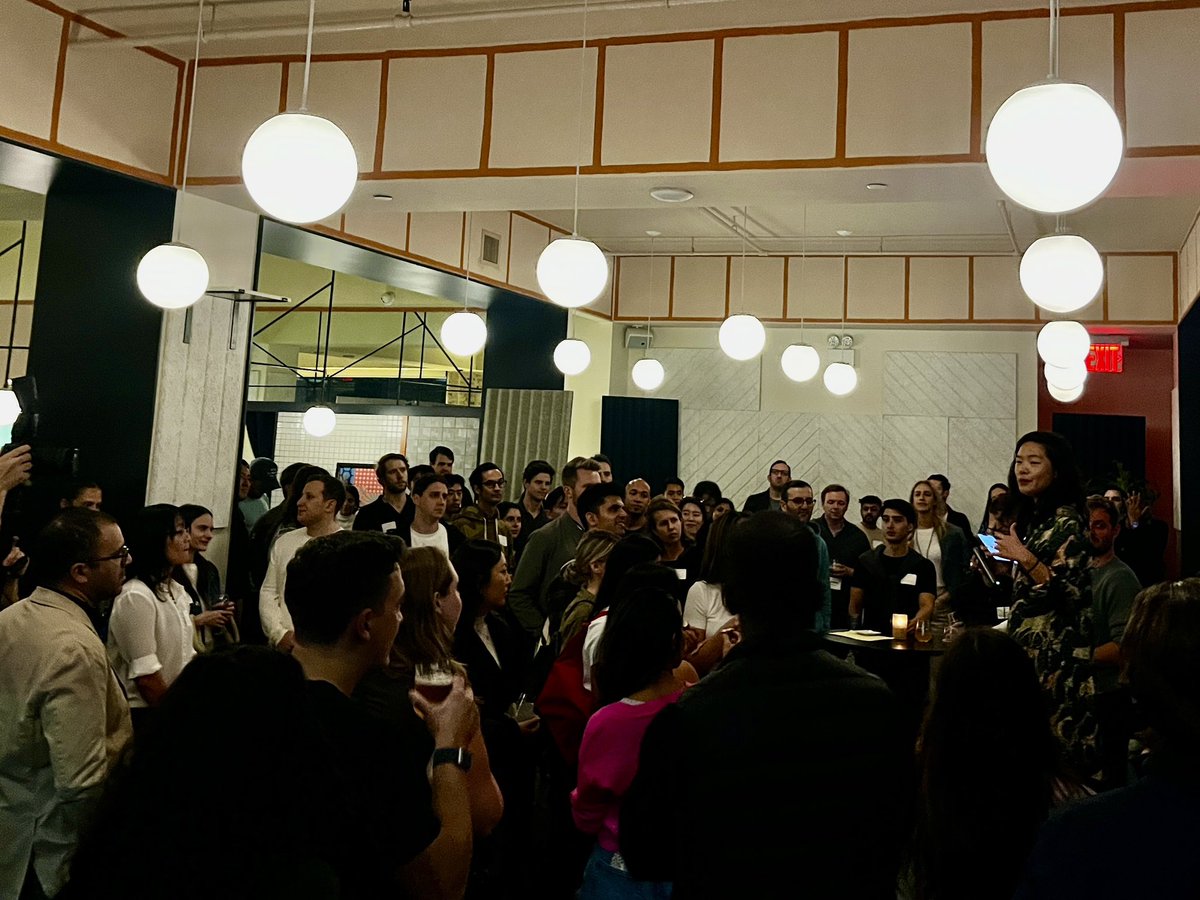
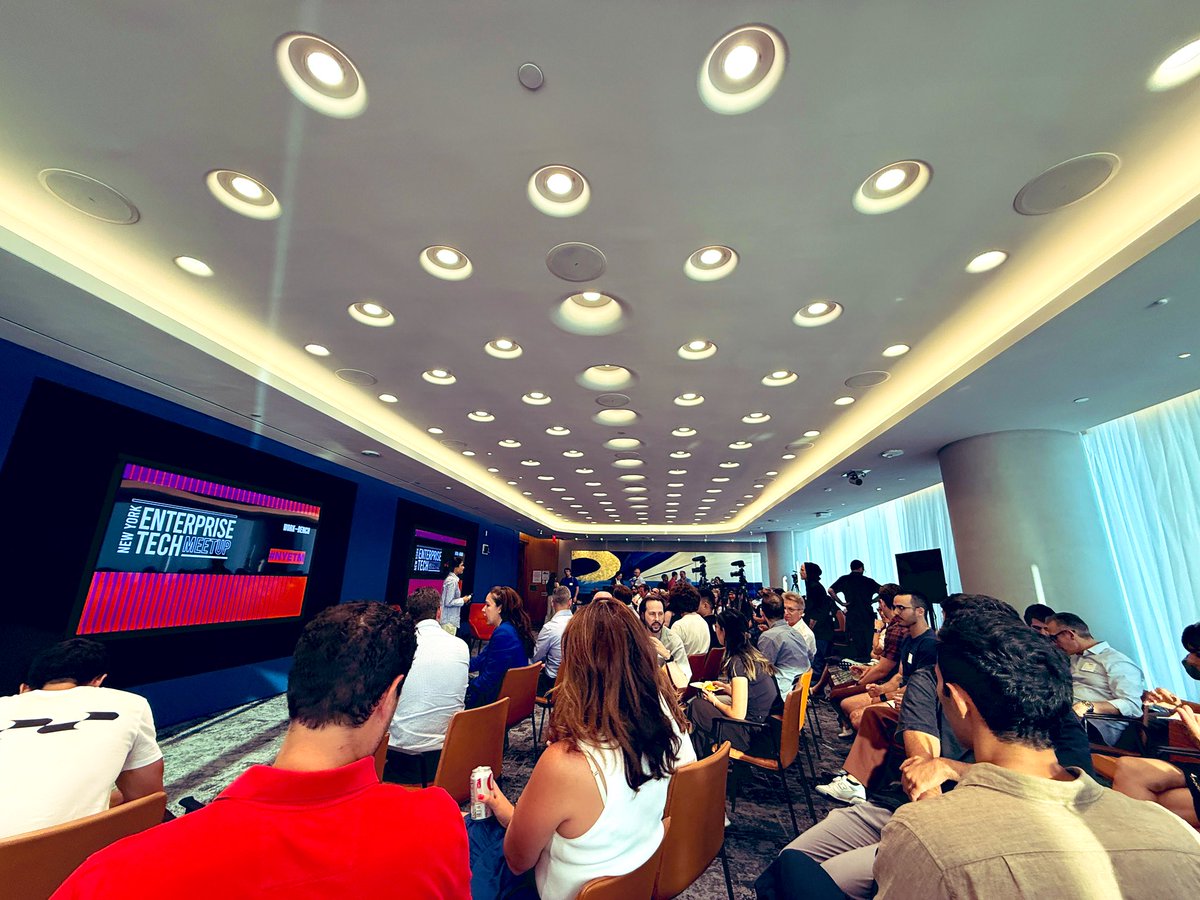
Packed house tonight at our @Work_Bench NY Enterprise Tech Meetup!! 🔥🔥
Deep diving on lessons learned navigating Product and GTM in the AI Market with @superblocks and @withgraphite, 2 of NYC’s fasting growing dev tool cos
6
2
12
1,459
Work-Bench retweeted
15 Jul 2025
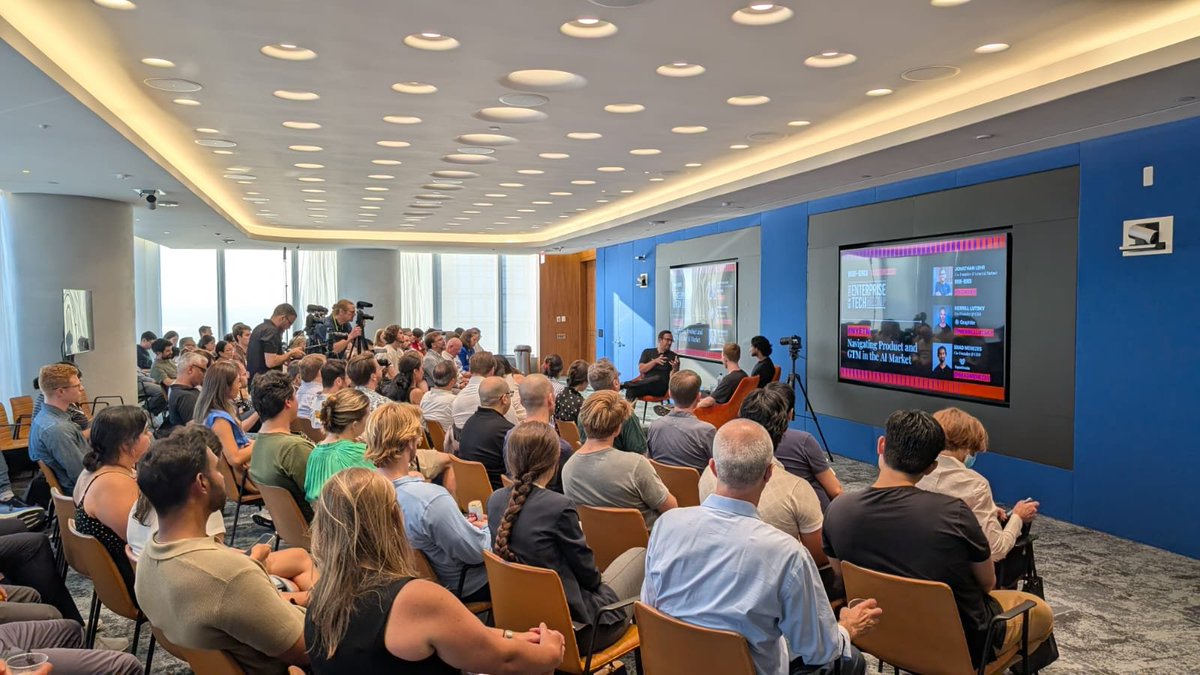
Another awesome @Work_Bench NY Enterprise Tech Meetup featuring two of NYC's fastest growing AI companies -- @withgraphite & @superblocks
CEOs @MerrillLutsky @bradmenezes are dropping knowledge on product architecture for SOTA models, navigating competition, & how GTM has changed in the AI era
Shoutout @fendien for coordinating their all-black outfits 🥷🥷🥷
2
9
700
Work-Bench retweeted
12 May 2025
Excited to announce the launch of @Work_Bench Fund IV: $160M dedicated to backing visionary seed stage enterprise founders!
The enterprise tech landscape has never been more dynamic. We're witnessing massive transformation across the entire stack - from groundbreaking AI applications to reimagined cloud-native infrastructure and security, and enterprise software that actually delights users. These aren't just incremental improvements—they're fundamental reinventions of how businesses operate, ushering in a new guard.
This milestone is a testament to our incredible founders, who have the conviction to go toe-to-toe with industry giants and who spot opportunities before others do, unflinchingly building something new in uncharted territory. It's a celebration of our vibrant NYC enterprise community that continues to punch above its weight. And I can't forget to celebrate my exceptional Work-Bench team (@fendien, @jerseejess, @psomrah, @DanielChesley) that I'm privileged to learn from and laugh with every day, whose unbound energy makes it all worthwhile.
With Fund IV, we're quadrupling down on our mission to partner side-by-side with the most ambitious enterprise founders from day one, writing $2-4M checks to lead Seed rounds.
If you’re eager to build the future of enterprise technology, reach out and let’s do it together!
fortune.com/2025/05/12/work-…
3
1
21
718