
Enterprise VC @Work_Bench | We Lead Seed Rounds with $2-4M Investments | Organizer @NYETM, @KauffmanFellows 19 | My better half is @MichaelaLehr | 305 Native
Joined March 2008
- Tweets 27,642
- Following 1,383
- Followers 6,768
- Likes 51,967
1,590 Photos and videos






Pinned Tweet

12 May 2025
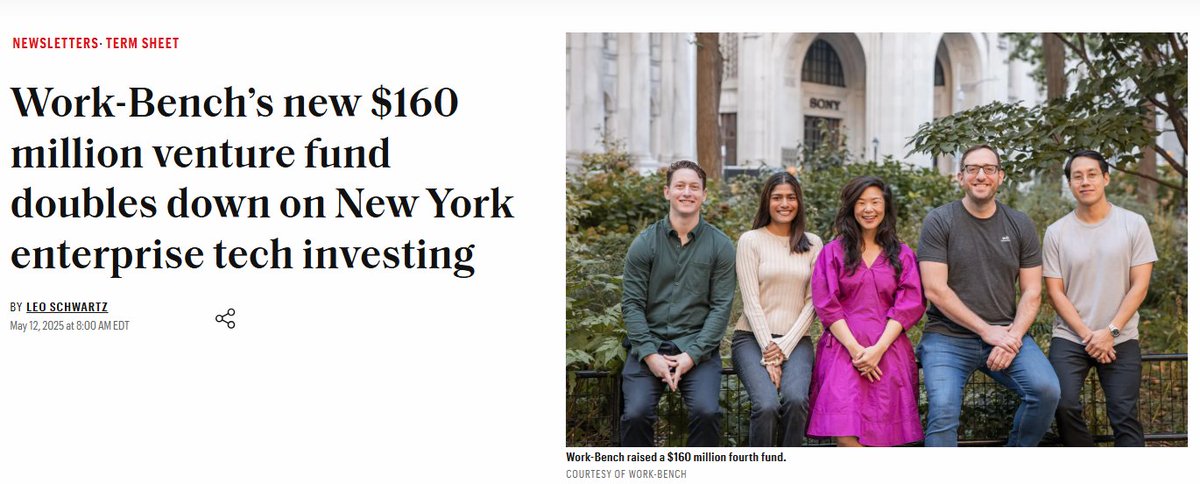
🚨 Big news: We’ve raised $160M for @Work_Bench Fund IV to back Seed-stage founders with massive enterprise ambitions.
Enterprise is in our DNA and with Fund IV, we’re quadrupling down.👇
29
17
156
19,022
Jun 12
well played John
May 20

1
183
Jun 11
What an amazing fireside chat between NYC VC legend @fredwilson and @fabref at the @KauffmanFellows NYC Summit
Hearing Fred's perspective on AI, valuations, fund sizes and more was such a treat during such a dynamic (read: wild) macro environment
And of course seeing so many KFP friends made the summit even more meaningful!
2
82
Jun 11
This post, and especially my call out below, is an absolute banger.
The reason is because it touches on something too many Silicon Valley VCs don't think (or care) enough about -- customer empathy.
What challenges do employees at large enterprises face and what are their actual incentives and motivations.
WHAT A TOKEN ACTUALLY DOES INSIDE A 40,000 PERSON ENTERPRISE
A knowledge worker at a megacorp has a CEREMONIAL relationship to output. Compensation isn't bonded to production. It's bonded to tenure and seeming useful to the guy one level up. The output is at best slightly beneficial to the megacorp and at worst pure politics theatre.
This is not a moral failing. The link between "what you do" and "what you get" was severed somewhere up the MEGACORP org chart decades ago. Everyone downstream is living honestly inside the incentives they were handed.

2
5
1,065
Jun 11
omg nailed it

The Spurs know how to TAKE the lead, they just don't know how to HOLD the lead. And that's really the most important part of the lead: the holding

1
8
1,225
Jun 11
Great talk by @nikesharora at @theallinpod Summit
A few nuggets that stuck with me:
1. Analytical SaaS is dead. Infrastructure software is undervalued
2. Mythos so far is great for offense and horrible for defense because it has a 30% false positive rate.
3. How can you take a 10-20% false positive rate down to 0.1%. A lot is needed post model to make it useful and effective in a business context
4. On M&A in today's world: If you can have the best operating efficiency compared to your competitors, then you can then buy something, improve its margins, and get credit from the Street for it
Link to the full convo in the next tweet
1
3
387
Jun 11
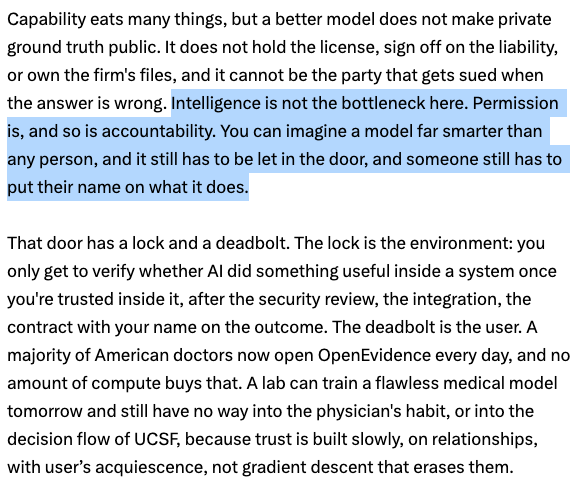
Couldn't agree more. That's why I'm so pumped for the work @authzed is doing for authorization and permissions across users and agents
cc @JacobMoshenko @samkim

1
4
330
Jun 10
Training an RL task generator often requires expensive rollouts. Turns out mech interp can help make this more efficient!
Gotta love a good @Work_Bench port co collab!
Vmax 🤝 Goodfire

Training a model to generate RL tasks not too hard, not too easy costs many solver runs per task.
PROPEL predicts difficulty via a probe on its activations instead, amortizing cost and speeding up generator optimization.
New open-ended RL research from @Vmax @GoodfireAI.
1
8
971
Jonathan Lehr retweeted

Jun 10
Love seeing a portfolio collab between @VmaxAI and @GoodfireAI
PROPEL breaks the solver bottleneck in task-generator RL. Instead of running the solver repeatedly to check if generated tasks are hard enough, you train a probe once on model internals and use it as a free reward signal
The result is 2x frontier-task generation across math, code, and SWE
Nice work @lorenz_wlf
Training a model to generate RL tasks not too hard, not too easy costs many solver runs per task.
PROPEL predicts difficulty via a probe on its activations instead, amortizing cost and speeding up generator optimization.
New open-ended RL research from @Vmax @GoodfireAI.
1
2
14
2,062
Jun 9
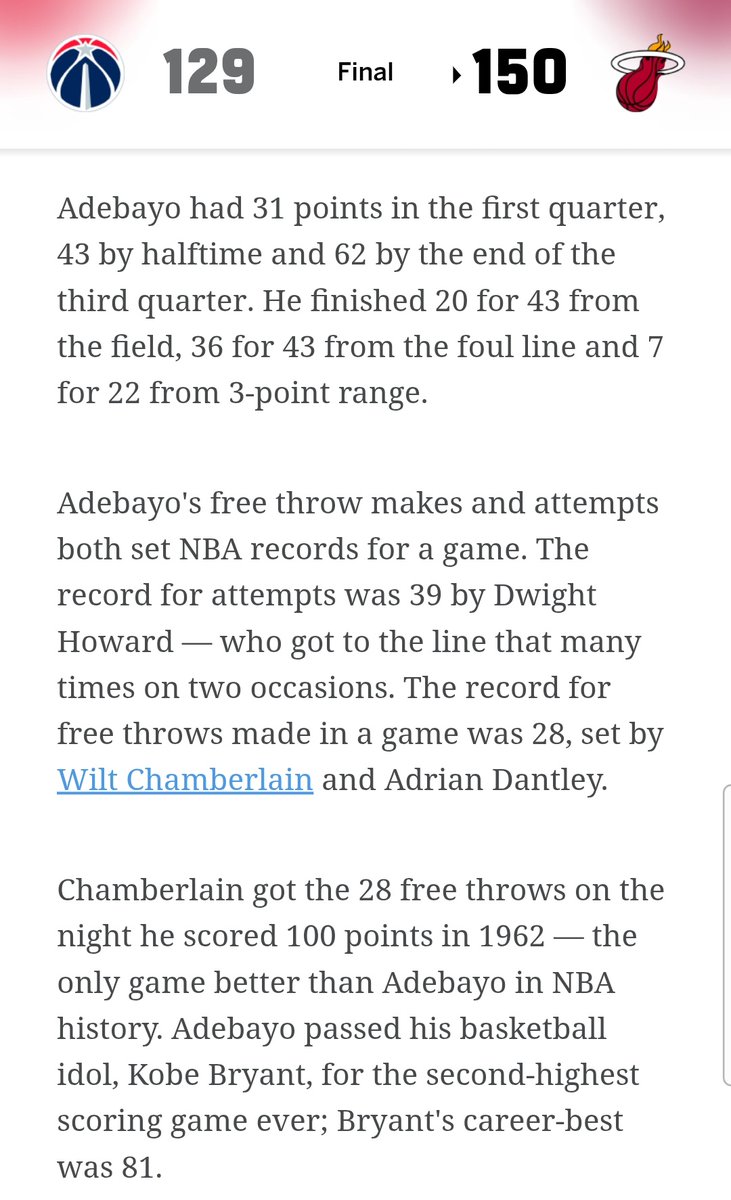
I was talking with @ProbyShandilya earlier how about this is Wemby's "Wade in 06" moment
Can he rise to the occasion and carry his team back from an 0-2 Finals deficit?
If so this will be the forging of his legacy
But if he loses, this is going to be disastrous for him
2
217
Jun 8
RT @ProbyShandilya: when visiting NYC, all enterprise roads lead to @Work_Bench :) always great to see @vasuman @eyad_khrais x.com/iok…
1
13
Jun 2
🗽🗽🗽
Jun 1

The best founders don't end up in New York by accident. They come because this is where the hardest problems, the biggest customers, and the highest stakes are. The city demands you build something real.
I've always believed the best opportunities live between fields of expertise — not inside any single industry, but at the intersections. No city in the world has more intersections than New York. Finance and media. Healthcare and technology. The customers who need AI to actually work — banks, hospitals, newsrooms, asset managers — are all here, within a few miles of each other.
AI adoption is accelerating faster than any cycle I've seen. Per @PitchBook, AI is now 65% of NYC venture deal value, up from 16% six years ago. Early-stage funding hit $8.9B in 2025, up 50% in a year. Active unicorns: 32 in 2019, 159 today.
The infrastructure of a generational tech hub is being built in real time.
We're still early. The biggest deals haven't happened. The companies that define applied AI haven't been built.
The founders who build them will be ambitious. They'll want to be where the problems are.
They'll be here.
NY @Techweek_ starts today. Come build 🗽
1
1
16
9,098
Jun 1
I appreciated speaking with @ychernova of the @WSJ for a story she wrote about the NYC and SF tech ecosystems.
Pre-COVID, roughly 70% of our @Work_Bench portfolio was NYC-based. Today it’s closer to 60% by company count. That shift isn’t because we have less conviction about NYC - quite the opposite. The NYC enterprise ecosystem has become dramatically stronger over the last decade. There are simply more technically ambitious founders, more repeat founders, deeper operator talent, and far more enterprise customers willing to engage early.
That said, our job is ultimately to find the best enterprise founders wherever they are. The biggest change over the last few years is that AI has reshaped where different categories of companies tend to emerge.
For vertical AI applications and a lot of enterprise software broadly, NYC continues to be an incredible place to build. The proximity to large financial institutions, media companies, healthcare organizations, retailers, and other Fortune 500 buyers creates a huge advantage around customer discovery, design partners, and early go-to-market execution. We’ve always believed enterprise go-to-market is massively underrated at Seed, and in today's world where distribution becomes your moat, NYC remains one of the best places in the world for that.
Infrastructure is a different story. You can’t ignore San Francisco right now, particularly around AI infrastructure, developer tooling, and frontier model ecosystems. There’s an intensity and density there across researchers, infrastructure engineers, ex-founders, talent from the major labs and hyperscalers that creates a unique environment. Having said that, we're excited for what the next wave of infrastructure talent will build in NYC over the next few years as people who have scaled AI-first companies like Modal, Coreweave, Cursor, and others eventually leave to launch their own companies.
In cybersecurity we continue to see exceptional technical talent coming out of Israel, and we often partner with Israeli pre-seed and seed funds where we can serve as the US Seed lead and help companies navigate early enterprise go-to-market.
What hasn’t changed is how we think about winning. Whether a founder is in NYC, SF, or Tel Aviv, the common thread is usually that they want a highly engaged Seed partner who can materially help with early enterprise traction across customer introductions, ICP development, pricing, positioning, and building a repeatable go-to-market motion. That has always been the core of the Work-Bench strategy, and in many ways it matters even more in today’s market.
4
1
9
930
Jonathan Lehr retweeted

The unix terminal is the natural interface for agents to get work done on a computer but how well can agents actually use unix?
Claude Code. Codex. Devin. Every frontier agent ships as a terminal tool.
With unix-ctf, Vmax is using setters and solvers to measure Unix competence.
7
12
56
15,332
May 29
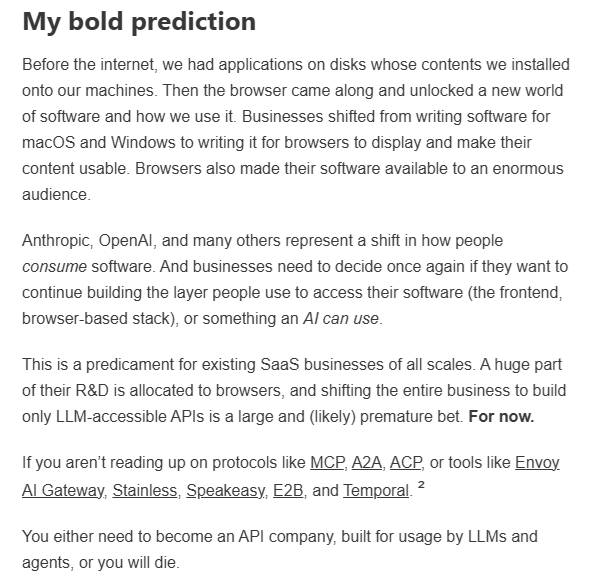
"The app companies that will work are not wrappers around models. They will be systems wrapped around metrics. A wrapper exposes a capability, but a product takes that capability and makes it show up in a number the customer already tracks.
That is where the data, workflow, feedback loops, integrations, evals, and deployment model matter. A thin interface to a model gets eaten. A system wrapped around a metric has a chance."
Excellent read 🎯
May 28

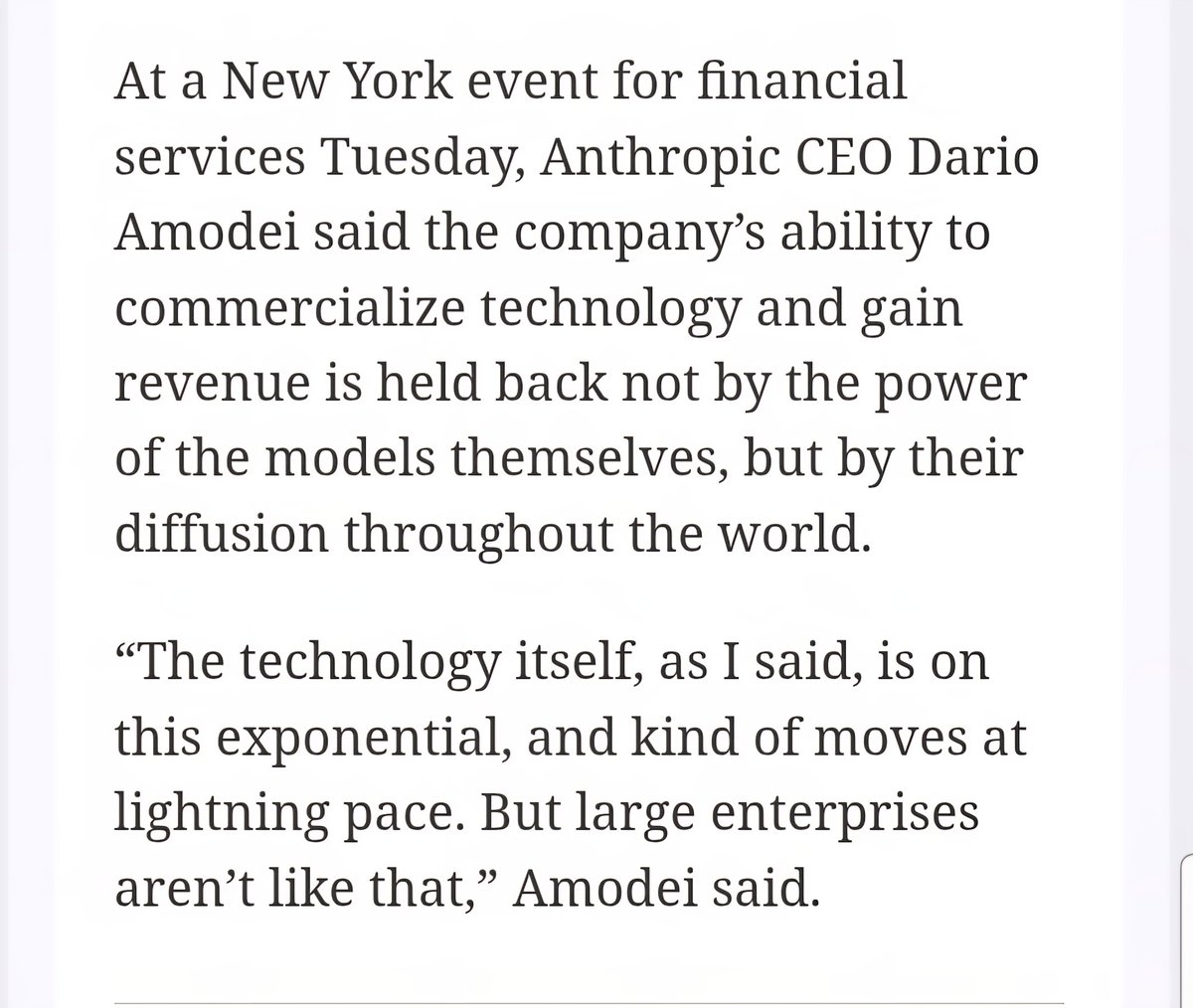
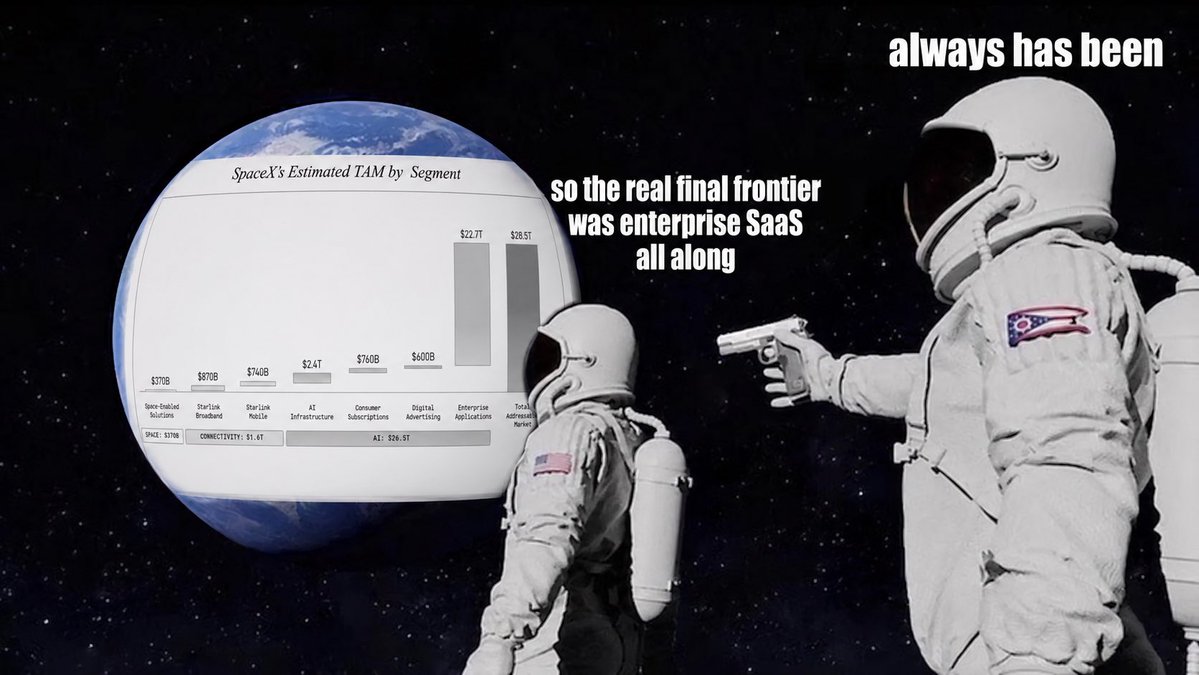
Does Corporate America want to buy 1Trillion of token value on a wholesale basis, direct from the Frontier labs or intermediated through AI Apps built for specific vertical and horizontal use cases?
There will be some build-your-own, but as we are seeing in real time, that is harder and more expensive than it looks. Our belief is that the AI Apps business will be just as vibrant as the prior SaaS apps business, and we are investing accordingly. Thoughts from @siddharthvader_
2
2
2
580
May 28
We loved having you @RMB 🙌
May 28

Working from @Work_Bench today! They are one of my favorite early stage investors and awesome to work with. The community they have built is super helpful for anyone scaling in AI/B2B. DM me if I can help you with an intro.

1
1
546
Jonathan Lehr retweeted

May 21
Few insights are truly as earned as Vas's on Forward Deployed Engineering. His clarity on how AI will be metabolized by organizations is special, and anyone thinking about this should read the post below. Sharing some of my favorite parts:
"The FDE is a highly skilled engineer who can understand the customer's problems very deeply, write code into a code base they've potentially never seen before, and communicate the business impact to a non-technical decision maker to close the deal. This is a million-dollar hire." The role is truly multidimensional!
"Don't overuse AI when building your agents. Most automation tasks can be done with a series of tool calls and just one call to an LLM as an orchestrating layer. Too much AI leads to unneeded token costs (which compound at scale) and often a lower-quality output."
"Evals prove value to the customer. While everyone says they want AI in their company, there are still many who are skeptical of whether it works. A good agent evaluation is what an executive needs to trust the agent will provide ROI."
I'm excited to meet the future Varick FDEs whose curiosity for the role emerged from reading this post :)

1
1
11
2,607
Jonathan Lehr retweeted

May 21
Great post on FDEs. Everyone should read it if you’re interested in this job category. This is a job that is going to be around as long as AI keeps changing rapidly, which it inevitably will.
People often wonder why isn’t this like just deploying other forms of technology in the past, like cloud.
Because something like cloud adoption affected a fairly concentrated set of users (developers and IT), and generally didn’t require a fundamental change to the workflows of employees to get the benefits of the new service being delivered on the cloud. At best you went to one training session and you were done.
With agents, the work to implement them is not only highly technical, but they directly impact the underlying workflows that people participate in. This means there’s a ton of technical work and change management that comes with it.
Further, the pace of change of cloud wasn’t nearly as quick, so there was a lot more time for best practices to propagate. Now, every model change means either something new can be done that wasn’t possible before, or some piece of scaffolding is now redundant or holding you back.
This is why it’s commonly easier for a vendor or partner that’s seen the implementation hundreds or thousands of times help do the work, even with internal support from the customer.
So, this job isn’t going away any time soon, and will be a great path for a lot of technical talent, especially early career.
70
182
1,717
588,964
May 21
"At Vmax, that is the long-term ambition: AI systems that keep generating harder, broader, and more useful challenges for their own improvement. Moreover, these methods have the potential to not just match, but exceed humans by discovering radically new ways of performing work in the domains we train them in."
Amazing progress by the @VmaxAI team towards their huge vision
This work represents @vmaxai 's first steps towards breaking through the human data bottleneck, and stabilizing self-play.
This work was led by @creus_roger; my DMs are open if you're interested in collaboration and we are hiring: vmax.ai/careers
1
4
547