
Joined October 2010
- Tweets 22,468
- Following 410
- Followers 82,178
- Likes 1,255
12,669 Photos and videos



Pinned Tweet

May 28
Missed it? Replay the launch of the Atlas of Global Development 2026, live from our headquarters in Washington, D.C.
Start streaming and explore 75 years of development in interactive data visualizations and storytelling. x.com/i/broadcasts/1NGarabPR…
2
6
456
How can satellite-observed nighttime lights help answer development questions?
Join this training session on June 17 and learn how to work with nighttime lights data, including an intro to BlackMarblePy, a Python package for NASA Black Marble products. wrld.bg/SQG450Zbc6o
1
183
Originally developed for weather forecasting and environmental monitoring, Earth observation #data are now informing development finance at scale, such as:
• Climate resilience
• Agricultural statistics
• Energy infrastructure planning
Read more 👇 wrld.bg/1gqG50ZbbUl
4
14
597
Jun 13
The strongest predictor wasn't a better algorithm.
It was better information.
A four-country study finds that simple mobile phone records can help identify chronic poverty — even where traditional survey data are scarce or outdated. wrld.bg/6iq050ZbbTq
3
1
344
Jun 13
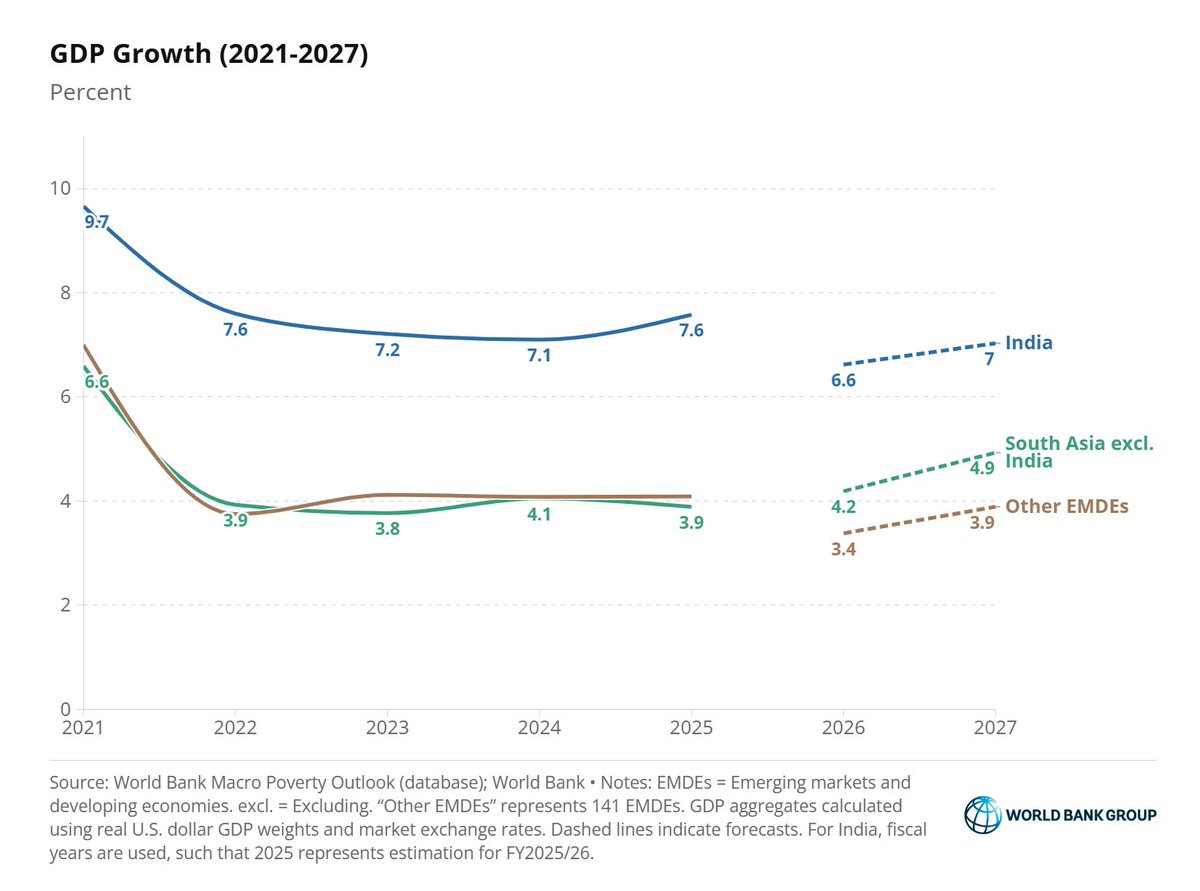
South Asia has been one of the fastest-growing regions. But higher energy prices are now threatening that momentum.
In our latest South Asia Economic Update, we examine how conflict in the Middle East is affecting inflation, remittances, and welfare: wrld.bg/Gf5E50ZbbWq
3
3
14
453
Jun 12
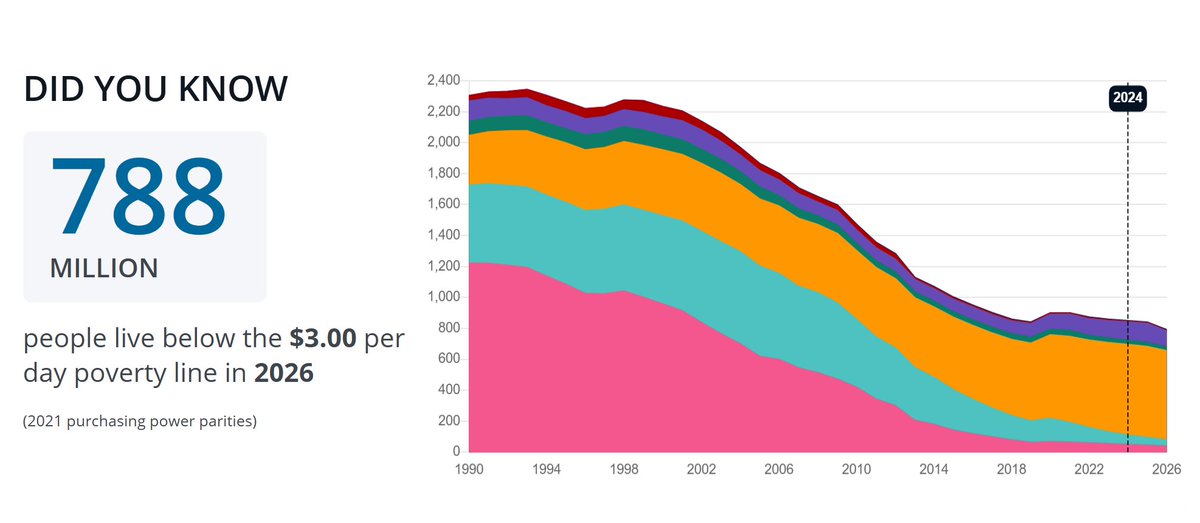
The March 2026 update to our Poverty and Inequality Platform (PIP) is now live, bringing new survey data, improved estimates, and updated projections of global #poverty through 2026.
Explore the latest data: wrld.bg/zpLQ50ZasL9
9
12
892
Jun 12
How can satellite-observed nighttime lights help answer development questions?
Join this training session on June 17 and learn how to work with nighttime lights data, including an intro to BlackMarblePy, a Python package for NASA Black Marble products. wrld.bg/wrtF50ZasIt
1
1
281
Jun 12
A model estimated poverty at 46%. The true rate was 84%.
The gap wasn’t due to the algorithm—it reflected what the data failed to capture. The model could not “see” the shock.
Here’s what makes the difference 👇 wrld.bg/e0LW50ZasKc
3
9
644
Jun 12
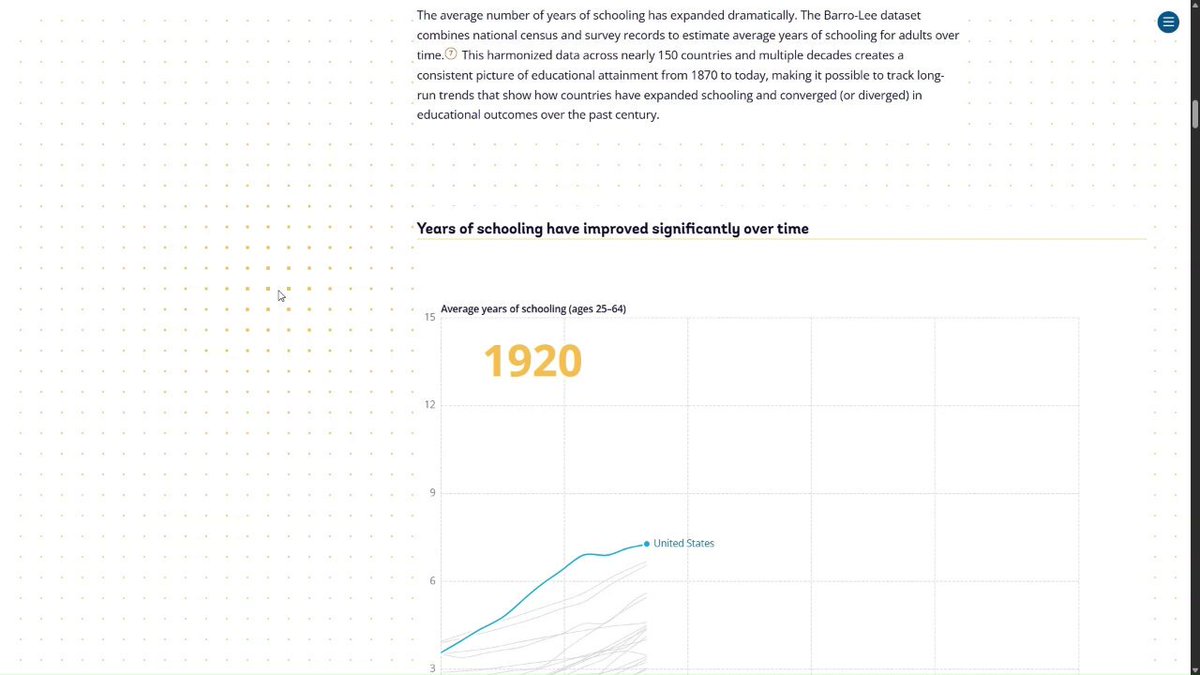
More kids are in school than ever before.
But too many are failed twice: by weak learning in the classroom and by jobs that offer few opportunities to build skills.
New Atlas of Global Development data: wrld.bg/2y1A50ZasIV #WBGAtlas
1
5
9
1,070
Jun 12
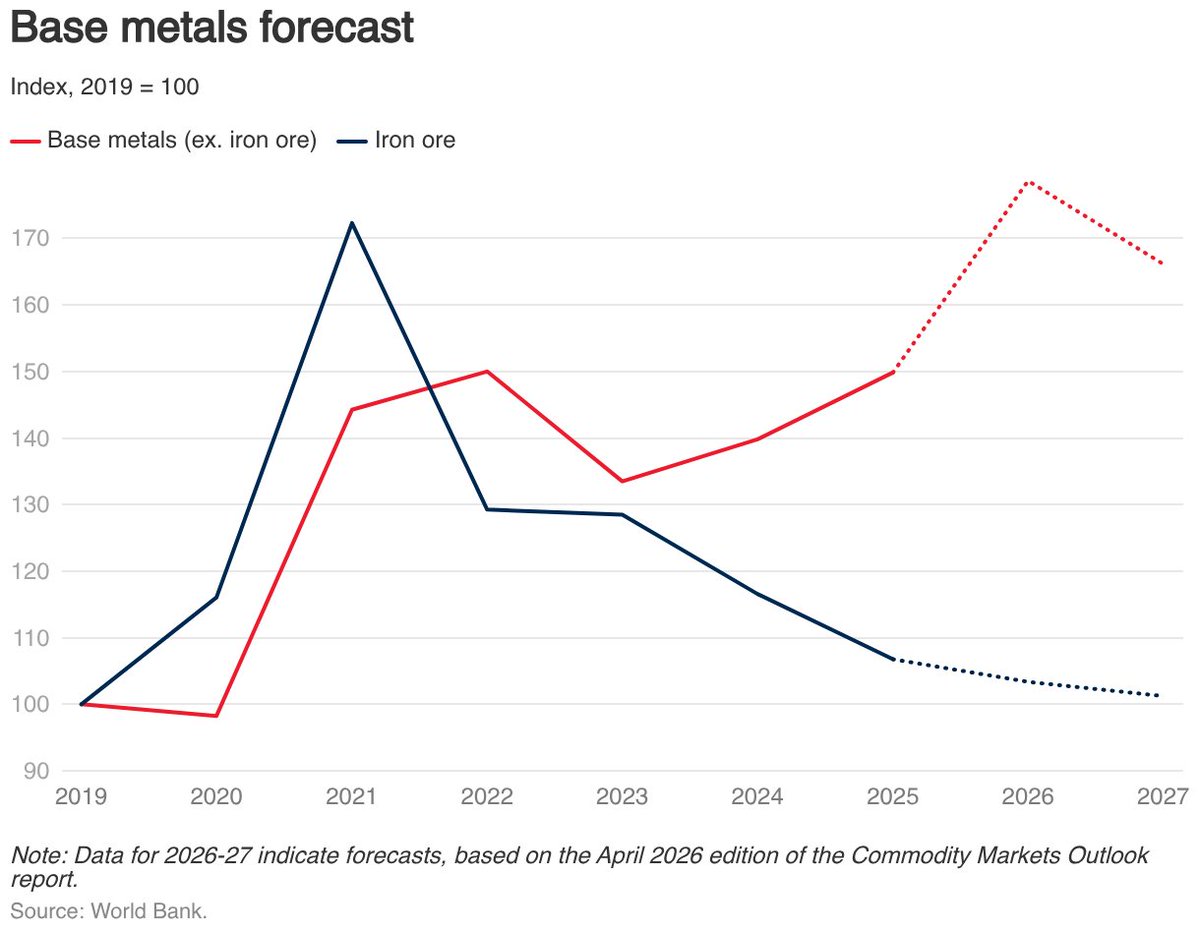
Aluminum, copper, and tin prices are expected to hit record highs in 2026, driven by supply constraints and resilient demand from clean energy, AI data centers, and digital infrastructure.
Read more: wrld.bg/bU1650ZasH1
1
4
6
570
Jun 11
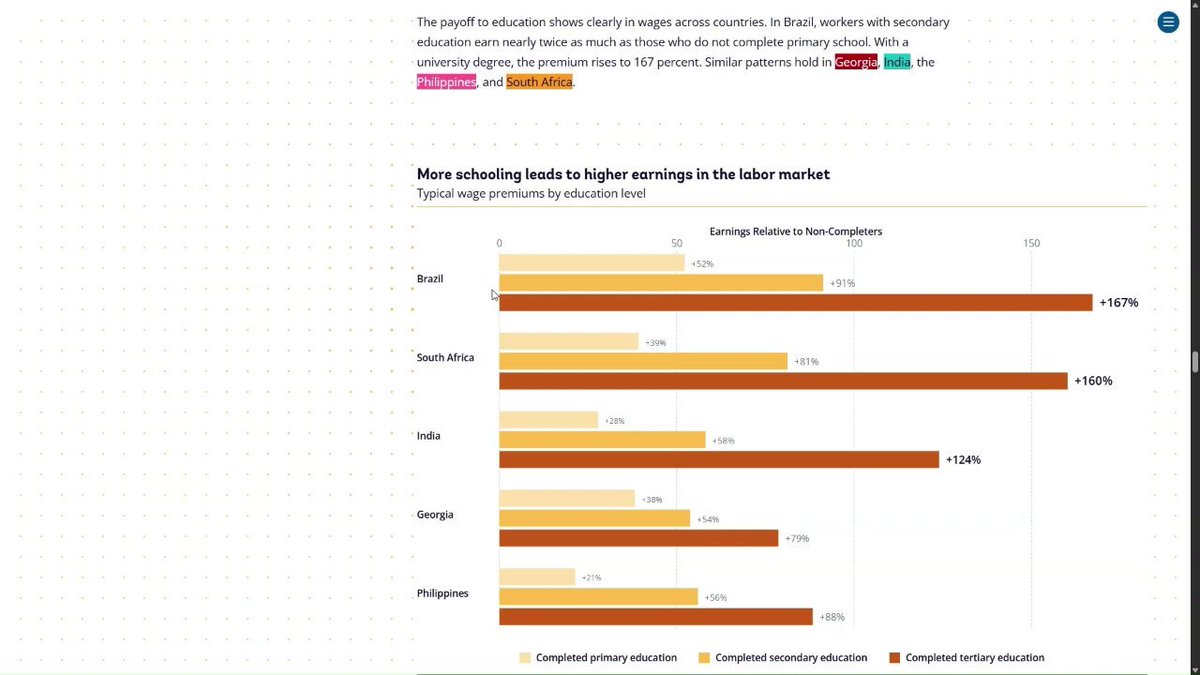
Education remains one of the best investments a country can make.
Each year of schooling raises earnings by 10%, yet students leave school without mastering basic skills—and jobs offer few opportunities to catch up.
New Atlas of Global Development data: wrld.bg/U6aT50Z9Wgk
6
12
1,334
Jun 11
How can satellite-observed nighttime lights help answer development questions?
Join this training session on June 17 and learn how to work with nighttime lights data, including an intro to BlackMarblePy, a Python package for NASA Black Marble products. wrld.bg/LPvl50Z9VAL
1
2
6
432
Jun 11
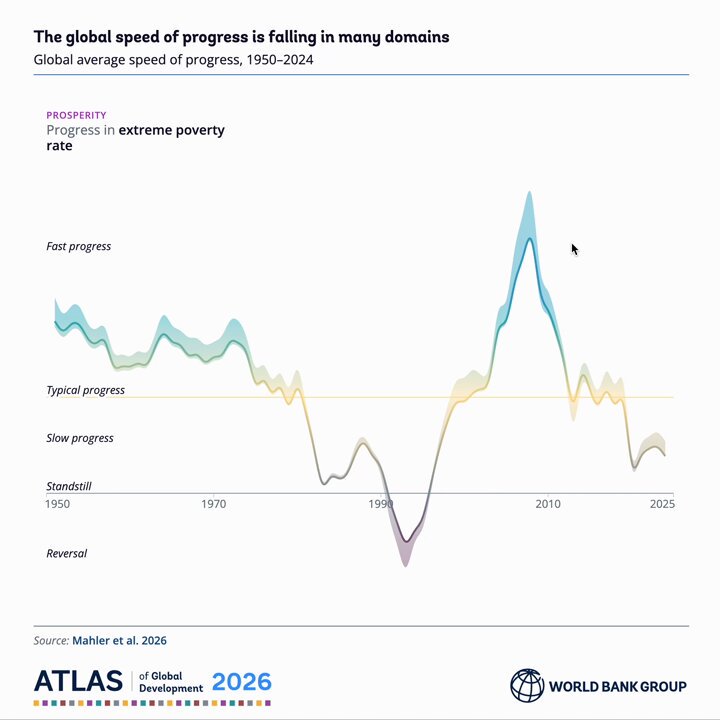
Progress hasn’t stopped—but it has slowed to its weakest pace in decades.
Our blog breaks down what the Atlas of Global Development 2026 reveals about where the world stands—and where it’s heading.
Read the key insights: wrld.bg/toe350Z9lUn #WBGAtlas
2
9
19
1,523
Jun 11
What would it take for a country to reach its development goals?
We explored how historical development paths can help countries set more achievable and ambitious targets, from child mortality to poverty reduction.
Take a look 👇 wrld.bg/j1AB50Z9WiE
1
4
7
468
Jun 11
Finding trade data is one challenge. Understanding what those data mean for policy is another.
A newly AI-powered tool now combines data discovery & methodological guidance in a single interface, helping users move more faster from numbers to insight.
➡️ wrld.bg/IzVj50Z9Wht
3
6
286
Jun 10
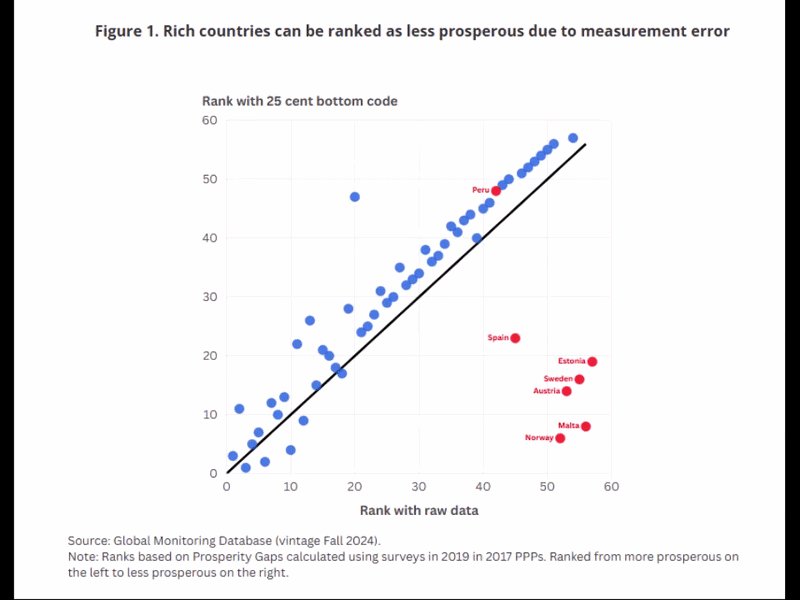
How do you handle impossibly low income data in global poverty estimates?
The World Bank's Poverty & Inequality Platform now applies bottom coding to improve accuracy—without changing overall results.
What it means for poverty and inequality measurement: wrld.bg/UBqK50Z9lZL
1
10
21
1,715
Jun 10
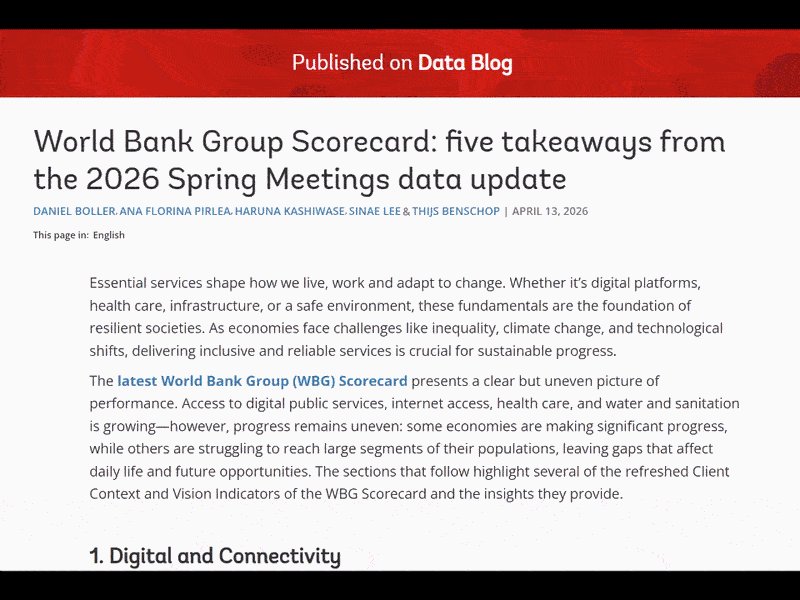
What do the latest development data show?
The @WorldBankGroup Scorecard update highlights progress in digital connectivity, health coverage, and water access—but major gaps remain across regions.
Five takeaways from the Spring Meetings data update: wrld.bg/fi5Q50Z9lVE
5
10
592
Jun 10
What if one of the major development risks today is not seeing the slowdown clearly enough?
Using the Atlas of Global Development 2026, @WorldBankGroup Chief Statistician @HaishanFu argues that data & visualization are becoming essential for policymaking.
wrld.bg/HrO250Z9lTf
1
10
628
Jun 10
Data is not just information—it is infrastructure for development.
The Global Data Facility helped unlock $1 billion in new World Bank investments in 2025 by strengthening data systems, expanding innovation, and supporting evidence-based policymaking. wrld.bg/uWFw50Z9lRe
3
2
294
Jun 10
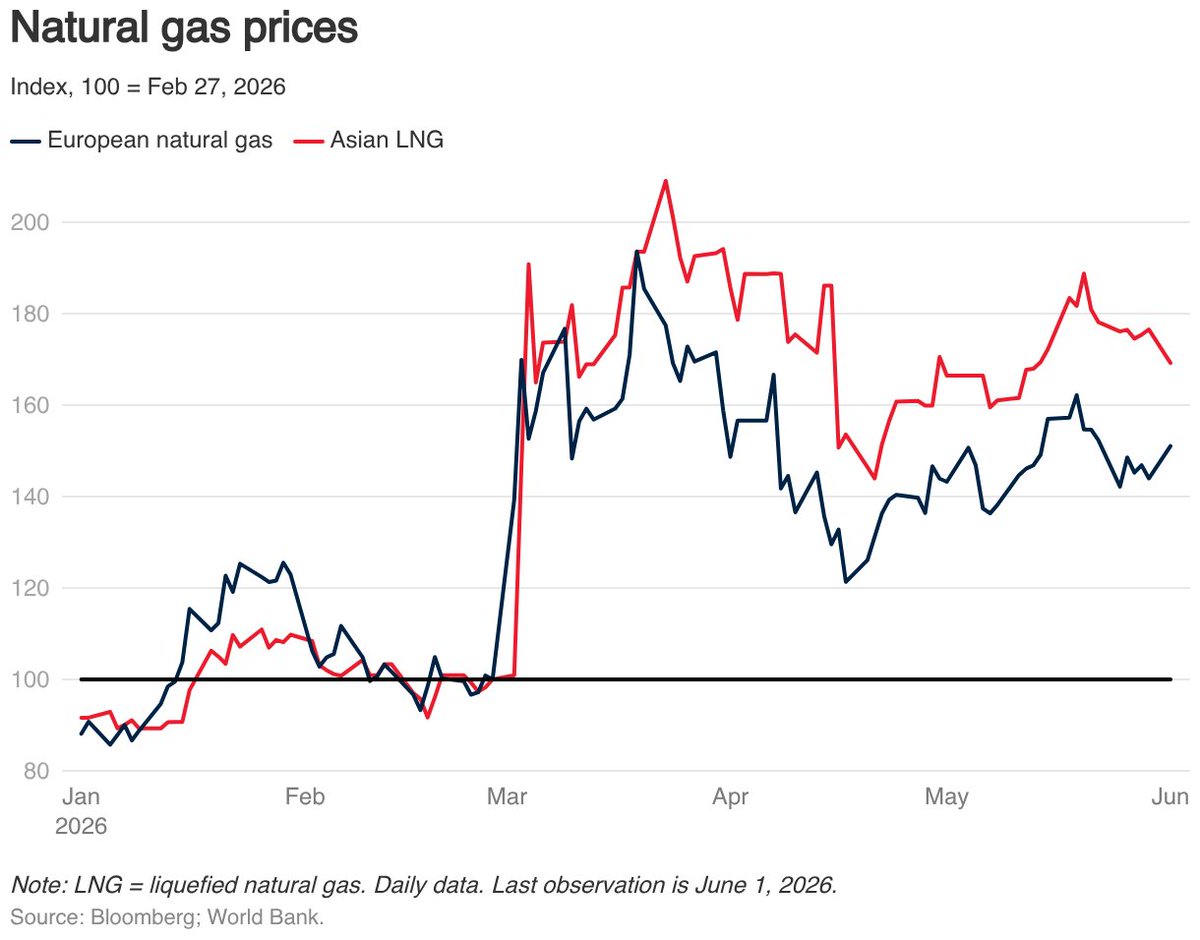
The closure of the Strait of Hormuz sent shockwaves through global natural gas markets.
In March, the World Bank natural gas price index rose 24%, while Asia’s LNG benchmark surged about 94% and Europe’s benchmark climbed 59%.
Read more: wrld.bg/Cufx50Z9lPZ
5
9
494
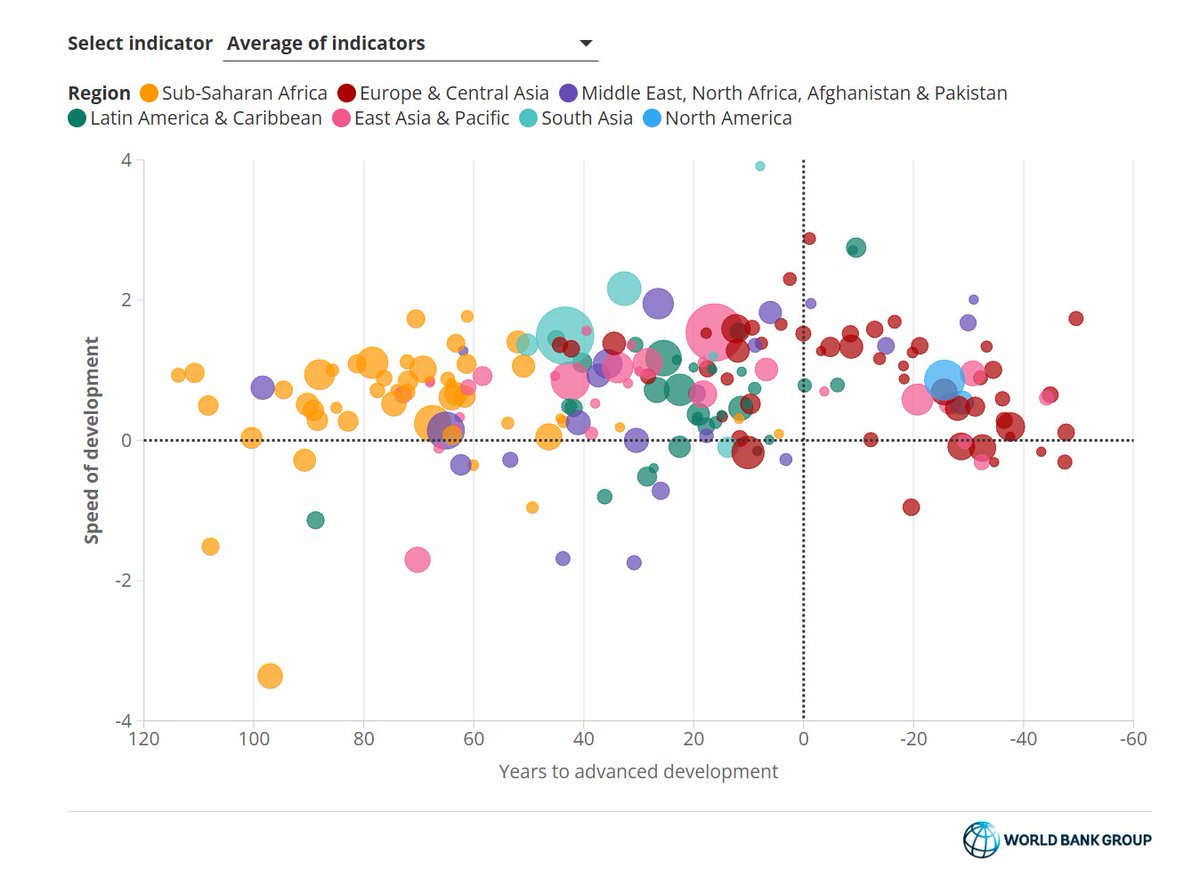
54 countries are currently more than 100 years away from reaching advanced development levels if they continue at today’s pace.
Our new #WBGAtlas blog explores what happens when development is measured in years instead of rankings or income levels: wrld.bg/fqJ650Z8NSC
1
13
29
1,484