
Frontend developer with a taste for design. Proud citizen of Vue land. Jamstack early player. Former backend coder. Curiosity 80 - 20 Serendipity
Joined February 2012
- Tweets 954
- Following 809
- Followers 129
- Likes 5,454
52 Photos and videos

Carles Muiños retweeted

May 30
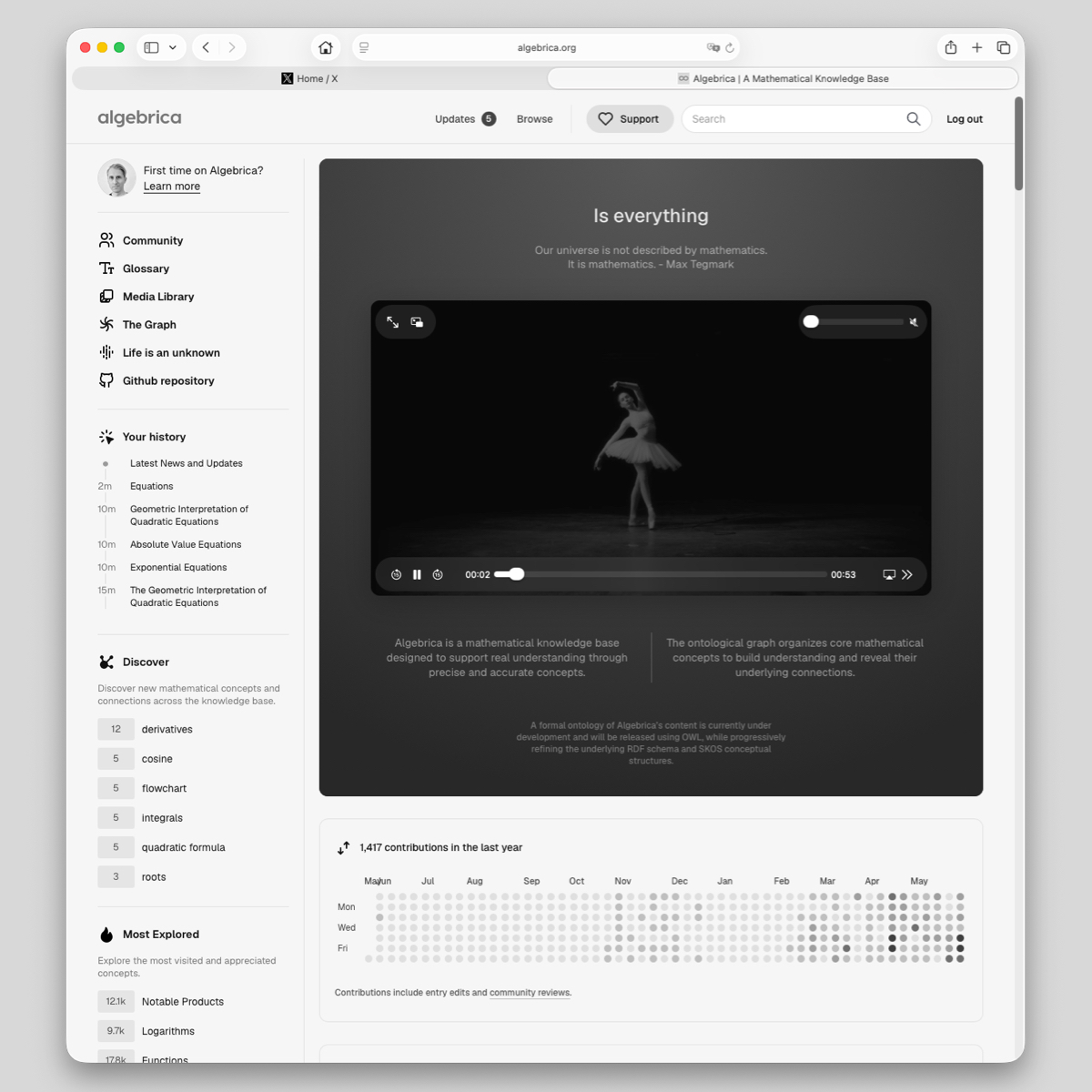
Over the last few months, Algebrica has reached a much wider audience than I ever expected. Some posts shared on X received millions of views, bringing many new readers to the project. The decision to make the content openly available on GitHub also led to valuable feedback and appreciation, something that means a great deal to me.
Over the past three years, I have written around 230 entries. In the context of the web this may not seem like a large number, but for a project built entirely by hand it represents a substantial amount of work. Every page is researched, written, revised, illustrated, and maintained individually. My goal has never been to publish content as quickly as possible, but to produce explanations that are accurate, complete, and supported by diagrams that are both useful and visually clear.
For this reason, before expanding the knowledge base further, I decided to undertake a comprehensive revision of the existing material. The objective is to improve consistency, correct mistakes, refine explanations, and raise the project's overall quality. At the moment, I am approximately halfway through this process.
If everything proceeds as planned, I expect to complete most of the revision work by the end of the summer and then return to focusing on new topics and new entries.
Thank you to everyone who has shared comments, suggestions, corrections, and words of encouragement. They help me understand that Algebrica provides value to its readers and can become an increasingly useful resource for students, teachers, and anyone interested in mathematics.
#Mathematics #Math #MathEducation #STEM #OpenSource #GitHub
3
10
42
1,562
Carles Muiños retweeted
May 23
"Algebrica" is a free, open, and distributed mathematical knowledge base.
Since its earliest conception, I never wanted to include advertising or transform it into a click-driven platform. The goal has always been to build a rigorous, accessible, and independent space for mathematical knowledge.
Over the last few months, the project has grown significantly, thanks in part to several posts shared here on X that unexpectedly reached millions of people worldwide.
To continue growing Algebrica and progressively transform it from a personal project into a global mathematical resource, I now need your help. For this reason, I decided to launch a series of periodic fundraising campaigns.
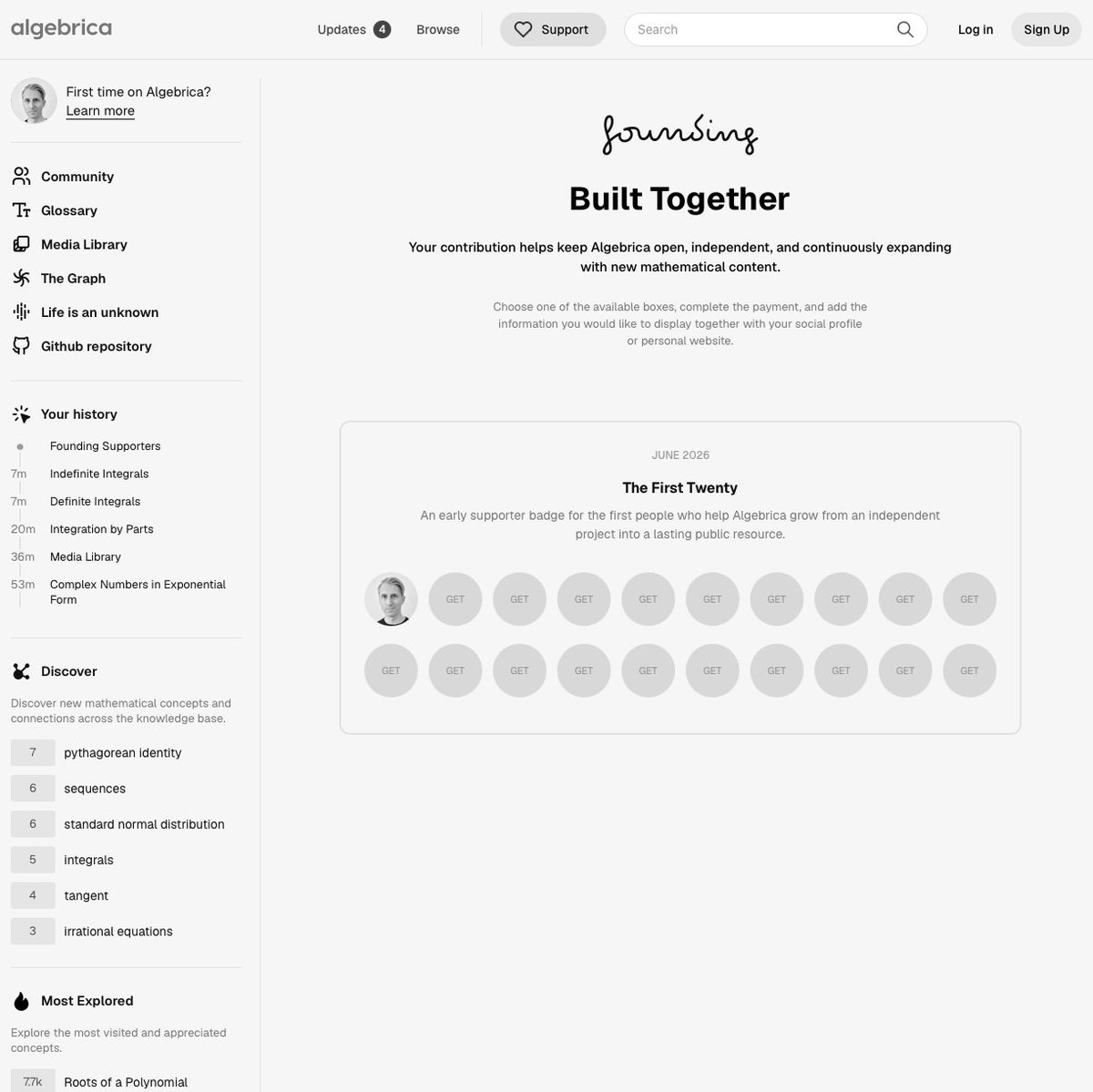
The first one is called "The First Twenty".
The idea is simple: find the first twenty people willing to support the long-term development of Algebrica and help build an independent, ad-free mathematical infrastructure for the web.
The first supporters will appear on the Founding Supporters page with their photo and personal profile or website:
algebrica.org/founding-suppo…
No aggressive fundraising, no paywalls, no exclusive content. Just people helping sustain open knowledge together.
Thank you to everyone who has supported, shared, read, or simply spent time on Algebrica so far. It genuinely means a lot.
2
12
82
2,966
Carles Muiños retweeted

Apr 24
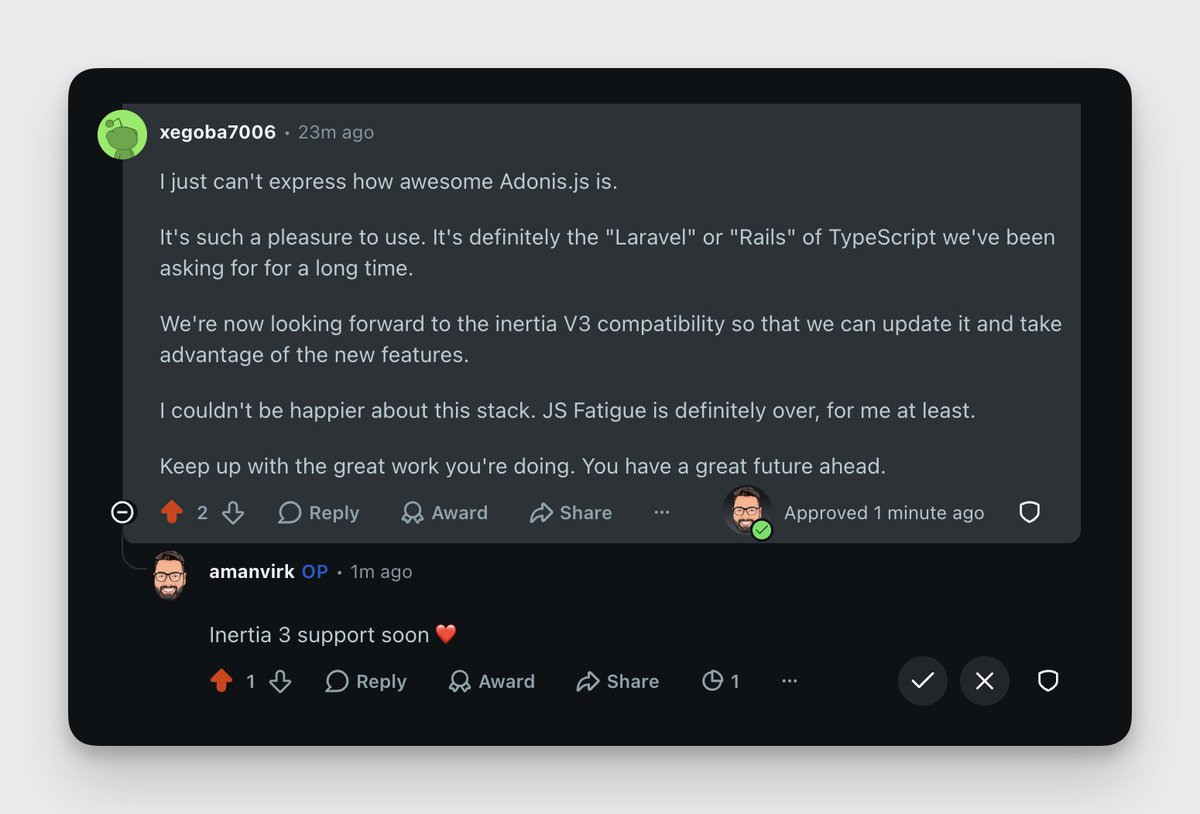
Can we tell every burnt-out JavaScript developer how much fun it is to use AdonisJS?
1
6
49
2,407
Carles Muiños retweeted
Apr 10
After the unexpected growth of the past few days, driven by the strong visibility Algebrica received on X, with over 220,000 views, I decided to follow one of the most common suggestions I received.
“Why not make the site collaborative?”
It is something I had already considered in the past but I have always been cautious. Allowing open, unsupervised contributions risks making the content less coherent, less consistent, and less aligned with the unified voice I am trying to build over time. At the same time, it is also true that more minds can lead to better outcomes. For this reason, I decided to move forward step by step.
Starting today, a new Community section is available, where users can suggest edits or additions directly within individual sections of the entries. This feature will not be enabled on all pages at once, but will be rolled out progressively. This approach preserves accuracy, avoids fragmentation, and allows focused work on a limited number of topics at a time, making the process more effective.
Contributions are intentionally constrained: short, targeted edits of up to 850 characters, and always subject to review before publication. The goal is simple: improve the content without losing its identity. Thank you to everyone who has shown interest in these past days and to those who will contribute to making Algebrica an even stronger, free, and open resource.
6
6
35
1,981

Feb 17
#n26 do not sleep on this...

El neobanc @Revolut busca traductor al català.
Pot ser només per al programari dels caixers que està instal·lant a Barcelona, però també per a la seva web i aplis mòbils.
En qualsevol cas, bona notícia.
/via @martibrav0 @maxkarpis
@digitalencatala
revolut.com/careers/position…
60
17 Dec 2025
This 👇🏻💯
25 Aug 2025

Vibe-coding is not the same as AI-Assisted engineering.
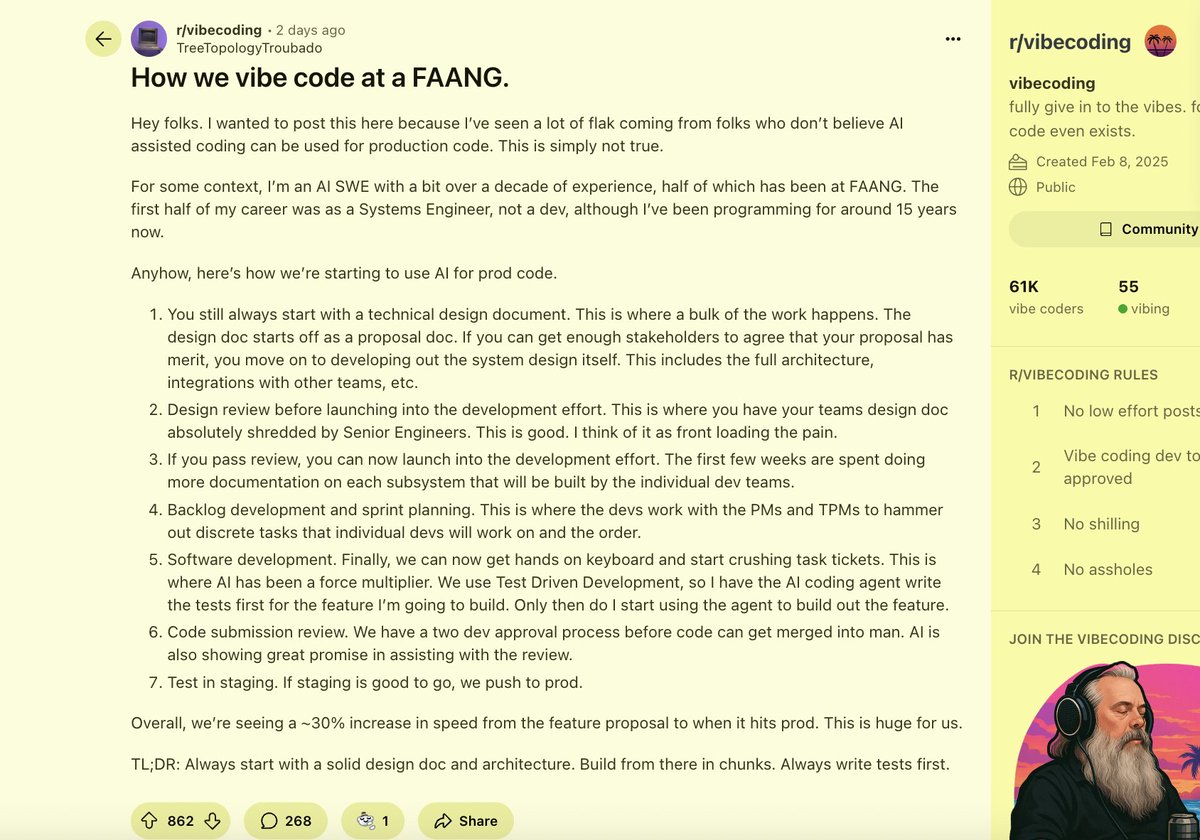
A recent Reddit post described how a FAANG team uses AI and it sparked an important conversation about semantics: "vibe coding" and professional "AI-assisted engineering". While the post was framed as an example of the former, the process it detailed - complete with technical design documents, stringent code reviews, and test-driven development - is a clear example of the latter imo.
This distinction is critical because conflating the two risks both devaluing the discipline of engineering and giving newcomers a dangerously incomplete picture of what it takes to build robust, production-ready software.
As a reminder: "vibe coding" is about fully giving in to the creative flow with an AI (high-level prompting), essentially forgetting the code exists. It involves accepting AI suggestions without deep review and focusing on rapid, iterative experimentation, making it ideal for prototypes, MVPs, learning, and what Karpathy calls "throwaway weekend projects." This approach is a powerful way for developers to build intuition and for beginners to flatten the steep learning curve of programming. It prioritizes speed and exploration over the correctness and maintainability required for professional applications.
There is a spectrum between vibe coding and doing it with a little more planning, spec-driven development, including enough context etc and what is AI-assisted engineering across the software development lifecycle.
In stark contrast to the post, the process described in the Reddit post is a methodical integration of AI into a mature software development lifecycle. This is "AI-assisted engineering," where AI acts as a powerful collaborator, not a replacement for engineering principles. In this model, developers use AI as a "force multiplier" to handle tasks like generating boilerplate code or writing initial test cases, but always within a structured framework.
Crucially, the big difference here is the human engineer remains firmly in control, responsible for the architecture, reviewing and understanding every line of AI-generated code, and ensuring the final product is secure, scalable, and maintainable. The 30% increase in development speed mentioned in the post is a result of augmenting a solid process, not abandoning it.
For engineers, labeling disciplined, AI-augmented workflows as "vibe coding" misrepresents the skill and rigor involved. For those new to the field, it creates the false and risky impression that one can simply prompt their way to a viable product without understanding the underlying code or engineering fundamentals.
If you're looking to do this right, start with a solid design, subject everything to rigorous human review, and treat AI as an incredibly powerful tool in your engineering toolkit - not as a magic wand that replaces the craft itself.
ALT how we vibe code at faang
11
14 Jun 2024
Looking forward to using the (hopefully future) @fleek integration
🧑🚀🤝⚡
13 Jun 2024

[2/3] The Astro Content Layer
29
28 Dec 2023
How cool would it be to see #Astro Studio leveraging #Fleek's distributed edge infrastructure. Two of my fav projects. A match made in heaven.
studio.astro.build
fleek.network
@astrodotbuild #AstroStudio
@fleek_net #FleekNetwork
2
287
Carles Muiños retweeted

25 Aug 2023
🧑🚀⭐ Calling all aspiring astronauts—Astro 3.0 touches down next week. We're giving away 10 of these official Astro hats to celebrate!
Retweet for your chance to win.
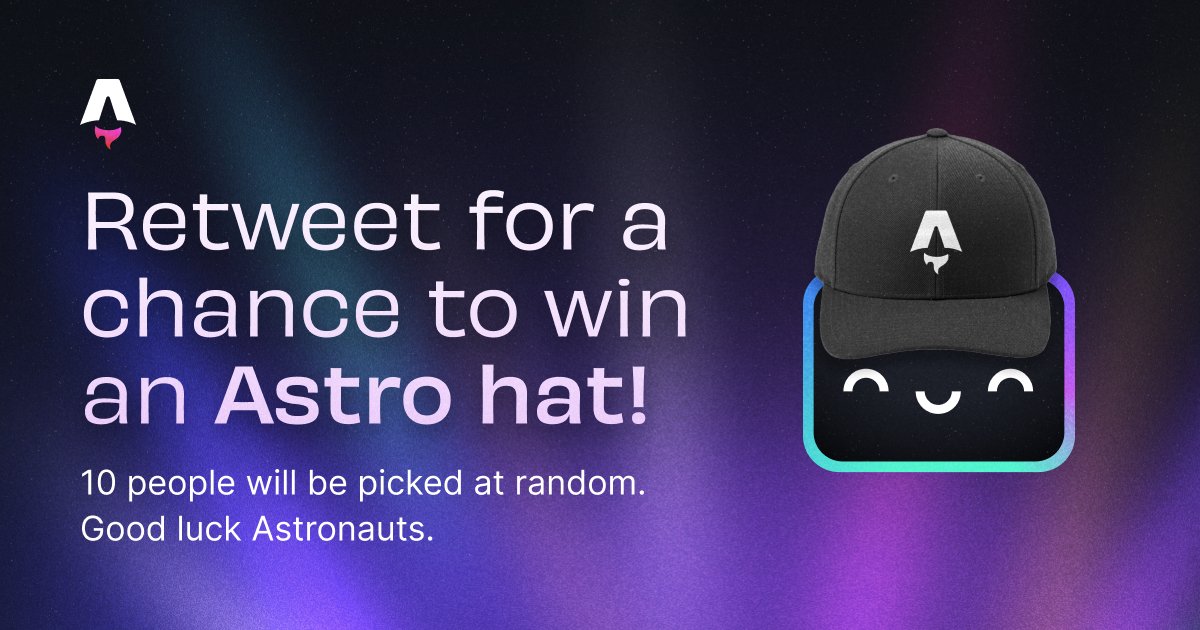
ALT Retweet for a chance to win an Astro hat! 10 people will be picked at random. Good luck Astronauts.
65
1,055
833
188,495
28 Oct 2022
27 Oct 2022
Say hello to Houston—our friendly virtual assistant!
👋✨ ● ◡ ●
Get started with `npm create astro@latest`

Carles Muiños retweeted

20 Oct 2021
#todayIwatched What is Dollar Cost Averaging in Crypto? The SMARTEST Way to Invest on #WhiteboardCrypto YT channel
#crypto #trading #dca #nice
youtu.be/c4NCNfbz8oU
1
Carles Muiños retweeted
11 Oct 2021
#todayIwatched The Cardano wallet Gero will be critical to adoption with @hashoshi4
#Web3 $ADA #GeroWallet #nice
youtu.be/hJXevTQxv9o
1
1
Carles Muiños retweeted
6 Oct 2021
#todayIread Ethereum-Based Blogging Platform Mirror Opens Up to Everyone by Andrew Hayward on @decryptmedia
#Web3 #Ethereum #Mirror #nice
decrypt.co/82703/ethereum-ba…
1
Carles Muiños retweeted

23 Sep 2021
I know it sounds silly... but the 100% best way that you can support our work on Astro is to throw us a star on GitHub and RT/❤️ this tweet.
👉 github.com/snowpackjs/astro
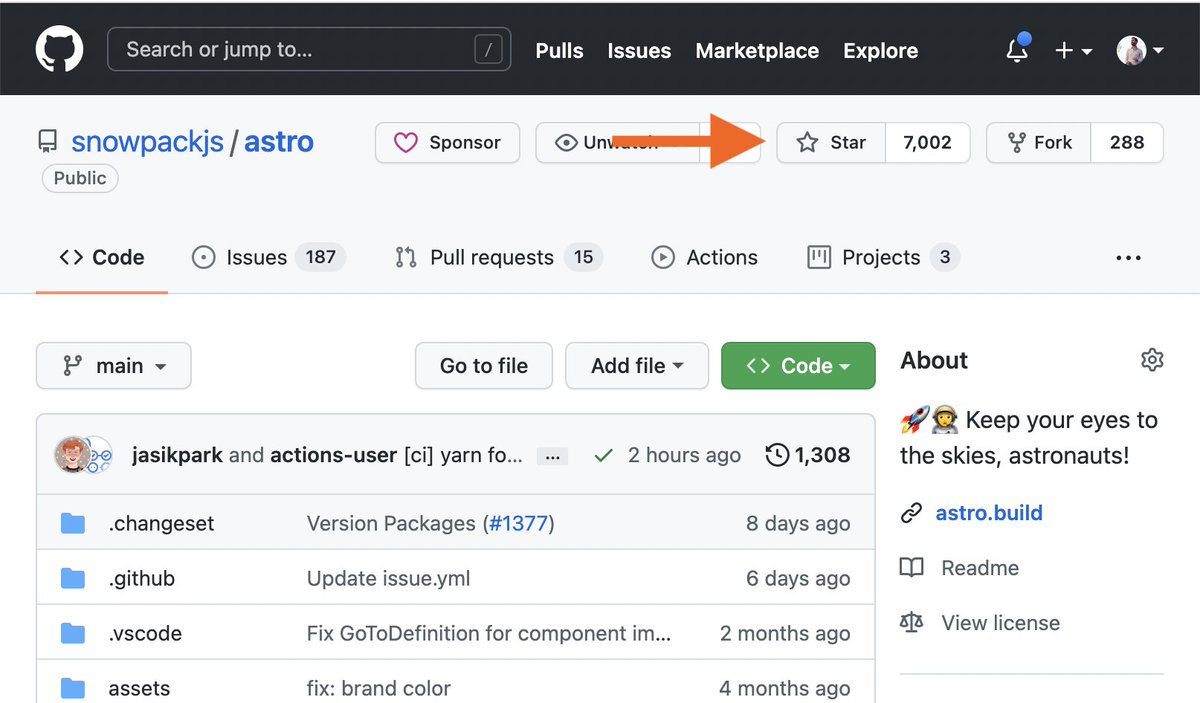
ALT a screenshot of our GitHub repo with a red arrow pointing to the "Star" button
14
83
255
20 Sep 2021
#todayIwatched Astro Demo Day - September Edition on @astrodotbuild YT channel
Awesome stuff coming from Astro!
#jamstack #astro #must
youtu.be/-ExcBJrXOd8

1
16 Sep 2021
#todayIread Is It a Bird? Is It a Plane? No! It’s User-Events! by @m4d_z from @divriots
#DesignSystems #Backlight #should
backlight.dev/blog/user-even…
2
Carles Muiños retweeted

15 Sep 2021
🤓 Technical details
🚀 We launch @backlight_dev on @ProductHunt today!
The landing of backlight.dev is made with Backlight itself 🌀 and statically generated with @astrodotbuild 🧑🚀
Thread 👇
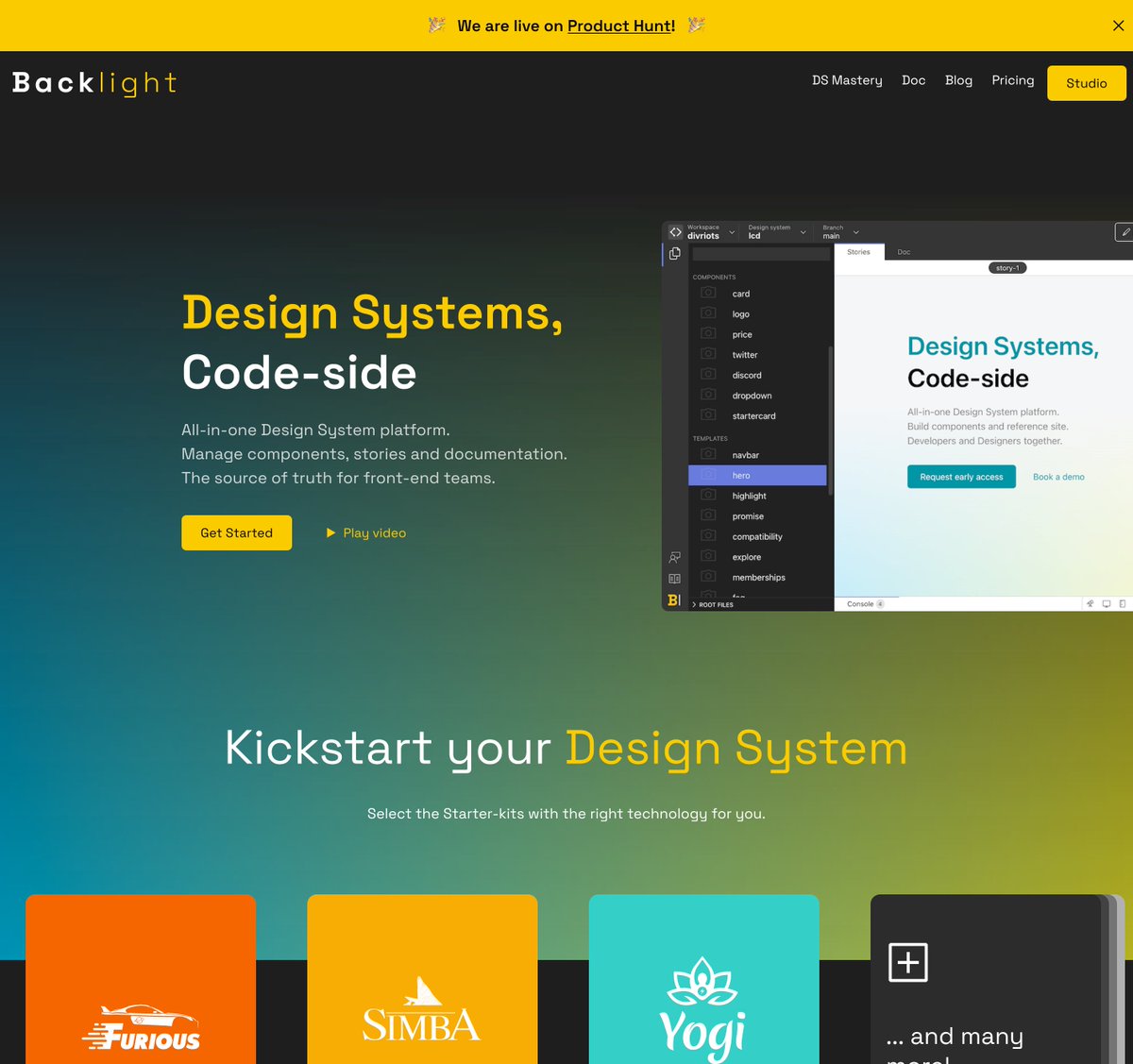
15 Sep 2021

🚀 Launch day! 🚀
Backlight is now live on #producthunt!
To mark the date we're offering 50% off Pro licenses, come join the party!
👉producthunt.com/posts/backli…
> Big thanks to the community 🙏 and to @tiboel for hunting us 👍
#designsystem
1
8
31
13 Sep 2021
#todayIread Astro Foresty CMS Revisited from @navillus_dev blog
#jamstack #astro #forestry #nice
navillus.dev/blog/astro-plus…
1