
Exploring how technology shapes human connection | Innovation & market intelligence | Sharing insights on tools that connect us
Joined August 2016
- Tweets 702
- Following 1,950
- Followers 165
- Likes 9,665
54 Photos and videos









20 Nov 2025
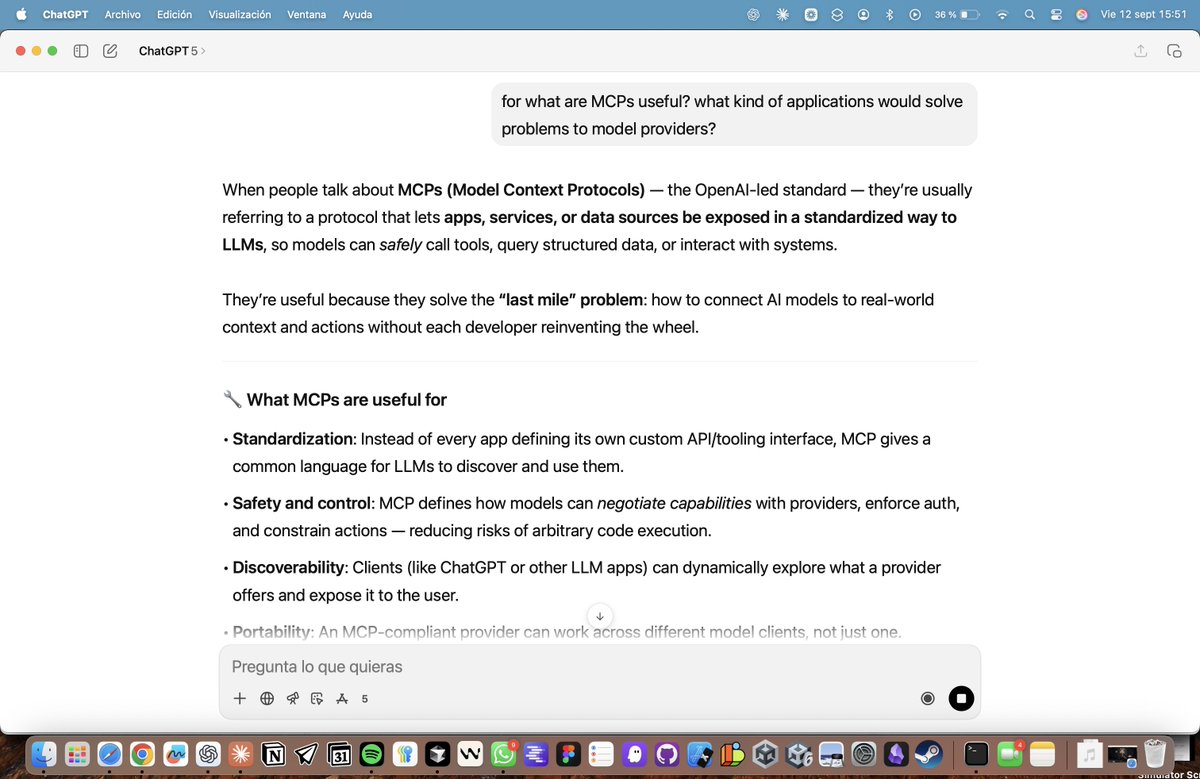
I keep jumping between ChatGPT, Gemini and Claude depending on the task…
but each one holds a different “version” of my context.
My AI memory ends up fragmented, like parallel timelines drifting apart.
Does this happen to you too?
1
69
28 Sep 2025
this is a true clever way of creating a fair and win-win situation for everyone. hope we live to see this happen, or at least test it!
26 Sep 2025

The Negotiation Revolution Nobody's Talking About
I keep seeing the same weird pattern in AI governance discussions...
Everyone's panicking about AGI centralizing power, building digital panopticons, requiring massive government control. But what if we're looking at this completely backwards?
What if AI's real superpower isn't control, but coordination?
Here's the thing that's been nagging at me: We've been stuck with the same dreary choice for centuries. Either suffer through market failures (your neighbour's leaf blower at 6am, anyone?) or submit to ham-fisted government rules.
Nobel laureate Ronald Coase spotted the problem decades ago. In theory, you and your leaf-blowing neighbour could just... negotiate. You pay him to stop, or he pays you to tolerate it. Everyone wins.
Except it never happens. Why?
Transaction costs. It's too bloody expensive to find each other, hash out a deal, and enforce it. So we default to blanket bans or resigned suffering.
But that's not the interesting part...
What if every person had a hyper-competent AI agent - not some corporate spy, but a genuine digital advocate that knew your preferences down to the penny? An agent that could negotiate with millions of other agents in milliseconds?
Suddenly, Coase's impossible dream becomes Tuesday afternoon.
Your agent knows you'll tolerate construction noise on weekdays but not during your baby's naptime. The construction company's agent instantly sees a higher "price" for those sacred hours. They either pay up or reschedule.
No council meetings. No angry letters. Just instant, precise coordination.
Think about how this changes... everything.
That hideous tower block developers want to build? Instead of a political bun fight, it becomes simple economics. The developer's agent must discover the actual price at which every single resident would accept it.
If residents truly value their neighbourhood's character, that price will be astronomical. The project only proceeds if the developer values the location more than residents value the status quo.
Either way, the true costs are revealed and paid.
"But wait," you might think, "couldn't wealthy people just buy their way through everything?"
Here's where it gets clever...
These agents don't just do individual deals. They can form instant coalitions. Picture 10,000 residents whose agents spot a factory's pollution proposal and instantly band together: "Our collective price is £50 million. Non-negotiable."
The poor suddenly have the coordination power of the rich.
Even better: wealthy areas can't just export their problems anymore. A billionaire closing a public beach must make a public, auditable offer to every single person affected. The cost of selfishness becomes explicit.
(Though knowing billionaires, some will still pay it. At least then we're compensated, eh?)
Now you might wonder: "What about the really big stuff? Climate change? Pandemics?"
Fair point. You can't negotiate with someone planning to release a bioweapon. That's where the state still matters - but in a leaner, focused way.
The state stops trying to micromanage parking disputes and focuses on what only it can do: preventing violence, enforcing contracts, stopping existential threats.
Think of it as the state becoming a bouncer instead of a busybody.
The framework even suggests how agents themselves stay aligned...
It's not one giant AI overlord (terrifying) but millions of personal advocates operating within nested constraints: law (outermost boundary), market competition (middle layer), and your preferences (innermost core).
Like Russian dolls, but for governance. Each layer keeps the others in check.
Here's what really gets me: This isn't just about efficiency. It's about revealing the true shape of human preferences that have been hidden by transaction costs for centuries.
What do people actually value? What trade-offs will they really make? We're about to find out.
Imagine the implications:
Sugar taxes? Your health insurer's agent offers immediate premium discounts if your agent limits junk food purchases
Airline peanuts? Agents negotiate flight-specific policies based on actual passenger needs
Urban planning? Real-time preference aggregation replaces five-year-old council votes
We're talking about governance that adapts as fast as human needs change. A permanent referendum on everything, but one that actually works.
The mad thing is, this starts small. Office thermostats. Shared parking. Roommate chores. As these systems prove themselves, they scale up. Same mechanism that solves your neighbour dispute could one day help manage river rights between nations.
Makes you wonder what else we're missing...
What other "impossible" coordination problems are actually just transaction cost problems in disguise? What other human potential has been locked away, waiting for the right key?
If you're working on AI alignment, maybe the question isn't "how do we control AGI?" but "how do we use AGI to finally coordinate properly?"
Different question. Different future.
Try this thought experiment: Next time you're annoyed by an externality - noise, pollution, whatever - ask yourself: "What would I actually accept to tolerate this?"
Then imagine a world where that question matters.
That's the world we could be building.
(And yes, I know this sounds like techno-optimism gone wild. But compared to the "let's centralize all AI in a government bunker" proposals floating around, I'll take distributed negotiation over centralised control any day. At least this way, we muddle through together.)
104
12 Sep 2025
Making some hallucination tests... Still a long way to avoid it! There should be some sort of confidence % to help users determine when to contrast info... @OpenAI @AnthropicAI @GeminiApp
1
58
12 Sep 2025
For example here I implemented that on the quick tool I made to check confidence of ego/essence levels when sending transcriptions from congress discussions.
vitaciv.eu
24
19 Aug 2025
I’ve tested a lot of image-to-3D tools, but the new @Polycam3D AI Capture takes it to another level 🤯
👉 Snap a photo → instantly get a 3D mesh.
Here’s my original image vs. the generated model
What excites me isn’t just the tech…
(And that’s where it gets interesting 👇)
1
1
174
19 Aug 2025
It’s the fact that this is becoming more seamless: easier to use and higher fidelity. That’s when interior designers, architects, and VR/game devs will really start adopting it. 👇
1
19
19 Aug 2025
From interior designers to VR/game developers to educators — snapping real objects → instant high fidelity 3D models means faster prototyping, growing library of realistic assets, and more immersive ways to teach & share ideas. Less friction, more creativity. 👇
41
6 Aug 2025
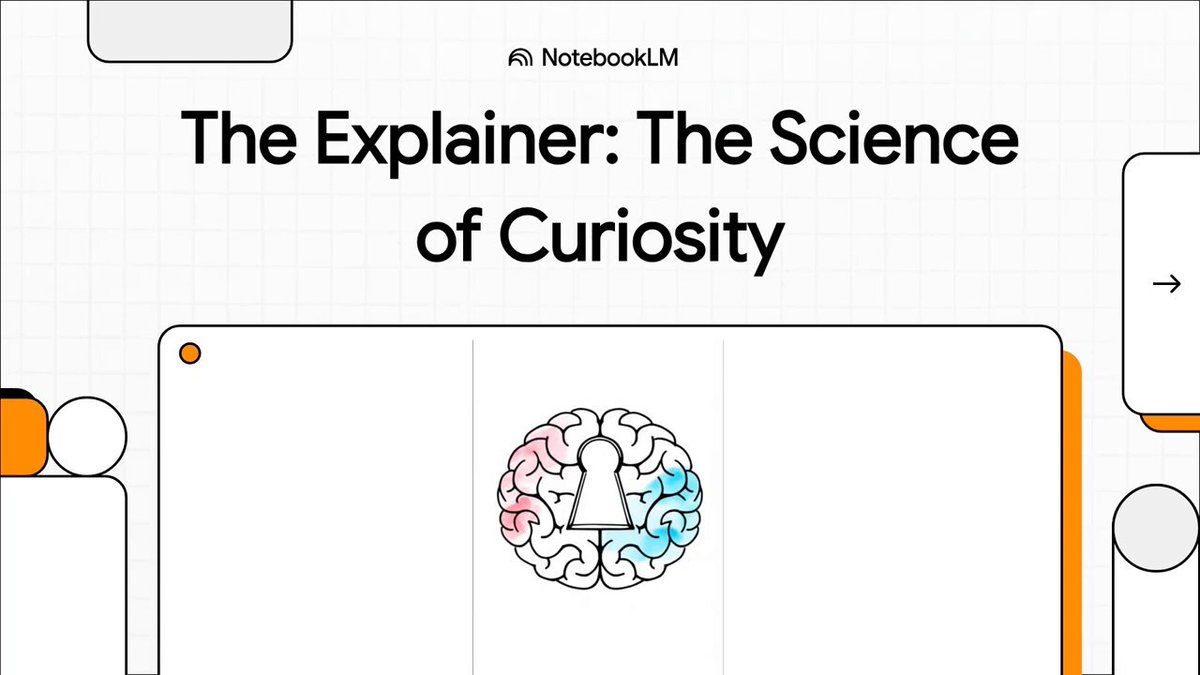
Starting a new series of videos exploring the ideas that shape how we think and build:
Curiosity, neuroscience, tech, AI, and the future.
Kicking off with this:
👉 Curiosity isn't a distraction. It's a brain-rewiring force.
Made with my own research and created the video with @NotebookLM
#Curiosity #Neuroscience #AI #Tech #Growth #FutureThinking
1
53
Alber retweeted

2 Aug 2025
Get a typeless.com invitation code now!
Just:
1. Like this post ❤️
2. Repost 🔁
3. Tag a friend below 🧑🤝🧑
4. Follow me ✅ (so I can DM you the invitation code)
744
807
1,167
77,422
Alber retweeted

16 Jul 2025
nobody is using this Midjourney trick... and it’s wild!
make endless parallax loops with AI DaVinci Resolve.
Full guide prompts in this thread 🧵👇
64
109
1,205
119,232
Alber retweeted

27 Jun 2025
Slack came out in 2014. At the time it wasn't obvious why you'd want to use it. We already had email for professional conversations; quick group messages felt too unrefined to use at work.
Coding agents are at a similar inflection point today. Most engineers are used to writing and reviewing every line of code themselves. The idea of working across multiple threads and delegating core parts of development to AI can sound scary at first.
But just as early Slack adopters learned a new way to work and became more productive, early users of coding agents have discovered the right usage patterns through trial & error and have learned how to do a lot more.
Over the last year and a half we’ve learned that coding agents are insanely powerful but come with a learning curve. So we sat down and wrote up everything we’ve learned from 250,000 merged PRs, from our own usage and our users’.
Today we’re sharing Agents 101, a platform-agnostic guide to using any coding agent. It’s a short doc on how to incorporate async agents into your flow and includes the actionable tips that we use to make Devin our top code contributor. We’ll be updating this regularly and would love to hear your thoughts.
devin.ai/agents101
14
54
591
124,813

We built an AI creative team that turns a sentence into a full video.
The waitlist is live.
Sign up now👇
26 Jun 2025

Today we’re introducing you to the future of video.
The world’s first Creative Operating System, we call it the HeyGen Video Agent.
Upload a doc, some footage, or even just a sentence.
It analyzes your input.
Finds the story.
Writes the script with taste.
Selects the shots or generates the footage.
Casts your actor.
And edits everything… Pacing. Motion. Captions.
An entire creative team built to tell your story.
Whether it’s ads, TikToks, short films, product demos, or any other idea you’re dreaming up.
Join the waitlist below. 👇
123
1,970
513
130,208
Alber retweeted

5 May 2025
just installed the first public Dream Park access point on Third St Promenade turning the entire street into a game, coming soon to Quest 3 with camera access! First of many AR theme parks we’ll be setting up all over the world!
107
215
1,902
168,504
10 Apr 2025
🧠 Turning vision into execution with frontier tech.
I help ideas become products and products become systems.
Let’s co-create something worth scaling. DM me.
1
197
3 Apr 2025
it’s out!!
3 Apr 2025

After 5 years in the making, I'm very happy to finally release Anime.js v4, my dream animation library:
🧩 New modular API
⚡️ Highly performant
🖱️ Scroll-linked animations
🫵 Draggables
↔️ Responsive
✨ Additive animations
🪽 WAAPI support
And so much more!
Link below👇
2
96
28 Mar 2025
I’m constantly testing frontier tech with my partners to explore how it can be applied in real-world markets.
If you’re interested in exploring or scaling direct-to-market applications, let’s connect.
DM me.
95
10 Feb 2025
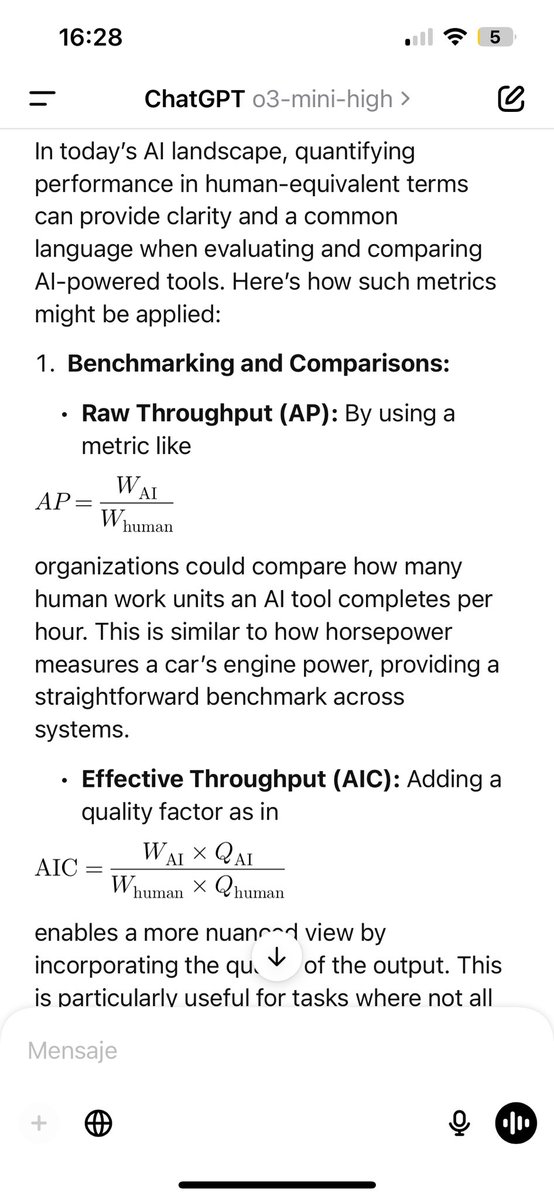
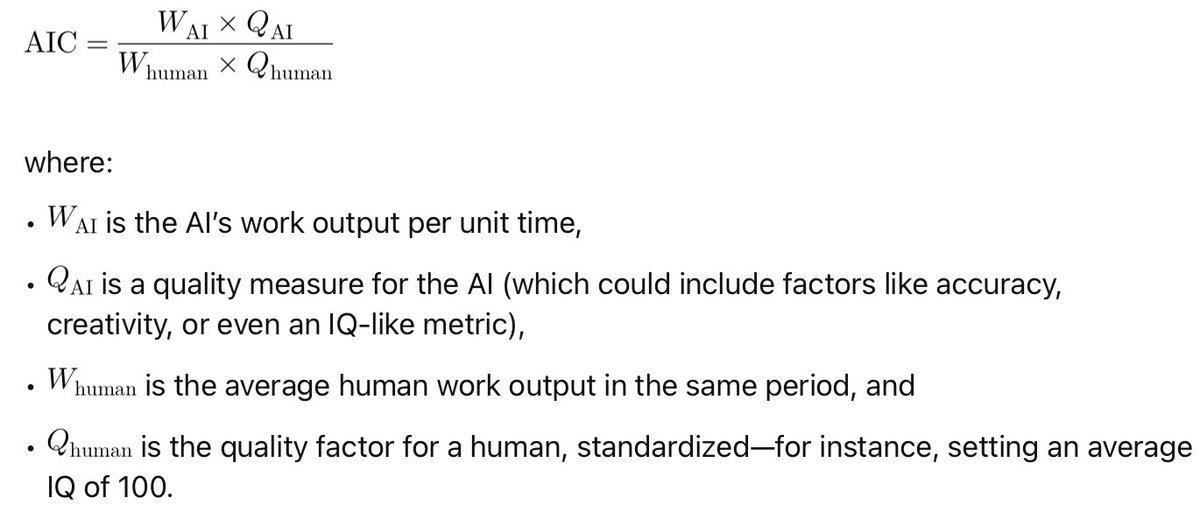
@sama In your opinion what will be the intelligence capacity of an AI agent relative to a human, considering both work output and cognitive IQ?
Maybe we could create a new unit and formula!call it Artificial Inteligence Capacity (AIC) 🤣
we could calculate it like this:
1
134
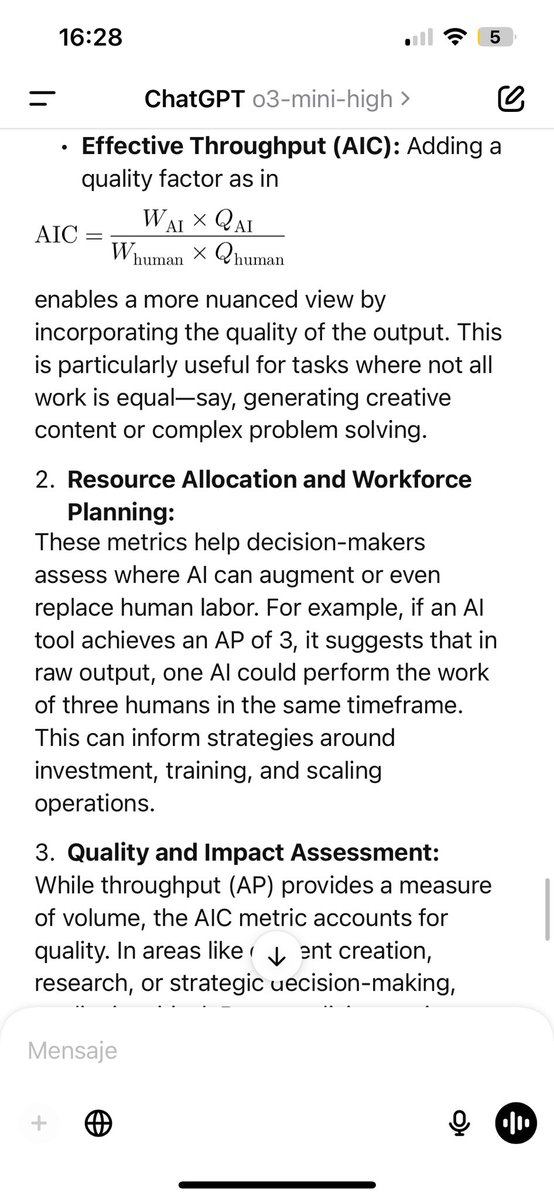
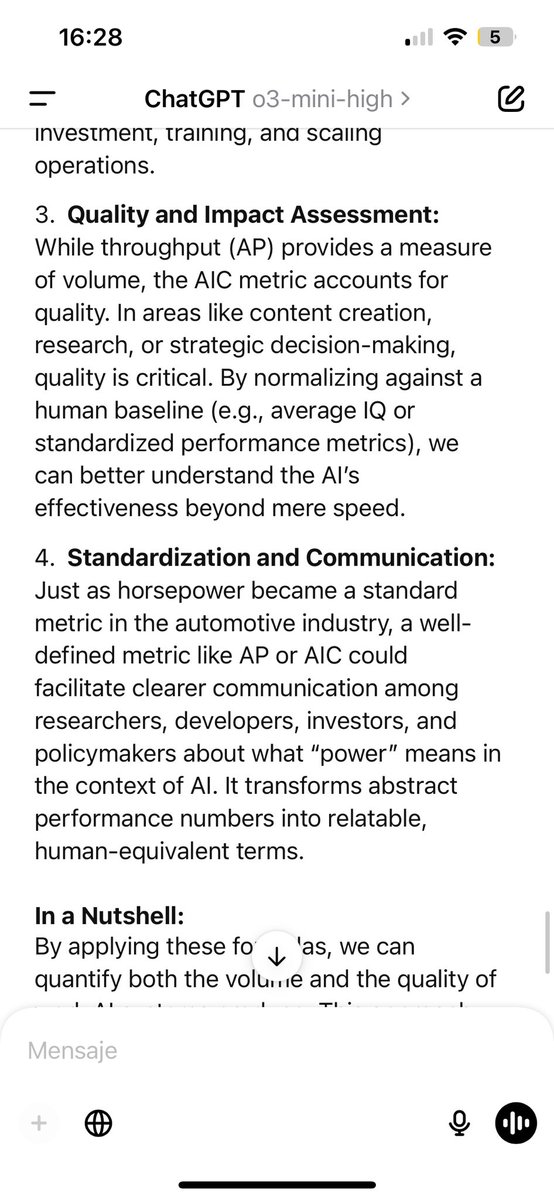
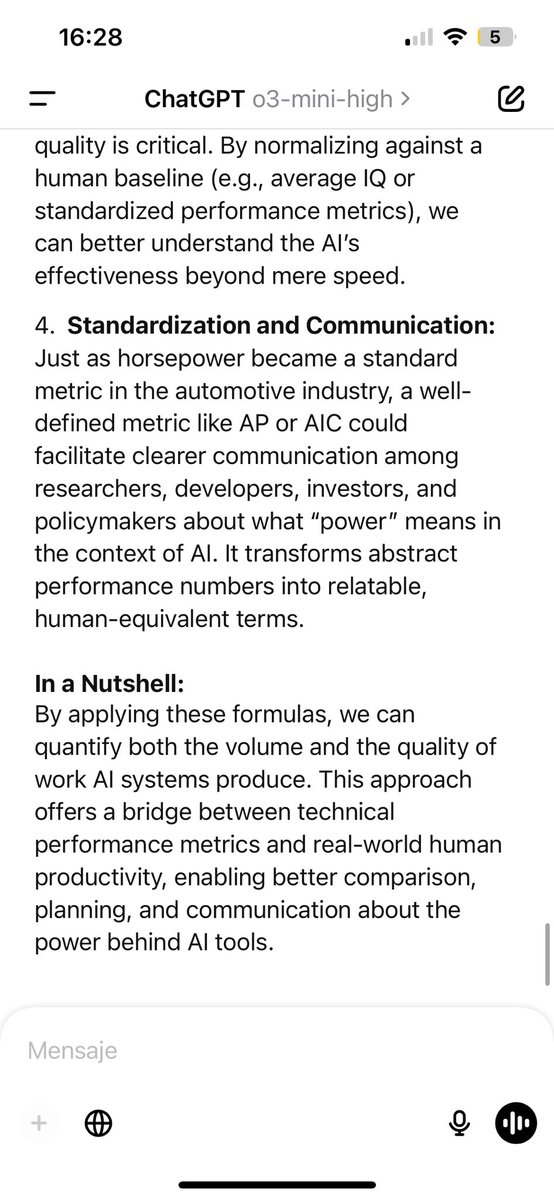
28 Mar 2025
so cool that there has been progress with this! openai and anthropic has finally shown metrics to see the impact on the market with “workforce” equivalent metrics 🥳🥳
26
8 Mar 2025
@lovable
the following things would be awesome to increase user experience and reduce credit anxiety.
1. batch editing: let me comment on every element i want to change and then send them all to edit at once
2. fix code button should not waste credits
(click to read the rest)
3. restoring should not waste credits
4. give me a list of external frameworks and packages that lets me add them quickly to my project, such as Framer motion, third party signing, stripe, etc… and if possible without wasting credits
2
2
78
12 Mar 2025
5. let me import current git projects or import other lovable projects into a new lovable project (it’s like creating a meta-lovable project that combines all of the functionalities of both projects)
62
11 Mar 2025
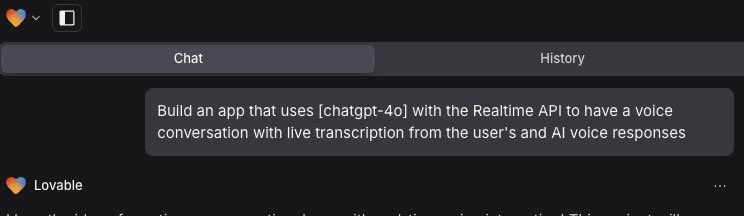
hi @lovable , i am currently trying to implement openAIs realtime API with the prompt in the image but is not working! (continuous loop of bugs to be fixed and can’t test it)
can you make lovable successfully integrate this?
thanks in advanced!
1
90
3 Mar 2025
today i got caught up in a 20 min call with Maya… this speaks loudly on how the experience is. The bar has been set!! great job @sesame team!!
57