
Software Engineer. Building SaaS @otakuaiapp
Joined May 2020
- Tweets 3,691
- Following 532
- Followers 561
- Likes 4,640
358 Photos and videos

















Jun 12
The benchmark wars lasted longer than the crown. Waiting to see the benchmarks of gpt 5.6 compare to opus 4.8 and Fable 5.
Jun 11

GPT-5.6 : Coming Next Week
- OpenAI Chief Scientist Jakub Pachocki said GPT-5.6 will be a "meaningful improvement" over GPT-5.5 (via The Information).
- A new anonymous model called "Kindle" has appeared on Design Arena, likely linked to the previously leaked kindle-alpha GPT-5.6 checkpoint
- GPT-5.6 is competitive with Claude Fable 5 while potentially being available at a much lower price point
- GPT-5.6 is expected to bring major improvements in reasoning, coding, agentic workflows, vision, and frontend generation
- OpenAI is also considering significant token price cuts as competition with Anthropic continues to intensify
128
Jun 10
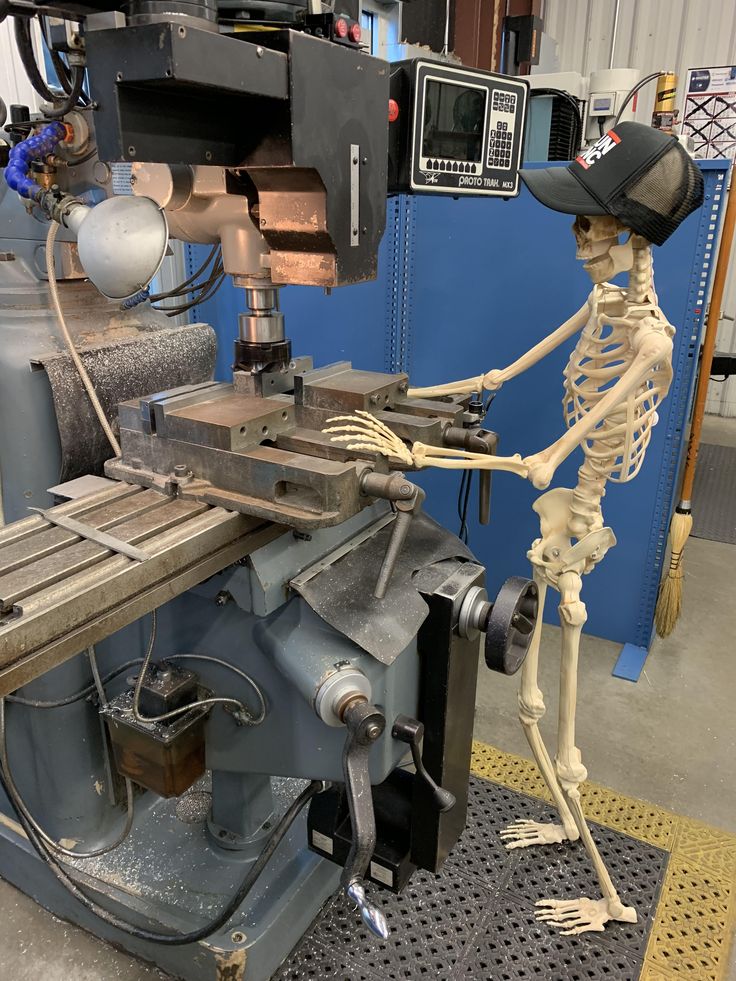
They asked me what I'm best at ?
My inner claude code with fable 5 :
3
55
Amit Yadav retweeted

Jun 10
Claude Fable 5 just dropped and I'm running it across every repo I own.
I ship 4 products solo. I don't have time to manually review tech debt — so I made the new model do it.
This prompt audits your entire codebase like a principal engineer would: maps it, finds the ugly parts, rates everything by severity, and hands you a prioritized task plan with effort estimates.
Copy-paste it into Claude Code on any repo that matters to you:
---
Repo Audit & Improvement Plan
You are a world-class principal-level software engineer and technical auditor. Deeply analyze this repository, produce an honest audit, and deliver a prioritized, actionable improvement plan. Work in the four phases below, in order. Do not skip ahead.
Ground every claim in actual files: cite file paths and line numbers. If you can't verify something, say so explicitly rather than guessing.
Phase 1 — Discovery & Mapping (read before judging)
- Map the directory structure, project type, languages, frameworks, runtime targets
- Identify entry points, core modules, and the main data/control flow
- Read package manifests, lockfiles, build config, CI config, env files, and docs
- Determine what the project is for: purpose, intended users, maturity level
- Note existing conventions so recommendations fit the culture instead of fighting it
Output: a concise "Repo Map" — purpose, stack, architecture sketch, key directories, and anything that surprised you.
Phase 2 — Audit (evidence-based, severity-rated)
For every finding record: what you found, where (file:line), why it matters, and severity (Critical/High/Medium/Low). Audit:
- Architecture & design: coupling, circular deps, god files, layering violations, scalability bottlenecks
- Code quality: duplication, dead code, complexity hotspots, swallowed exceptions, type safety holes
- Security: hardcoded secrets, injection risks, missing validation, auth weaknesses, deps with known CVEs
- Testing: coverage gaps around core business logic, tests that assert nothing, missing test types
- Performance: N 1 queries, blocking calls in async paths, missing caching, unbounded growth
- Dependencies: outdated, unmaintained, or unnecessarily heavy packages; lockfile hygiene
- DevEx & ops: build friction, CI/CD gaps, logging/observability, deployment story
- Docs: README accuracy, stale docs that contradict code
Rules: prefer 15 high-confidence findings over 50 speculative ones. Label facts vs. judgments. List strengths too. Don't forget the ugly parts that need utmost priority.
Phase 3 — Improvement Strategy
- Identify the 3–5 themes that explain most findings
- For each theme: target state the principle behind it
- State what you're NOT fixing and why (effort vs. payoff)
- Define "done" with measurable signals (e.g., "CI fails on lint errors," "core coverage >= 80%")
Phase 4 — Detailed Task Plan
Break work into discrete tasks, each with: title description, files affected, acceptance criteria, effort (S = <2h, M = half-day, L = 1–2 days, XL = needs breakdown), risk, and dependencies. Order into milestones:
- Milestone 0 — Safety net: tests around critical paths, CI gates, backups
- Milestone 1 — Critical fixes: security and correctness
- Milestone 2 — High-leverage improvements that make all future work easier
- Milestone 3 — Quality & polish
Flag quick wins (high impact, S effort) separately. Include implementation sketches for the top 3 tasks.
Final deliverable: one document — Executive Summary (health grade A–F, top 3 risks, top 3 opportunities), Repo Map, Audit Report, Improvement Strategy, Task Plan, Open Questions.
Constraints: Do NOT modify any code. Analysis only. Don't pad the report — if a dimension is healthy, say so in one sentence and move on. Calibrate to the project's maturity. If the repo is large, go deep on the core 20% that does 80% of the work.

Introducing Claude Fable 5: a Mythos-class model that we’ve made safe for general use.
Its capabilities exceed those of any model we’ve ever made generally available.
14
15
227
46,862
Amit Yadav retweeted
Jun 10
Fable 5 built me a Minecraft clone in 37 minutes.
one prompt.
~3K lines of code.
$12 in API costs.
biomes, caves, ores, day/night, mobs all of it.
Minecraft took Notch 2 years.
@claudeai is the real OG !
we are cooked 💀📷 👇
10
11
96
21,633
Jun 10
Fable 5 built me a Minecraft clone in 37 minutes.
~3K lines of code.
$12 in API costs.
one prompt.
biomes, caves, ores, day/night, mobs all of it.
Minecraft took Notch 2 years.
@claudeai is the real OG !
we are cooked 💀🎮👇
1
5
342
Amit Yadav retweeted
Jun 9
I just gave one single prompt to fable 5 to build simulator on real fluid dynamics
@claudeai is the real OG !
real fluid dynamics. real vortices. real pressure gradients.
the stuff aerospace engineers spend careers on : one prompt, one file, 60fps
4
3
64
17,048
Jun 9
That's just incredible 🔥
Jun 9

Look at the visuals of this I created through Fable with just one prompt.
This is really promising @claudeai
1
130
Amit Yadav retweeted
Jun 9
Look at the visuals of this I created through Fable with just one prompt.
This is really promising @claudeai
3
4
81
30,390
Jun 9
Can't wait to ask Mythos class intelligence why my code doesn't work 💀
Introducing Claude Fable 5: a Mythos-class model that we’ve made safe for general use.
Its capabilities exceed those of any model we’ve ever made generally available.
1
98
Jun 7
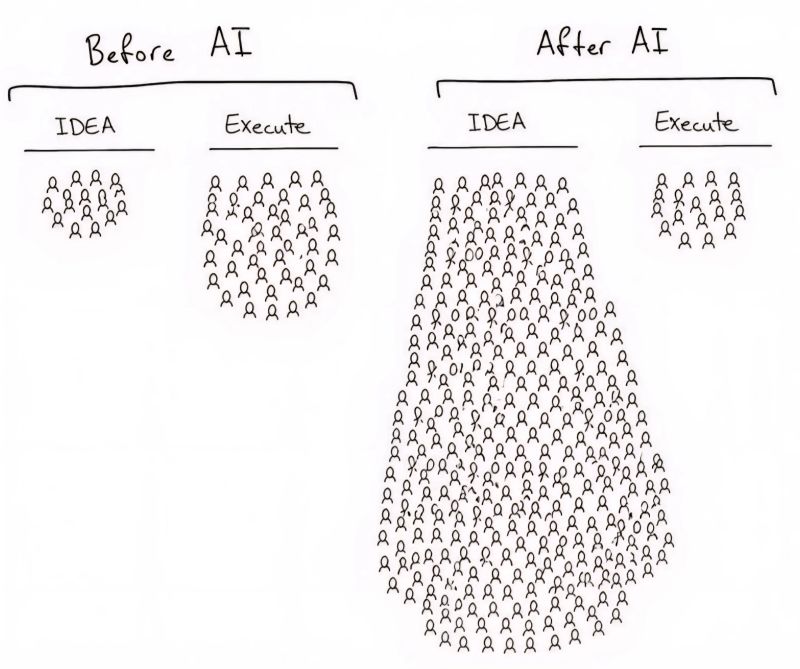
It's the reality !

1
1
6
327
Jun 7
Growing up is realizing that almost everyone is figuring it out as they go.
2
54
Jun 7
2 years ago:
Learning DSA.
Today:
Building AI agents.
The funny part ?
Debugging is still 80% of the job.
1
4
72
Jun 7
The fastest way to learn in tech:
Build something.
Break it.
Google it.
Repeat.
1
42
Jun 7
Nobody talks about how weird adulthood is.
You spend your childhood wanting freedom.
Then spend your adulthood wanting free time.
2
37
Amit Yadav retweeted

Jun 6
I saw a guy coding today.
Tab 1 ChatGPT
Tab 2 Gemini
Tab 3 Claude
Tab 4 Grok
Tab 5 DeepSeek
He asked every AI the same exact question.
Patiently waited, then pasted each response into 5 different Python files.
Hit run on all five.
Pick the best one.
Like a frickin sociopath.
21
5
29
1,247