
Making hard things easy
Joined June 2008
- Tweets 8,530
- Following 326
- Followers 549
- Likes 5,920
158 Photos and videos




Yevhen Bobrov retweeted

Jun 16
I even have a problem with the “unit test coverage” part, because it presumes that the correct way to test software is to generate enormous amounts of code (in this case, unverified code) to cover the massive combinatoric space of execution of any nontrivial software.
This philosophy destroys development velocity, solidifies APIs long before they’re ready, destroys testing performance (which contributes to the worse development velocity), and destroys the value-per-unit-of-code ratio within a codebase.
There are vastly more efficient ways to test software comprehensively, and it starts by treating the testing problem as no different from other software problems. If you need to generate new code to cover many new cases, you’ve failed. You want your testing code to scale combinatorially (in the same way you want regular code to do this, thus obtaining a large number of features with very little code).
17
24
439
27,055
Yevhen Bobrov retweeted

Jun 15
This so very much. Unless the code is truly intended to be short lived (throwaway) we're just not there yet.
4
5
105
4,383
Yevhen Bobrov retweeted

16h
I care what the code looks like because I care about the portfolio of options embedded in the code. If I assume that the first thing I ship will deliver all of the value, then sure nobody cares about the internals. If I'm going to learn & expand, though...
6
20
1,260

23m
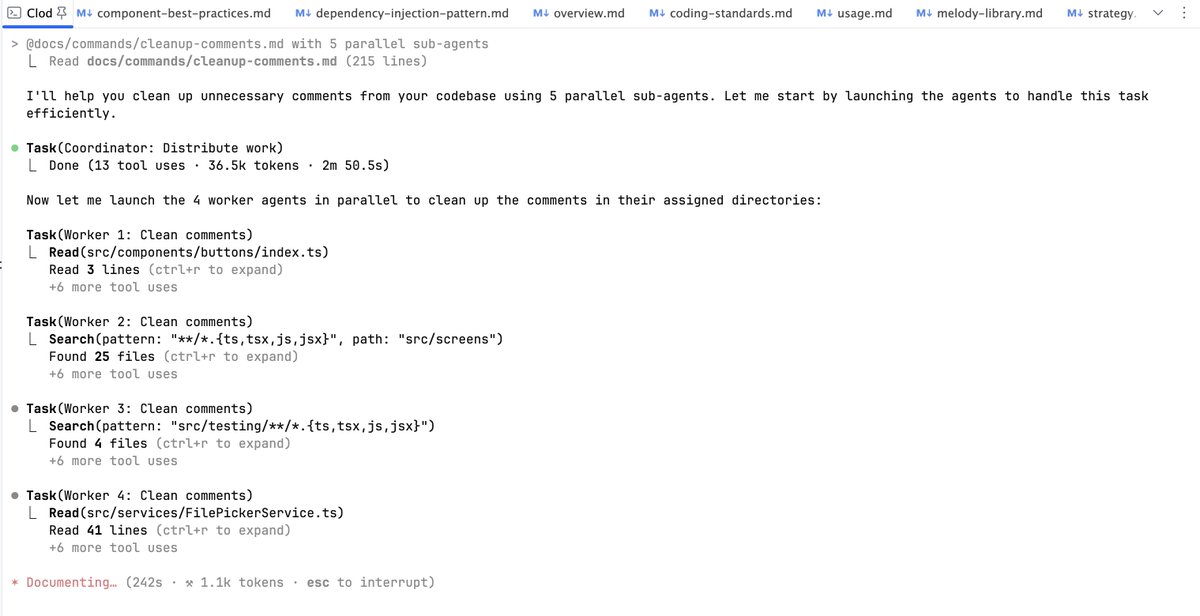
Many like this. I’m getting frustrated by senior/leader people singing this mantra. You just guys need to try work with a vibe coded slop to realize how stupid “customers don’t care about the code” is. Who needs half-baked buggy features? It was always about quality, folks.
Jun 15

The problem with the "if it works who cares what the code looks like" mindset for agentic work is that it assumes the agent has a perfect understanding of "works." Realistically, things are underspecified, agents make bad assumptions, etc.
To be fair, agents are pretty good at unit test coverage. They're pretty bad at designing human experiences (API, CLI flags, etc.), especially cohesive ones for future roadmap plans they may not have visibility into (unless your backlog is perfect and vision fully laid out, which I doubt). They're bad at knowing where performance matters and what type (CPU vs memory tradeoffs). They're bad at where compatibility matters and where it doesn't (and tend to err on the side of preserving it without further guidance). Etc.
Unless you have this ALL specified, you can't possibly claim "it works" without taking a look and thinking about it.
1
29m
This thread is so good! Exactly my daily routine - deleting BS created by AI.

I'm an old programmer (by programmer standards). I use agents daily, extensively. Here's a view from the other side of "wooooow look how many lines it wrote!", taken from my work today.
5
35m
6 months is too optimistic. My initially vibe coded plugin turned into trash in 1 week. I’ve wasted at least 1.5 month just trying to bring the sanity back with manual interventions and three architecture redesigns.
4h

there's a new word i'm hearing a lot in the most frontier-pushingest coding-agent builders:
_program design_
for even the best agentic coders trying to maintain code quality, we've all seen it
- you come up with something to build
- you research the codebase, riff with the agent, align on what the end state looks like
- you (or the agent) breaks it down into tasks for individual agents / context windows
- you rip the implementation
- the code works or is close to working - and it follows your spec to the letter
but the code itself is still trash
- poorly factored methods
- leaky abstractions
- tramp data
- overloaded interfaces
- try catch, useEffect, global variables everywhere
I thought models would catch up, or that this wouldn't matter - that if we stayed in spec-land, understood the high-level architecture, and tokenmaxxed hard enough, we would be able to skip code review and just stay shipping
doesn't seem to be working out that way
I have seen agent-owned codebases spin up out of nothing...
...and I have seen them collapse into rubble within 6 months
now there's something to be said about "skate where the puck is going"...
...and I can't tell you what tomorrows models will be capable of
but I *can* tell you that *today*, models are mid-to-bad at program design
you can solve some of this with memory / agents.md, but the scope of program design is massive.
- entire companies have been built to help you implement it
- books, classes, and professions have spun up around it
are you building something to last? Or are you slinging more slop on the pile?
anyways, thats the post, stay tuned for a fun announce tomorrow y'all 🙂
1
34
Yevhen Bobrov retweeted
Jun 14
Brother if I get one more "root cause confirmed" comment I am going to lose my shit.
20
7
277
19,713
Yevhen Bobrov retweeted

Jun 14
I'm doing one quick targeted pass so I can give you the exact answer rather than hand-waving
66
68
1,515
91,228
Yevhen Bobrov retweeted

Jun 12
people who dont read the code are not serious people
and it takes a serious person to ship production software
33
94
943
117,526
Yevhen Bobrov retweeted
Jun 13
When I struggle to structure my thoughts about what's happening I turn to writing. Today about the recent US Anthropic ban news, what it says about power and dependency, and what it should mean for Europeans and citizens of the world. It's a long one. lucumr.pocoo.org/2026/6/13/a…
52
136
845
125,858

While Fable is an amazing model, don't get too excited: it is great, but still has the usual failure models of the other good LLMs we saw in the past, including GPT 5.5. If you look at Anthropic, Opus -> Fable was a huge jump. If you look at the field, GPT 5.5 -> Fable is incremental.
49
34
909
109,947
Jun 10
It's just a next token prediction ....

i think the models are great and do amazing things day to day
and then i go to use them as a brainstorm partner for creative work and they are just horrible, no amount of steering gets them to be even slightly better
makes you think about what these things actually are
88
Jun 10
Nice revelation from AWS 😅
Jun 9

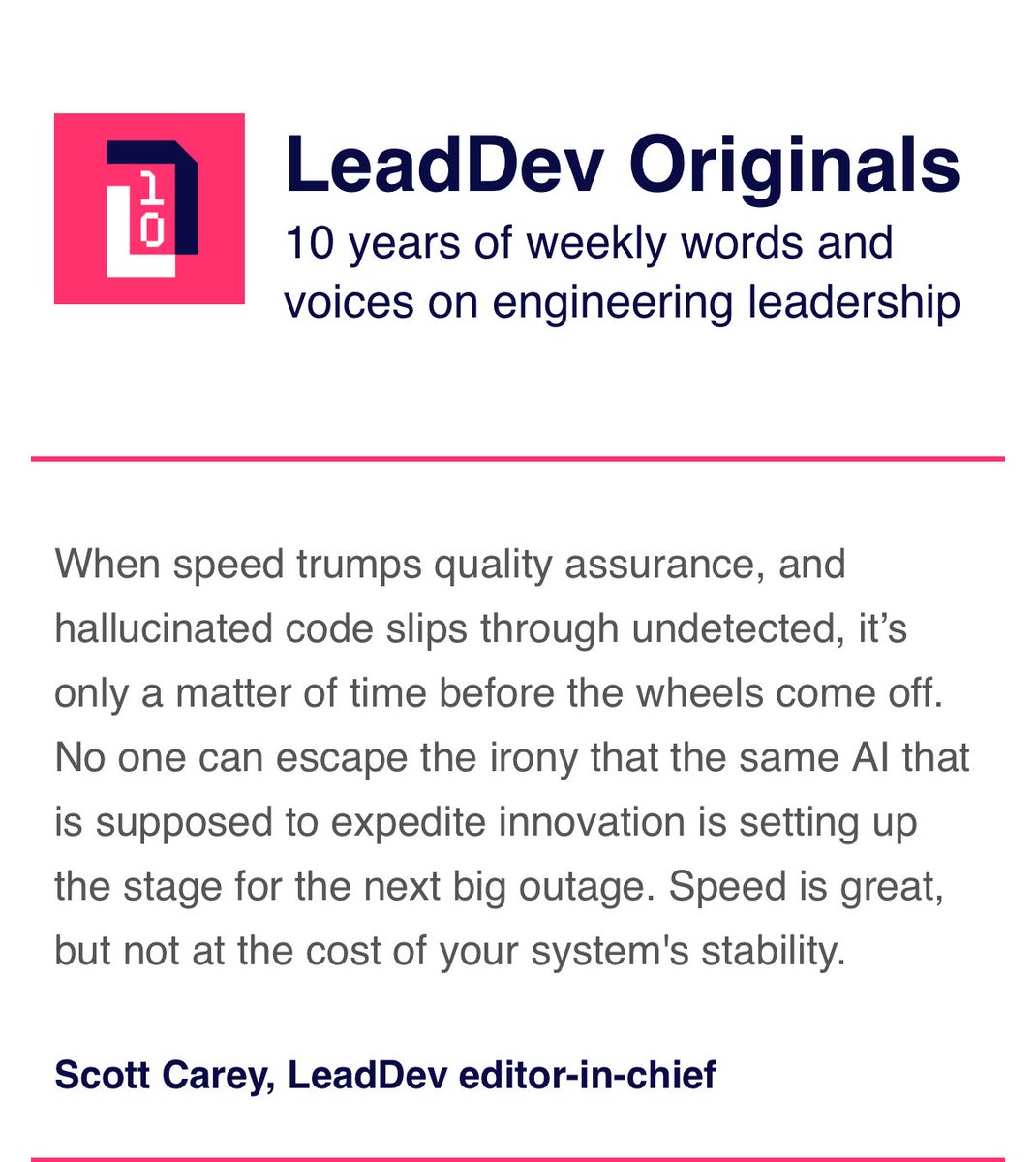
More AI-generated code doesn't make your team faster. It might actually slow you down.
1
98
Yevhen Bobrov retweeted

Jun 9
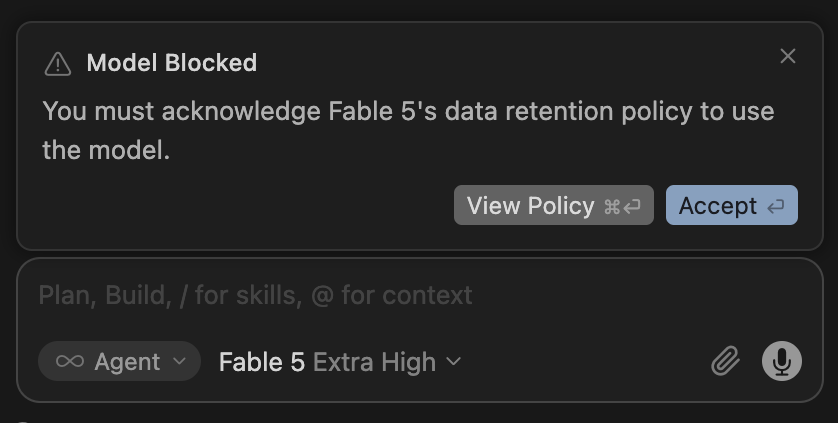
yup. non-starter for enterprise customers

apparently there's no zero data retention for Claude Fable 5
23
32
2,292
254,340
Jun 10
Hey, #dotnet people! I want to share with you the project I built last year.
SharpAssert provides rich assertion diagnostics with zero syntax ceremony, unlike rivals like FluentAssertions or built-in NUnit assertions. And it’s free and will stay free forever (unlike infamous FluentAssertions library).
It’s truly unique of a kind. This is how you do evals for real!
Give it a shot! github.com/yevhen/sharp.asse…
1
2
15
484
Jun 9
Ok, I think I finally figured out why LLMs are so bad at design: they simply don't understand what Coupling and Cohesion is.
I think it's all due RL. Every time when I ask LLM to tell me about the responsibilities of the element is starts spitting the list of "horizontal" concerns like creating, calling, lifecycle management, storing , etc. Instead of telling that "this class is responsible for adapting the 3rd party boundary".
It never tells the story of the element from the cohesion PoV (until you pressed). This is incredibly stupid way of doing design. It leads to destructive decoupling, which leads to myriads of seam and interaction based tests which tests mocks instead of behavior.
1
2
66

Here’s your monthly reminder that you shouldn’t be prompting coding agents anymore.
It’s June. You should be looking at the unfurled leaves of trees shaking gently in the summer breeze, eating buckets of cherries, and reading a big fat history book you won’t finish.
25
105
1,558
37,398

Rich people who were too stupid to code before are now superstars. And actually brilliant engineers are made to feel stupid and redundant. Meanwhile coding has been synthesized into beige gooey calorie dense bars made from cockroaches and engineers have to line up with a small plate begging for their share from the token barons who, fortunately, at any given moment can feel generous enough to press a button that makes the tokens fly out like projectile vomit. Engineers at these companies, who sit mere inches from the spigot, frequently bless us with thinkpieces that we too should be doing what they do, and it’s actually quite unfashionable not to do so. Of course none of this is so much engineering advice as it is financial advice.
But sure, “wHy dO pEoPle hATe Ai?”
Jun 7

I have a new kind of big button that I can press for Codex. Over the next 100 days, we will select one person per day who does impressive or incredibly useful work with Codex and give them 10X usage limits for a month to see what they can do with it.
First one tomorrow.
188
274
3,317
351,891
Yevhen Bobrov retweeted

Jun 8
loops are 2026. ngmi. real Gs have their agents tail recurse each other.
49
27
640
56,000