
Yolc is a safe, expressive, fun language for Ethereum, powered by YulDSL/Haskell.
Joined June 2023
- Tweets 105
- Following 36
- Followers 69
- Likes 35
32 Photos and videos




11 Dec 2025
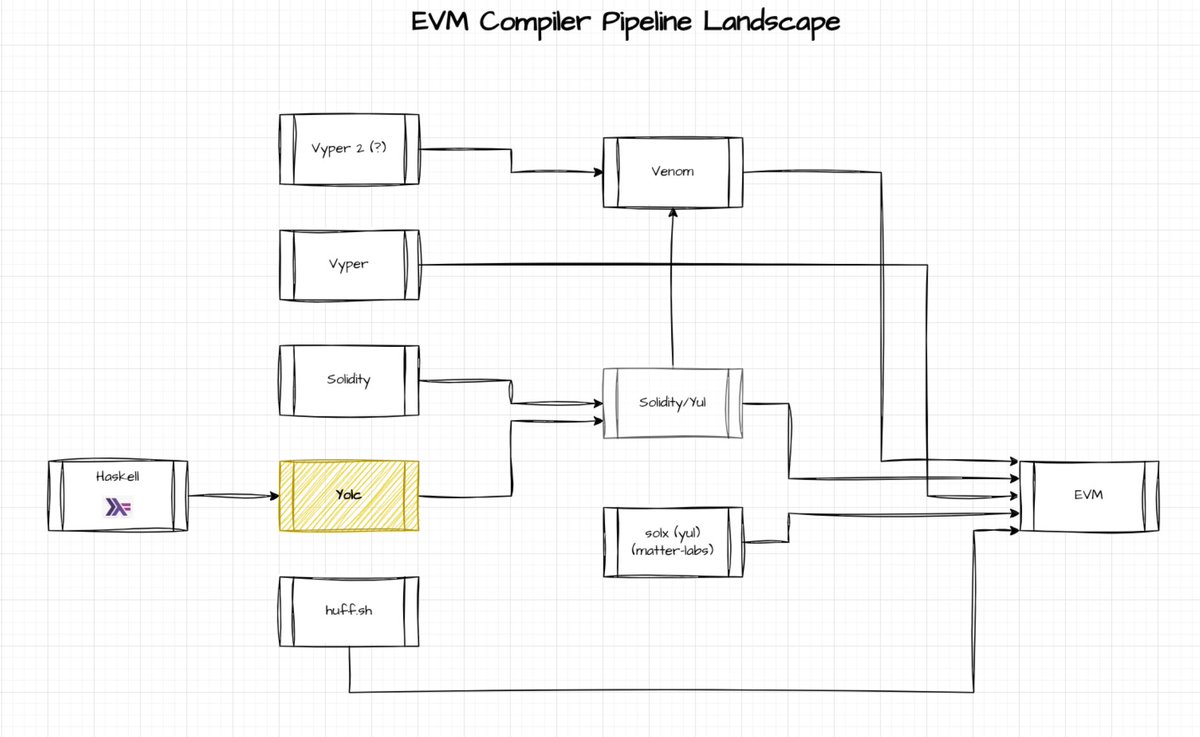
The silence is deliberate... Before we come back, here is the recording of the previous talk about Yolc youtube.com/watch?v=4DiRJRIl…
1
48

Echidna is now using hevm, our tool, to perform an awesome combination of symbolic execution and fuzzing. In my view, this is a very cool and exciting way of using hevm as a library:
gustavo-grieco.github.io/blo…
Thanks to Gustavo Grieco for the amazing work and write-up!
9
45
2,860
30 May 2025
A stunt contract is the one that is in the ERC1967 implementation slot, while the actual logic contract in the fallback contract might be different.
Yolc uses this technique to make the contract interactable on Etherscan, e.g. basescan.org/address/0x71D97…
2
110
29 May 2025
Pattern matching on locally-declared supported networks:
1
76
28 May 2025
The access control part of the contracts is inherently not suitable for fuzzing or invariant testing.
Yolc will introduce a type-level ACL (access control list) for the storage APIs: If applied, you will need to supply the necessary "runtime-witness" as an ACL to have write access to the sensitive storage.
1
152
26 May 2025
Yolc is born for a different purpose:
No: Simple, Easy, Wrong.
Yes: Elegant, Coherent, Correct.
More on: addressing essential complexity.
Lesss on: creating accidental complexity.
2
45
15 May 2025
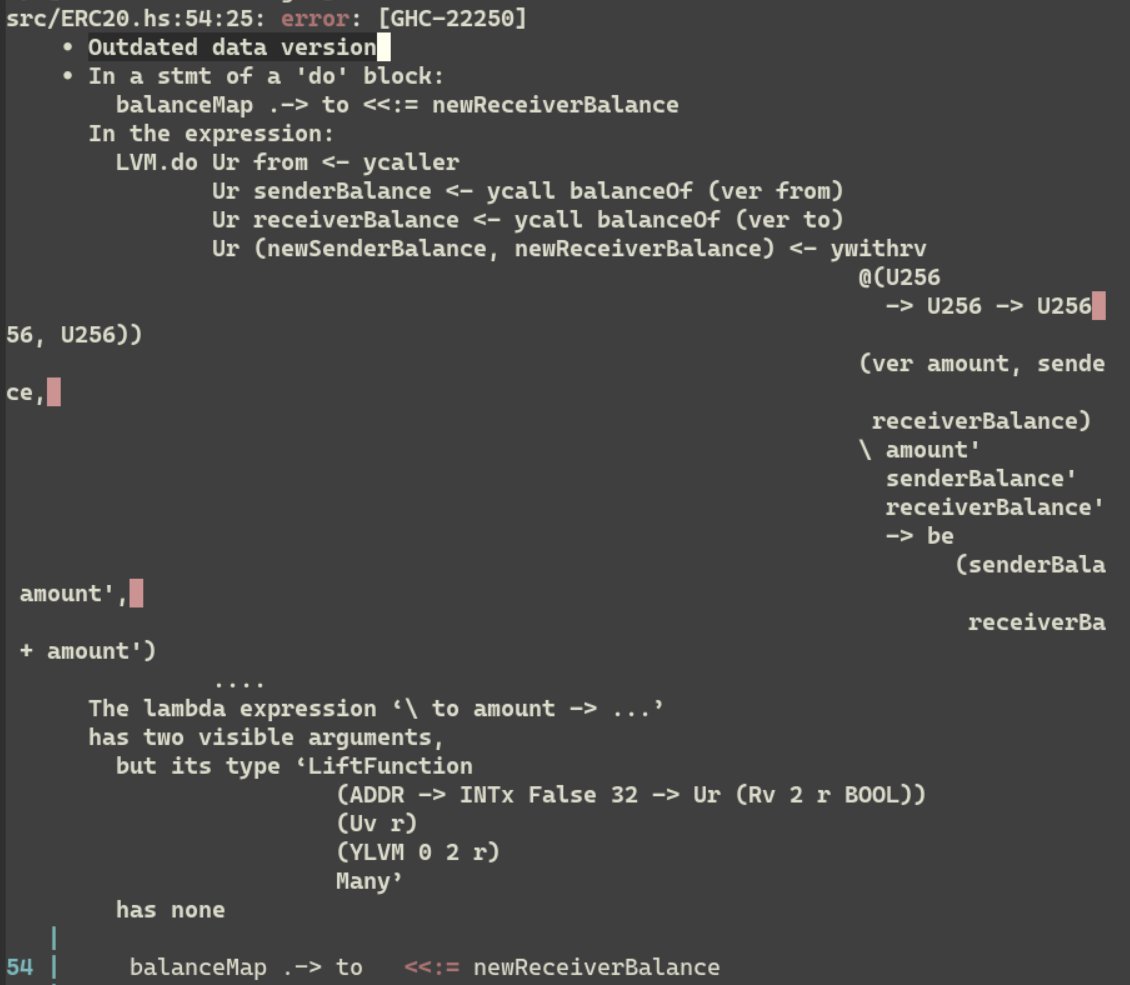
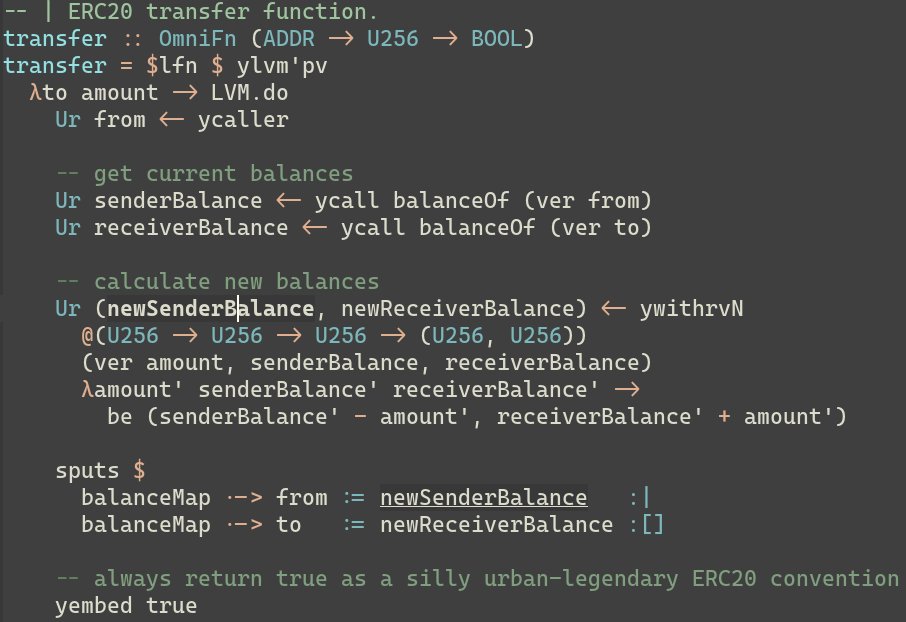
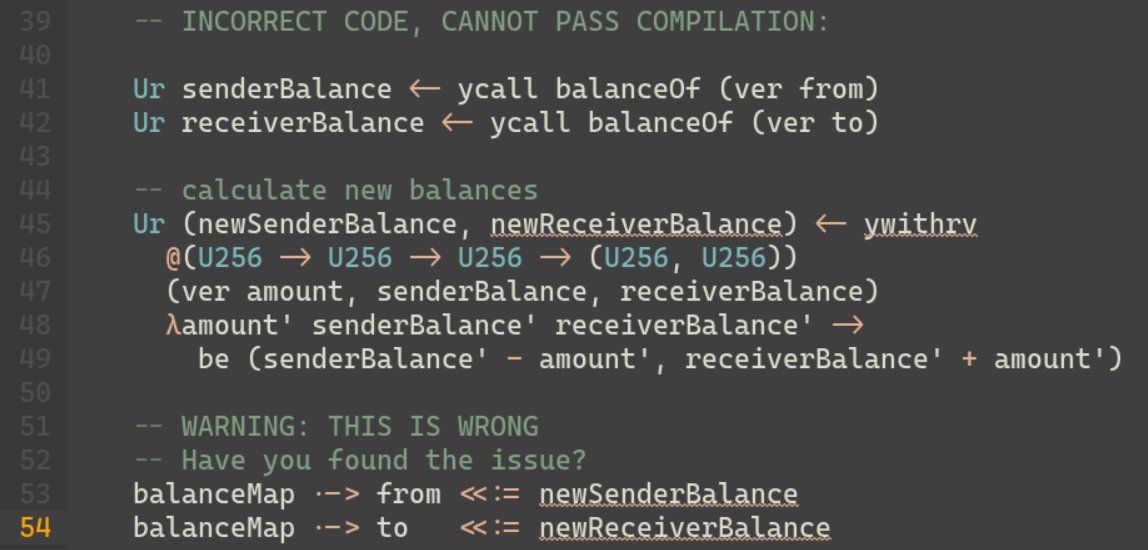
Have you found out why it is a type error?
This is its similar solidity code:
```solidity
uint256 senderBalance = balances[from];
uint256 receiverBalance = balances[to];
(uint256 newSenderBalance, uint256 newReceiverBalance) = (senderBalance - amount, receiverBalance amount);
balances[from] = newSenderBalance;
balances[to] = newReceiverBalance;
```
1
189
19 May 2025
19 May 2025

A short article on "data versioning" and how it catches errors at compile time with two examples.
yolc.dev/docs/concepts/data-…
68
19 May 2025
A short article on "data versioning" and how it catches errors at compile time with two examples.
yolc.dev/docs/concepts/data-…
228
19 May 2025
Haskell makes Yolc expressive.
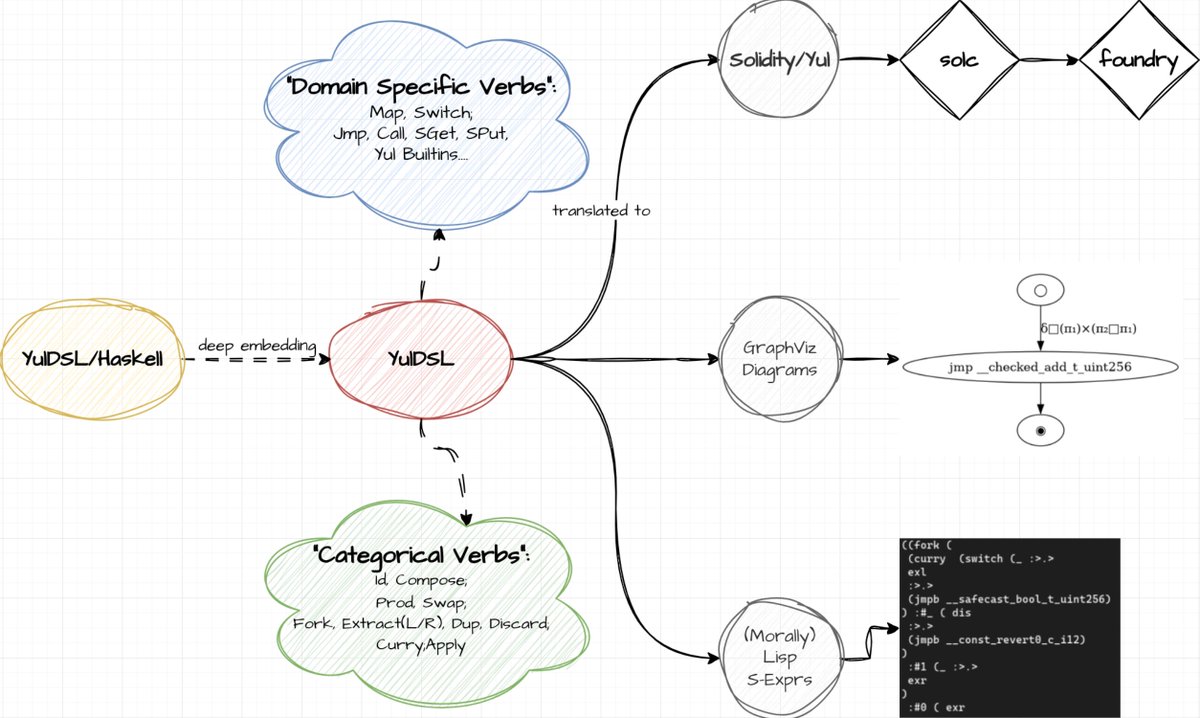
A short article on what "Embedded DSL (EDSL) in Haskell" is for Yolc.
yolc.dev/docs/concepts/edsl/
1
1
109
19 May 2025
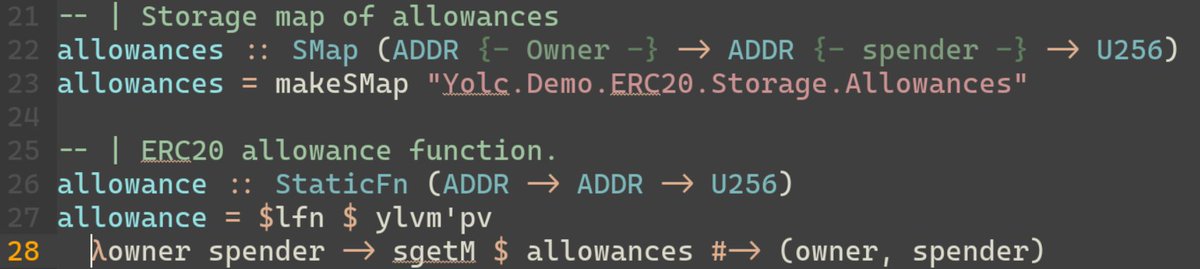
Define multi-level hash map at arbitrary storage slot:
This is similar to and compatible with Solidity's "mapping (address -> mapping (address -> uint256))".
1
48
16 May 2025
ethprague.com/schedule @EthPrague scheudle out. 27th May, Tuesday morning, 10:30. Yolc's live demo is prepared for you.
43

This is the first part of a series explaining the next-generation Haskell effect library, Heftia.
Heftia: The Final Word in Haskell Effect System Libraries - Part 1.1 sayo-hs.github.io/blog/hefti…
1
13
57
7,808
15 May 2025
Another future benefit of being an embedded DSL is that the same code can be used as indexer logic.
This will be an equivalent to "isomorphic client-server-stack": an "isomorphic contract-indexer-stack."
2
1
207