
Incoming AP @UTKnoxville | PhD Candidate @UCSDPolSci | MA @DukePoliSci. Studying authoritarian institutions, Chinese politics, and methodology. He/him 🌈
Joined March 2016
- Tweets 320
- Following 3,031
- Followers 1,572
- Likes 1,589
24 Photos and videos




Pinned Tweet

Apr 5
1/6
SSRN: papers.ssrn.com/sol3/papers.…
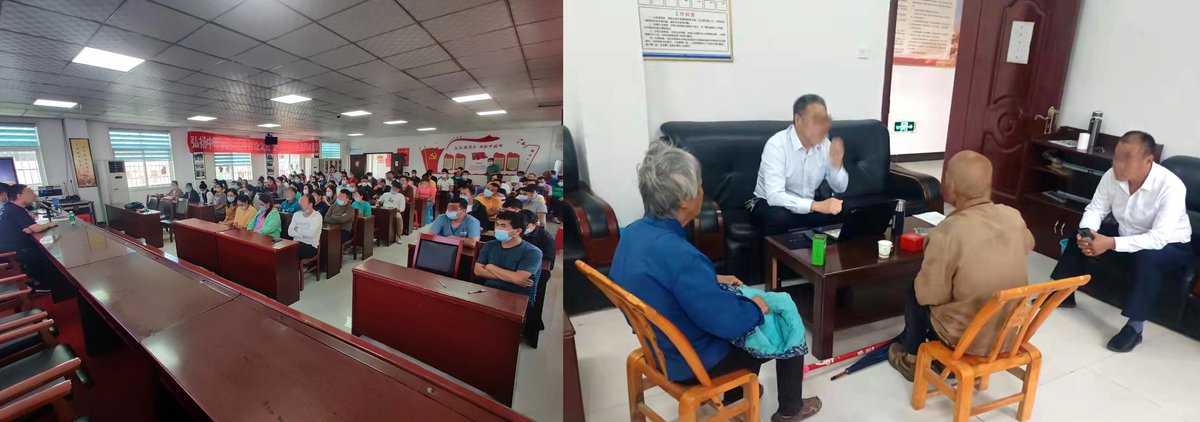
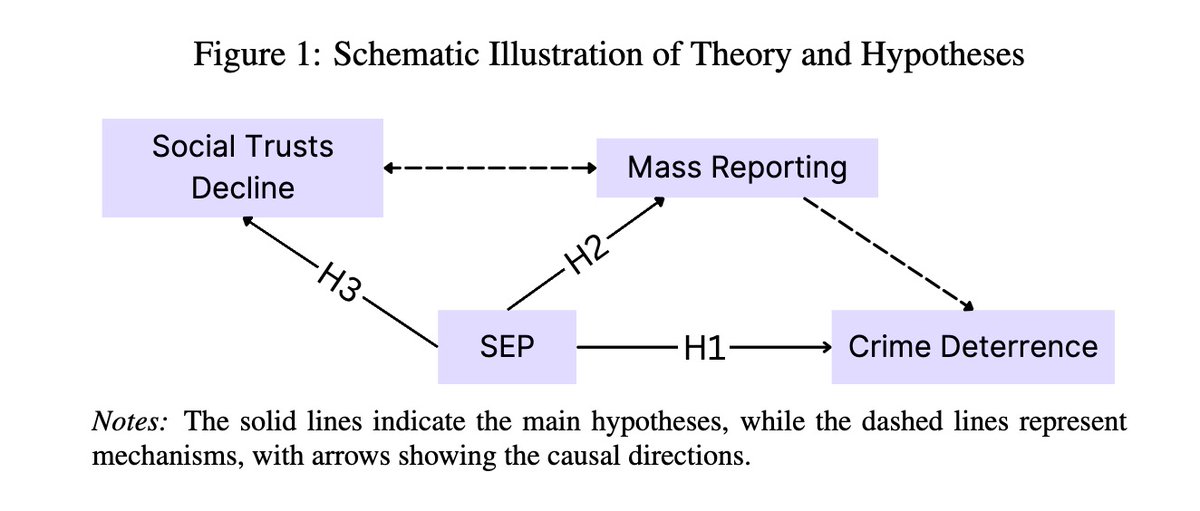
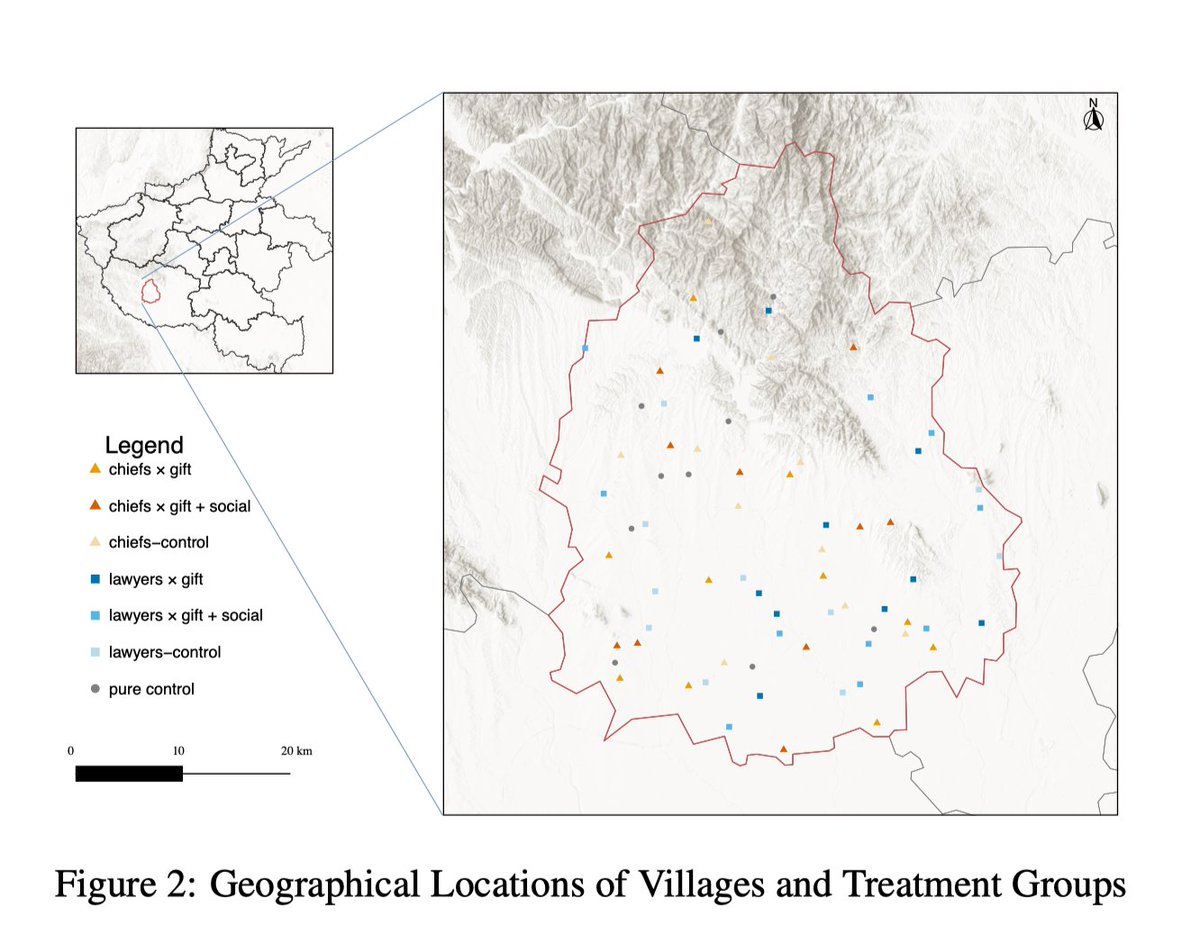
I ran a rare randomized field experiment on law and politics in the most populous province in rural China 🇨🇳⚖️
For 20 weeks, across 70 villages and 60,000 adults, I studied what happens when ordinary people get easier access to legal service.
Does that make them more compliant with the system—or more able to use it? What are the social and political implications of accessing law in autocracy? 👇
comments are welcome :)
3
28
90
9,143

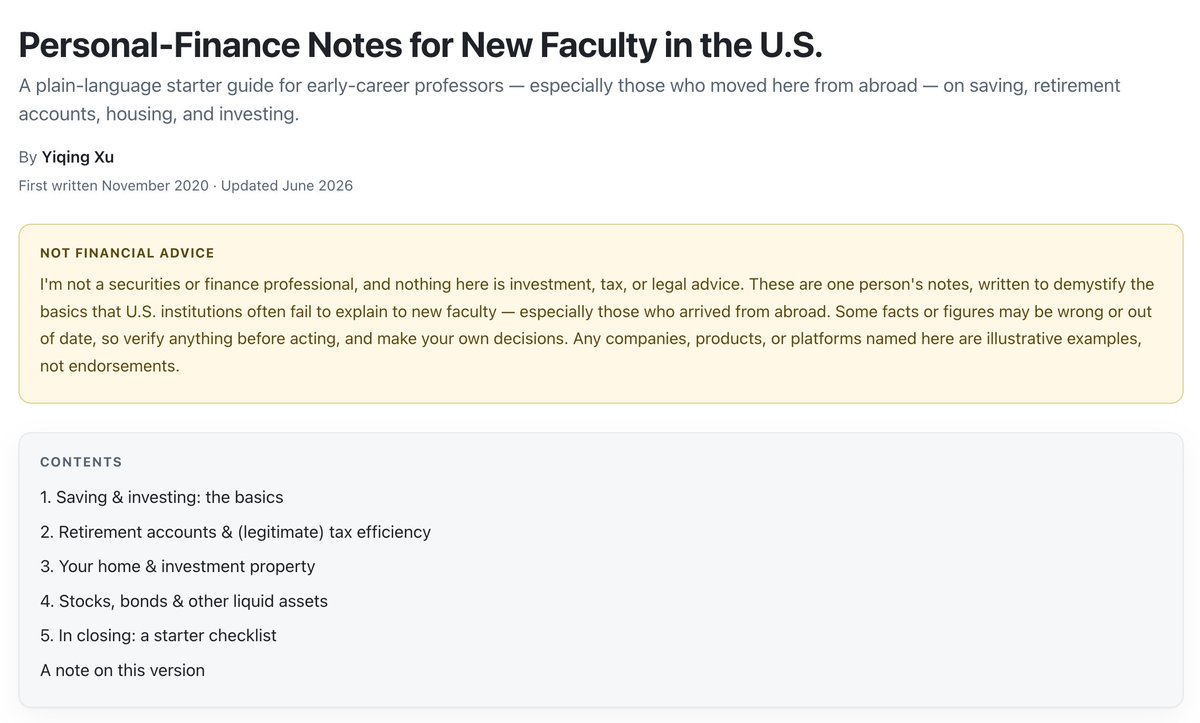
**Personal Finance Notes for New Faculty** I intentionally chose a red day to post this, to avoid giving the impression that I am encouraging people to buy stocks.
yiqingxu.org/guide/personal-…
In 2020, I wrote a short note on personal finance for a Chinese-speaking young faculty audience and have updated the numbers since then. Ye said this is my most-read piece of writing. 🤣
This is the English version.
Over the years, I have also given many of our international students a 30-minute tutorial on this topic when they start academic jobs in the US.
They are excellent at what they do, but knowledge about US financial markets is often lacking. I hope this helps.
2
6
36
2,035
May 19
Today I successfully defended my dissertation and officially became Dr. Zu. I cannot thank my advisors @vshih2, @mollyeroberts, @rxjia, Stephan Haggard, and Sebastian Saiegh enough for their guidance, support, and generosity throughout this journey.
4
3
63
6,139
Gary ziwen_Zu retweeted

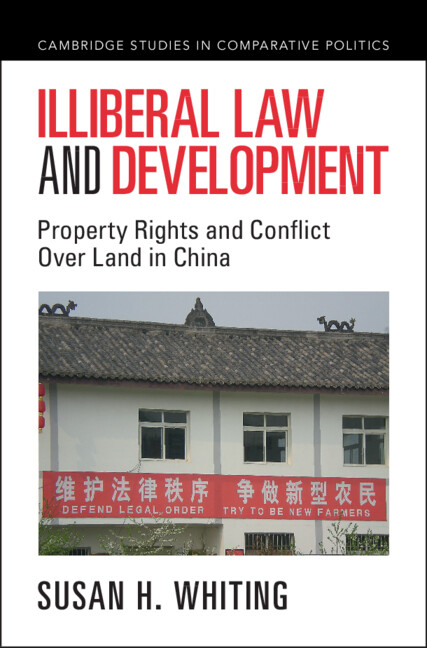
Illiberal Law and Development by Susan H. Whiting
Explains how China achieved transformative economic development without secure property rights and regime durability despite conflict.
📚 cup.org/4vKSRqu
ALT Illiberal Law and Development by Susan H. Whiting
23
61
5,168
Apr 5
1/6
SSRN: papers.ssrn.com/sol3/papers.…
I ran a rare randomized field experiment on law and politics in the most populous province in rural China 🇨🇳⚖️
For 20 weeks, across 70 villages and 60,000 adults, I studied what happens when ordinary people get easier access to legal service.
Does that make them more compliant with the system—or more able to use it? What are the social and political implications of accessing law in autocracy? 👇
comments are welcome :)
3
28
90
9,143
Apr 5
5/6
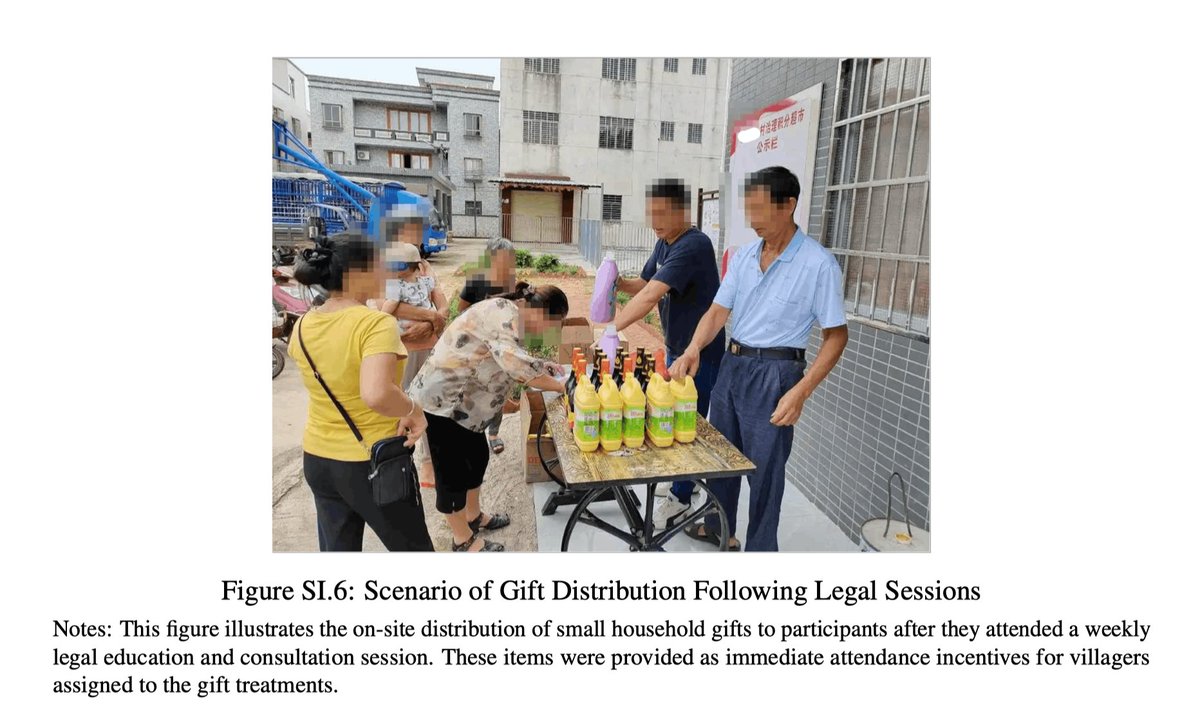
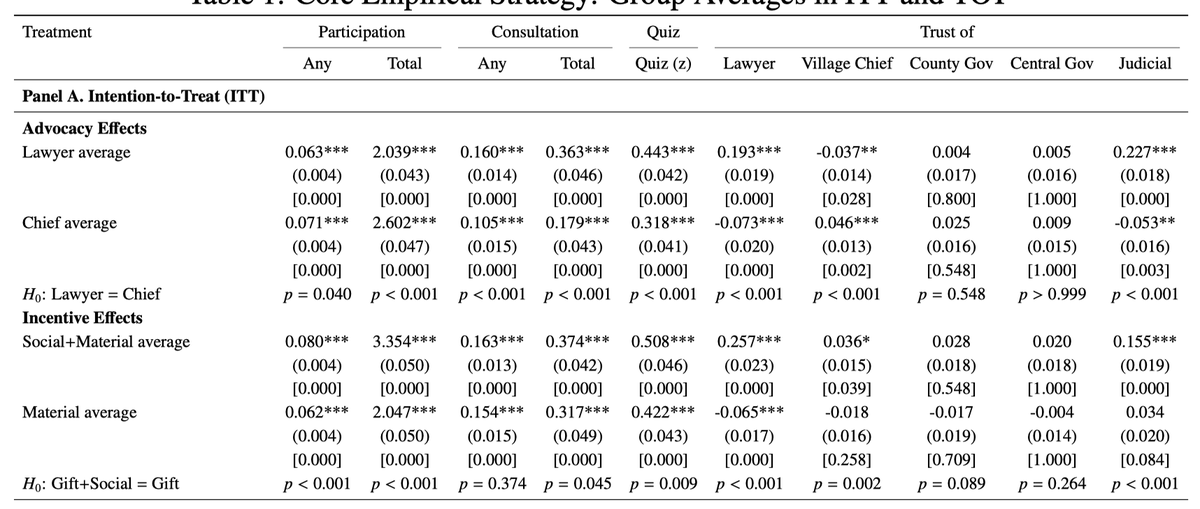
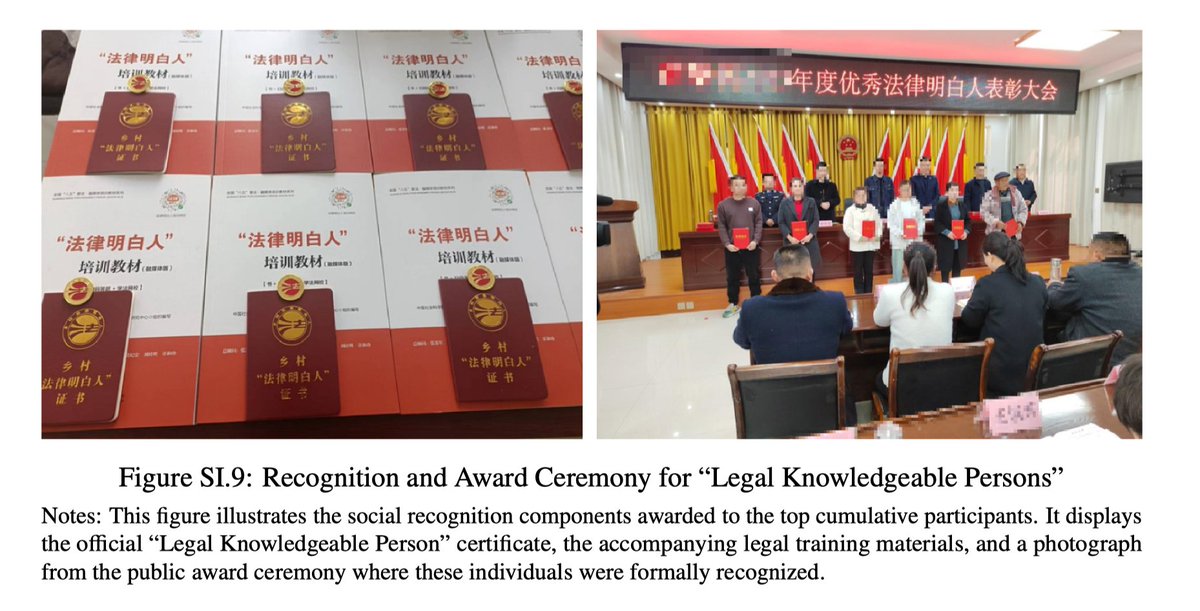
Incentives mattered—but not in the obvious way 🏅
Small gifts helped a bit.
But public recognition (being named a “Legal Knowledgeable Person”):
• increased participation persistence
• strengthened legal learning
• improved trust in legal institutions
And it worked best when paired with lawyer-led outreach.
1
5
513
Apr 5
6/6
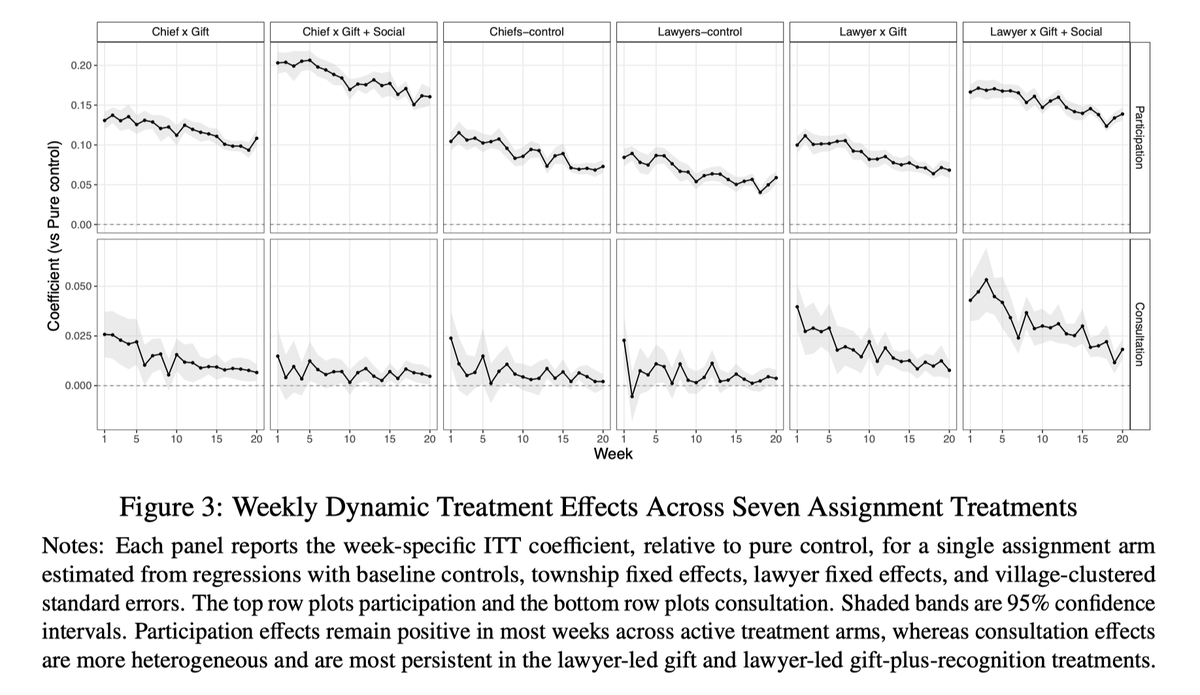
The strongest combination:
⚖️ lawyer-led mobilization
🏅 public recognition
→ more follow-up consultations
→ largest reductions in village-level conflict 📉
Big picture:
The same state program can produce shallow compliance—or real legal empowerment—
depending on who mobilizes citizens and how participation is framed.
1
5
441
Apr 3
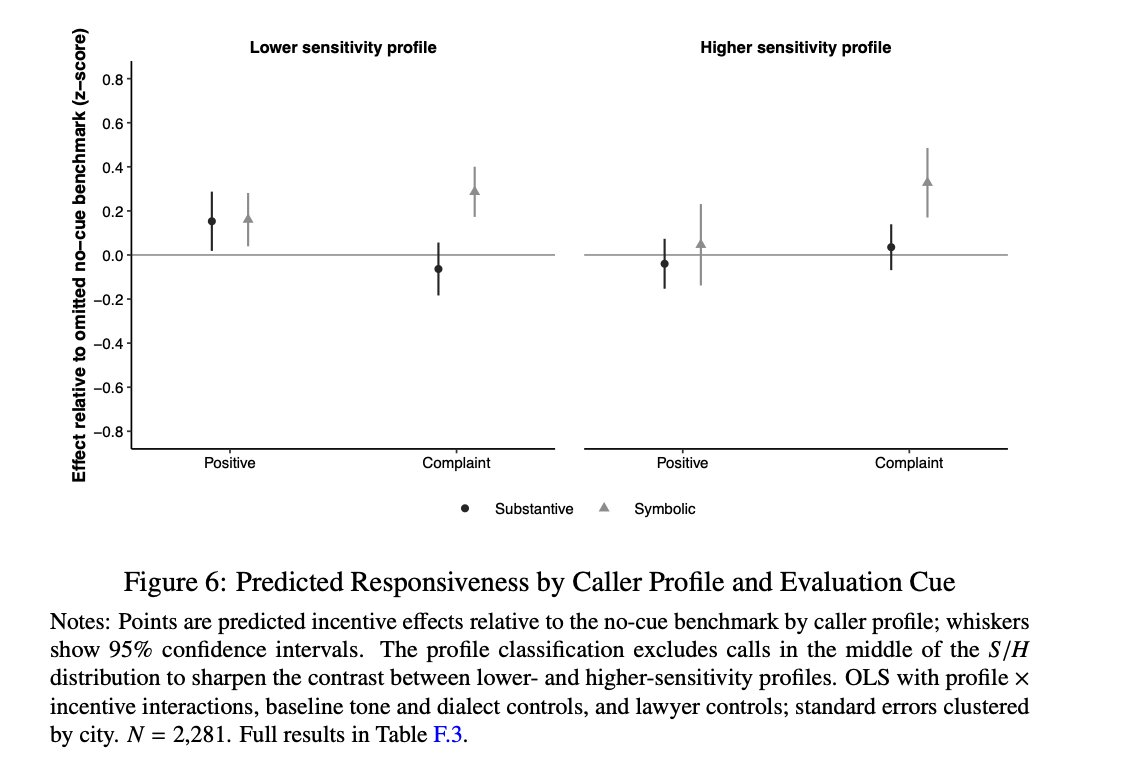
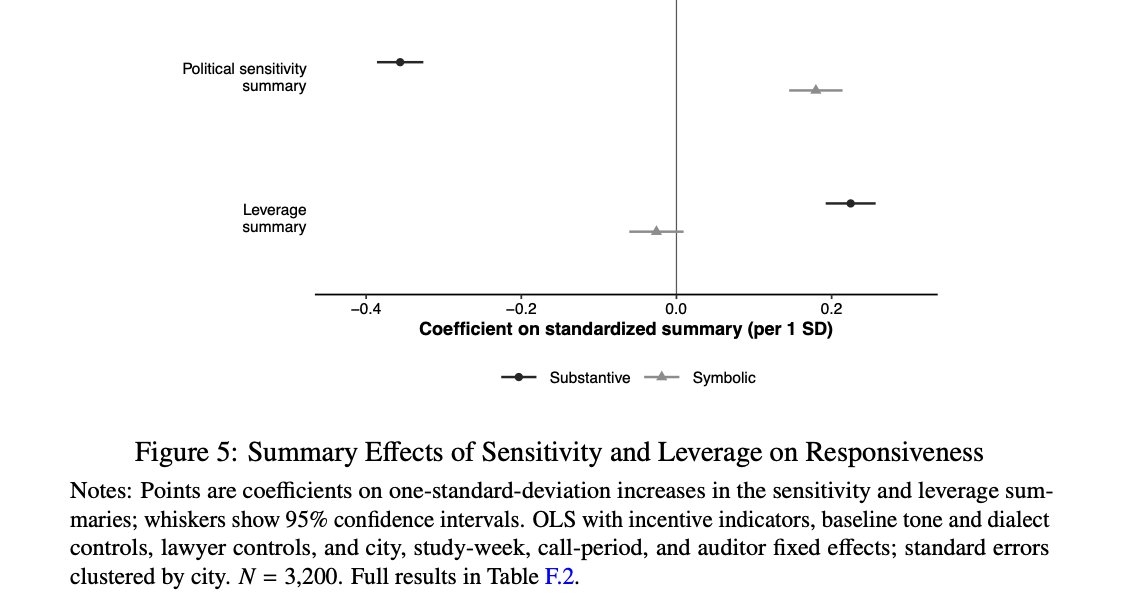
1/8 Updated version of my JMP working paper:
How do authoritarian regimes make law accessible without letting it become politically dangerous?
I study this through China’s legal-aid hotlines. 🧵
1
5
16
739
Apr 3
7/8
Evaluation pressure matters asymmetrically.
Praise improves both substantive and symbolic responsiveness.
Complaint pressure mostly improves the visible side of service—tone, patience, accommodation—more than the claim-enabling side.
1
175
Apr 3
8/8
So the key divide is not response vs. nonresponse.
It is recognition vs. empowerment.
Authoritarian legality at the frontline can be accessible, polite, and still selectively disempowering.
Updated version here: papers.ssrn.com/sol3/papers.…
Comments very welcome.
147
Jan 26
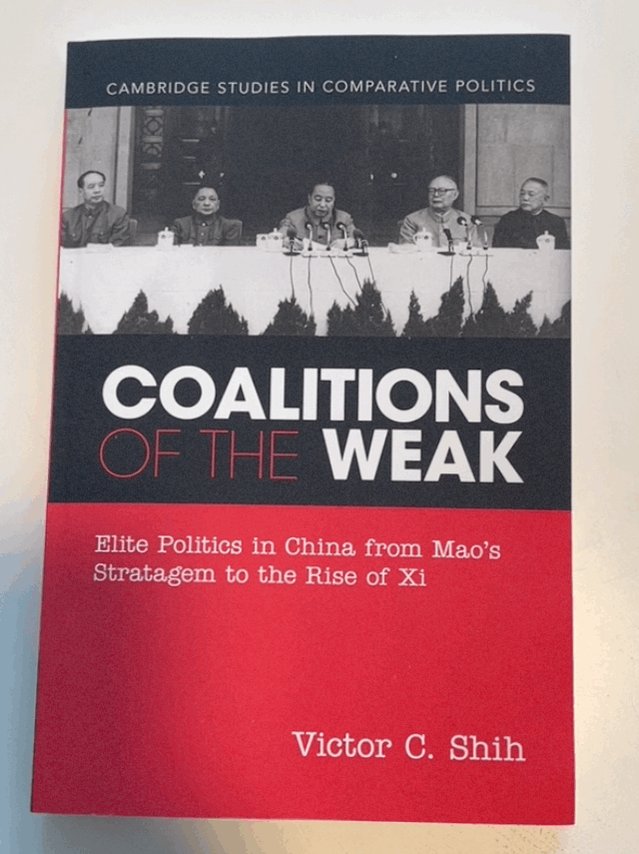
If the current wave of military purges has you asking “why now?”, read @vshih2 Coalitions of the Weak an insightful causal map of how coalitions form, fracture, and get policed in contemporary China.
10
1,000
Jan 21
Some personal news: I am thrilled to share that I will be joining the University of Tennessee, Knoxville (@UTKnoxville ) as an Assistant Professor of Political Science this August! 🍊 🧡 🏔️
I look forward to continuing my research on Chinese politics, authoritarian rule, and information management at UTK. Huge thanks to my mentors and the wonderful community at @UCSD @GPS_UCSD for their support.
16
82
8,090
25 Nov 2025
🚨 New Working Paper Alert! 🚨
How China Responded to the Trade War
Using firm-level data on subsidies procurement, we examine how China cushioned the shock from U.S. tariffs:
1️⃣ Tariff-exposed firms received more subsidies
2️⃣ Support flowed mainly to politically connected—not productive—firms
3️⃣ Local governments also stepped in: tariff-hit local firms received much larger procurement contracts
Takeaway: China did provide support, but in highly political and very local ways.
🔗 How China Responded to the Trade War: Evidence from Subsidies and Public Procurement
papers.ssrn.com/sol3/papers.…
1
3
30
3,083