
Project Manager • Building products, systems and businesses
Joined September 2022
- Tweets 3,458
- Following 315
- Followers 1,308
- Likes 3,653
425 Photos and videos







Pinned Tweet

Jun 15
I like studying systems and opportunities that come from solving coordination problems
Whether it's software, AI, operations , web3 or real estate
The biggest opportunities exist where trust is low, information is fragmented, and incentives are broken
That's what I'm interested in fixing
2
22
À• Shòlá retweeted

The world has a problem: 4.8 million unfilled cybersecurity roles.
Organizations are exposed daily.
GCTI is fixing it by building structured, assessed, employer-ready cyber talent.
Join the solution here👇
globalcybertalent.org
#Cybersecurity #CyberTalent
3
5
17
Jun 15
I like studying systems and opportunities that come from solving coordination problems
Whether it's software, AI, operations , web3 or real estate
The biggest opportunities exist where trust is low, information is fragmented, and incentives are broken
That's what I'm interested in fixing
2
22
Jun 15
Every business eventually becomes a systems problem
The sooner you solve it, the easier growth becomes
x.com/i/status/2054317160571…
May 12

What suleiman built for me is absolutely mind blowing! He built a web app where I can record orders, track revenue, expenses. It’s soo elaborate. I can see every damn thing about my business on what he built for me !
@0xDfinity My Genius, I love you !!!
31
Jun 15
Currently building @edqorta with @0x3Devoid and @0x01_phoenix
We're exploring what trust infrastructure for real estate could look like
1
1
11
Jun 15
Most people wait until everything is perfect before launching
Perfect website. Perfect product. Perfect plan
Then someone else launches
Progress compounds faster than perfection
Launch. Listen. Fix. Repeat 🔁
1
7
Jun 14
A few hours after opening early access for Edqorta, the site went down
People started messaging that they couldn't join the waitlist
One call
Everyone jumped in
Issue fixed
It's easy to celebrate launches
The real test is how fast your team responds when things break
Back to building
@edqorta
Jun 13

Most people think real estate is about property
I think it's about trust
A renter wants confidence
A buyer wants certainty
An agent wants credibility
A landlord wants reliable demand
The problem isn't a lack of properties
The problem is that trust is invisible
That's one of the reasons I'm building @edqorta alongside @0x3Devoid and @0x01_phoenix
Still early
Still learning
Still building
11
Jun 13
Most people think real estate is about property
I think it's about trust
A renter wants confidence
A buyer wants certainty
An agent wants credibility
A landlord wants reliable demand
The problem isn't a lack of properties
The problem is that trust is invisible
That's one of the reasons I'm building @edqorta alongside @0x3Devoid and @0x01_phoenix
Still early
Still learning
Still building
1
1
51
Jun 13
People often misunderstood this
It's no brainer
Product is not business

Building product is cool. What did you do to build the business?
1
19
À• Shòlá retweeted
Cybersecurity education should create professionals, not just graduates.
At GCTI, our mission is to bridge the gap between academic learning and real-world industry requirements through practical labs, structured learning, and mentorship.
🌐 globalcybertalent.org


2
3
35
Jun 2
How I wish you expand to evm
Let evm dapps / wallet connect to your chain
Polkadot and injective run that playbook and more builders , dapps and users join the ecosystem
Jun 2

We are building the architecture for the human and agentic future.
And everyone who holds a stake in it holds a say in what it becomes.
1
80
À• Shòlá retweeted
May 17
. @photon_hq a founder just asked me to connect her business social accounts directly into the operational OS I built for her brand.
Feels like a very interesting real-world workflow orchestration use case for your infrastructure.
Curious whether this is currently possible with Photon.
Would happily document the entire integration journey publicly while building.
May 12
What suleiman built for me is absolutely mind blowing! He built a web app where I can record orders, track revenue, expenses. It’s soo elaborate. I can see every damn thing about my business on what he built for me !
@0xDfinity My Genius, I love you !!!
1
1
105
May 25
I need simple function like "bulk marking inorder to bulk delete chat history" with @grok
1
35
May 19
One thing I think the ecosystem will eventually need to rethink deeply around FHE systems is:
“observable behavior” may itself become a meaningful leakage surface.
I understand exactly what Blockscout Zama are trying to achieve here:
- auditability
- developer tooling
- compliance compatibility
- operational visibility
And structurally it makes sense.
But I’m not convinced we can simply port traditional observability assumptions from transparent systems into encrypted execution environments without subtle tradeoffs emerging over time.
In traditional crypto systems, MEV and front-running often don’t require seeing exact values.
Behavioral visibility alone can already reveal:
- intent
- urgency
- execution patterns
- strategy structure
- profitable ordering opportunities
Which raises an interesting long-term question for FHE ecosystems:
At what point does execution observability itself become economically extractive?
Especially once:
- sophisticated inference models
- agentic searchers
- behavioral clustering
- probabilistic transaction modeling
start operating against encrypted systems.
Feels like FHE-native ecosystems may eventually require entirely new paradigms around:
- auditing
- observability
- compliance
- investigation
- debugging
- transaction privacy guarantees
Not by removing visibility entirely…
but by designing programmable observability intentionally for encrypted environments instead of inheriting assumptions from plaintext systems.
The challenge probably isn’t:
“privacy vs transparency.”
It’s:
how to preserve verifiability without unintentionally rebuilding metadata-driven extraction layers around encrypted execution itself.
Very curious how people thinking deeply about FHE architecture view this direction.
May 13

.@Zama brings Fully Homomorphic Encryption to onchain smart contracts.
Now Blockscout indexes the FHE operations behind every confidential transaction.
Inspect encrypted compute at the transaction level. Track HCU. Spot FHE-enabled contracts automatically.
Values stay private, behavior stays observable.
blog.blockscout.com/fhe-oper…
ALT FHE Operations by Zama, observability by Blockscout
2
49
May 13
Portal 2.0 feels less like gaming infrastructure and more like a prompt refinement layer wrapped in crypto narratives.
The core issue isn’t whether AI can help people build games faster. Claude Code, Codex and specialized workflows already make end-to-end prototyping increasingly accessible.
The real question is:
where does durable network effect come from?
Right now I don’t see:
- strong distribution loops
- habitual usage mechanics
- economic coordination primitives
- player-owned agent economies
- machine-to-machine commerce infrastructure
- meaningful token sink pressure
Just building tools for episodic creation isn’t enough anymore.
The next generation gaming infra probably looks more like:
- autonomous onchain agents
- ownable AI entities
- machine economies
- build/deploy/play/earn loops
- programmable in-game economic actions
That’s why projects exploring machine commerce like @arc and agent coordination layers like @Somnia_Network and MultiverseX feel directionally more interesting than “AI tools token” models.
If Portal truly wants sustainable infrastructure, the token itself likely needs deeper economic gravity:
usage sinks, gamified supply reduction, ownership incentives and ecosystem-native coordination loops.
Otherwise the tooling risks becoming replaceable while the token remains economically detached from actual value creation.
May 11

The next era of gaming will be built on better infrastructure
From day 1 of Portal 2.0, we have been building towards a Tools-as-a-Service (TaaS) model.
Here's what that actually means for builders and creators 🧵👇
1
1
70
May 13
Glad you love it
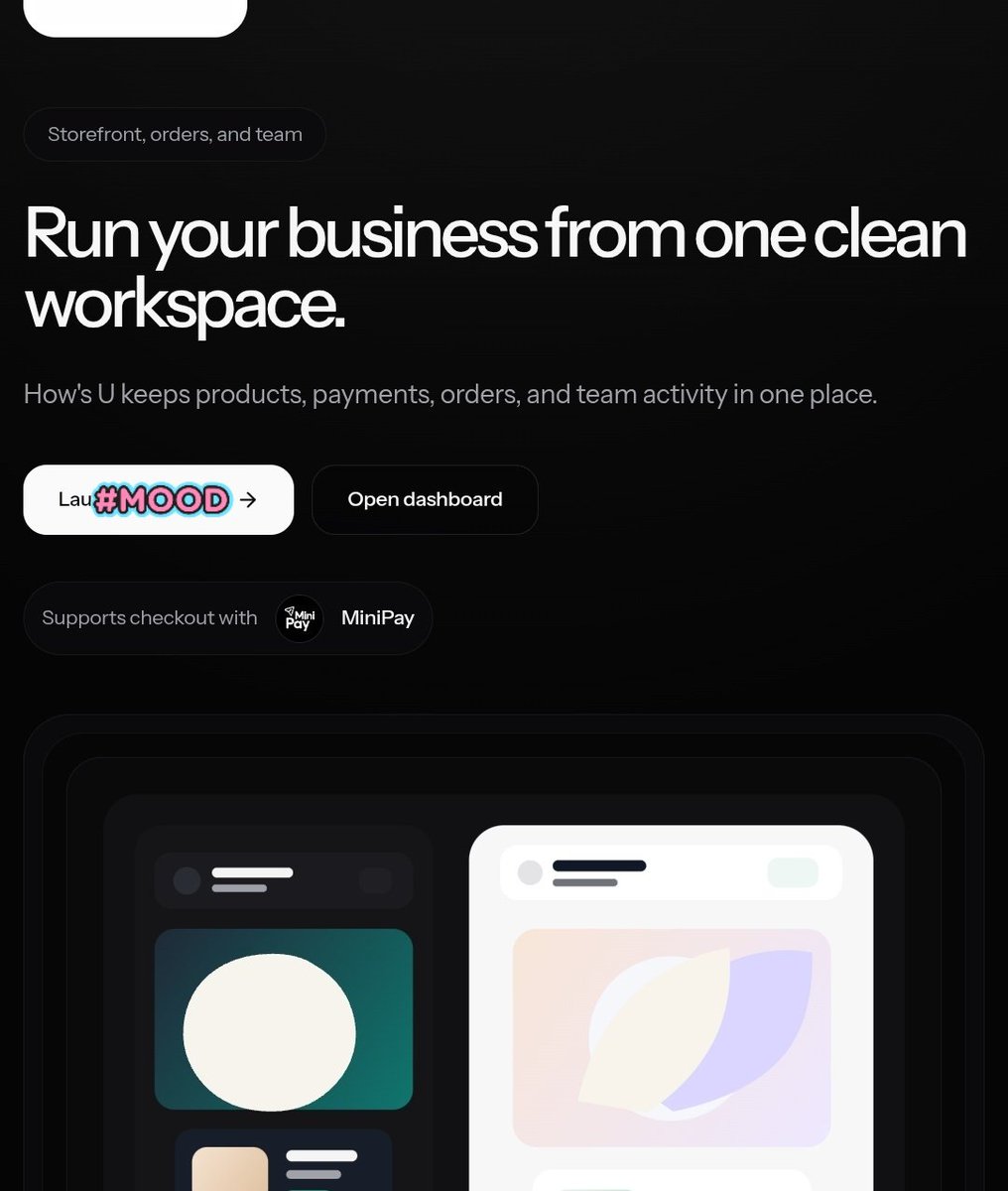
Most businesses are running on DMs, memory and chaos
I’m increasingly convinced every growing business needs an operating system designed around its real workflow, not generic software
May 12
What suleiman built for me is absolutely mind blowing! He built a web app where I can record orders, track revenue, expenses. It’s soo elaborate. I can see every damn thing about my business on what he built for me !
@0xDfinity My Genius, I love you !!!
1
2
226
May 12
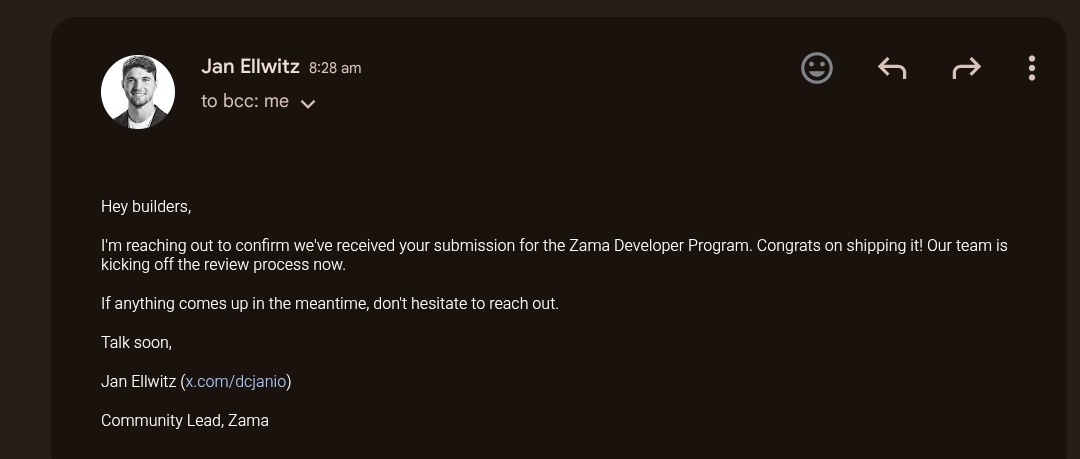
Received this from @dcjanio this morning after submitting to the Zama Developer Program.
Small moments like this matter more than people think.
Good ecosystems make builders feel like participants, not outsiders.
Now I’m even more motivated to keep pushing the confidential commerce infrastructure I’m building around FHE.
May 9
Working with FHEVM stack isn't actually hard as I thought it would be
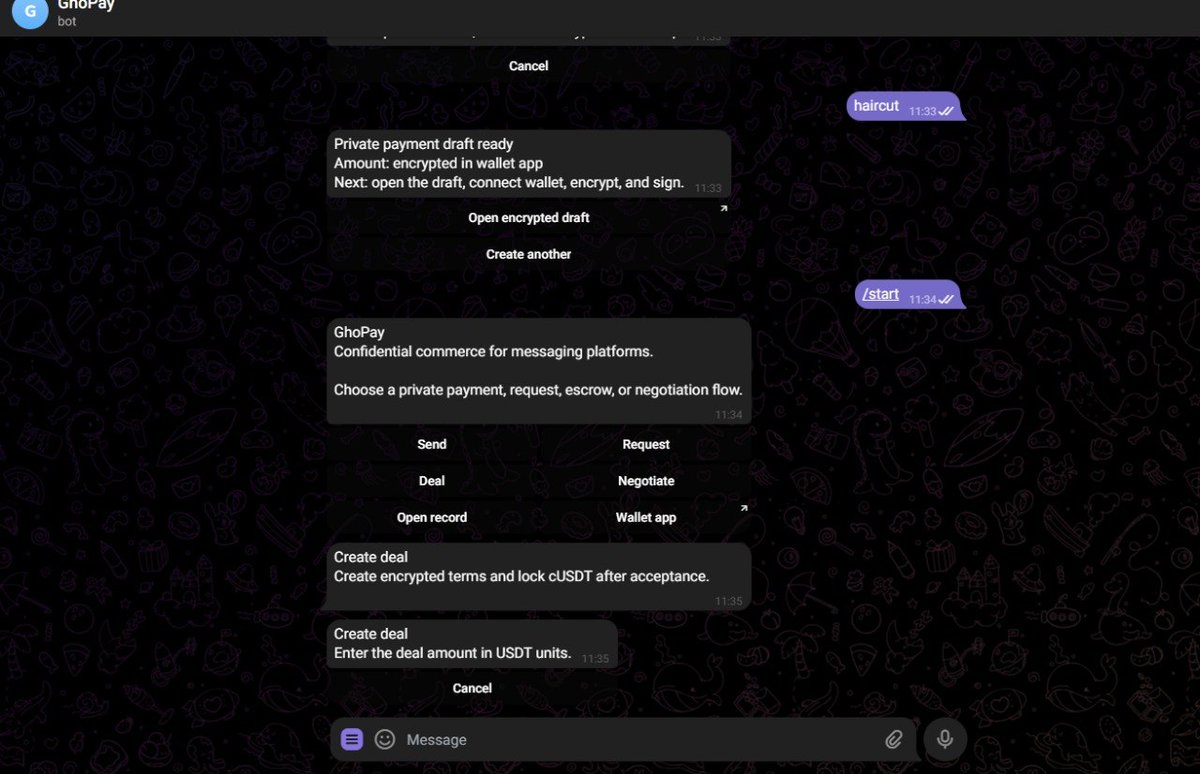
I just shipped Confidential commerce protocol for messaging platforms, built with Zama FHEVM and submitted to @OpenBuildxyz
Looking forward to turning it to OS for FHECCP (Fully homomorphic encryption for confidential commerce protocol)
2
3
115