
dev
Joined August 2016
- Tweets 832
- Following 1,830
- Followers 1,148
- Likes 1,580
70 Photos and videos




Mar 31
"The bottom line is that your attention, your behavior, your choices, all of that has become a commodity to be bought and sold."
1
33

leo.dev retweeted

1 Dec 2025
New on our Frontier Red Team blog: We tested whether AIs can exploit blockchain smart contracts.
In simulated testing, AI agents found $4.6M in exploits.
The research (with @MATSprogram and the Anthropic Fellows program) also developed a new benchmark: red.anthropic.com/2025/smart…
346
698
4,780
2,122,012
leo.dev retweeted

26 Nov 2025
If you’re sending a transaction that sends $500M:
Don’t use the Safe UI.
Use localsafe.eth.
Once all signatures are collected on the Safe UI, anyone can submit. And, you expose what you’re planning to do to the world.
Using localsafe has no backend.
You can still mess up using localsafe, but it’s harder.
Sorry this happened MegaETH and MegaETH team.

19
16
368
63,437
leo.dev retweeted

9 Sep 2025
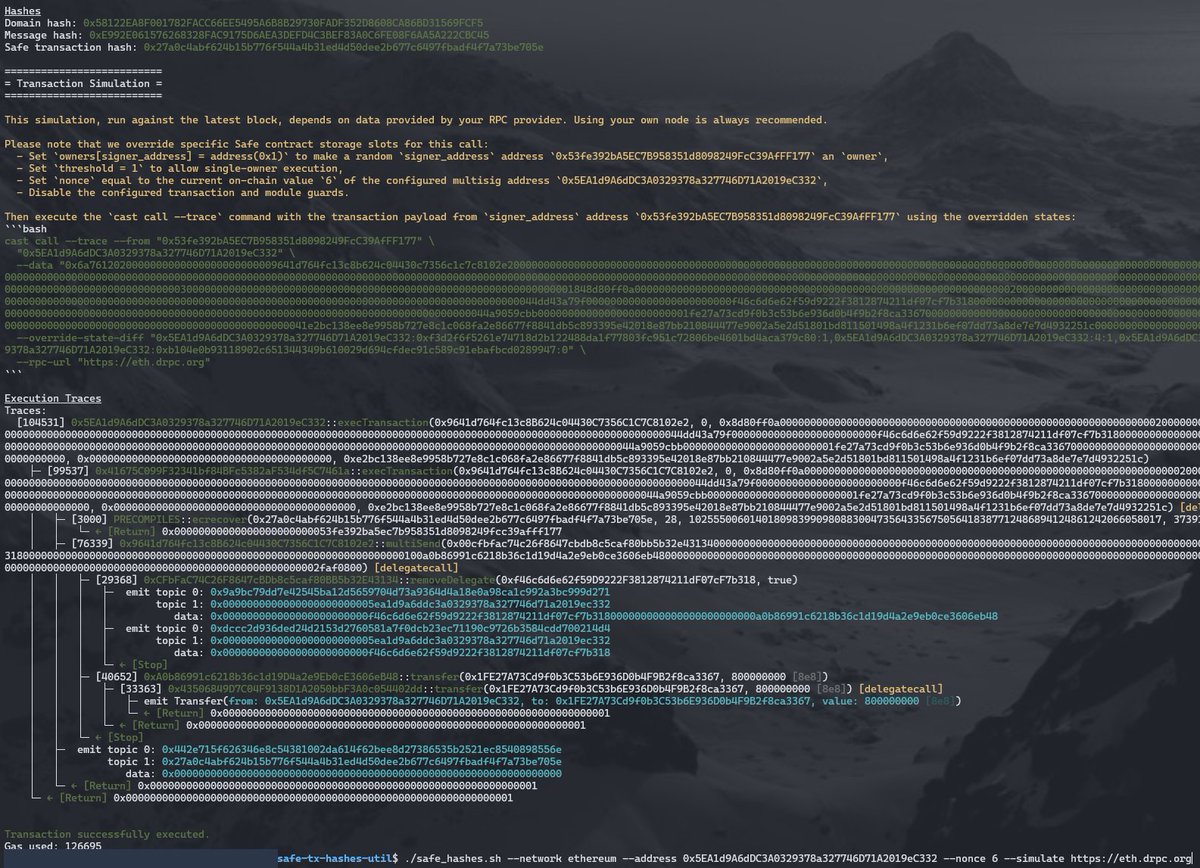
alright, after a week of work you can now fully simulate Safe transactions _locally_ before signing and verify the transaction hashes in parallel using my `safe-tx-hashes-util` with a single command (use the `--simulate flag` simply). This lets you check exactly how the transaction will execute before you sign. Everything is local. Everything what is executed is printed in the terminal. Transparency at all cost. You trust your RPC provider here so use a trusted endpoint or the preferred solution of running your own node. I know many still do not believe me but local-first, cli-based verification is the way to go. Not hosted UIs. My verification script is _one_ fucking Bash file. Everyone can audit it by looking at exactly one file. No dependency bloat.
56
132
800
72,791
leo.dev retweeted

17 Sep 2025
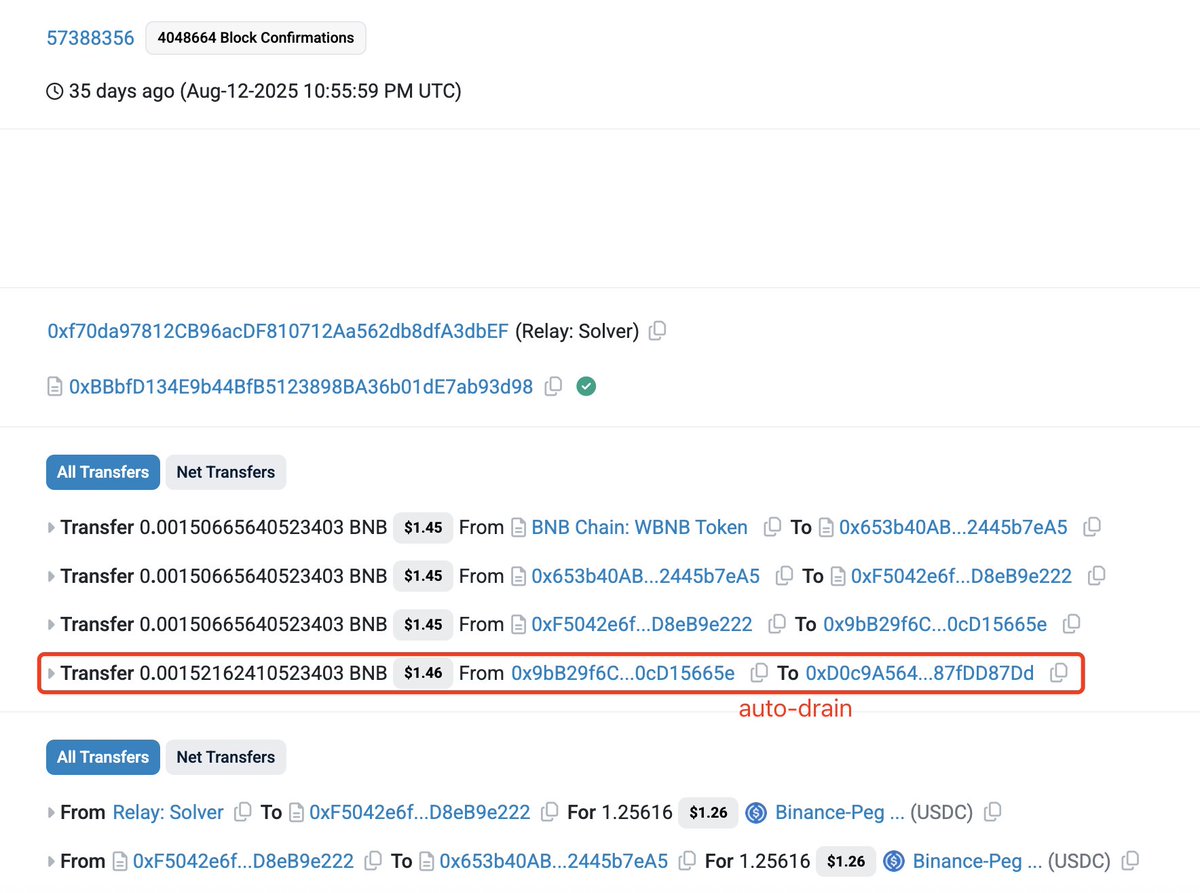
🚨 EIP-7702 auto‑drain case
Leaked key → delegated to a malicious 7702 contract. After bridging, the contract fallback auto-forwarded native token in the same tx—no attacker tx needed. Looks like a bridge issue, but the wallet was already compromised.
Takeaways:
- Phishers love 7702: batch signatures = one‑click drain (we’ve seen multi‑million losses).
- With a leaked key, attackers use 7702 auto‑drainers to siphon any incoming native token instantly.
Advice:
- Key leaked? Removing the 7702 delegation is useless—they’ll re‑delegate. Treat the wallet as burned; migrate now.
- Don’t sign 7702 batches you don’t fully understand.
Stay sharp and sign carefully.
16 Sep 2025

In recent weeks, we’ve seen a big uptick of claims that “Relay is hacked”. Obviously, this is something that we take very seriously, and have been investigating.
TLDR: there’s no evidence to suggest an issue with Relay. But there absolutely is an epidemic with compromised wallets, that everyone should be aware of.
Here’s what we’ve found, after investigating over 200 reports:
- Almost all victims have compromised private keys or seed phrases. Relay consists of smart contracts and a web app. Neither of these can access your private key, even if they were hacked. Typically these leak when storage is hacked (computer, cloud backup, etc), or the user is tricked into sharing them
- Zero evidence that official Relay products are hacked or involved in a compromise
- Relay has over 1 million monthly users. And yet only a tiny tiny fraction have had issues.
In summary, everything suggests that these users were externally compromised.
So, why blame Relay?
This partly stems from the fact that many victims don’t notice they are hacked, until they use Relay. Maybe they didn’t notice an earlier draining, because it happened in the background. Or maybe the hacker was waiting for the wallet to have sufficient funds before draining it. So when you use Relay, and the funds immediately go missing, it’s natural to think Relay is at fault.
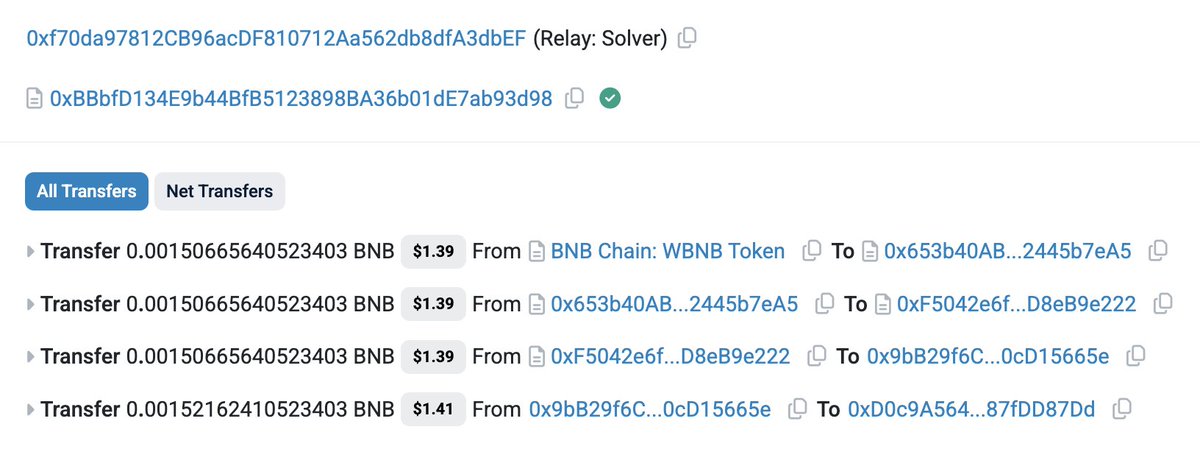
Take this example: bscscan.com/tx/0xb5de4415a80…
The user (0x9b) bridged with Relay, but funds were sent to a hacker instead (0xD0). Must be Relay’s fault right?
No!
What happened here is that the user’s wallet was delegated to a malicious 7702 contract, and that contract has a fallback function that immediately sends out any native tokens. The hacker does not even need to make a transaction to drain the user. It happens automatically in the same transaction that tokens are received!
If you look at their past transactions, this is what you see:
02:56:50 AM = call "check in" on some contract (possibly related to where hack happened)
02:56:54 AM = account is drained
02:56:55 AM = account delegated to auto-drainer for future
10:55:59 PM = uses Relay and instantly drained again
The user probably didn’t notice the first drain, and so was rightfully suspicious of Relay when their funds failed to arrive in their wallet.
In summary:
- as more people use Relay, more compromised wallets use Relay
- Relay involves sending funds to a wallet, so users are paying attention to their balances
- in addition, hackers often only watch certain chains, or wait for a $ value threshold, and so after using Relay is often when they strike
So, what can be done?
First of all, stay vigilant!! It’s a wild west out there. You should be especially careful with anything that can access your private keys or seed phrase. For example, this tool, which is popular with farmers, was recently hacked: news.risky.biz/risky-bulleti…
Second, we are exploring ways to protect our users from external threats, including:
- working with @ChainPatrol to take down phishing sites
- detecting malicious 7702 delegations
- detecting past interactions with known drainers
If you have other suggestions, please reach out
In summary, Relay is safe, and we plan to continue going above and beyond to keep our users safe.
If you’ve seen someone who was concerned, please share this message with them!
If you still have concerns, feel free to reply here or contact our support. We are always happy to investigate, and any new information we learn can help protect others in the community.
23
38
154
49,722
leo.dev retweeted
16 Sep 2025
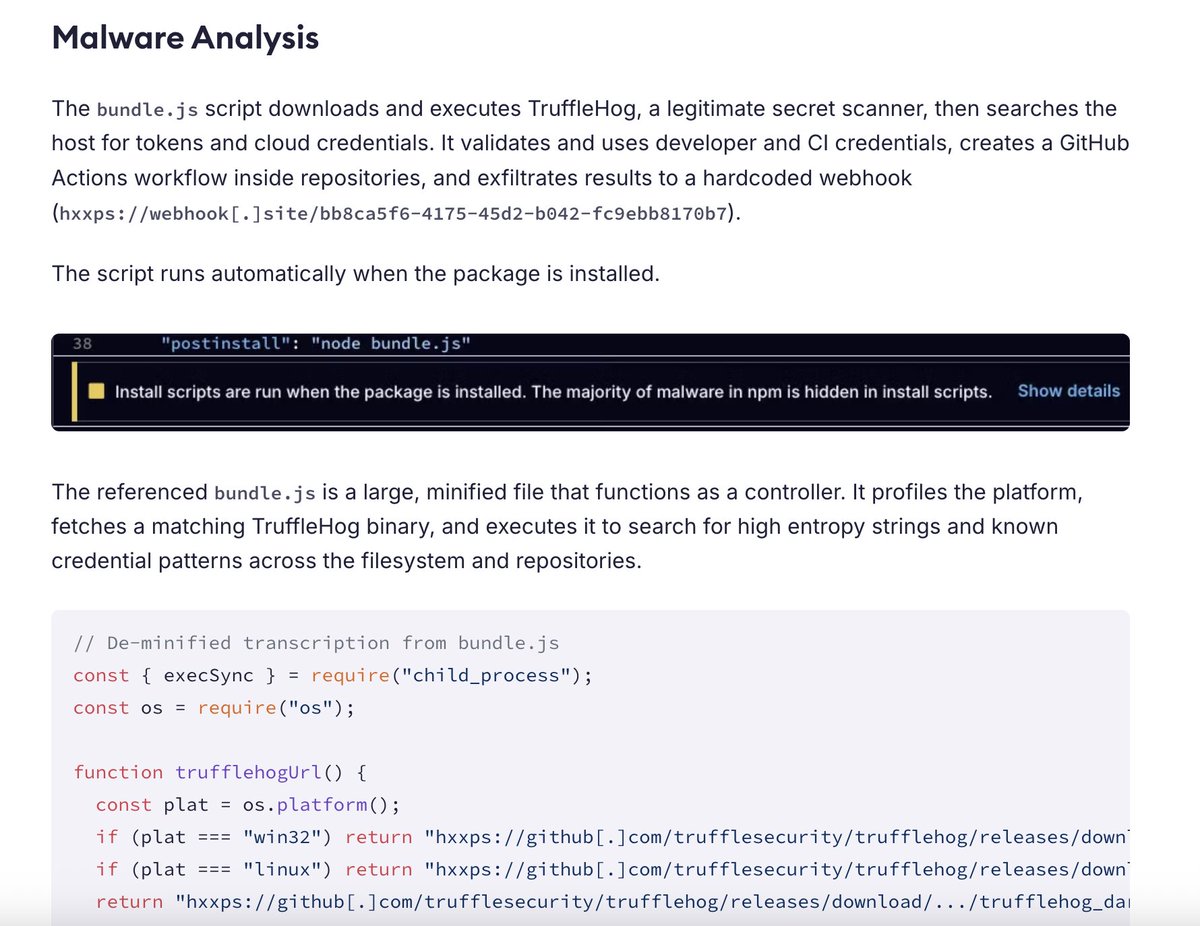
🚨 Another NPM supply chain attack
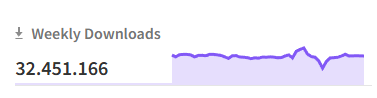
`@ctrl/tinycolor` (2.2M weekly downloads) shipped malicious versions that run an infostealer during npm postinstall to scan for and exfiltrate sensitive data. The payload abuses TruffleHog, a legitimate secret scanner.
Check if you pulled affected versions, pause installs/updates, and pin to known-good releases.
Source: socket.dev/blog/tinycolor-su…
19
96
307
71,872
27 Jul 2025
I recently realized that the best way to go faster is to really understand how big companies' code works deeply and see if there are gaps I can improve upon.
1
157
leo.dev retweeted
23 Jul 2025
I made a 🦊 wallet plugin that:
1. Decodes your calldata
2. Uses that decoded data as input to an AI
3. Which then searches the web to see if the transaction has anything "fishy" about it.
Here is an example where you'd be sending money to the ByBit hackers, but it catches it!
85
135
858
67,854
9 Jul 2025
RT @yhbryankimiq: From the world's highest IQ record holder : Jesus is returning soon. The end is near. To summarize my calculation regardi…
1,885
leo.dev retweeted
23 Jun 2025
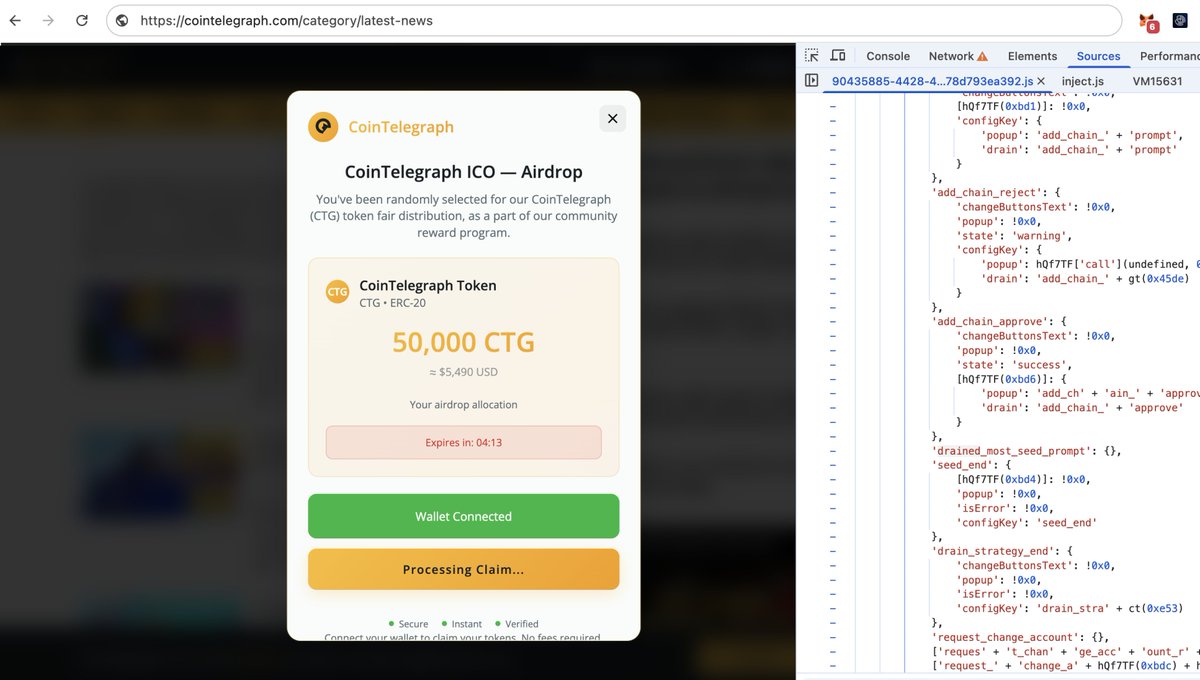
🚨 CoinTelegraph's frontend has been compromised. Please be cautious.
31
66
186
76,456
leo.dev retweeted
2 Jun 2025
We need to talk about hardware wallets.
1. If you have one, you're probably signing transactions without checking calldata.
2. If you don't have one, you're more susceptible to hacks.
One of these needs to change.
126
132
1,010
148,239
leo.dev retweeted
7 May 2025
Pectra: The DANGERS of EIP-7702 | Live on YouTube x.com/i/broadcasts/1dRKZYPvl…
19
12
120
4,609
leo.dev retweeted

16 Apr 2025
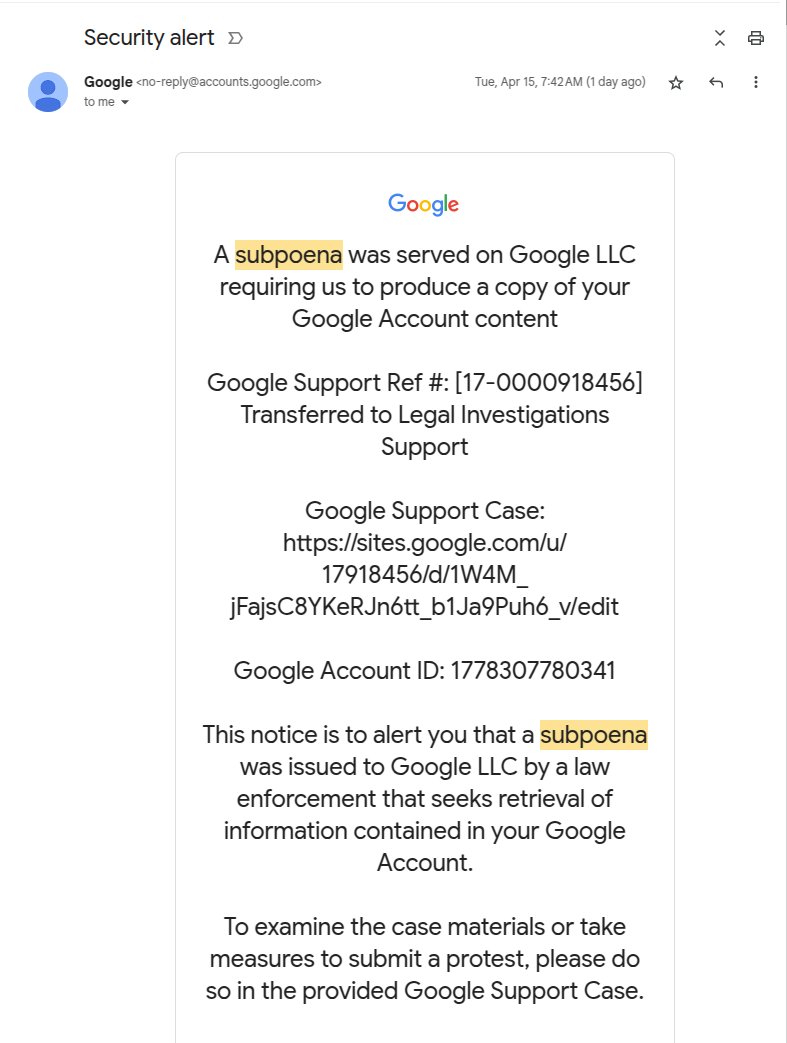
Highly sofhisticated Google phishing attack.
Be EXTREMELY careful.
Level up your OpSec or be hunted.
16 Apr 2025

Recently I was targeted by an extremely sophisticated phishing attack, and I want to highlight it here. It exploits a vulnerability in Google's infrastructure, and given their refusal to fix it, we're likely to see it a lot more. Here's the email I got:
11
5
23
3,390
22 Mar 2025
Casualmente un broker de exploits ruso está ofreciendo hasta 4 millones de dólares por vulnerabilidades zero day en Telegram
21 Mar 2025

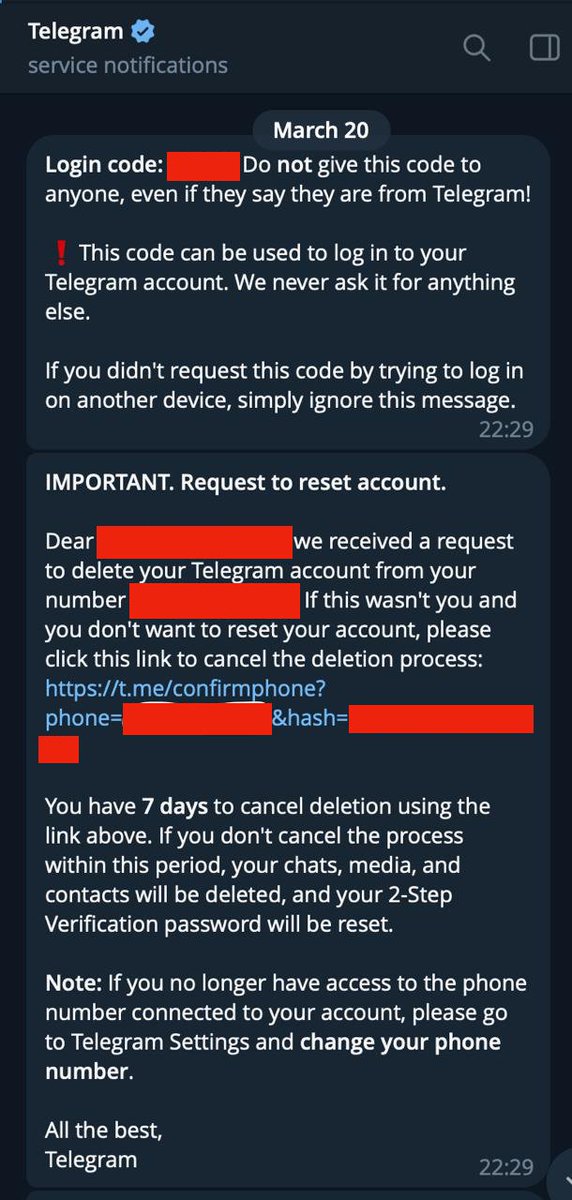
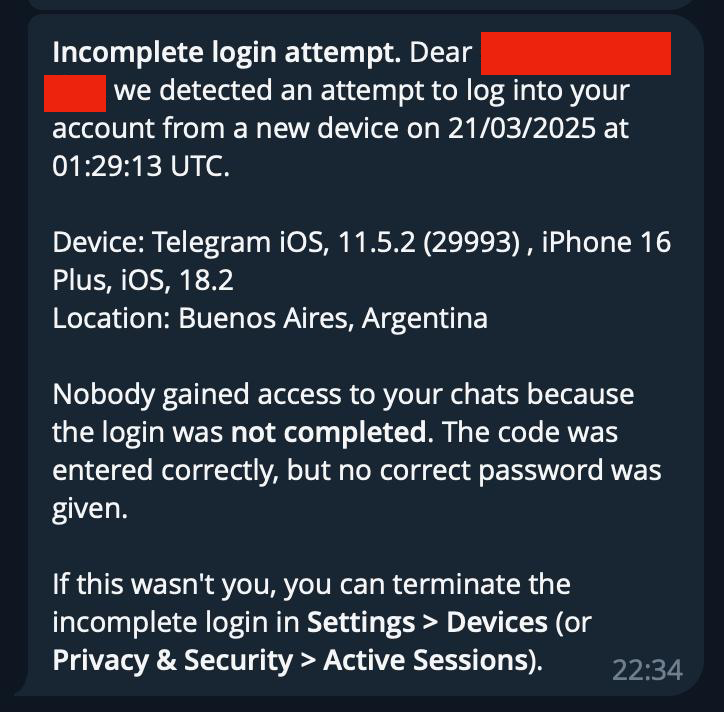
🚨ALERTA USUARIOS DE TELEGRAM🚨
En los últimos días estamos viendo un incremento altísimo de ataques a cuentas de Telegram en Argentina, algunos de los cuales son exitosos. El atacante está de alguna forma accediendo a los códigos de autorización que se envían por SMS y por notificaciones de Telegram. Luego procede a intentar eliminar la cuenta. En los casos que tienen 2FA activado, el ataque no es exitoso. Estamos analizando el vector de ataque, el cual podría ser el proveedor de SMS de Telegram en Argentina.
- Si les sucedió esto o similar, envíenme un mensaje privado con capturas de los sms relacionados, las notificaciones de Telegram y de la sesisón del atacante.
- Si no les sucedió aún: Telegram > Settings > Privacy and security > Two step verification > actívenlo.
Difundan por favor.
2
2
242
22 Mar 2025
...incluso millones.
◼️El broker la revende a clientes (en este caso, al gobierno ruso) o a entidades privadas.
En resumen es un mercado de armas digitales.
1
1
102
22 Mar 2025
Tambien comercian con "exploit chains" que combinan varios bugs. Usados por separado no son tan potentes, pero encadenándolos, el atacante puede lograr acceso total.
2
95