
CEO & co-founder @therealgregoai | host of @bountyhunt3rz podcast | top ranked whitehat on @immunefi immunefi.com/profile/riptide
Joined September 2011
- Tweets 4,421
- Following 3,330
- Followers 9,764
- Likes 24,064
229 Photos and videos







Jun 12
Not the outcome DeFi was built for
two big drivers behind us building @therealgregoAI:
1) break the audit mafia's control on who can afford human level quality security audits
2) provide security at scale so that bootstrapped founders can still compete
this is how DeFi survives and thrives under the constant duress of an adversarial AI environment
Jun 12

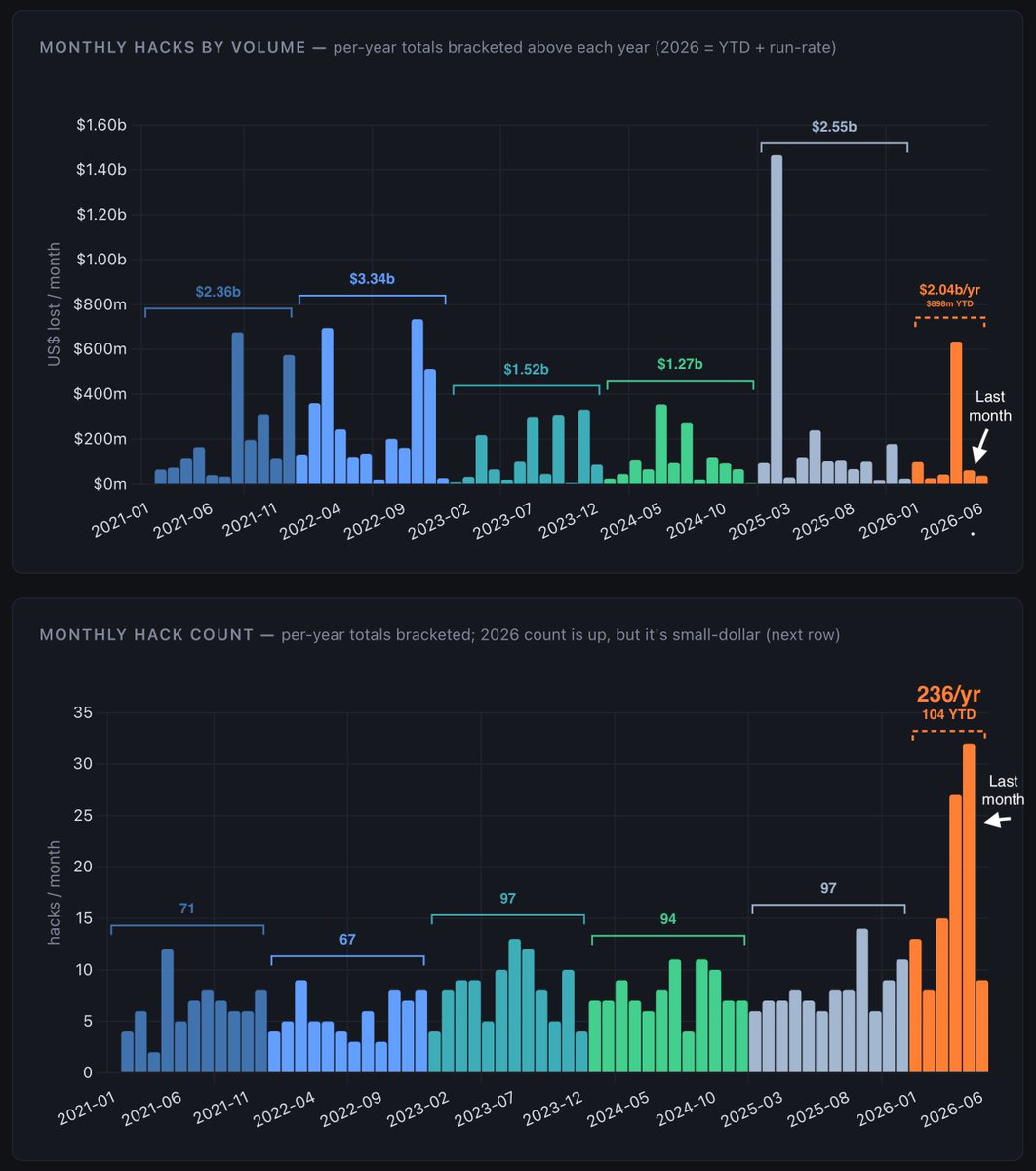
Everyone thinks there's a hackpocalypse going on in crypto right now. But if you dig into the data, the story is not that simple.
Narrative violation: total dollars hacked in 2026 actually looks pretty normal so far.
Check the chart below for raw data. What's grown is not the amount hacked, but rather the NUMBER of incidents.
Case in point: April was a brutal month for $$ hacked, but May was actually way below average in terms of $$ hacked (1/10th hacked compared to April). And yet by number of incidents, May was actually the highest in crypto history.
So what could explain the number of hacks going crazy, but the amount stolen staying flat?
Here's what I think is going on: for large protocols, using AI for cybersecurity is balanced between offense/defense. If you're Uniswap, AI makes it easier to harden your protocol, just as much as it makes it easier for randos to attack you.
But for the tens of $10M TVL DeFi protocols, there's no one running AI hardening at all. So attackers are looting unattended stores. Over time that will push TVL toward the larger protocols that can actually afford to defend their gates (and eventually, formally verify their code).
Analogy: In a high crime city, the Wal-Mart stays open, but the family owned corner store that can't afford security shuts down. Over time, the equilibrium is that more and more people will end up doing their shopping at Wal-Mart.
2
37
3,855
riptide retweeted

Feb 27
We discovered a critical funds freezing vulnerability in @reserveprotocol protocol due to its integration with the @gnosis_ EasyAuction contract (deployed 5yrs ago)
Grego AI can easily include external dependencies within our audit scope that would typically be considered "out-of-scope" for human audits due to cost or time constraints
Secure Smarter with Grego AI

5
56
7,374
riptide retweeted

Jun 5
All these fucking dorks at Anthropic do is yap about how insane their product is and how end-of-the-world it will be
Someone tell these jabronis to shut the fuck up, holy Christ they're so annoying
Jun 5

JUST IN: Anthropic co-founder Jack Clark reportedly warned new recruits to “get hobbies that aren’t computers,” saying the company is building a “superhuman coder with nation-state hacking capabilities.”
160
420
6,197
238,669

Another big win for @0xriptide.
Elite work. Elite consistency.
Want to learn how he finds bugs at this level?
Watch the full interview below.
10
8
234
6,563
Jun 5
Six months ago the conversations I had with investors were different.
Few understood why an AI whitehat system was needed, or were not convinced AI bug hunting was going to become better than humans, or couldn't see the market opportunity.
If it's not obvious by now, the market extends to anything with code that secures value (Web2 & Web3).
The time is now to play aggressive offense and emphasize security more than ever.
Bugs are always obvious in hindsight, but as this example demonstrates, some are literally hidden from human eyes and AI becomes the key that picks the lock.
Jun 5

👉For 4 years, 1 day, and 10 hours, anyone who understood the Orchard circuit could have minted ZEC out of thin air, silently, with no on-chain signature. The bug was disclosed this week. It was found by an AI-driven audit running Opus 4.8, not by an attacker.
1. Call the bug what it is
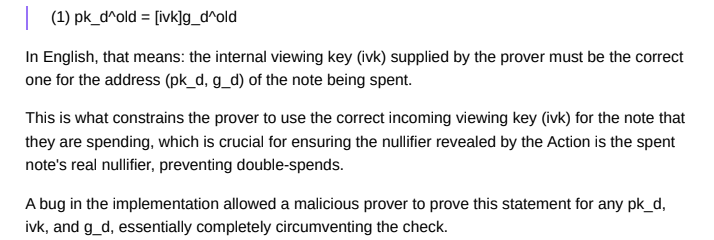
Two lines in halo2's variable-base scalar multiplication gadget used assign_advice() where copy_advice() was required. As a result, the diversified-address integrity check pk_d = [ivk]·g_d could be satisfied for arbitrary inputs. A malicious prover could spend the same note multiple times with different nullifiers, i.e. counterfeit ZEC inside the Orchard pool, undetectable on-chain because the privacy of the ZK proof hides exactly the inputs that would reveal the attack.
We do not know whether it was exploited. We will probably never know.
2. Four years. Multiple audits. Top-tier reviewers.
Orchard was reviewed by some of the strongest cryptographers in the field before activation. They missed it. Earlier automated audits with Opus 4.7 missed it. Opus 4.8 catches it in roughly 1 in 4 runs when prompted generically. The bug is hard.
And ZK inflation bugs are not new. Zcash itself shipped a counterfeiting vulnerability in Sprout (BCTV14) that survived years before being silently neutralized during Sapling. Similar soundness issues have appeared in circom, halo2, and rollup verifiers since. The pattern is consistent: when the protocol is private, exploitation is undetectable. You patch the bug and hope.
3. What Zcash did right
This was a textbook decentralized incident response:
▶️Audit: a full AI-assisted soundness audit of halo2 Orchard, scoped end-to-end.
▶️Discover: the agent flagged the missing constraint and worked out the algebra to turn it into an exploit. A working RPC-level PoC in ~6 hours, mostly waiting on tokens.
▶️Coordinate: a soft fork disabling Orchard, prepared and distributed without leaking the bug, activated 2 days and 15 hours after acknowledgement. Coordinating a soft fork across miners, exchanges, and nodes without disclosing why is genuinely hard. They did it.
▶️Disclose: timeline, code lines, math, open questions. No spin.
Worth naming explicitly: Zcash's turnstile invariant caps the value that can ever leave a shielded pool by the value that entered it. Privacy and verifiability inside the same protocol. That is not an accident. That is good engineering, and it is what kept the worst case bounded.
4. The economics of security just changed
AI does not change whether bugs like this exist. It changes the cost of finding them. I wrote about this x.com/P3b7_/status/203643721…: a missing constraint in a 4-year-old production ZK circuit used to require a top-tier cryptographer with months of context. It now requires a few tokens, an API key, and a well-framed prompt.
The defender benefits. The attacker benefits more, they only need to find it once, and they never disclose.
Orchard is the optimistic version of this story: defense got there first. The pessimistic version is the one we cannot rule out, because the chain is private by design.
5. The only real exit
You do not patch your way out of this asymmetry. You raise the floor.
Formal verification of consensus-critical circuits, every assign_advice audited by SAT solvers and AI for under-constraint, as the reporter himself recommends. Proof-grade engineering that used to be too expensive is now cheap enough to be mandatory.
Hardware roots of trust, secure enclaves, certified secure elements, WYSIWYS. Cryptographic guarantees the user can actually verify, not promises a host can lie about.
Continuous AI-assisted audit of every consensus-critical commit, re-run immediately on the release of any new frontier model.
Zcash didn't just patch a bug. They demonstrated the new defensive playbook: AI-driven audits, decentralized coordination, radical transparency, verifiable invariants. That is the direction the rest of the industry needs to follow.
And those who don't raise the bar for security will be rekt in this new world.
Stay safe. Stay honest about your trust assumptions.
4
3
52
4,646
riptide retweeted

Jun 3
Avoiding confrontation is single behavior that will ruin your life
You must CONFRONT. Confront your problems, confront your avoidances, confront those behaving improperly
The only way out is through. And to blast through requires confrontation
33
485
3,492
707,313
Jun 1
Back in Manhattan for the first time in many years
will be around until the 10th. DM if you'd like to meet up
1
27
1,927
Jun 1
You would hope that after we wrote up our findings for multiple live criticals on the Zodiac modules at @therealgregoAI months ago, that PERHAPS if one's company used these modules in a live, deployed, project the CISO would want to have another audit done (last one was 6 years ago with many changes since then)
Instead what happened is Gnosis has split into multiple different entities and neither one of them wants to own something that is widely used and directly affects their core product and brand
If a hacker reported this bug he would have received no bounty
Unfortunately, again, it looks like DeFi will only improve through pain
Jun 1

Unfortunately, there is a hack related to @gnosispay and the "delay module".
Please be patient while we try to contain the damage. Rest assured, Gnosis will cover all user losses.
5
4
79
7,598
May 29
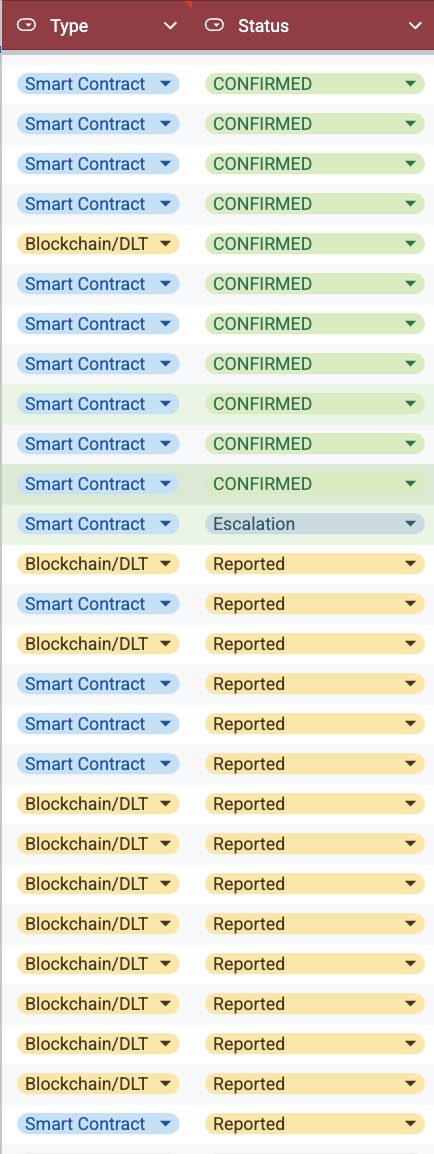
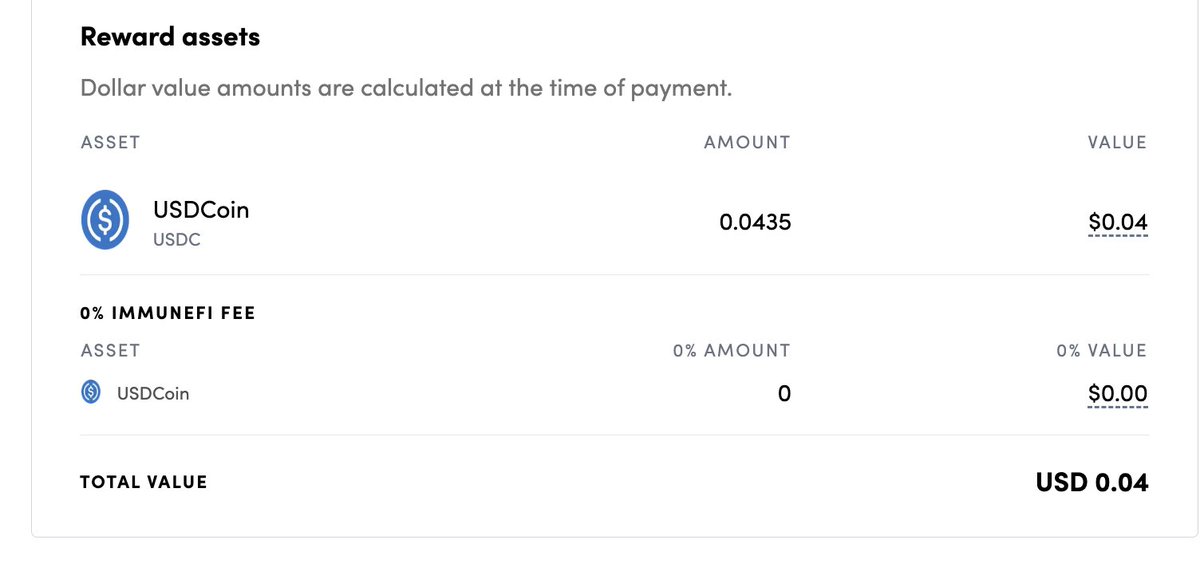
I just found a bug and got paid on @immunefi #immunefitribe immunefi.com/s/ss/?severity=…
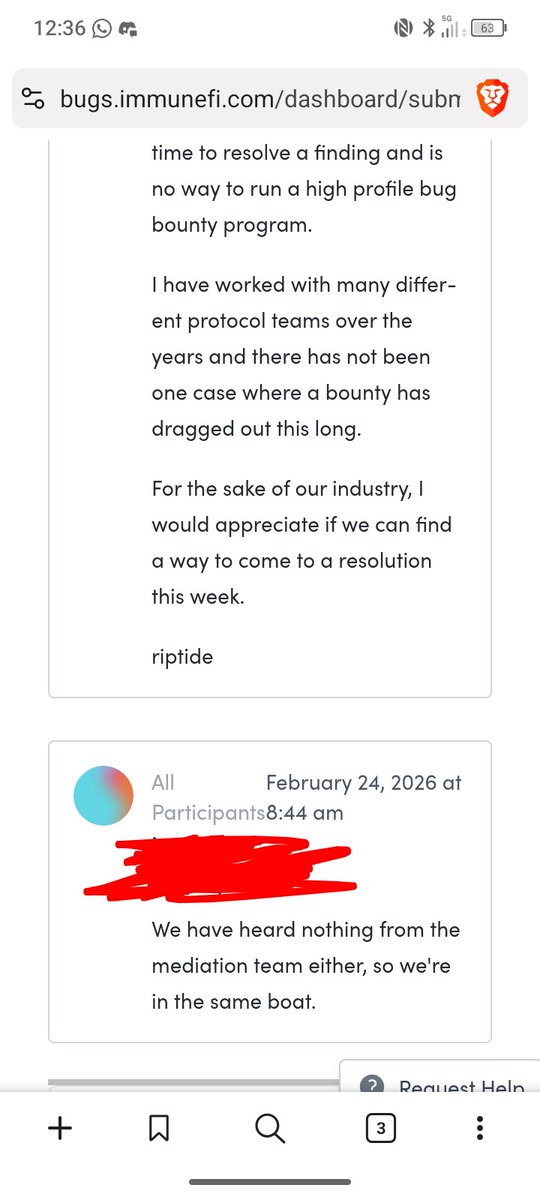
One of the findings from v1.0 of @therealgregoAI which we originally submitted NINE MONTHS ago has finally reached a resolution
I wish this painful lengthy experience on no one and likely have set the immunefi world record
Let's strive to do better as an industry recognizing the efforts of whitehats and value their time appropriately
20
9
291
7,897
May 29
Big changes are on the horizon for DeFi and further crypto adoption in Japan next year
Lets keep security at the forefront while opening up more pathways to onboard to DeFi
Grateful for the opportunity and looking forward to a great discussion in Tokyo
May 29

We’re thrilled to welcome Justus Hanna (@0xriptide), CEO at Grego AI, to the stage at JBWS2026!
Join us in Tokyo for insights on the future of blockchain and innovation.
📅 July 12, 2026
📍 Shibuya, Tokyo
🎫 luma.com/jfsb91aj
#JBWS2026

2
55
4,868
May 27
Believe it or not, there is code on the blockchain, that no matter how many times you run AI against it, it remains bug free
And then there are protocols with poor security (incl key management) that are getting rekt
Ultimately, we strengthen the ecosystem by embracing well established and well known INCREDIBLY BASIC security precautions levelling up on AI defensive measures
There is a real need right now for AI defensive security which is what we are building at @therealgregoAI. It is a problem with a solution. Our team and many other big brains in this space are hard at work fighting back to ensure this space survives and thrives.
If you feel that the risk is not priced appropriately then that is an individual investment decision, but the market as a whole does not agree given current rates
IMO the benefits of DeFi outweigh its growing pains, and no, it's not time to throw in the towel because your favorite protocol trades meme coins with the admin key, but it is time for investors to demand security be taken more seriously and vote with their capital appropriately
Growth and maturation happens only through adversity
DeFi forever
May 26

PSA: I now consider *all* of DeFi unsafe.
Coding agents are superhuman at finding vulnerabilities, and smart contract security is too asymmetric: defenders need to fix every bug while attackers need just one exploit to steal funds.
5
10
112
7,546
May 25
We found multiple critical bugs in a well known Gnosis Safe Module recently (x.com/compose/articles/edit/…) and warned about the root level access that modules have when enabled
If you have a module that you have enabled on your Safe please drop it here and @therealgregoAI can take a look
May 25

This incident is unrelated to Squid’s core protocol and contracts. All Squid users and integrators are unaffected and no action is needed.
A third-party Gnosis Safe module was exploited today across Base and Ethereum, resulting in approximately $3.2M in losses. The vulnerable contract is verified on Basescan under the name “SquidRouterModule” but this contract was not built, deployed, or operated by Squid. It is a third-party smart-wallet product that chose to integrate with Squid, among other protocols, but has not been in contact with us.
The exploit worked because the third-party module accepted a caller-supplied constant string as proof that a message was secure. If you pass in this string (which is publicly available in the verified contract’s code), then you can execute an array of arbitrary calldata, stealing funds at will. The victims’ Safes had added this faulty contract as a trusted Safe Module, which gives the contract the ability to spend any tokens in the Safe without signatures. Squid’s own router (0xce16F69375520ab01377ce7B88f5BA8C48F8D666) is architecturally different and was not touched. Squid user funds, approvals, and integrations are fully secure.
Early public reporting may reference “SquidRouter” due to the contract’s verified name on Basescan. The accurate framing is: a third-party SquidRouterModule was exploited, not Squid’s Router contract. The contract shares our name but is not our code. We are monitoring the situation and will share updates if anything changes materially.
4
5
88
18,024
riptide retweeted
May 25
The core argument: protocols often spend 6-figures on periodic human audits and still have no guarantee of security.
Code now ships faster than auditors can keep up with.
This exposes protocols to new risks between cycles.
Attackers are increasingly AI-assisted and are constantly looking for new vulnerabilities.
Security has to be continuous, and it has to be AI-powered too.
But not all AI security is the same. Most AI scanners stay at the surface and give you a ton of false positives.
Grego AI is built to go deeper than human review, because it’s tracing multiple logic across layers of interacting systems, and gives you minimal false positives.
We’ve found confirmed vulnerabilities in protocols like Lido, Chainlink, Reserve, Aave, Uniswap, Euler, Polygon, and others. All previously audited by leading security firms. All found 100% through AI.
Watch the full talk with our CEO @0xriptide here 👇
4
27
2,051
May 22
Most of the recent high profile exploits didn't start with a smart contract exploit they started with a human
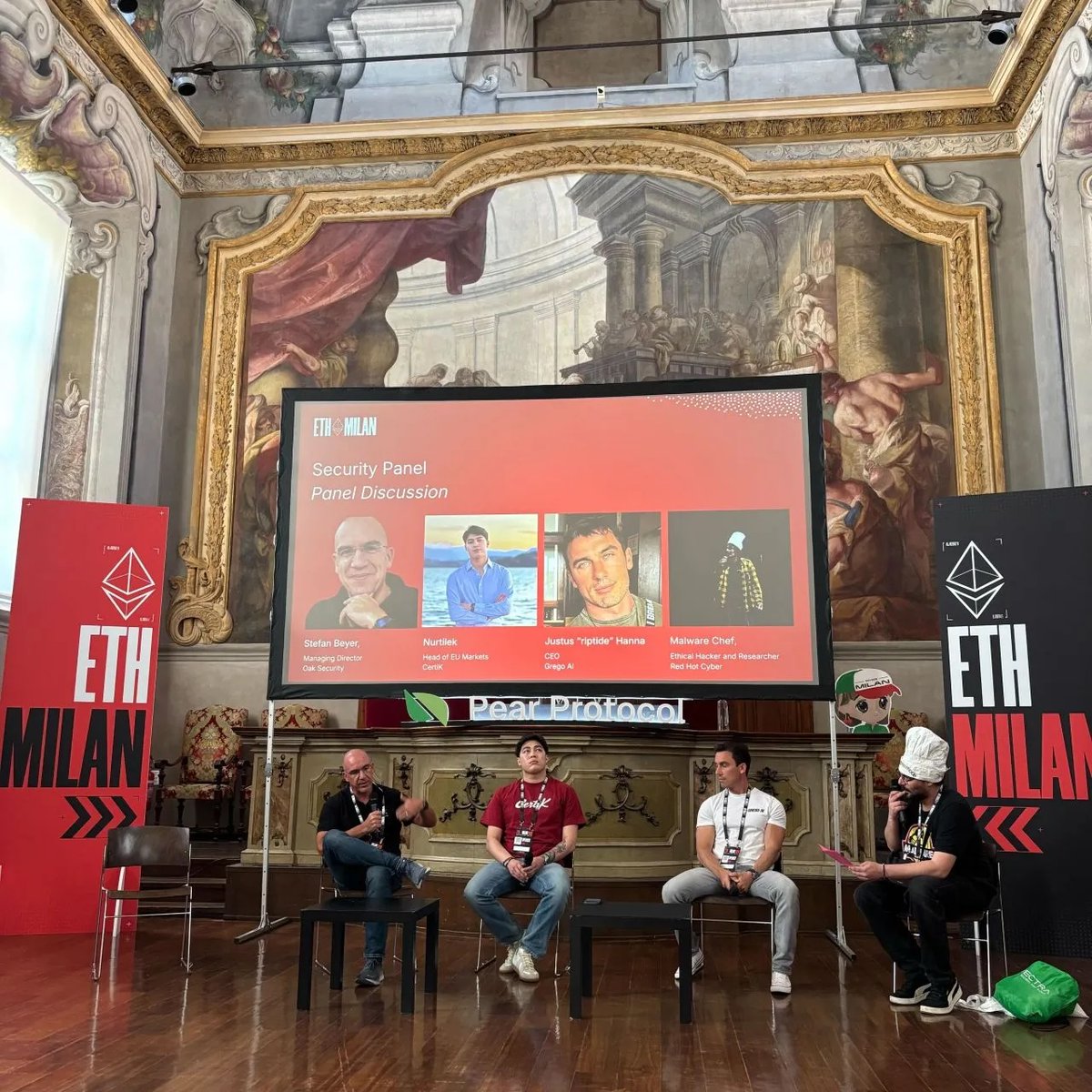
Dropped a few suggestions in the room at the security panel @ @eth_milano and might as well rehash them here:
- Use separate devices for work and leisure. Use an airgapped wallet. Your daily driver with 35 chrome extensions shouldn't be your signing machine
- Simulate and inspect every transaction before you sign it. No blind signing you might as well put it all on black at the casino
- Double check your recipient address (address poisoning is a very real risk)
- Consider a multi-sig for anything of significant value
- Revoke token approvals regularly. Most people set and forget until it's too late
Attackers are getting more sophisticated, but the basics haven't changed ... yet most teams still aren't doing them!
Great sharing the stage with @beyer_st and Nurtilek from @CertiK
1
2
79
3,161
May 20
Imagine reporting this theoretical attack to a bug bounty program
May 20

We’re sharing our completed post-mortem on the April 18th incident, prepared with @Mandiant and @CrowdStrike. We are publishing both an executive summary and the full report at the link below.
Over the past four weeks, we’ve worked with hundreds of partners to help them understand their current security posture, and harden it where appropriate. We’ll continue this work, alongside taking additional proactive steps for the benefit of not only our partners, but also the ecosystem as a whole.
We want to extend our thanks to our partners for their support and patience this past month. There’s a reason that over $12 billion has moved across the network in the past four weeks, and why the world’s most valuable asset issuers have stood by our side: they believe in us, in what the LayerZero protocol has to offer, and in the value of modular, isolated, application-controlled security.
The work continues. And we look forward to continue showing up for the applications that trust us with their business, as well as the broader ecosystem.
layerzero.network/blog/layer…
15
4
152
14,511
May 20
AI black hats are the ultimate forcing function
most devs have been sleeping on security for years as their code was not worth the time or effort to attack
now you simply cannot ignore it
proactive AI security solutions will play a huge role going forward
3
2
75
3,343
riptide retweeted

May 19
Introducing the Monastery for AI-native founders.
A single builder can now outperform a publicly traded company.
$2 million. 12 weeks. Do the impossible.
122
150
1,011
350,197
riptide retweeted

May 18
Many people have claimed that with AI-assisted bug finding, secure code (and hence trustless anything) will be impossible.
I have a much more optimistic take, and AI-assisted formal verification is a major part of the reason why:
vitalik.eth.limo/general/202…
449
401
2,572
456,135