
The American Council for Capital Formation's policy goals are strong capital formation, a cost-effective regulatory regime, and strategic approach to energy.
Joined April 2011
- Tweets 1,152
- Following 152
- Followers 921
- Likes 21
272 Photos and videos







Jun 10
Important column from @SenKevinCramer connecting permitting modernization to America’s economic and national security. To outcompete China, the U.S. must be able to permit, finance and build critical projects at the speed this moment demands. foxnews.com/opinion/sen-kevi…
24
Jun 10
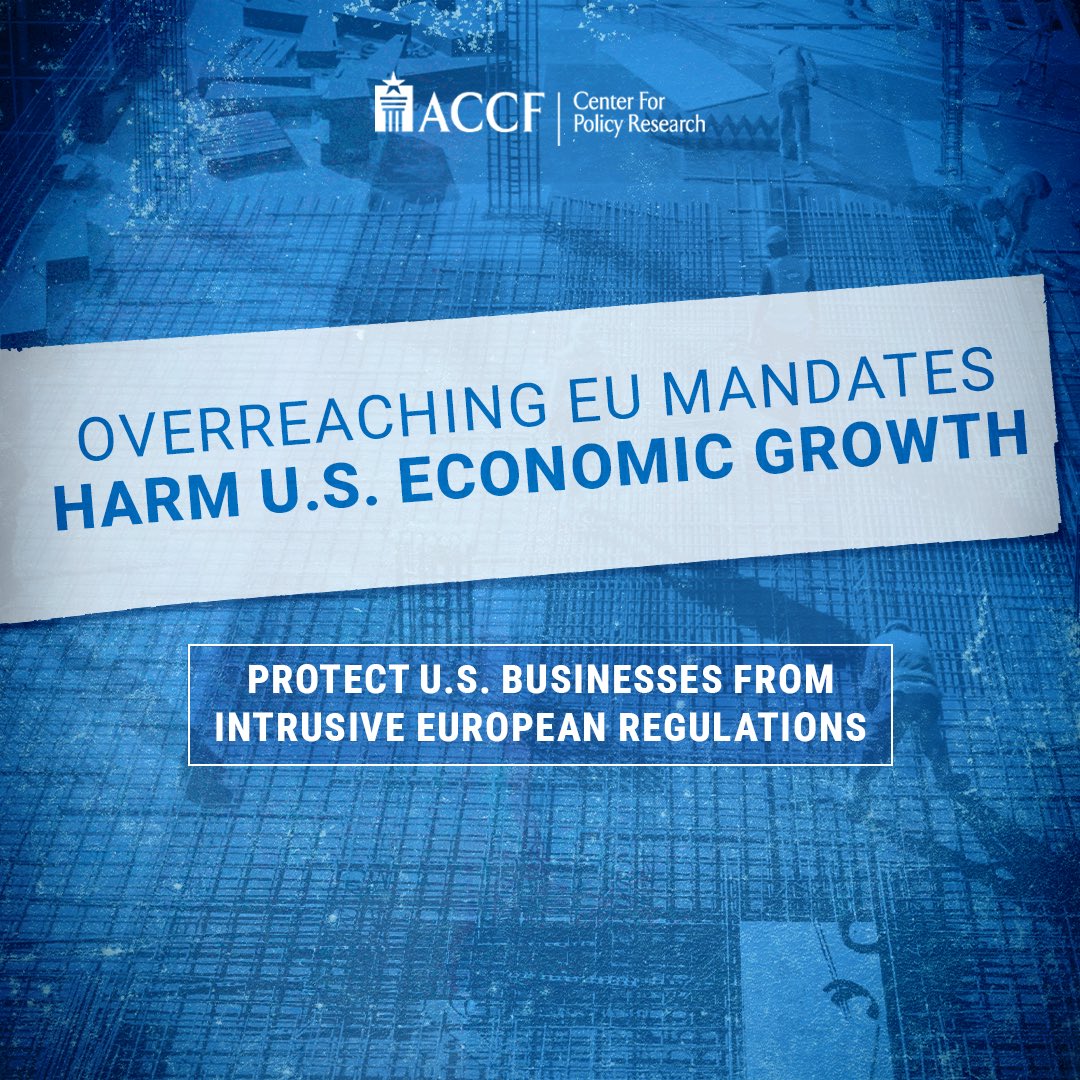
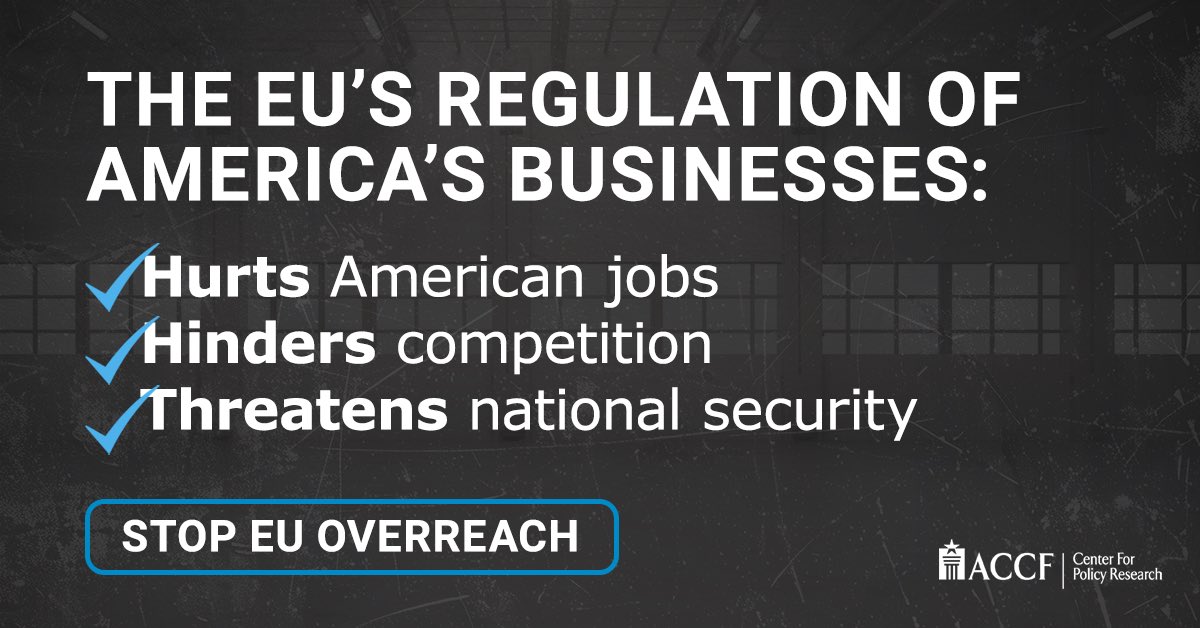
Misguided EU regulations are weighing down American competitiveness and economic growth. Supporting American industry means safeguarding businesses from foreign mandates like #CS3D. Stopeuoverreach.com
1
1
33
Jun 9
Foreign mandates like #CS3D don’t just stifle American economic growth; they also threaten American sovereignty. Our businesses should not be governed by European regulations. Learn more at stopeuoverreach.com
1
1
49
Jun 9
The ACCF applauds @RepBethVanDuyne and @RepTerriSewell for the GROWTH Act. Americans’ careers and savings habits have changed. The tax code should too.
Read more from @DrCebiWilber thewellnews.com/opinions/mak…

The GROWTH Act is commonsense bipartisan legislation I introduced with @RepTerriSewell, it ends the annual taxation of reinvested mutual fund capital gain distributions.
I am excited to share that we now have over 100 cosponsors in the House!
64
Jun 8
ACCF applauds House passage of the bipartisan DOMINANCE Act, led by @RepYoungKim and @RepBera. Reducing U.S. dependence on China for critical minerals is essential to strengthening America’s economic competitiveness, energy security, and national defense. youngkim.house.gov/2026/06/0…
37
May 22
Lawfare is becoming a real economic drag on U.S. energy and infrastructure. A @PelicanInst op-ed reinforces ACCF’s newest report — strategic litigation can delay critical projects for years, raise costs, and weaken American competitiveness. thecentersquare.com/opinion/…
1
72
May 21
America’s retirement system is stuck in the past, and everyday savers are paying the price. ACCF Chief Economist @DrCebiWilber explains why it’s time to modernize retirement investing rules in @re_markets. realclearmarkets.com/article…
2
9
58,739
Apr 27
The EU’s Corporate Sustainability Due Diligence Directive (CSDDD) is more than a regional regulation; it’s a global compliance mandate. See our ads this week in the @dcexaminer For more on the onerous nature of this EU directive, please visit:
stopeuoverreach.com
1
1
133
Apr 15
The pace of change in today’s economy isn’t slowing—and neither is the need for smart, forward-looking policy leadership. In Q1 2026, ACCF brought together policymakers, industry leaders, and experts to tackle key issues.
Catch up on our latest work: icont.ac/51gxh
1
1
68
Mar 17
Litigation is becoming a policy tool—and it’s costly.
A new ACCF CPR report finds lawsuits can delay projects for years, raise costs, and deter investment. accf.org/new-report-examines…
92
Mar 13
A new ACCF Center for Policy Research report urges the U.S. to lead on solar geoengineering research and governance before adversaries set the rules. Exclusive coverage via @saraschonhardt @Politico. subscriber.politicopro.com/a…
1
94
Mar 11
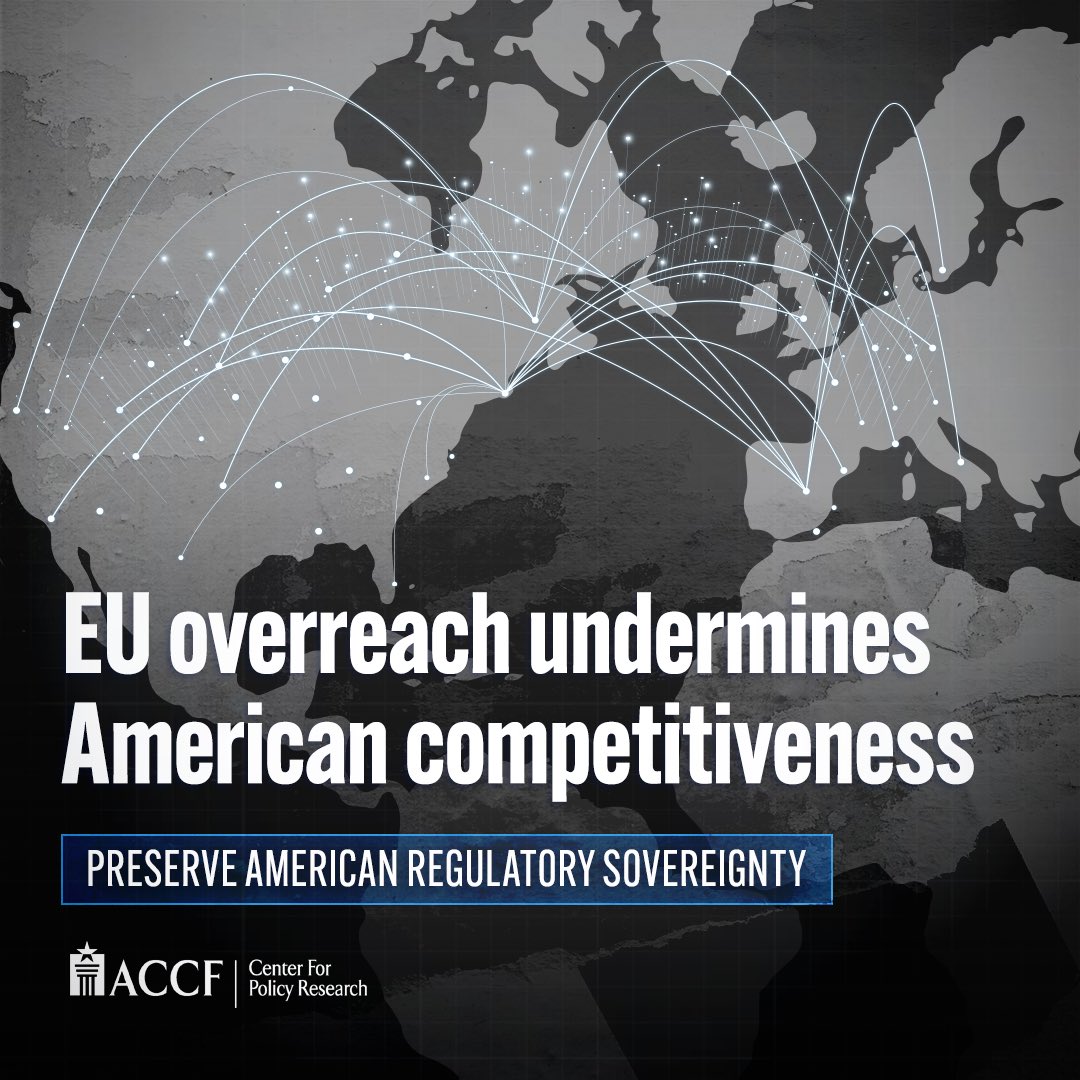
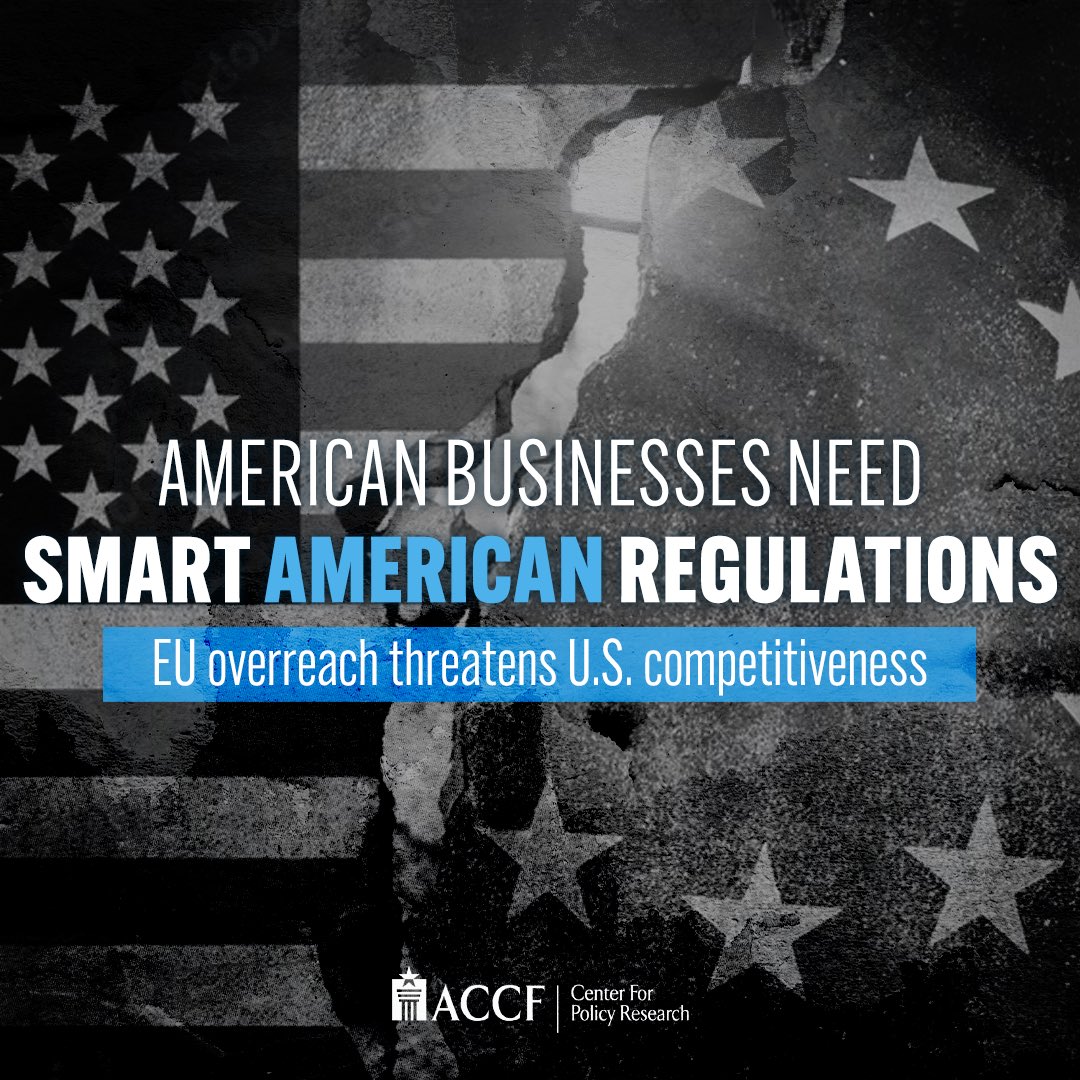
Our new digital ads make the case for U.S. businesses to stand up to the EU Corporate Sustainability Due Diligence Directive (CSDDD). Learn more at StopEUOVerreach.com
158
Mar 11
The EU’s Corporate Sustainability Due Diligence Directive would push sweeping compliance rules deep into U.S. supply chains—impacting thousands of U.S. small businesses. Congress should act to protect U.S. competitiveness. accf.org/theres-certainty-in…
1
1
137
Mar 8
Electricity demand could double by 2050. In @dcexaminer, ACCF President and CEO Dave Banks argues for an an all-of-the-above energy strategy—using our diverse resources to deliver abundant, reliable power and strengthen economic and national security. washingtonexaminer.com/op-ed…
52
Feb 20
EU climate rules through #CSDDD could impose $637B–$1T in compliance costs on U.S. firms. That’s capital diverted from infrastructure and jobs to paperwork and legal overhead. See more from Senior Fellow Mike Roman accf.org/eu-regulations-and-…
104
Jan 27
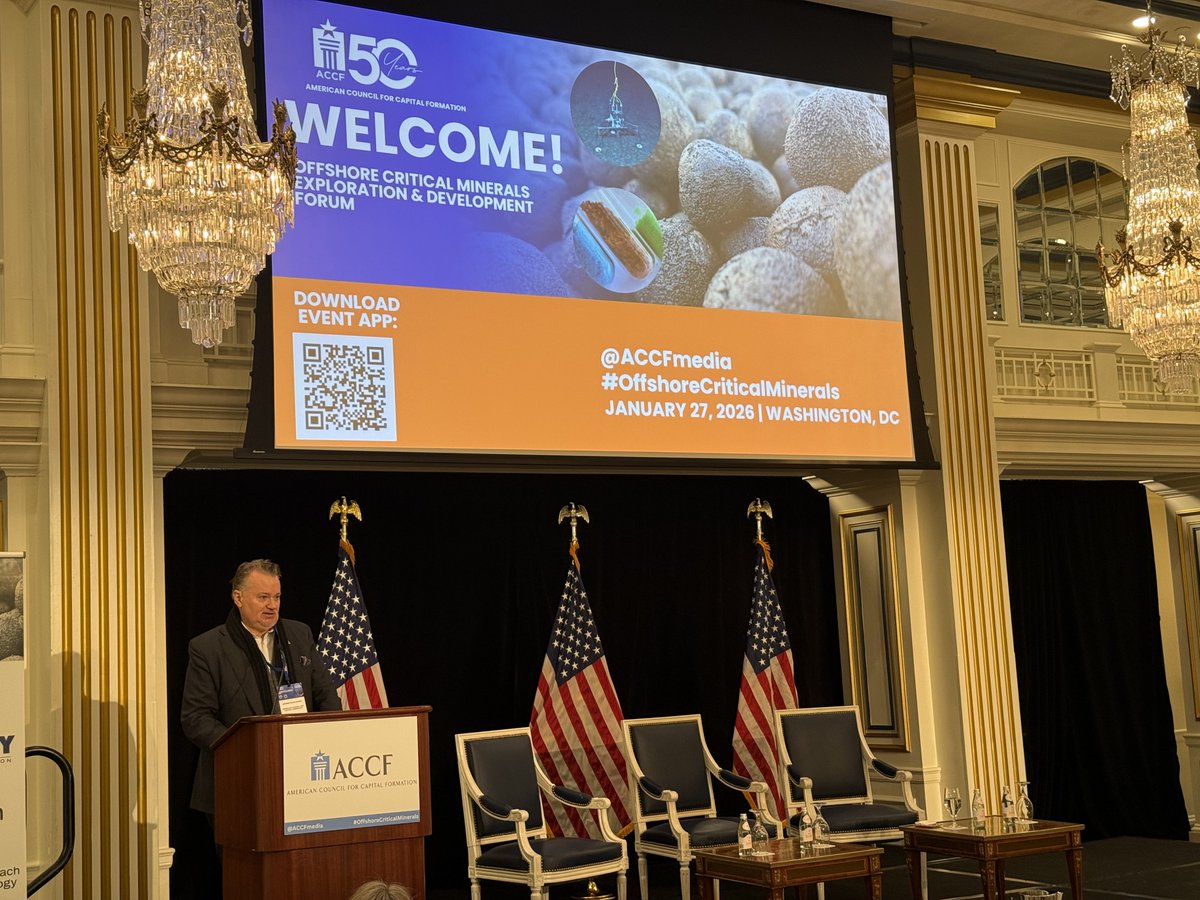
Starting now! @mikeroweworks keynote at the ACCF #OffshoreCriticalMinerals forum. Watch live! youtube.com/live/nxuKFkduE_w…
1
73
Jan 27
The ACCF #OffshoreCriticalMinerals Forum has started! Join the livestream here: youtube.com/live/nxuKFkduE_w…
1
2
65
17 Dec 2025
The ACCF proudly joins @USChamber and a broad coalition in supporting the SPEED Act. Smarter permitting means faster infrastructure, stronger supply chains, and more investment in U.S. competitiveness. Congress should act. #SPEEDAct uschamber.com/assets/documen…
2
84
10 Dec 2025
Even after cutbacks in their plenary session, the EU’s #CSDDD puts jobs, innovation, and competitiveness at risk worldwide. As the directive encroaches on the negotiation of a U.S.-EU trade deal, we encourage stakeholders to learn more and push back at stopeuoverreach.com
125