Performing Arts representative for the Association of Chartered Physiotherapists in Sports and Exercise Medicine.
Joined July 2016
- Tweets 50,403
- Following 6,455
- Followers 2,954
- Likes 130,404
437 Photos and videos



Pinned Tweet

20 Sep 2023
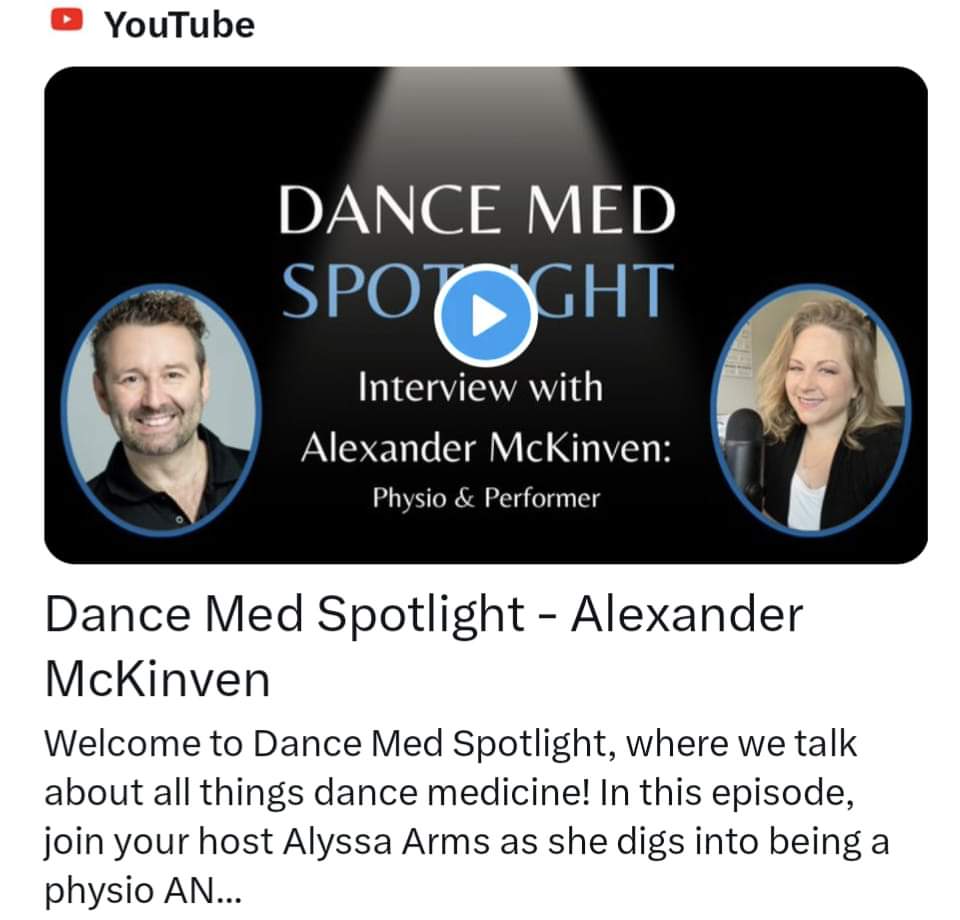
🎙️Great to speak with @thedancept about the continued evolution of dance medicine & science🩰🎪🕺🎺 & the ongoing global efforts to raise standards in the clinical management of performing artists 📝📈Ties in well with the upcoming @physiosinsport series⬇️ x.com/thedancept/status/1702…
1 Sep 2023

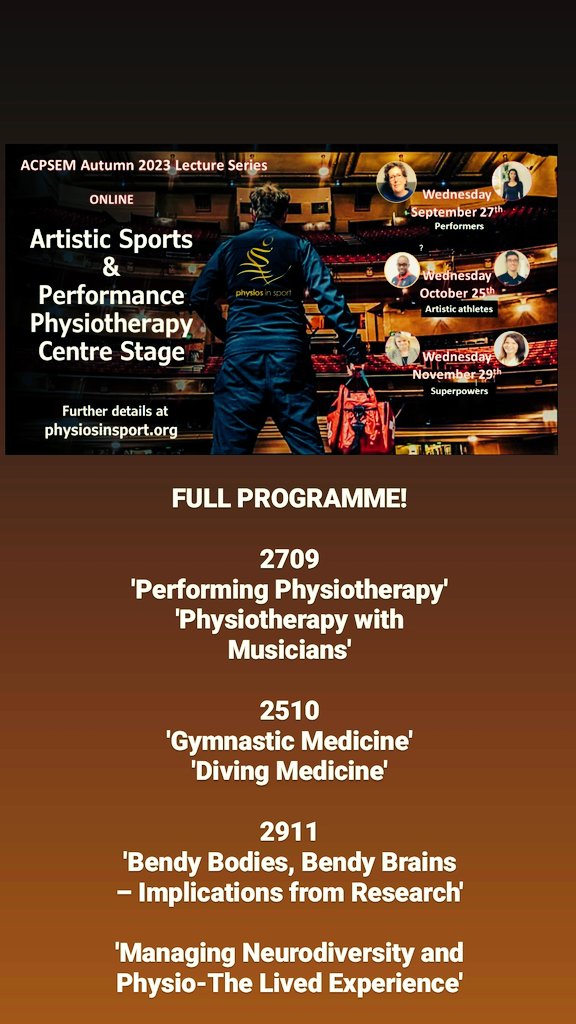
It's September!
So it's the first month of our 'Artistic Sports & Performance Physiotherapy Centre Stage' programme of events!
Check out the evening titles for this Autumn!
Check out the Details &
Book here: bit.ly/AutumnSeries23
3
10
27
25,654
ACPSEMdance retweeted

🚨🚨🚨 New #OpenAccess Article
How are medical and performance departments organised in elite European football? ⚽️
This study reveals substantial variation in structure, leadership, data management, and return-to-play processes!
Read more here:
tandfonline.com/doi/full/10.…
7
27
2,170
ACPSEMdance retweeted

Jun 14
Using virtual reality, researchers found that children who take physical risks during playtime develop better hazard-assessment skills. The study highlights how a cultural embrace of adventurous play helps kids safely navigate complex real-world… dlvr.it/TT212y
11
35
2,329
ACPSEMdance retweeted

Jun 13
Nutritional Adaptation to Circadian Misalignment: Implications for Musculoskeletal Health in Modern Lifestyles
frontiersin.org/journals/nut…
4
9
402
ACPSEMdance retweeted

Public health isn’t built primarily in hospitals—it’s built in the environments where people live.
🌳 Green spaces
🚲 Bike lanes
🚶 Walkable cities
🥗 Healthy food environments
Change the environment → change behavior → improve health.
thelancet.com/journals/lance…
9
26
2,335
ACPSEMdance retweeted

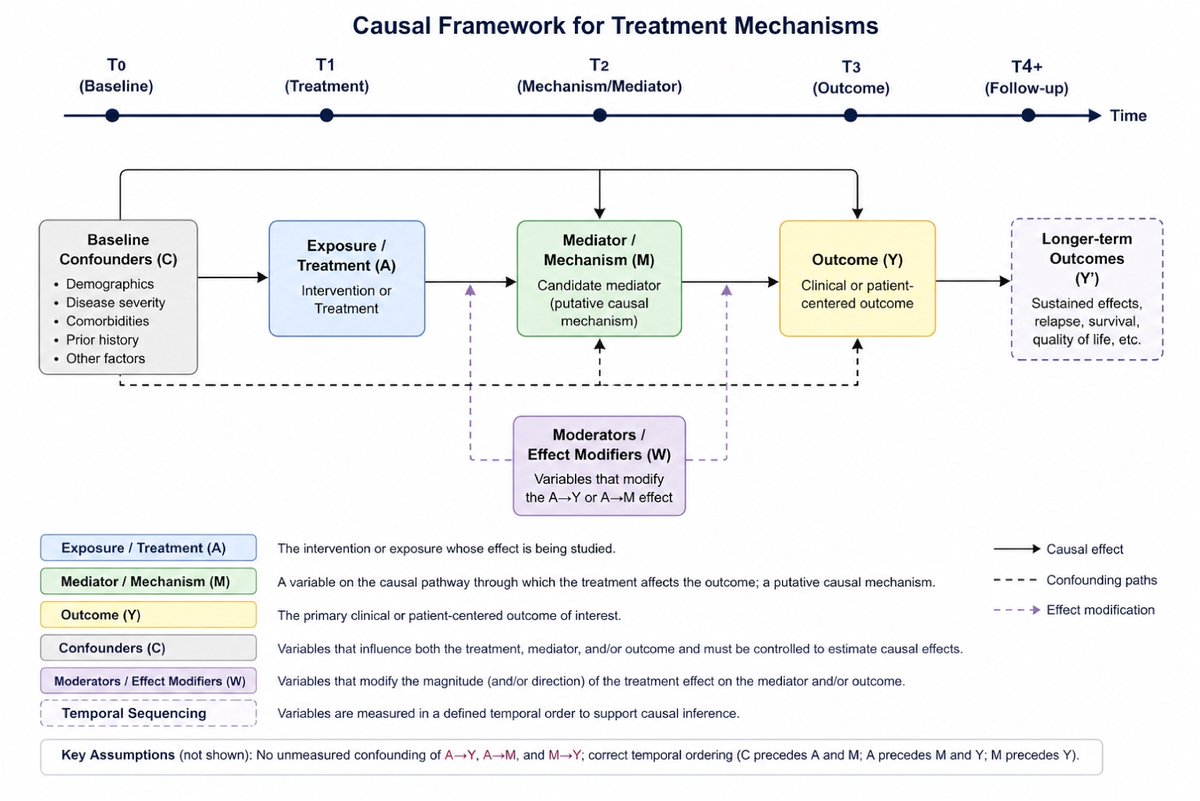
Appropriate Translational Designs for Determining Causal Force-Based (Manual Therapy) Treatment Mechanisms.
sciencedirect.com/science/ar…
1
11
47
3,737

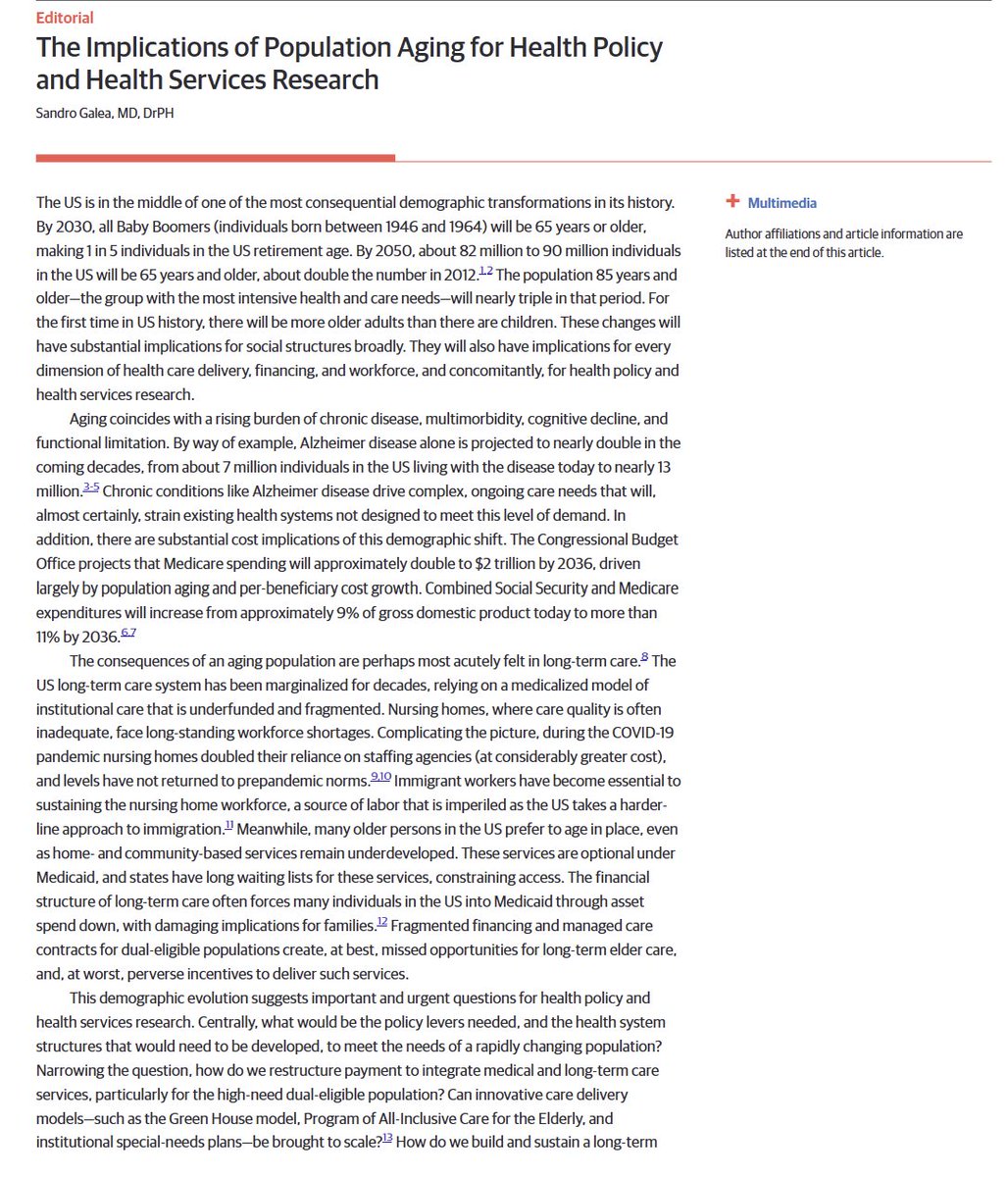
The Implications of Population Aging for Health Policy
and Health Services Research
watermark02.silverchair.com/… via #SandroGalea @lucypgeridoc
4
9
753
ACPSEMdance retweeted

Men Are in an Epidemic, Just Not the One You Think
The not-so-hidden engine behind male self-optimisation culture
By Katie Jagielnicka
thenoosphere.substack.com/p/…
1/2
1
2
25
1,469
ACPSEMdance retweeted
Sports science knows a great deal about what Olympic champions do at their peak, but less about how they get there.
Evidence suggests that youth success is a weak predictor of senior elite performance, supporting broader participation delayed selection
journals.humankinetics.com/v…
1
9
41
3,274
ACPSEMdance retweeted

Teams competing at the 2026 #fifaworldcup will contend with heat & humidity, long-distance travel, time-zone transitions, congested scheduling, altitude variation, & substantial logistical complexity. See our new Collection, guest edited by @Alan_McCall shorturl.at/2eKRR
5
7
956
ACPSEMdance retweeted

Jun 12
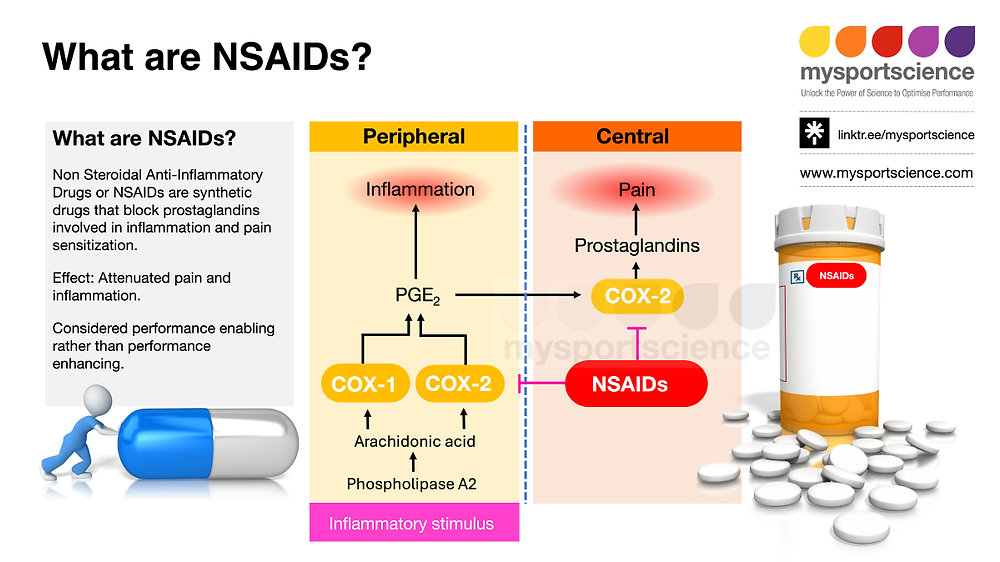
What are NSAIDs? mssa.app/i9i
People often take NSAIDs, such as ibuprofen, to manage pain. In this blog, we explore the mechanisms of action of NSAIDs. We also explore how the mechanism may have important implications for athletes.
7
9
1,714
ACPSEMdance retweeted
Jun 12
Why some people can’t stop working, even when they want to: A study of 43 professionals who can't stop working traces the habit back to childhood. Researchers find that an internalized "doer" identity, built to survive early demands, can quietly generate… dlvr.it/TT1CLg
12
63
2,702
ACPSEMdance retweeted

Jun 11
Performance Under Pressure in Sport: A Position Statement from Exercise and Sports Science Australia (ESSA)
pubmed.ncbi.nlm.nih.gov/4227…
3
9
598
ACPSEMdance retweeted

Jun 11
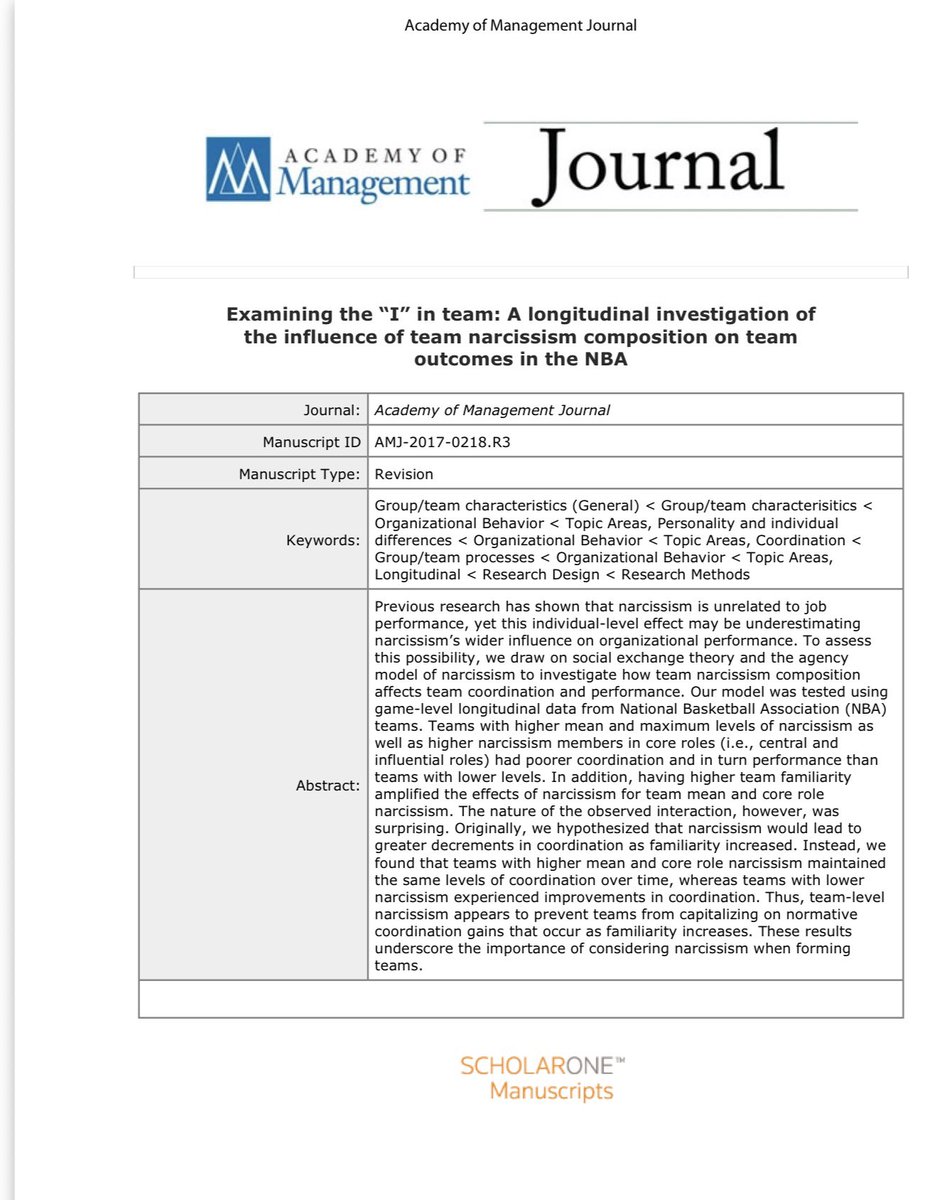
I am not a psychologist, but I came across an interesting paper by Grijalva, Maynes, Badura, and Whiting titled Examining the “I” in Team, and it hit on something very practical for anyone who has coached, led, or worked inside a team. The paper looks at narcissism in NBA teams and how it can affect coordination and performance. One line that stood out was the idea that narcissists may “trade interdependence and closeness for individual status and esteem.” That is a powerful way to describe something many coaches have seen, especially with young athletes who are pushing for a starting role or trying to prove themselves.
The practical piece is what matters most to me. The paper describes how “egocentric behaviors will evoke reciprocal selfishness from exchange partners,” and that is where teams can start to break down. When one person starts highlighting themselves, chasing credit, or moving off the collective mission, others often shift into protection mode. They start guarding their own effort, their own role, their own recognition, and their own standing. The paper says this creates “a shift toward emphasizing personal interests over those of the collective,” which can hinder team coordination and performance. In coaching terms, that is when the team stops playing connected and starts playing guarded.
I wish I had this language when I was coaching athletics, because I saw versions of this all the time. Not in a bad way. These were young athletes trying to earn opportunities, prove they belonged, or fight for playing time. But many did not yet understand that when the collective team gets better, everyone’s individual opportunity also improves. Effective teams have to address these vulnerabilities because all of us are capable of drifting toward the personal train for our own glory. The goal is not to shame ambition. The goal is to mature it, so individual drive strengthens the team instead of pulling people away from it.
Team needs to be coached and nurtured!
1
2
5
710
ACPSEMdance retweeted

Jun 11
NEW ARTICLE ALERT (June 1, 2026)
“The Forgotten Group: A Call to Focus on Early Adulthood in Sport and Physical Activity Policy and Research”, by Natalie Connolly, Holly Thorpe, William M. Roberts & others, available online and open access ahead of print.
journals.sagepub.com/doi/ful…
1
2
174
ACPSEMdance retweeted

Jun 11
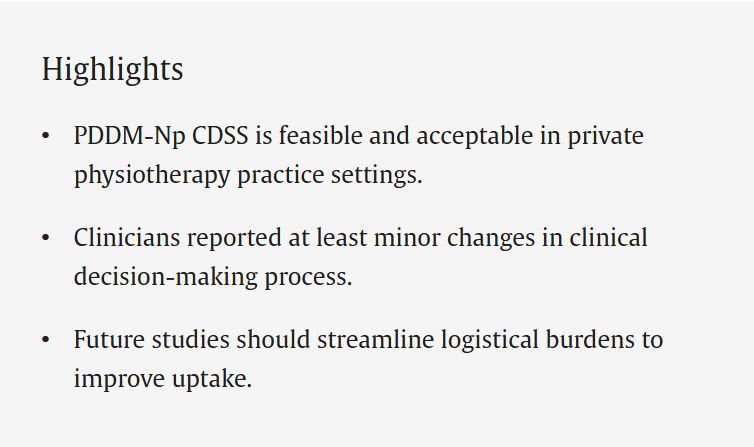
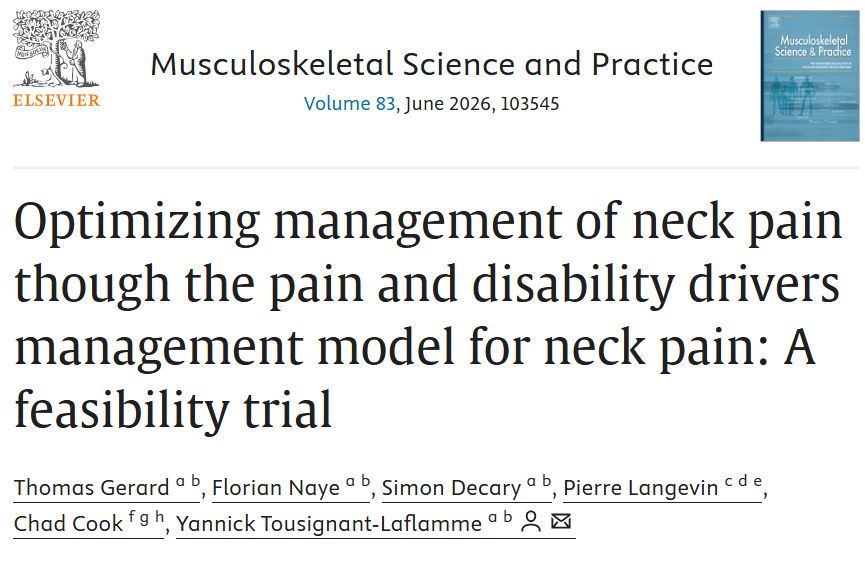
Are we missing important drivers of neck pain when making clinical decisions?
This feasibility trial buff.ly/0xlUdi0 evaluated the Pain and Disability Drivers Management Model for Neck Pain (PDDM-Np), a clinical decision support framework designed to help clinicians identify and address multiple contributors to neck pain.
#Neck pain #Rehabilitation #Stratified care #Physiotherapy
10
15
1,473
ACPSEMdance retweeted

Jun 11
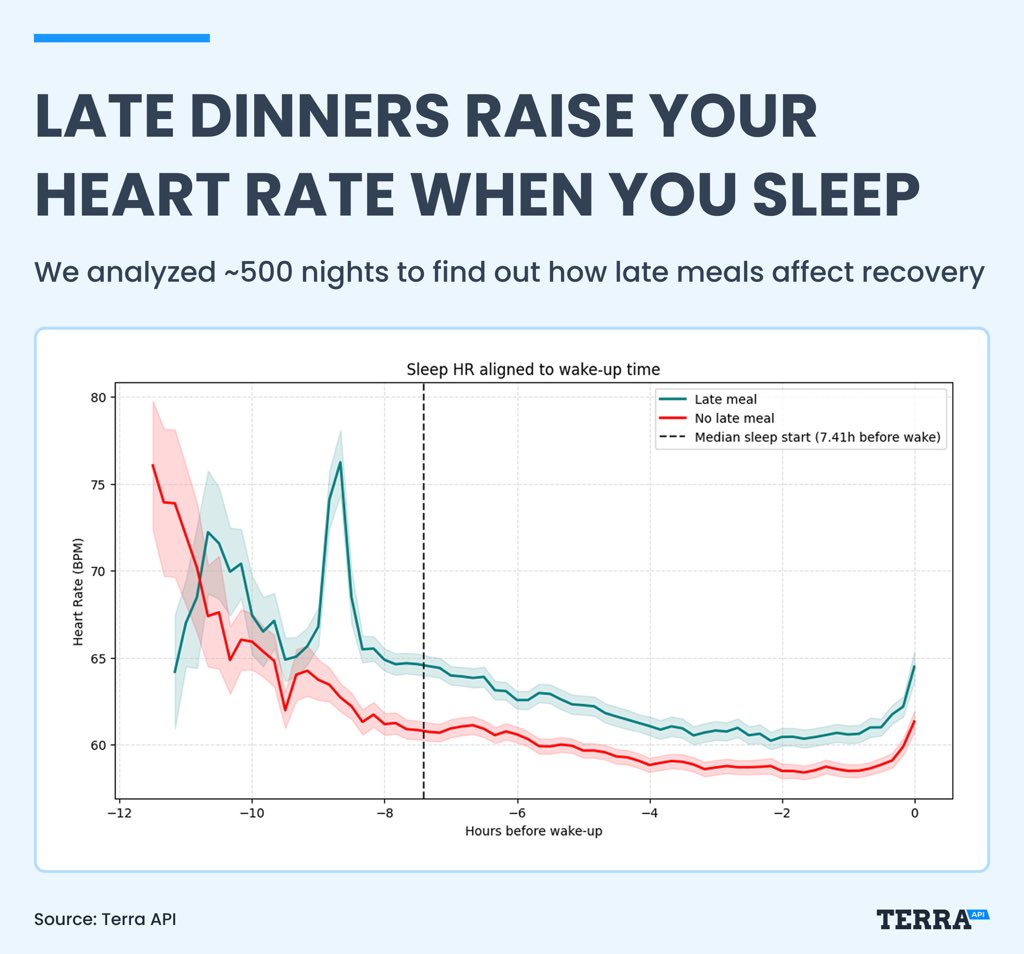
Did you know that eating late meals affects not only your sleep but your heart rate, too?! This was quite hard for me to wrap my head around.
At @TerraAPI Research, we analysed thousands of nights of wearable data to explore whether late eating meaningfully impacts sleep. Not in a lab, not in a controlled setting, but in the messy reality of everyday life.
There is a relationship between late eating and sleep. Eating closer to bedtime is associated with slightly worse recovery, as evidenced by higher heart rate, later sleep onset, more awake time and small changes in sleep structure (although sleep structure measured with wearables should be taken with a pinch of salt), but the magnitude is modest.
If you’re interested, link to the full research is in the comments below
6
8
50
9,532
ACPSEMdance retweeted

Jun 11
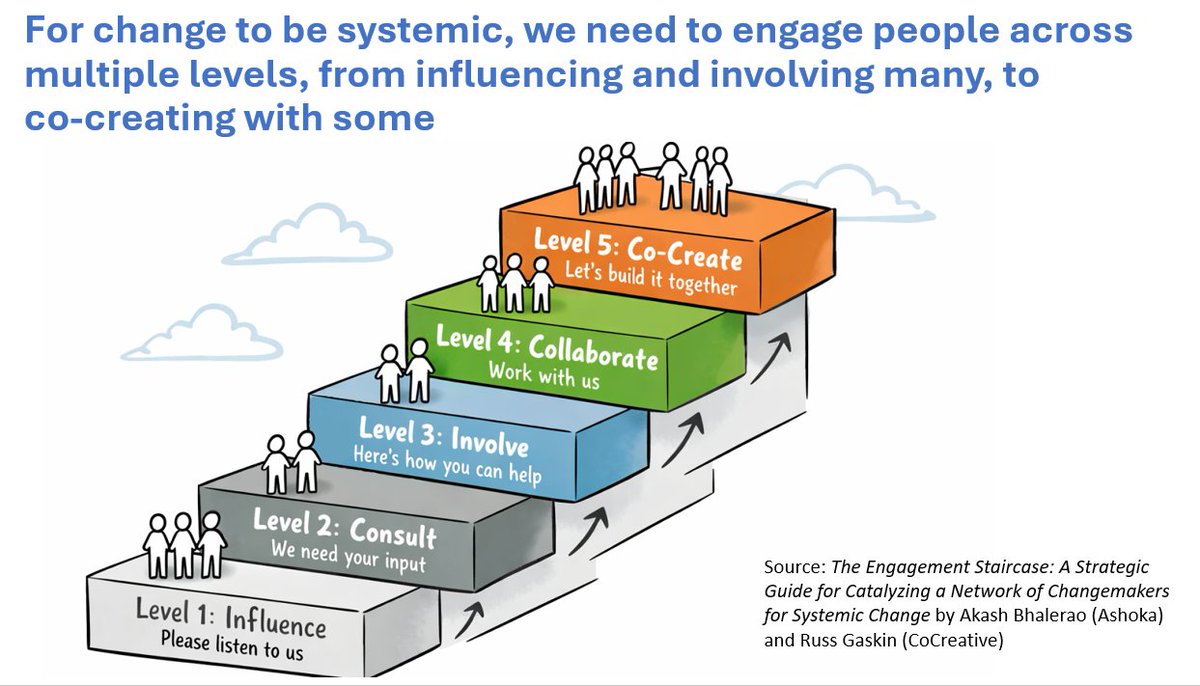
If we want change to be systemic, we need to engage people across multiple levels, from influencing and involving many, to co-creating with some.
The "Engagement Staircase" from Russ Gaskin (CoCreative) and Akash Bhalerao (Ashoka) is a really helpful, research-informed framework for thinking about who we need to engage and how.
Their core premise is that engagement is not a single act. It exists on a spectrum of levels, from communicating to many, through consulting, involving, and collaborating, to co-creating with a smaller core. Each step represents a progressively deeper level of stakeholder participation, ownership and shared power.
In health and care, that tends to mean a lot of communication and consultation, and not enough collaboration and co-creation. We often inform people about change. We ask for their views. We call it engagement. But informing is the bottom step of the staircase, and consulting, however well-designed, still positions the leader as the one who decides.
Working at higher levels of engagement requires a different kind of change leadership capacity. Co-creation is likely to mean relinquishing control over outcomes. Collaboration requires an ongoing investment in relationships, not just in on-off tasks. Most change leadership development is better at building lower-level engagement skills than upper-level ones.
In our sector, there is a big push towards “co-production” or “co-creation” which is a positive thing. However, It is also problematic to think that we need to co-create with a lot of people. The higher up the staircase, the fewer people are involved, and that's by design. We communicate to many; we co-create with some. We have to be intentional about this distribution. The risk is trying to get everyone to the top step, or, just as problematic, keeping everyone at the bottom. Both are strategic errors.
We should seek to work across all five levels simultaneously. It’s about holding large-scale awareness and influence across a wide network while nurturing a smaller network of co-creators who are deeply invested in the work. This requires thinking about engagement like a portfolio, mapping who needs to be where on the staircase, and actively managing upward movement over time.
There is also an equity dimension. Who gets invited to collaborate and co-create? In too many change initiatives, the higher levels of engagement get reserved for those who already hold formal power or existing relationships with the change leader. Creating the conditions for systemic change means actively seeking out people whose experience is closest to the problem, even when that requires bridging structural divides.
We might treat the Engagement Staircase as a mirror - reflecting on which levels we are working at, with whom, and what it would take to move the right people to higher levels of ownership of the change.
The article: lnkd.in/eaDX8z5p. It has links to some great resources.
26
63
3,880

ACPSEMdance retweeted
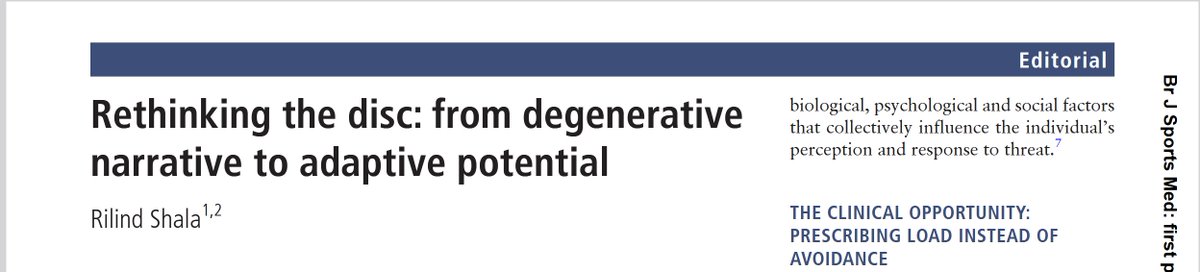
Just published in BJSM
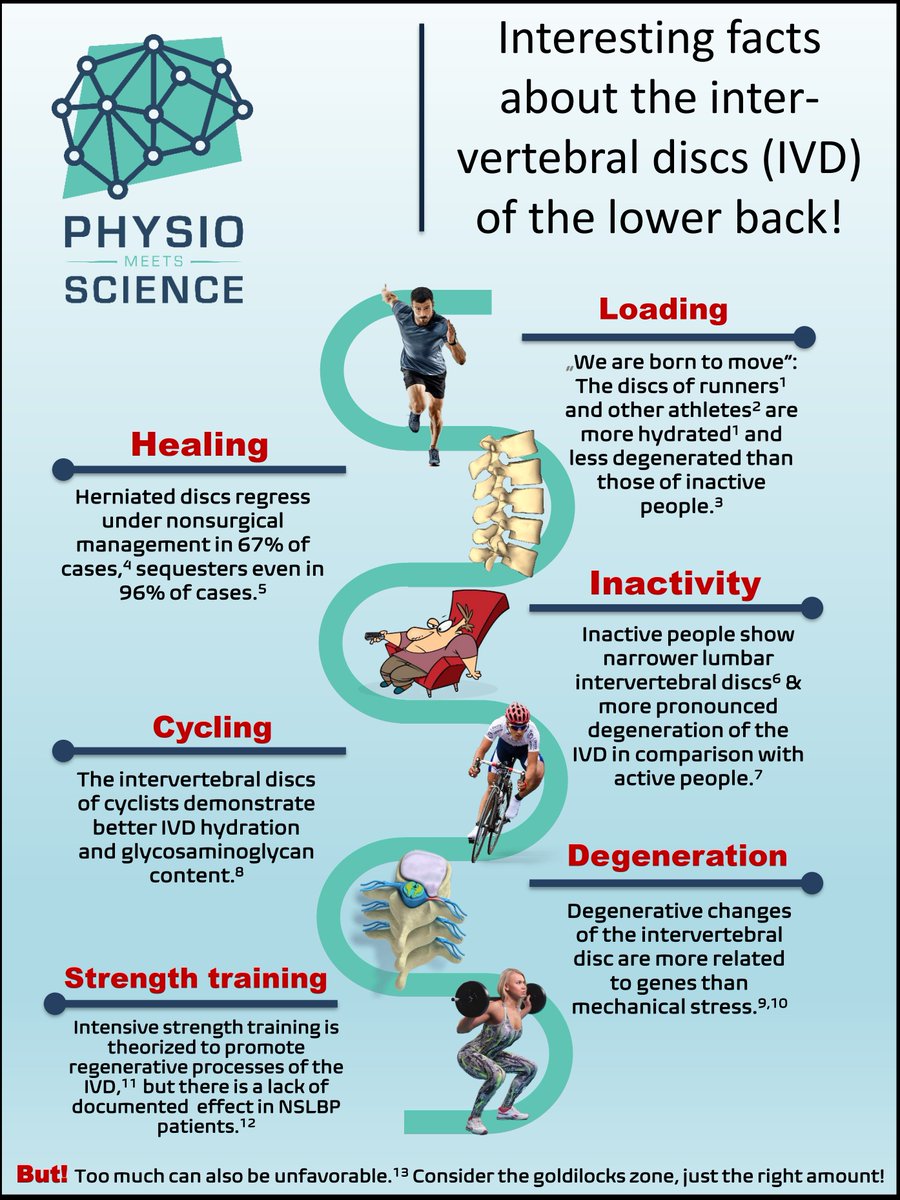
Rethinking the disc: from degenerative narrative to adaptive potential
bjsm.bmj.com/content/early/2…
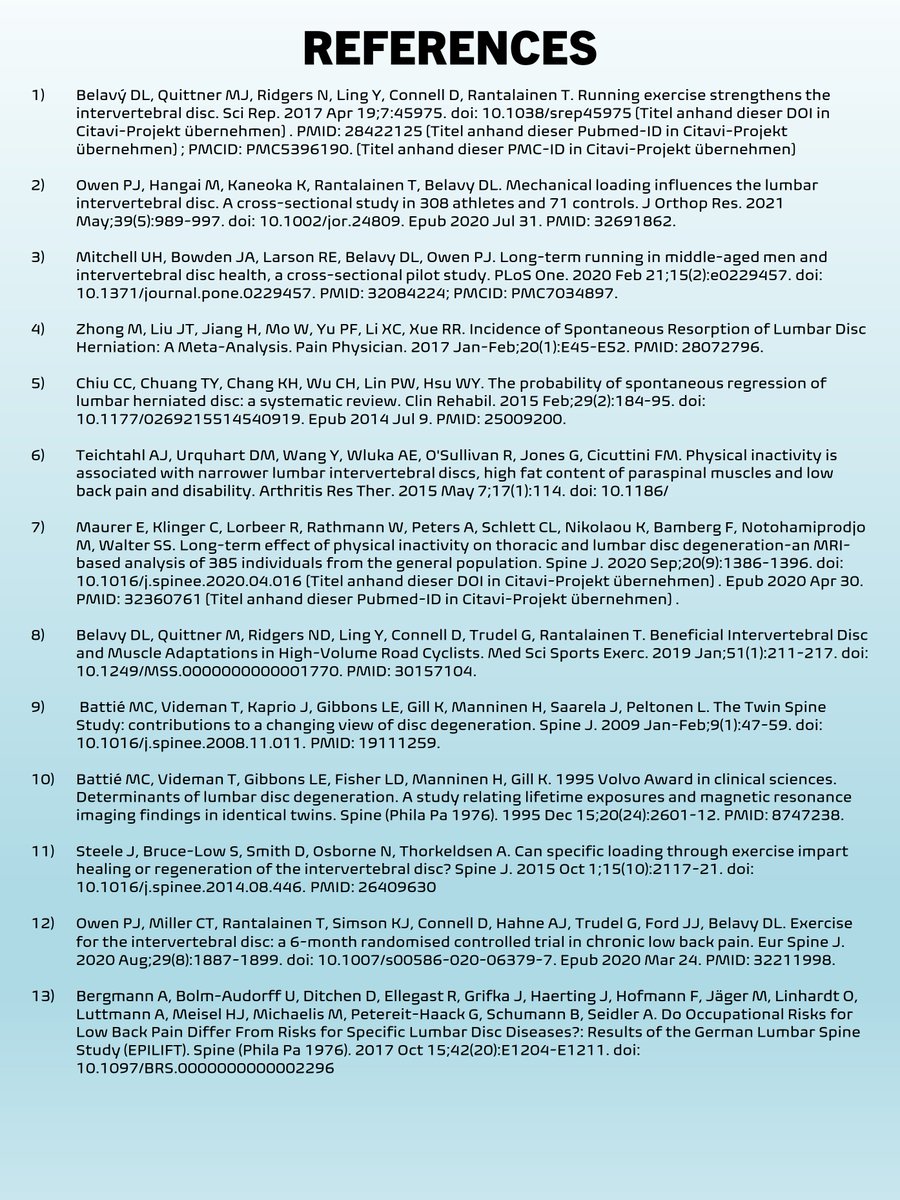
reminds us of our infographic 👇
3
40
154
9,152
ACPSEMdance retweeted

Apr 10
📢 New publication in the British Journal of Sports Medicine (BJSM)
👉 “I coach them, I treat them, I listen to them”: the multifaceted role of the coach - a qualitative study on stakeholders’ perspectives on injury prevention and management in Senegal
pubmed.ncbi.nlm.nih.gov/4195…
1
3
79