An Africa where evidence is used consistently to transform lives | L'Afrique où les preuves sont systématiquement utilisées pour transformer les vies
Joined July 2012
- Tweets 10,668
- Following 5,374
- Followers 9,282
- Likes 3,496
3,486 Photos and videos


AFIDEP retweeted

Africa’s greatest resource is its people.
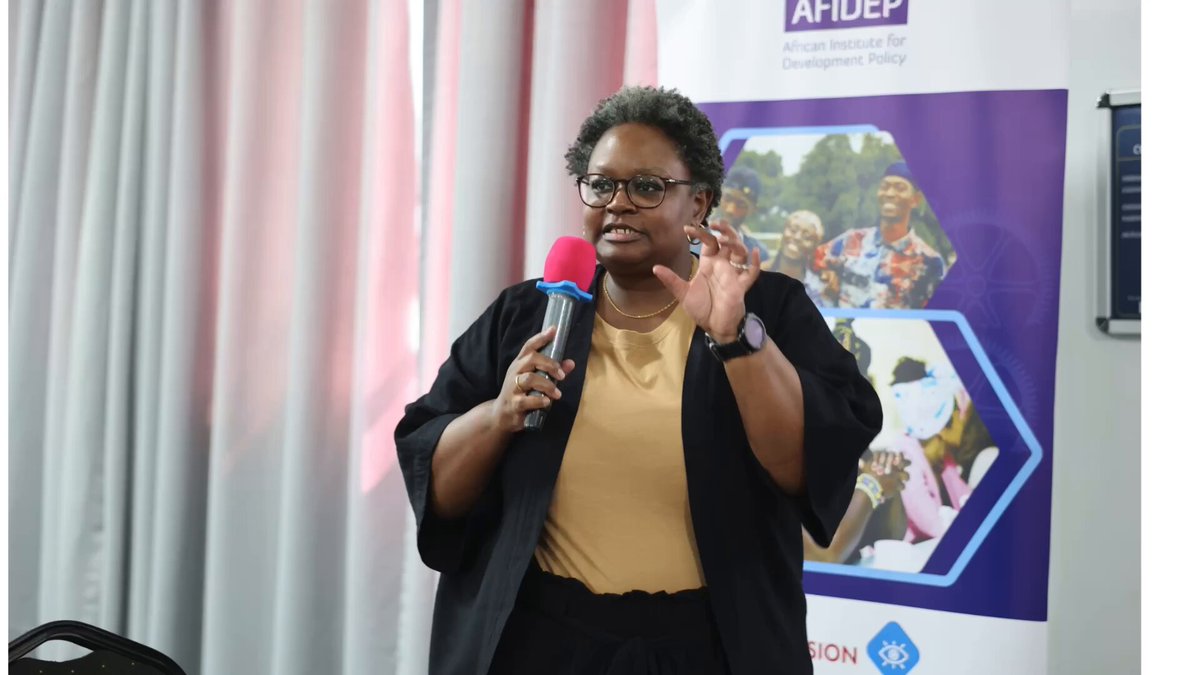
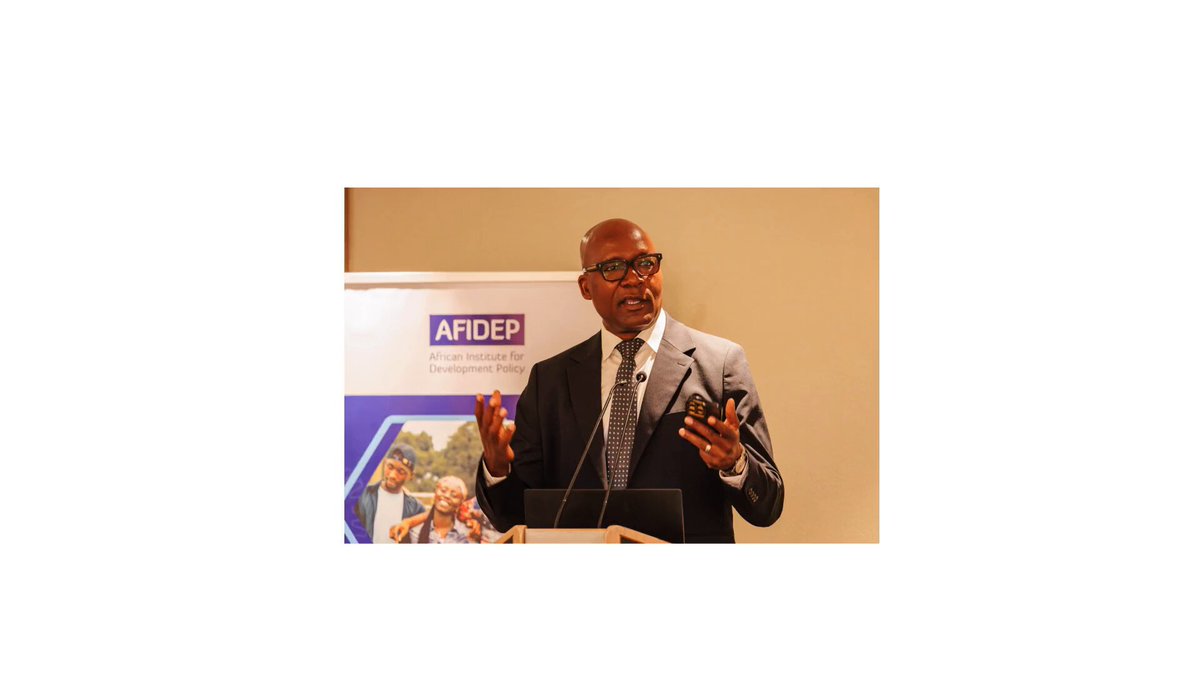
Speaking at the 9th RHNK Pan-African Adolescent & Youth SRHR Scientific Conference 2026, Dr. Eliya Msiyaphazi Zulu, Executive director at @Afidep highlighted the immense potential of Africa’s rapidly growing youthful population. With Africa projected to account for one in every four people globally by 2050, he emphasized that the continent’s future depends on investing in young people today.
He noted that transforming this demographic growth into a healthy, educated, skilled, economically empowered population is critical to achieving Africa’s development aspirations under Agenda 2063. Beyond driving socio-economic transformation across the continent, strategic investments in young people can also contribute to addressing some of the world’s most pressing development challenges.
🎥 Listen as Dr. Eliya shares why Africa’s youth are central to the continent’s future and global progress.
#RHNKPanAfricanConference2026
19
30
410

County health officials from Homa Bay, Laikipia, Nyandarua, Taita Taveta, Tana River, Kwale, and Kisumu have committed to actions to improve health system efficiency and strengthen #data use following a two-day AFIDEP-led knowledge exchange workshop under the Advancing Resilient and Self-Reliant Health Systems in Africa project.
The workshop reviewed findings from @Afidep's #efficiency study, "Efficiency Analysis and Assessment of Data Availability and Use for Decision Making at the Subnational Level in Kenya", which found that county health systems operate at an average efficiency level of 63.4%, indicating significant potential to improve service delivery through better use of existing resources.
Participants identified workforce shortages, infrastructure gaps, delayed funding, and limited data use as key challenges and developed county-specific action plans focused on #accountability, resource allocation, workforce productivity, financing, digital health innovations, and evidence-informed decision-making.
#DomesticFinancing #SRHR #Efficiency
1
129
AFIDEP retweeted

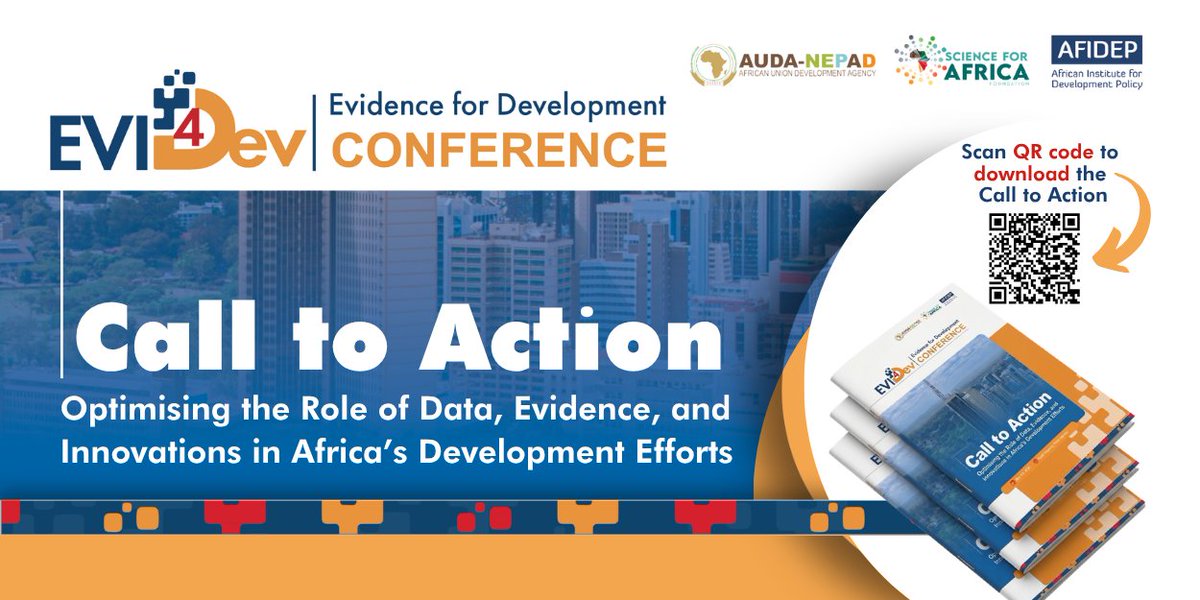
408 delegates from 29 countries united at #Evi4Dev2025 in Nairobi to advance Africa’s future through data, evidence & innovation.
Read the Call to Action: evi4devconference.org/resour…
#EvidenceForDevelopment #AfricaRising
2
2
95
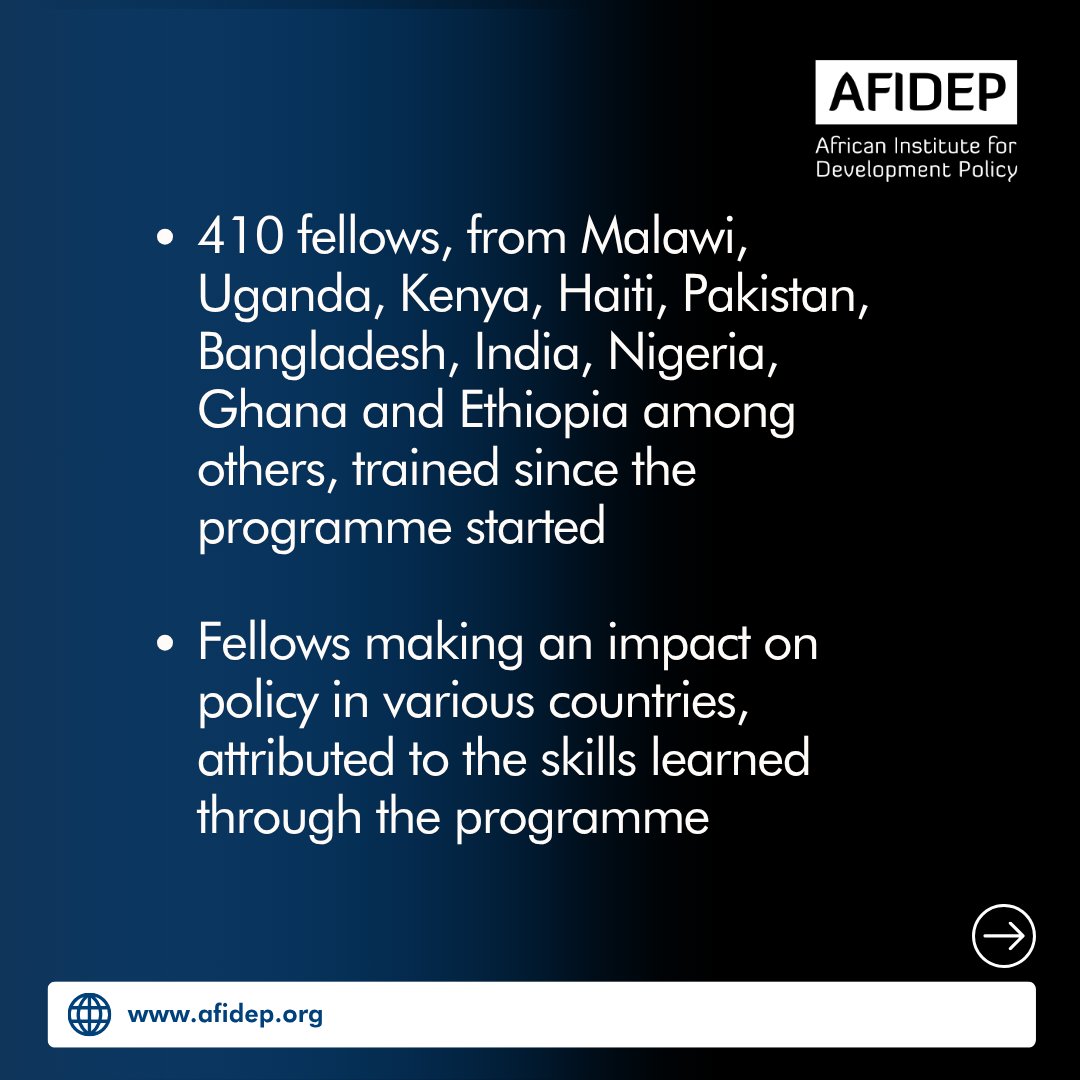
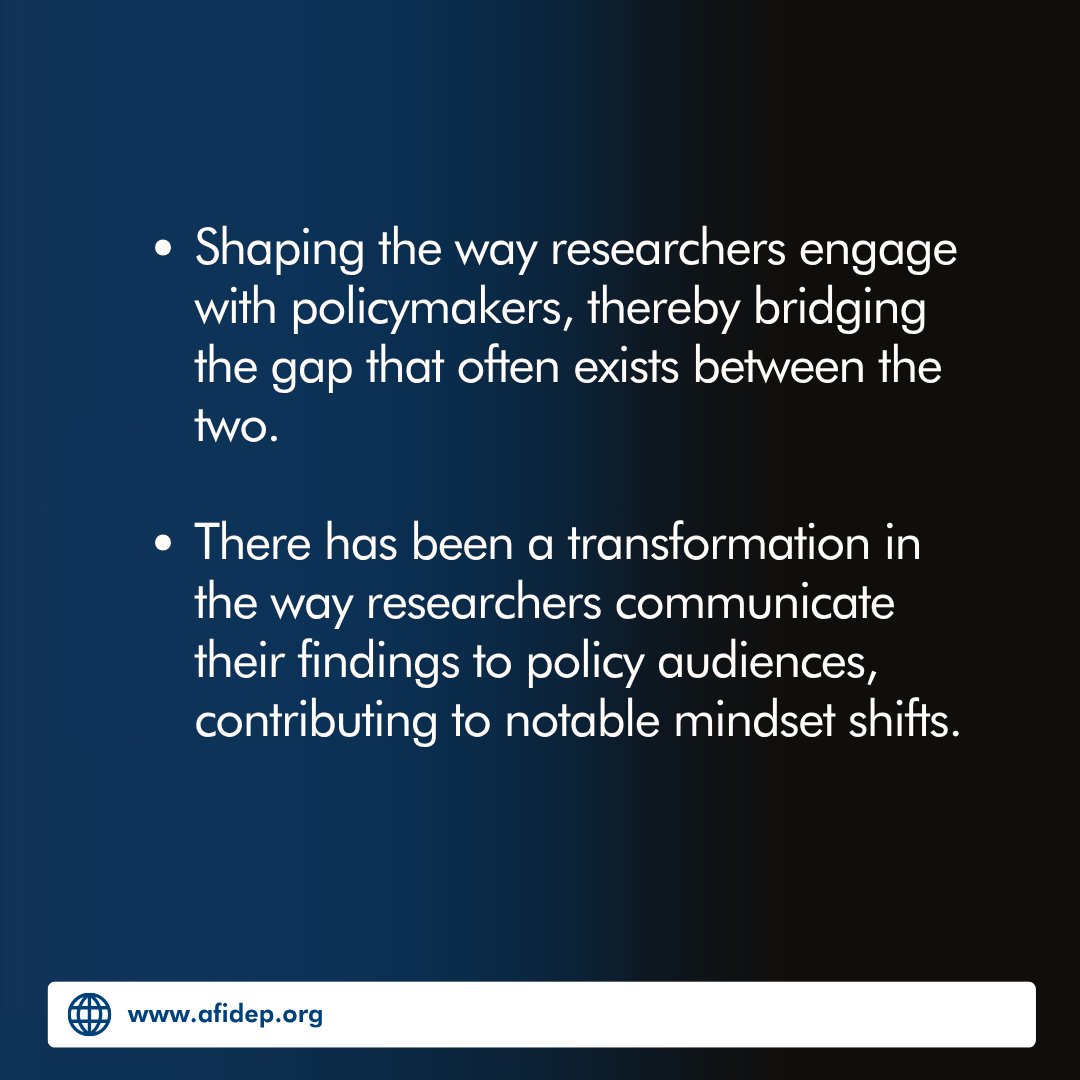
Through the Policy Communication Fellows Programme, AFIDEP, in partnership with the Population Reference Bureau, has helped strengthen the capacity of emerging leaders to translate research evidence into compelling policy messages that influence decision-making.
The programme has equipped fellows with strategic communication skills to foster evidence-informed policymaking. The programme has contributed to a growing network of professionals shaping policies that improve lives in less developed regions worldwide.
Swipe through to see some of the programme's key impacts and achievements.
Visit the project webpage to discover more: bit.ly/4vtfRJA
1
123
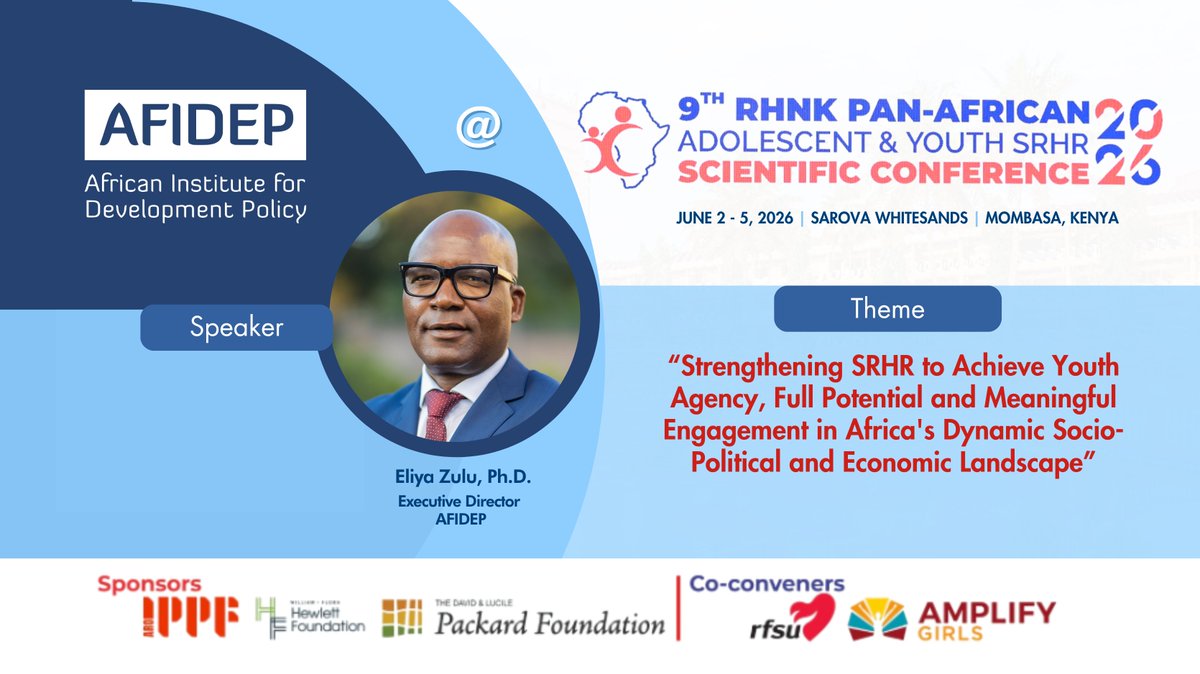
@Afidep is excited to join researchers, policymakers, practitioners, advocates, and young people from across Africa, to advance evidence-informed solutions for adolescent and youth sexual and reproductive health and rights (AYSRHR) at the 9th RHNK Pan-African AYSRHR Scientific Conference in Nairobi, Kenya.
AFIDEP’s Executive Director, Eliya Zulu, is among the distinguished speakers at the conference. As conversations unfold on strengthening policies, improving access to services, and addressing emerging challenges affecting young people, AFIDEP remains committed to ensuring that robust evidence informs decisions that improve the health and wellbeing of adolescents and youth across the continent.
2
4
119
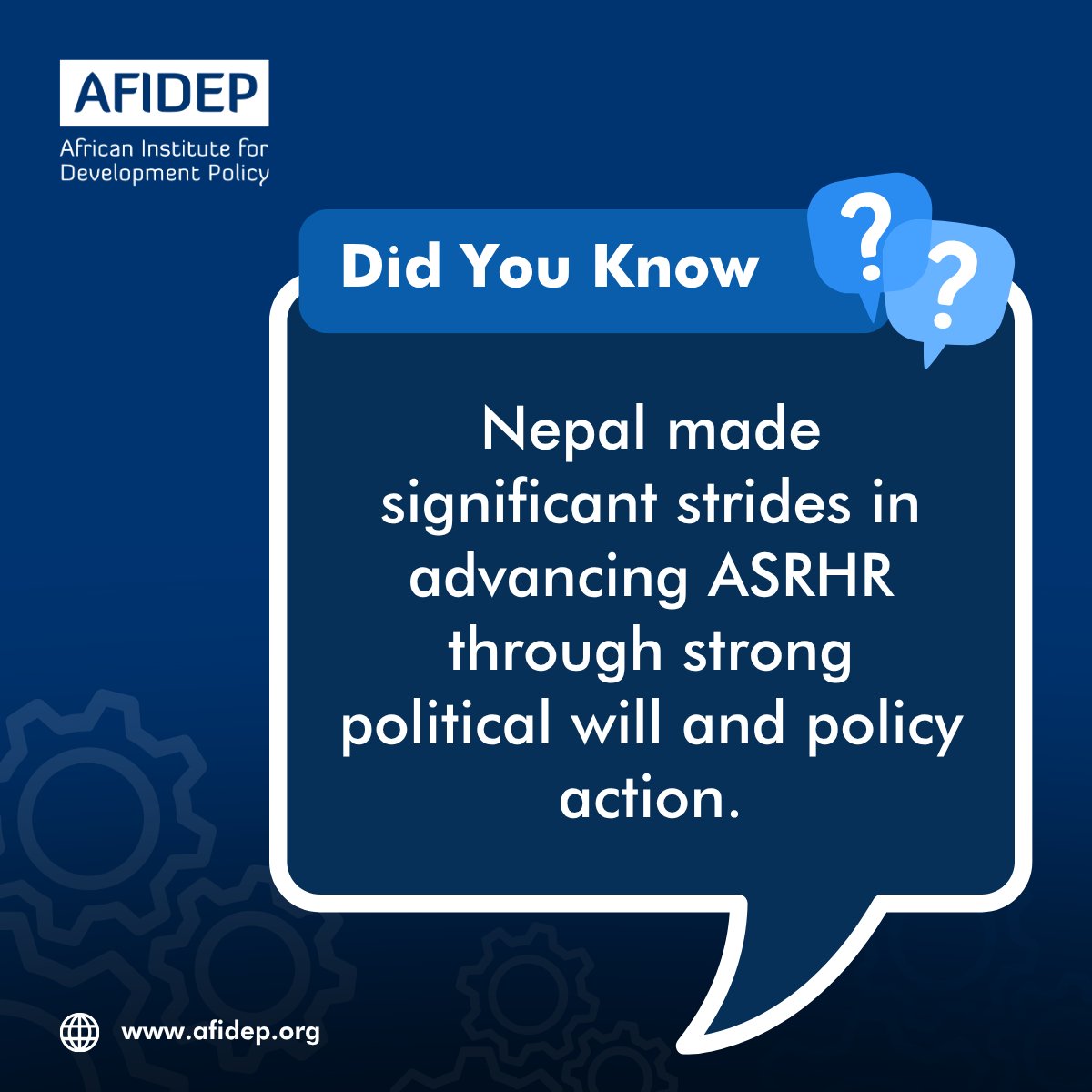
What does it take to advance Adolescent Sexual and Reproductive Health and Rights (ASRHR)?
Nepal’s experience shows that meaningful progress is possible when strong political commitment, evidence-informed policies, and sustained action come together.
The country has made significant strides in strengthening ASRHR, offering valuable lessons for policymakers, practitioners, and advocates across the Global South. But what drove this progress, and what challenges remain?
Read the full policy brief to explore the evidence and lessons learned: bit.ly/4vsASUN
88
AFIDEP retweeted
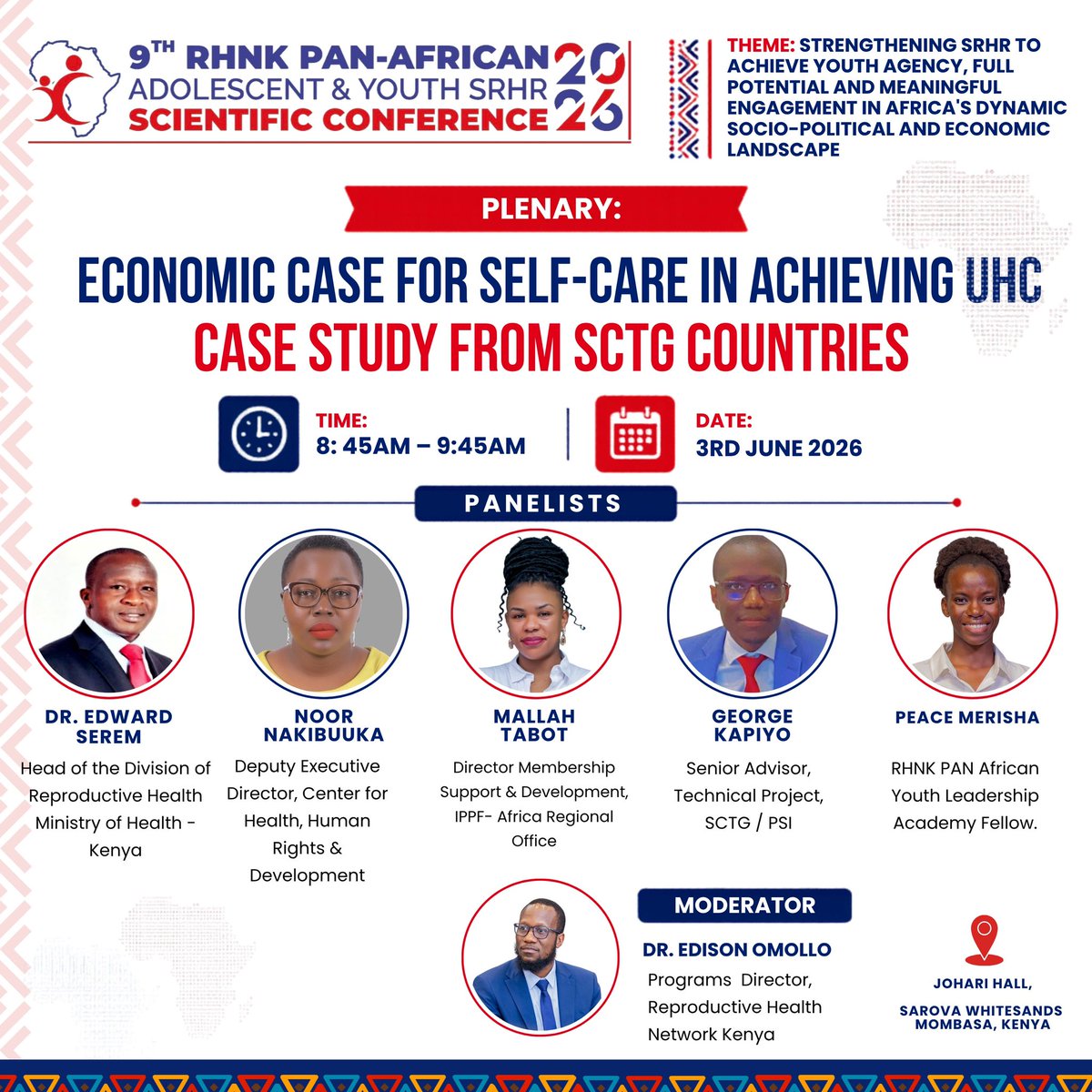
Next up in line: Plenary Session – Economic Case for Self-Care in Achieving Universal Health Coverage (UHC): Case Studies from SCTG Countries.
As countries across Africa navigate shrinking donor funding and growing demand for sexual and reproductive health services, self-care is increasingly being recognized as a cost-effective strategy for expanding access and strengthening health systems. This plenary will examine the evidence, policy considerations, and practical experiences that make the economic case for investing in self-care as a pathway towards achieving Universal Health Coverage.
Moderated by Dr. Edison Omollo, Programs Director at @rhnkorg, the session will feature insights from Dr. Edward Serem, Head of the Division of Reproductive Health at @MoH_DRMH; Noor Nakibuuka, Deputy Executive Director at @cehurduganda; George Kapiyo, Senior Advisor and Technical Project Lead at @SelfCare4UHC /PSI; Mallah Tabot, Acting Director of Membership Support and Development at @IPPFAR; and Peace Merisha, @rhnkorg Pan-African Youth Leadership Academy Fellow and Youth Advocate.
The panelists will explore how governments can sustainably finance and integrate self-care into primary healthcare systems, lessons from implementing self-care policies at community and facility levels, and evidence from SCTG-supported countries demonstrating the health and economic returns of self-care investments. The discussion will also highlight the role of civil society in supporting institutionalization efforts and ensuring resilient, people-centred health systems.
Importantly, the session will centre the experiences of young people, examining how self-care interventions have improved access, privacy, autonomy, and informed decision-making while identifying the barriers that must still be addressed to ensure equitable access for all. #RHNKPanAfricanConference2026
1
13
20
631
AFIDEP retweeted
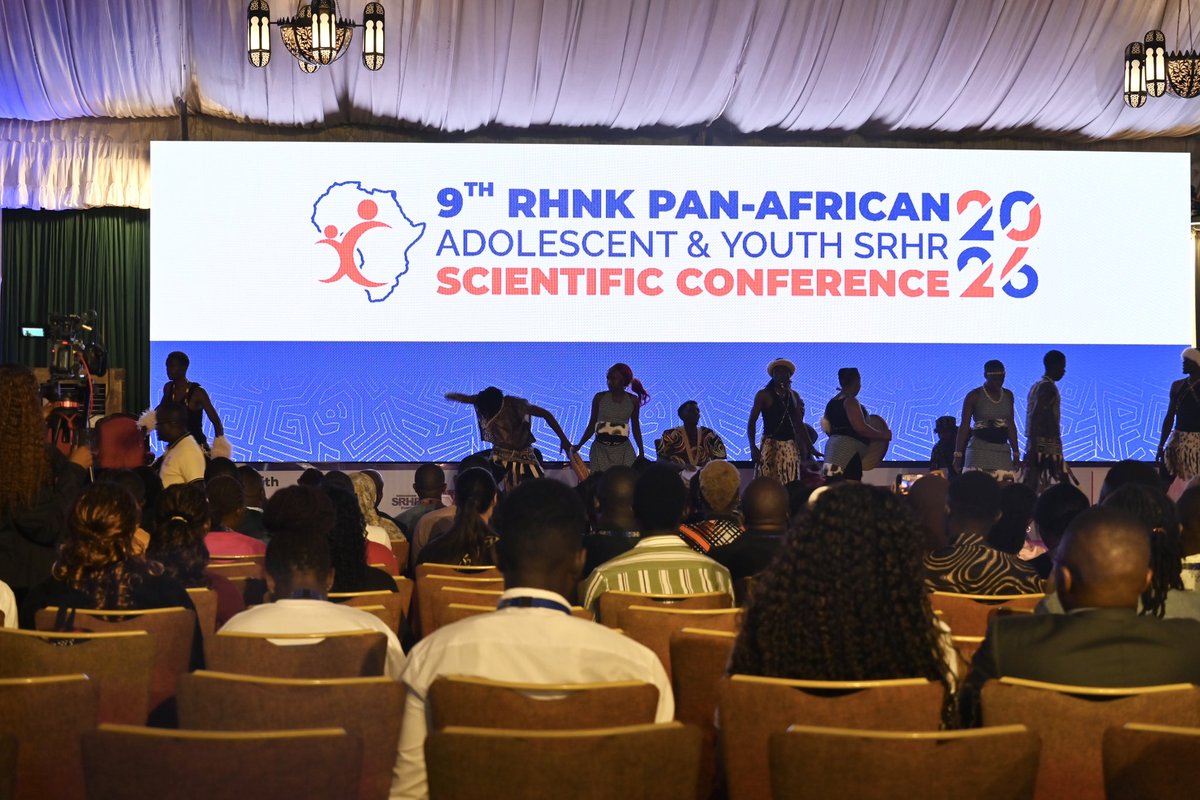
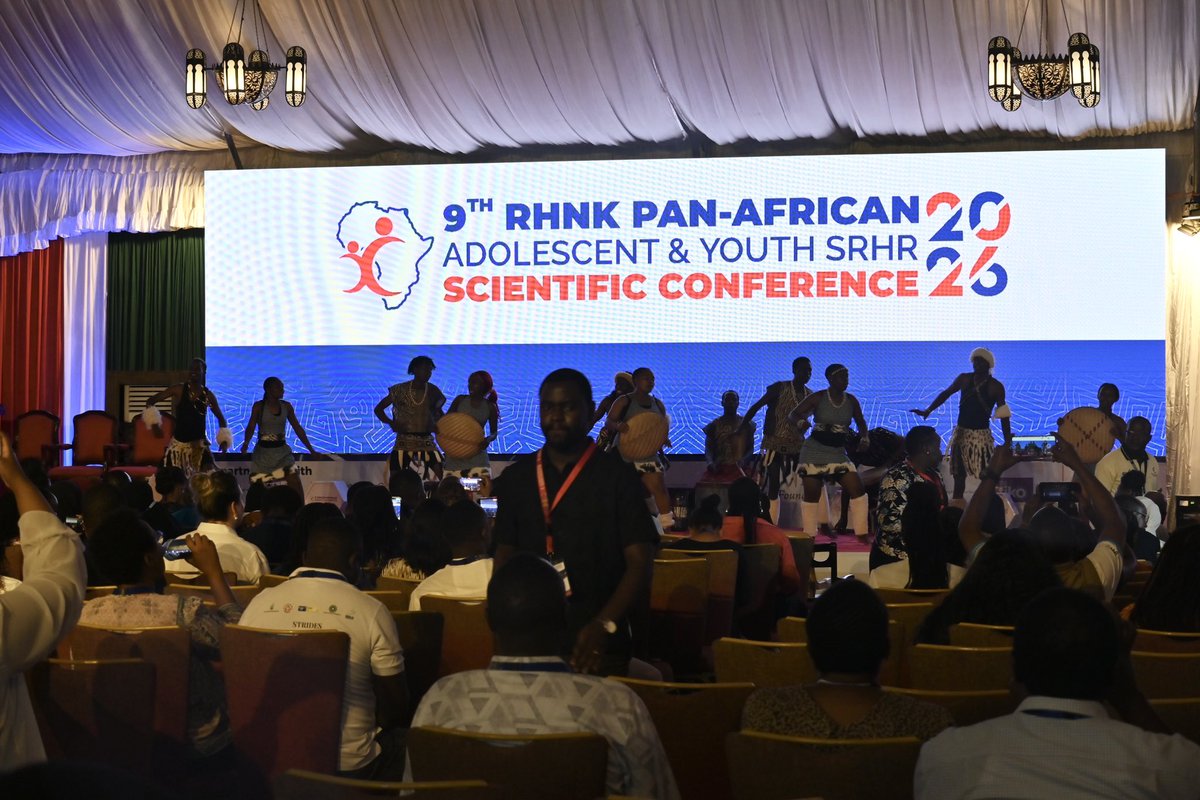
The 9th RHNK Pan-African Adolescent & Youth SRHR Scientific Conference has officially begun!
We are proud to convene in Mombasa, Kenya, bringing together youth leaders, feminists, advocates, researchers, and partners from across Africa under the theme:
“Strengthening SRHR to Achieve Youth Agency, Full Potential and Meaningful Engagement in Africa’s Dynamic Socio-Political and Economic Landscape.”
Over the coming days, we will centre youth agency, amplify feminist leadership, share evidence and lived realities, and strengthen collective action to advance adolescent and youth sexual and reproductive health and rights (AYSRHR) across the continent.
Welcome to a space for learning, solidarity, and movement-building.
Watch the conference live and be part of the conversations shaping the future of AYSRHR across Africa: youtube.com/live/Mx4MYVYGcnE…
Welcome to #RHNKPanAfricanConference2026
1
24
33
850
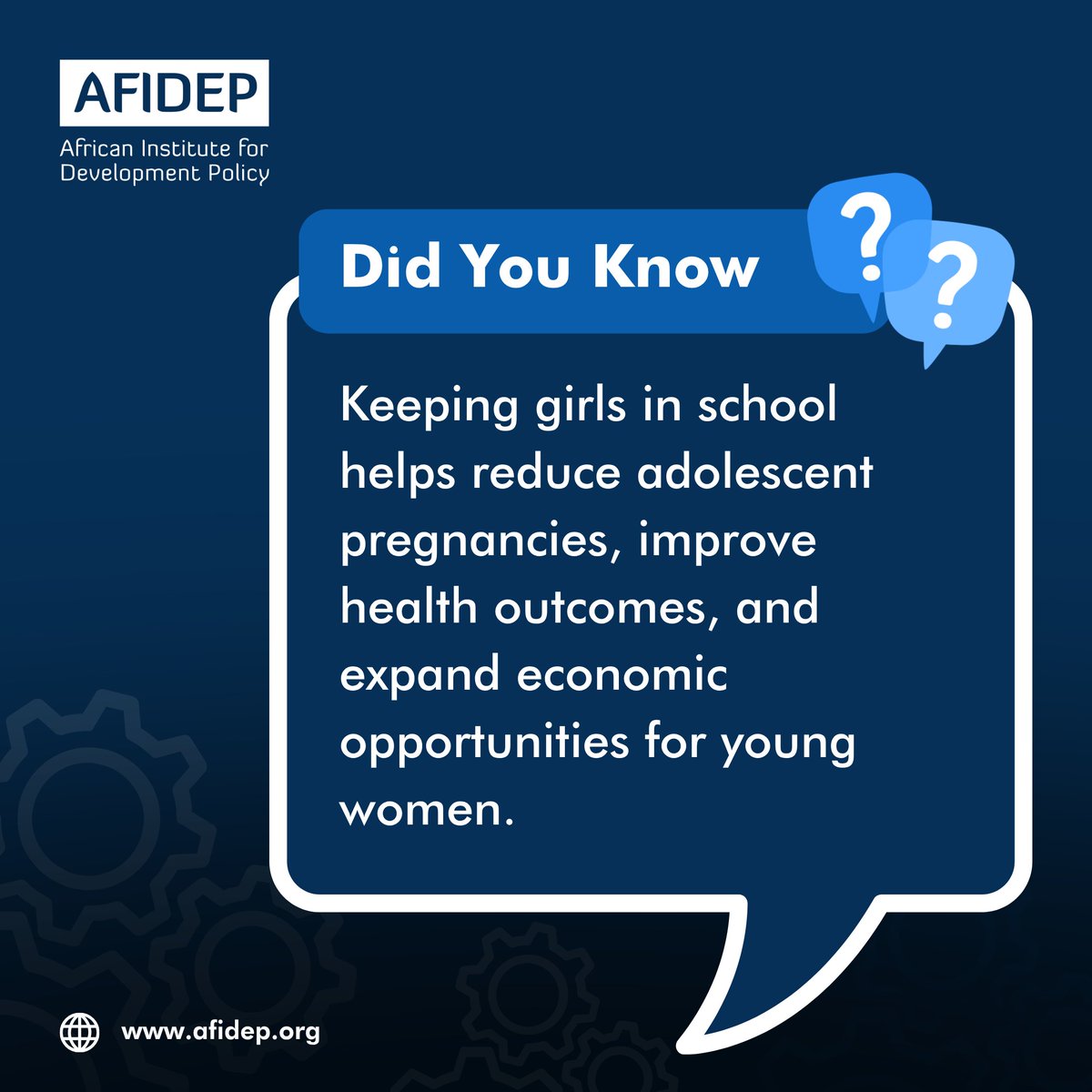
Did You Know?
In many African countries, girls who stay in school longer are significantly less likely to experience adolescent pregnancy. Evidence shows that education is not just a learning issue — it is also a health, gender equality, and economic development intervention.
That’s why evidence-informed policies that keep girls in school can have ripple effects across entire communities.
Read AFIDEP’s policy brief on the link between girls’ education and adolescent pregnancy in Malawi: afidep.org/publication/addre…
#DidYouKnow #GirlsEducation #AdolescentHealth #EvidenceForAction #AFIDEP
4
187
AFIDEP retweeted
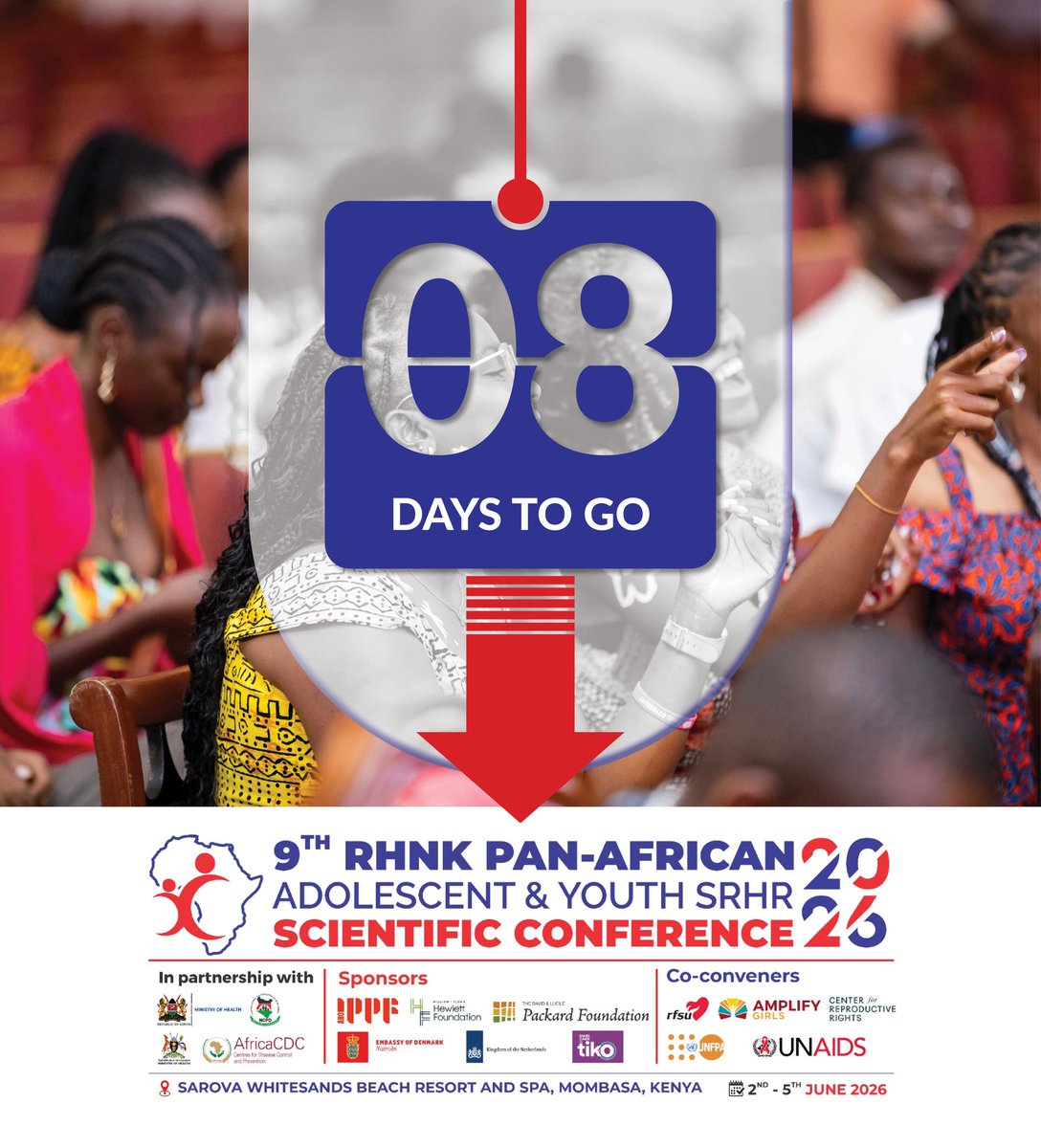
8 days to go.
The momentum is growing.
Across the continent, young leaders, researchers, advocates and partners are gearing up for a convening that will spark bold conversations and meaningful action.
A space to share knowledge.
Build stronger partnerships.
Amplify youth voices.
And turn ideas into impact.
As the countdown continues, one question remains:
Will you be part of what comes next?
#RHNKPanAfricanConference2026
1
25
45
610
AFIDEP retweeted
We welcome @Afidep as an official partner of the #RHNKPanAfricanConference2026
Across the continent, @Afidep continues to strengthen the bridge between research, policy and practice ensuring that evidence drives decisions that improve health, development and wellbeing for African communities.
This partnership reflects a shared commitment to advancing people-centered policies, stronger health systems and sustainable solutions grounded in data, research and lived realities.
Because Africa’s biggest challenges require more than conversation.
They require collaboration, innovation and evidence-informed action.
This is how we move from policy to impact.
This is Africa building for Africa.
Join us from 2–5 June 2026 in Mombasa, Kenya for a powerful convening of young leaders, researchers, policymakers and partners shaping the future of health and development across the continent.
For more information about the conference visit rhnk.org/conference/
#RHNKPanAfricanConference2026
21
31
518
𝐖𝐡𝐲 𝐝𝐨𝐦𝐞𝐬𝐭𝐢𝐜 𝐫𝐞𝐬𝐨𝐮𝐫𝐜𝐞 𝐦𝐨𝐛𝐢𝐥𝐢𝐬𝐚𝐭𝐢𝐨𝐧, 𝐩𝐫𝐢𝐯𝐚𝐭𝐞 𝐬𝐞𝐜𝐭𝐨𝐫 𝐞𝐧𝐠𝐚𝐠𝐞𝐦𝐞𝐧𝐭, 𝐚𝐧𝐝 𝐩𝐡𝐢𝐥𝐚𝐧𝐭𝐡𝐫𝐨𝐩𝐢𝐜 𝐩𝐚𝐫𝐭𝐧𝐞𝐫𝐬𝐡𝐢𝐩𝐬 𝐚𝐫𝐞 𝐜𝐫𝐢𝐭𝐢𝐜𝐚𝐥 𝐟𝐨𝐫 𝐟𝐢𝐧𝐚𝐧𝐜𝐢𝐧𝐠 𝐮𝐧𝐢𝐯𝐞𝐫𝐬𝐚𝐥 𝐡𝐞𝐚𝐥𝐭𝐡 𝐜𝐨𝐯𝐞𝐫𝐚𝐠𝐞 𝐢𝐧 𝐀𝐟𝐫𝐢𝐜𝐚.
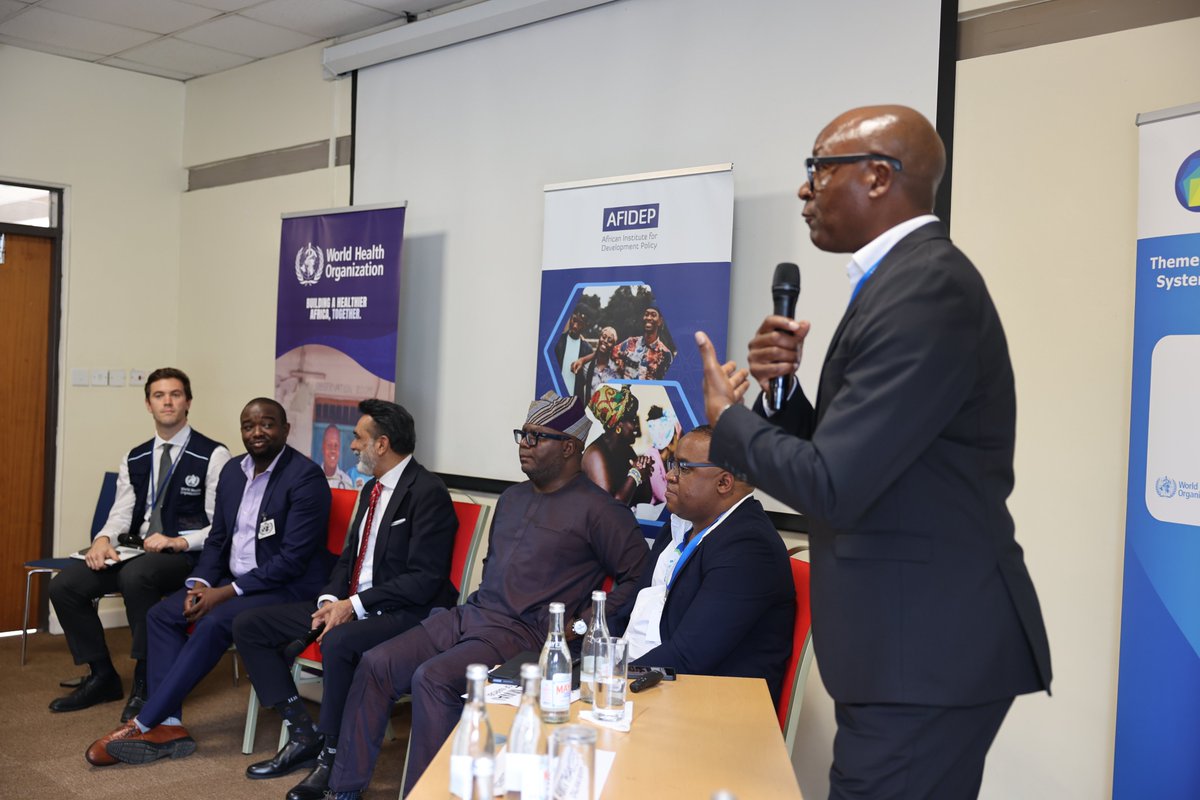
Read our latest blog for key insights from our session on “Financing Universal Health Coverage: Domestic Resource Mobilisation (DRM), Private Sector, and Philanthropic Partnerships,” held during the World Health Summit Regional Meeting on 27 May 2026 in Nairobi: shorturl.at/bUksa
@MOH_Kenya @WorldHealthSmt @AKU_EAI @WHO @AfricaCDC @EliyaZulu @roseoronje
#WHSNairobi2026 #UHC #HealthFinancing #WHS
4
5
252
AFIDEP is looking for a passionate and motivated Monitoring & Evaluation (M&E) Intern to join our team.
If you are eager to gain hands-on experience in evidence-informed development and contribute to impactful work across Africa, this opportunity is for you.
🔗 Apply and view full details here: bit.ly/4cUAyaU
2
33
126
13,415
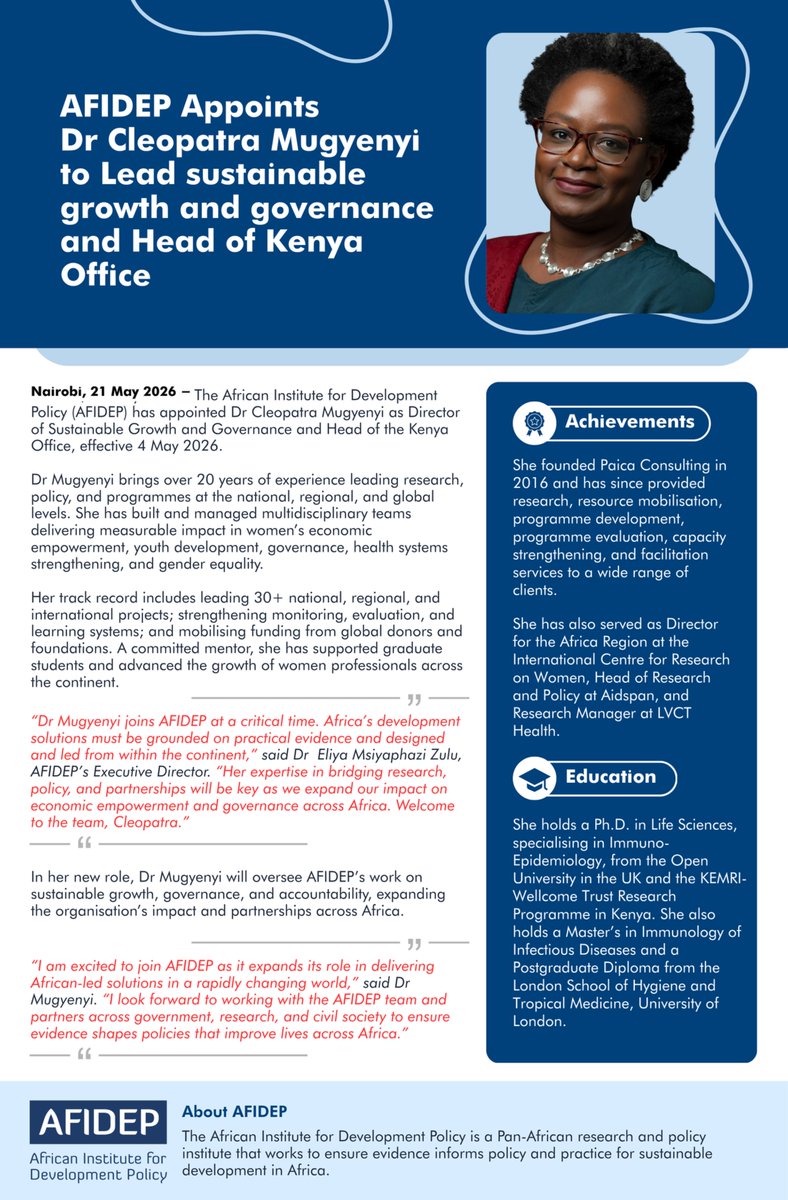
We are pleased to announce the appointment of Dr Cleopatra Mugyenyi (@DrCleopatraKama) as AFIDEP’s Director of Sustainable Growth and Governance and Head, Kenya Office, effective 4 May 2026.
Dr Mugyenyi has over 20 years of experience in research, policy, programme leadership, and capacity strengthening across Africa. Her work spans governance and accountability, gender equality and social inclusion, women’s and youth empowerment, health systems strengthening, sexual and reproductive health and rights, and infectious disease epidemiology.
As she joins AFIDEP, Dr Mugyenyi brings a strong commitment to using evidence to solve real-world development challenges, strengthen institutions, and inform policies and programmes that improve lives.
3
14
514
Reimagining African health systems: Key takeaways from AFIDEP’s WHA79 high-level dialogue
Geneva, 21 May 2026 – At the margins of the #79th World Health Assembly, AFIDEP hosted a high-level dialogue with @NEPAD_Agency and @MinofHealthUG on building more resilient, self-reliant African #health systems.
The session centred on three levers: increasing domestic health financing, improving system efficiency, and scaling locally relevant #innovations.
Dr @EliyaZulu, AFIDEP's Executive Director, opened the session by highlighting Africa’s growing fiscal squeeze.
“External assistance now accounts for 23% of health spending in Africa. #ODA for health fell by an estimated 40% between 2021 and 2023, with further cuts projected. Over 20 African countries are in or at high risk of debt distress," he noted.
He argued that Africa must get more health from existing resources by improving #efficiency, engaging the private sector in local manufacturing and service delivery, and scaling proven innovations. He called for better use of evidence to make the investment case for health, and for global development and finance partners to back #innovative financing like debt swaps.
Delegates flagged persistent fragmentation as a barrier: off-budget and parallel financing systems weaken coordination and planning. The consensus was that funding flows must align with country-led priorities.
Lightning talks from @Afidep, @UNITAID, and @CHAI_health covered the full pipeline: developing, testing, adopting, and scaling innovations. The message from experts was that #partnerships across the pipeline are critical to move proven solutions into routine health service delivery faster.
Delegates agreed that sustained financing alone won’t deliver impact. Africa needs faster adoption of scalable #innovations that improve efficiency and outcomes, alongside stronger domestic financing and better alignment of external support with national health system strengthening priorities.
#WHA79 #HealthFinancing #PHC #WHA @WHO
2
4
387
Today, AFIDEP's Executive Director @EliyaZulu joined partners in Geneva at the #WorldHealthAssembly to advance the operationalisation of the African Medicines Agency (@AU_AMA_). A strong continental regulatory framework is key to improving access to safe, affordable, quality-assured medicines for all #Africans, while enhancing resilient health systems across the continent.
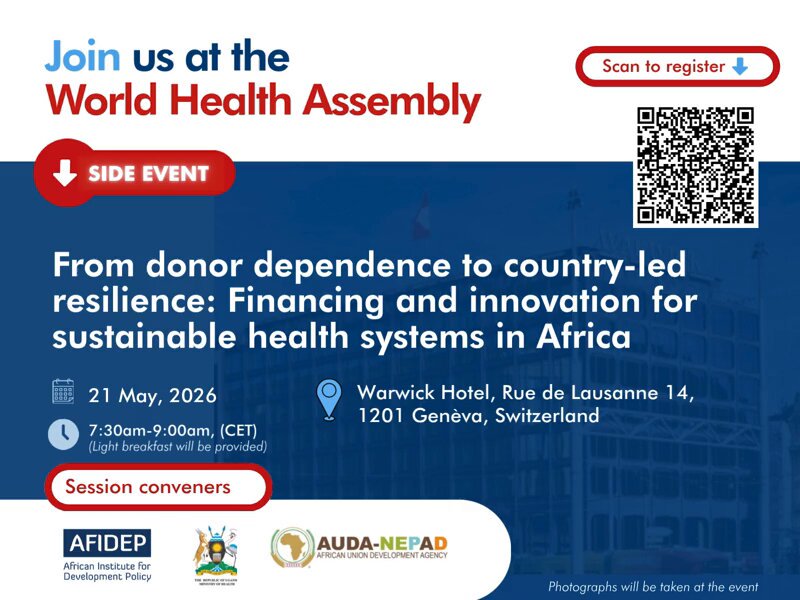
Catch our side event at #WHA as we spotlight domestic health financing and efficiency in spending for more resilient #health systems in Africa.
📅 21 May 2026 | 7:30–9:00 AM (CET)
📍 Warwick Hotel, Geneva - Switzerland
Register for the side event: shorturl.at/0jAXD
@WHO @roseoronje @MinofHealthUG @health_malawi @NEPAD_Agency @EGPAF @UNITAID @CHAI
#WHA79 #HealthFinancing #PHC #WHA
May 18

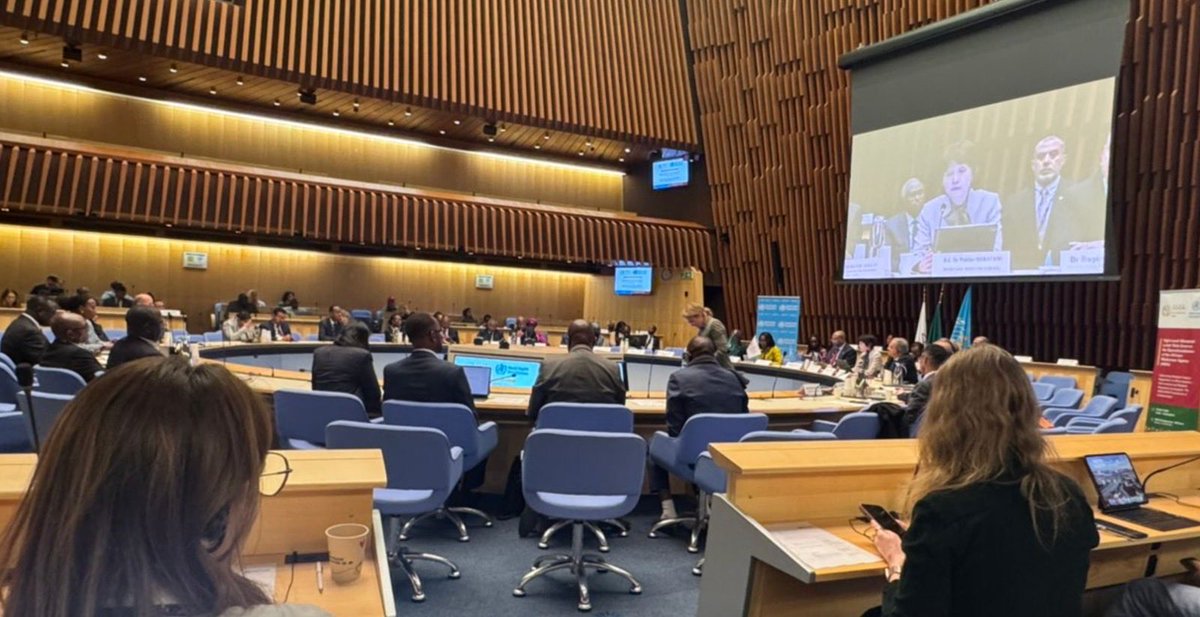
On the sidelines of the World Health Assembly in Geneva, a High-Level Ministerial Side Event on the Operationalisation of the African Medicines Agency (AMA) highlighted the critical role of a strong, continent-wide regulatory system for medicines and medical products. Established as an independent African Union Specialised Agency, AMA is central to ensuring that all Africans have access to affordable, safe, effective, and quality-assured medicines, a key step towards achieving #UHC.
We commend the 32 African countries that have ratified the AMA Treaty, which entered into force in 2021, and deposited their instruments with the African Union Commission. We also call on the remaining countries to accelerate the signing and ratification of the treaty to fully operationalise AMA’s mandate. A fully functional #AMA will help Africans access safe and quality-assured medicines faster, while strengthening Africa’s capacity to regulate and locally manufacture medical products. Pl
@Afidep @WHO @AU_AMA_ @_AfricanUnion
#79WHA #WorldHealthAssembly
5
9
463
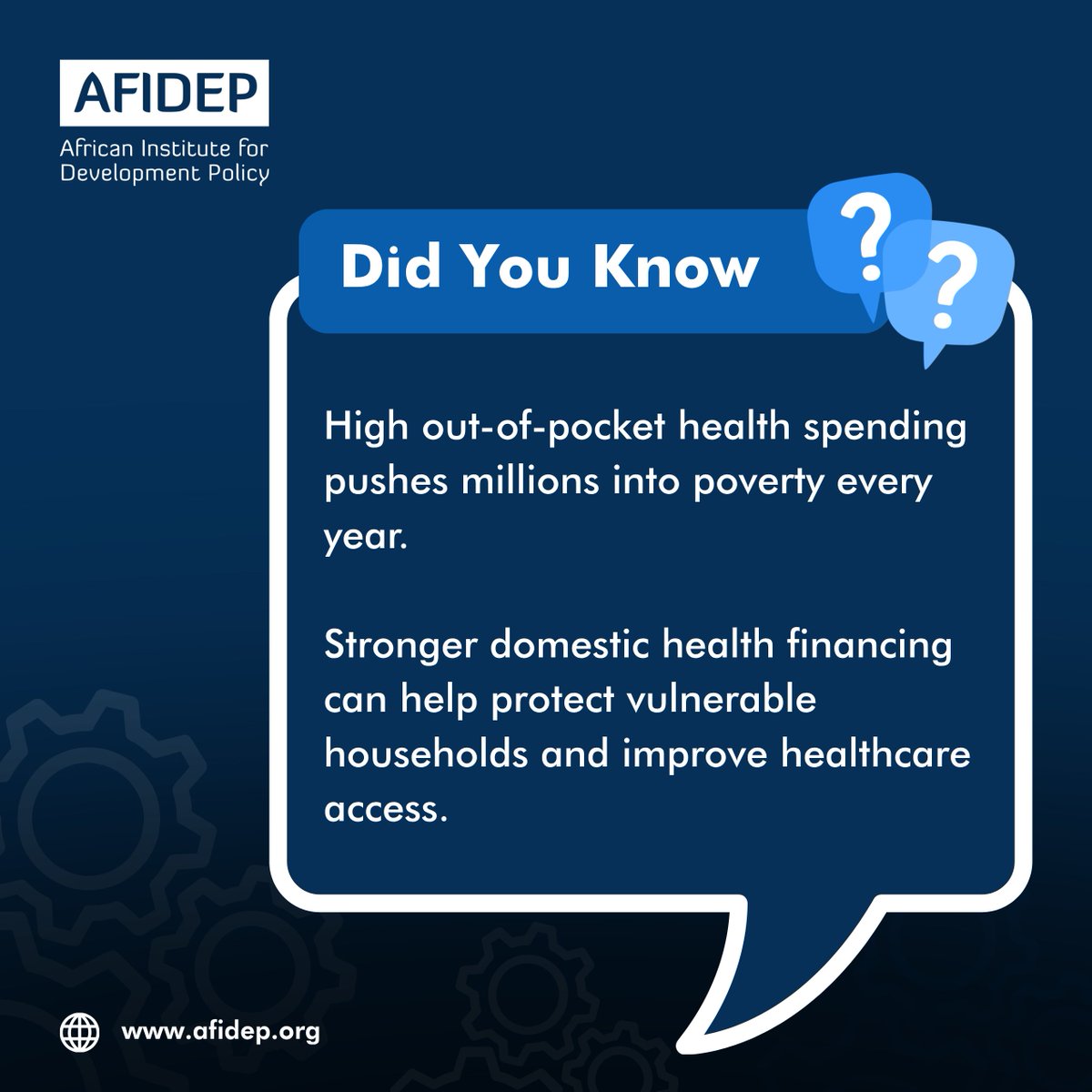
Sustainable domestic health financing is essential for resilient and equitable healthcare systems.
What should governments prioritise most in domestic health financing?
0%
Strengthen health systems
0%
Pandemic preparedness
0%
Reduce out-of-pocket
0%
Expand healthcare access
0 votes • Final results
2
152
African Institute for Development Policy (AFIDEP)’s Board and Management extend our warmest congratulations to the African Population and Health Research Center (@aphrc) on 25 years of excellence and impact.
This milestone reflects APHRC’s remarkable contribution to advancing research, evidence-informed policymaking, and sustainable development across Africa. Over the years, AFIDEP has been privileged to collaborate with APHRC in strengthening the continent’s research and policy ecosystem. We deeply value our partnership, the shared learning, and our collective commitment to improving lives through evidence and innovation.
We also recognise @aphrc critical role in nurturing talent and developing leaders in the research community. Several members of the AFIDEP team contributed to building APHRC in its formative years, and have since grown into leaders driving evidence-informed development across Africa — a testament to the institution’s transformative influence.
As you celebrate this milestone and reflect on the growth, lessons, and impact of the last 25 years, we celebrate with you. We look forward to deepening our collaboration in advancing Africa’s development agenda.
Congratulations once again on this momentous achievement and for building a truly African-led institution. We wish APHRC even greater success and impact in the years ahead.
3
8
289