For people who track health data and use AI tools. Export Apple Health info for deeper insights using ChatGPT, Claude, and more.
Joined November 2025
- Tweets 42
- Following 15
- Followers 13
- Likes 7
13 Photos and videos
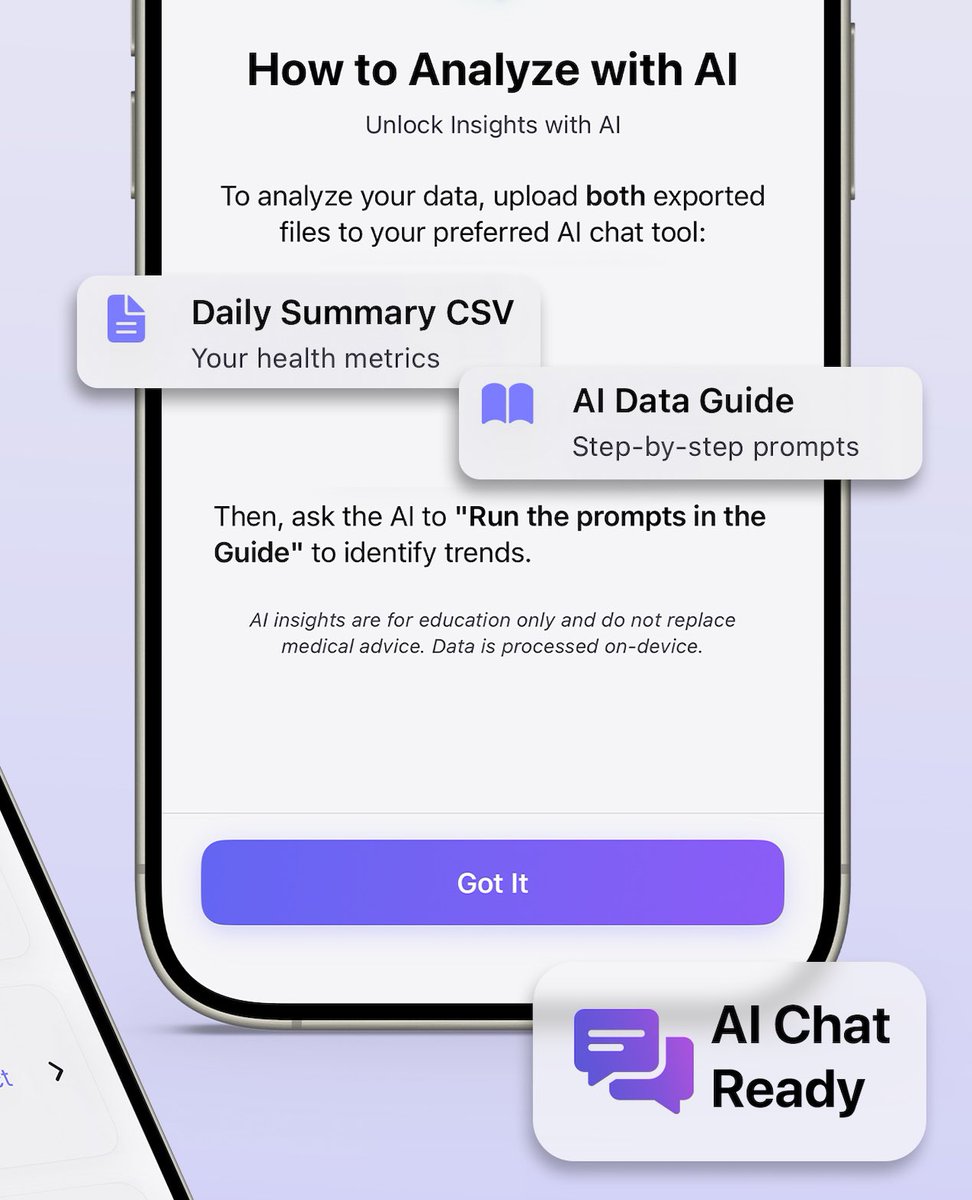
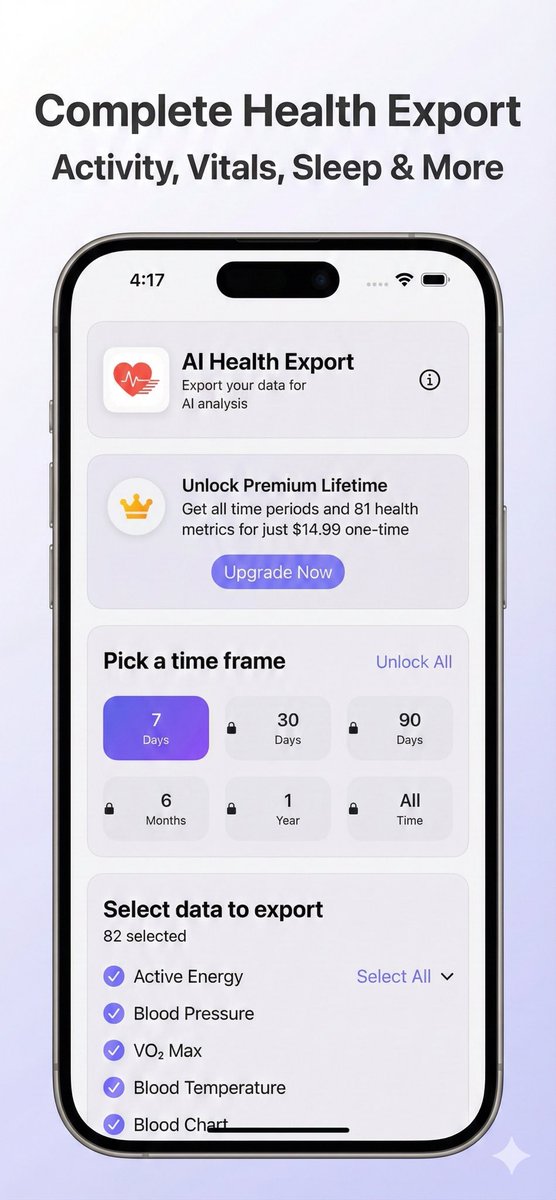
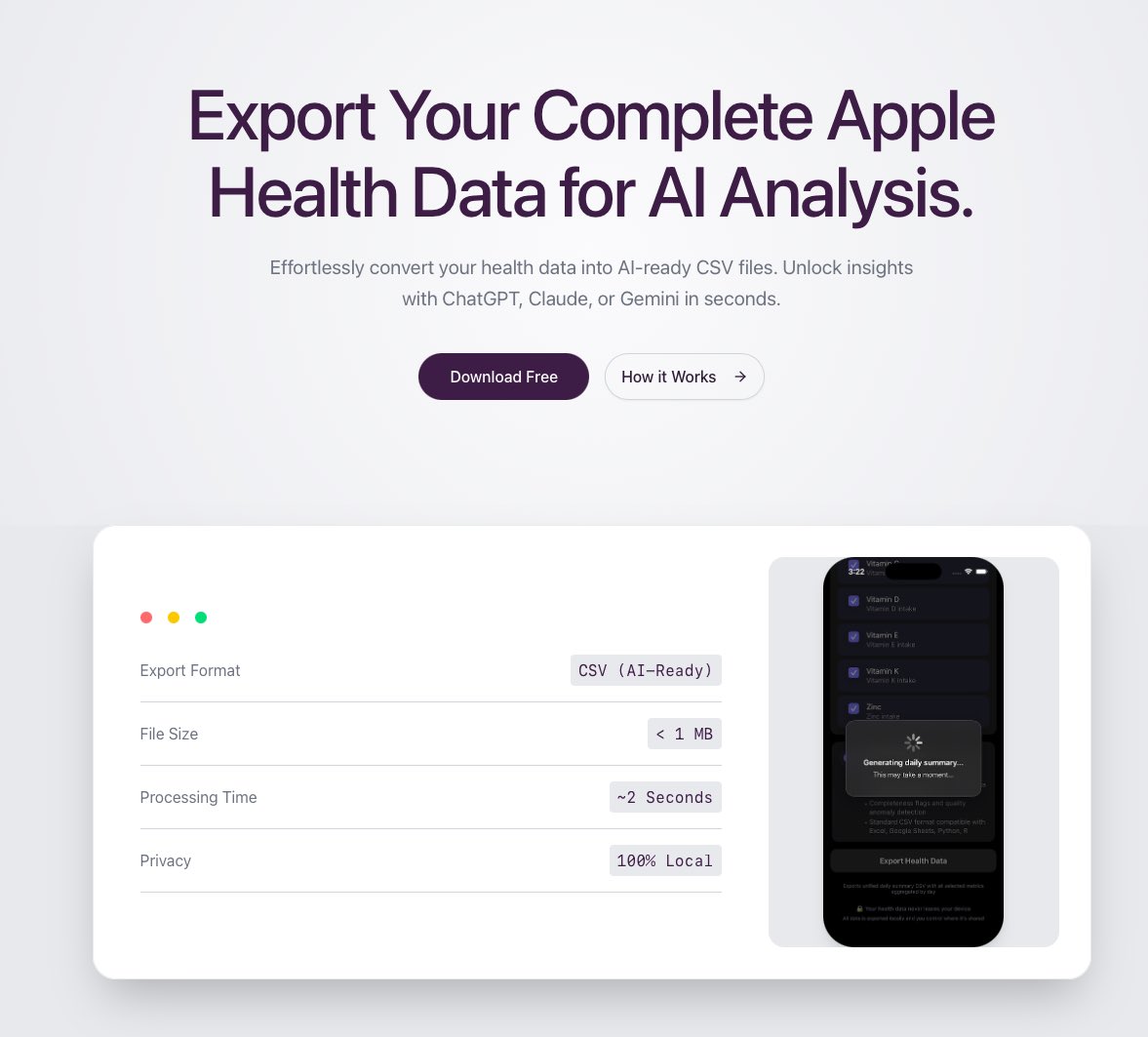
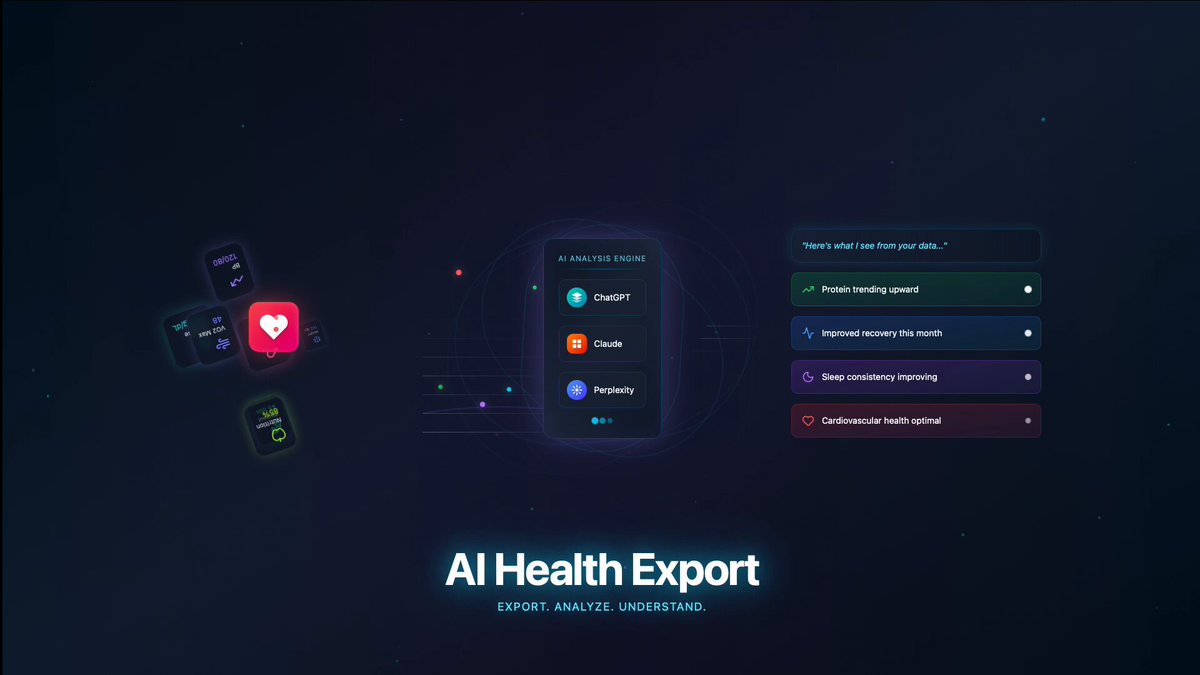
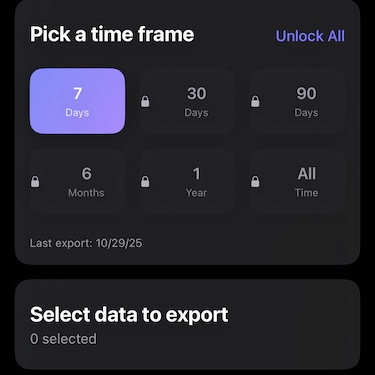

the big AI apps all want to be the place you ask your health questions.
fine.
I built AI Health Export for the other side of that: getting your Apple Health data out in a clean, usable file, so you are not locked into one assistant.
1
doctor visit coming up?
your Apple Health already has the answer, HRV, sleep, blood pressure, symptoms, it is just scattered across a dozen screens.
AI Health Export turns the last 90 days into one clean, doctor-ready summary in about 30 seconds.
6
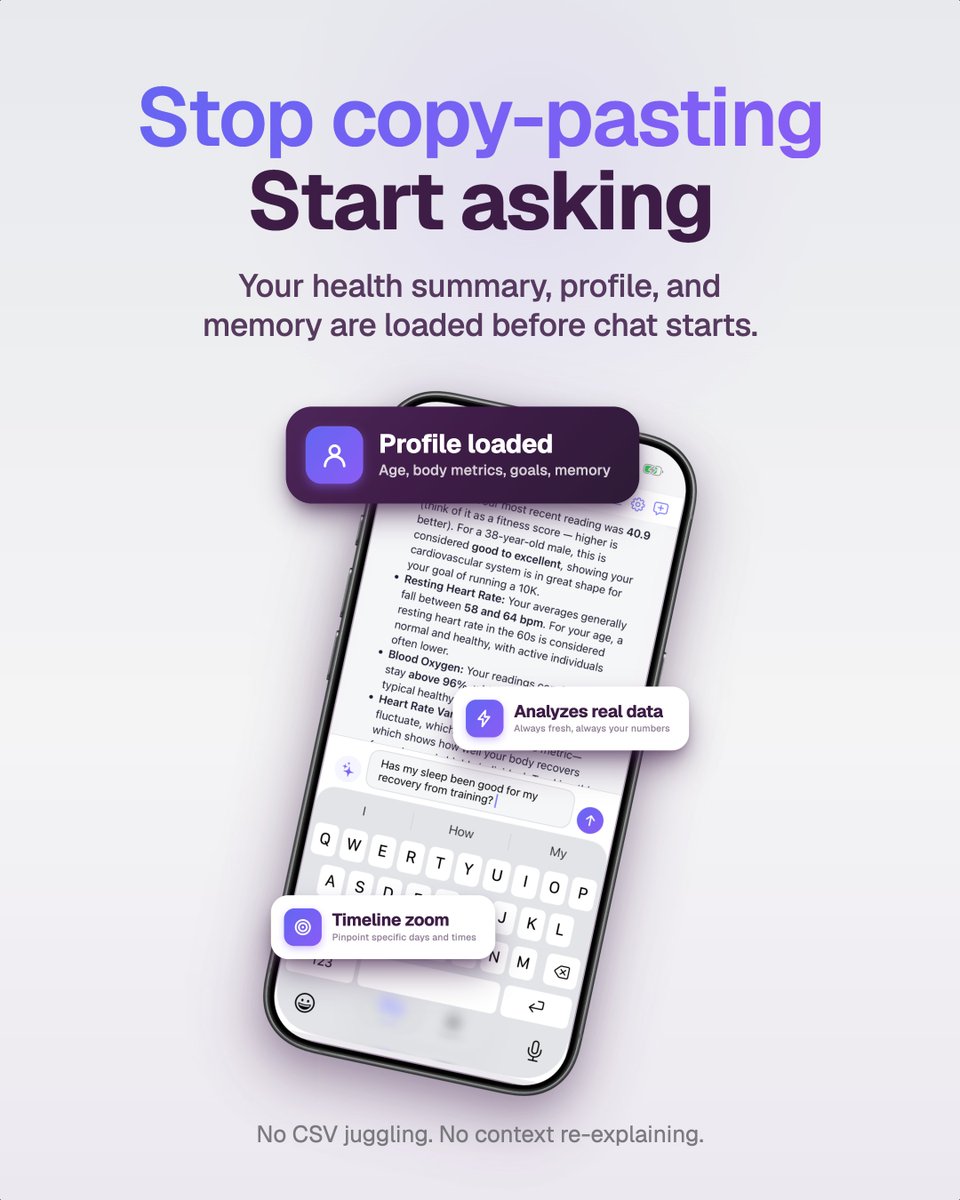
The worst part about AI health analysis is constantly reminding the AI of your baseline.
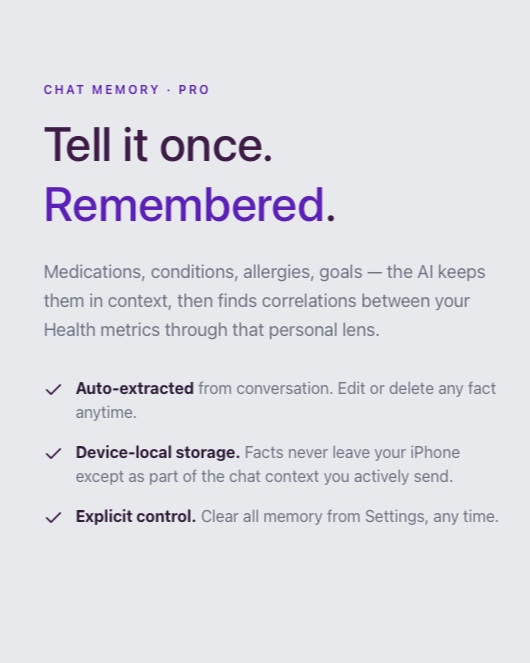
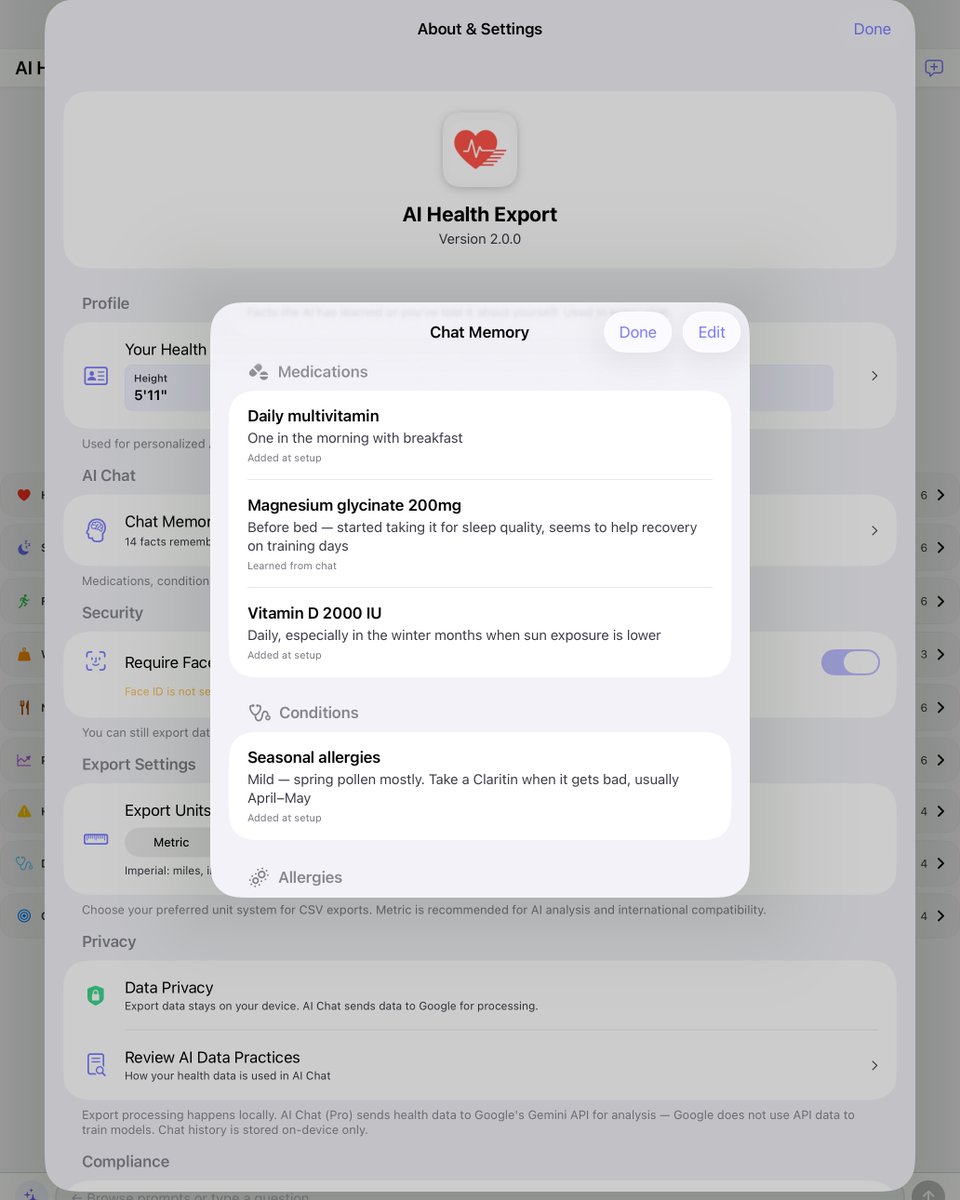
AI Health Export solves this with on-device Chat Memory. Tell it your allergies, conditions, or goals once, and the AI remembers them for every future analysis.
Link in bio. #AIHealth
6
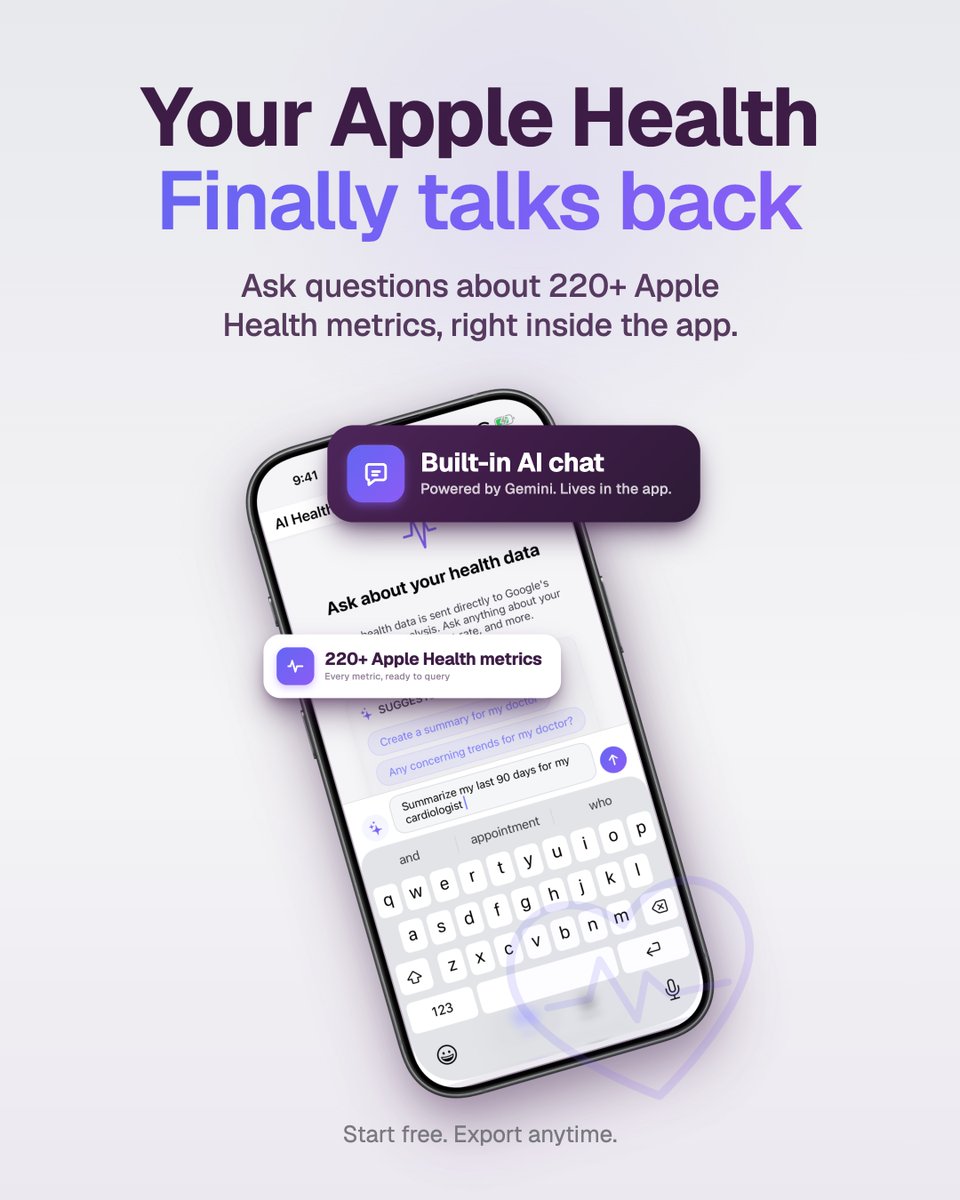
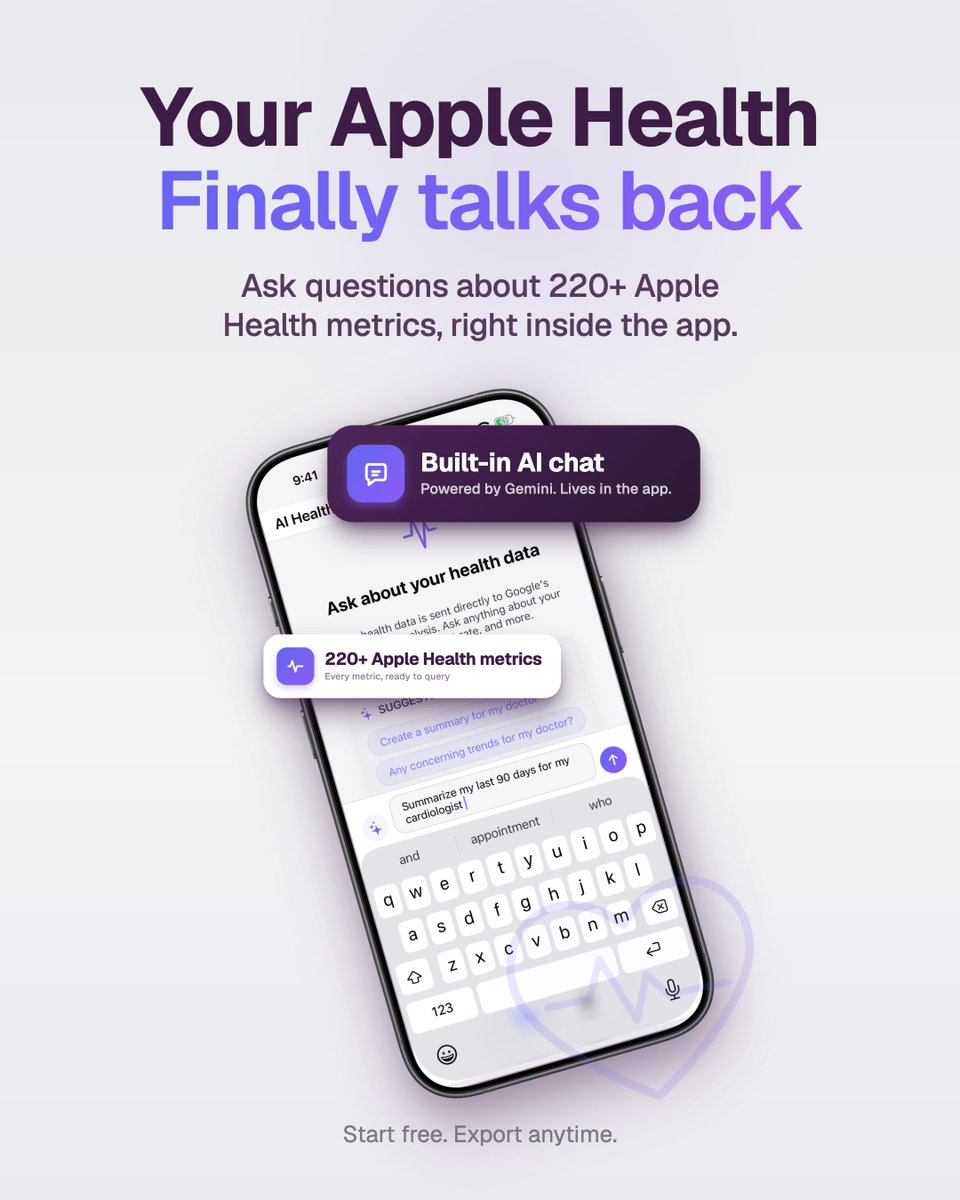
You can't optimize what you can't measure. And you can't measure what your export tool ignores. AI Health Export gives you access to 220 HealthKit metrics—more than any other AI tool on the App Store. Every metric, every workflow. Link in bio.
#Biohacking #QuantifiedSelf
27
You shouldn’t have to re-explain your medications, allergies, and goals every time you open a health AI.
AI Health Export v2.0 has persistent Chat Memory. Tell it once — Gemini remembers it every session. 📲 Link in bio.
#Biohacking #AppleHealth
135
The big AI apps are racing to become the place you ask health questions.
Cool.
I built AI Health Export for the other side of that: getting your Apple Health data out in a usable shape so you are not locked into one assistant.
21
most people do not really have a health data shortage.
they have a usability shortage.
the data exists.
the hard part is getting it out of charts, screenshots, and messy exports and into something you can actually work with.
6
health AI is getting a lot easier to demo.
the part I still care about is whether your own data is actually usable when the demo is over.
that is why I built AI Health Export around getting Apple Health into a cleaner, movable shape first.
21
most health AI demos skip the annoying part.
getting your own data into a format
that is actually usable.
that was the whole starting point for me.
I was not looking for another dashboard.
I just wanted my Apple Health data in a shape
where I could actually do something with it.
11
this kind of thing is interesting to me
mostly because it keeps proving
people want more context around their health data,
not just another place to log it.
the part I still care about most
is whether the person can actually get the data out
and reuse it somewhere else.
Jun 5

Good afternoon CT
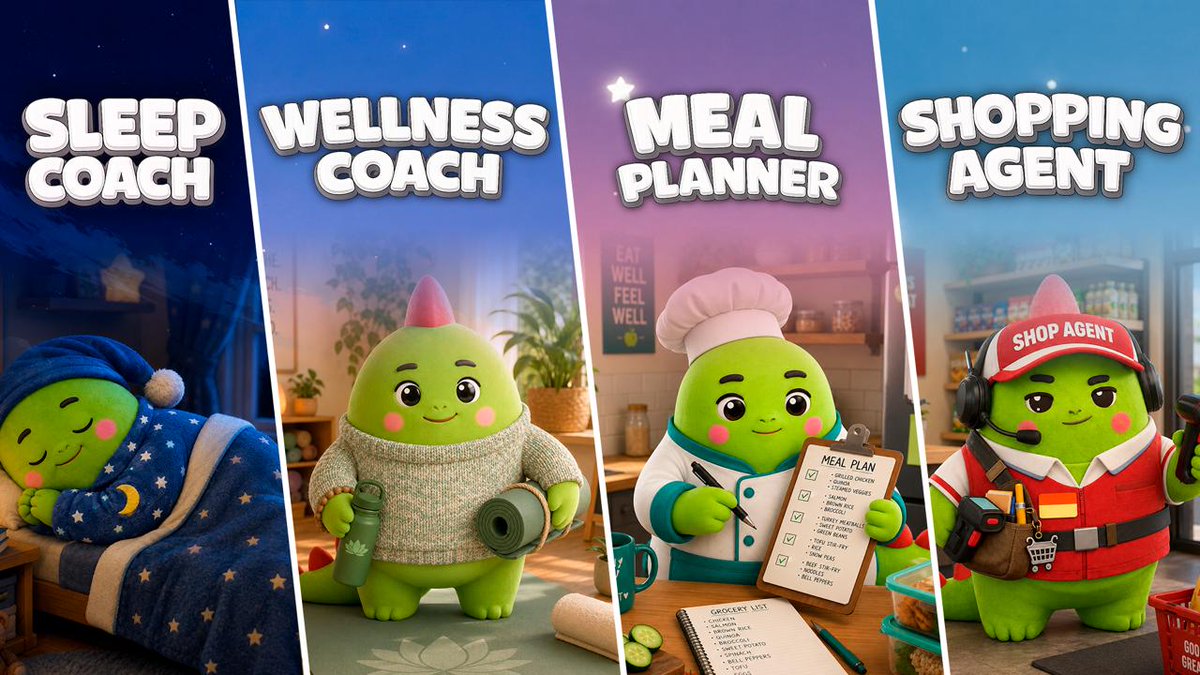
Check out what everyone's missing about Sleepagotchi
I analyzed how it stacks up against normal fitness tracking apps (Fitbit, Whoop, Oura, Apple Health) and one pattern keeps hitting different.
Most fitness apps collect your biometrics, show you pretty charts, then quietly stop there.
@sleepagotchi mobile alpha is doing something else.
Early testers run the biometric loops on their own wearables, feeding diagnostics straight into the engineering pipeline.
The rewards engine actually ties your real usage into priority updates and asset distributions.
After using both worlds for a while, the scary part is how quickly traditional apps feel like dead data collectors.
This one makes the feedback loop feel alive like your sleep and movement actually matter to the product’s future.
You almost forget it’s Web3 infrastructure underneath.
It just feels closer to how normal people would actually stick with a tracker long term.
$SLEEP Feels like early signs of something bigger.
13
the weird thing about a lot of health AI workflows
is how manual they still are.
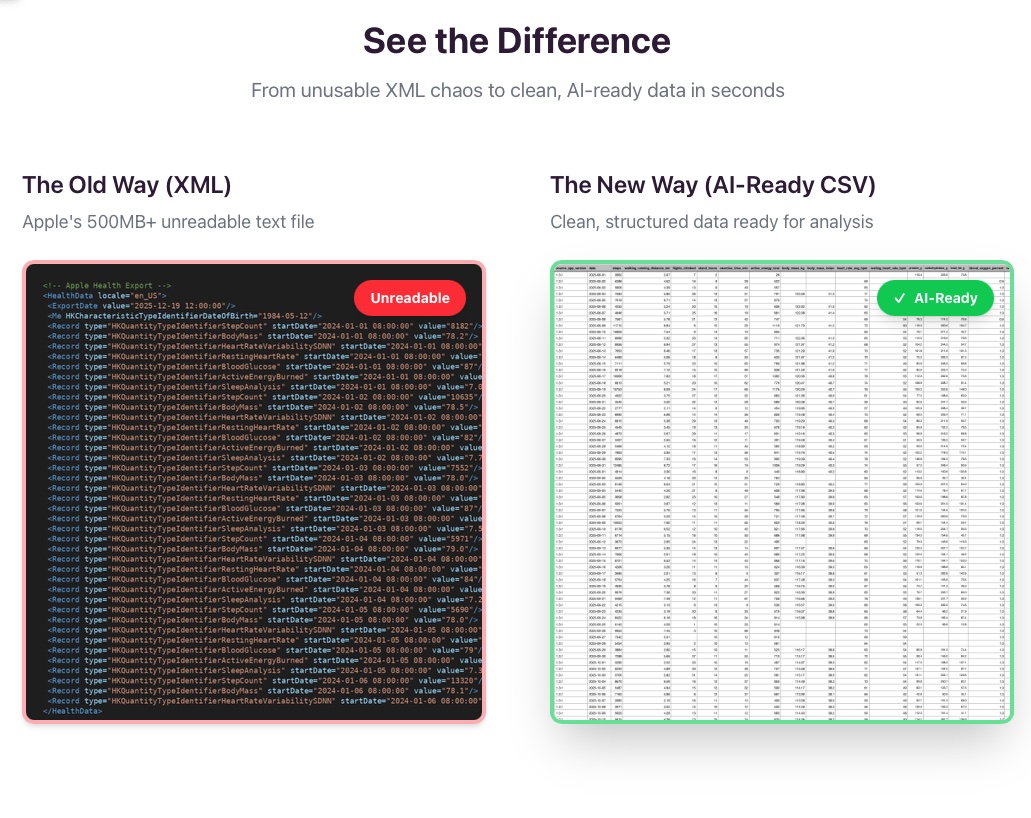
copy this, paste that,
convert this giant xml,
trim the file, try again.
I wanted something closer to:
choose the data, get the export, ask the question.
10
a lot of people do not need more health data.
they need a better starting question.
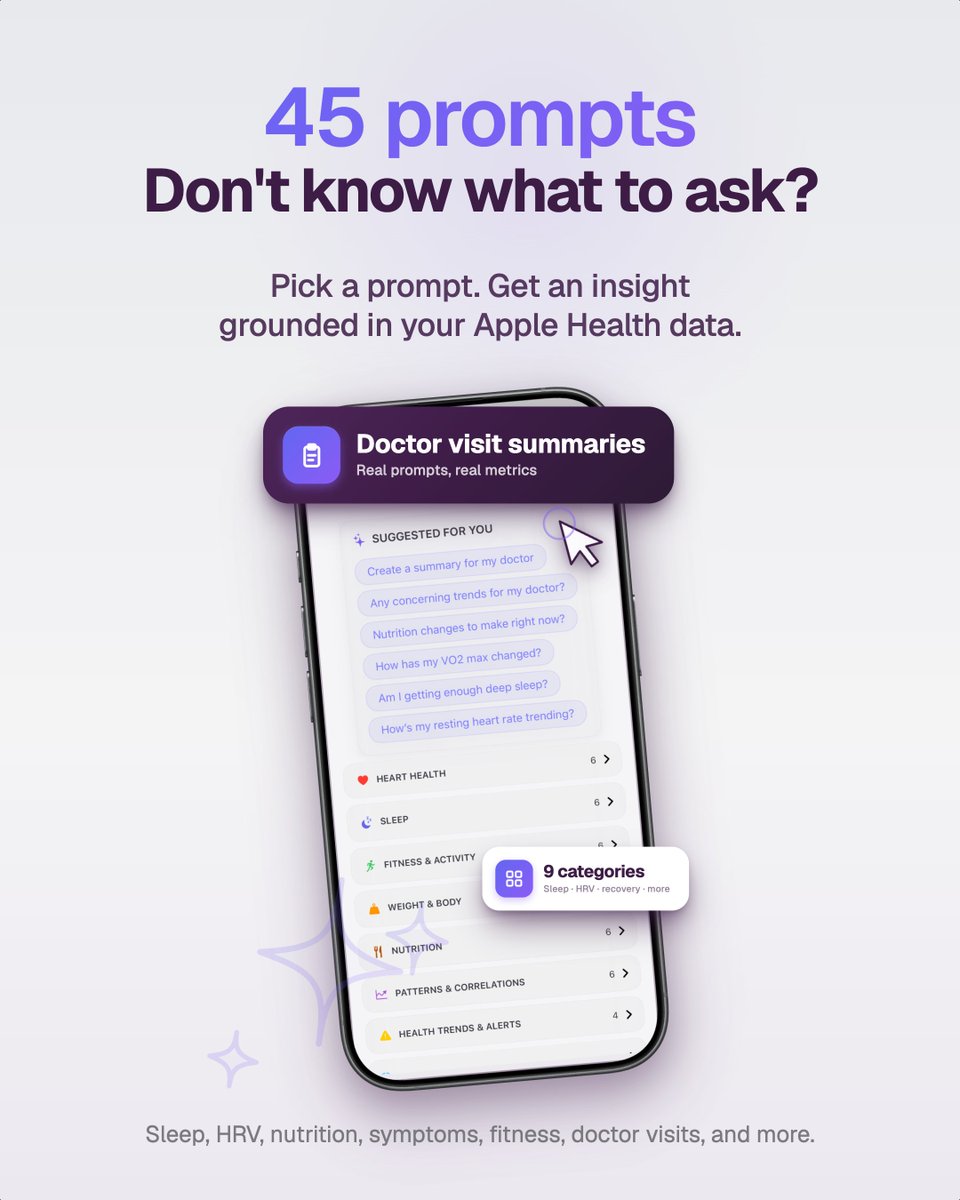
that is a big part of why I added sample prompts,
because staring at a giant export
is not the same thing as knowing what to ask.
11
health products keep relearning the same lesson.
people will tolerate a lot less weirdness once the data feels intimate.
good UX matters, but so does giving people a clearer sense of what they can keep, inspect, and take with them.
x.com/VechAlex/status/206258…

$450k/mo from a period tracker.
Stardust paywall says "Try for $0.00" before showing a single price. 11 health conditions collected before you've seen the app.
➡️ consent screen: "keep your secrets (*data) safe" → playful framing on serious data collection
➡️ sign up with Apple → account before data → commitment before value
➡️ birthday picker renders live star constellation → watch your sign appear
➡️ Apple Health sync → app knows your body before you've done anything
➡️ cycle length picker → "I forgot" is a valid option → no friction for uncertain users
➡️ 11 health conditions collected → specificity = personalization = sunk cost
Paywall:
➡️ "Try for $0.00" → no price visible → mental commitment before number shown
➡️ "No payment due now" → 3-step moon phase trial timeline
➡️ 2 plans: 7-day free annual ($29.99/yr, 64% off, pre-selected) vs monthly ($6.99/mo)
➡️ annual framed as the obvious choice before comparison
15
this is part of why I keep caring about the data layer.
people can change watches, subscriptions, apps, whatever.
what matters is whether the health data stays usable after that.
x.com/justabdulraouf/status/…
Jun 4

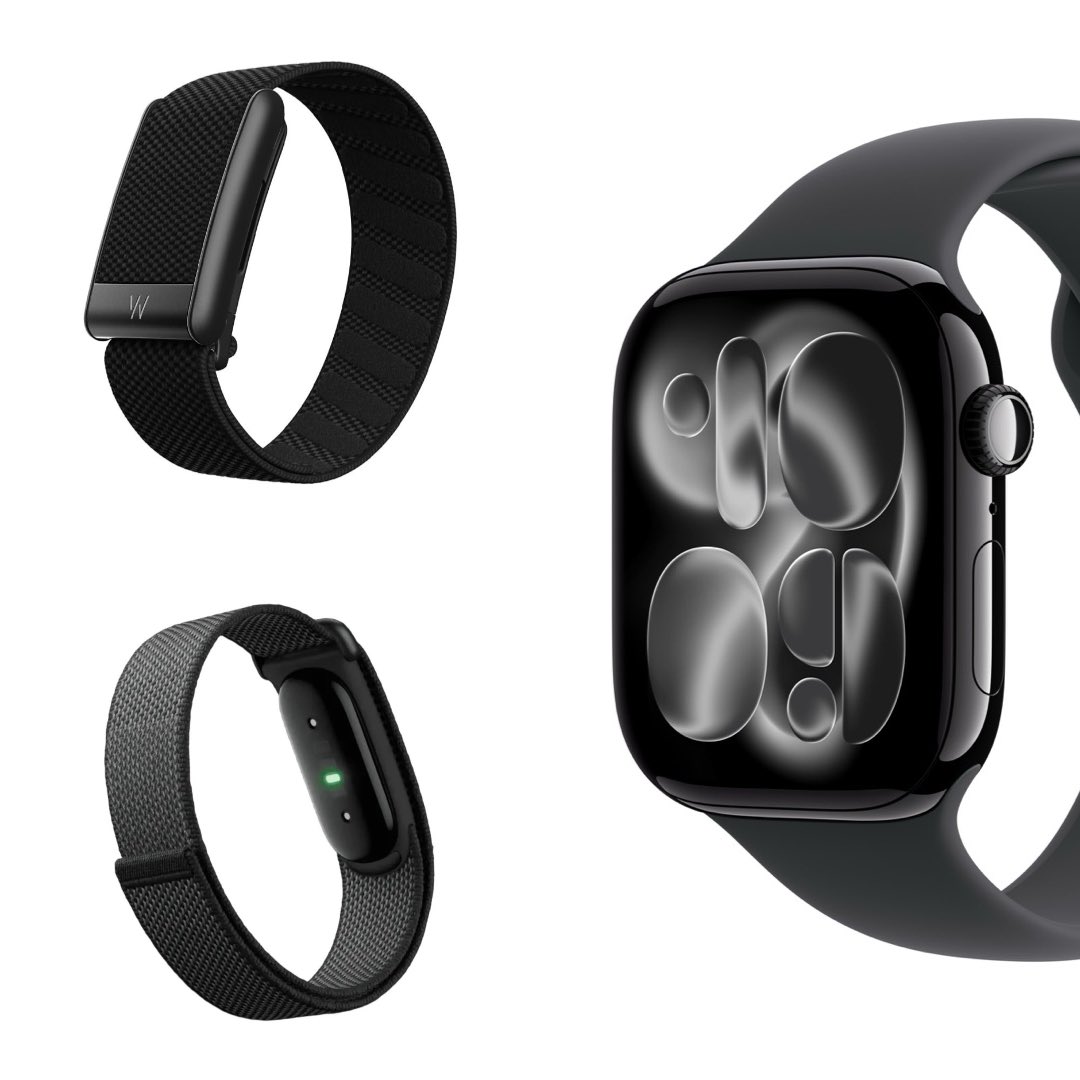
Whoop, Fitbit Air, or Apple Watch… smh.
I've been thinking about getting the Whoop since I started my health and fitness journey 152 days ago, but their subscription model is unbearable.
I know myself—I won’t enjoy it unless everything is unlocked, but I’m not paying that ridiculous amount yearly for it.
When Google announced Fitbit Air, I was excited there might be a replacement for the greedy Whoop model with the same functionality. But after checking the new health app, I was so disappointed.
It is funky and buggy. Even though Google usually makes perfect iOS apps, it has an insane amount of missing data despite connecting Apple Health. And I seriously think the Google Fit UI is cleaner and more beautiful.
I guess I’ll stick to my Apple Watch Series 11 for now.
13
this is where a lot of health products are heading.
less "here are your charts"
more "what should I actually do with this?"
still think the missing layer is making sure the person can inspect and move the data too, not just read the summary.
x.com/procastx/status/206241…

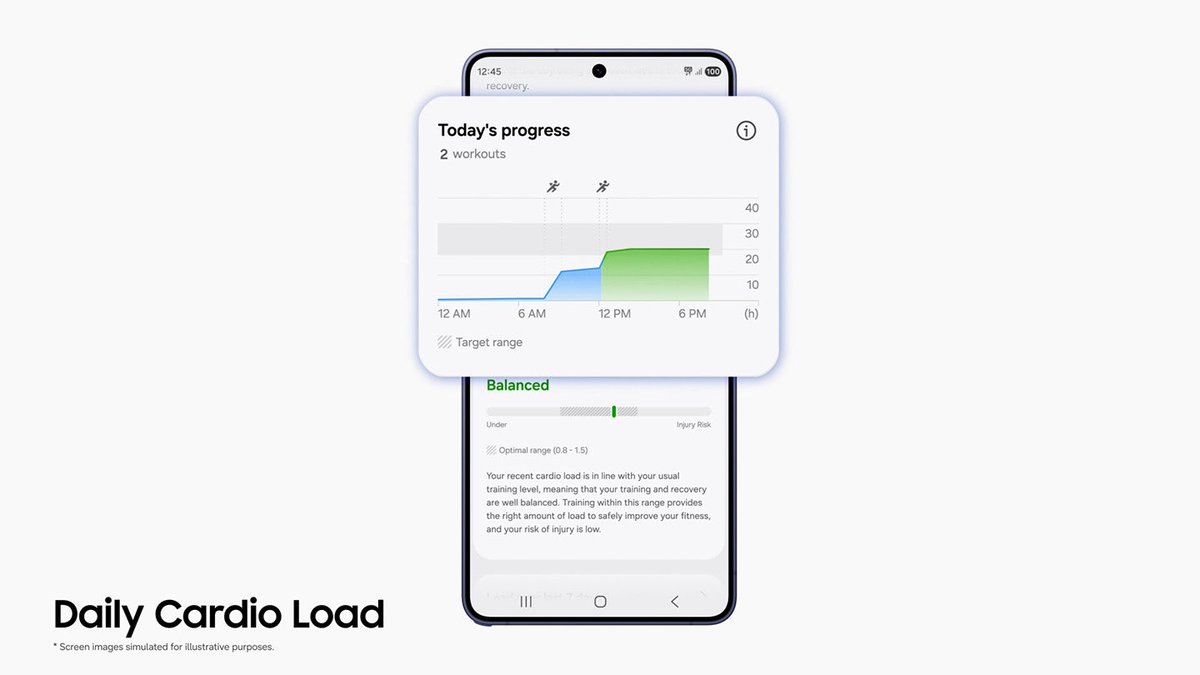
Samsung Introduces Next-Gen Galaxy Watch Features for AI-Powered Everyday Health Companion
Starting June 8, a major Samsung Health app update will introduce four new features designed to provide personalized guidance instead of just tracking data:
• Vitals
• Running Coach
• Antioxidant Index
• Mindfulness Tracker
This feels like Samsung’s biggest step toward WHOOP-style coaching. The focus is shifting from simply tracking health data to delivering AI-powered insights and actionable guidance. Your smartwatch isn’t just measuring your health anymore—it’s starting to coach you.
Would you trust health advice generated by AI from your smartwatch data?👇
ALT Samsung Health
1
26
health AI keeps getting framed like the model is the product.
I think the real product is whether your data is still usable after the demo ends.
if I cannot inspect it, export it, or move it somewhere else, I do not really have much.
5
One thing I like about this moment in health AI is that indie builders still have a real shot.
I built AI Health Export because I wanted it for myself.
Indie does not have to mean less capable. Sometimes it just means more focused.
220 Apple Health metrics already.
37
Still one of the clearest ways to say it.
The shortage is not more tracking. It is context, portability, and being able to do something useful with the data once you have it.
Jun 2

1/ every health app sucks. whoop, apple health, all of them. numbers with zero context.
I was measuring everything and still felt like shit.
so i built my own health brain. used @karpathy methods to create an AI clone of me that knows everything, injuries, diet, full history.
i call it Doppel
hooked it up to my weighing scale, whoop and uploaded all my history, every blood panel piped into one system that reasons across all of it like a doctor who never forgets a data point.
@bryan_johnson waddya think?
39
This is where the space is going.
More AI health products are showing up, but the useful question is still whether people can actually get the data into a shape they control and reuse.
Jun 3

SoloVault Signal: Condition-specific AI copilot unifying wearable and health data.
Signal Strength: 8
Investment View: invest
Market Crowding: medium
Commercial Value: medium
Startup Idea: You've been tracking your sleep, HRV, glucose, and lab results for months, but the data lives in five different apps and none of them talk to each other. When you ask your doctor about a pattern you noticed, they don't have time to look at your Oura data. You're left feeling like you have all this information and none of the insight. Build a condition-specific AI health copilot — start with a single condition (Type 2 diabetes management, PCOS, or long COVID) — that pulls data from Apple Health, Oura, Dexcom CGM, and lab result PDFs into a unified timeline, then lets users query it in natural language ('Why was my glucose spiking at 3pm last week?', 'How does my sleep quality correlate with my HRV this month?') and receive personalized, evidence-based interpretations with actionable suggestions. The key is condition specificity: a generic health AI feels like a toy; a tool that deeply understands the specific biomarker patterns of your condition feels like a knowledgeable ally.
Revenue Drivers: —
Growth Logic: -
MVP Monetization: -
MVP Design: -
Key Competitors: —
Differentiation: Moat builds through data accumulation and community trust: (1) Each user's health timeline grows richer over months, making the AI's pattern recognition more accurate for their specific physiology — this personal data moat makes switching costly; (2) Condition-specific interpretation models improve as more users with the same condition contribute anonymized pattern data (with consent), creating a network effect within each condition cohort; (3) Practitioner endorsements and integrations create institutional trust that generic health AI tools cannot match; (4) Condition-specific content library (evidence-based interpretation rules for each biomarker in the context of a specific condition) takes months to build and validate with medical advisors.
Risk & Compliance: —
One-liner: For people managing chronic conditions or optimizing health who are drowning in disconnected data from Apple Watch, Oura, CGMs, and lab results, a condition-specific AI health copilot that unifies and interprets their data gives them the clarity and agency their doctor's 15-minute appointment never could.
1
23
The more health AI gets connector-heavy, the more I care about having the data in a portable format.
Convenience is great.
Being able to leave with the file is better.
That is a big part of why I built AI Health Export.
18