2009-2024 … now on Bluesky
Joined March 2009
- Tweets 17,744
- Following 2,412
- Followers 2,367
- Likes 5,604
1,533 Photos and videos











Pinned Tweet

3 Oct 2025
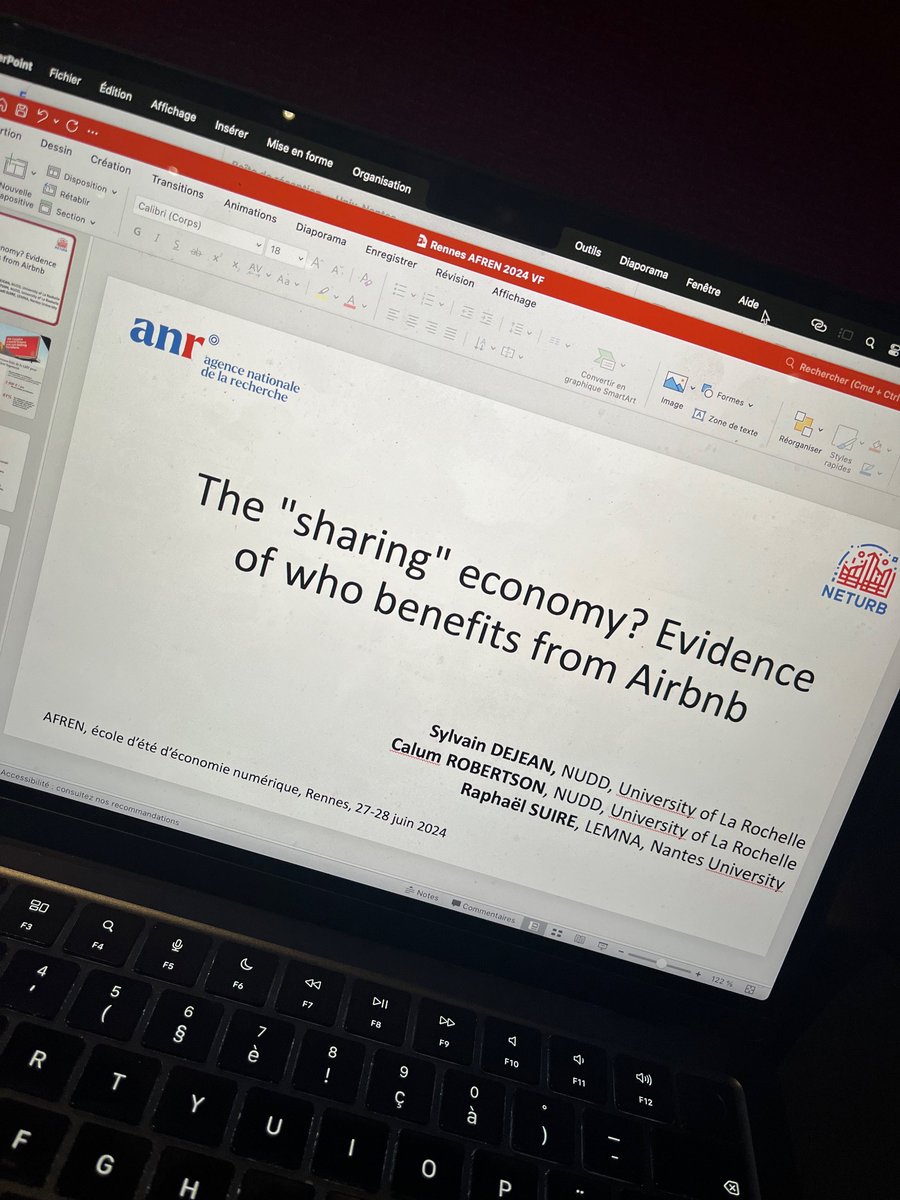
Et si réguler airbnb et la location courte durée profitait avant aux gros propriétaires / loueurs ? résultats d'une recherche que nous venons de publier : lemonde.fr/idees/article/202…
2
1
1
229
ɹaphaël suire | retweeted

Jun 11
🇮🇳 Une heure par jour, Nagireddy Sriramyachandra se filme chez elle en train de faire les tâches ménagères, pour entraîner les futurs robots dopés à l'IA qui le feront à sa place #geneu_afp
30
152
440
132,738
ɹaphaël suire | retweeted
Chères et chers collègues universitaires,
Vous rêviez d’un texte où notre ministère explique, avec un calme parfait, que l’enseignement supérieur privé est désormais incontournable, qu’il constitue une composante normale du paysage
Bonne nouvelle : ce texte existe. 🙄

1
1
1
129
ɹaphaël suire | retweeted

May 20
I have spent my entire life working on this and thinking about this for the past 4 years. I don't know what will happen in 20 years, but I can promise you that on the 5-10 year timescale, scientists are not out of their jobs. AI is going to massively accelerate the pace of science, increase productivity, let individual scientists make way more discoveries way faster, and is going to make science overall more fun. But the model is going to be collaboration between humans and AI, not replacement.
The key difference here between science and e.g. software engineering is that science is not verifiable in any rapid/convenient way (unlike software), unlike programming. We still need humans for their scientific taste.
May 20

Today we all lost our jobs.....
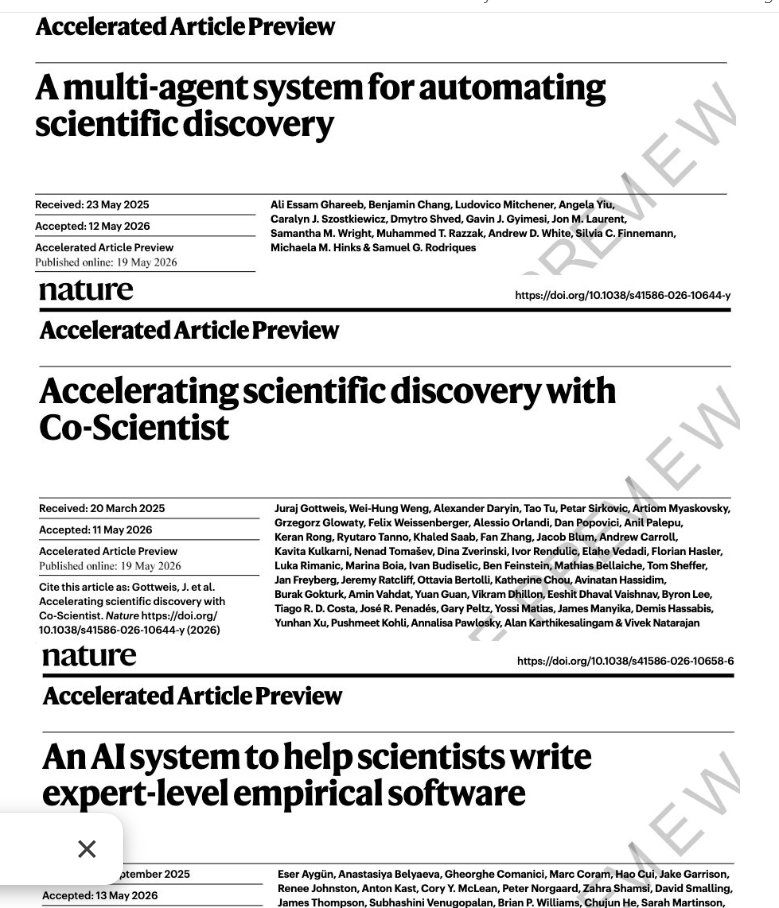
Three Nature papers showing that scientists in the conventional sense are obsolete
At least read the first one.... the AI replaced all things that the scientist does ....
nature.com/articles/s41586-0…
41
178
1,067
161,733
ɹaphaël suire | retweeted

Apr 30
Un pays qui désinvestit sa recherche n'a pas d'avenir.
En France le budget du ministère de la recherche est systématiquement en première ligne lorsque les gouvernements annoncent des plans d'économies. Le président du CNRS observe que la France (avec 2,2% du PIB en R&D) est désormais très en dessous de la moyenne OCDE (2,7%).
Malgré une performance de gestion qui obtient un plébiscite de la cour des comptes, le budget a été réduit de... 500 millions d'Euros.
17
118
292
8,648
ɹaphaël suire | retweeted

Apr 29
Two economists just published a mathematical proof that AI will destroy the economy.
Not might. Not could. Will — if nothing changes.
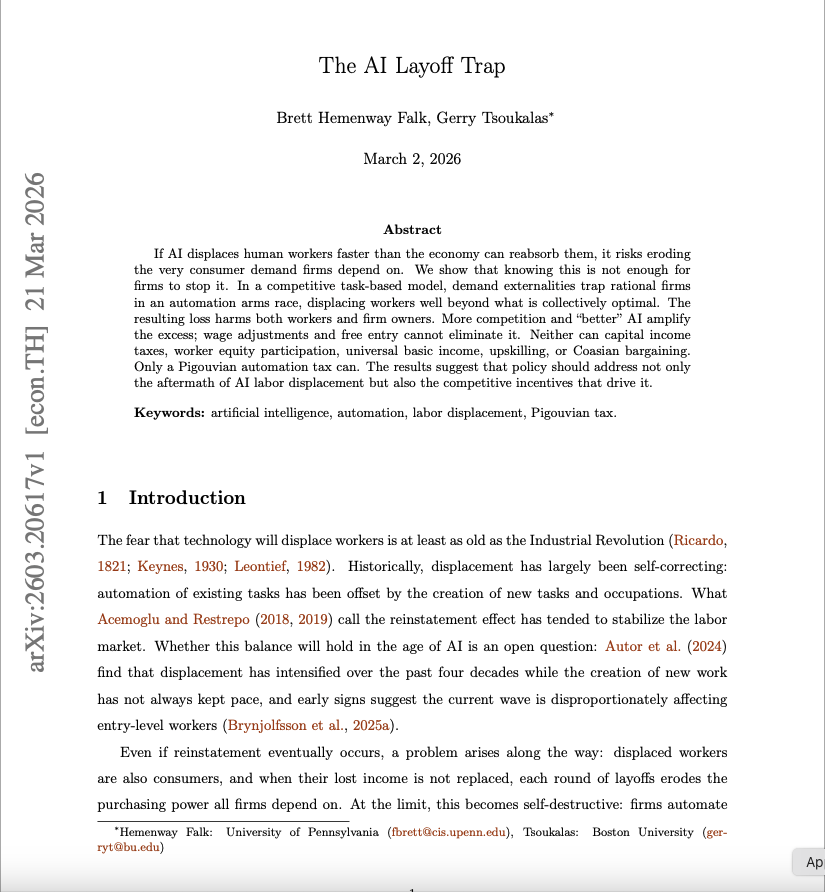
The paper is called "The AI Layoff Trap." Published March 2, 2026. Wharton School, University of Pennsylvania. Boston University. Peer reviewed. Mathematically modeled.
The conclusion is one sentence.
"At the limit, firms automate their way to boundless productivity and zero demand."
An economy that produces everything. And sells it to nobody.
Here is how you get there.
A company fires 500 workers and replaces them with AI. A competitor fires 700 to keep up. Another fires 1,000. Every company is behaving rationally. Every company is following the incentives correctly. And every company is building a trap for itself.
Because the workers who were fired were also customers.
When they lose their jobs faster than the economy can absorb them, they stop spending. Consumer demand falls. Companies respond by cutting costs — which means automating more workers — which means less spending — which means more falling demand — which means more automation.
The loop has no natural exit.
The researchers tested every proposed solution. Universal basic income. Capital income taxes. Worker equity participation. Upskilling programs. Corporate coordination agreements.
Every single one failed in the model.
The only intervention that worked: a Pigouvian automation tax — a per-task levy charged every time a company replaces a human with AI, forcing them to price in the demand they are destroying before they pull the trigger.
No government has implemented this. No major economy is seriously discussing it.
Meanwhile the numbers are already tracking the curve. 100,000 tech workers laid off in 2025. 92,000 more in the first months of 2026. Jack Dorsey fired half of Block's workforce and said publicly: "Within the next year, the majority of companies will reach the same conclusion."
Nobody is doing anything wrong. Companies are following their incentives perfectly. That is exactly the problem.
Rational behavior. At scale. Simultaneously. With no mechanism to stop it.
Two economists built the math. The math leads to one place.
Source: Falk & Tsoukalas · Wharton School Boston University ·
arxiv.org/pdf/2603.20617
1,122
3,917
9,868
1,372,417
ɹaphaël suire | retweeted

Plus de 1500 Nantaises et Nantais soutiennent Johanna Rolland et la Gauche unie pour Nantes. Merci à toutes et tous. La liste complète : lagaucheuniepournantes.fr/as…




7
4
11
905
ɹaphaël suire | retweeted
Le maire de Québec soutient Johanna Rolland pour les élections municipales de Nantes. Merci Bruno Marchand pour ton témoignage qui en dit long sur les coopérations fertiles entre Québec et Nantes : 2 villes sœurs à bien des égards. @JRolland_Nantes @GaucheUnieNtes
13
2
15
794
ɹaphaël suire | retweeted

Feb 18
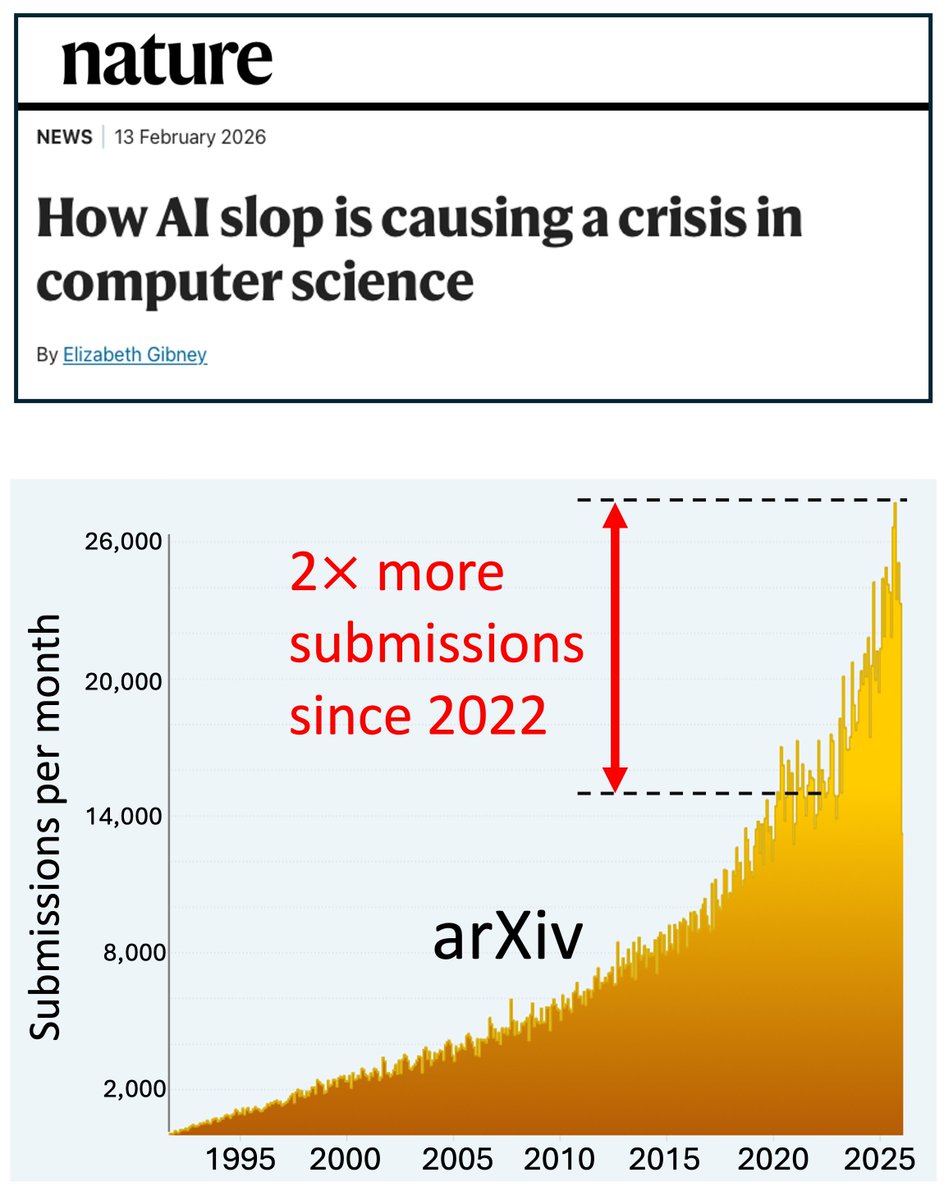
A really dangerous situation. Too many submissions. Too many generated papers. Little responsibility.
1. In 2026, more than 24,000 submissions were made to the International Conference on Machine Learning (ICML). It’s TWO times more than in 2025. To fight it, the organizers now require researchers to pay $100 for every subsequent paper.
2. LLM adoption has increased researcher productivity by 90% (there’s a recent paper in Science).
3. The number of papers is becoming far too high. Submissions to arXiv have risen by 50% since 2022.
4. There are simply not enough reviewers. Plus, many scientists no longer want to invest precious time in it for free.
5. We can’t easily identify AI-made papers from the genuine ones.
__
Important words from Paul Ginsparg, a co-founder of arXiv:
“AI slop frequently can’t be discriminated just by looking at abstract, or even by just skimming full text. This makes it an “existential threat” to the system.”
Basically, we’re getting closer to the tipping point.
📍 Many professors blame the AI.
But the problem is likely elsewhere:
1. Without a sufficient number of papers, many PIs can’t get funded. They have to prove their credibility to reviewers. Their proposals have to rely on prior publications. In many countries, there are some informal (or even formal) expectations for how many papers a group with a certain size has to publish to survive (funding-wise).
2. Our students / postdocs need papers if they want to be hired in faculty roles. Yes, some departments hire people with few publications. But the majority still want to ensure their faculty can get funded. If funding is partly a function of papers, this is used in decision-making.
3. The number of papers is important if you want to get high-level awards. Many of them are not given because you published one paper (even if it’s great). They are given because you made a meaningful CONTRIBUTION to the field. How do you make it? Publish more papers.
4. Tenure promotions in many places take the number of your papers into account (often indirectly). Your tenure may get delayed if you don’t publish enough. Not everywhere, but for many mid- to low-ranked universities this story is more or less the same.
There are many more to mention.
📍My opinion:
Much of this is rooted in how funding is distributed.
There is a strong correlation between the requirements at a university and the funding acquisition criteria.
If funding were based ONLY on the quality of published papers, universities would hire people for the quality of their science. If funding agencies strongly discouraged publishing too many papers, universities wouldn’t expect numbers from faculty during promotions. And some supervisors wouldn’t pressure students and postdocs to publish unfinished studies and low-quality data.
Yes, we need good detectors of fake papers.
But we also need the right policies and better funding allocation criteria.
94
366
1,426
194,284
ɹaphaël suire | retweeted

Jan 16
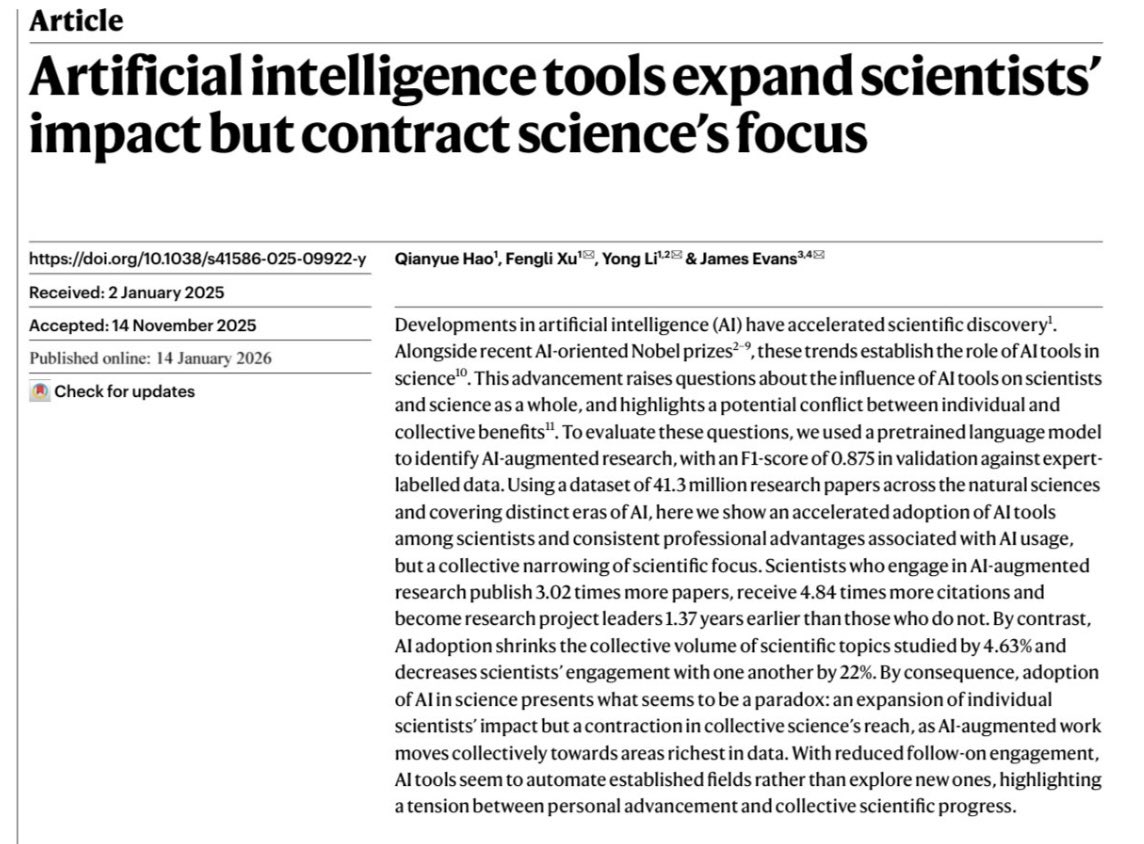
A new Nature paper shows what looks like a paradox.
Researchers who adopt AI tools publish more, receive more citations, and become PIs earlier.
At the same time, the scope of science appears to be narrowing.
How can we reconcile this apparent contradiction?
LLM outputs are, by construction, a combination of existing knowledge: an average of averages.
As reliance on LLMs increases, variance declines.
Productivity goes up. Creativity goes down.
*
Paper in the first reply
28
95
363
27,076
ɹaphaël suire | retweeted

Au pays des grandes écoles, l’indifférence des politiques et de la Nation à l’égard des universités.
radiofrance.fr/franceculture…
5
7
650
ɹaphaël suire | retweeted
ESR : la France accentue son décrochage en 2025 universites2024.fr/esr-la-fr…
5
8
676
ɹaphaël suire | retweeted

2 Dec 2025
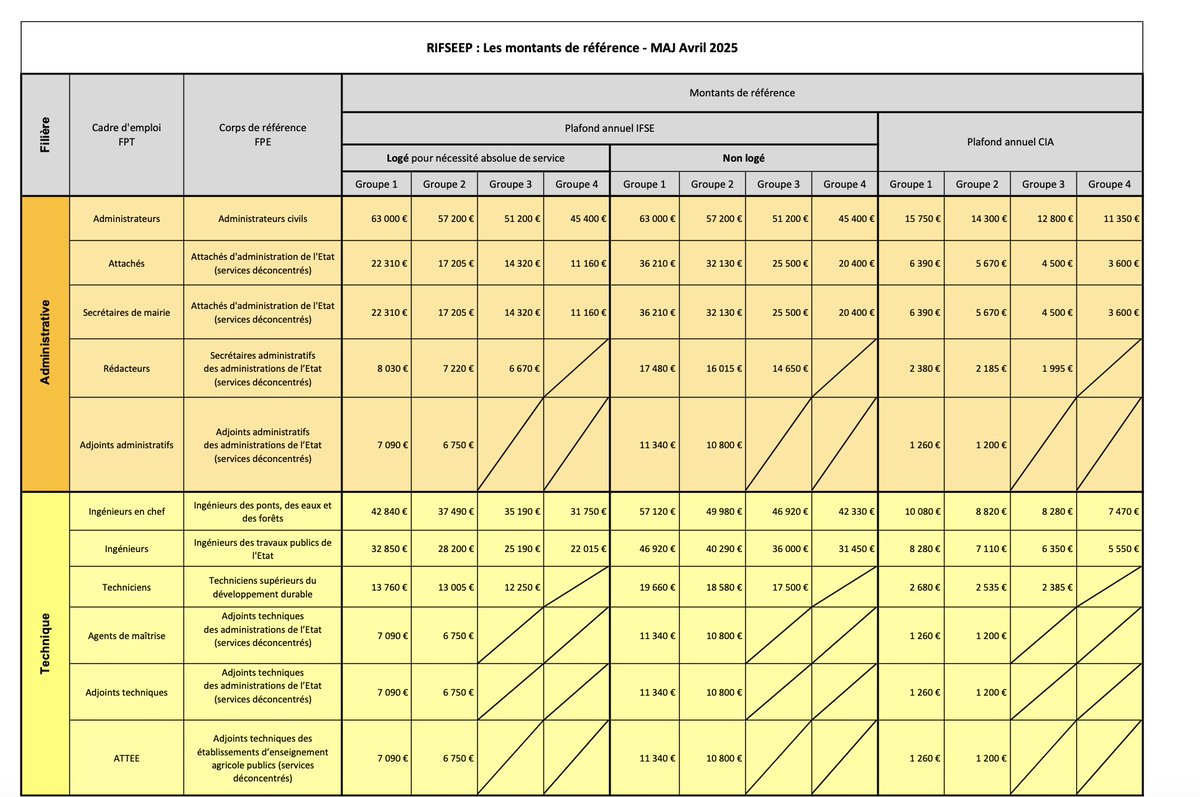
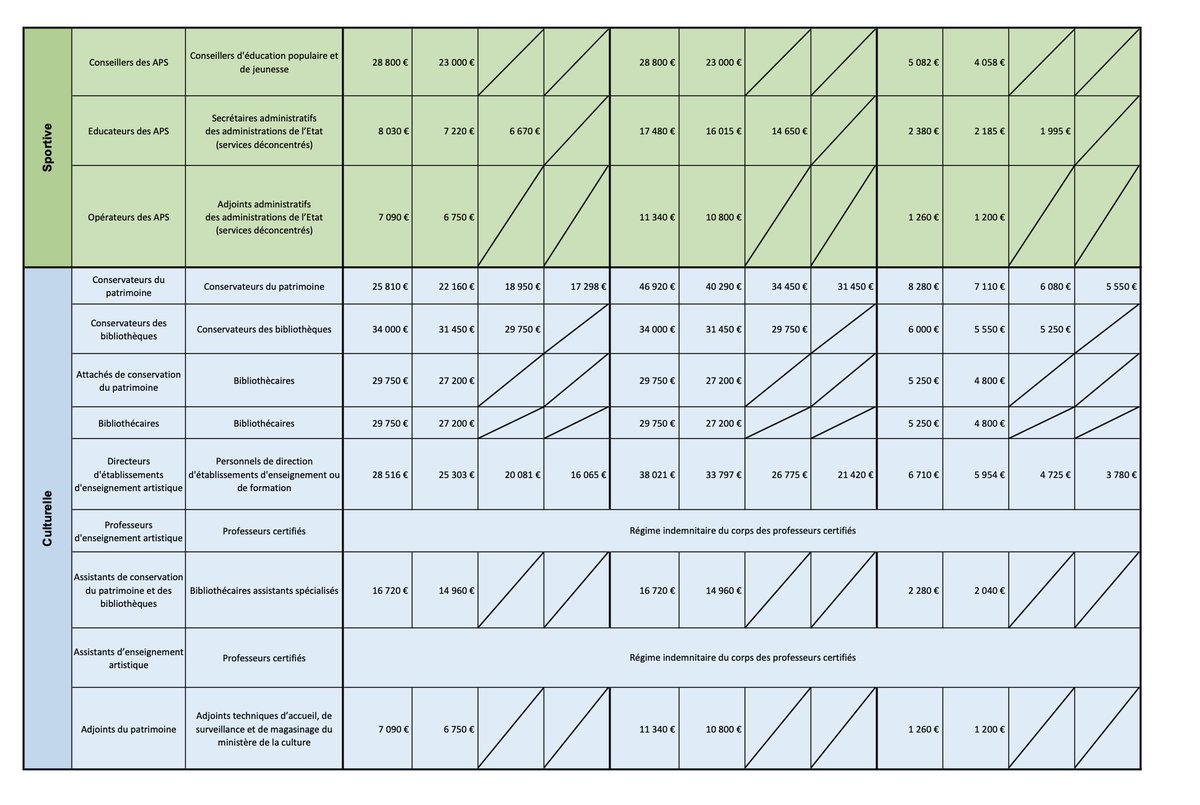
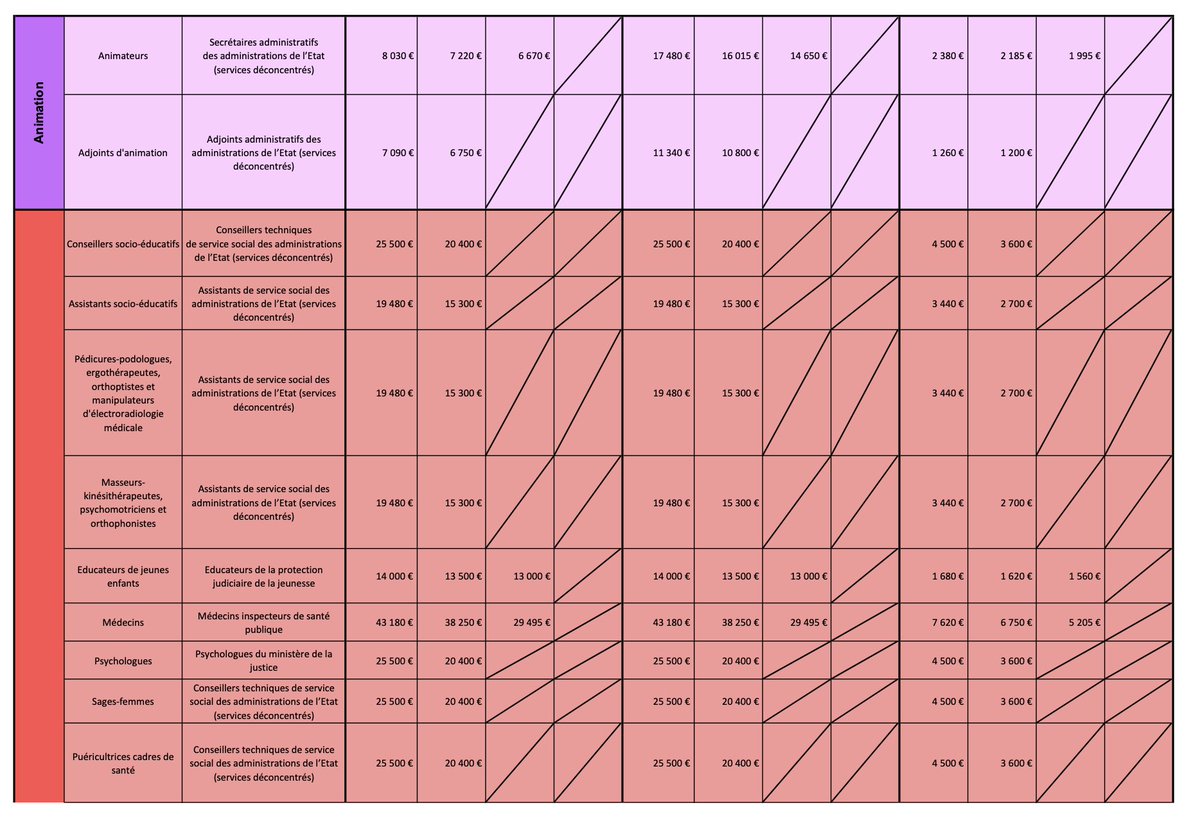
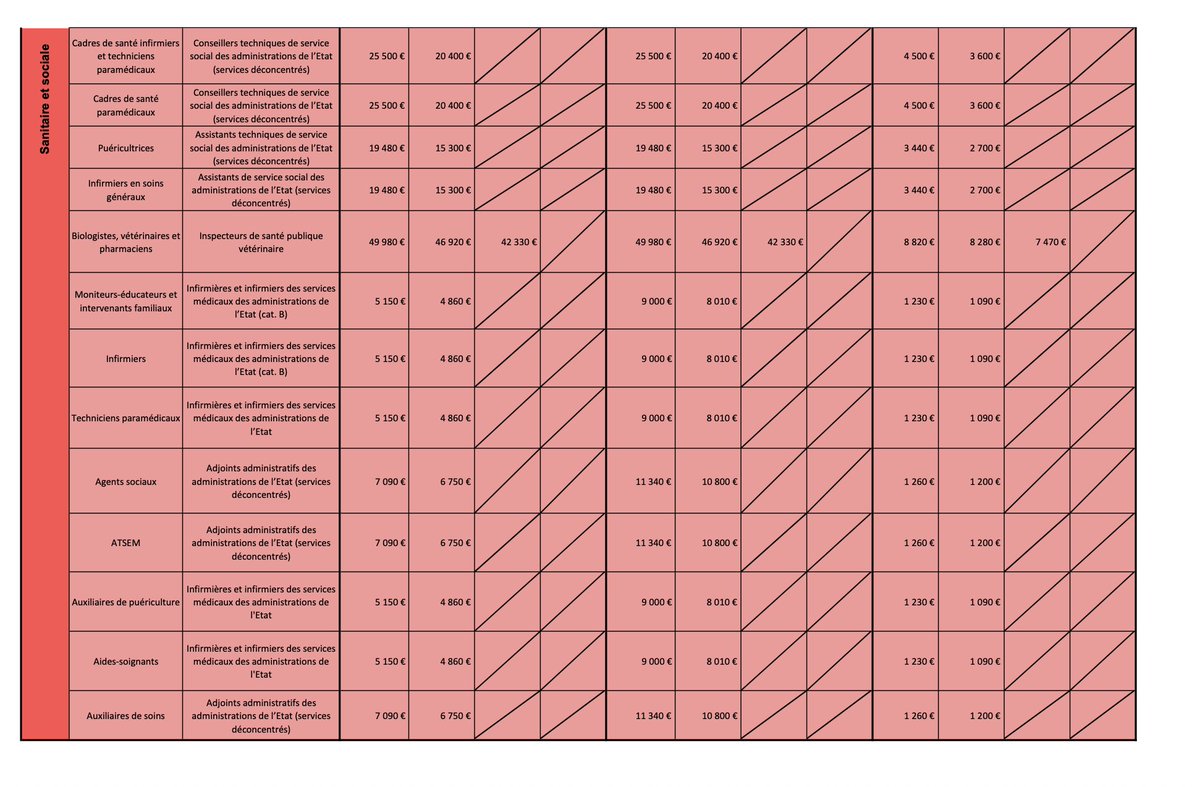
Ci-dessous les primes pour les administratifs de l'Etat
Comp. avec la pauv' RIPEC C1 de 400 E brut/mois et suspendu en 2026 !
3
1
17
1,831
ɹaphaël suire | retweeted

11 Jul 2025
Final reminder 🚨
@geoinno2026 call for papers closes this Monday, July 14th
Whether you’re an early-career researcher or an established scholar, this is your chance to share your ideas, connect with the int'l community & drive the conversation forward
geoinno2026.com/

7
14
1,738
ɹaphaël suire | retweeted

10 Jul 2025
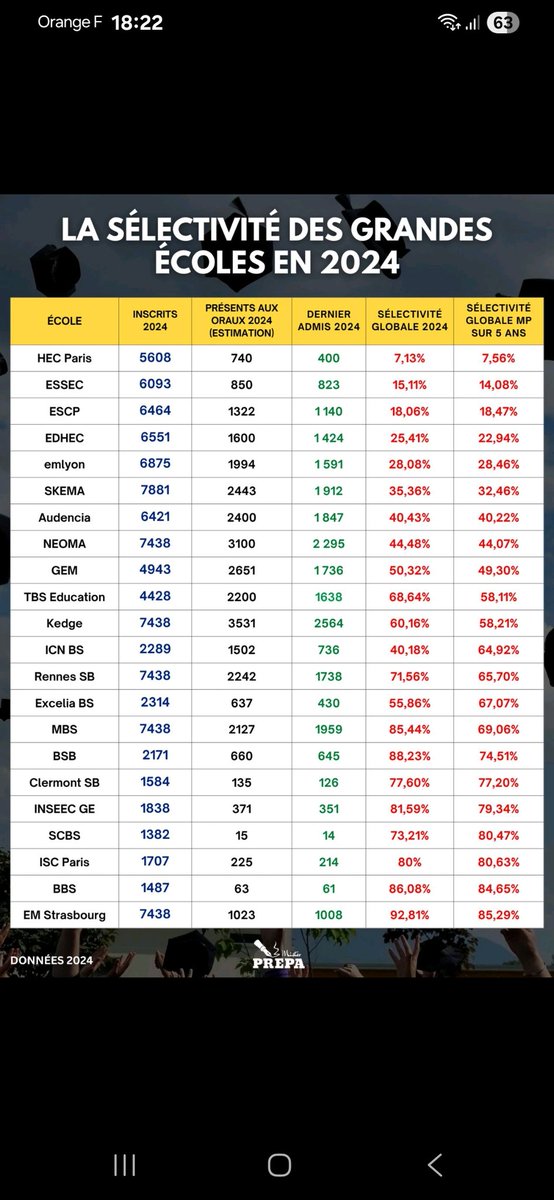
Selon la ville vous avez des licences universitaires nettement plus sélectives que certaines écoles...
1
1
78
ɹaphaël suire | retweeted
6 Jul 2025
Il est grand temps d'introduire un examen pour entrer à l'université.
5 Jul 2025

Le bac est devenu de fait une attestation de fin d’études, ce qui n’est pas déshonorant, et il faudrait l’assumer. Ce qui est ridicule, c’est de le traiter comme une sorte de concours…
1
2
150
ɹaphaël suire | retweeted
6 Jul 2025
Quand l'effet réseau ne parvient plus à rattraper le manque de compétences et de connaissances applicables ?

1
1
107
ɹaphaël suire | retweeted
19 Jun 2025
Je propose de réduire le budget des universités françaises et de leur rajouter des contraintes administratives tout en continuant de les denigrer par rapport aux ecoles privées. Ça devrait nous aider à remonter dans le classement. ...
19 Jun 2025

La France sort du top 10 des leaders de la recherche, la Chine confirme son leadership dlvr.it/TLRL0N

1
4
4
384

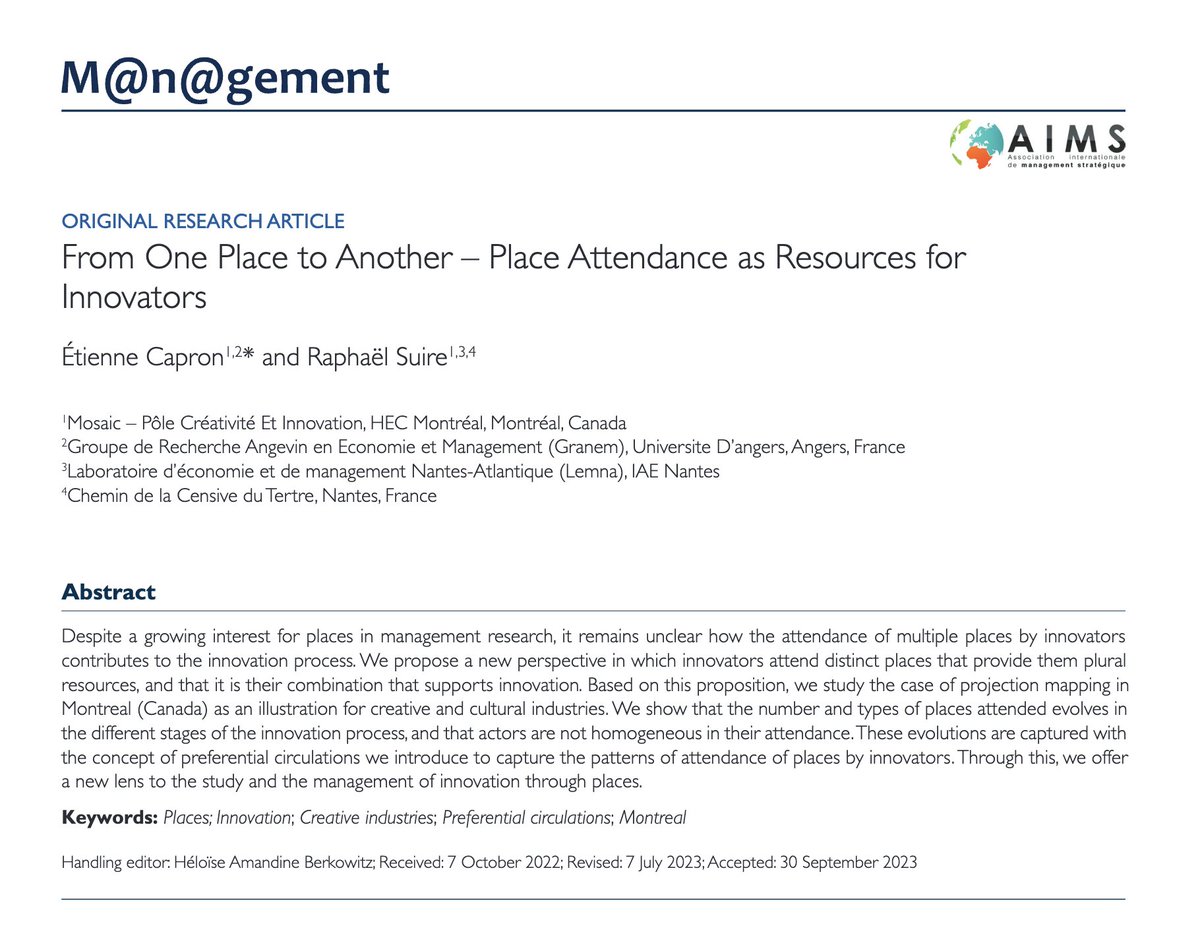
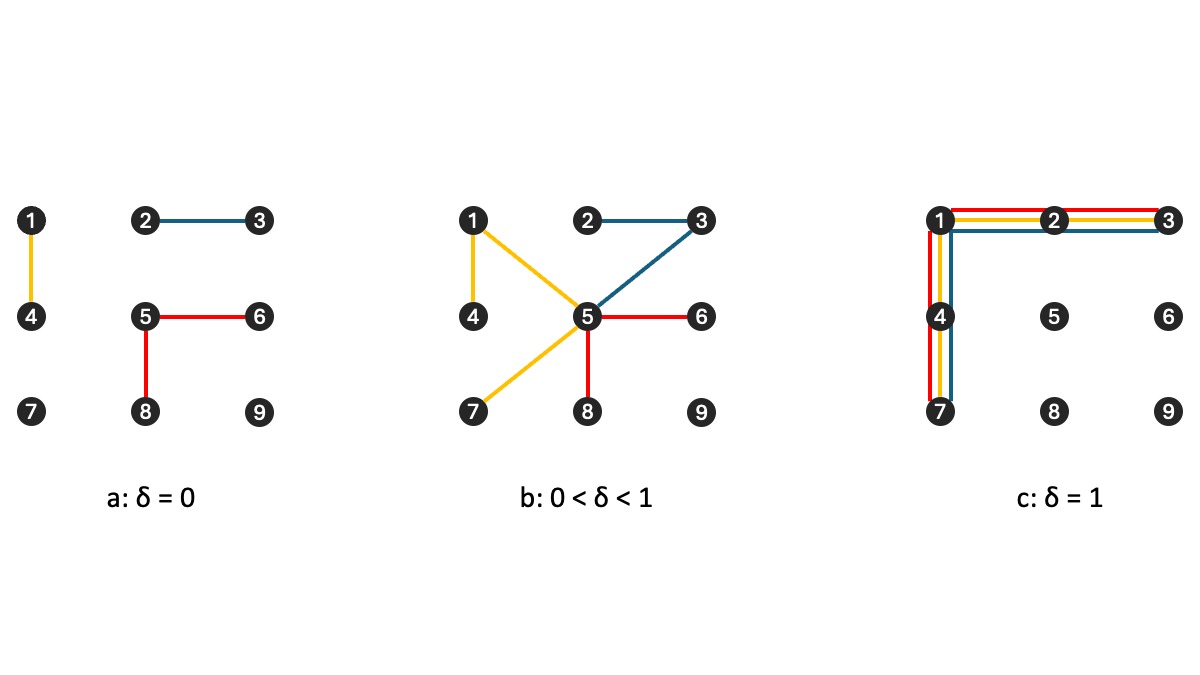
🔍 NEW BLOG: "Towards a micro-geography approach of the entrepreneurial ecosystem" by Etienne Capron and Raphaël Suire
Exploring how geographical proximity enables tacit knowledge exchange in entrepreneurial ecosystems!
Read now: bit.ly/3EgpHtm @regstud @RSAChiefExec

1
4
5
229