
AIoTChain | Merging #AI, #IoT & #Blockchain for a smarter, decentralized future.
Joined August 2023
- Tweets 293
- Following 54
- Followers 5,373
- Likes 280
78 Photos and videos




Jun 11
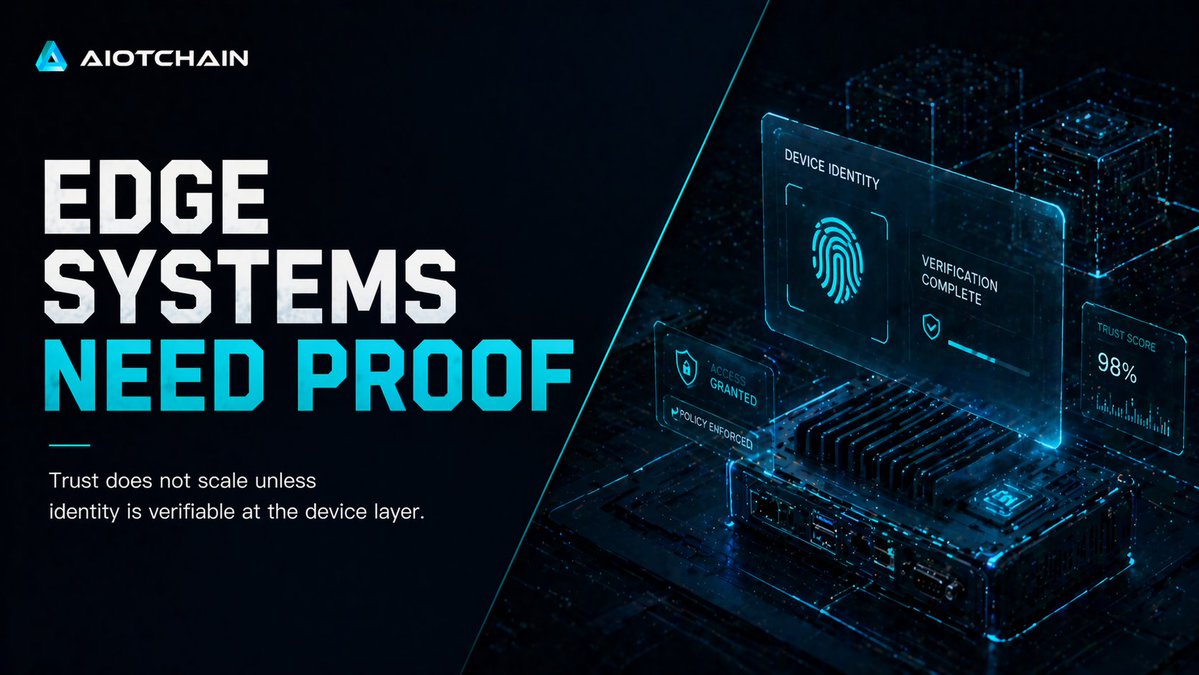
If AI is going to touch machines, the trust stack has to be boring on purpose.
Not louder.
More verifiable.
Which layer should every real-world agent prove first? ⚙️
0%
Device-bound DID
0%
Expiring access
0%
Public audit trail
0%
Edge fallback rules
0 votes • 1 hour
6
7
9
443
Jun 2
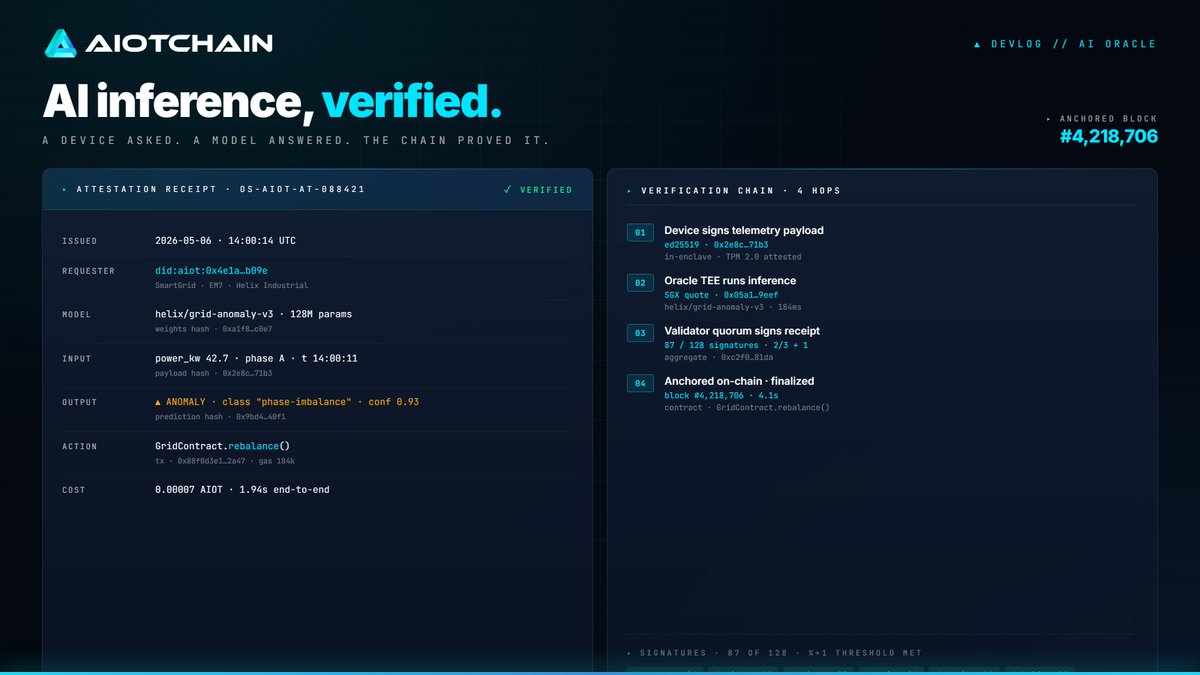
A device asked.
A model answered.
The chain proved it ▲
01 · device signs payload
02 · TEE runs inference (184ms)
03 · 87/128 validators co-sign
04 · anchored · block #4,218,706
1.94s end-to-end ⚡
This is what verifiable AI looks like.
#AIoTChain #AI #onchain
5
8
11
626
Jun 1
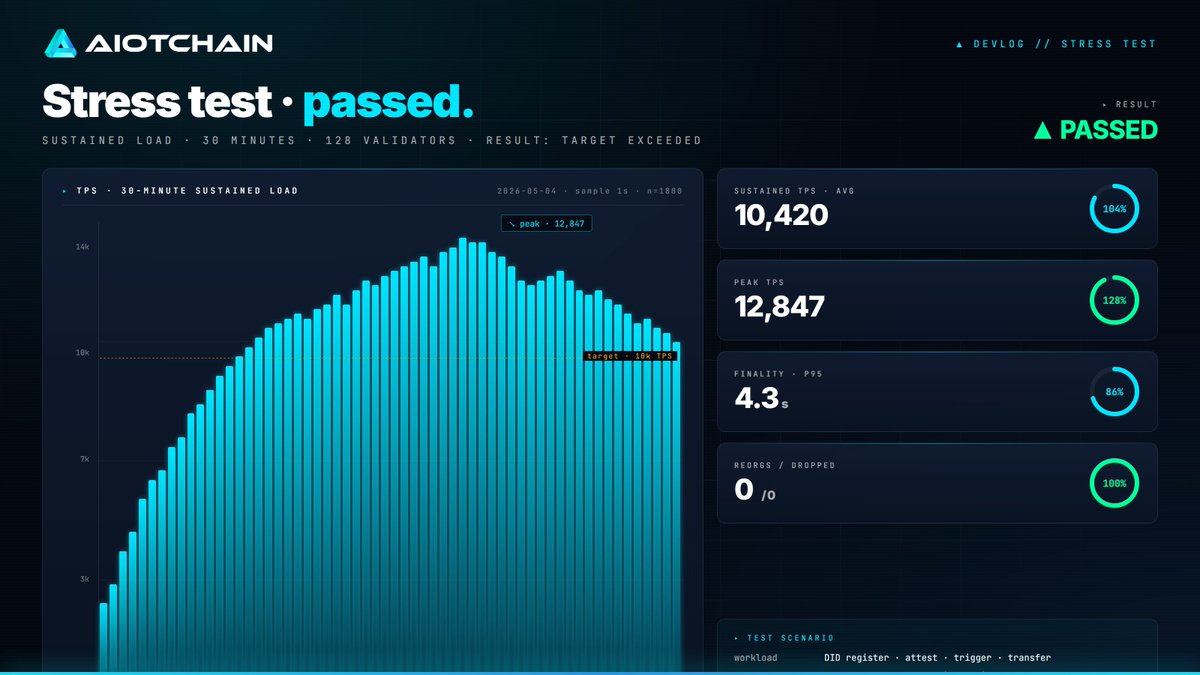
30-minute sustained load test 🧪
Avg TPS · 10,420 (target 10k)
Peak TPS · 12,847
p95 finality · 4.3s
Reorgs · 0
Dropped · 0
128 validators · 5 regions
Built for billions, not benchmarks ▲
#AIoTChain #TPS #DePIN $AIOT
5
6
14
725
May 30
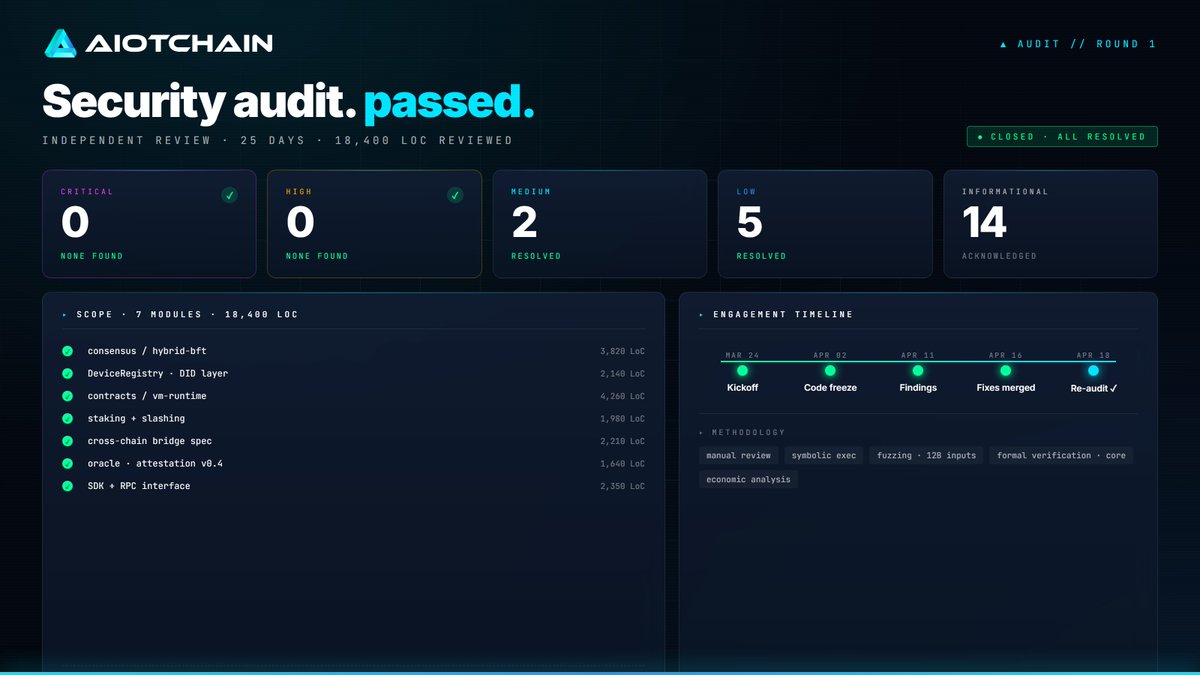
Round 1 audit · CLOSED ✅
25 days · 18,400 LoC
7 modules audited
Findings:
0 critical · 0 high
2 medium · 5 low — all resolved
Audited by OtterSec.
Round 2 → Q4 2026 ▲
#AIoTChain #Security #Audit
4
6
9
711
May 29
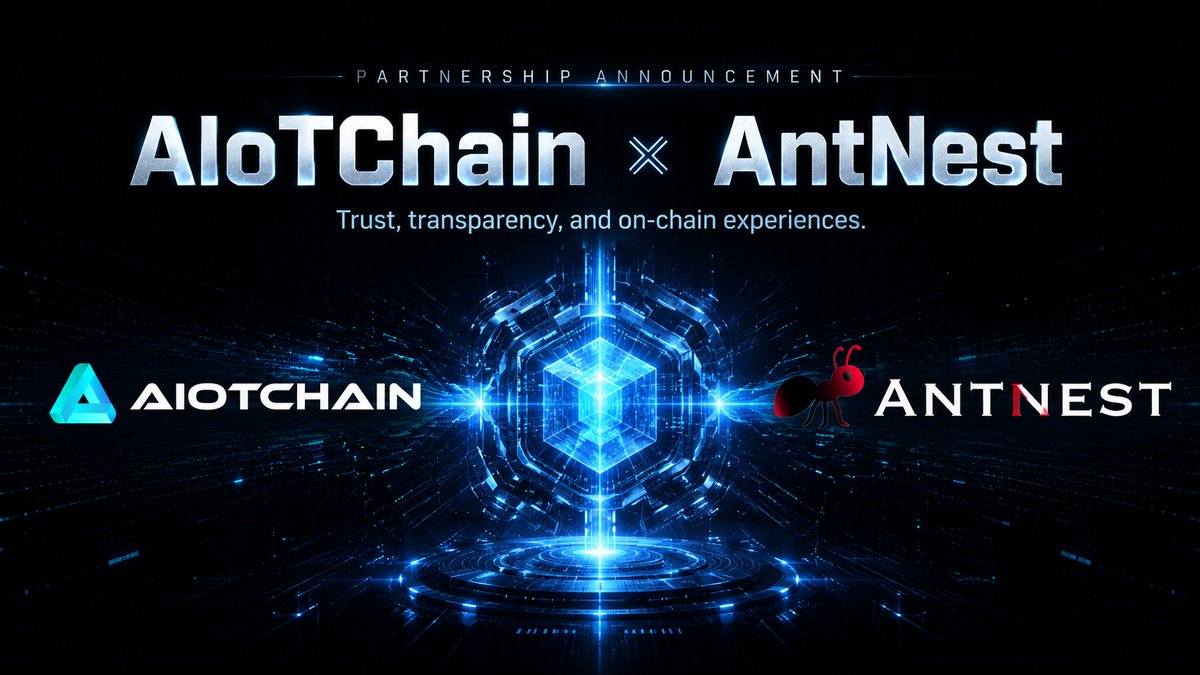
Glad to announce our partnership with @antnestglobal
AIoTChain brings trust infrastructure.
AntNest brings fully on-chain gaming.
Looking forward to building stronger on-chain experiences together.✅
4
10
11
696
May 28
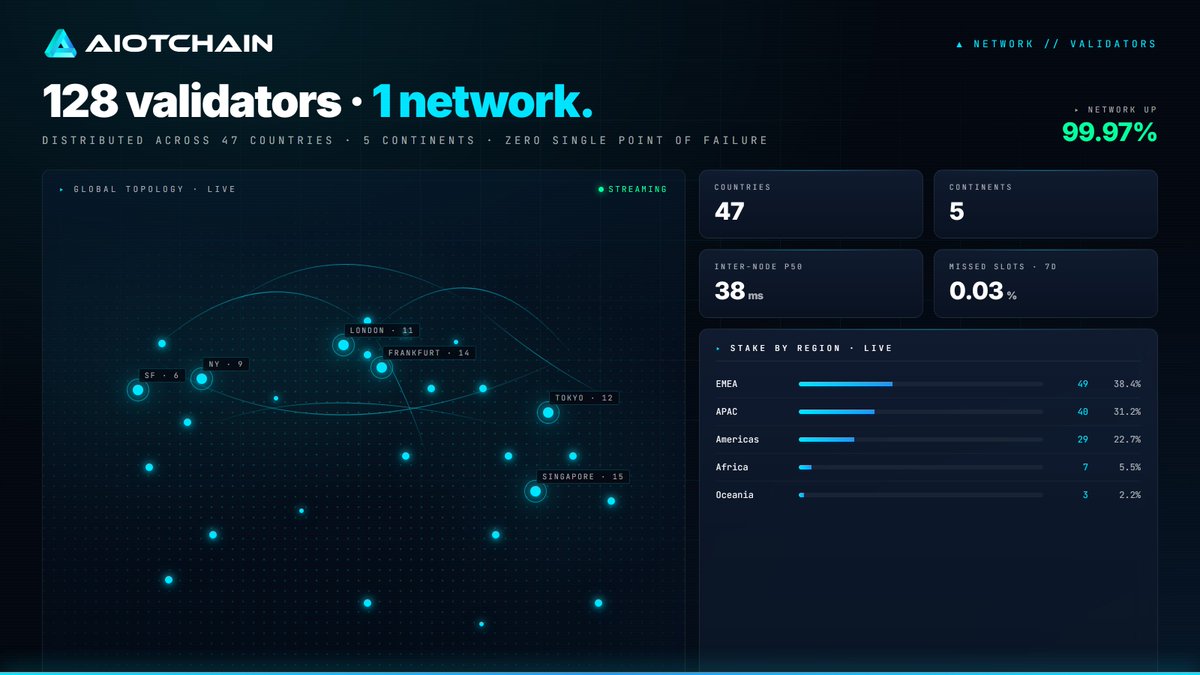
128 validators.
47 countries.
5 continents 🌐
0.03% missed slots · 7d
38ms median inter-node latency
EMEA · APAC · Americas · Africa · Oceania
Decentralization isn't a slogan.
It's a deployment map ▲
#AIoTChain #DePIN #Validators
5
6
9
796
May 28
Autonomous machines sound cool
until one of them says “trust me bro” 👀
AIoTChain is here for the boring-but-critical part:
real device identity before real-world action ⚙️🔗
4
9
10
694
May 26
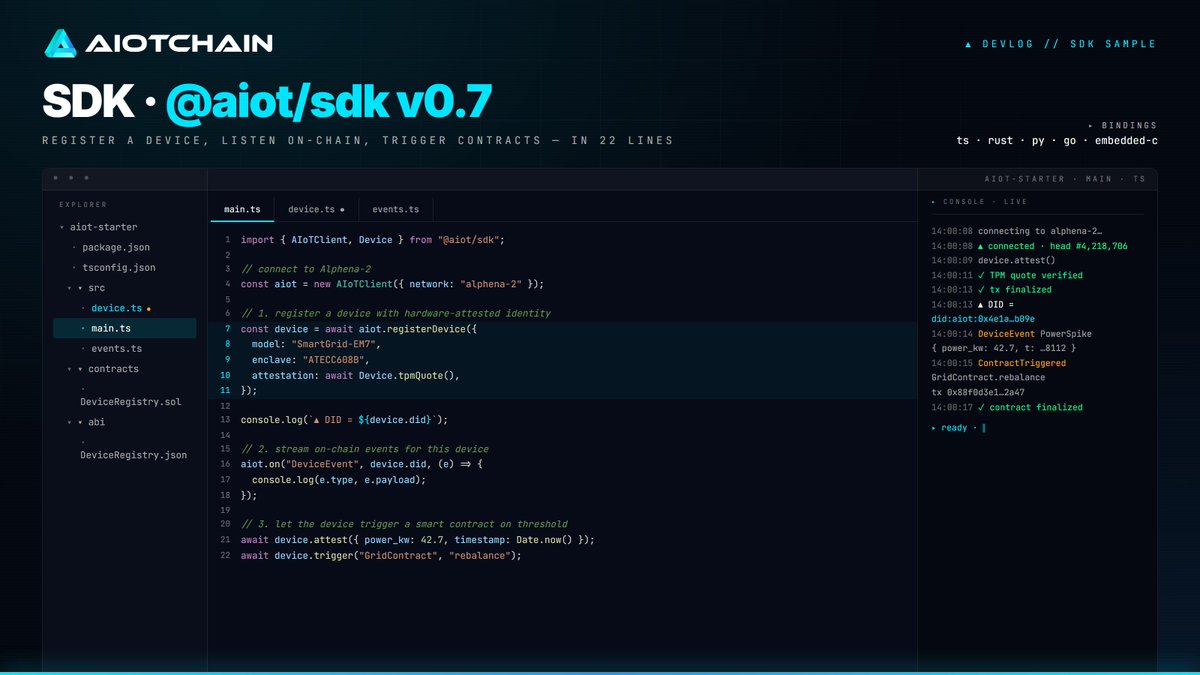
Register a device.
Listen on-chain.
Trigger a contract.
22 lines ▲
import { AIoTClient } from "@aiot/sdk"
✅ ts · rust · py · go · embedded-c
✅ Hardware-attested in 1 call
✅ No infra to run
The machine economy, boring on purpose.
#AIoTChain #DevTools #SDK
3
8
12
658
May 25
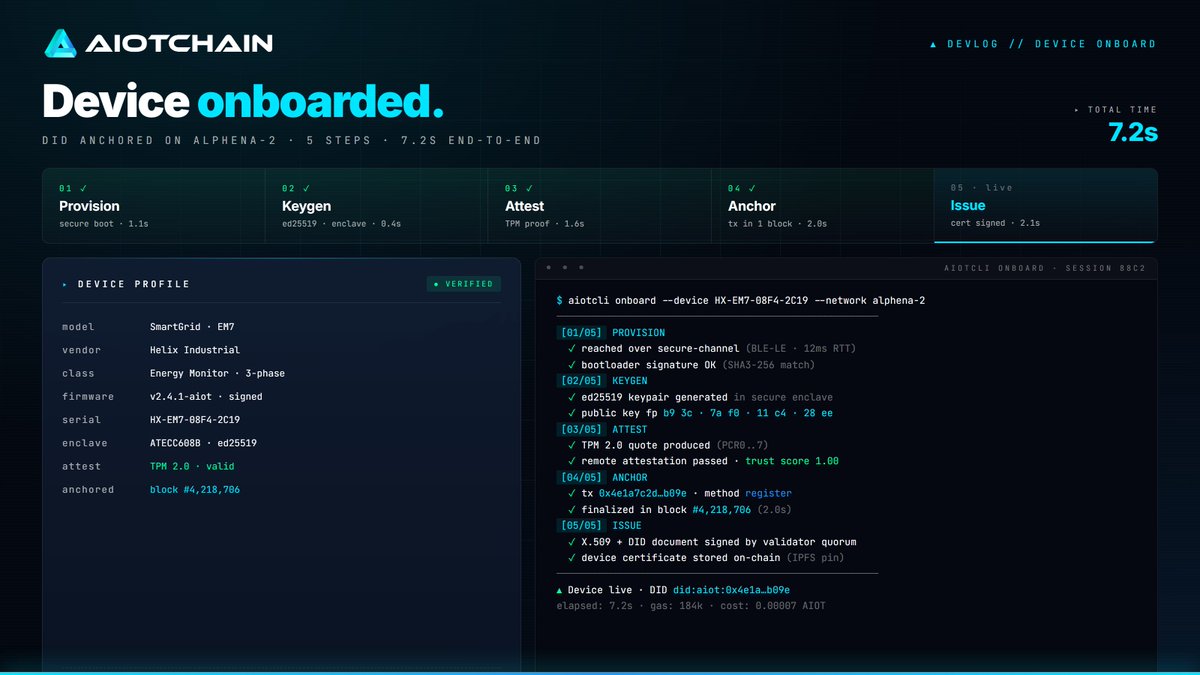
A device just claimed its identity 🔐
7.2 seconds. 5 steps:
▸ secure boot
▸ keypair in enclave
▸ TPM attestation
▸ anchored on-chain
▸ certificate signed by quorum
did:aiot:0x4e1a…b09e
Now multiply by billions ▲
#AIoTChain #DID #IoT
4
11
12
683
May 23
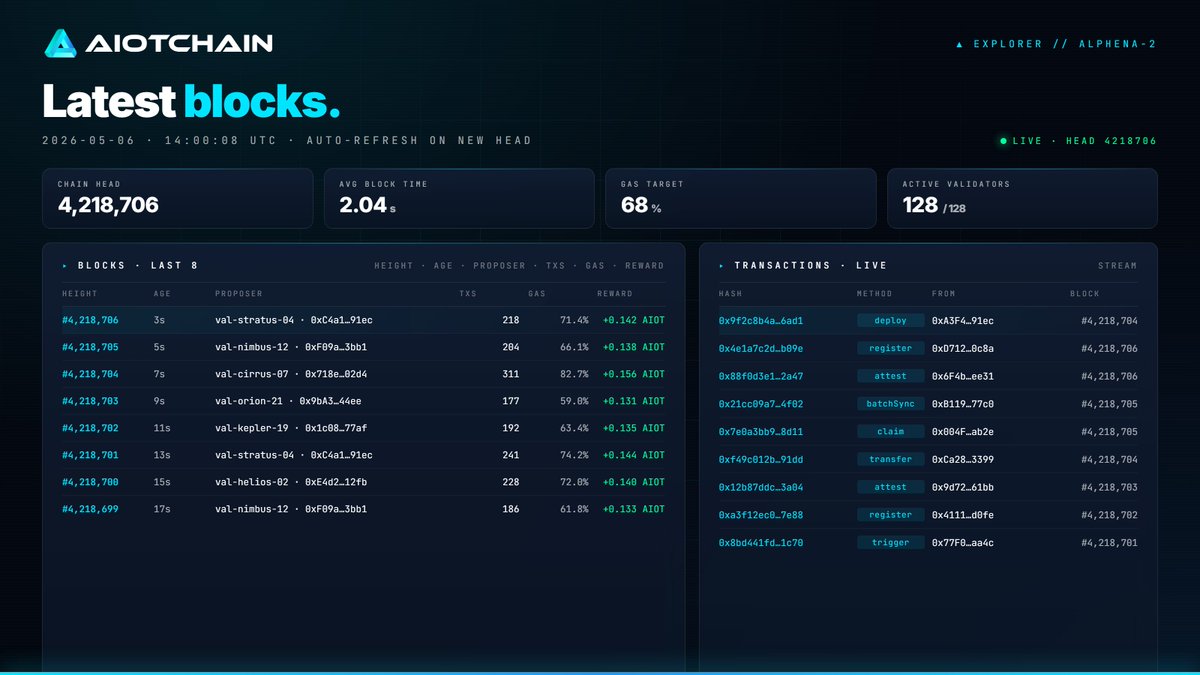
Look under the hood ⛓
8 blocks · 17 seconds
128 validators rotating · 0 missed
Methods: register · attest · trigger
Every device action, on-chain.
Every tx, public. ▲
#AIoTChain #onchain #Web3 $AIOT
5
10
1
665
May 22
An #AI agent calling an API is one thing.
An AI #agent touching a real machine is another.
At that point, “who approved this action?” cannot stop at a server key or a dashboard login.
The proof has to follow the device, the permission, the action, and the environment it happened in.
4
11
12
656
May 21
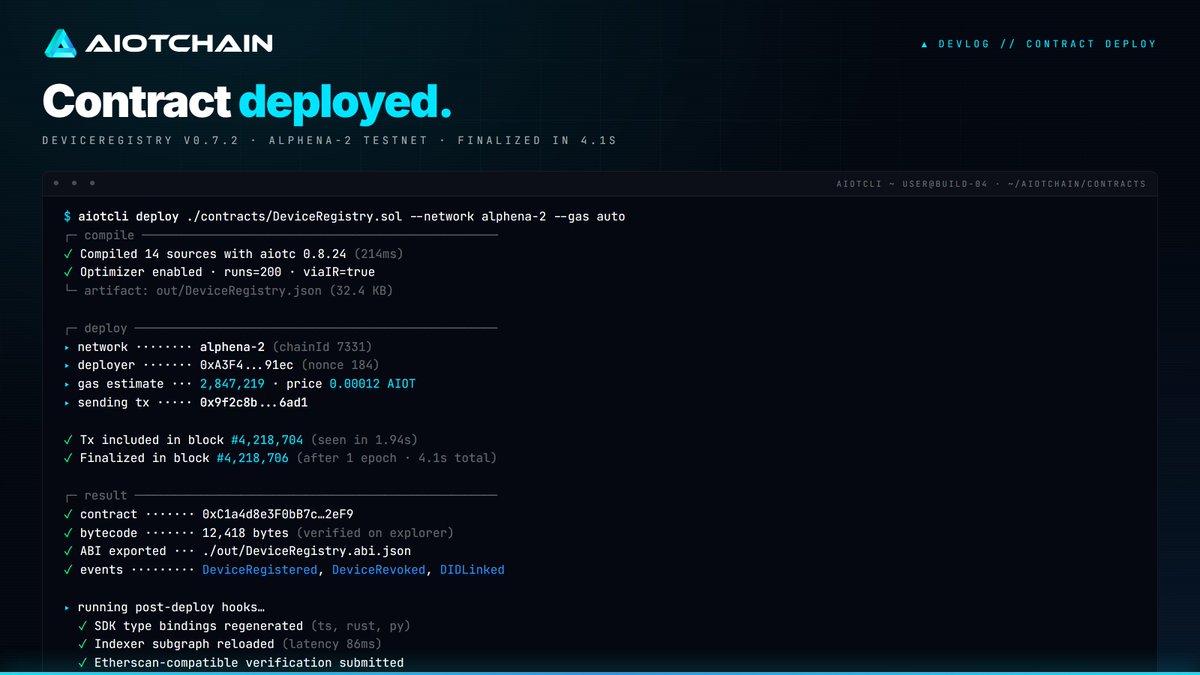
DeviceRegistry v0.7.2 — shipped 🚀
Deployed → Alphena-2
Block → #4,218,704
Finality → 4.1s
Gas → 2.85M
Every device gets a cryptographic identity.
On-chain. ▲
#AIoTChain #SmartContracts #DID
8
10
14
699
May 19
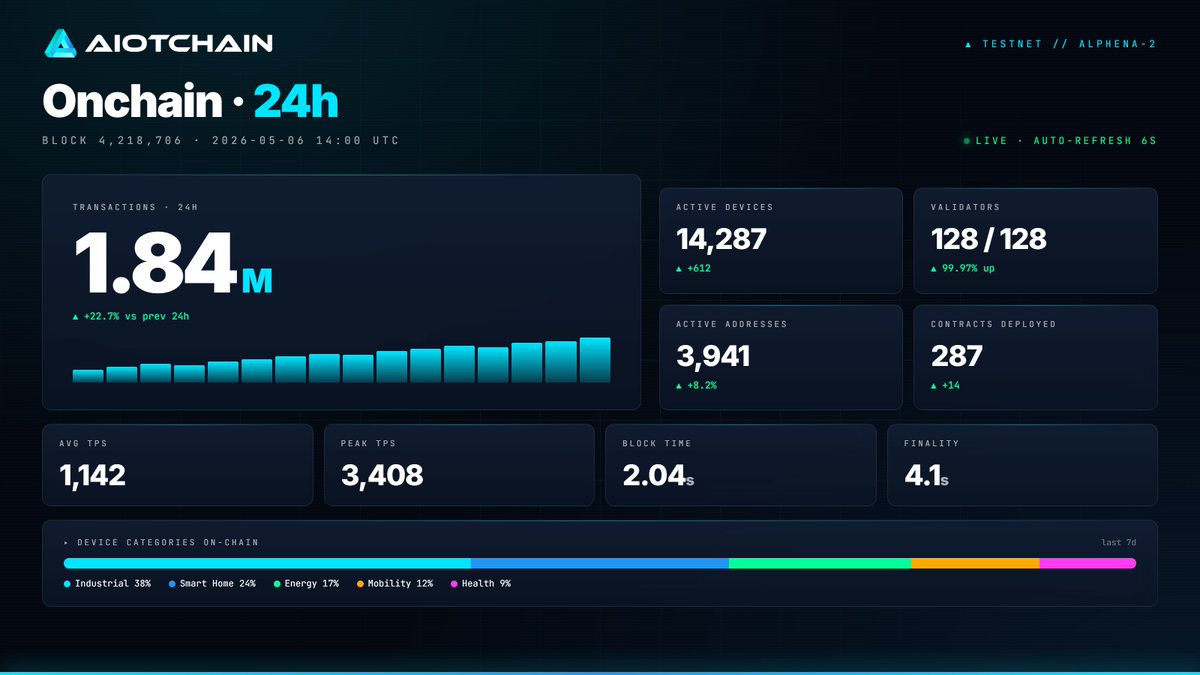
Alphena-2 · live · 24h 📡
1.84M transactions
14,287 devices online
128 / 128 validators · 99.97% up
1,142 avg TPS · 3,408 peak
4.1s finality
The trust layer for machines is live ▲
#AIoTChain #onchain #DePIN $AIOT
6
10
13
694
May 17
Week 23 · BuildLog ▲
142 commits
27 PRs merged
87.4% coverage
CI · 412/412 green
This week:
▸ batch DID via merkle proof
▸ BFT latency → 480ms
▸ ESP32 / RP2040 firmware live
Heads down. Shipping. 🛠
#AIoTChain #BuildInPublic #DePIN
1
9
10
669
May 17
before AI touches real machines:
who are you?
what are you allowed to do?
can we prove it later?
no identity = just vibes in a metal box 🧠⚙️
AIoTChain starts at the device layer.
4
13
621
May 14
Most AI infrastructure stops at the model.
AIoTChain goes lower:
device identity, enforceable access, edge coordination.
Because machines need trust before they need autonomy.
3
9
8
667