Research Scientist @OpenAI & Assistant Professor @VanderbiltU. Black holes, photon rings, gravity & beyond. Formerly @Harvard and @Princeton.
Joined April 2020
- Tweets 126
- Following 128
- Followers 5,143
- Likes 136
2 Photos and videos
Alex Lupsasca retweeted
GPT-5.5 (the one available right now to everyone) can also disprove the sum-product conjecture: chatgpt.com/share/6a187d12-7… . I didn't reveal it before because I think it is good to give some space to the community to absorb these new capabilities. In particular the humans involved in the discovery should get all the credit for this amazing breakthrough. We all have some work to do to align on cultural norms in this new world.
39
74
896
98,960
Alex Lupsasca retweeted

Jun 3
It’s time to fly!
Excited to share the first short brand film for Codex. Catch it airing during Game 1 of the NBA Finals tonight.
youtube.com/watch?v=bJcA23ck…
117
83
1,346
220,413

Alex Lupsasca retweeted

May 27
1/ We’ve raised over $1B at a $26B valuation, led by @Lux_Capital, @generalcatalyst, and @8vc.
Our enterprise usage has grown >10x since the start of this year, and our run-rate revenue grew to $492 M.
We launched Devin two years ago as the first AI software engineer. Since then, cloud agents have gone from niche to mainstream, and today they are the fastest growing way to create software.
165
194
2,464
870,224
Alex Lupsasca retweeted

May 26
We now know that with an appropriate harness both Mythos and GPT-5.5 can reproduce what our internal model did in one-shot for the unit distance problem. Clearly there is an insane overhang of capabilities with this generation of models, and no ceiling in sight for what scientific advances they can bring. You can go and try to discover new things with 5.5 right now!
May 21

The standard GPT-5.5 reproduced the proof ~ 👇 chatgpt.com/share/6a0e9e04-8…
You don't need to wait for oai's internal model!
55
97
1,219
214,754

May 11
I recently joined @latentspacepod to talk about AI for physics.
We dug into recent work on scattering amplitudes with GPT, and what it suggests about how AI will accelerate theoretical discovery in a rapidly evolving field.
May 5

🔬Doing Vibe Physics
The full story of how GPT‑5.x derived new results in theoretical physics and quantum gravity, live on our Science pod today!
latent.space/p/lupsasca
our conversation with @ALupsasca, an award winning theoretical physicist on his AGI-pilling journey applying GPT5 to physics problems (with a nudge from @markchen90)!
Timestamps
0:00 Introduction to Al's impact on physics research
0:43 Guest introduction: Alex Luposka
2:49 Alex joining OpenAl and the shift in physics research
4:08 The release of GPT-5 and the shift in capabilities
10:05 Explaining Quantum Field Theory and amplitude calculations
14:20 Overview of gluons and the strong force
14:38 Discussing the first research paper on single-minus gluon tree amplitudes
20:56 How ChatGPT helped solve a year-long physics puzzle
23:02 Complexity of manual calculations in physics
26:12 The history and mechanics of Feynman diagrams
27:44 The Parke-Taylor formula and the quest for simplification
31:26 Using ChatGPT to find the simplification in the special phase space region
38:07 Proving the formula from scratch to ensure validity
41:00 Determining the scientific impact and future research
42:27 Introduction to the second paper on graviton amplitudes
45:41 |
Defining particles, irreducible representations, and symmetry
47:46 How GPT Pro generalized the research to gravity
53:57 The epistemological shift: Is this a new way of doing physics?
59:27 The use of Al as a 'scout' for research directions
1:01:44 The role of 'taste' and collaboration with Al
1:10:23 Personal evolution from Al skeptic to resident scientist
1:12:46 Solving a black hole perturbation problem with GPT-5
1:16:34 Discussing whether Al can make original, conceptual leaps
1:20:09 Challenges of 'Al slop' and the future of academic publishing
1:23:13 The bottleneck of writing academic papers
1:30:19 Final takeaways and looking ahead to the next year
5
9
46
18,041
Alex Lupsasca retweeted

I've recently got in on the act of getting AI to solve open problems in mathematics. More precisely, I gave some questions asked by Melvyn Nathanson to ChatGPT 5.5 Pro, to which I have been given access, and it answered them. 🧵
75
379
1,963
643,722
Alex Lupsasca retweeted
Apr 23
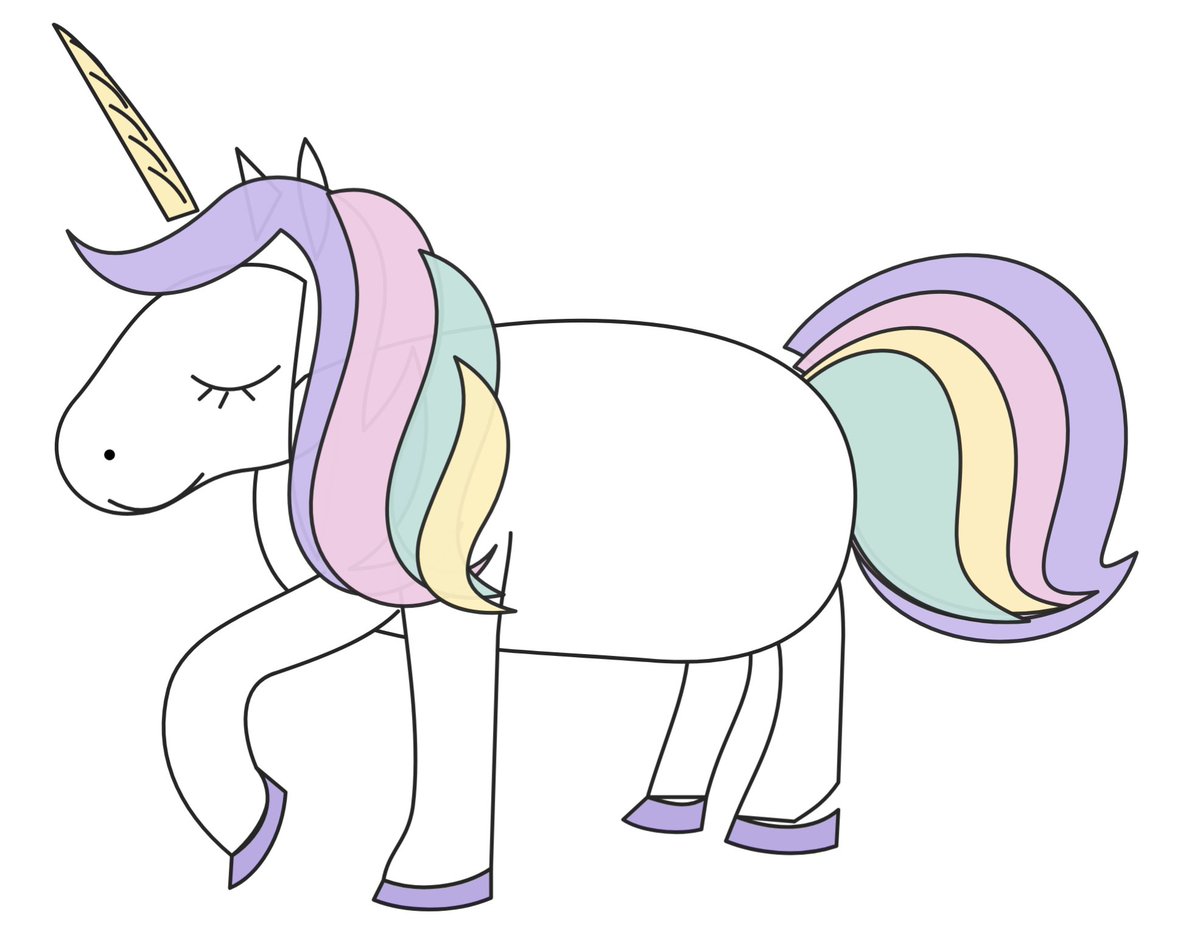
GPT-5.5, not fully saturating the TikZ unicorn test yet but getting awfully close ...
(yes this is actual TikZ code, I personally find it so unbelievable that I'm putting the code below for anyone to verify for themself)
50
59
872
335,436
Alex Lupsasca retweeted

We’ve just released another paper solving five further Erdős problems with an internal model at OpenAI: arxiv.org/abs/2604.06609.
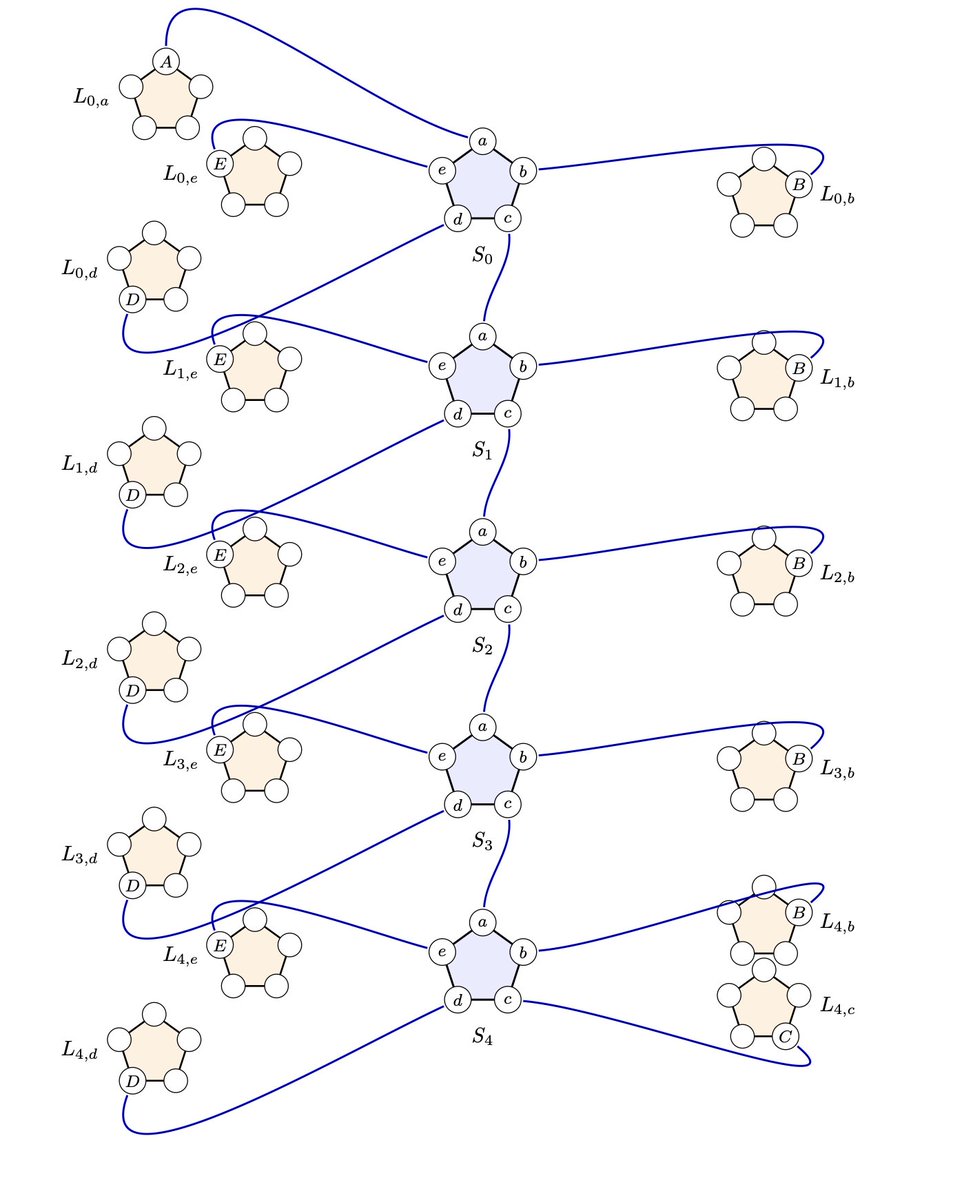
Several of the proofs were especially enjoyable to digest while writing the paper. My personal favorite was the solution to Erdős Problem 1091. The question asks: if a graph G has chromatic number 4, while every small subgraph has chromatic number at most 3, must it contain an odd cycle with many diagonals? The internal model gives a very enlightening counterexample to this conjecture, and the proof was a pleasure to understand.
For those so inclined, a really fun exercise is to try to reconstruct the proof from Figure 5 of the paper, which was of course produced by Codex.
20
151
902
205,368
Mar 13
Interested in the future of black hole imaging?
I will be giving a public talk in NYC next week on Wednesday (3/18) about "The Black Hole Explorer: Tracing an Edge of the Visible Universe".
This is part of the Simons Presidential Lecture series hosted by the Simons Foundation.
1
6
24
4,697
Mar 13
The talk is free but registration is required:
simonsfoundation.org/event/t…
In the meantime, you can find out more about the Black Hole Explorer mission here:
blackholeexplorer.org/
2
805
Alex Lupsasca retweeted

Mar 11
It is blurring the line between tool and collaborator economist.com/science-and-te…
3
9
26
22,519
Alex Lupsasca retweeted

Mar 4
💥 AI accelerating high energy physics
Just a few weeks after the gluon scattering paper, this morning we posted the more complicated graviton scattering analogue. See below for more from @ALupsasca 👇
Mar 4

We just posted a new preprint: “Single-minus graviton tree amplitudes are nonzero.”
Yes: a helicity sector long assumed to vanish in quantum gravity can actually appear under well-defined kinematics. Preprint: cdn.openai.com/graviton/grav…
8
15
172
20,631
Mar 4
We just posted a new preprint: “Single-minus graviton tree amplitudes are nonzero.”
Yes: a helicity sector long assumed to vanish in quantum gravity can actually appear under well-defined kinematics. Preprint: cdn.openai.com/graviton/grav…
9
31
197
71,453
Mar 4
We’re sharing the receipts: a long chat transcript of the initial exchange that generated the core ideas and an early draft. Transcript: cdn.openai.com/graviton/gluo….
2
1
27
16,097
Mar 4
Takeaway: this is strong evidence that AI can push the frontier of theoretical physics—and, even more importantly, that it compresses the discovery cycle by shifting effort toward checking and exposition!
Lots more to come; feedback welcome in the meantime!
4
4
36
2,106