
Gamecock grad, Lex 1 School Board Chair, The Unumb Center for Neurodevelopment founding board member, Volunteer Extraordinaire
Joined October 2015
- Tweets 3,525
- Following 4,812
- Followers 1,226
- Likes 66,985
1,176 Photos and videos












Anne Marie Green retweeted

Jun 12
"This Sunday night’s UFC spectacle on the South Lawn...captures something about this moment in our history.
It's vulgar, violent, commercial, grandiose, tacky, and it dishonors a place once thought worthy of care and respect. In other words, it’s Donald Trump."
open.substack.com/pub/thebul…
4,653
7,661
22,503
423,018
Anne Marie Green retweeted

Jun 5
Normandy veterans Henry Rice and Ken Hay - both 100 - on Sword Beach once more. @ForcesNews #D-Day

344
3,820
23,134
326,481
Anne Marie Green retweeted

May 23
Want to help stop this last-second redistricting mess?
Vote early Tuesday morning.
Early voting opens May 26 at 8:30 AM.
The Senate cannot reconvene until 11 AM. Break early turnout records before they try to cancel congressional primaries.

24
31
55
6,013
Anne Marie Green retweeted

I just can’t imagine wanting an entire secure ballroom for one man and not wanting gun reform for every child in America.
3,492
11,843
54,497
786,101
Anne Marie Green retweeted

Apr 21
11yr old PRINCE ROGERS NELSON — who left us 10yrs ago today, aged just 57 — interviewed in 1970 on a Minnesota picket line succinctly & eruditely making it clear why he believed his Teachers deserved better pay.
23
964
5,492
239,434

Buttigieg: And my word of warning to my own political party is that we would make a terrible mistake if we thought that our job was to just take power somehow and then put everything back the way it was. That’s not what we’re here to do.
We’re not out to go around and just find all the little bits and pieces of everything that they smashed and tape it together and say, “Here you go, I give you the world as it looked in 2023.” That’s not going to work. It’s not what we need.
So much has changed, and the truth is they are destroying things right and left. They’re destroying a lot of good, important things. They’re destroying some useless things too, because they’re destroying everything. So now we get a chance to put things together on different terms.
682
5,193
22,123
629,171
Anne Marie Green retweeted

Apr 16
Reading @Franklin_Graham's attempt to pretzel himself in defense of the president's social media posts.
God calls believers to stand for what's right and true — not cower because you might not get a "seat at the table." The seat is worthless if everything is compromised.
22
55
357
6,536
Anne Marie Green retweeted

Apr 16
It's becoming increasingly apparent that white evangelicals would vote for Satan himself if he were Republican.
210
730
8,044
73,119
Anne Marie Green retweeted

Apr 16
Woe to those who manipulate religion and the very name of God for their own military, economic, and political gain, dragging that which is sacred into darkness and filth. #ApostolicJourney #Cameroon vatican.va/content/leo-xiv/e…
22,132
74,496
381,555
10,834,261
Anne Marie Green retweeted

I think JD Vance’s response, unfortunately, misses the point.
When the Pope says, “God is not on the side of those who wield the sword” (Matthew 26:52), he is not denying the Church’s Just War tradition. He is calling us back to the heart of Christ.
In Matthew 26:52, Jesus says, “all who take the sword will perish by the sword.” He also teaches us to love not only our friends but our enemies (Matthew 5:44), to refuse retaliation (Matthew 5:39), and in the end, He submits to the Cross without violence. This shows a clear direction: the Kingdom of God is not built through force. As He says, “Blessed are the peacemakers, for they shall be called children of God” (Matthew 5:9).
Christ does not present violence as something that reflects God’s nature. He allows Himself to be killed rather than defend Himself with force. That is central to the Church’s message.
What is Just War Theory? Just War Theory was developed mainly by St. Augustine and later refined by St. Thomas Aquinas. It is not a justification for violence, but a strict moral framework meant to limit it. It accepts that, in a fallen world, the use of force may sometimes be tolerated, but only under serious conditions. There must be a just cause, such as defending innocent life or resisting grave injustice. It must be declared by a legitimate authority. The intention must be right, not driven by revenge, hatred, or conquest, but by the desire to restore justice and peace. War must truly be a last resort, after every serious peaceful option has been exhausted. There must be a real probability of success, so that lives are not wasted in a hopeless conflict. The response must be proportionate, meaning the harm caused must not be greater than the evil being resisted. And even in war, civilians and non-combatants must never be deliberately targeted.
Even with all these conditions, the Church never says that God supports war. At most, it says that moral responsibility may, in very limited circumstances, tolerate the use of force to prevent a greater evil. Peace remains the goal. Violence is never the ideal.
What I find difficult in Vance’s response is the tone toward the Pope. It comes across as though he is trying to correct theological language, as if the Pope is offering just another opinion. But the Pope’s role is precisely to speak into moral and theological questions, especially when they touch on real issues like war and power.
At a deeper level, this seems like a clash between political reasoning and the logic of the Gospel. Christ is the standard, not political strategy, not historical precedent. Everything has to be measured against Him.
So yes, the Church has wrestled with the reality of war. But that does not weaken the Pope’s point. If anything, it makes it more necessary. In a world that keeps finding ways to justify violence, the Church must keep pointing back to Christ, who did not conquer by the sword, but by the Cross.
252
372
1,657
133,525
Anne Marie Green retweeted

Mar 27
The cost of your flight went up because you searched for it twice. Your rideshare costs more because your phone battery is dying.
This is surveillance pricing – corporations using your own data and behaviors against you.
In the US Senate, I’ve got a plan to ban it.
1,098
13,471
61,574
5,760,057
Anne Marie Green retweeted

Mar 21
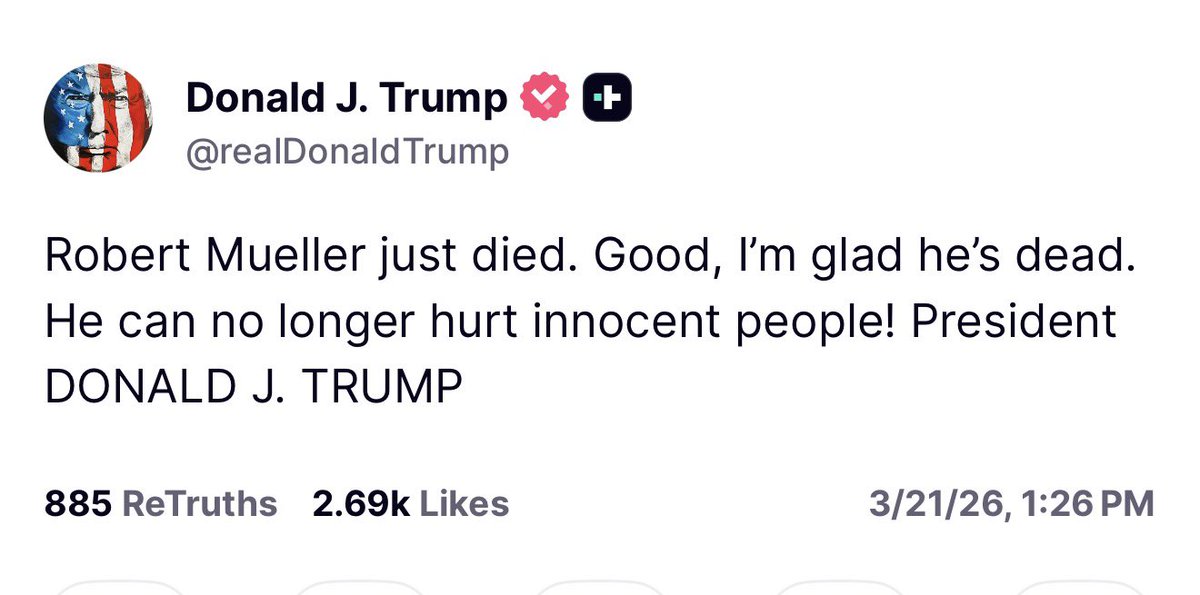
God help us. This is disgraceful language coming from a Christian, or anyone with a soul. It was just as wrong to celebrate the death of Charlie Kirk as it is to celebrate that of Robert Mueller. May they rest in peace. And may we never forget that Jesus's message is about mercy.
3,595
4,224
24,645
1,081,035
Anne Marie Green retweeted

Mar 20
This is sad. I know as a politician these companies are going to spend a billion dollars against me for saying it but 🤷🏽♀️
Pervasive gambling is not good for society. It turns life into a casino, traps people in addiction & debt, surges domestic violence, and fosters manipulation.
Mar 19

We’re honored to announce MLB has named Polymarket as their Exclusive Prediction Market Exchange Partner.
Polymarket 🤝 MLB
8,767
11,104
115,491
10,717,629
Anne Marie Green retweeted

Mar 20
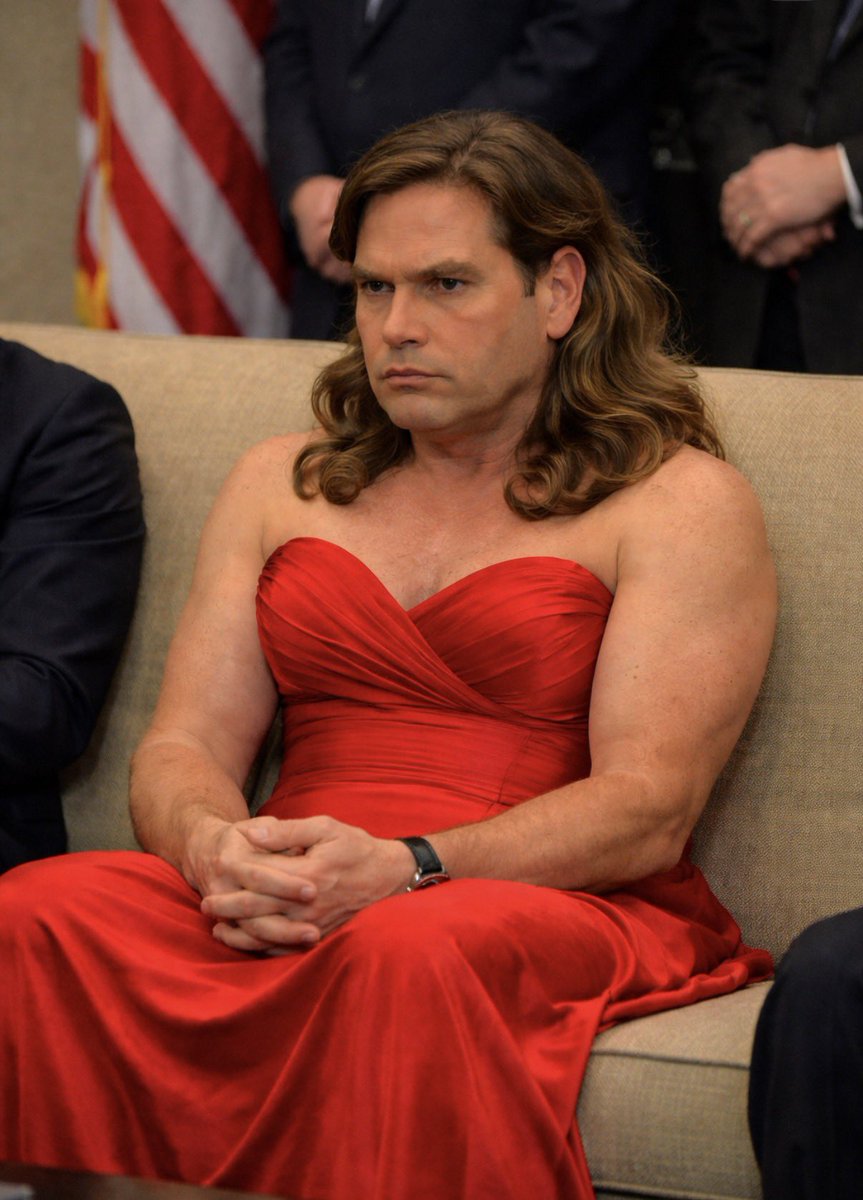
Marco Rubio when he realizes he has to be the next Bachelorette 🌹.
267
1,115
9,228
1,918,190

Mar 10
winner
Mar 10

Earlier I implied that I escorted yo' momma through the Strait of Hormuz. I apologize for the misinformation. Yo' momma's too fat for such a narrow passageway and whatnot.
113
Anne Marie Green retweeted

Mar 8
So far, this Iran operation is a cascade of worst‑case outcomes.
• Iran effectively closed the Strait of Hormuz, collapsing tanker traffic by 80–90% and sending oil prices from about $65 to over $110 in just over a week.
• U.S. operational costs: ~$1B per day.
• Iranian drone and missile attacks have killed 7 Americans and wounded 18.
• A likely U.S. strike on Feb 28 hit the Shajareh Tayyebeh girls’ elementary school in Minab, killing ~165–175 civilians—mostly schoolgirls aged 7–12z
• Kuwait was expected to have ~18 days of storage before cuts, but began reducing oil output within 2–3 days of the blockade.
• Iraqi oil production from its main southern fields has collapsed by 70%.
• Qatar's Energy Minister Saad al-Kaabi warned Gulf exporters may halt production within days, potentially spiking oil to $150 per barrel within 2-3 weeks.
• U.S. embassy evacuations collapsed into disaster: State Dept delayed approvals 1–4 days, facilities struck, thousands stranded amid closed airspace/airports, slow military/charter rollout.
• Treasury issued a 30‑day OFAC waiver allowing India to continue purchasing Russian oil, reversing years of U.S. pressure discouraging those imports.
• Iran’s Supreme Leader has been replaced by his more hardline son, Mojtaba Khamenei — and with Iran likely heavily protecting him, Trump’s likely push to remove him could take time, prolonging the crisis and its costs.
• The Atlanta Fed’s GDPNow estimate for Q1 2026 growth plunged from 3.0% (Mar 2) to 2.1% (Mar 6) — a 0.9 pp drop in just four days.
• U.S. gas prices jumped from about $2.95 to ~$3.40/gal in a week (≈40–60¢, one of the fastest increases ever), while diesel surged ~50–75¢ to ~$4.30–$4.50.
• U.S. stocks have fallen since Feb 28: S&P 500 −2.0%, Dow −3.0%, Nasdaq −1–2%.
• Despite hopes the strikes might trigger regime collapse, protests so far are nowhere near the scale of the January 2026 nationwide uprising.
• The Fed’s ability to cut rates is constrained even with weak jobs data, as surging oil has pushed up inflation expectations.
105
1,112
4,387
1,317,936
Anne Marie Green retweeted

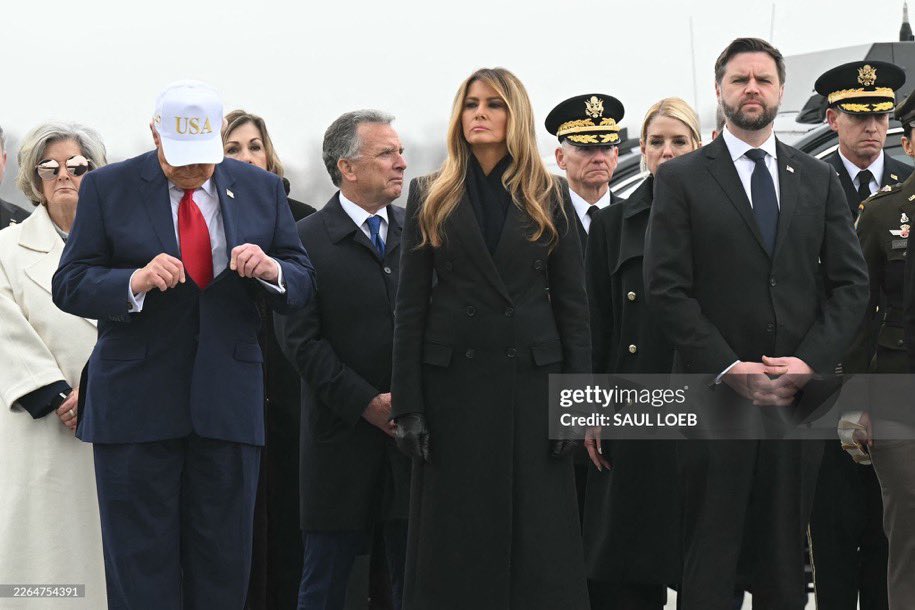
📺FAKE FOX NEWS: In shocking example of MAGA propaganda, @foxandfriends Weekend replaces footage of Trump's attendance at Dover AFB dignified transfer yesterday with video clip of Trump attending similar transfer on December 17, 2025 — all because he wore a baseball cap yesterday

Trump sparks major outrage on social media after wearing a baseball cap during the dignified transfer of six U.S. soldiers killed in the Iran war.
313
2,246
5,926
1,498,126

An unarmed Iranian ship was invited to take part in an Indian naval exercise alongside the United States.
Its sailors were welcomed on land and paraded before the president as a gesture of cooperation.
Then, at the last moment, the United States abruptly withdrew from the exercise,only to turn around and torpedo the very ship it had just stood beside.
What followed was even more grotesque.
After attacking an unarmed vessel, the US refused to rescue the sailors it had thrown into the sea, abandoning them to drown.
The grim work of recovering bodies was left to the Sri Lankan Navy.
This wasn’t warfare,it was treachery of the most disgraceful kind: an ambush carried out under the pretense of diplomacy, followed by a cold refusal to show even the most basic human decency to the dying.
It would represent a collapse of every norm that supposedly governs civilized conduct at sea.
And yet, instead of outrage, much of the American media response has been indifference or rationalization.
The bombing of a girls’ school is brushed aside; talk of carpet-bombing Tehran is floated as if it were just another policy option.
When atrocities are normalized and cruelty is laundered into “strategy,” the line between reporting and complicity begins to disappear.
3,067
15,999
37,307
3,875,324
I can't believe I'm reposting Matt Walsh
Mar 2

I can't take the gaslighting, guys. I really can't. Conservatives are now running around saying "Iran has been waging war on us for 47 years." Okay then why didn't any of you call for an attack on Iran at any point until now? Why didn't you make a case for Trump "ending the war, not starting it" until precisely the moment when Trump did it? You and I both know that you are latching onto a talking point you never used until 45 seconds ago. You and I both know that almost every conservative influencer in the business was opposed to war with Iran until just now. And now you're trying to use justifications that stretch back decades. It doesn't make any sense. If you changed your mind, fine. Say so. Explain why. You're allowed to change your mind. I've changed my mind about things. But don't try to rewrite history. Be honest about it. There's too much at stake to play these games.
76
Anne Marie Green retweeted

Feb 27
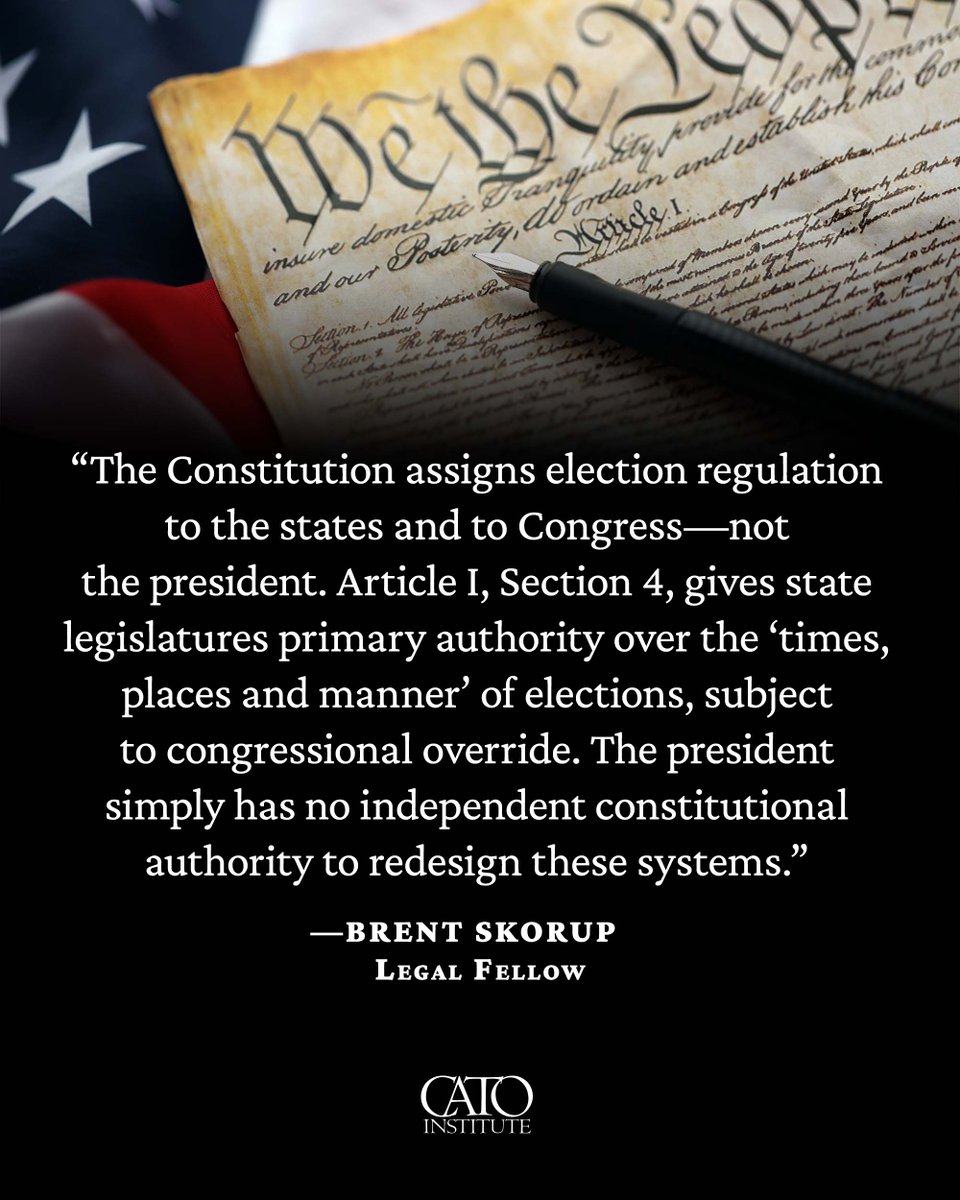
“Elections are always high-stakes, and public trust in election processes is important. Invoking vague emergency statutes to exert more control over elections would raise the stakes—and reduce public trust in elections,” Cato’s @bskorup explains.
ow.ly/Jwim50Ynga4
6
112
202
39,238