
Director of Education Reform at Reason Foundation. Free minds and free markets. @ReasonFdn @Reason
Joined June 2012
- Tweets 3,921
- Following 2,530
- Followers 3,675
- Likes 33,521
394 Photos and videos
Pinned Tweet

29 Feb 2024
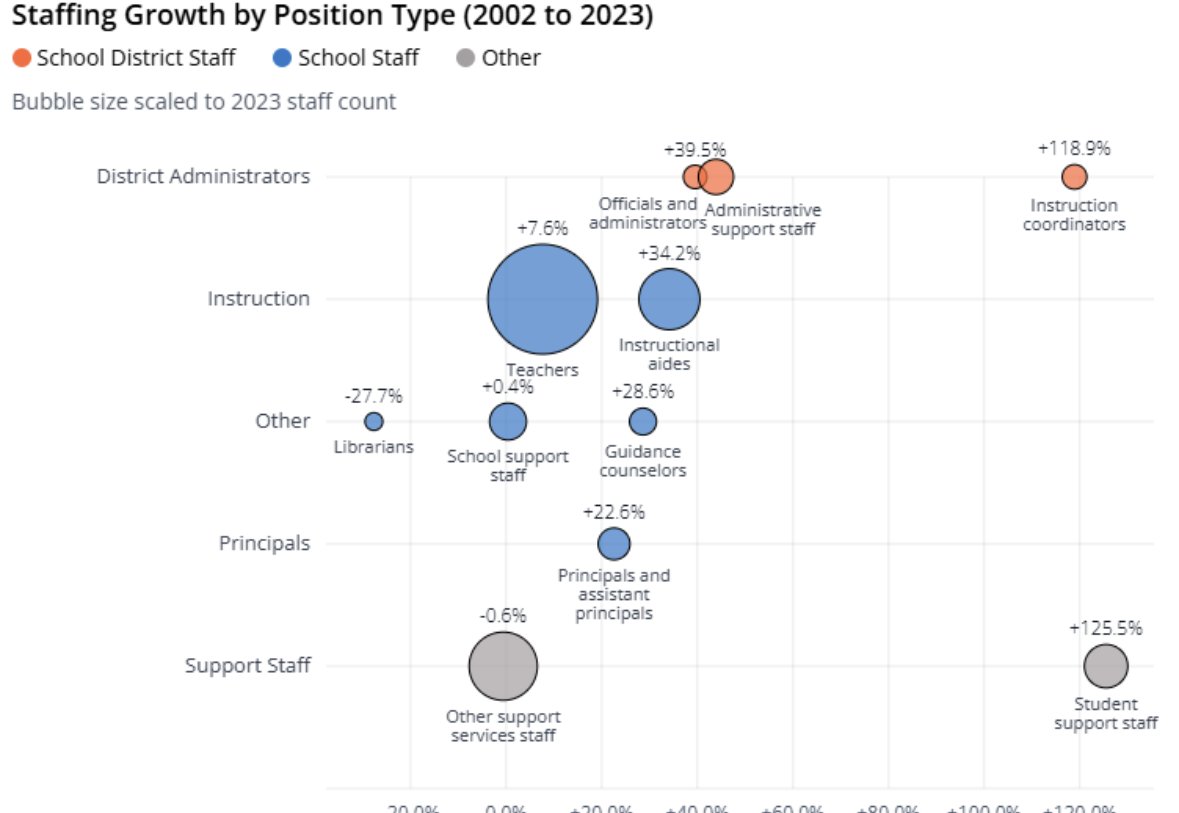
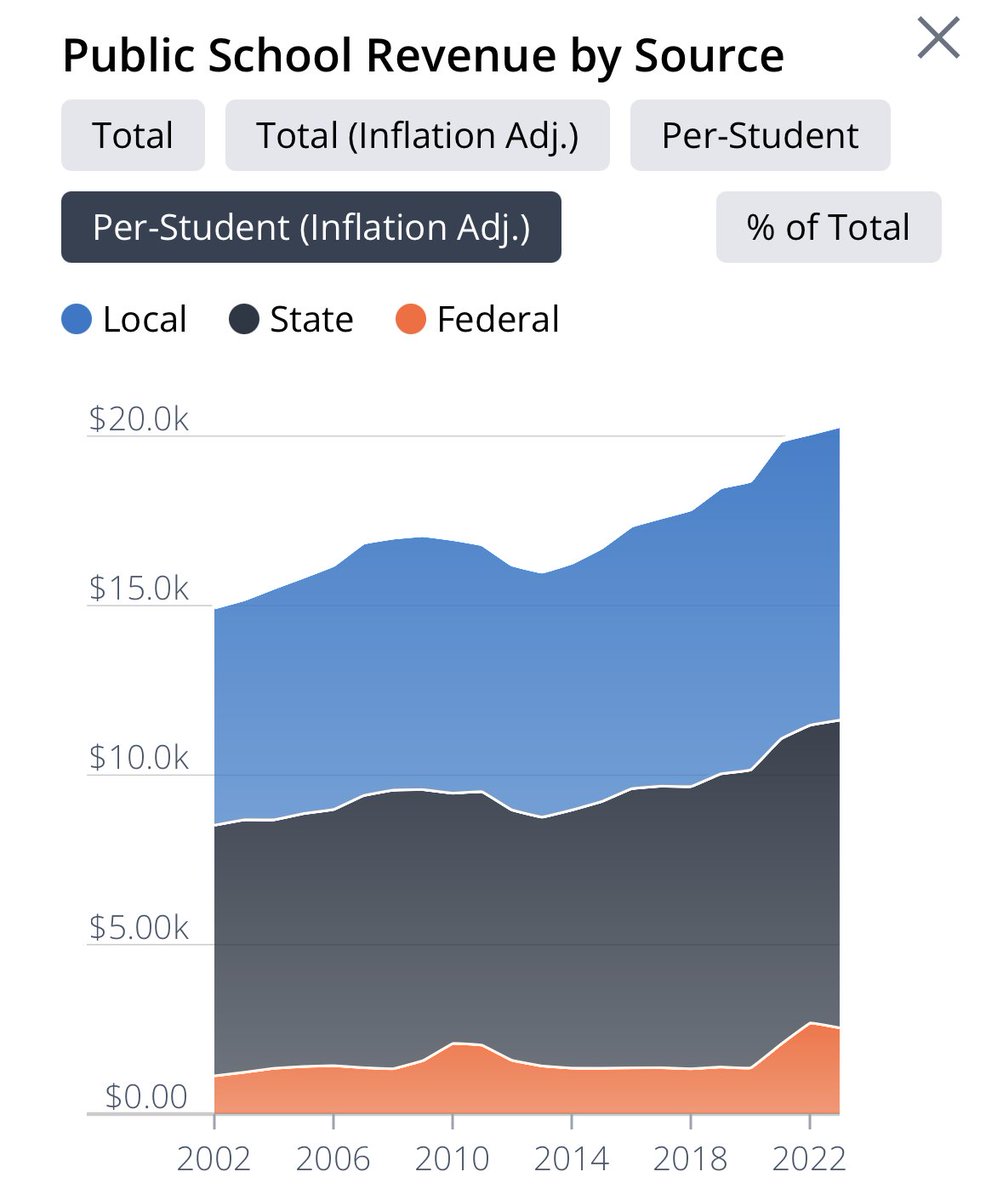
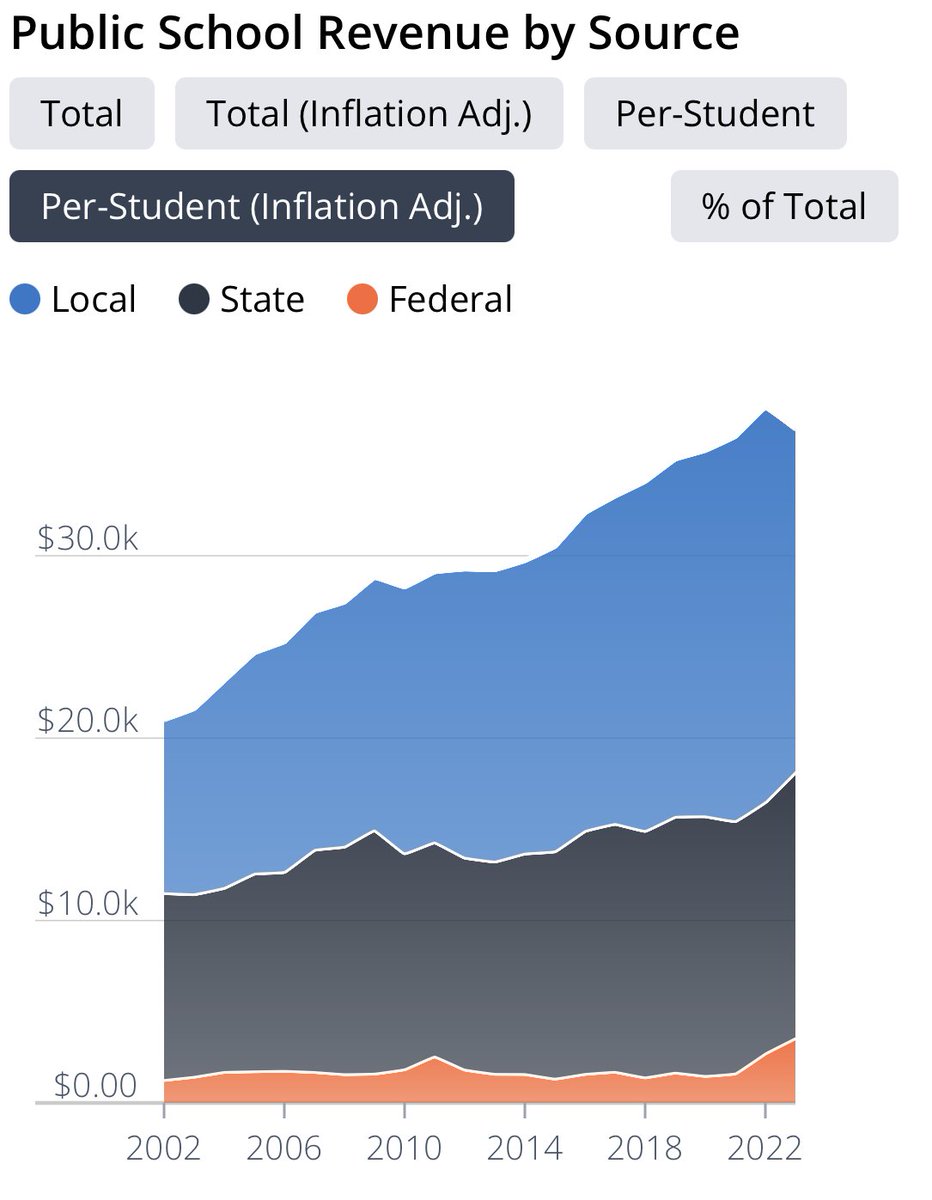
Reason’s latest K-12 study takes a comprehensive look at resources and outcomes for all 50 states over the past two decades.
Bringing together key revenue, expenditure, enrollment, staffing, and NAEP data, here are five key takeaways from our report.
reason.org/k12-ed-spending/c…
🧵1/9
5
33
74
17,935
Aaron Smith retweeted

May 20
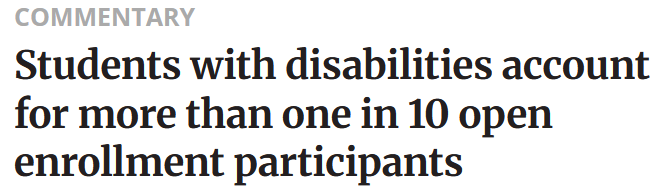
As public school choice expands across the country, new data show a clear pattern: families are using open enrollment to move their children to higher-performing districts, writes @JudeSchwalbach.
reason.org/education-newslet…
4
6
333
May 11
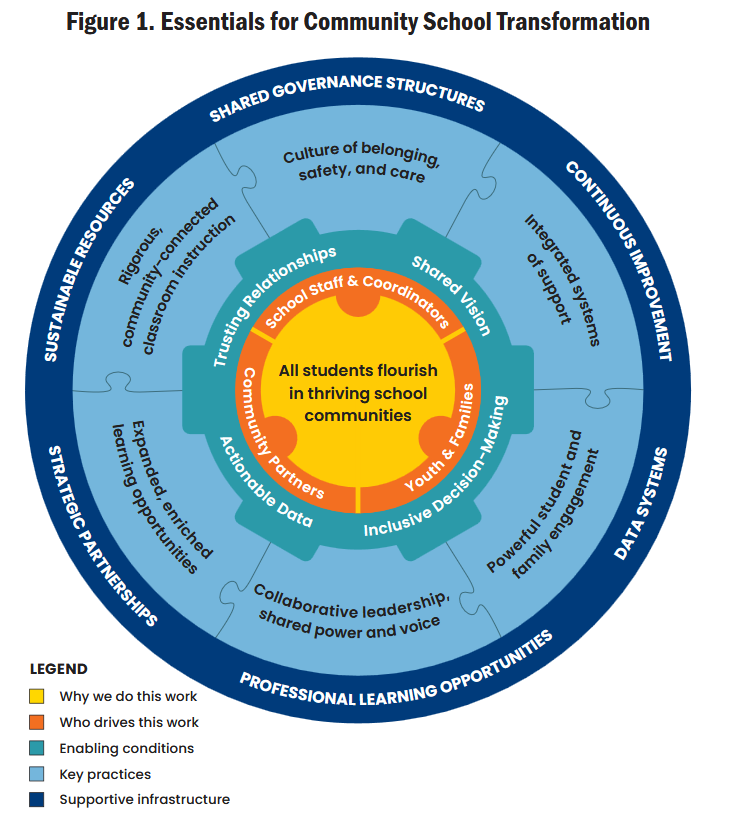
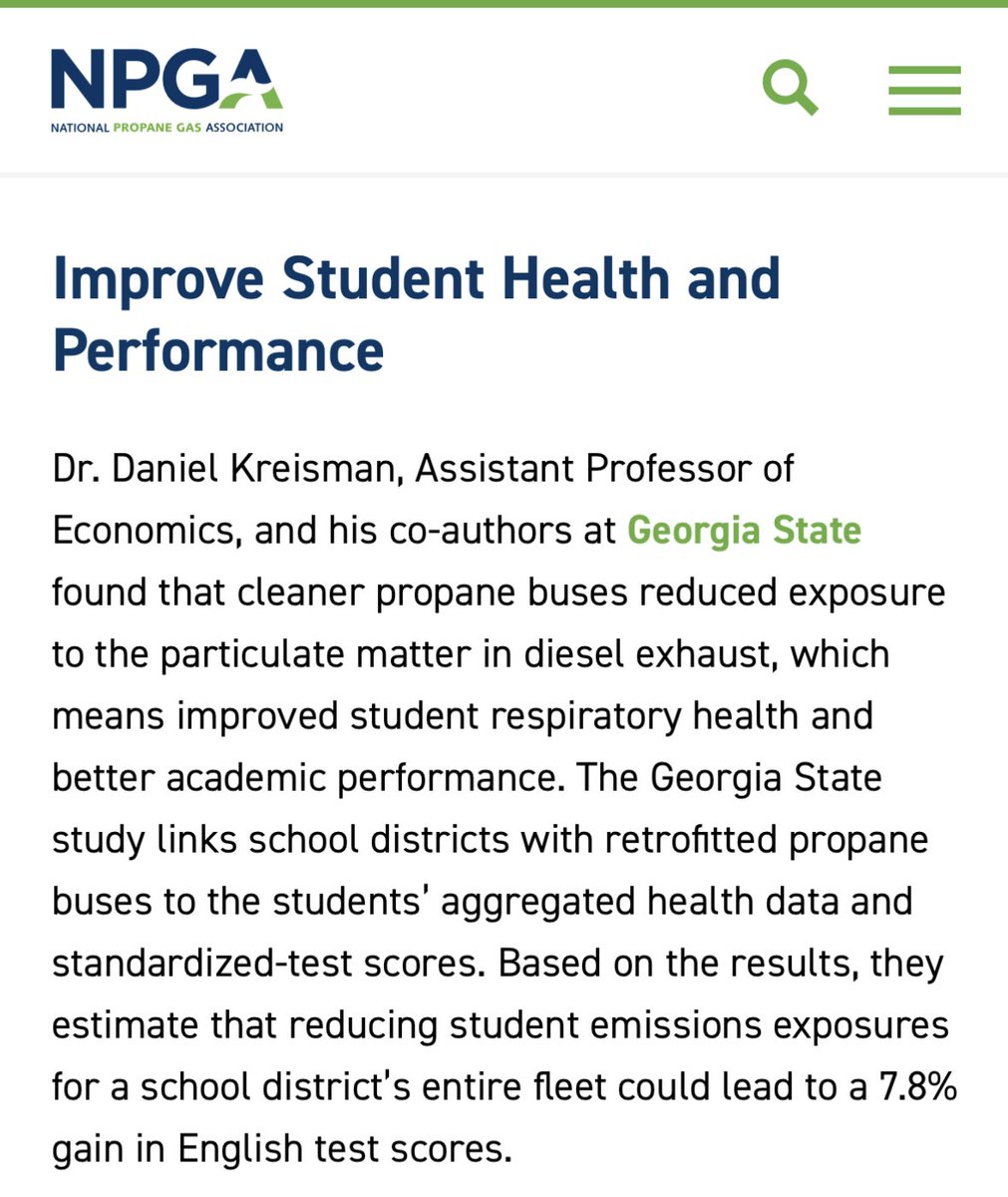
It seems the more I study community schools, the less I understand what they are and how they're supposed to improve K-12 outcomes.
Exhibit A:
4
2
16
1,280
Aaron Smith retweeted

May 9
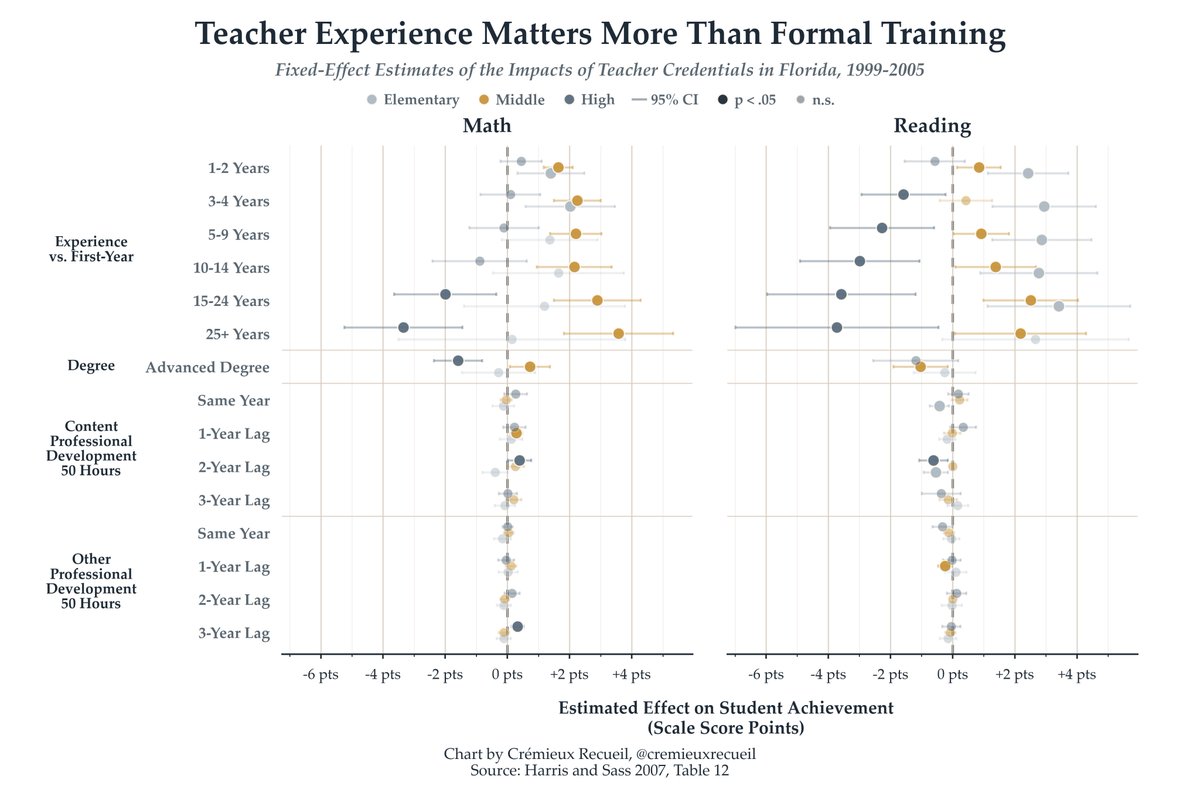
Researchers used administrative data from Florida and looked at the effects of teacher experience, advanced degree attainment, and professional development.
Effects on student achievement were meager, and often not in the direction you'd hope:
9
20
179
13,133
May 9
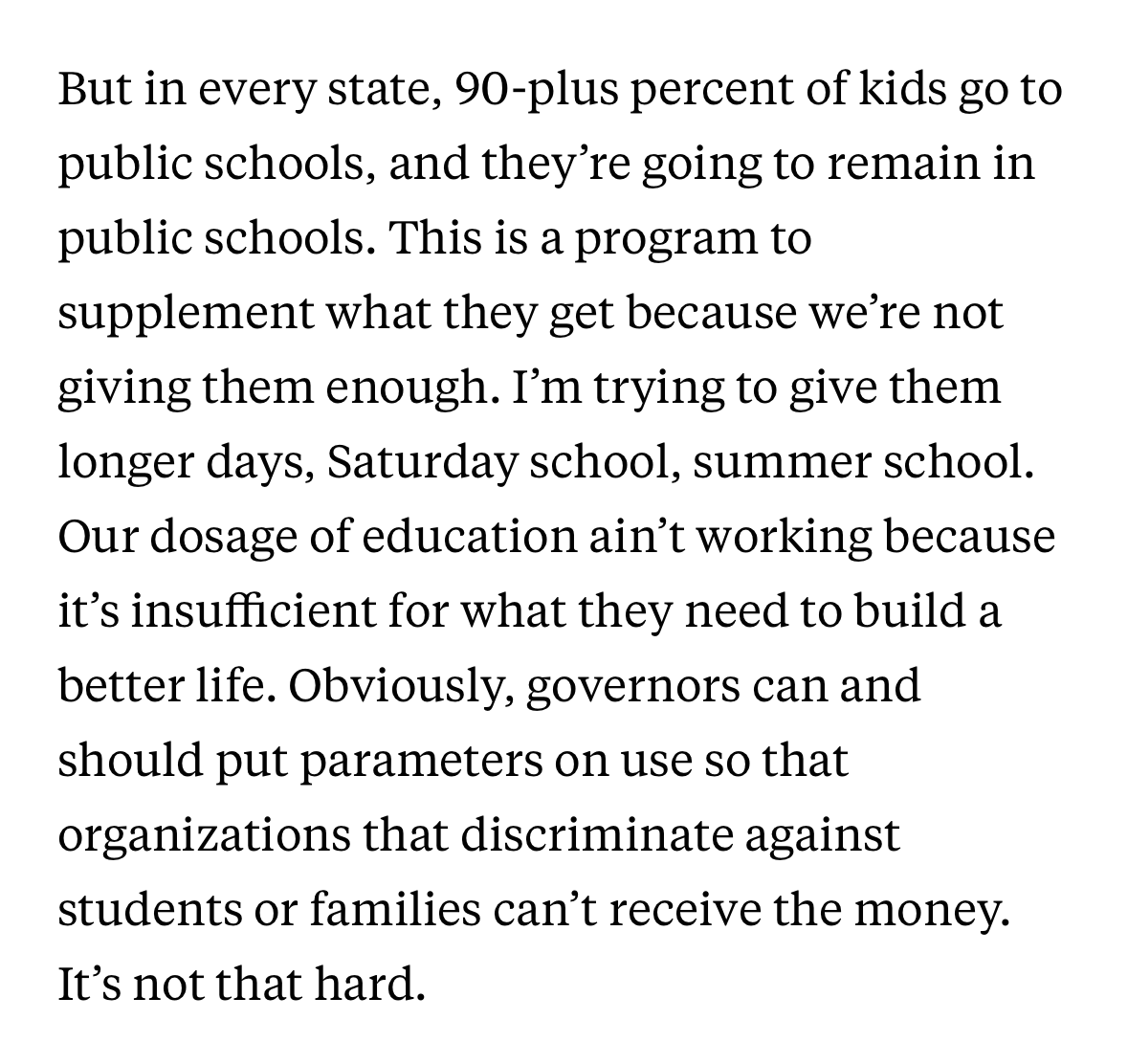
Federal school choice will likely be a financial windfall for public schools in the long run.
And I don’t think that’s a good thing.
May 9

Maybe; maybe not. In blue states the money could flow back into public education through tutoring, therapies, after-school programs, and side-income streams for teachers. Choice could end up looking less like “exit” and more like an educational services marketplace built around traditional public schools.
2
10
1,111
May 2
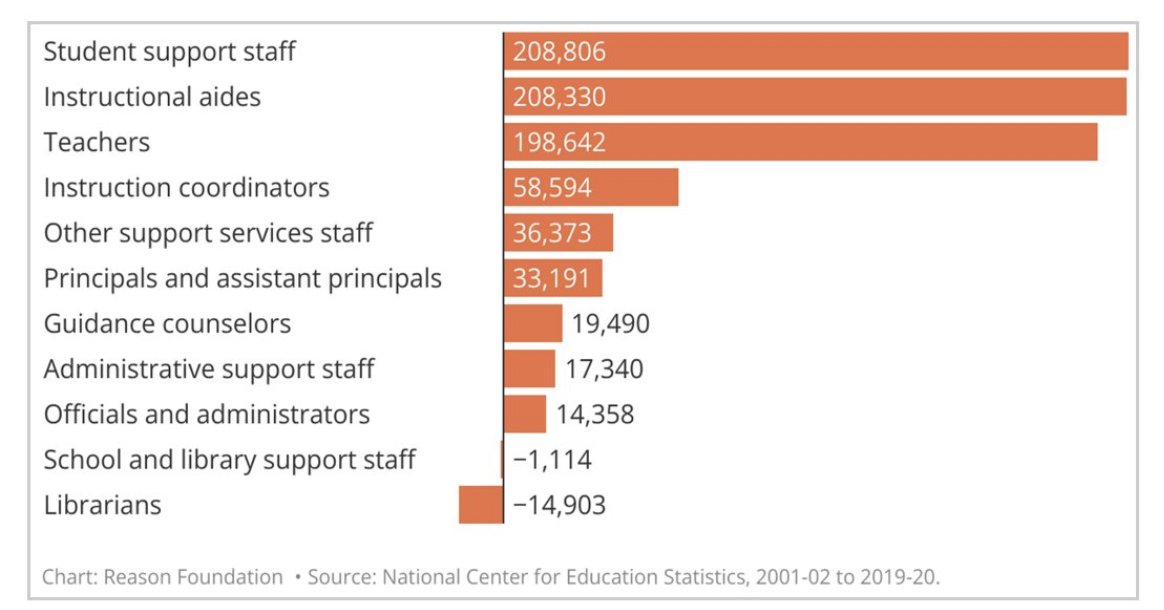
LAUSD has a billion-dollar budget deficit but has agreed to hire hundreds of new support staff.
“UTLA’s deal includes a 12% average salary increase for teachers, paid parental leave, class-size reductions, limits on subcontracting, and hiring hundreds of new support staff, such as counselors, nurses, and psychologists.”
May 2

LAUSD avoided a teachers' strike, but the costly union deals it approved will deepen the school district’s already large budget deficits. Now, LAUSD is effectively banking on a taxpayer bailout to stay afloat.
reason.org/commentary/lausd-…
4
8
19
1,906
Aaron Smith retweeted
May 1
LAUSD agreed to the costly demands of United Teachers Los Angeles to avoid a strike, but now the school district’s only hope is a bailout from state taxpayers, writes @ASmithAZ.
buff.ly/hlXI6fe
2
2
233
May 1
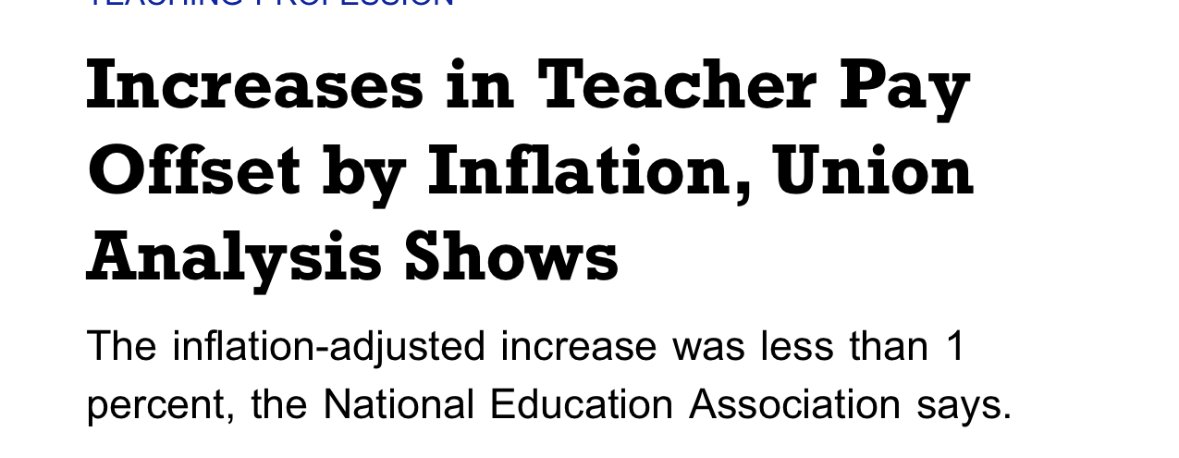
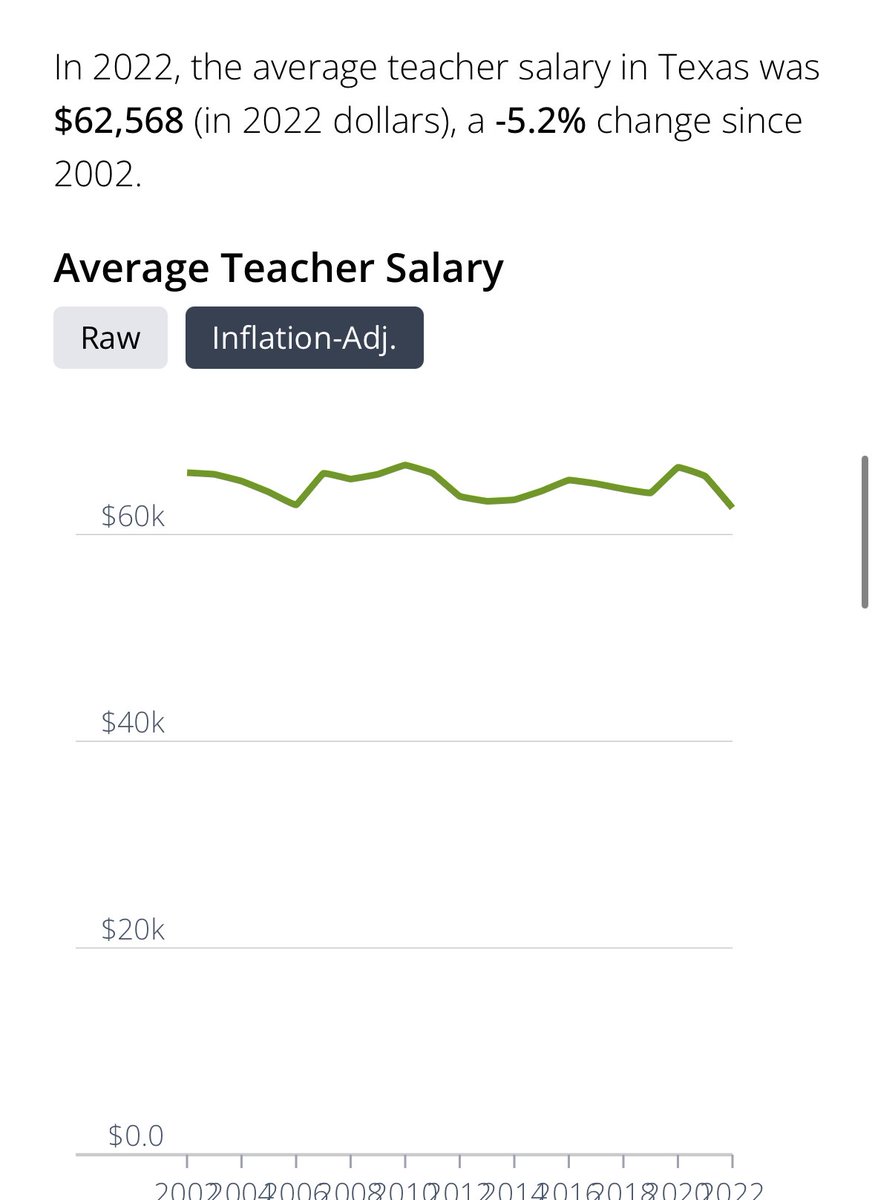
The biggest drain on teacher pay isn’t inflation, it’s:
1) Mission Drift: Public schools have invested heavily in the “whole child” approach, hiring thousands of new social workers, counselors, psychologists, etc.
2) Pension Debt: For decades states have underfunded pension promises, resulting in increased contribution rates with the same or even worse retirement benefits.
Inflation has been a problem in recent years, but policymakers must address structural problems with K-12 finance if they want to move the needle on teacher pay.
1
3
8
377
Aaron Smith retweeted

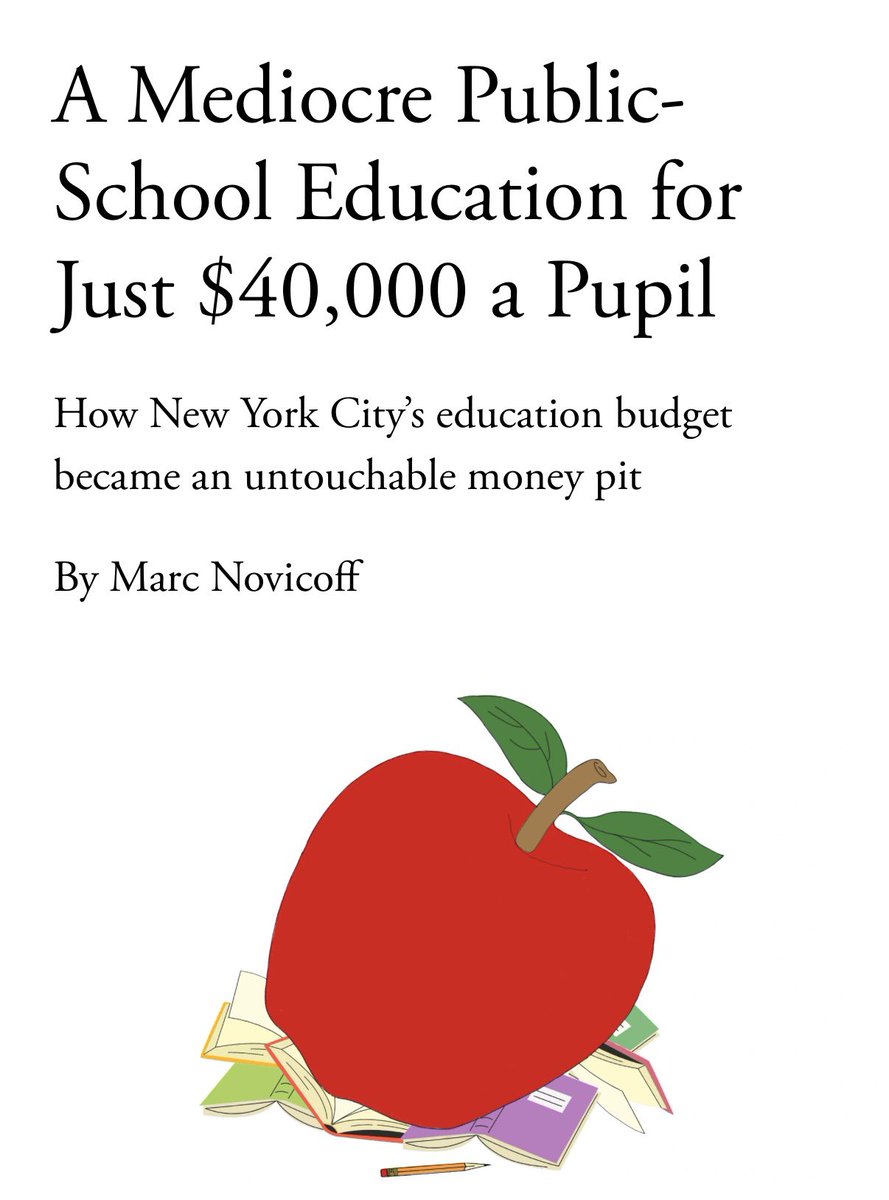
At its height, the NYC public school system educated 1.2 million kids a year. Ten years ago that dropped below 1 million. The current estimates are about 880,000. Ten years from now it could be only 700,000. And yet the budget just keeps going up.

The Atlantic on NYC schools: “According to federal data, its per-pupil spending is nearly 50 percent higher than Los Angeles’s and Chicago’s … A shrinking student body mechanically pushes up per-pupil spending unless the education budget is cut—and the budget is never cut”
29
47
165
7,673
Aaron Smith retweeted
Apr 26
Since 2007, the number of births in the U.S. has dropped by 18%. This means that nearly 718,000 fewer children were born in 2025 than in 2007.
Fewer kids means fewer students in classrooms, which leads to less funding for public schools since budgets are largely based on enrollment.
reason.org/education-newslet…
2
6
5
1,252
Apr 24
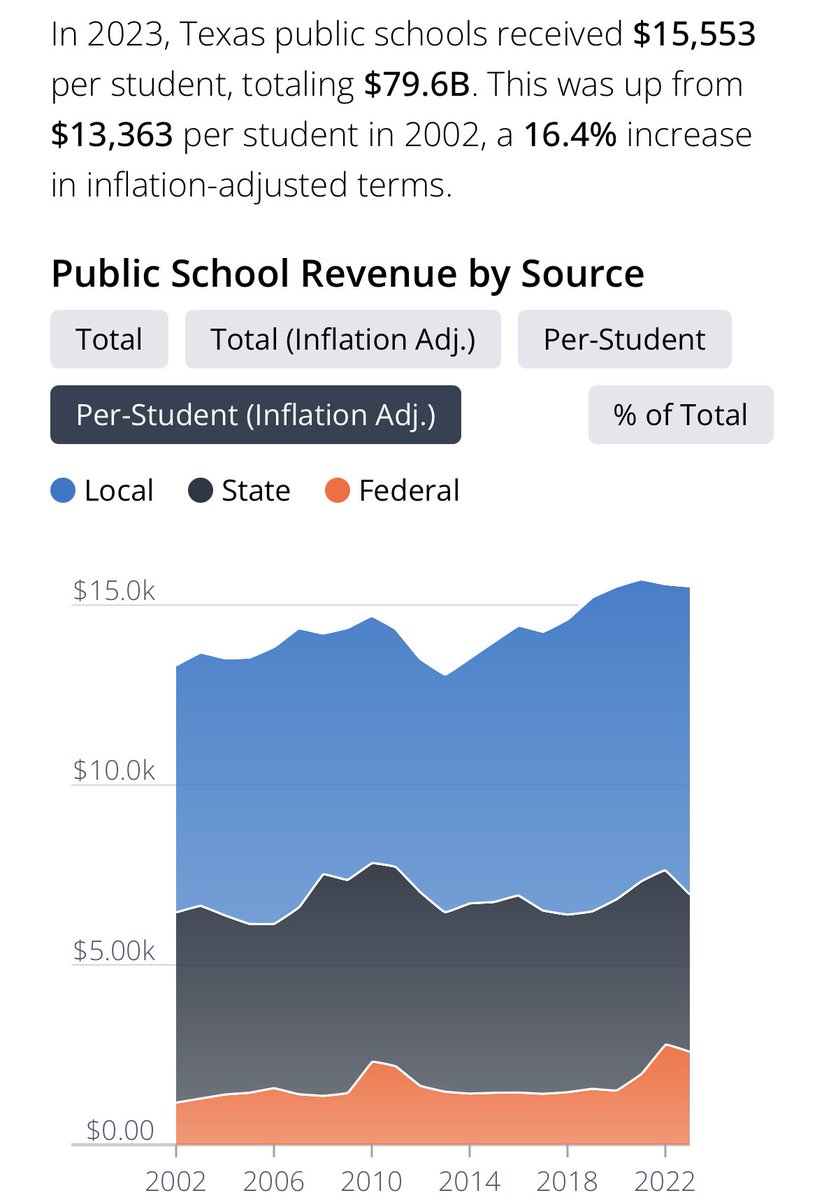
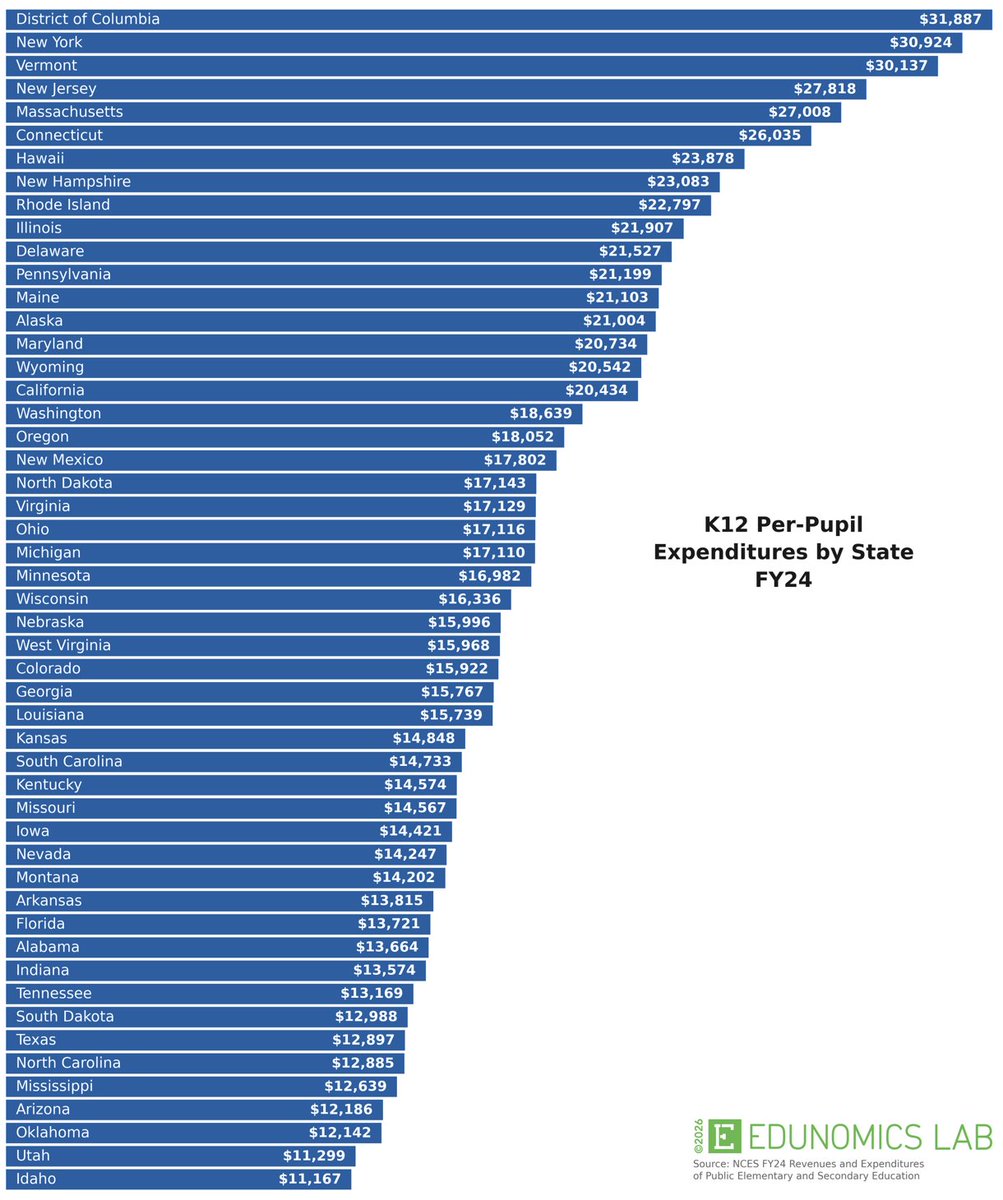
The remarkable thing isn’t just that public school spending hit the $1 trillion mark.
It’s that funding keeps growing despite widespread enrollment losses.
Public schools have lost 1.2 million students since the start of COVID-19, but inflation-adjusted funding is as record levels.
Trends vary by state.
But lawmakers would be wise to shift the focus from “how much”funding to “how to” use funding more productively.

A BREAKING release of fed financial data from FY24 (yes, I get the irony) shows that K12 spend is now over $1 trillion. National avg is over $17K.
We cover what's relevant in today's newsletter. Link in next post.
2
7
24
1,791
Apr 23
It's important to keep in mind that these figures are "current" expenditures, which means they don't include spending on capital, construction, etc.
That's why it's better to look at revenue.
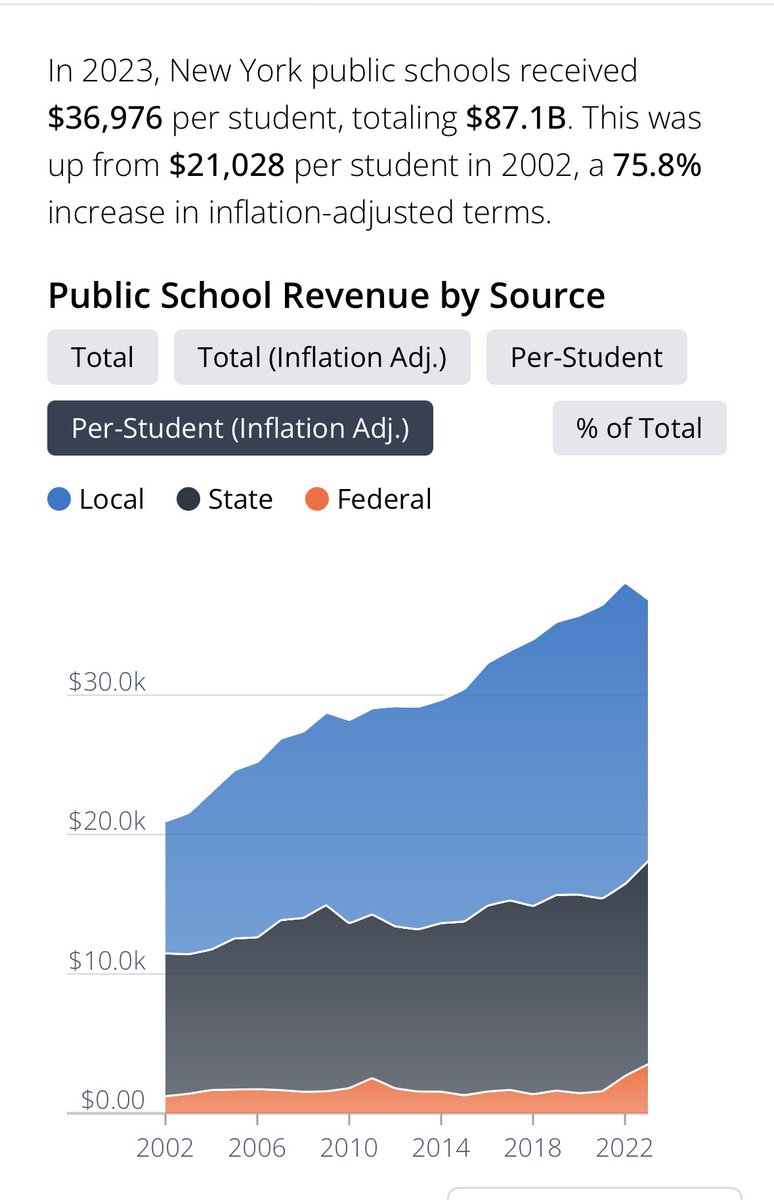
Public school funding in 2024 was $21,065 per student. These are the dollars public schools received from federal, state, and local sources.
Isolating operating expenditures is useful and has its place.
But there's generally no reason to ignore such a large chunk of taxpayer funding.

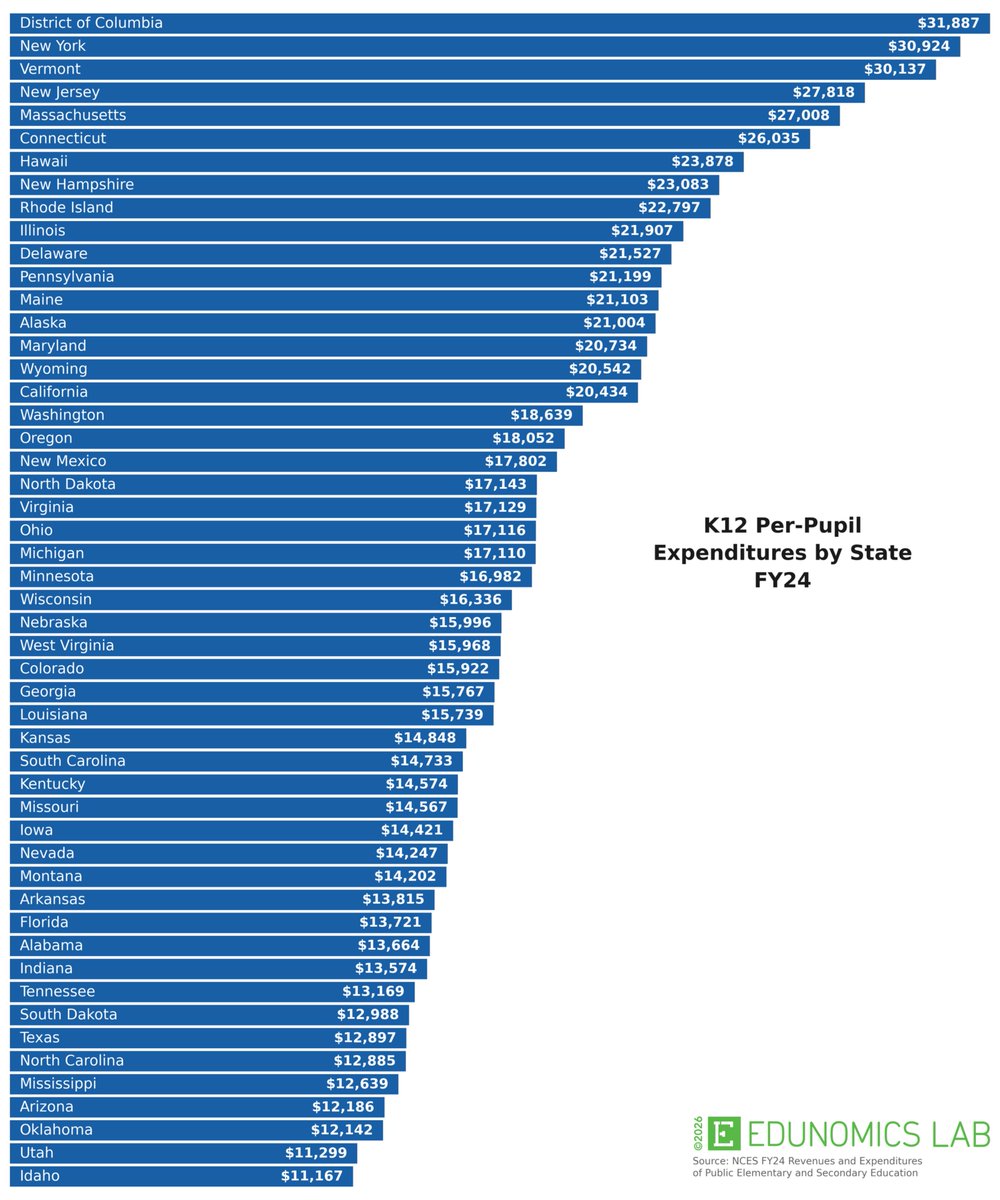
K–12 spending just topped $1 TRILLION.
Per-pupil: ~$18K and rising.
Outcomes? That’s a different story.
2
8
26
15,075

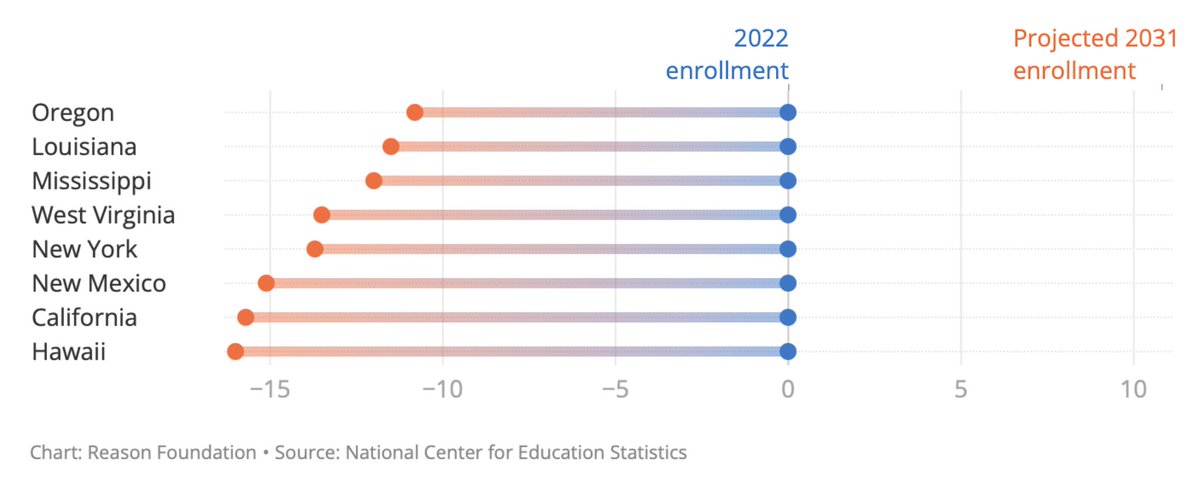
“New York and California’s combined trajectories alone–losses of about 347,000 and 931,000 students, respectively–would account for 47% of the nation’s projected enrollment losses in 2031.” @JudeSchwalbach
5
8
30
2,239
Aaron Smith retweeted

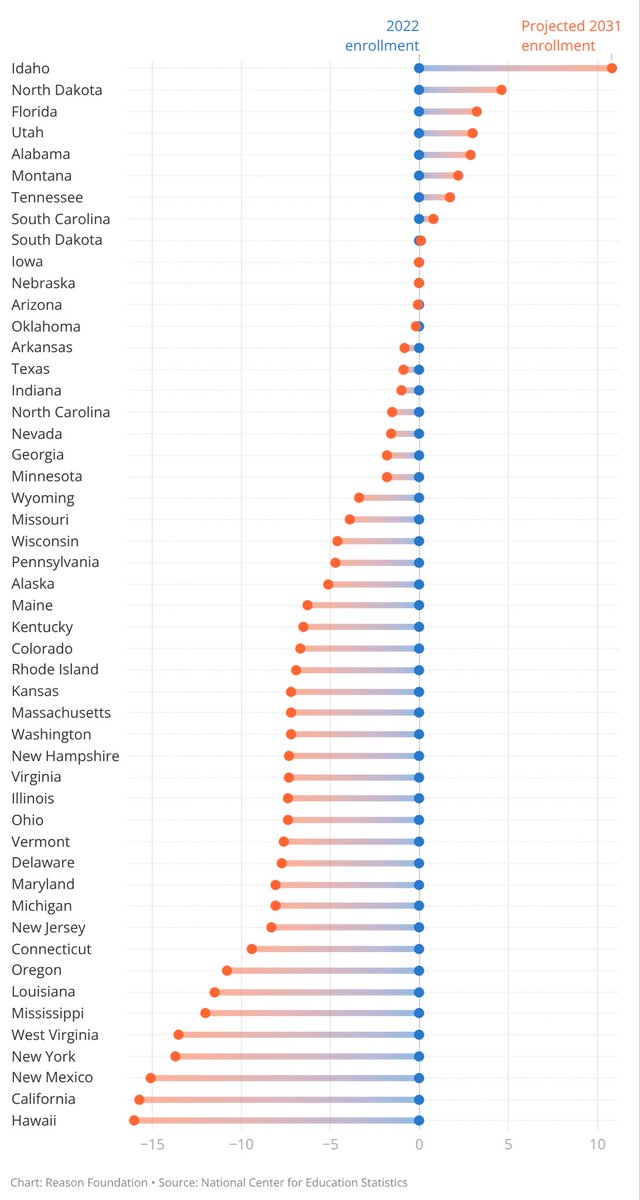
Here’s the state by state estimated percent change in public school enrollment
6
30
79
22,726
Aaron Smith retweeted
Declining K-12 enrollments weren’t a pandemic anomaly, NCES estimated that public schools will lose 4 million students between 2020-31. Forecasts estimate that just 9 states will gain students by 2031
reason.org/education-newslet…
4
14
30
6,047
Aaron Smith retweeted

Apr 21
Opinion: LAUSD avoided a strike and now wants a state taxpayer bailout to avoid fiscal disaster ocregister.com/2026/04/21/la…
4
1
1
1,041
Aaron Smith retweeted
Apr 22
"The tentative labor agreements with United Teachers Los Angeles (UTLA) and other unions are estimated to cost about $1.2 billion annually, money LAUSD doesn’t have." — @ASmithAZ
Apr 21

Opinion: LAUSD avoided a strike and now wants a state taxpayer bailout to avoid fiscal disaster ocregister.com/2026/04/21/la…
4
9
465
Apr 21
The national average in 2023 was actually $20,322 per student. Most people underestimate this by a country mile.

That’s not accurate across all states, and it’s a pretty misleading comparison. Public school funding varies widely. For example, national averages are closer to $14K–$16K per student, with some states much lower and others higher.
Also, that number includes far more than classroom instruction: transportation, special education services, facilities, and federally required supports. Public schools are mandated to serve all students, including those with significant needs under IDEA and other laws.
Private school tuition varies too (many are actually lower than $15K), but they don’t have the same legal obligations or student populations.
This isn’t really an apples-to-apples comparison
1
1
18
1,972