Roman Catholic CIC which evangelises about the mission to safeguard and accompanies people impacted by abuse.
Joined March 2021
- Tweets 19,897
- Following 1,505
- Followers 1,314
- Likes 50,999
1,570 Photos and videos

Pinned Tweet

20 Nov 2024
1
7
24
4,957
LOUDfenceUK retweeted

🚨 Crown Princess Mette-Marit’s Son Sentenced to 4 Years for Rape and Abuse
An Oslo court has convicted 29-year-old Marius Borg Høiby — son of Norway’s Crown Princess Mette-Marit and stepson of Crown Prince Haakon — of two counts of rape and additional charges including domestic violence, gross bodily harm, and drug offences.
He was sentenced to four years in prison. Prosecutors had sought over seven years, while his defence requested around 18 months for the admitted lesser offences. Høiby was acquitted on two other rape charges. He appeared via video link from prison due to health reasons and is reported to accept the verdict without appeal.
Key details from the case:
• One rape at the royal Skaugum estate in 2018 (victim asleep, reportedly captured on video).
• Another rape in Oslo in 2024.
• Multiple charges spanning 2018–2024 involving ex-girlfriend Nora Haukland and others.
The high-profile trial has shaken Norway’s royal family, especially with Crown Princess Mette-Marit facing her own serious health issues.
A stark reminder that no one is above the law — even those close to royalty.
What’s your reaction to this sentencing? 👇

2
6
9
4,135
I am in despair about this. This is the greatest safeguarding risk facing the vulnerable in the UK. Anyone with a mental health condition as a result of trauma or disability will be put at risk.
Jun 14

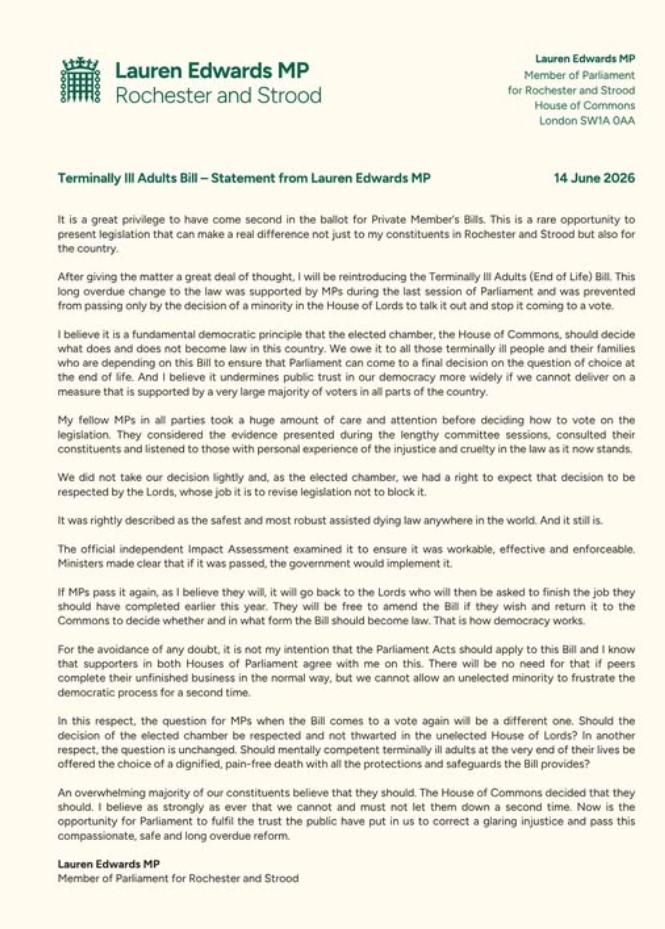
NEW - The Assisted Dying Bill is coming back to the Commons.
It is being reintroduced by Lauren Edwards, who came second in the private member's bill ballot.
6
21
253
LOUDfenceUK retweeted

Supporting restrictions on social media for under-16s is not about limiting freedom but helping young people to grow in it. Their worth should not be measured by likes or followers. Childhood is a time for real friendships, discovery and wonder. Sometimes the most caring thing we can do is set wise boundaries.
Jun 14

🚨 NEW: Under-16s in the UK will be banned from the following 10 social media apps
TikTok
YouTube
Snapchat
Instagram
X
Reddit
Facebook
Twitch
Kick
Threads
37
2
27
4,345
Excellent news!
Under-16s to be banned from social media, PM announces news.sky.com/story/politics-…
44
Abuse can tell the victim the lie, their human dignity is diminished or eradicated because of their wounds. Reject this lie. Abuse is ugly, but the injured are not less beautiful in the eyes of God because of their injuries. @BirgitteUna @BITLorgje @BenRMPWorley
2
42
LOUDfenceUK retweeted

Jun 13
@TutelaMinorum President Abp. Thibault Verny, on today's publication of the revised Statutes: "They reflect listening, to victims and survivors, to safeguarding experts, and to the experience of local Churches, and reaffirm that safeguarding remains a central priority."
3
7
9
916
LOUDfenceUK retweeted

Jun 11
Some babies born with disabilities were denied medical help because they were judged unadoptable, as ITV News Social Affairs Correspondent Sarah Corker reports. #adoption #forcedadoption #birthmothers #justiceforsurvivors
itv.com/news/2026-06-09/evid…
6
6
652
LOUDfenceUK retweeted
Jun 11
Unwed Canadian women forced to give up their babies in the decades after the Second World War until the early 1980s. They are waiting for an apology. #adoption #forcedadoption #birthmothers #stolenchildren #justiceforsurvivors
cbc.ca/radio/thecurrent/moth…
8
13
409

Jun 11
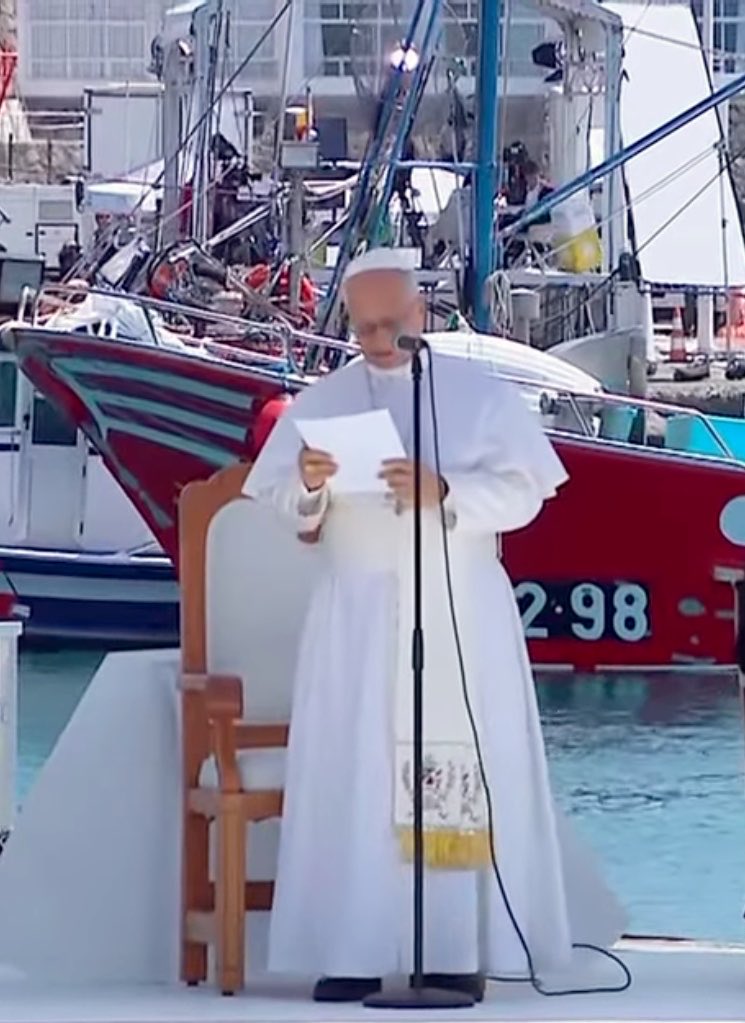
RT @DianeLangberg: We do not protect the name of Jesus in the Christian world using godly words to cover ungodly deeds. God wants purity i…
45
Jun 11
2
85
LOUDfenceUK retweeted

Jun 10
In a society whose values seem to be increasingly shaped around men's demands for women's compliance, thank goodness for @ShelaghFogarty.

"Men, it is really simple..."
As the first person is sentenced under a new sex-based harassment law, Shelagh Fogarty has a clear message...
2
17
104
13,040
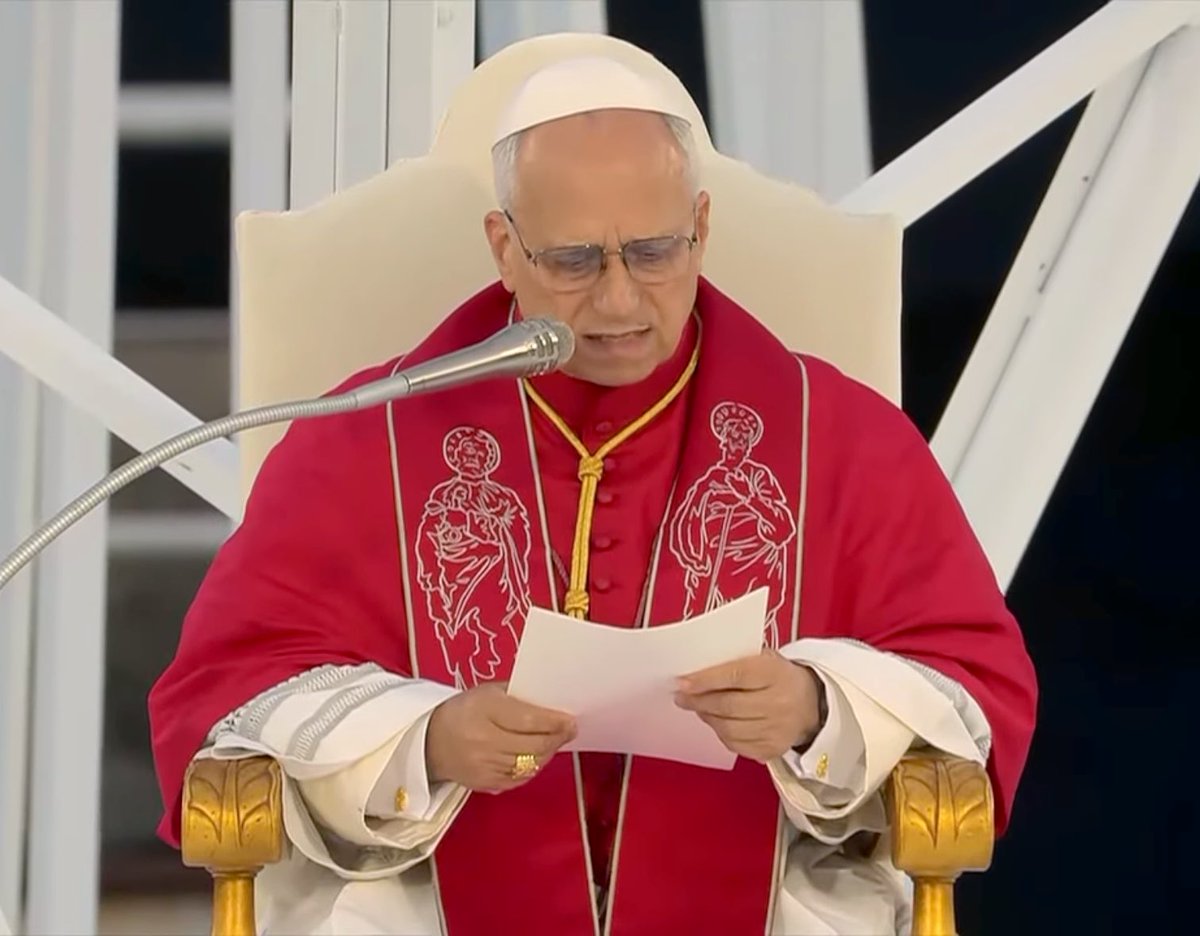
Pope Leo at Barcelona Prayer Vigil: “In our societies, the idolatry of profit, the frenzy of always having to produce and be winners, as well as the cult of one's own self-image, are nothing more than anesthetics to numb our conscience and adapt it to a certain idea of society.”
5
104
344
4,980
LOUDfenceUK retweeted

Jun 9
Pope Leo XIV venerating the Virgin of Montserrat tonight in Barcelona
3
77
888
13,135
Jun 10
"There are moments of darkness and suffering that our society silences," Pope Leo said, because "certain cultural norms demand that we always be victorious and perfect, and so our limitations, fragility and pain must be eliminated, confined to the deafening silence of loneliness or even shame."
And in these moments, we may instinctively think that "God has abandoned us as well," he admitted. "However, the cross of Jesus tells us that God does not abandon us, that he is at our side, crucified with us in moments of pain and extreme loneliness, that he gathers not only our tears but also the cry of our suffering that others do not hear."
Jun 9

Carmina is a high school teacher. Testifying about her depression she told Pope Leo, with her voice breaking, that she "struggled to overcome this illness in silence for years." "I am here," she said, because "God gave me a second chance," when she wanted to give up.
"But there are many others who continue to face this darkness. That is why I ask you with all my heart: Where can we see God when the darkness is absolute and we
cannot take it anymore?"
Pope Leo said he was "moved" that she was "able to speak about it, that you are here among us and that you have found the strength to embrace this second chance that the Lord has given you."
"Through contact with Jesus, even those who feel lost regain confidence in life; healed of their illness, they can rise to live again."
Speaking about depression, Pope Leo said: "there is something deeply wrong with a certain notion of
progress that subjects people to pressures, expectations and tensions that compromise healthy
balances. For this reason, we need a healthcare system that prioritizes this invisible and widespread malaise, which also affects young people."
"There are moments of darkness and suffering that our society silences," Pope Leo said, because "certain cultural norms demand that we always be victorious and perfect, and so our limitations, fragility and pain must be eliminated, confined to the deafening silence of loneliness or even shame."
And in these moments, we may instinctively think that "God has abandoned us as well," he admitted. "However, the cross of Jesus tells us that God does not abandon us, that he is at our side, crucified with us in moments of pain and extreme loneliness, that he gathers not only our tears but also the cry of our suffering that others do not hear."
"When God seems absent, we must entrust to him once again the burdens we carry in our hearts, even crying out to him, even protesting like Job, confident that in some way he is present and near even when he appears to be silent. But I believe we cannot do this alone. In times of pain, at least as much as possible, we must open ourselves to someone who can help us utter a
simple prayer, who can accompany us with discretion without rushing to explain that pain, who can take us by the hand and lead us out of that cry."
Video: Vatican Media
79
Jun 10
The Pope opened his remarks in Catalan before continuing in Spanish. This is an important act of inclusion so all Spanish speakers watching online from all over the world were included.

Pope Leo broke protocol to greet the thousands of people waiting for him outside the cathedral after his first event in Barcelona.
“Bon dia i bona ora, germans i germanes!” he exclaimed—a traditional Catalan greeting that can be translated as “Good day and good weather, brothers and sisters!”
The Pope clearly enjoyed using the Catalan phrases he already knows, opening his remarks in the local language before continuing in Spanish. Then, with a little help from the Archbishop of Barcelona, he concluded with a heartfelt “Adeu-siau!”—a traditional farewell meaning “goodbye” or “see you later.”
For us, it felt like a whole new Duolingo level unlocked.
1
1
98
LOUDfenceUK retweeted

The idea that there can be a statute of limitation for submitting reports of sexual assault is ludicrous.
Would like to know what you mean with the euphemistic “save in exceptional circumstances”?
bbc.co.uk/news/articles/c9qj…
2
2
14
613
Jun 10
The utter contempt for people making disclosures in this post is appalling. I am heartened to see so much opposition to it.

These historic allegations go back many decades. Isn’t it time the law should be changed to introduce a limitation period of 3 years upon attaining adulthood, save in exceptional circumstances?@GBNEWS @LBC @TalkTV@BarristerSecret @JoshuaRozenberg @Iromg mol.im/a/15883555
1
1
1
53
LOUDfenceUK retweeted

Jun 9
🇪🇸 🇻🇦 Pope Leo denounces 'scourge' of sexual abuse before meeting survivors
Pope Leo XIV denounced the "scourge" of sexual violence by Catholic clergy and called for a "culture of care" in the Church ahead of a private meeting with victims in Madrid. Representatives of some victim groups complained they were being excluded #geneu_AFP
5
9
25
7,249

Seems like a bit of an oversight for the headline to mention him asking if he could kiss her, but not mention him cornering her, leaning his body against her and grabbing her hair. Or that she was a child sexual abuse survivor and he was a stalker.
34
3,307
37,565
683,984