
Joined January 2012
- Tweets 18,480
- Following 1,932
- Followers 5,549
- Likes 23,108
924 Photos and videos

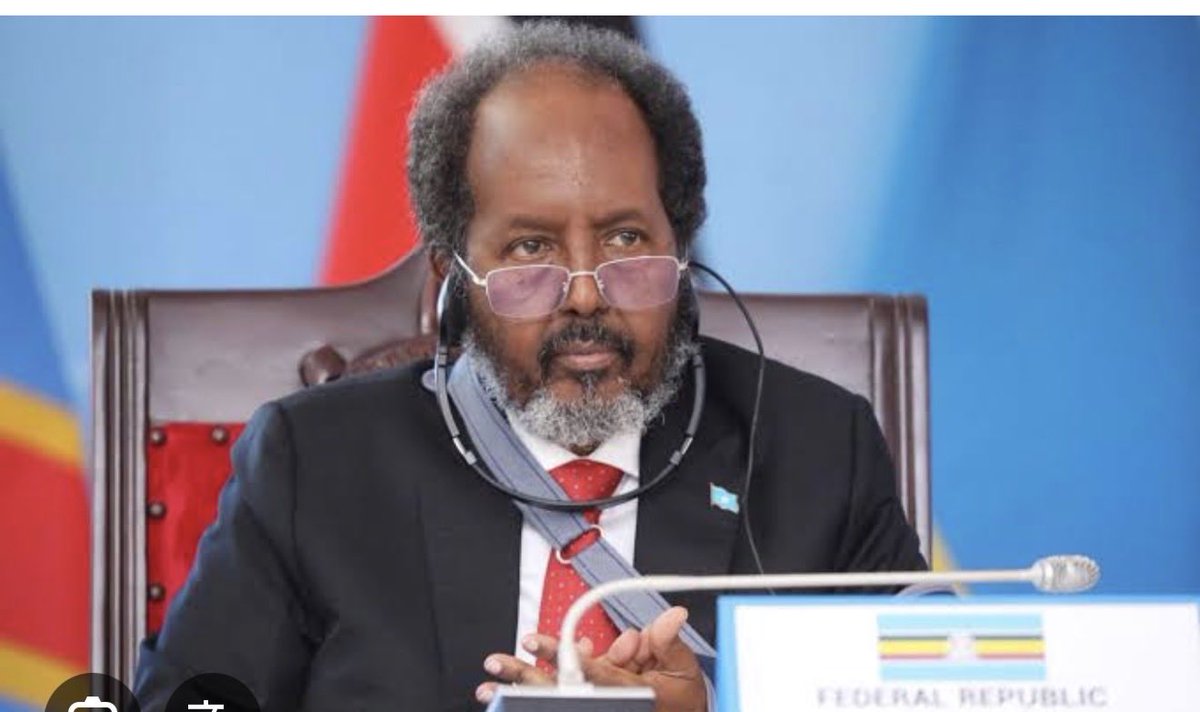
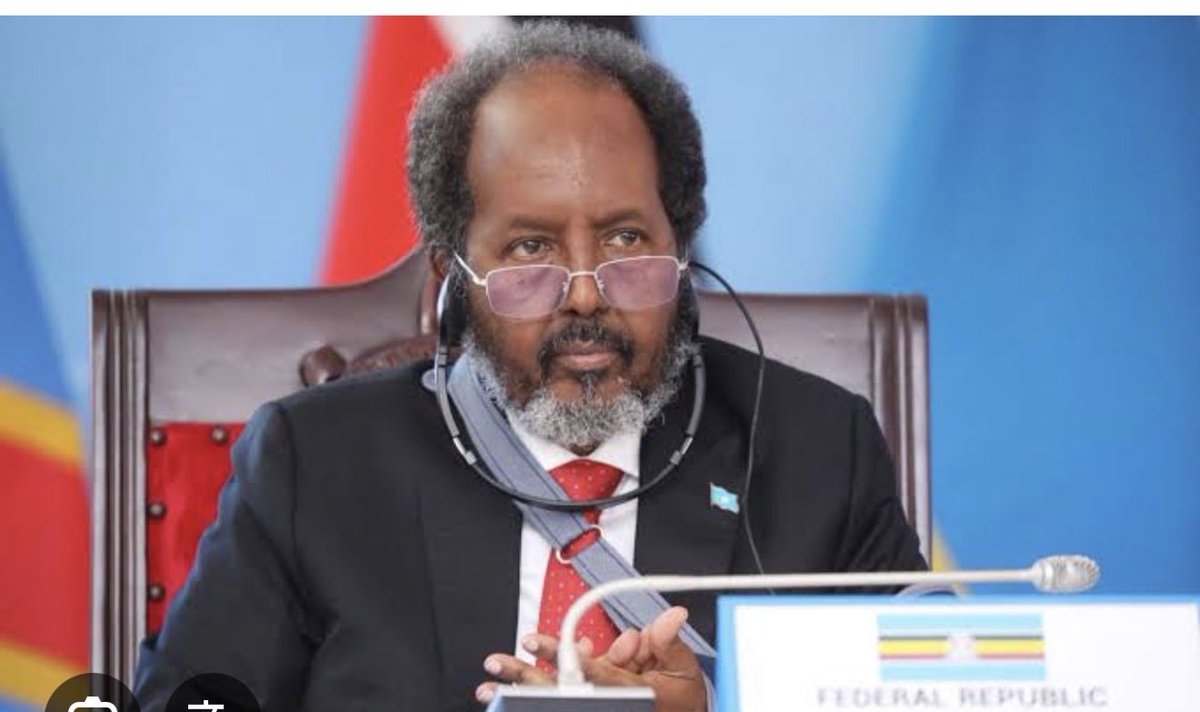
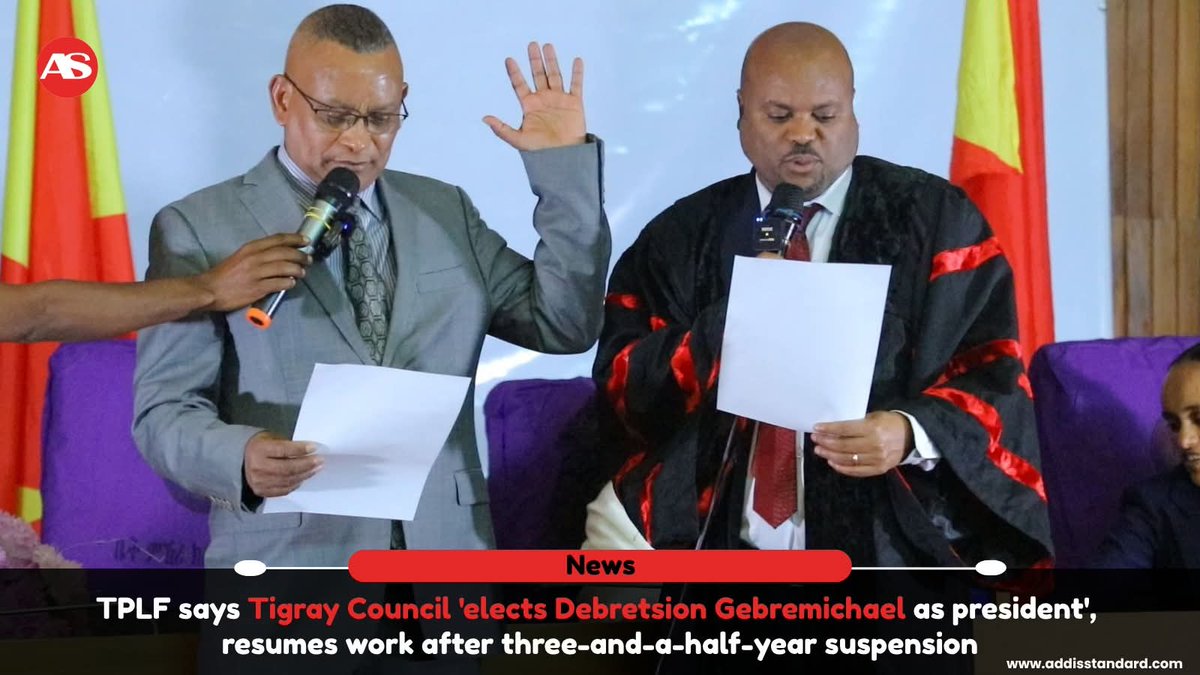
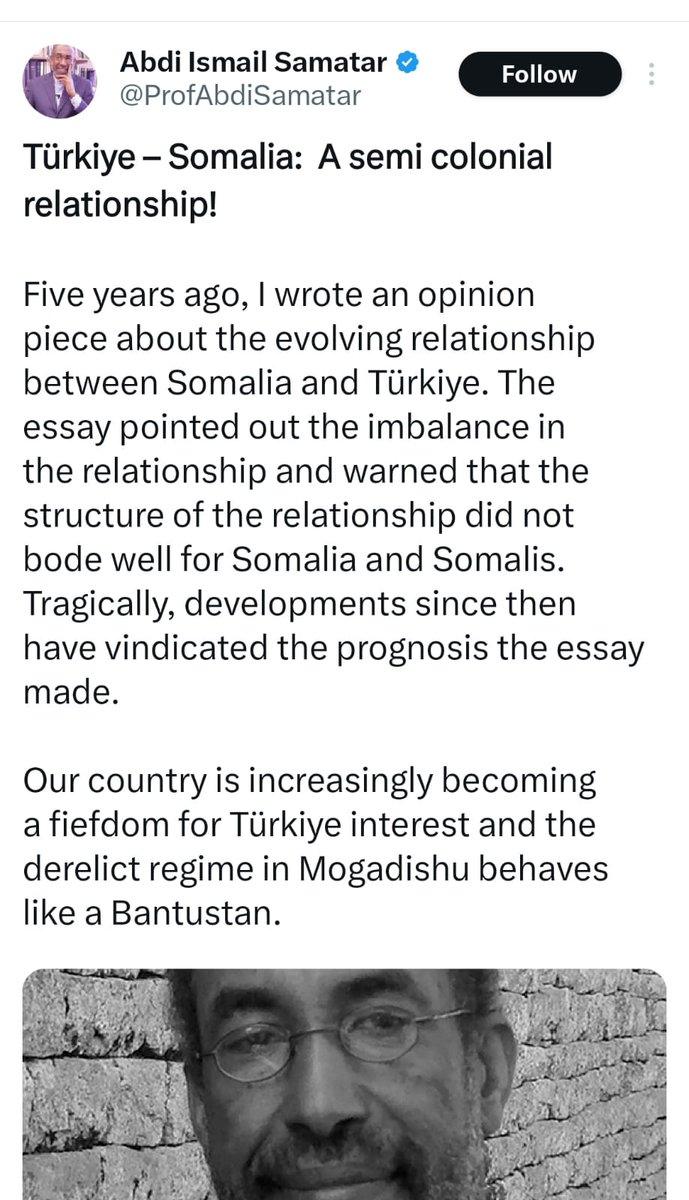
Pinned Tweet

28 Jan 2023
Organising his kinsmen into a rebellion against British imperialism in the Juba Valley, Abdirahman Mursal, a Somali Suldan, in 1917 declared "By Allah, I will not be a slave to the government."
Singing a praise for & Pedestrian Loyalty to a Sitting President/PM is to be a slave.
6
21
12,905
Abdirizak Muhumed retweeted

Jun 13
Marco Rubio, America’s secretary of state, has talked of a “new era of US–Eritrea relations”. Much chatter suggests that sanctions on the country will soon be lifted economist.com/middle-east-an…
42
93
213
52,452
Abdirizak Muhumed retweeted

Jun 14
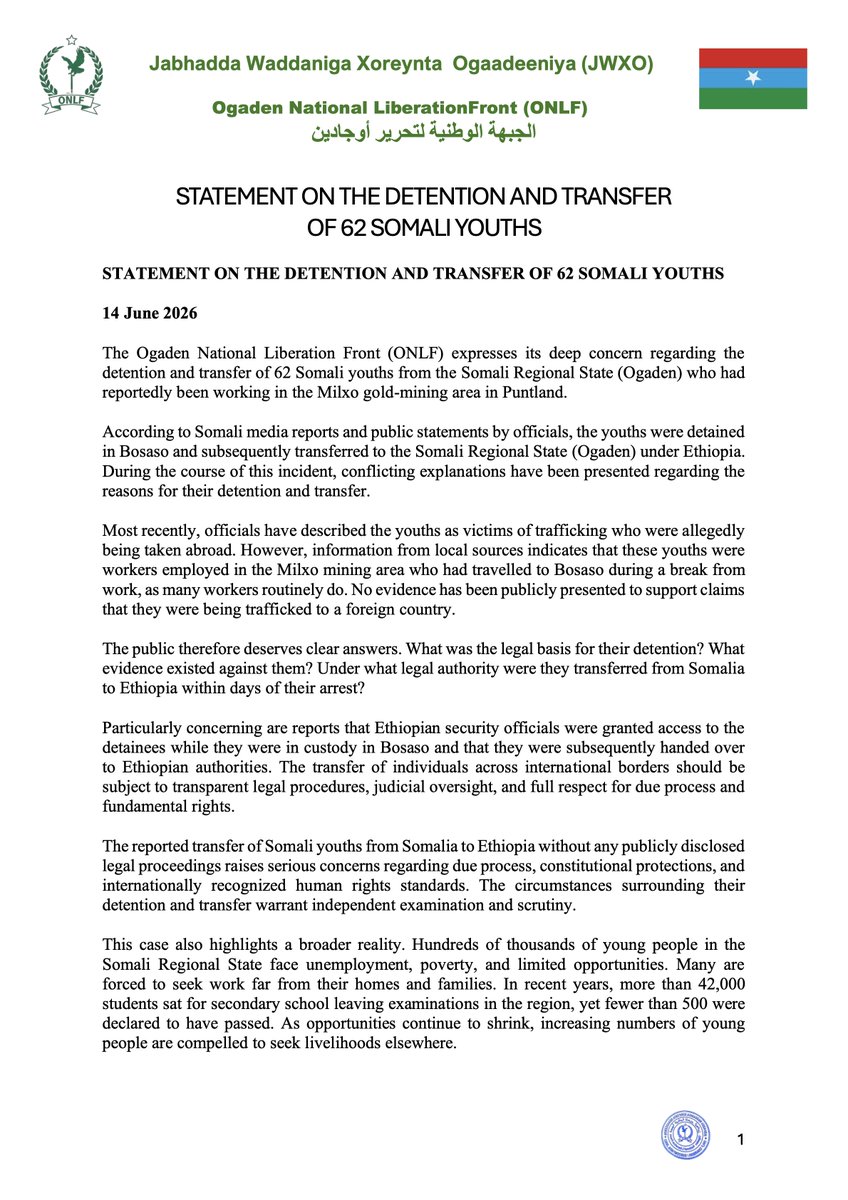
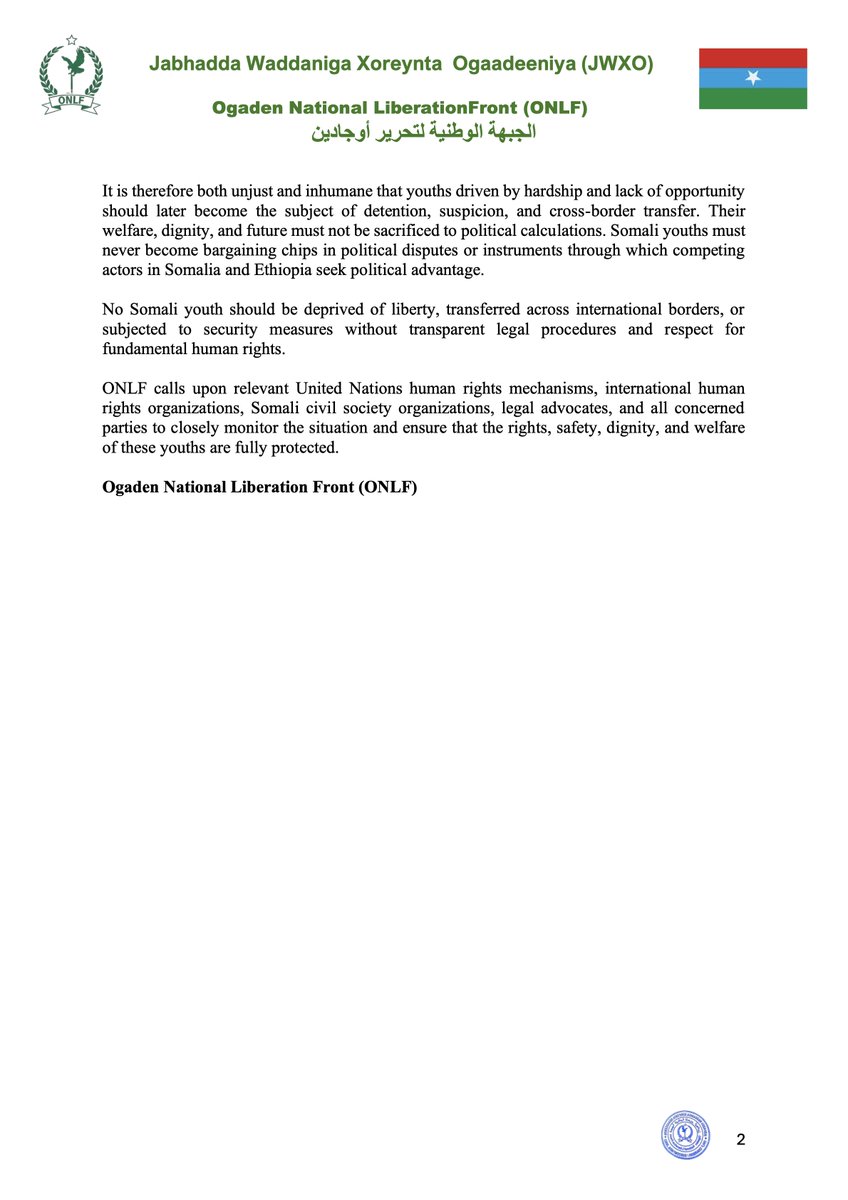
62 Somali State (#Ogaden) youths were detained in #Bosaso, #Puntland, #Somalia and transferred to #Ethiopia within days. No publicly disclosed legal proceedings, no transparency, and conflicting official explanations. Somali youths seeking work must not become victims of political calculations or cross-border rights violations. #ONLF strongly condemns all those involved in this heinous act.
@UNHumanRights @amnesty @hrw @Reuters @AP @AFP @BBCWorld @AJEnglish @VOANews #HumanRights #Somalia #Ogaden #Ethiopia
9
20
50
2,990
Abdirizak Muhumed retweeted

Jun 14
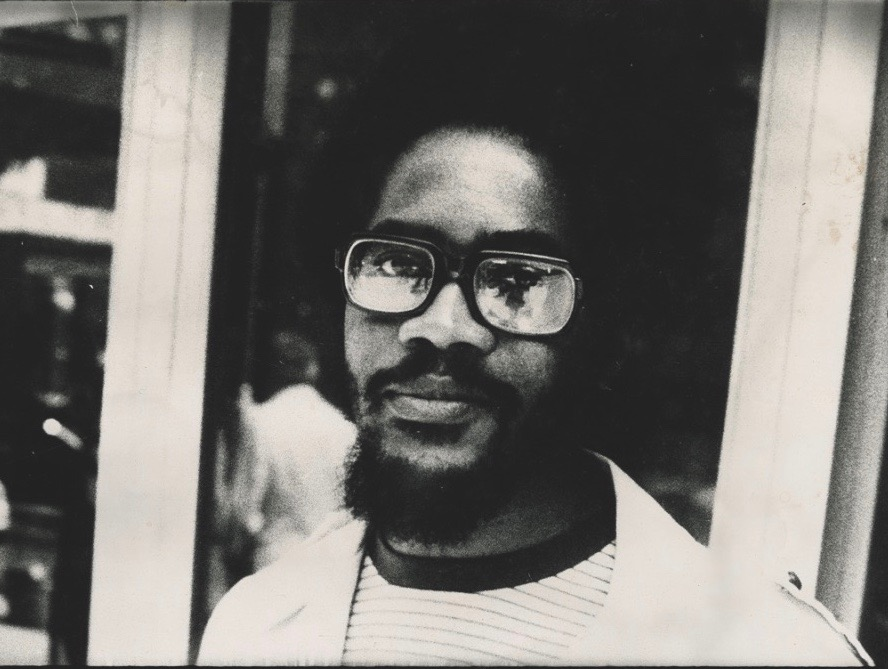
Dr Walter Rodney was assassinated on June 13, 1980, by a bomb planted in a walkie talkie. He was 38.
His key work, How Europe Underdeveloped Africa, exposed the roots of global inequality and the violence of colonial underdevelopment.
75
4,589
12,335
238,757
Abdirizak Muhumed retweeted

Türkiye neo-colonial agenda in Somalia
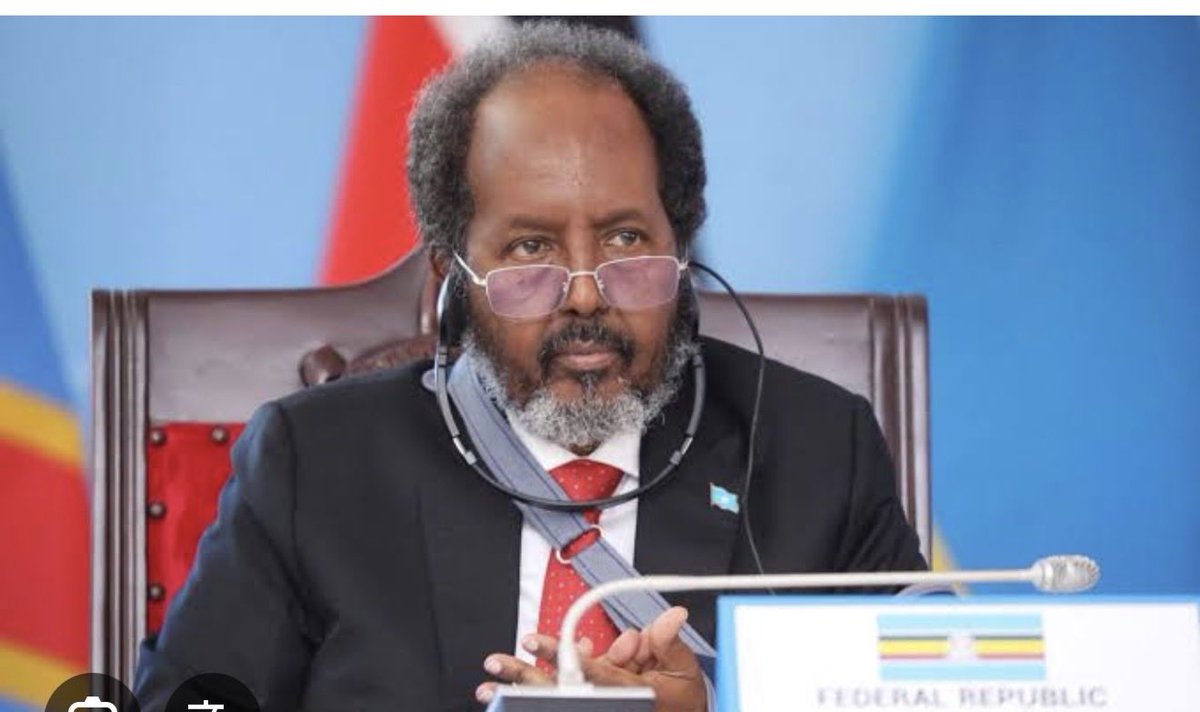
Over two years ago, I publicly stated that Hassan Sh. will go down in history as Somalia’s worst president. I told the listeners that Barre destroyed our country, but he did not know that his catastrophic acts would cost the lives of millions, fragment the country into sectarian fiefdoms, and destroy Somalis’ trust in each other. In contrast, Hassan Sh. witnessed Siyad Barre’s calamity in the making and lived through the consequent horrors of civil war and statelessness. He should know better, but is utterly blinded by lust for personal dictatorship!
Astonishingly, Hassan Sh.’s tenure over the past fours mimicked the worst corrupt practice of the old regime’s last decade and is now attempting to impose a second rate violent tyranny over the country most of whose territory he does not control. The English proverb “Repeating history the first time is a tragedy; the second time it is a farce” aptly captures the mindset and fate.
The political opposition’s demand for an inclusive electoral process not controlled by Hassan Sh.’s lackeys is legitimate and honorable as he is lusting for the establishment of a second rate Bantustan. Hassan’s violent use of all the security forces to block the political opposition from conducting peaceful demonstrations in Mogadishu marked a regressive turning point. Such manufactured crisis has brought Mogadishu, and by extension the country, to the brink of a precipice.
Türkiye’s sinister agenda
Hassan Sh.’s agenda is buttressed by Türkiye who has armed the regime fully knowing its agenda. In fact, Ankara has been a partner of the regime for the past four years as the regime rode rough shod over the parliamentary process in signing military, mining, and other lob-sided agreements without the Somali parliament ever seeing the documents. Thus, it is not surprising that Ankara watched as Hassan Sh. turned Somali security forces, many of which they trained, as his personal mercenaries.
It has been reported that Ankara removed its ambassador to Somalia and dispatched a new one. Meanwhile Türkiye declared that it wants to act as a mediator between the regime in Mogadishu and the political opposition. Such a move is pretentious as it exploits, once more, whatever empathy it garnered for its humanitarian intervention nearly a decade and half ago. What exposes its duplicity is the fact that it is orchestrating an attempt, behind the scenes, to have one of its Somali lackeys and agents elected as speaker of Somalia’s lower house of parliament in the next few weeks. If this candidate is appointed as Speaker, it would be like having a Turkish agent as Somali Parliamentary leader.
An old Somali saying pithily captures Ankara’s chameleon character, “Qofka aad kaba ka tolaneysid kabihiisa u fiirso” If you want to buy shoes from someone, first check the quality of his footwear. The implication of this proverb is: Somalis in general and the political opposition in
particular must not trust Ankara anymore as its nefarious agenda is patently clear. And if the Somali political opposition had any doubt about Ankara’s even-handedness in Somalia, they must take stock of Ankara’s ill treatment of its own political opposition!
fdd.org/analysis/2026/06/03/…
40
84
164
18,407
Jun 13
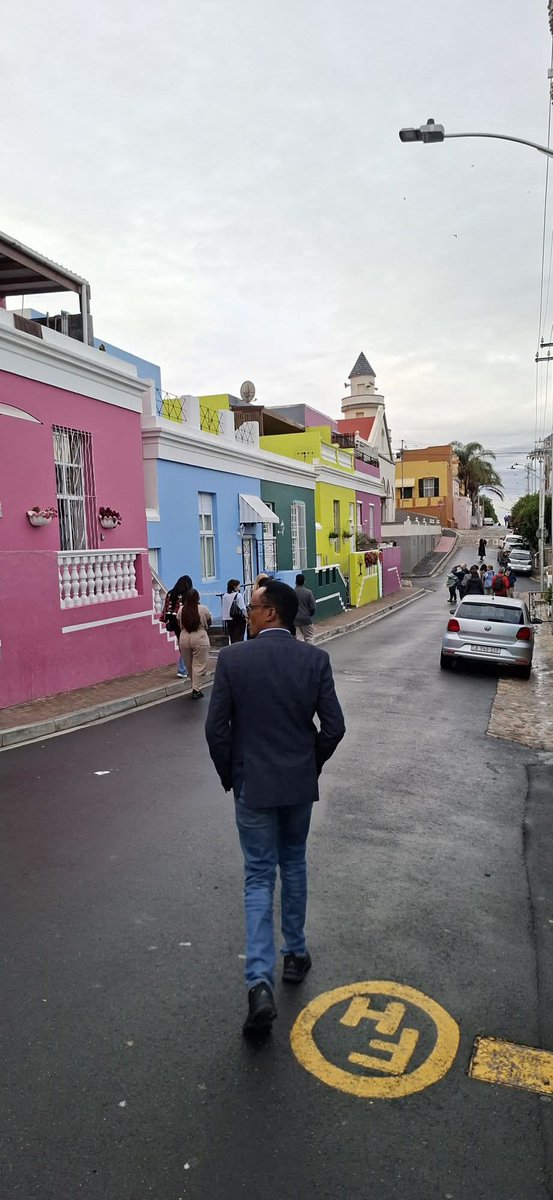
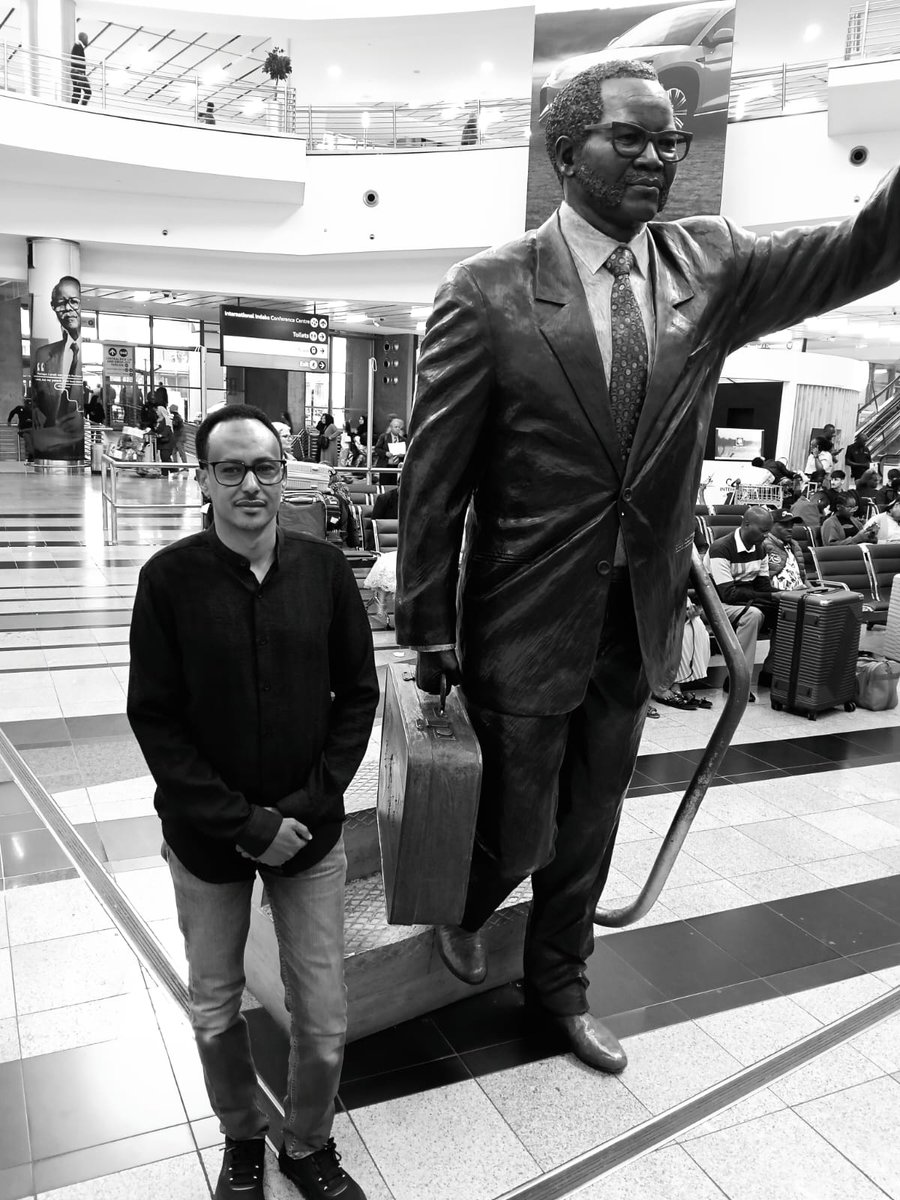
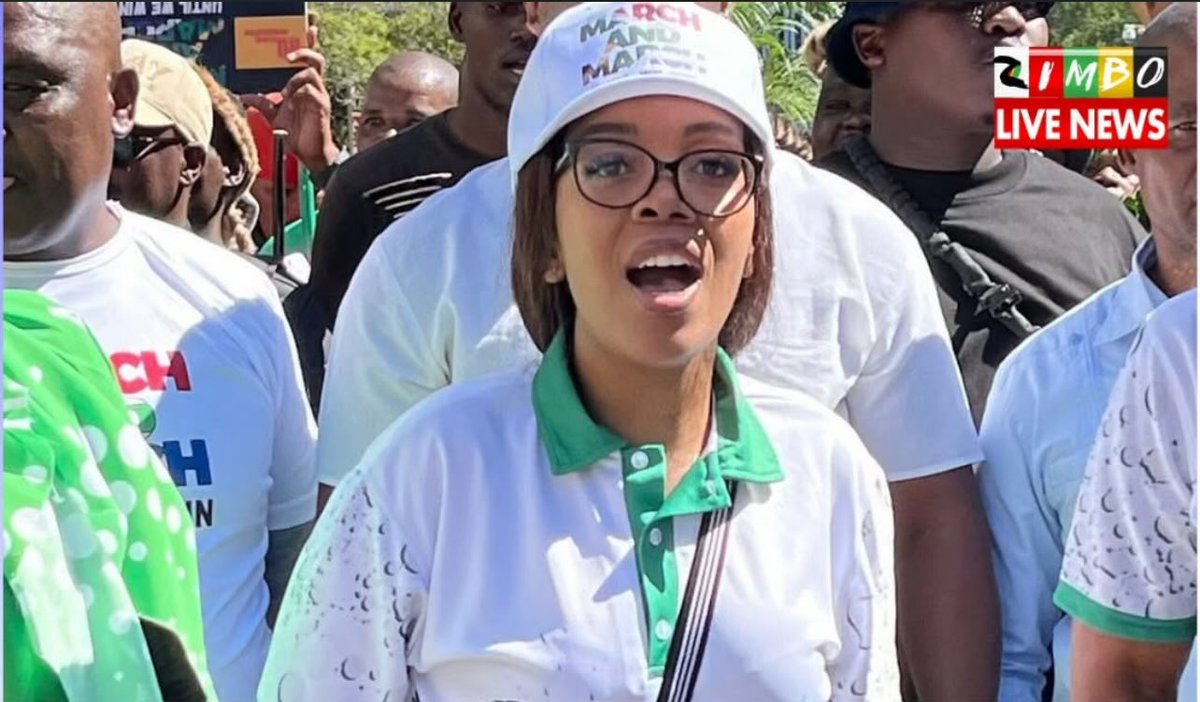
The Revolutionary street!
One of the most "revolutionary" streets on the Southern tip of the continent.
No room for Xenophobia or Afro-phobia.
2
73
Jun 12
No daybreak is near for Somalia!
Jun 12

When Hassan Sheikh Mohamud took office he promised to unite and calm Somalia. By refusing to step down, he may instead be hastening its fragmentation economist.com/middle-east-an…
5
874
Abdirizak Muhumed retweeted

Jun 11
I completely agree this with you.
Jun 10

The most effective way for Somalis to express their pride & patriotism is to find common ground, mobilize & throw political hawkers who have tortured Somalia to death into the Indian Ocean. Doing so, would save future generations from this ordeal & give Somalia a chance to live!
1
1
67

Gode airport:
Flights:
2009/2010: 1,978
2010/2011: 1,374
2011/2012: 1,965
2012/2013: 1,452
Passengers:
2009/2010: 24,118
2010/2011: 34,991
2011/2012: 37,448
2012/2013: 28,750
Despite this facts, job creation & socio-economic benefits for the local community were/is non-existent
2
1
3
154
Jun 11
It is the political hawkers that has murdered Somalia.

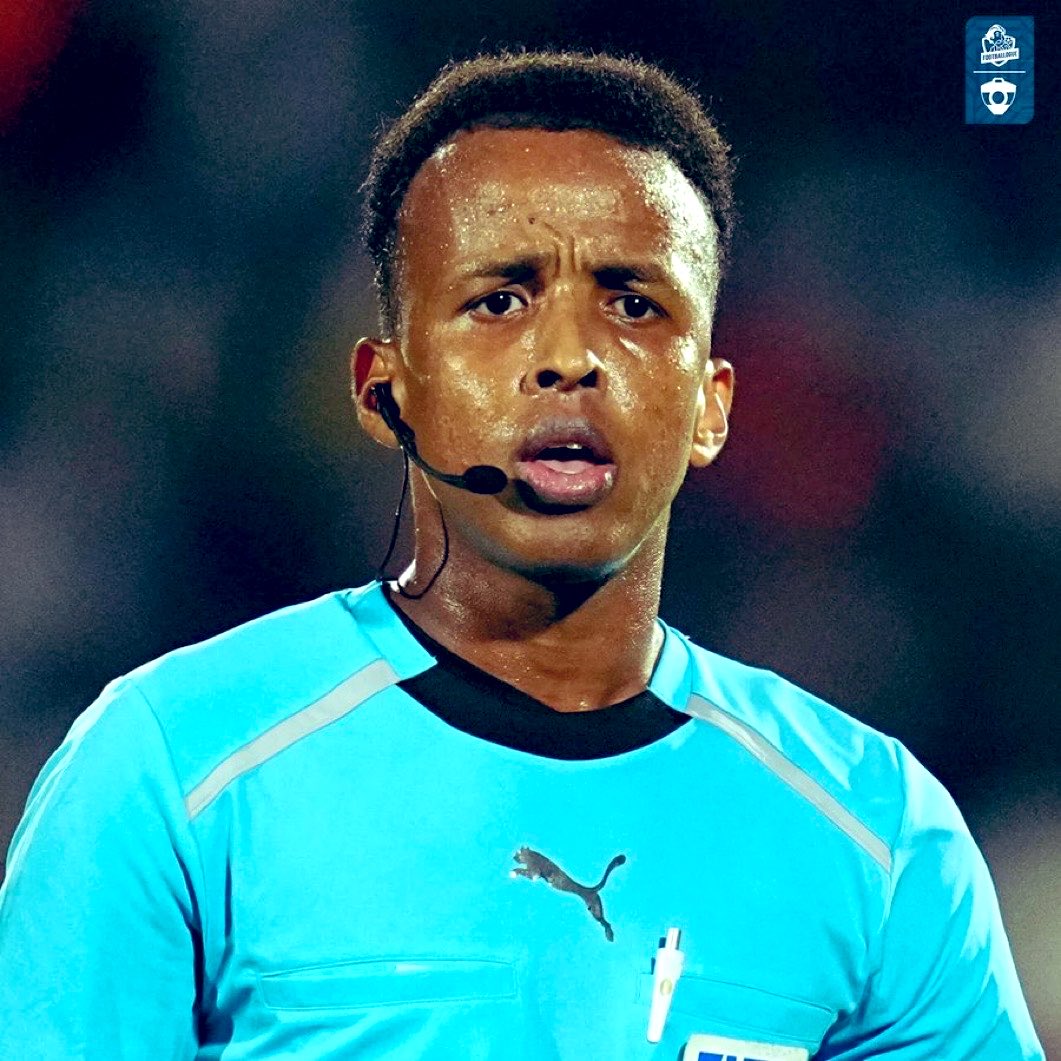
Omar did his role and achieved more than his fellow generation can even dream. It's Somalia's politicians, chief among them HSM, that betrayed the future of not only Omar but if millions of Somali youth with invaluable talents and potentialities.
53
Jun 10
The most effective way for Somalis to express their pride & patriotism is to find common ground, mobilize & throw political hawkers who have tortured Somalia to death into the Indian Ocean. Doing so, would save future generations from this ordeal & give Somalia a chance to live!
2
4
372
Jun 10
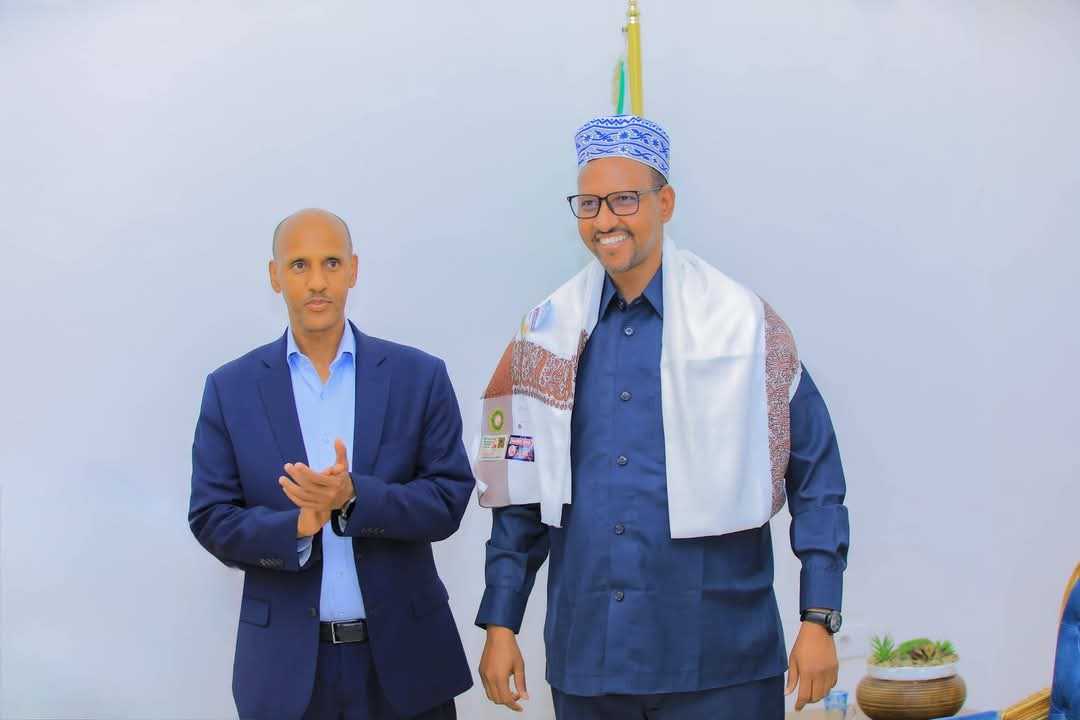
"For generations, Ethiopia’s rulers have asked oppressed nations to sacrifice their rights in the name of national unity, state survival, sovereignty, territorial integrity!"

1
108
Abdirizak Muhumed retweeted

Karaamo-beel oo uu qaranjabku sababay Paracetamol laguma qandho jabiyo ee raadka sababaha ayaa u baahan in la soo helo, ka dibna si dhab ah oo aan caadifad lahayn looga shaqeeyo.
Cumar Cartan waa nin iskiis ah u guulaystay ee ilinta yaxaaska halaga tago.
#Somalia
#AragtidaDawladnimada
7
3
16
2,306
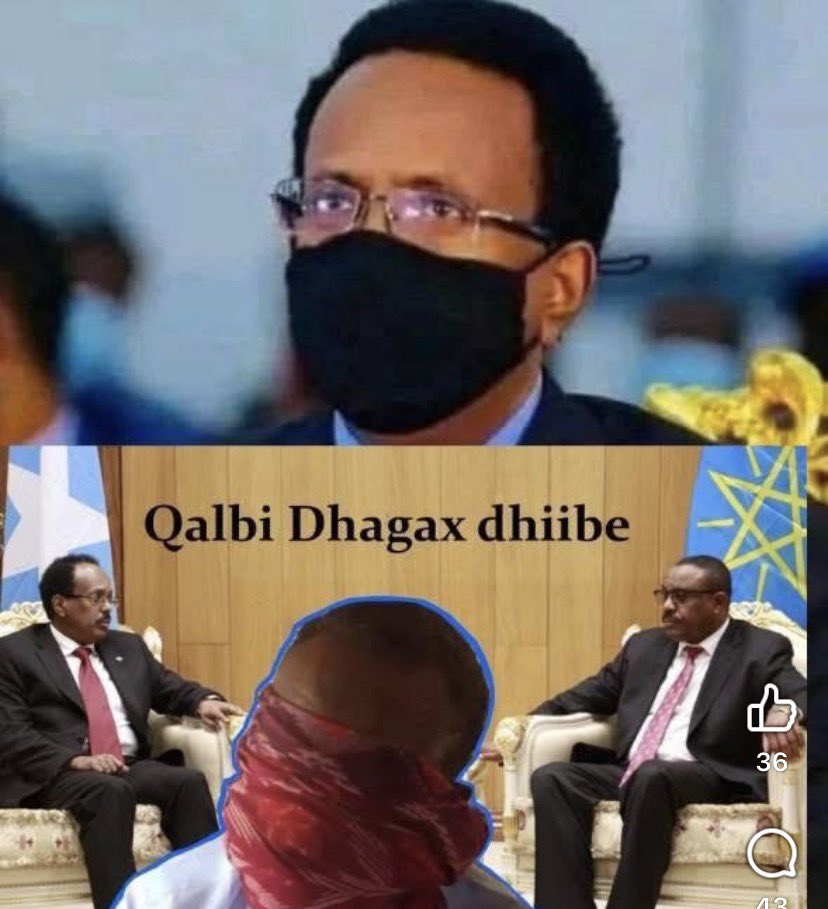
Here is your legacy:
1. Added the @ONLFofficial to your so-called "terrorist list."
2. Sold #Dhagax, a 1977 war hero to TPLF?
3. Gave Ethiopia 4 ports.
4. Illegally extended your mandate, a practice that @HassanSMohamud
has adopted.
You're still Farmaajo, the same sellout!
Jun 9

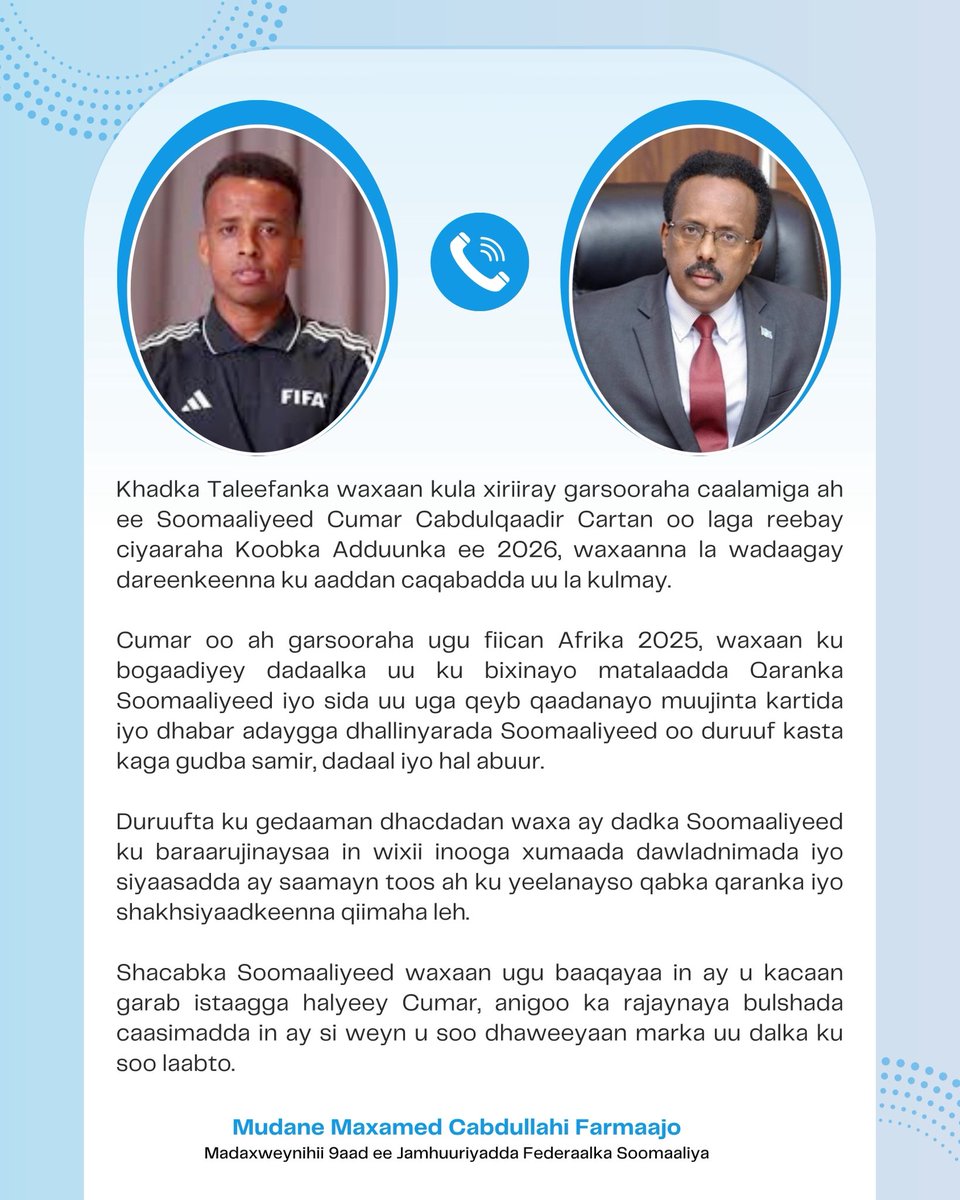
I had a phone call with the Somali international referee, Omar Artan, who is unable to participate in officiating at the 2026 @FIFAcom World Cup, and I shared with him our feelings regarding the challenge he has faced. Omar is a symbol of our people and country's great potential
1
2
302
Somalia's political hawkers elevated hypocrisy & lunacy to an art form!
Their decrying a visa rejection is akin to the proverbial hyena that has eaten his mother for meat, then mourns her death.
They have eaten Somalia &, like the proverbial hyena, now cry over her dead body!
2
4
7
449
Abdirizak Muhumed retweeted

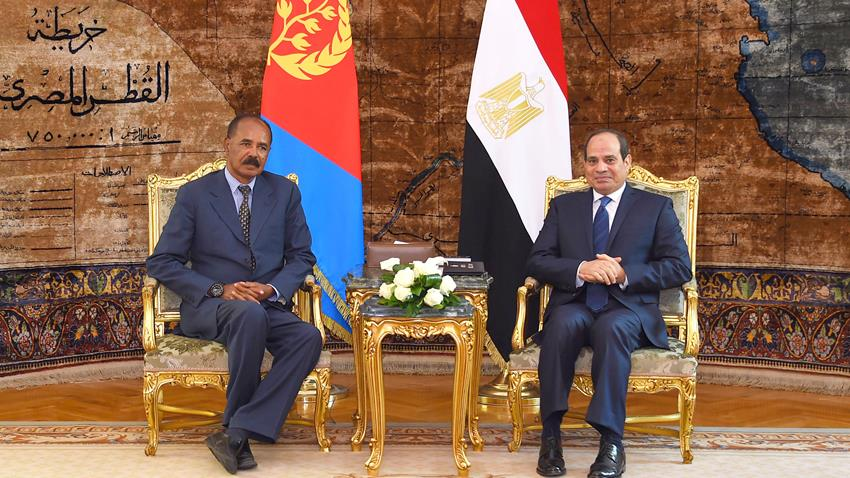
Egypt and Eritrea Close the Red Sea to Ethiopia Once Again!
In a renewed official rejection of Ethiopian maritime ambitions in the Horn of Africa, the Egyptian-Eritrean summit held in Cairo emphasized that the security, stability, and governance of the Red Sea are the exclusive and direct responsibility of its coastal states only. This move completely blocks Addis Ababa's endeavors to establish an illegal military or political foothold in this vital maritime corridor.
This decisive stance came during extended talks held at the Ittihadia Palace between Egyptian President Abdel Fattah El-Sisi and his Eritrean counterpart, Isaias Afwerki. Both leaders underscored their joint coordination to protect regional peace and security, while firmly rejecting any unilateral actions that undermine the sovereignty of the region's nations.
I believe that the summit's emphasis on the "exclusive responsibility" of littoral states serves as a diplomatic and legal wall that effectively contains the memorandum of understanding previously signed between Ethiopia and the secessionist region of "Somaliland," stripping it of any regional legitimacy.
This is particularly evident given President El-Sisi’s declaration of Egypt's steadfast commitment to supporting Eritrea's sovereignty and territorial integrity, a clear, indirect warning against any potential escalation or pressure from Addis Ababa to secure a maritime outlet by force or through agreements unrecognized by international law.
The discussions were not limited to the Red Sea file; coordination extended to the latest developments in brotherly Sudan.
Both presidents renewed their firm stance supporting Sudan's unity, sovereignty, security, and stability, emphasizing the urgent need to end the current crisis and back efforts to restore comprehensive stability, as Sudan remains an integral part of the Horn of Africa's national security.
On the bilateral level, the summit witnessed an agreement to propel relations between Cairo and Asmara toward wider horizons, particularly by enhancing economic, investment, and trade cooperation.
This reflects both nations' desire to transform this strategic and political alliance into a sustainable developmental partnership that brings prosperity to both brotherly peoples.
(Note: The attached photo is an archival image from a previous meeting in 2019).
114
116
287
36,946
Abdirizak Muhumed retweeted
Jun 8
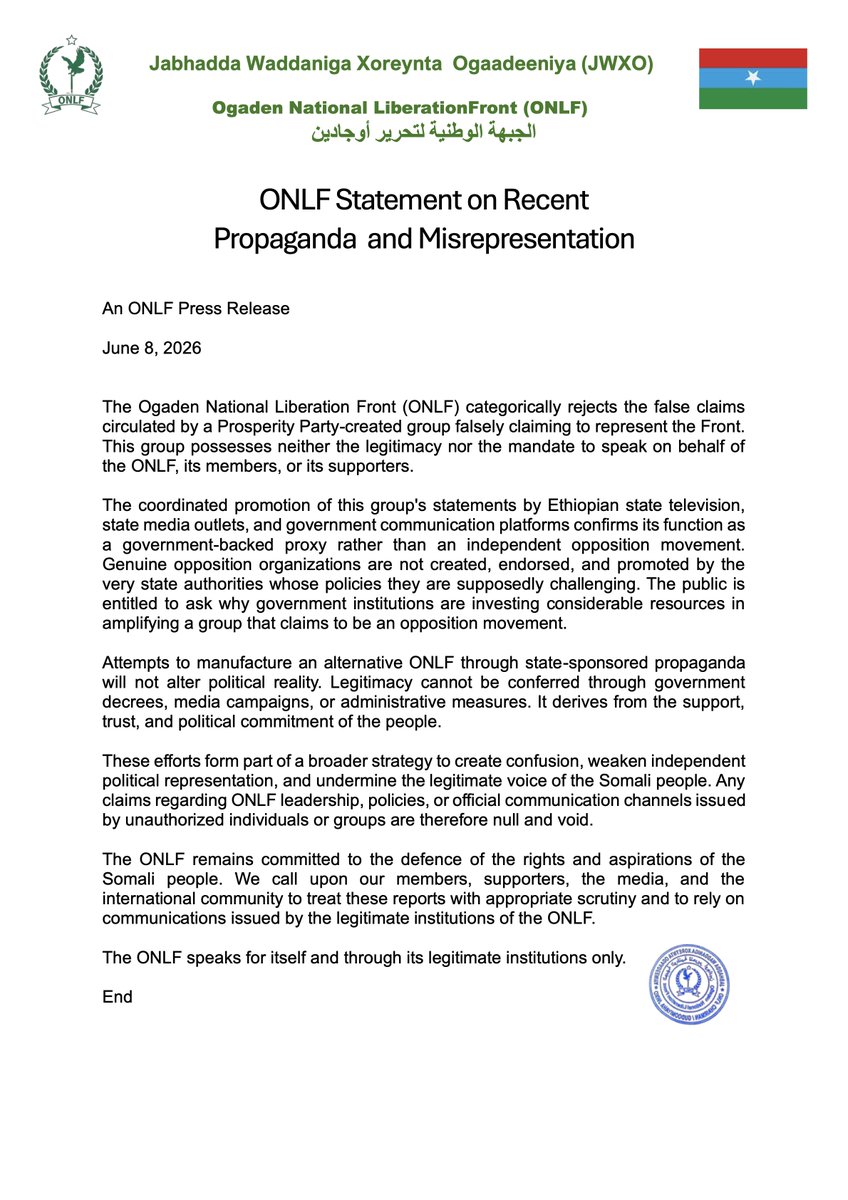
State-sponsored propaganda cannot manufacture political legitimacy. The #Ethiopian government's promotion of a group falsely claiming to represent the #ONLF only exposes the true nature of that project. Statement below:
12
31
67
5,913
Abdirizak Muhumed retweeted
Jun 8
Many #Somali scholars visit the Somali State, receive a warm welcome, hear polished presentations, and leave impressed. Genuine scholarship, however, requires looking beyond official narratives and asking difficult questions about political freedom, human rights, representation, and the right of the Somali people to determine their own future.
A government should be judged not by the praise it receives from guests, but by the freedoms enjoyed by its people.
#SomaliState #ONLF #Somali #Somalia #Ethiopia

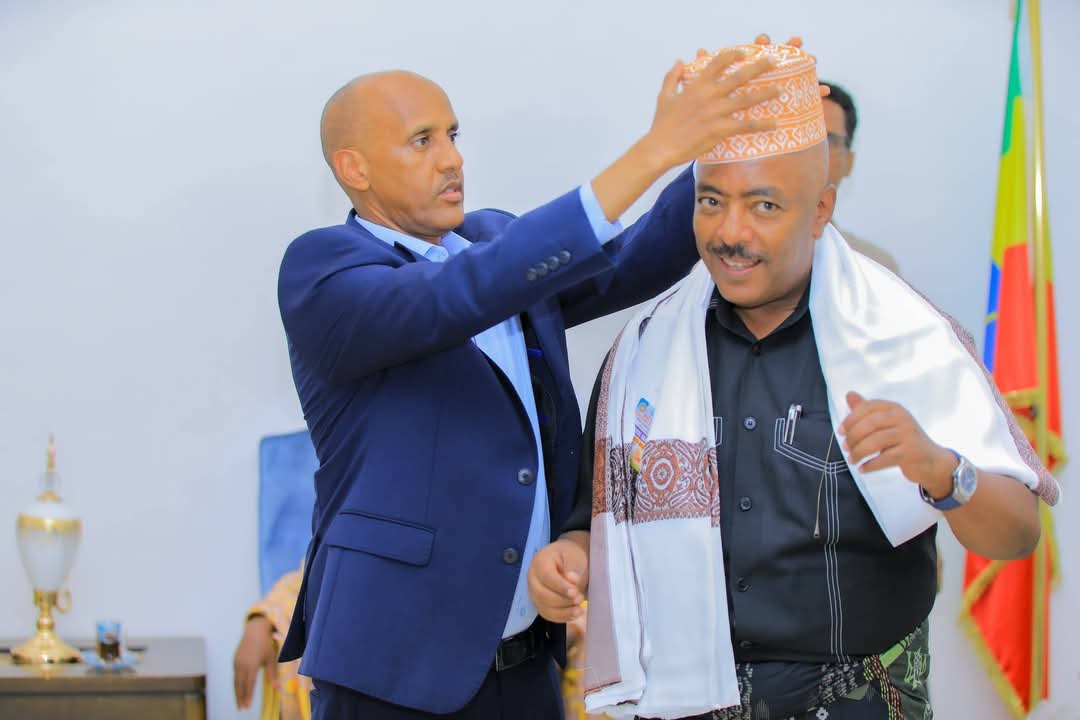
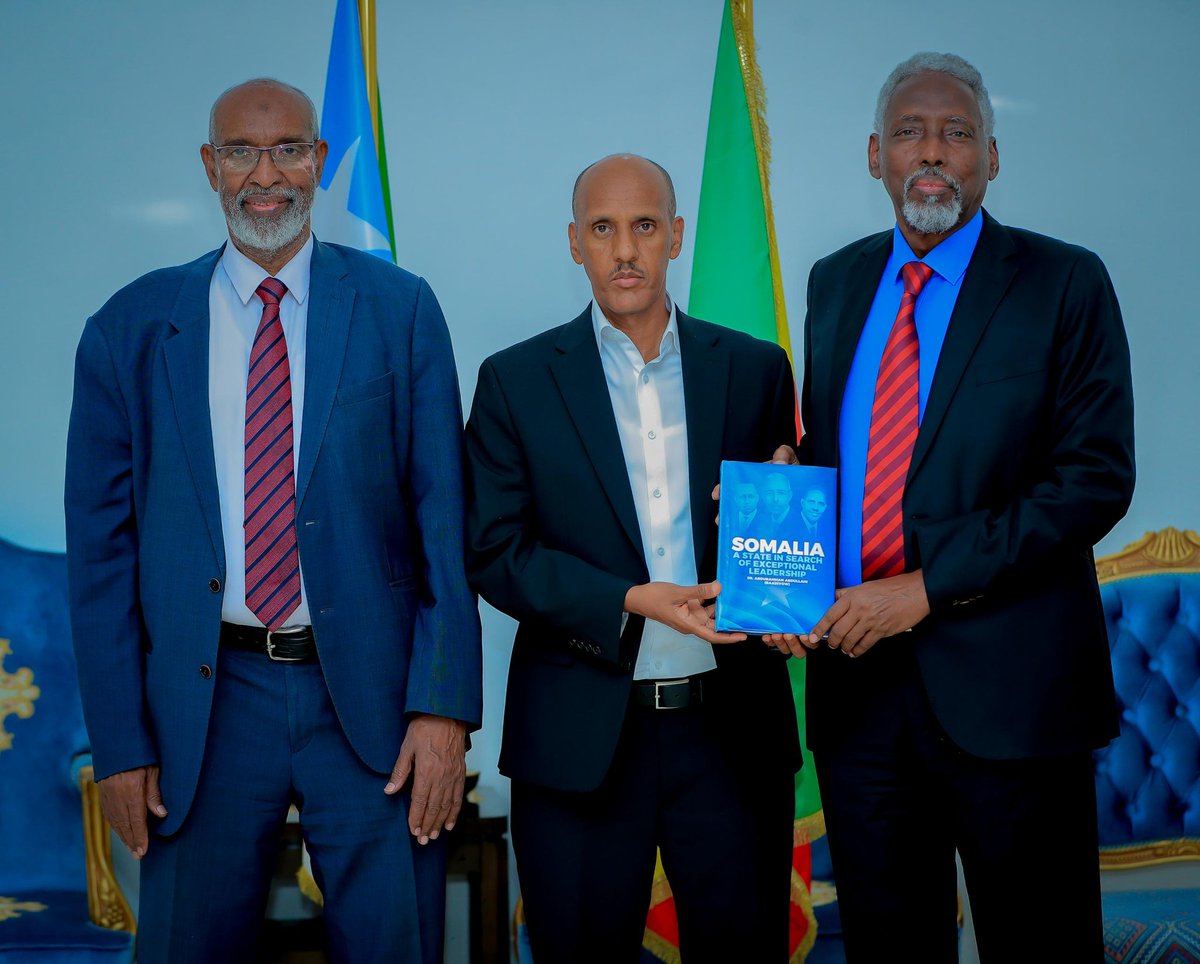
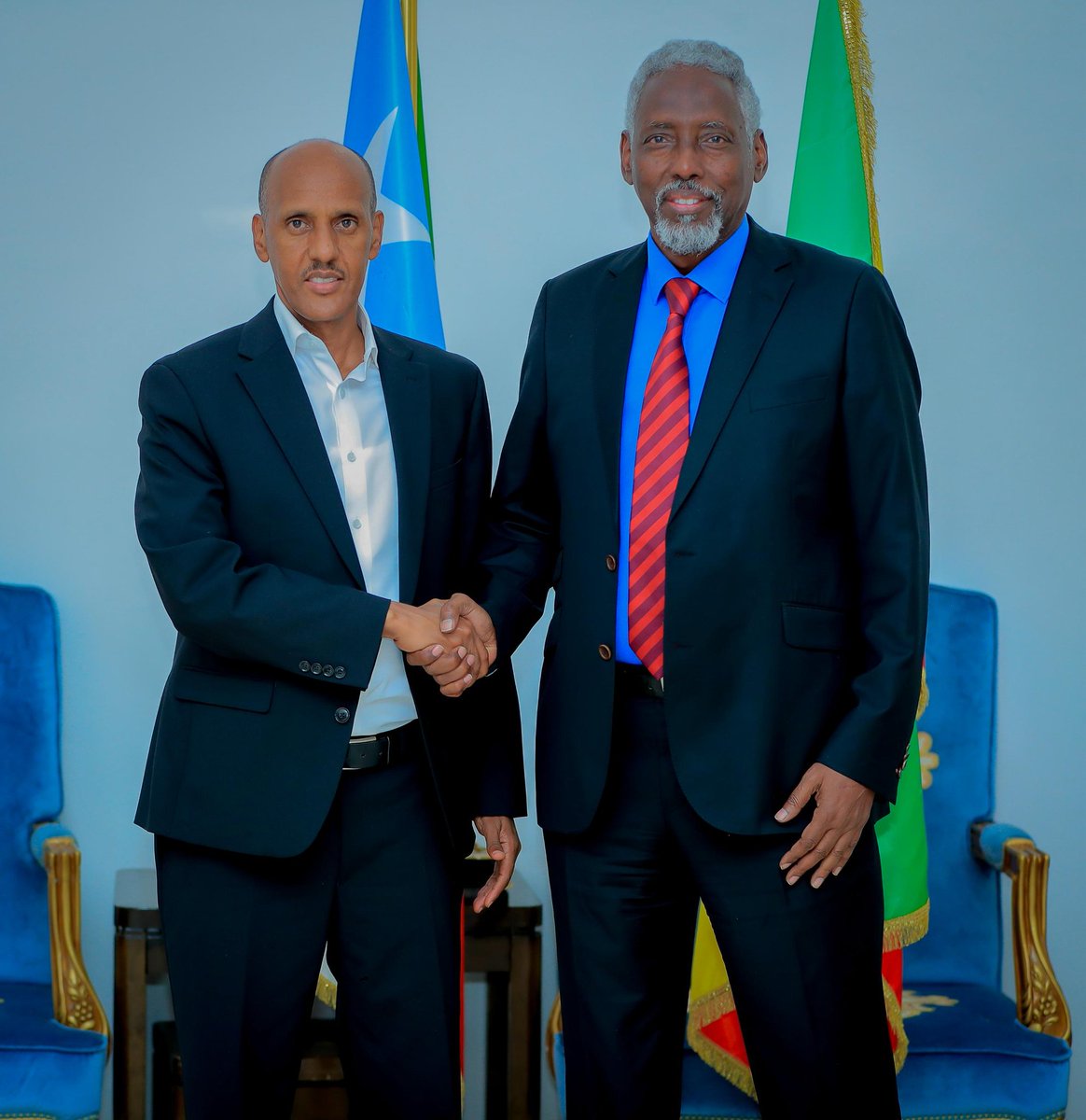
Delighted to be honored by President Mustafa of the Somali Region of Ethiopia. We exchanged ideas and information about our Somali people, and I had the opportunity to present him with my book, Somalia: A State in Search of Exceptional Leadership. I have observed in him certain qualities of such leadership, particularly in prioritizing social peace and the inclusivity of all clans in government, parliament, and administration. The challenges are still significant, but the direction is right. Over the past eight years, President Mustafa has transformed the Somali Region and made it a place where all Somalis can come together without fear.
1
7
22
3,430
Enjoy the taste of your own political medicine 💊 !
@HassanSMohamud
is a criminal but you're 100 times worse!
We now, know your fake patriotism.
You are the only sitting "president" who forged an Ethiopian passport to justify #Qalbidhagax was "handing himself over to TPLF!"
Jun 7
Former President Hassan Sheikhs term is up. He must work with all stakeholders to keep Somalia together, not drive it apart. Former presidents Sharif Sheikh Ahmed and I have extended an invitation to him for a meeting to discuss the way forward on elections and national future.
157
Ereyga "Dawdar" waa uun @M_Farmaajo.
"Hadba dawdar falan baa u kaca, nimanka Daarood!"
Ninkaan umbaa ku sifaysan meriskan.
Waxaana u dheer khaa'innimo iyo Xabashi jacayl.
Wallee, dib iima gaadid!
Jun 7

Farmaajo said, 'Hassan Sheikh cannot compete with us and has no confidence in #himself.
I am better than him at managing #politics. I do not want to remove him from #office
2
160
Abdirizak Muhumed retweeted

Today’s statement of the PM office asserts it: Abiy Ahmed can present the elections as a triumph. Never mind the confusion in the figures: number of registered voters, turnout, number of polling stations that reportedly could not open, etc. 1/5
7
4
20
9,082