
80 Photos and videos




Adam Fish retweeted

Jun 14
The first fundamental truth is that FDE is not a role, it is a product strategy.
It has to originate from the fount of the product org.
You judge an FDE org by the fruits they bear! What new product was discovered, what Thielan secrets were mined and refined into weapons grade product?
(but hey, what do I know about FDE 🤷♂️)
19
34
458
88,364
Adam Fish retweeted

Jun 11
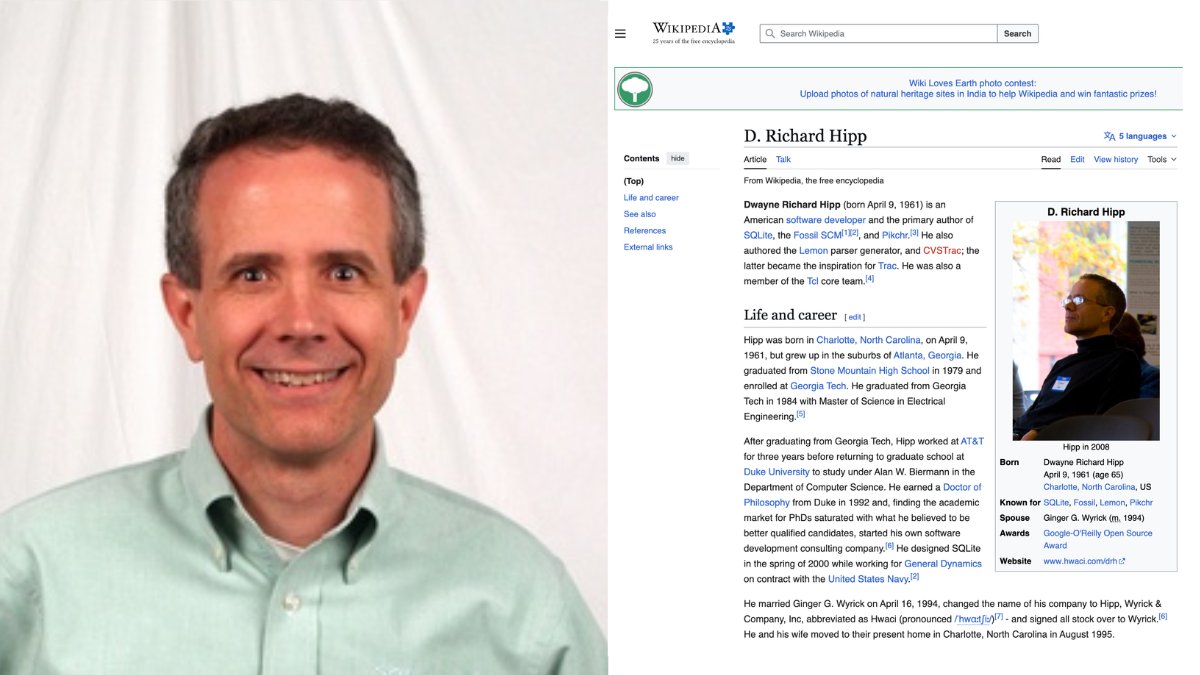
An engineer from Charlotte, North Carolina sat down in the spring of 2000 to write software for guided missile destroyers in the United States Navy. The ships needed a database that did not require a system administrator on board.
So he wrote one himself. 26 years later that database, SQLite, runs inside every iPhone on Earth, every Android phone, every Mac, every Windows machine, every major web browser, every airplane cockpit avionics system, and most of the cars built in the last decade. It is the most widely deployed software in human history. He still maintains it from his home in North Carolina.
His name is D. Richard Hipp. Most people call him Richard.
Here is the story, because the engineer behind the most replicated piece of code on the planet is a man almost nobody can name.
Richard was born in Charlotte on April 9, 1961. He grew up in the suburbs of Atlanta. He graduated from Stone Mountain High School in 1979 and went to Georgia Tech, where he earned both a bachelor's and a master's degree in electrical engineering by 1984. He spent three years at AT&T Bell Labs working in Unix and C. Then he went back to school at Duke University and earned a PhD in Computer Science in 1992. His dissertation was on spoken natural language dialog processing under Alan W. Biermann.
He could have stayed in academia. He told one interviewer the market for PhDs was saturated with better qualified candidates. He started a software consulting company instead. He married a musician and author named Ginger G. Wyrick in 1994 and renamed the firm Hipp, Wyrick and Company.
Then in 2000 he picked up a contract through General Dynamics to write software for the US Navy. The target was the Aegis class guided missile destroyer. The original system ran HP-UX with an IBM Informix database backend. The whole stack required a database administrator on board. The Navy did not want a database administrator on board. Richard's job was to make the database administrator unnecessary.
The design goals were simple. The database had to be self-contained. It had to run inside the application. It had to have zero configuration. It had to be transactional and reliable. It had to require no separate process. It had to be small.
On August 17, 2000 he released SQLite 1.0. He wrote it in C. The whole thing fit in less than a megabyte. The license he chose was the most extreme one possible. He released the source code into the public domain. No copyright. No royalties. No restrictions. Anyone could use it for anything forever.
The decision changed software history.
SQLite spread quietly. Mozilla adopted it for Firefox. Apple put it inside iOS. Google put it inside Android. Microsoft started shipping it inside Windows. Chrome, Safari, and Edge all use it. Photoshop uses it. Skype used it. Every major operating system you have ever touched runs SQLite somewhere underneath. The Airbus A350 uses it for flight software. Every Boeing 787 has SQLite onboard.
By 2026 SQLite was estimated to be running on more than 1 trillion devices. It is the most replicated piece of software ever written. Richard has personally turned down what is almost certainly hundreds of thousands of dollars in royalties over the past 26 years by keeping it public domain.
The SQLite team is tiny. Richard and a small group of core contributors. He maintains a separate version control system he wrote himself called Fossil. He maintains a parser generator he wrote himself called Lemon. He maintains a diagram language he wrote himself called Pikchr. He is a member of the Tcl core team and has been for over 25 years. He answers questions on Hacker News under the username SQLite.
The project's public commitment is to support SQLite through the year 2050.
A Christian engineer from North Carolina wrote a small database for missile destroyers and released it for free.
It is now running inside every device in your house.
32
245
1,360
204,896

Jun 11
They are a supply chain risk
Jun 10

Today I'm publishing a new essay, Policy on the AI Exponential. AI is progressing extremely fast—much faster than the policy process was built to handle. The essay lays out where I think the technology is now, and the action needed to close the gap: darioamodei.com/post/policy-…
29
Adam Fish retweeted

Jun 10
In light of Anthropic’s policy decision, I am withdrawing my amicus brief signature. I can’t truthfully argue they’re not a supply chain risk. 😞
Jun 9

I’ll be honest that it would have been much more difficult to defend Anthropic against the DoW incursion had that incident occurred after this one. This is the company literally telling their customers, “we reserve the right to silently sabotage you.” I’d still have defended them, because the government trying to destroy a firm is still wrong, but man would it have been a harder case to make.
16
71
1,138
125,688
May 29
It’s also becoming expensive and intelligence gains diminishing, so the workloads will shift away.
May 29

LARRY ELLISON: AI IS RAPIDLY COMMODITIZING BECAUSE MOST MODELS ARE TRAINED ON THE SAME PUBLIC INTERNET DATA.
THE REAL COMPETITIVE EDGE ISN’T THE MODEL ANYMORE — IT’S ACCESS TO EXCLUSIVE, PROPRIETARY DATASETS.
THAT MAY BE THE ONLY MOAT LEFT.
44
Adam Fish retweeted

Apr 30
Rivian plans to increase initial production capacity for a plant it’s building in Georgia by 50%, a move the electric car maker disclosed as it posted higher revenue in its latest quarter. on.wsj.com/4t6UGeM
6
20
122
74,093
Apr 28
Zerobeat: festival POS fails even with Starlink because the LAN is saturated by 50,000 attendee phones, not the WAN. Their fix: peer mesh CRDTs (on @dittolive) on-device AI.
zerobeat.io/blog/offline-fir…
31
Apr 23
Built an LLM wiki for Ditto based on @kaborthy's pattern. Mac mini, Claude Code, local search with zero cloud calls. Two wikis: one public, one internal. Template is open source.
ditto.live/blog/llm-wiki-for…
2
2
156
Apr 17
In 2026, your API is your product.
Apr 17

Welcome Salesforce Headless 360: No Browser Required! Our API is the UI. Entire Salesforce & Agentforce & Slack platforms are now exposed as APIs, MCP, & CLI. All AI agents can access data, workflows, and tasks directly in Slack, Voice, or anywhere else with Salesforce Headless 360. Faster builds, agentic everything. 🚀
#Salesforce #Agentforce #AI
venturebeat.com/ai/salesforc…
1
5
8
6,181
Apr 17
Webflow's CMS API can't publish code blocks. Tables aren't in the API at all!?
So I built a Playwright robot that clicks buttons in the Designer for us.
In 2026, your API is your product.
ditto.com/blog/browser-robot…
55
Adam Fish retweeted

Apr 16
Dogfooding Opus 4.7 the last few weeks, I've been feeling incredibly productive. Sharing a few tips to get more out of 4.7 🧵
335
1,052
11,812
1,649,431

Apr 15
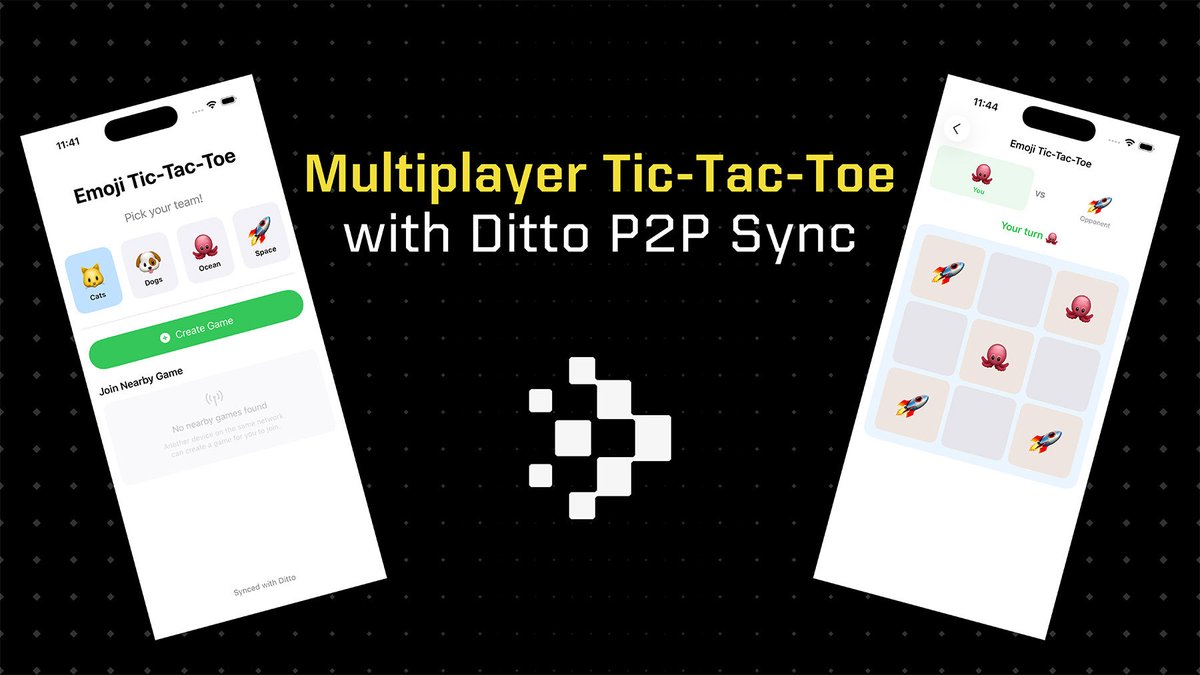
Built a multiplayer game for my kids. No server, no internet, just two iPhones syncing over Bluetooth.
They loved it. They also found a logic bug. Best QA team I've ever had.
Full SwiftUI tutorial → ditto.live/blog/swiftui-mult…
1
81
Adam Fish retweeted

Apr 1
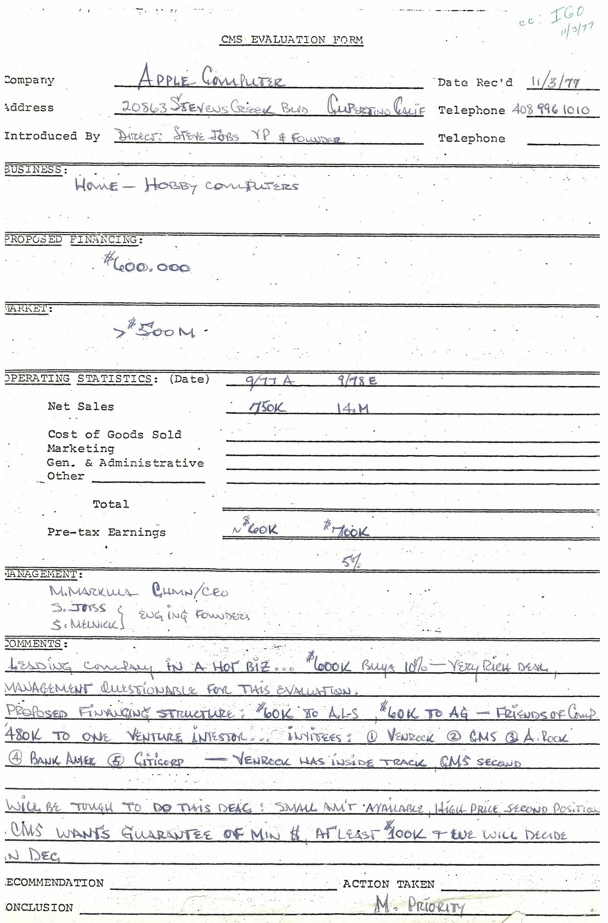
In honor of 50 years of Apple, we're sharing - for the first time ever - Don Valentine's original 1977 memo for Sequoia's investment into Apple Computer. #Apple50
189
912
6,043
2,257,666

Adam Fish retweeted

Mar 31
Demo of 1-bit Bonsai 8B from @PrismML running on-device on iPhone 17 Pro
More than 40tk/s for a dense 8B model on iPhone, that’s a first
Powered by Apple MLX and available now in Locally AI
45
120
1,750
159,818
Adam Fish retweeted

Mar 28
My dear front-end developers (and anyone who’s interested in the future of interfaces):
I have crawled through depths of hell to bring you, for the foreseeable years, one of the more important foundational pieces of UI engineering (if not in implementation then certainly at least in concept):
Fast, accurate and comprehensive userland text measurement algorithm in pure TypeScript, usable for laying out entire web pages without CSS, bypassing DOM measurements and reflow
1,335
8,197
64,972
24,006,283
Adam Fish retweeted

.@williamhockey is one of the least visible founders in tech relative to what he has created.
He co-founded Plaid and is now building Column, a software company that owns a bank, and powers Ramp, Wise, Bilt, Mercury, and others. He funded it himself by borrowing against nearly everything he had in Plaid shares, and has never raised any outside capital.
His story matters because so much of the value in our industry gets created through exactly this kind of extreme personal risk. He is maniacal about being the best in the world at his thing, and has spent his entire career betting on himself and doing whatever it takes to win.
He also spends a lot of time outside the US (in places like Kinshasa) which has given him a rare perch on the power of the US dollar.
We discuss:
- Why emerging markets are often the most financially innovative
- What owning 100% of his company allows him to do that VC-backed founders cannot
- Getting margin called and nearly going bankrupt
- Why the best founders are specialists
- What it takes to be the best in the world at your thing
- How Silicon Valley's consensus culture produces consensus founders
- How the US dollar functions as an instrument of national security
Enjoy!
Timestamps:
0:00 Intro
9:19 Emerging Markets
14:03 Silicon Valley's Elite Consensus Problem
16:03 Rejecting the VC Hamster Wheel
21:45 Equity and Liquidity
26:03 Funding a Bank
29:45 The Necessity of Extreme Founder Risk
37:18 Finding Leverage
45:20 Longevity and Profitability in Banking
48:46 Matching Your Capital Structure to Your Business
51:44 The Unseen Power of the US Dollar
1:02:30 How AI Will Transform Legacy Banks
1:09:23 The Kindest Thing
57
99
1,301
1,662,888
Adam Fish retweeted

Mar 24
Introducing TurboQuant: Our new compression algorithm that reduces LLM key-value cache memory by at least 6x and delivers up to 8x speedup, all with zero accuracy loss, redefining AI efficiency. Read the blog to learn how it achieves these results: goo.gle/4bsq2qI
1,007
5,712
38,820
19,380,942
Mar 21
Seeing a lot of these tools which excites me. Local first via edge AI is starting to take root.
Outside an algorithmic LLM breakthrough the models are asymptotic meanwhile hardware continues to improve. This shifts power back to end users and edge devices!

Granola was overkill for my markdown note setup, so I had Claude build a fully local transcription CLI with a skill that works great and composes well with others.
Read more: hrescak.com/notes/transcribe…
126