
🎤 @twentyminutevc, 🏦 @20vcfund, @projecteurope_😇 @fuseenergy @linear @wearelegora @factoryai @lovable @airwallex @mercor_ai @workos
Joined May 2015
- Tweets 33,788
- Following 374
- Followers 475,171
- Likes 119,858
6,545 Photos and videos



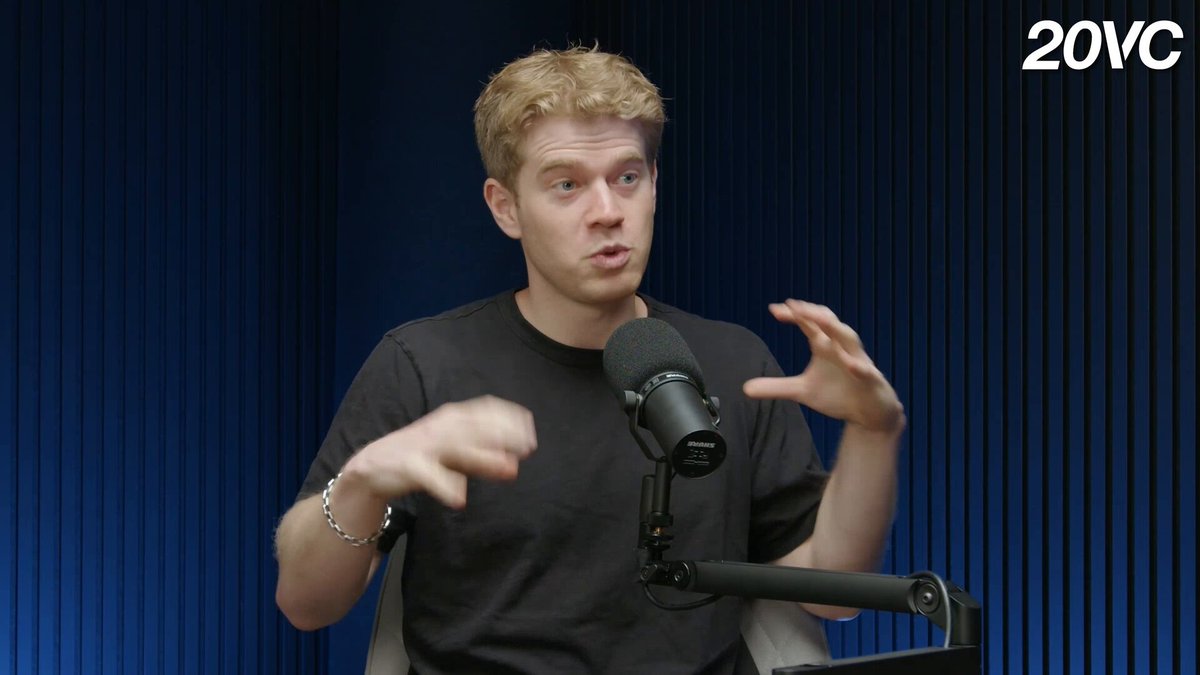






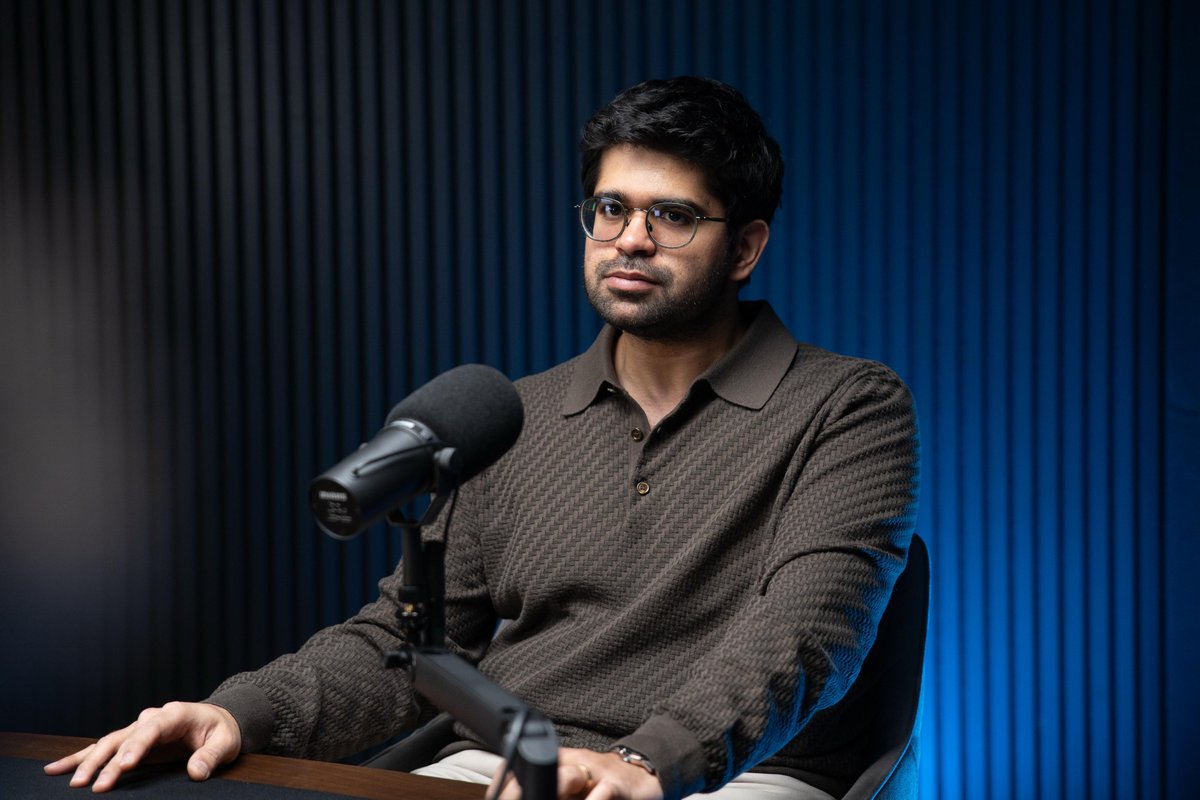


Pinned Tweet

15 Oct 2024
The work you do in private is the work you are rewarded for in public.
Today’s news is 10 years in the making.
$400M raised.
Time to get back to work and work harder than ever.
ft.com/content/7b553b44-7c92…
433
179
3,211
811,784
"The problem with grind culture is that it focuses on intermediate metrics instead of outcomes.
Measuring success by hours worked is like deciding a basketball game based on who sweated the most instead of checking the scoreboard.
Great companies hire great players and judge them on results. If you're forcing crazy hours and beds in the office, you're probably solving for the wrong thing." @matanSF
Love to hear your thoughts @lmcorrigan1 @WillManidis @beffjezos @garrytan
3
2
35
6,853
"Dario's messaging around AI-driven job loss has done real damage.
By framing AI as a force that could eliminate vast swathes of human work, it fuels fear, resistance, and calls to slow down progress.
The criticism is that these narratives often serve fundraising goals in the short term, while overlooking the long-term reality that new industries, new jobs, and new opportunities tend to emerge from every major technological shift." @matanSF
Do you agree? How should that message change moving forward? @JoshuaKushner @vkhosla @mmurph @Benioff @demishassabis
15
7
64
12,512
"So @ivankatrump is one of those rare investors who adds far more than capital.
She combines an exceptional network with genuine generosity, helping founders with the kind of unglamorous, hands-on work that many investors won't do.
The reason founders value her isn't just who she knows, it's how much time and effort she's willing to invest in helping companies succeed." @matanSF
What does no one know that everyone should know about working with Ivanka @jaredkushner @davidsenra @francesca_lab @eladgil
9
3
63
21,307
Call me grumpy or jaded but I really only want to work with founders where what they are working on is their life mission.
51
5
121
15,748
Buy versus build: what are your lessons?
"Just because you can build something doesn't mean you should.
The best companies are ruthless about focusing on the few things they uniquely own and do better than anyone else.
If it's not core to your business or competitive advantage, outsource it and stay focused on what matters." @matanSF
Single biggest advice to founders on build vs buy @benioff @bhalligan @sama @MaxJunestrand
6
5
47
8,880
To all of my insecure male friends in the valley:
Yes, if you are not in SpaceX, Anthropic or OpenAI, yes, you are less of a man.
KIDDING!
Go touch grass, hug a loved one, change a nappy.
Onto the next one.
20
4
164
22,763
Jun 12
If someone solve this problem for 20VC, I will wire them $500.
1. We create compositions in Descript. Clips of good moments.
2. This is done in an audio file by me.
3. My team then have to go through them and make the same clips in the video file of the show.
This wastes so much of the time duplicating work.
The Descript integration with ChatGPT doesn’t work when you ask to “take the compositions made in the audio file and apply the same to video.”
Literally, solve this and $500 is yours.
56
3
65
59,144
Jun 11
There is only one podcast you need to listen to every week to know everything you need to know in tech:
AGENDA:
- Largest IPO Ever: SpaceX
- OpenAI Files to Go Public
- Uber Cuts 23% of HR
- Lovable Hits $500M ARR
- Apple rebuilds Siri on Google Gemini at WWDC
My notes below on this week's show with @jasonlk & @rodriscoll:
1. Why Did Elon Make Such a Strong AI Strategic Play?
Over the last 24 months, Elon Musk built the Colossus clusters from ground zero. Backed by big-picture conviction and the planet’s cheapest cost of capital, he deployed $20 billion to $30 billion upfront ahead of revenue. This bold move established an efficient compute layer, allowing him to lease capacity back to competitors like Google and Anthropic.
2. Why Is Revolut Worth Over $100 Billion While Chime Is Worth $5 Billion?
Revolut commanded a massive $115 billion valuation because legacy European banks were slow, inefficient, and left easy profit margins unprotected. Chime is worth far less because US banks are generally more efficient. A challenger’s valuation is ultimately dictated by the weakness or efficiency of the incumbents it seeks to disrupt.
3. Why Bending Spoons Is an Amazing Business
Bending Spoons scales by acquiring companies, cutting extraneous expenditures, and reducing marketing spend to focus strictly on high-ROI initiatives. It then raises prices aggressively over time. By capitalizing on customer inertia, especially legacy users who rarely churn, it maintains decent net retention and generates significant cash flow.
4. Consumers Don’t Want AI Productivity Tools. They Want to Relax and Be Entertained.
There is no major consumer market for AI productivity tools or complex research in non-working life. Consumers do not want to do extra work when they are off the clock. Instead, they want delightful, engaging experiences because their core desires during downtime are simple: relax and stay entertained.
5. Founders Complaining About VCs Often Haven’t Sold Before
Founders who complain about poor treatment from VCs often reveal that they have never run a real sales pipeline. Selling stock is not fundamentally different from selling any other product. In standard sales, expected deals routinely collapse and prospects ghost you after repeated follow-ups. Fundraising requires getting over it and moving forward.
6. Why Intelligent, Efficient Businesses Are the Best Places for Employees and Investors
Businesses that leverage high intelligence, with AI tokens as a proxy, allow small teams to achieve massive operational output. Because compact teams can accomplish and earn so much through technical leverage, these hyper-efficient organizations can become the best environments for both employees and investors.
3
3
40
17,240
Jun 11
Spotify 👉 open.spotify.com/episode/1aG…
Youtube 👉 youtu.be/jxw7iRVpRoI
Apple Podcasts 👉 podcasts.apple.com/us/podcas…
5
3,368
Jun 11
The Leo Aschenbrenner Effect
"Everyone noticed it when @leopoldasch made such a large investment.
We saw it as validation of what we’re building, but ultimately it’s just another opportunity to deliver.
Every customer and investor gives you credit in advance, and your job is to earn it by executing." @romanchernin

The AI infrastructure race is ON. CapEx spend has never been greater.
At the centre of it: Nebius.
$66BN market cap. Going head-to-head with the largest hyperscalers on the planet.
Leopold Aschenbrenner just made them one of his largest positions.
I sat down with @nebiusai Co-Founder, @romanchernin and I’ve condensed my notes below:
1. How Reducing the Cost of Intelligence Increases Consumption
Reducing the unit cost of intelligence triggers Jevons Paradox: total compute consumption rises as previously uneconomic tasks become viable. At scale, builders move toward tunable open-source architectures and specialized post-training, while frontier labs expand into larger, harder reasoning markets.
2. If Nebius Doubled Pricing, How Would That Impact Demand?
Nebius’s pricing power is capped by customer economics. If inference costs rise too high, customer margins break and demand stalls. The real edge is not nominal GPU pricing, but Total Cost of Ownership: caching, runtime optimization, and distillation can shift token economics by an order of magnitude.
3. If Nebius Had 10x the Capacity, Could They Sell It?
The real question is not whether raw demand exists, but whether Nebius can diversify it. Bare metal concentrates revenue around a few global giants. Moving up the stack into managed infrastructure and specialized inference expands the market to thousands of application developers.
4. What Is the Single Biggest Threat to Nebius?
The biggest threat is extreme consolidation into three to five closed tech empires. If a few conglomerates control the frontier model landscape, independent clouds risk becoming low-margin physical-layer vendors. Survival depends on a broad, democratized ecosystem of independent builders.
5. Who Actually Holds Power Against Nvidia?
Power against Nvidia comes from engineering credibility, not political posturing. Nvidia is deeply engineering-driven, so influence comes from proving technical capability across the stack. Differentiation requires a world-class team that reliably executes and earns operational respect.
6. Surviving the Hyper-CapEx War
Competing with hyperscaler CapEx requires respecting operational timelines. Capital cannot compress a six-month infrastructure bottleneck, but over 18 to 24 months it matters. It lets providers parallelize execution, secure power, lock data centers, and prepare capacity ahead of GPU deployment.
7. The Shark Rule: Move or Die
Cloud infrastructure is a post-sales business: every funding round or contract is only a credit and an opportunity to deliver. Survival requires relentless forward motion, disciplined execution, and focus on daily operations rather than emotional market spikes or consolidation noise.
(links below)
8
8
159
58,497
Jun 11
Why Model Concentration is the Biggest Danger:
"The biggest threat to Nebius is a world that becomes too consolidated.
If 3 to 5 companies end up controlling everything, infrastructure providers become far less important and are reduced to serving a handful of dominant players.
The more decentralized and diverse the AI ecosystem is, the stronger Nebius’ position becomes."
What does no one know about model usage today, that everyone should know @matansf @alexatallah @lqiao @romanchernin
The AI infrastructure race is ON. CapEx spend has never been greater.
At the centre of it: Nebius.
$66BN market cap. Going head-to-head with the largest hyperscalers on the planet.
Leopold Aschenbrenner just made them one of his largest positions.
I sat down with @nebiusai Co-Founder, @romanchernin and I’ve condensed my notes below:
1. How Reducing the Cost of Intelligence Increases Consumption
Reducing the unit cost of intelligence triggers Jevons Paradox: total compute consumption rises as previously uneconomic tasks become viable. At scale, builders move toward tunable open-source architectures and specialized post-training, while frontier labs expand into larger, harder reasoning markets.
2. If Nebius Doubled Pricing, How Would That Impact Demand?
Nebius’s pricing power is capped by customer economics. If inference costs rise too high, customer margins break and demand stalls. The real edge is not nominal GPU pricing, but Total Cost of Ownership: caching, runtime optimization, and distillation can shift token economics by an order of magnitude.
3. If Nebius Had 10x the Capacity, Could They Sell It?
The real question is not whether raw demand exists, but whether Nebius can diversify it. Bare metal concentrates revenue around a few global giants. Moving up the stack into managed infrastructure and specialized inference expands the market to thousands of application developers.
4. What Is the Single Biggest Threat to Nebius?
The biggest threat is extreme consolidation into three to five closed tech empires. If a few conglomerates control the frontier model landscape, independent clouds risk becoming low-margin physical-layer vendors. Survival depends on a broad, democratized ecosystem of independent builders.
5. Who Actually Holds Power Against Nvidia?
Power against Nvidia comes from engineering credibility, not political posturing. Nvidia is deeply engineering-driven, so influence comes from proving technical capability across the stack. Differentiation requires a world-class team that reliably executes and earns operational respect.
6. Surviving the Hyper-CapEx War
Competing with hyperscaler CapEx requires respecting operational timelines. Capital cannot compress a six-month infrastructure bottleneck, but over 18 to 24 months it matters. It lets providers parallelize execution, secure power, lock data centers, and prepare capacity ahead of GPU deployment.
7. The Shark Rule: Move or Die
Cloud infrastructure is a post-sales business: every funding round or contract is only a credit and an opportunity to deliver. Survival requires relentless forward motion, disciplined execution, and focus on daily operations rather than emotional market spikes or consolidation noise.
(links below)
4
8
79
26,267
Jun 10
How education changes in a world of AI
"In a world where everyone has access to intelligence, memorising facts becomes far less important.
The challenge is teaching people how to think, adapt, and continuously learn as industries and careers keep changing.
Education will shift from knowledge acquisition to helping people navigate constant change." @romanchernin
What does no one know about the future of education that everyone should @alliekmiller @emollick @salkhanacademy @AndrewYNg @gaganbiyani
The AI infrastructure race is ON. CapEx spend has never been greater.
At the centre of it: Nebius.
$66BN market cap. Going head-to-head with the largest hyperscalers on the planet.
Leopold Aschenbrenner just made them one of his largest positions.
I sat down with @nebiusai Co-Founder, @romanchernin and I’ve condensed my notes below:
1. How Reducing the Cost of Intelligence Increases Consumption
Reducing the unit cost of intelligence triggers Jevons Paradox: total compute consumption rises as previously uneconomic tasks become viable. At scale, builders move toward tunable open-source architectures and specialized post-training, while frontier labs expand into larger, harder reasoning markets.
2. If Nebius Doubled Pricing, How Would That Impact Demand?
Nebius’s pricing power is capped by customer economics. If inference costs rise too high, customer margins break and demand stalls. The real edge is not nominal GPU pricing, but Total Cost of Ownership: caching, runtime optimization, and distillation can shift token economics by an order of magnitude.
3. If Nebius Had 10x the Capacity, Could They Sell It?
The real question is not whether raw demand exists, but whether Nebius can diversify it. Bare metal concentrates revenue around a few global giants. Moving up the stack into managed infrastructure and specialized inference expands the market to thousands of application developers.
4. What Is the Single Biggest Threat to Nebius?
The biggest threat is extreme consolidation into three to five closed tech empires. If a few conglomerates control the frontier model landscape, independent clouds risk becoming low-margin physical-layer vendors. Survival depends on a broad, democratized ecosystem of independent builders.
5. Who Actually Holds Power Against Nvidia?
Power against Nvidia comes from engineering credibility, not political posturing. Nvidia is deeply engineering-driven, so influence comes from proving technical capability across the stack. Differentiation requires a world-class team that reliably executes and earns operational respect.
6. Surviving the Hyper-CapEx War
Competing with hyperscaler CapEx requires respecting operational timelines. Capital cannot compress a six-month infrastructure bottleneck, but over 18 to 24 months it matters. It lets providers parallelize execution, secure power, lock data centers, and prepare capacity ahead of GPU deployment.
7. The Shark Rule: Move or Die
Cloud infrastructure is a post-sales business: every funding round or contract is only a credit and an opportunity to deliver. Survival requires relentless forward motion, disciplined execution, and focus on daily operations rather than emotional market spikes or consolidation noise.
(links below)
3
2
31
11,447
Jun 10
Nebius Could Double Pricing and It Still Would Not Impact Demand…
"We recently raised prices and still have significant demand pressure on supply.
The challenge isn’t finding the highest possible price, it’s finding the level where customers can build sustainable businesses.
If our customers’ economics work, they can grow, and we can grow alongside them." @romanchernin
The AI infrastructure race is ON. CapEx spend has never been greater.
At the centre of it: Nebius.
$66BN market cap. Going head-to-head with the largest hyperscalers on the planet.
Leopold Aschenbrenner just made them one of his largest positions.
I sat down with @nebiusai Co-Founder, @romanchernin and I’ve condensed my notes below:
1. How Reducing the Cost of Intelligence Increases Consumption
Reducing the unit cost of intelligence triggers Jevons Paradox: total compute consumption rises as previously uneconomic tasks become viable. At scale, builders move toward tunable open-source architectures and specialized post-training, while frontier labs expand into larger, harder reasoning markets.
2. If Nebius Doubled Pricing, How Would That Impact Demand?
Nebius’s pricing power is capped by customer economics. If inference costs rise too high, customer margins break and demand stalls. The real edge is not nominal GPU pricing, but Total Cost of Ownership: caching, runtime optimization, and distillation can shift token economics by an order of magnitude.
3. If Nebius Had 10x the Capacity, Could They Sell It?
The real question is not whether raw demand exists, but whether Nebius can diversify it. Bare metal concentrates revenue around a few global giants. Moving up the stack into managed infrastructure and specialized inference expands the market to thousands of application developers.
4. What Is the Single Biggest Threat to Nebius?
The biggest threat is extreme consolidation into three to five closed tech empires. If a few conglomerates control the frontier model landscape, independent clouds risk becoming low-margin physical-layer vendors. Survival depends on a broad, democratized ecosystem of independent builders.
5. Who Actually Holds Power Against Nvidia?
Power against Nvidia comes from engineering credibility, not political posturing. Nvidia is deeply engineering-driven, so influence comes from proving technical capability across the stack. Differentiation requires a world-class team that reliably executes and earns operational respect.
6. Surviving the Hyper-CapEx War
Competing with hyperscaler CapEx requires respecting operational timelines. Capital cannot compress a six-month infrastructure bottleneck, but over 18 to 24 months it matters. It lets providers parallelize execution, secure power, lock data centers, and prepare capacity ahead of GPU deployment.
7. The Shark Rule: Move or Die
Cloud infrastructure is a post-sales business: every funding round or contract is only a credit and an opportunity to deliver. Survival requires relentless forward motion, disciplined execution, and focus on daily operations rather than emotional market spikes or consolidation noise.
(links below)
6
12
220
47,547
Jun 10
If Nebius had 10x the capacity, could they sell it?
"The real question isn’t whether we could sell 10x more capacity, it’s how we build the right portfolio of demand.
As you move up the stack, from bare metal to infrastructure to inference, the number of potential customers expands dramatically.
The higher up the stack you go, the more value you can create and the larger the market becomes." @romanchernin
How do you balance between revenue grab when the dollars are on the table vs building a portfolio of customers @BrendanFoody @aliansarinik @matansf @ceo_clickhouse
The AI infrastructure race is ON. CapEx spend has never been greater.
At the centre of it: Nebius.
$66BN market cap. Going head-to-head with the largest hyperscalers on the planet.
Leopold Aschenbrenner just made them one of his largest positions.
I sat down with @nebiusai Co-Founder, @romanchernin and I’ve condensed my notes below:
1. How Reducing the Cost of Intelligence Increases Consumption
Reducing the unit cost of intelligence triggers Jevons Paradox: total compute consumption rises as previously uneconomic tasks become viable. At scale, builders move toward tunable open-source architectures and specialized post-training, while frontier labs expand into larger, harder reasoning markets.
2. If Nebius Doubled Pricing, How Would That Impact Demand?
Nebius’s pricing power is capped by customer economics. If inference costs rise too high, customer margins break and demand stalls. The real edge is not nominal GPU pricing, but Total Cost of Ownership: caching, runtime optimization, and distillation can shift token economics by an order of magnitude.
3. If Nebius Had 10x the Capacity, Could They Sell It?
The real question is not whether raw demand exists, but whether Nebius can diversify it. Bare metal concentrates revenue around a few global giants. Moving up the stack into managed infrastructure and specialized inference expands the market to thousands of application developers.
4. What Is the Single Biggest Threat to Nebius?
The biggest threat is extreme consolidation into three to five closed tech empires. If a few conglomerates control the frontier model landscape, independent clouds risk becoming low-margin physical-layer vendors. Survival depends on a broad, democratized ecosystem of independent builders.
5. Who Actually Holds Power Against Nvidia?
Power against Nvidia comes from engineering credibility, not political posturing. Nvidia is deeply engineering-driven, so influence comes from proving technical capability across the stack. Differentiation requires a world-class team that reliably executes and earns operational respect.
6. Surviving the Hyper-CapEx War
Competing with hyperscaler CapEx requires respecting operational timelines. Capital cannot compress a six-month infrastructure bottleneck, but over 18 to 24 months it matters. It lets providers parallelize execution, secure power, lock data centers, and prepare capacity ahead of GPU deployment.
7. The Shark Rule: Move or Die
Cloud infrastructure is a post-sales business: every funding round or contract is only a credit and an opportunity to deliver. Survival requires relentless forward motion, disciplined execution, and focus on daily operations rather than emotional market spikes or consolidation noise.
(links below)
13
14
228
72,917
Jun 10
Yesterday @AravSrinivas told me power was the most significant bottleneck to AI.
Today I had KR Sridhar, CEO of Bloom Energy on 20VC.
1. We are not in an AI infrastructure bubble. AI is a hockey stick on a hockey stick.
2. We are now manufacturing intelligence, and the only input is electricity.
3. Power has never moved to the edge, and that's the whole game.
4. Turbines are a band-aid on mechanical-age infrastructure.
5. After food, energy sovereignty matters more than anything, including model sovereignty.
6. Don't short the US or Silicon Valley.
7. AI will be the best thing that ever happened to energy.
8. Funding Russia for energy while funding their adversary is illogical, and avoidable.
9. Bring power to the edge and you democratise access, which changes geopolitics itself.
15
3
54
9,870
One of the best shows I have ever done.
1. The biggest problem today is power.
2. We will see large resistance to data centre buildout continue.
3. Micron will be worth more than Meta.
4. Export controls have meant China has developed their own architecture.
Alongside their ability to build data centres faster and cheaper, this makes them a real threat.
This and so much more on Monday but holy s*** this was like next level @AravSrinivas
18
19
324
61,453
The AI infrastructure race is ON. CapEx spend has never been greater.
At the centre of it: Nebius.
$66BN market cap. Going head-to-head with the largest hyperscalers on the planet.
Leopold Aschenbrenner just made them one of his largest positions.
I sat down with @nebiusai Co-Founder, @romanchernin and I’ve condensed my notes below:
1. How Reducing the Cost of Intelligence Increases Consumption
Reducing the unit cost of intelligence triggers Jevons Paradox: total compute consumption rises as previously uneconomic tasks become viable. At scale, builders move toward tunable open-source architectures and specialized post-training, while frontier labs expand into larger, harder reasoning markets.
2. If Nebius Doubled Pricing, How Would That Impact Demand?
Nebius’s pricing power is capped by customer economics. If inference costs rise too high, customer margins break and demand stalls. The real edge is not nominal GPU pricing, but Total Cost of Ownership: caching, runtime optimization, and distillation can shift token economics by an order of magnitude.
3. If Nebius Had 10x the Capacity, Could They Sell It?
The real question is not whether raw demand exists, but whether Nebius can diversify it. Bare metal concentrates revenue around a few global giants. Moving up the stack into managed infrastructure and specialized inference expands the market to thousands of application developers.
4. What Is the Single Biggest Threat to Nebius?
The biggest threat is extreme consolidation into three to five closed tech empires. If a few conglomerates control the frontier model landscape, independent clouds risk becoming low-margin physical-layer vendors. Survival depends on a broad, democratized ecosystem of independent builders.
5. Who Actually Holds Power Against Nvidia?
Power against Nvidia comes from engineering credibility, not political posturing. Nvidia is deeply engineering-driven, so influence comes from proving technical capability across the stack. Differentiation requires a world-class team that reliably executes and earns operational respect.
6. Surviving the Hyper-CapEx War
Competing with hyperscaler CapEx requires respecting operational timelines. Capital cannot compress a six-month infrastructure bottleneck, but over 18 to 24 months it matters. It lets providers parallelize execution, secure power, lock data centers, and prepare capacity ahead of GPU deployment.
7. The Shark Rule: Move or Die
Cloud infrastructure is a post-sales business: every funding round or contract is only a credit and an opportunity to deliver. Survival requires relentless forward motion, disciplined execution, and focus on daily operations rather than emotional market spikes or consolidation noise.
(links below)
19
23
204
246,878
Spotify 👉 open.spotify.com/episode/0ir…
Youtube 👉 youtu.be/aXAH3bdJ2cg
Apple Podcasts 👉 podcasts.apple.com/us/podcas…
3
6
67
78,211
10 years ago I was an intern at a fund.
I remember the first morning, one of the managing partners saw me waiting in the waiting room and took 30 mins out for a coffee and to welcome me.
Today, he pinged me after 8 years of not being in touch and asked for a favour for his daughter’s business.
I did it without pause. Problem now solved.
Karma is real. Be kind to the kid waiting in the wait room looking nervous.
43
15
742
59,829