Dedicated to uncovering hidden truths, exposing misinformation, and shining a light on the facts that matter. We dig deep, analyze the evidence, and share! 🇨🇦
Joined January 2023
- Tweets 1,576
- Following 10
- Followers 10,279
- Likes 1,075
376 Photos and videos







14 Oct 2025
Actually, food is taxed in Canada — just not always where you think. 🍞💰
People say “food isn’t taxed,” but that’s only half true. The government still takes its share — either at the checkout or through every step that gets the food to your table.
Before using MAGA as an excuse to try and be smart learn where tax applies first ether by researching or just buying your own groceries.
Here’s the breakdown 👇
🧾 Foods that ARE taxed (you pay GST/HST on these):
🍬 Candy, chocolate bars, and confectionery
🥤 Soft drinks, energy drinks, and sweetened beverages
🍟 Chips, popcorn, pretzels, and snack foods
🌯 Sandwiches, wraps, and hot prepared meals
☕ Hot coffee, tea, or cocoa sold ready to drink
🍱 Sushi trays, fruit platters, or cheese platters
🍺 Alcoholic beverages (beer, wine, liquor)
🍰 Baked goods sold in single servings (like a donut or muffin to-go)
🧊 Ice cream sold individually (cone, cup, bar, etc.)
🧃 Juices less than 25% real juice
🛒 Foods that are NOT taxed (0% GST/HST – “basic groceries”):
🥦 Fresh fruits and vegetables
🍗 Raw meat, poultry, and fish
🥚 Eggs and dairy (milk, butter, cheese, yogurt)
🍞 Bread, flour, sugar, rice, grains, and cereal
🧄 Ingredients for home cooking and baking
🧊 Frozen fruits, vegetables, or meat (unprepared)
☕ Coffee beans and tea leaves (if you brew it yourself)
⚙️ But don’t forget — everything before it reaches you is taxed:
🚜 Farm supplies like fertilizer, fuel, and machinery
🏭 Processing, packaging, and freezing services
🚛 Transportation, warehousing, and delivery
🏪 Retail operations (utilities, maintenance, labour)
🌍 Import duties and licensing fees
So even if groceries seem “tax-free,” every link in the chain — from the farm to the factory to the store — is still being taxed. You just don’t see it on your grocery receipt.
Bottom line:
➡️ Basic groceries = 0% tax at checkout
➡️ Processed, prepared, or “ready-to-eat” food = taxed
➡️ Everything else along the way = taxed before it hits the shelf
Most people don't eat clean which means your paying lots of tax on foods full of ADDITIVES....
So Pierre is right and your in denial
@PierrePoilievre #pierrepoilievre #taxonfood #Canada #markcarney #learnbeforeyouspeak #ontario #liberal #Conservative you all fighting each other instead of working together is why we will fail and you will lose.
14 Oct 2025

There are zero taxes on groceries
7
12
46
2,105
16 Sep 2025
Why is no one talking about this?
She’s still on the World Economic Forum Board of Trustees, pledging loyalty to their “code of conduct.”
Mark Carney is even godfather to her kids.
Yet this WEF insider is still in our government representing Canada. Forgotten? Or ignored?


4
18
38
1,124
22 Aug 2025
COVID is the flu rebranded. I didn’t take the shot because I have freedom of choice — and because I actually believe in my body.
Why? Because I don’t shovel garbage into it. I don’t live off chemical-filled foods, candy, pop, chips, or greasy takeout. I don’t smear myself with toxic soaps and creams, and I definitely don’t rely on cough syrup or Tylenol to get by.
You can sneer at people who didn’t blindly follow government orders, but here’s the truth: those who lined up for shot after shot are still getting sick — still catching the same flu they were promised protection from. Meanwhile, people like me who stayed away from it haven’t been sick at all.
I haven’t had the flu, a cough, or even a cold in over 25 years. That’s not luck — that’s discipline, responsibility, and actually respecting my health. Maybe if more people focused on strengthening their bodies instead of outsourcing their health to government narratives, they’d see the difference.
22 Aug 2025

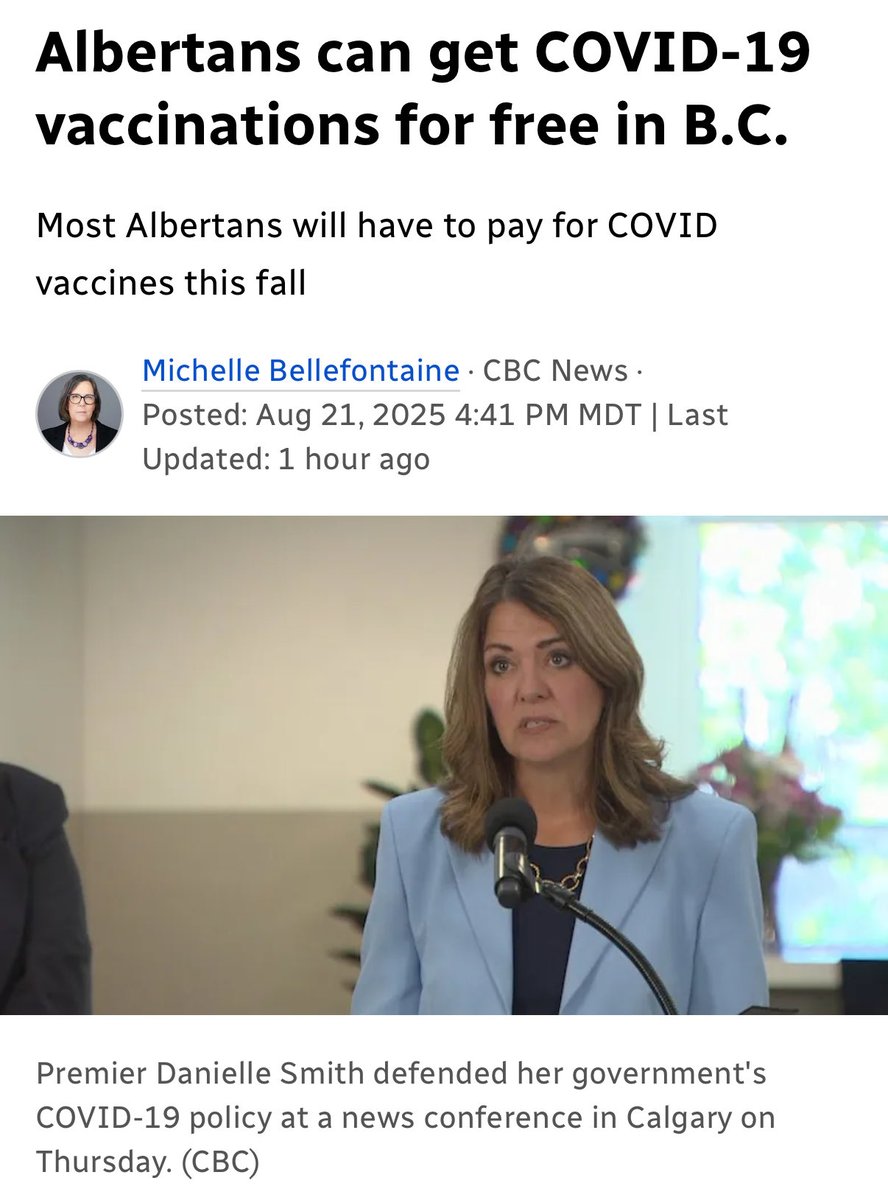
This is what we’ve been reduced to by our anti-vax, MAGA-North Premier. In order to look after our health, we’re going to have to sneak across the border and accept the charity of our neighbours. Big thanks to our BC cousins for looking after Albertans when our Premier won’t.
9
11
54
1,853
19 Aug 2025
WE DON’T WANT TO SPEND ANOTHER DOLLAR ON THIS WAR. Ukraine will drag this out forever while the Liberal government drains our wallets to play hero on the world stage.
I’m done footing the bill for your reckless spending. YOU are the failure, Prime Minister
19 Aug 2025

This morning, I spoke again with leaders of the Coalition of Willing.
We are working closely with President Zelenskyy and our partners to strengthen military and financial support for Ukraine, and secure lasting peace.
2
16
71
1,289
18 Aug 2025
FUCKING IDIOT. Do any liberals have any brains at all?
I swear they focus on just wanting free money they don't get the concept of why this is needed.
📊 Why Governments Consider Raising the Retirement Age
1. People Are Living Longer
When retirement ages were first set around 65, average life expectancy was often only 67–70.
Today, in countries like Canada, the U.S., and much of Europe, life expectancy is 80 years.
That means retirees are drawing 15–20 years of benefits instead of 5–10 like in earlier decades.
---
2. Workers vs. Retirees (Demographics)
Pension systems rely on current workers paying for current retirees (pay-as-you-go).
As birth rates decline and the population ages, there are fewer workers supporting more retirees.
Example: in Canada, the worker-to-retiree ratio was about 7:1 in 1970, but is projected to be 2:1 by 2035.
Raising the retirement age helps balance this by keeping people in the workforce longer.
---
3. Financial Pressures on Pension Funds
If people retire earlier and live longer, they take out more than they put in over their lifetime.
Raising the age reduces the number of years benefits are paid and increases the number of years contributions are made.
For programs like CPP (Canada Pension Plan) or Social Security (U.S.), this helps delay insolvency.
---
4. Encouraging Longer Workforce Participation
Many 65-year-olds today are healthier and more capable of working than past generations.
Extending working years means:
More tax revenue.
Less strain on healthcare and pension systems.
Higher individual savings for retirement.
---
⚖️ Trade-Offs
Pros: More sustainable pension systems, reduced government debt, better alignment with longevity.
Cons: Tougher on people in physically demanding jobs, or those with poorer health/lower life expectancy. These groups may not be able to work longer, and end up disadvantaged.
---
✅ Bottom line:
Yes — raising retirement age from 65 to 67 is mostly because people are living longer, healthier lives, and are drawing benefits for much longer than originally designed. It’s a financial balancing act to keep pension systems from running out of money.
#PierrePoilievre #markcareny
#liberals #Conservatives

BRCF RESIDENTS
HERE IS YOUR MP @PierrePoilievre VOTING TO INCREASE THE RETIREMENT AGE FROM 65 TO 67 WHILE HE COULD COLLECT A BIG FAT PENSION AT AGE 30 FROM THE SAME SENIORS.
PIERRE DOESN'T CARE ABOUT SENIORS!
HE IS A LIAR , A FAKE & A PHONEY!!
2
15
48
1,895
7 Aug 2025
To the Doctors in the West —
Let’s be brutally honest for a moment. Most of you aren’t healers anymore. You’re sales reps in white coats. You’ve been trained — not to cure — but to prescribe. To push pills, to push treatments, to push anything that keeps the patient coming back.
The truth? You were indoctrinated by a system that’s designed to profit from sickness, not health. Big Pharma doesn’t make money from healthy people — they need customers for life. And guess who’s trained to create those customers? You are.
You’ve been told that those of us who’ve done our own research — who understand fasting, whole foods, and plant-based or clean carnivore diets — are “conspiracy theorists.” Why? Because the moment people eat additive-free, stay away from processed garbage, and allow their bodies to heal naturally, your prescriptions, treatments, and repeat appointments become useless.
💡 Here’s the part you ignore:
Over 95% of chronic illnesses in the West are directly linked to the chemical soup in our food — artificial colors, preservatives, emulsifiers, stabilizers, and countless additives that our bodies were never designed to process. The scientific evidence is there, buried in studies you’re never shown in medical school because your education is funded and shaped by the same corporations selling the drugs.
When people strip away the additives — whether they go carnivore, plant-based, or simply whole-food clean eating — their bodies do something miraculous:
Inflammation drops
Autoimmune symptoms fade
Energy returns
Mental clarity sharpens
“Incurable” conditions vanish
It’s not magic. It’s common sense. Remove the toxins, the body heals.
But you don’t talk about that. Because there’s no profit in fasting. There’s no recurring revenue in “stop eating chemicals.” There’s no billion-dollar ad campaign for clean water and sunlight.
So instead, you keep marketing the lie that only pharmaceuticals can save us — while your patients get sicker, fatter, more depressed, and more dependent on the very system that’s draining them.
The truth is simple:
A sick population = profit.
A healthy population = bankruptcy for your industry.
And deep down, many of you know it.
🖕
7 Aug 2025

DOCTORS WANT TO MAKE SICK PEOPLE BETTER THATS LITERALLY WHY WE DO OUR JOBS STOP LYING ABOUT OUR PROFESSION
4
18
66
1,806
7 Aug 2025
Still a bunch of talk and no action.
Stop tweeting do something then update us.
This is getting noticeably stupid.
Let's lead on Canadians with all this talk and promises with no action for another 140 days...
Expert negotiator, business man I'm wondering did it take this long for you to make deals in the private sector considering the 512 investments that you have seems like you make them pretty quickly wireless sudden those skills are not happening for you now?
7 Aug 2025
We’ll build big things that will transform our economy — ports, bridges, energy corridors, and other major infrastructure projects — in partnership with Indigenous Peoples.
Thank you to Métis leadership for meeting today to discuss these opportunities, and how we will move forward, together.
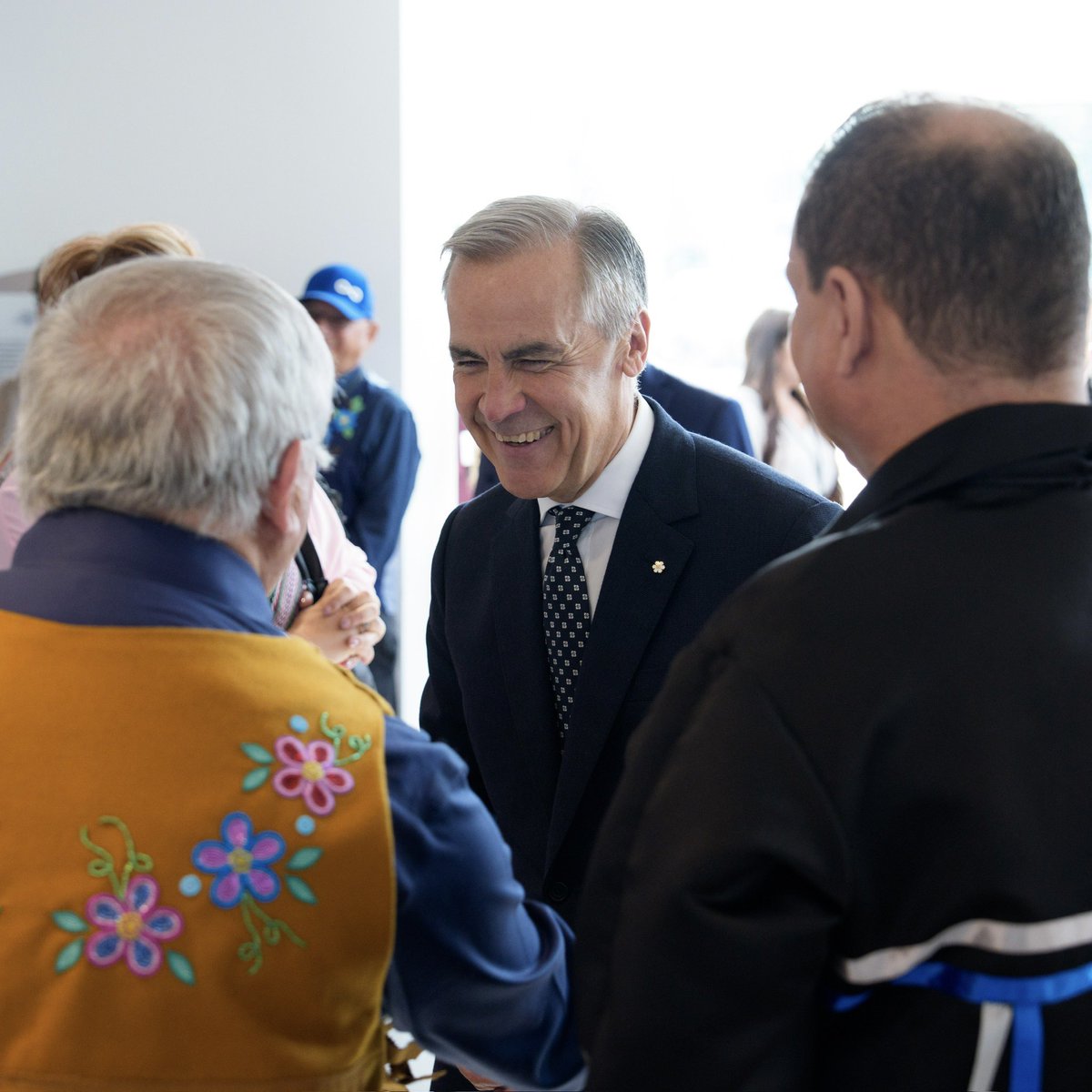
ALT Prime Minister Carney attends the Métis Major Projects Summit and meets with Métis leadership.
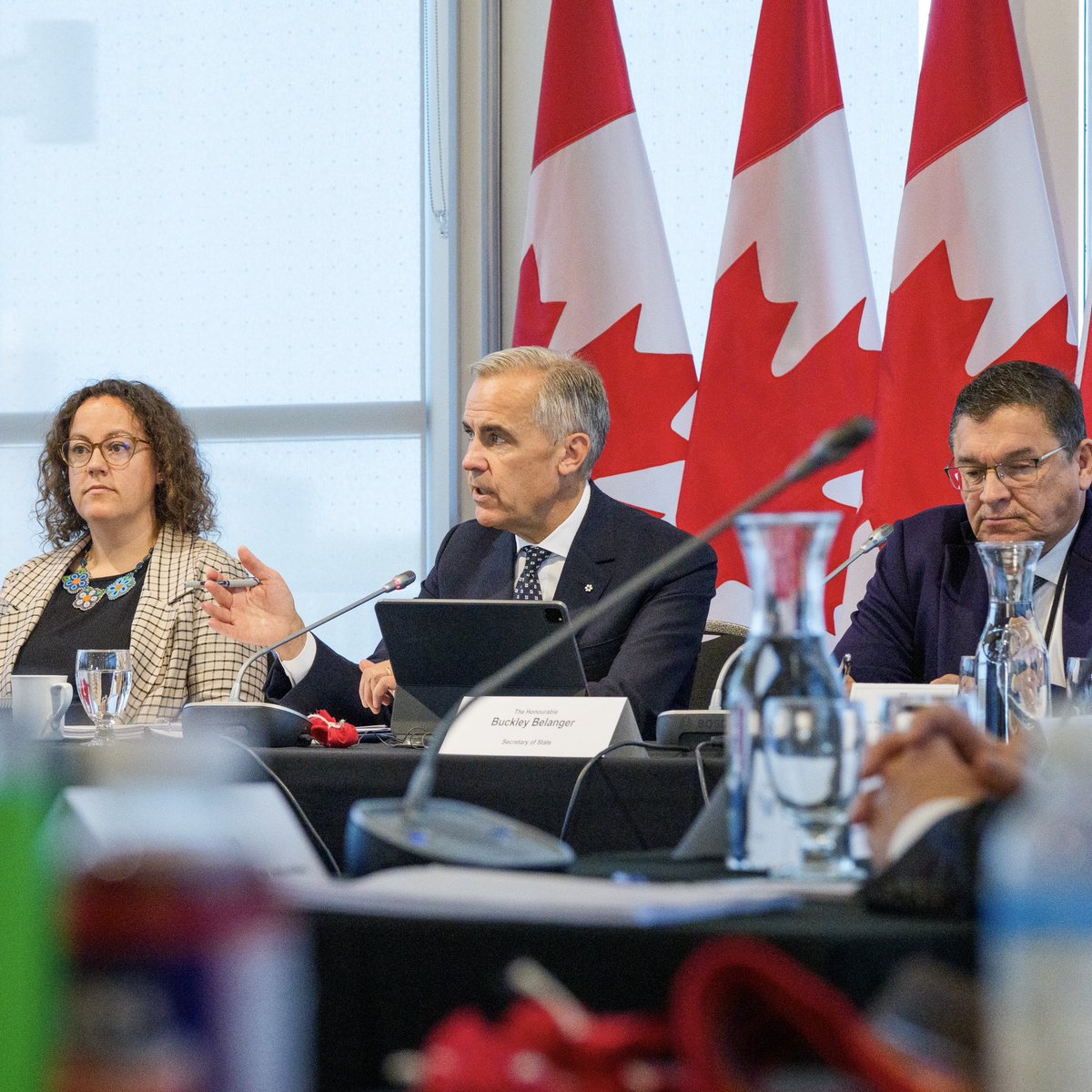
ALT Prime Minister Carney attends the Métis Major Projects Summit and meets with Métis leadership.
10
28
102
1,756
22 Jul 2025
🧱 Why Did Trade Restrictions Exist Between Provinces?
1. Constitutional Fragmentation (1867)
Canada’s Constitution Act gave provinces significant control over areas like property, civil rights, natural resources, and local commerce.
This meant provinces could create their own rules for business operations, certifications, regulations, etc., even if it interfered with other provinces’ products or services.
2. Protectionism
Provinces often wanted to protect their own industries, jobs, and revenue sources by making it harder for out-of-province businesses to compete locally.
3. Licensing, Regulations, and Standards
Different rules for trucking, alcohol sales, building codes, professional certifications (like electricians or nurses), and product standards led to non-tariff trade barriers.
4. Alcohol and Crown Corporations
Many restrictions stemmed from provincial control of alcohol through government monopolies (e.g., LCBO, SAQ) which refused to allow easy cross-border liquor sales to protect their revenues.
---
🧑💼 Who Is Responsible? Which Parties?
❌ ALL parties are responsible at different times:
Liberal Governments (Federal & Provincial)
Often promoted “national unity” while avoiding battles over provincial autonomy.
The Chrétien and Trudeau (Sr.) governments did little to break interprovincial trade barriers.
Trudeau Jr. signed the Canadian Free Trade Agreement (CFTA) in 2017, but it had limited enforcement and exemptions that left most restrictions in place.
Conservative Governments
Mulroney’s Conservatives pushed hard for free trade with the U.S. (FTA and NAFTA) but didn’t eliminate barriers between provinces.
Harper’s Conservatives were more vocal about internal trade but didn’t make major constitutional or legal changes to fix it.
Provincial Governments (all stripes)
NDP, Liberal, Conservative, and other provincial parties all protected their provincial turf.
Premiers often talked about free trade but resisted change when it affected their revenues, control, or key industries.
---
📜 Notable Example of Attempted Reform:
Agreement on Internal Trade (AIT) – 1995
Aimed to reduce barriers, but was weak and non-binding.
Canadian Free Trade Agreement (CFTA) – 2017
Replaced the AIT under Trudeau's Liberal government.
Covered more sectors but included over 130 pages of exceptions.
No real penalties for provinces who ignored it.
---
💥 Who’s Fighting It Now?
Pierre Poilievre (CPC Leader) has repeatedly criticized interprovincial trade barriers and has said he would:
> “Use the federal power of trade and commerce to knock down these ridiculous walls between provinces.”
He and others argue that Canada has freer trade with the U.S. than between our own provinces, which is ridiculous in a supposedly unified country.
---
🧠 Bottom Line:
It’s not just one party’s fault. Trade restrictions are the result of decades of political cowardice, provincial self-interest, and federal unwillingness to assert authority.
Every major federal and provincial party has contributed to keeping the barriers in place — either by defending their own turf or by failing to enforce stronger internal free trade rules.
If you're looking for a single party or person to blame — blame all of them for allowing Canada to have a dysfunctional internal economy while preaching free trade abroad.
Everyone has promised but never made it happen Mark has used it as a tactic to keep votes.
Regardless it's needed decades ago but all governments didn't do it

Why oh why were there ever trade restrictions between provinces at all?
1
7
25
1,133
22 Jul 2025
🚨 Mark Carney – First 130 Days in Office (Since March 14, 2025)
No spin. Just facts. Good or bad.
FACKING PEOPLE ARE SLOW AND EASILY CONTROLLED AND BLIND TO SEE
MORE SO THE LIBERALS. 8.4 MILLION OF YOUS.
I DONT SUPPORT PIERRE OR CARNEY I DONT SUPPORT GOVERNMENT PERIOD USE THAT ARGUMENT ELSE WHERE
👇👇👇 READ
---
✅ What He Has Done
🔧 Scrapped the consumer carbon tax – Yes, he removed the direct tax at the pump and on home heating.
👉 BUT here's what they don't tell you:
On the same day, the industrial carbon tax was raised — and will keep rising every single year.
So you're still paying the price — just hidden in your grocery bill, fuel cost, and everything you buy.
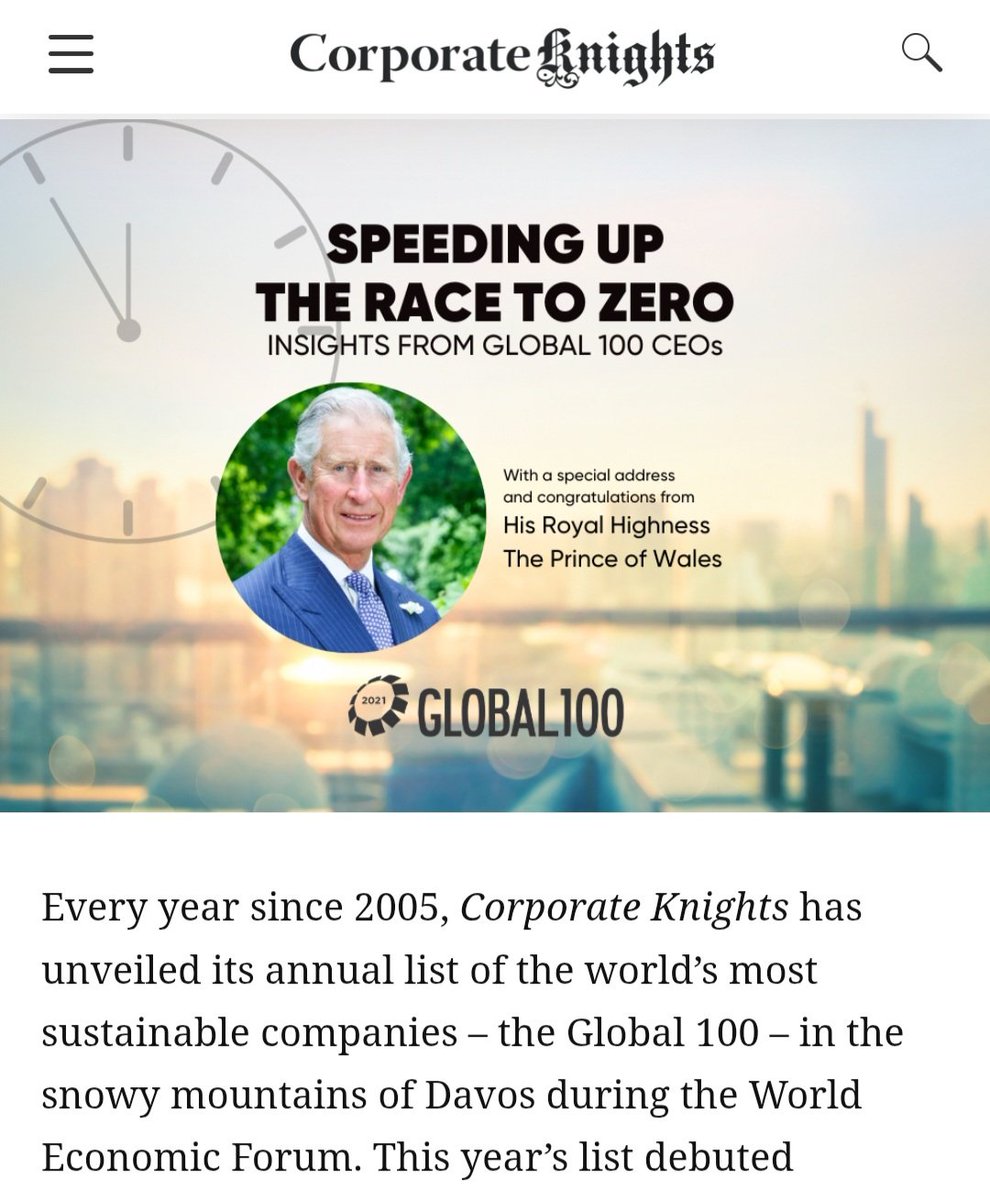
🌍 G7 Host & Global Diplomacy – Met with King Charles III. Hosted the 2025 G7 Summit in Alberta. Invited Modi and Zelenskyy. Reinforced his globalist climate finance agenda.
📜 Bill C‑5 (“One Canadian Economy Act”) – Reduced internal trade barriers and streamlined infrastructure approvals.
First Nations called it a betrayal. Business groups cheered. Canadians? Still waiting for impact.
🪖 Boosted NATO Spending – Committed to 2% of GDP by 2026 and 5% by 2035.
That’s billions to military contracts while Canadians can’t afford housing or groceries.
🤝 Restarted Talks with India – Relations thawed. Pledged to revive trade negotiations. Still no deal signed.
---
❌ What He Hasn't Done
💸 Still no cost-of-living relief – No help on rent. No help on fuel. No help on food.
Promised a “middle-class rescue” — hasn’t delivered a dime.
🏠 No housing affordability plan – No land reform. No construction bill. No rent control. No tax breaks.
Housing is worse today than when he took office.
📉 No green incentive plan – Removed the consumer carbon tax but replaced it with nothing.
Emissions pricing still exists — just hidden behind the scenes. Still punishing Canadians.
📉 No trade deals – Not one new trade deal signed. Not even a framework.
**🇺🇸 No U.S. agreement – Carney campaigned as a “master negotiator” who could handle Trump and restore Canada–U.S. relations.
👉 130 days in, still no deal. No tariff relief. No progress.
In fact, he’s worsened U.S. relations by posturing on climate and ESG, pushing the U.S. further away.
📄 Still hasn’t released a federal budget – Canadians still don’t know how their money is being spent or how programs will be funded.
No budget = no accountability. Period.
---
📊 Carney’s 130-Day Report Card
AreaWhat He DidWhat He Didn't
Carbon TaxCut consumer portionRaised industrial portion — costs still rising
Climate PolicyG7 climate pushNo green incentive system delivered
Foreign AffairsG7 host, India talksNo U.S. deal. Relations deteriorating
MilitaryBoosted NATO spendingNo help for struggling Canadians
Domestic EconomyPassed Bill C‑5No budget. No housing plan. No cost relief
Trade DealsTalked with IndiaDelivered zero signed trade deals
---
🔥 Bottom Line
Mark Carney sold himself as a polished economist, global statesman, and expert dealmaker.
So far? No budget. No U.S. deal. No cost-of-living relief.
He removed one tax, raised another, made headlines abroad — but Canadians are still paying more, earning less, and falling further behind.
He’s not fixing the country.
He’s polishing the global image — while you pick up the tab.

Trade deal with Mexico today.
Remind me exactly what your guy is doing right now?
Riiiight, he lost his election. So he is busy trying to win a by election to desperately try to hold his position. But currently he’s squatting in Stornoway as an unelected …. Squatter.
29
58
1,894
22 Jul 2025
I am only retweeting us to come back to it a year from now or 2 years from now just as I follow-up...
22 Jul 2025

Our nation will rise to the very top with you Mark!!! Everyday is 1 step closer to being the biggest energy superpower on the planet
1
3
21
829
20 Jul 2025
📢 Public Service Announcement:
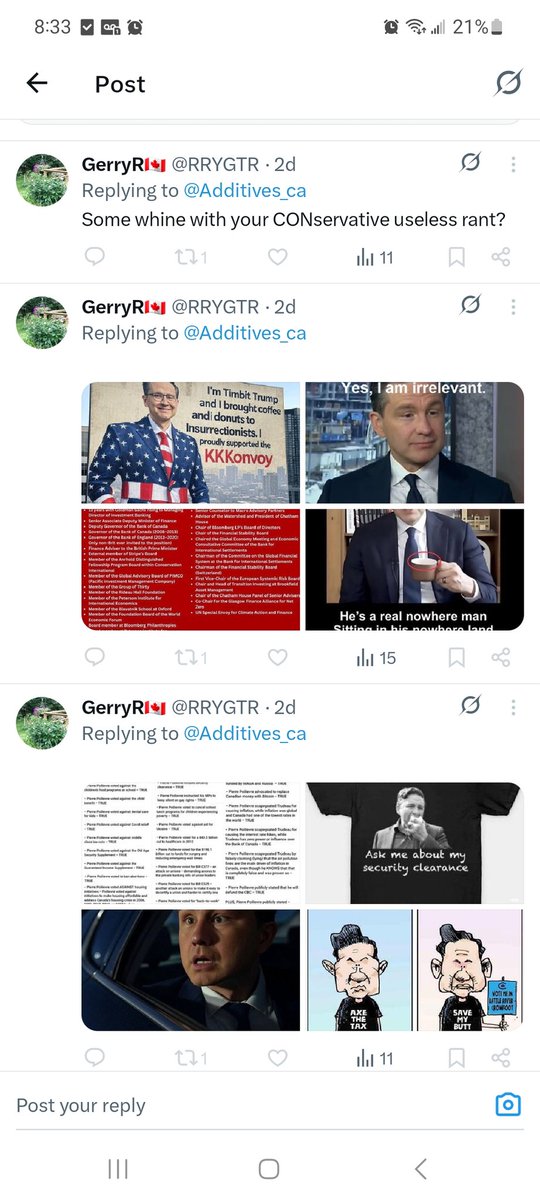
To all the Liberals jumping into my replies just to block me immediately after — let me make this clear:
🛑 I don’t support any political party. Not Liberal. Not Conservative. None of them.
So before you foam at the mouth trying to label me “CONservative” or “alt-right,” understand this:
I don’t vote for puppets.
I don’t pick a team in a rigged game.
I call out corruption, hypocrisy, and systems that fail everyday Canadians — no matter which party’s in power.
---
🇨🇦 Canada’s system is a joke. You get to “choose” between 5 parties — but all it does is divide the population into angry, tribal mobs, each defending their “side” while the people up top laugh.
They don’t serve you.
They manage you.
They control your energy, your anger, your division — and use it to push whatever corporate-backed, globalist policy they want next. While you're busy screaming "CONservative" or "Libtard," they’re busy raising your cost of living and lowering your quality of life.
---
⚠️ 4 years from now, after this Liberal term ends — NOTHING will be fixed.
Vote in the Conservatives again — still NOTHING will be fixed.
Because that’s the point.
It’s not broken. It’s rigged.
Every party that’s run this country — Liberal, Conservative, or NDP — has failed to:
Lower the cost of living
Raise real wages
Give you better access to healthy food
Make life less stressful for working families
Restore Canadian sovereignty
Protect truth, transparency, and unity
They’ve all FAILED. Every. Single. One.
---
And if that hurts your feelings?
Good.
Because maybe it’s time you stop being a party cheerleader, wake up, and realize this system isn’t designed to empower you.
It's designed to distract you.
You are not free in a system that weaponizes division, censors dissent, and lets billionaires write the rules behind closed doors while you cheer for their puppets.
#WakeUpCanada
#NotLeftNotRight
#SystemRigged
#DivideAndConquer
#NoPartyLoyalty
#CanadianUnity
#WeDeserveBetter
#CostOfLivingCrisis
#FailedByThemAll
#liberals
#Conservatives
#ndp
#markcarney
4
18
64
1,144
20 Jul 2025
You trust the ethics commissioner? That explains everything.
The Office of the Ethics Commissioner in Canada has no real teeth, and no one should pretend it's a pillar of integrity. It answers to Parliament, not the people. It has no power to enforce criminal charges, and its former commissioner Mario Dion resigned midway through multiple investigations, including ones involving Trudeau and Liberal ministers. Cozy, isn’t it?
Let’s not pretend this office holds elites accountable.
Now to your claim about “right-wing nonsense” — I don’t play that left-right game. That illusion is exactly how corrupt actors keep people divided while they rob everyone blind. I believe in abolishing centralized government altogether and replacing it with decentralized, blockchain-based systems where people vote directly, transparently, and without insider backdoor deals or media manipulation.
Now back to Carney — he:
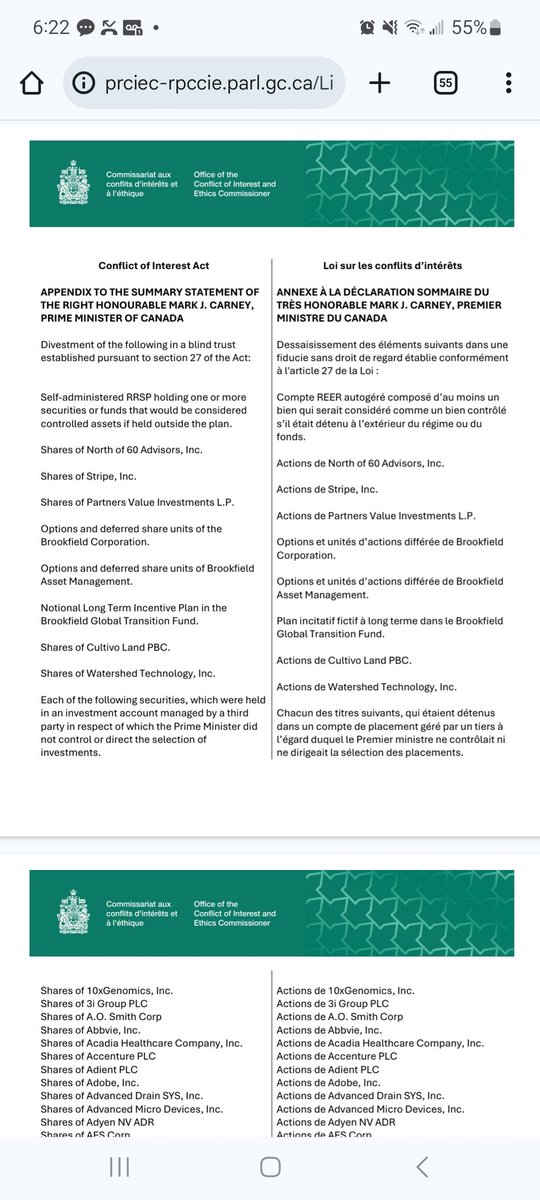
Held 573 company holdings while positioned to influence Canada’s pandemic recovery, ESG policies, digital currency infrastructure, and climate finance.
Claimed they were in a “blind trust” — but even blind trusts require divestment or recusal, especially when you’re giving global economic advice during a crisis.
Was vice chair of Brookfield while also shaping global climate policy — that’s not “normal,” that’s textbook regulatory capture.
Whether Liberal or Conservative, political puppets serve financial empires, not the public. Carney is a globalist insider, groomed by Goldman Sachs, the WEF, and central banks, not elected by the people.
So don’t come at me with party lines or ethics commissioner smoke screens.
Come back when you’re ready to talk about tearing down the rigged system — not defending it.
#573Companies
#MarkCarney
#RegulatoryCapture
#DecentralizeEverything
#BlockChainGovernance
#LiberalCorruption
#EthicsCommissionerIsAFigurehead
8
62
157
2,877
17 Jul 2025
You won’t vote CPC because you think they lie?
So you’re still okay voting Liberal while their unelected messiah, Mark Carney, was caught holding shares in 573 companies — including:
💉 Pfizer, Moderna, Johnson & Johnson, Gilead, AbbVie, Biogen — all while advising on global economic recovery during the pandemic.
💵 Coinbase, PayPal, Stripe, Robinhood, Block (CashApp) — while pushing for central bank digital currencies and digital ID systems.
🛢️ Chevron, Exxon, ConocoPhillips, Canadian Natural Resources, Valero, Enbridge — while acting like he’s Mr. Climate.
🏦 BlackRock, Blackstone, Goldman Sachs, JPMorgan, Bank of America, Wells Fargo — the same financial monsters now backing "net zero" policy enforcement.
🇨🇦 Brookfield Asset Management, where he was Vice Chair — and he held options, deferred share units, and a notional incentive plan in its Global Transition Fund.
Also held Canadian Pacific Kansas City and Canadian Natural Resources — while talking “climate transition.”
That’s not a politician.
That’s a walking conflict of interest — buried in a “blind trust” to dodge scrutiny.
> 573 companies. Pandemic profiteering. ESG manipulation. CBDC infrastructure. All documented. All real.
And this is the guy Liberals want running the country?
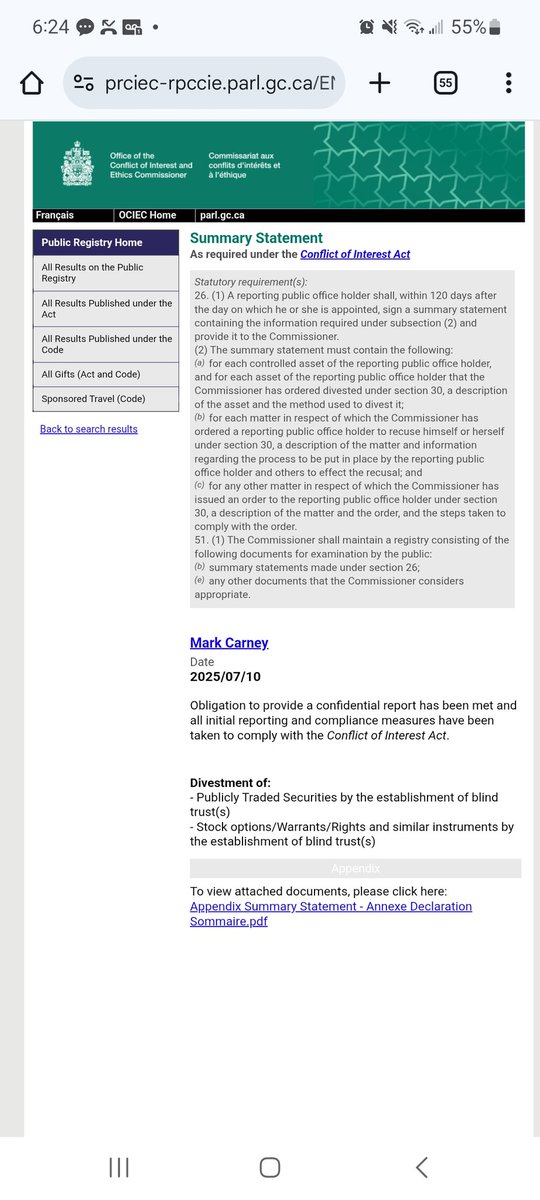
📄 Official Source (Parliament Registry):
prciec-rpccie.parl.gc.ca/EN/…
📑 Full List of His 573 Company Holdings (PDF):
prciec-rpccie.parl.gc.ca/Lis…
So before you lecture about “CPC lies” — maybe ask why the Liberals are pushing forward a corporate insider who was positioned to profit off every major global crisis.
#MarkCarney #573Companies #LiberalCorruption #BlindTrustScam #BigPharma #BigOil #BigBanks #BigTech #DigitalCurrency #IWasRight #CanadaDeservesBetter
I won't ever vote for the CPC again if they don't stop endlessly lying to Canadians.
33
102
321
5,810
17 Jul 2025
💉 CARNEY CASHED IN ON COVID 💉
While Canadians were locked down, losing jobs, and being forced to take shots — Mark Carney was profiting from the pharmaceutical giants behind it all.
📊 According to his official ethics disclosure, Carney held shares in Big Pharma's top players:
Pfizer
Moderna
Johnson & Johnson
Eli Lilly
Gilead Sciences
AbbVie
Biogen
…and more.
These were the same companies that raked in billions during the pandemic through:
✔️ Vaccine rollouts
✔️ Government contracts
✔️ Emergency drug approvals
✔️ Lobbying for mandates
✔️ Public health influence
> And Mark Carney was a key global advisor during the pandemic on economic recovery, global finance, and health response policy?
That’s not just unethical — that’s coordinated profit from crisis.
Let’s be crystal clear:
This wasn’t “just investing.” This was insider-level exposure to the exact companies benefiting from fear, control, and government spending — all while the public was told to “trust the experts.”
📄 Full Disclosure (Parliament site):
prciec-rpccie.parl.gc.ca/EN/…
📑 Full Share List:
prciec-rpccie.parl.gc.ca/Lis…
#MarkCarney #BigPharma #PandemicProfiteering #FollowTheMoney #BlindTrustScam #LiberalCorruption #IWasRight #CanadaDeservesBetter
34
431
787
14,507
17 Jul 2025
🚨 1. Massive Holdings in ESG “Gatekeeper” Firms
Carney held shares in:
BlackRock
Blackstone
Brookfield Asset Management (where he served as Vice Chair)
S&P Global
MSCI, Inc.
> These are the very firms driving ESG ratings, green finance, and climate scoring systems — the tools being used to control investment flows and “de-bank” non-compliant industries.
He profited from climate regulation enforcement firms, while helping design the policies. That’s textbook conflict of interest.
#markcarney #liberals #thief #lies #Canada
3
71
126
1,592
17 Jul 2025
🍁 MARK CARNEY’S CANADIAN HOLDINGS — CONFLICTED AT HOME TOO 🍁
🤣🤣👍 Elbows downs libs
While Liberals pretend Mark Carney is some clean-slate saviour, the official ethics registry tells a very different story.
He didn’t just hold U.S. corporate power — he had financial stakes in major Canadian corporations while pushing policy that directly impacts them.
📊 Carney’s Disclosed Canadian Holdings Include:
🇨🇦 Brookfield Corporation
→ One of the largest asset managers on Earth. Carney was Vice Chair before politics. He held options and deferred share units in both Brookfield Corp and Brookfield Asset Management, along with a notional incentive plan in the Brookfield Global Transition Fund.
🇨🇦 Canadian Natural Resources Ltd.
→ A massive oil and gas company, tied directly to Canada’s fossil fuel exports and energy policy.
🇨🇦 Canadian Pacific Kansas City (CPKC)
→ The backbone of Canadian transportation infrastructure — and heavily impacted by government policy, carbon pricing, and trade regulations.
These aren’t passive investments.
These are elite-level economic levers — and Carney held the strings while prepping his run for Prime Minister.
> This isn’t just a “perceived conflict.”
It’s a documented, institutional-grade conflict of interest — wrapped in a blind trust and pushed under the rug by Liberal handlers.
📄 Full Government Declaration:
prciec-rpccie.parl.gc.ca/EN/…
📑 Full List of Holdings (PDF):
prciec-rpccie.parl.gc.ca/Lis…
#MarkCarney #Brookfield #CanadianConflict #LiberalCorruption #BlindTrustScam #FollowTheMoney #IWasRight #CanadaDeservesBetter
2
56
99
1,127
17 Jul 2025
💰 MARK CARNEY: THE DIGITAL CURRENCY KINGPIN THEY DON'T TALK ABOUT 💰
While Canadians were distracted by buzzwords like “trust” and “ethics,” Mark Carney quietly held shares in 7 digital currency and fintech companies — and dumped them into a blind trust before stepping into politics.
📲 These weren’t minor investments — they were strategic positions in the future of financial control.
🧾 Carney's Digital Currency & Fintech Holdings Include:
• Coinbase Global, Inc. (crypto exchange)
• Stripe, Inc. (digital payment giant)
• Paypal Holdings, Inc. (global online payment system)
• Block, Inc. (formerly Square – Bitcoin payments CashApp)
• Robinhood Markets, Inc. (crypto & stock trading app)
• Visa, Inc. (actively building crypto infrastructure)
• Mastercard, Inc. (deep into CBDC & digital ID projects)
This isn’t coincidence.
> This is a central banking insider buying up private sector control over the future of money — and now entering politics to shape the laws that regulate it.
And Liberals want you to believe a “blind trust” fixes this?
No.
This is a blatant conflict of interest with long-term global consequences.
📄 Full Registry (Official):
prciec-rpccie.parl.gc.ca/EN/…
📊 Full Share List PDF:
prciec-rpccie.parl.gc.ca/Lis…
#MarkCarney #DigitalCurrencyAgenda #BlindTrustScam #ConflictOfInterest #LiberalCorruption #CBDC #FollowTheMoney #IWasRight
13
98
174
2,089
17 Jul 2025
🚨 MARK CARNEY’S OIL & GAS EMPIRE — EXPOSED 🚨
While pretending to be a climate champion, Mark Carney held shares in 25 oil, gas, and energy companies — and tried to bury them in a blind trust.
These aren’t small names — these are the fossil fuel giants he was financially tied to before running for office:
🛢️ Oil & Gas Holdings Include:
• Chevron Corp.
• Exxon Mobil Corp.
• ConocoPhillips
• Occidental Petroleum Corp.
• Valero Energy Corp.
• EOG Resources, Inc.
• Phillips 66
• Diamondback Energy, Inc.
• Coterra Energy, Inc.
• Ovintiv, Inc.
• Halliburton Co.
• Schlumberger Ltd.
• HF Sinclair Corp.
• Targa Resources Corp.
• Weatherford International
• NOV Inc.
• Cheniere Energy, Inc.
• DT Midstream, Inc.
• DTE Energy Co.
• Sempra Energy
• Dominion Energy, Inc.
• PPL Corp.
• The Williams Companies, Inc.
• Enbridge (via funds)
• Expand Energy Corp.
Let that sink in:
> This man held millions in fossil fuels, while pushing green finance policies and lecturing Canadians on climate.
And Liberals think he’s “clean” because of a blind trust? That’s not ethics — it’s a cover-up. He knew this before the blind trust.
🔗 Full Registry:
prciec-rpccie.parl.gc.ca/EN/…
📄 Full Share List:
prciec-rpccie.parl.gc.ca/Lis…
#MarkCarney #LiberalCorruption #OilAndGas #BlindTrustScam #ClimateFraud #ConflictOfInterest #FollowTheMoney #IWasRight
53
730
1,236
35,782
17 Jul 2025
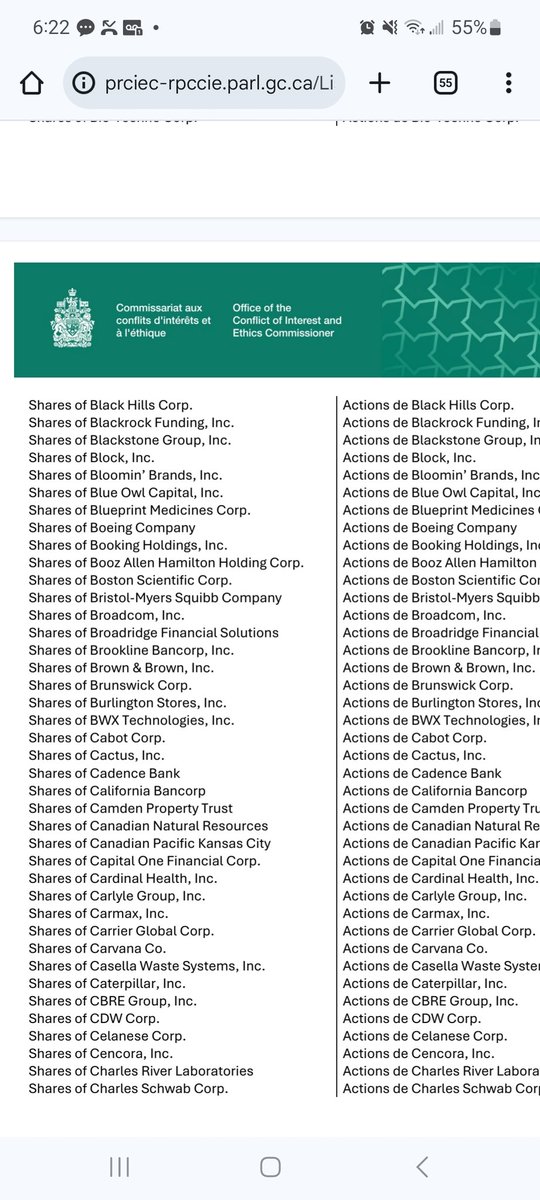
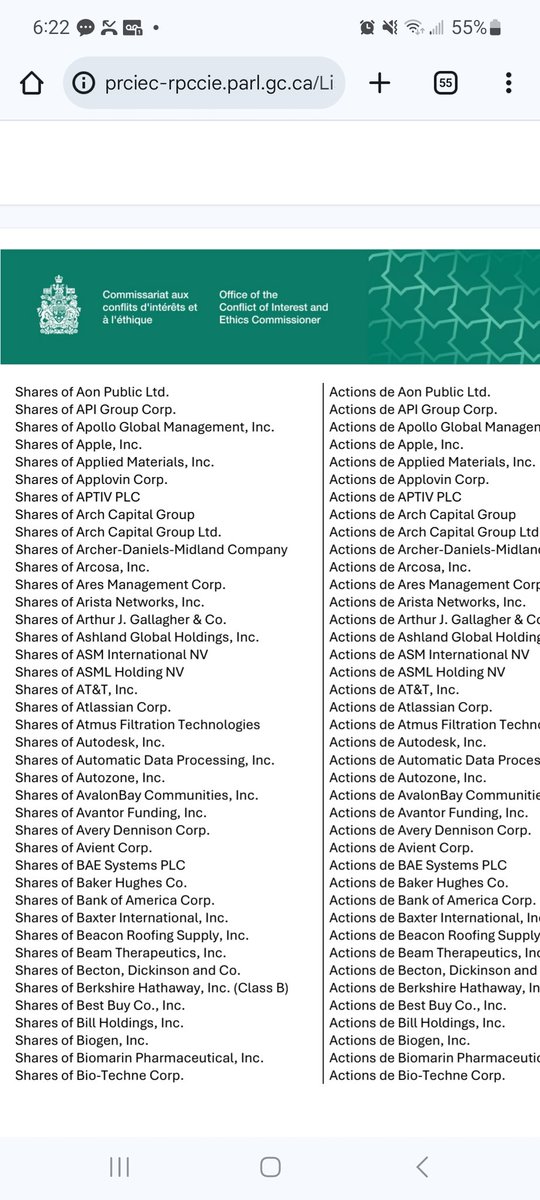
🔥 I TOLD YOU — 75 TIMES. 🔥
And you Liberals laughed, called it “misinformation,” and buried your heads.
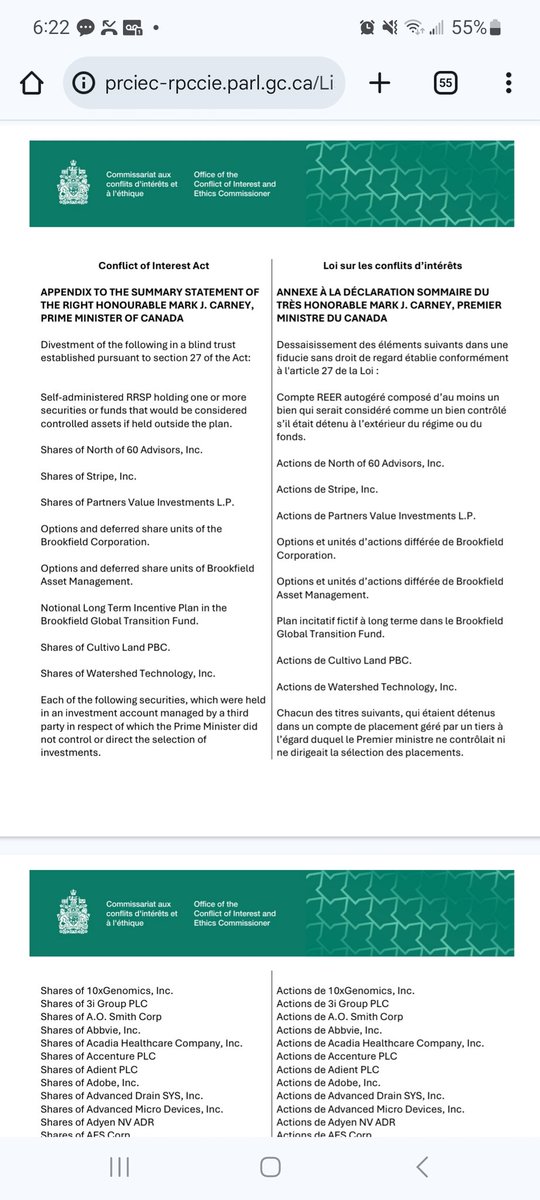
Well here it is — official government documents proving Mark Carney had massive conflicts of interest long before he even hinted at running for Prime Minister.
📄 Official Registry Summary (Parliament site):
prciec-rpccie.parl.gc.ca/EN/…
📊 Full List of Corporate Holdings (PDF):
prciec-rpccie.parl.gc.ca/Lis…
Carney wasn’t just holding a few blue-chip stocks.
He was invested in 573 companies across every major sector, including:
🧨 Tech Giants: Microsoft, Amazon, Apple, Meta, Nvidia, Intel, Zoom, Salesforce
💰 Big Banks & Finance: JPMorgan, BlackRock, Visa, Goldman Sachs, Berkshire Hathaway
💉 Pharma Powerhouses: Pfizer, Moderna, Eli Lilly, Johnson & Johnson, AbbVie
🛢️ Energy & Oil: ExxonMobil, Chevron, Canadian Natural Resources, ConocoPhillips
🏪 Retail & Consumer: Walmart, McDonald’s, Nike, Home Depot, Costco
📡 Telecom/Infra: AT&T, Verizon, American Tower, Brookfield
And yes — he held options, share units, and incentives from Brookfield, the same financial empire he's been deeply connected to for years.
So what did they do?
They stuffed it all into a “blind trust” — not to eliminate the conflict, but to hide the scale of it.
> This isn't ethics. It's deception — legal paperwork designed to blind the public, not the politician.
So to every Liberal who mocked the 75 videos I made exposing this:
You owe me an apology.
I wasn’t spreading misinformation — I was 573 receipts ahead of you.
#MarkCarney #LiberalCorruption #BlindTrustScam #ConflictOfInterest #IWasRight #CanadaDeservesBetter #FollowTheMoney #liberals #Canada
36
579
1,187
12,613
17 Jul 2025
TO ALL THE IGNORANT, NON EDUCATED, LOW IQ SHEEP LIBERALS I HATE TO SAY IT BUT I TOLD YOU SO.
🤣🤣 How's it feel to be controlled and used?
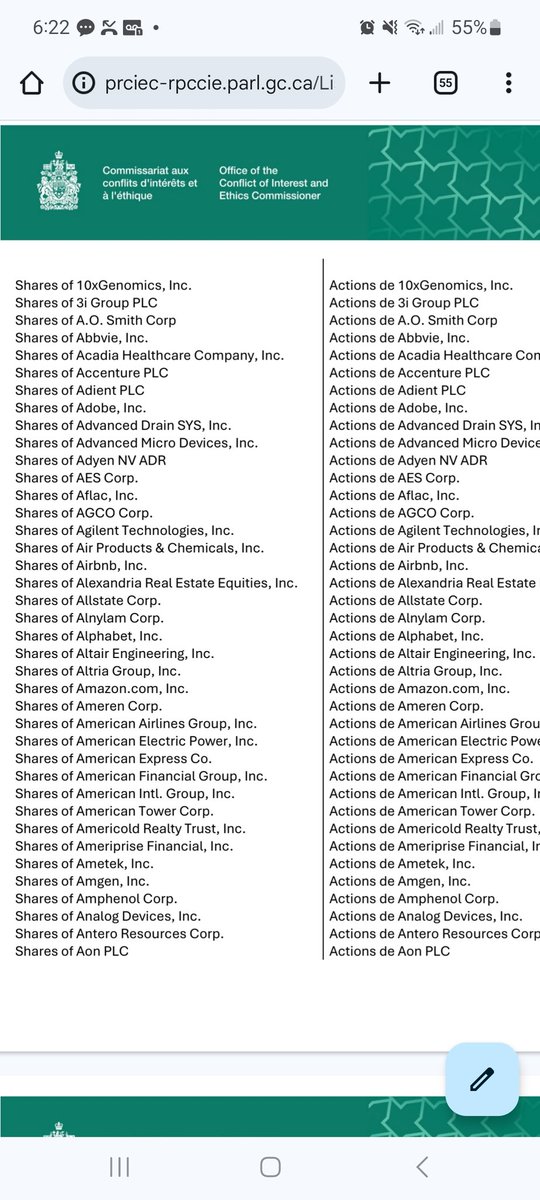
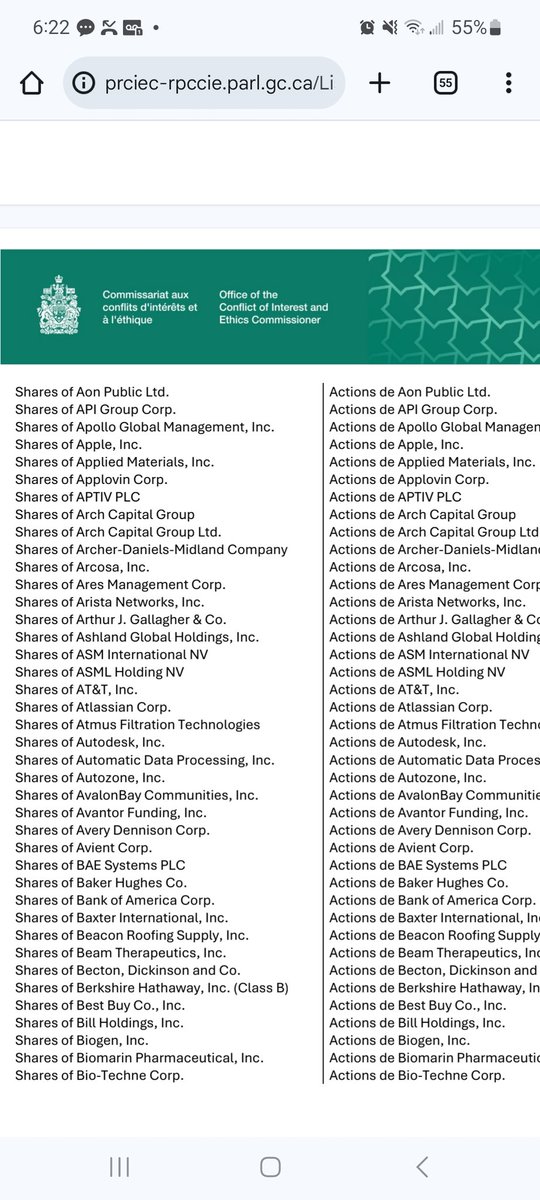
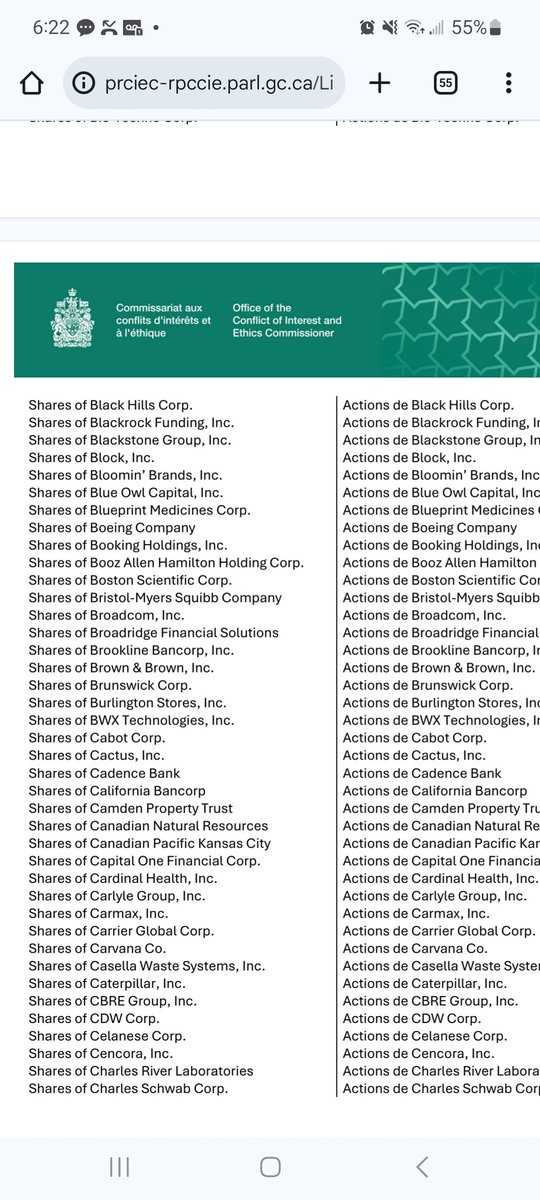
Mark Carney disclosed holdings in a total of 573 publicly traded companies and financial instruments — an extraordinary number for someone in public office.
---
🧨 Key Highlights:
These were placed into a blind trust under Section 27 of the Conflict of Interest Act — but only after being identified as conflict-prone "controlled assets."
He still knows where his money and interest is blind or not.
The companies span every major sector: tech, banking, defense, pharmaceuticals, energy, and more.
Many of them are corporate giants, including:
---
🏢 Examples of Major Companies Mark Carney Held Shares In:
Tech & Social Media:
Microsoft
Apple
Meta (Facebook)
Alphabet (Google)
Amazon
Nvidia
Tesla
Zoom
Salesforce
Intel
Finance & Banking:
JPMorgan Chase
Bank of America
Goldman Sachs
Morgan Stanley
Blackstone
BlackRock
Visa
Mastercard
Citigroup
Berkshire Hathaway
Oil, Energy & Mining:
ExxonMobil
Chevron
ConocoPhillips
Canadian Natural Resources
Enbridge
Valero
Schlumberger
Suncor (indirectly via funds)
Pharmaceuticals & Health:
Pfizer
Eli Lilly
Johnson & Johnson
Moderna
Gilead Sciences
AbbVie
Biogen
Retail & Consumer Goods:
Walmart
Costco
McDonald’s
Nike
PepsiCo
Procter & Gamble
Home Depot
Lululemon
Real Estate, Telecom & Infrastructure:
AT&T
Verizon
American Tower Corp
Simon Property Group
Brookfield Corp (including options)
---
⚠️ Why This Matters:
> Holding shares, options, or deferred share units in this many companies before entering public office is not just a red flag — it’s a red forest.
Even if a blind trust was created, the sheer scale of exposure raises serious concerns about:
Pre-existing influence from major industries
Ongoing indirect benefits (e.g. spousal trust, legacy ties)
Policy bias in sectors he previously invested in
---
📊 Total Companies Involved: 573
FACTS 👇👇🤣🤣
prciec-rpccie.parl.gc.ca/EN/…
FACTS 👇👇🤣🤣
prciec-rpccie.parl.gc.ca/Lis…
#MarkCarney #liberals #Canada #ElbowsUp
25
338
651
8,203