One thing we know, another thing we can't avoid: Infection and aging partially converge in spatial transcriptomics data of mice. Great work by our good friend and esteemed colleauge @fabiankern13 👏
biorxiv.org/content/10.1101/…
Great piece by @_bunnech et al. on optimal transport for single cell and spatial omics. Really curious about practical implications in the future: nature.com/articles/s43586-0…
We are looking for exceptional MSc and PhD students! 👩🔬🧪🔬🧑🔬🧫💩
If you're interested in exploring the interface between gastrointestinal tract immunity and the microbiota in various diseases and combining basic science with NGS in the best environment possible - send me a DM
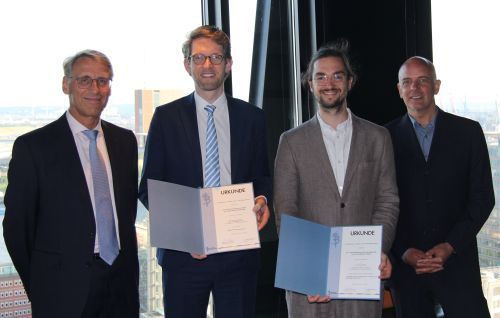
I'm honoured to be awarded the Dr. Liselotte-Brauns Research Prize for Internal Medicine this year. Great feedback for my project ideas, can't wait to put them to the test 🤓 stiftung-drbrauns.destiftung-drbrauns.de/die-pre…
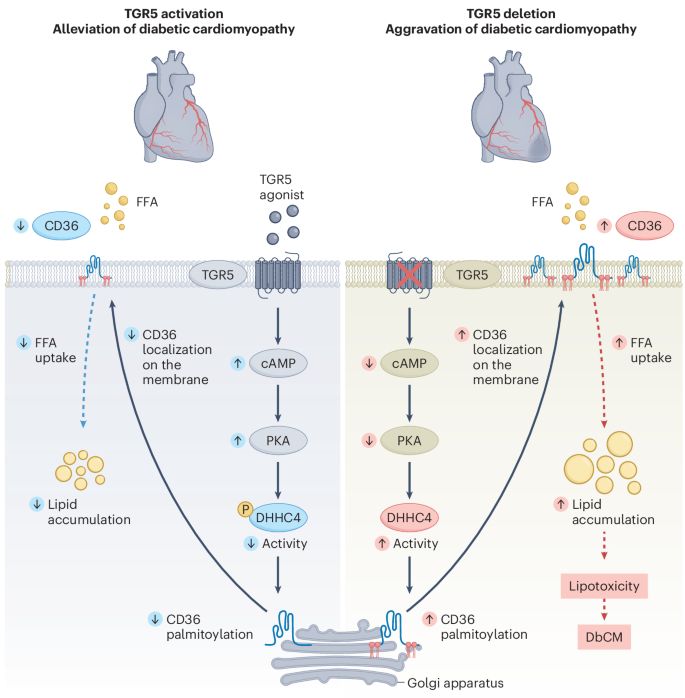
Great work in @NatureCancer on how to utilise single-cell data to predict cancer patients' response to different drugs. I see wide applicability even beyond tumours! nature.com/articles/s43018-0…
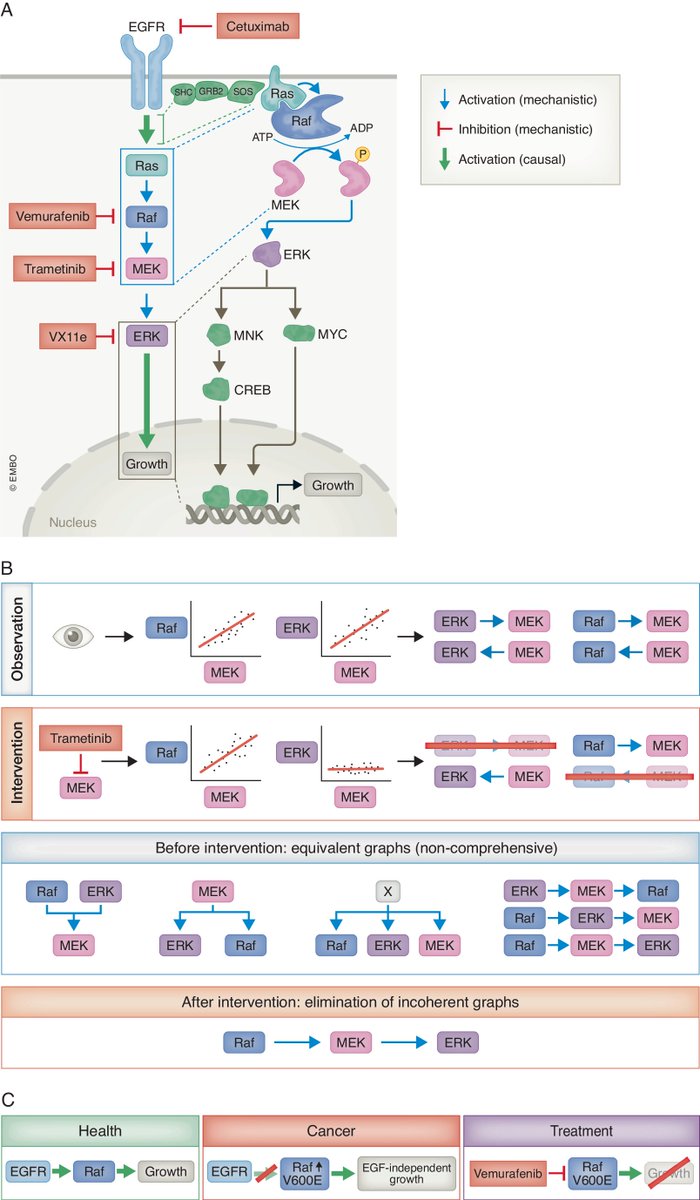
Correlation is not causation. In our new perspective, we connect systems biology, causal reasoning, and machine learning to inform future approaches in systems biology and molecular medicine in the wake of current deep learning advances: doi.org/10.1038/s44320-024-0… 🧵👇
ALT (A) The EGFR, upon activation, leads to growth via a linear cascade of activations. Displayed are several direct causal (mechanistic) interactions, such as activation via protein-protein interactions (blue) and inhibition by drugs (red); and two indirect causal interactions (green), which occur via molecular intermediates. (B) Blue boxes: Observational correlations between protein activities of components of the pathway do not allow concrete conclusions regarding the exact causal structure of the pathway, leading to a class of equivalent explanations for the observations (not all are shown). Orange boxes: Upon intervention, we can exclude certain possibilities, closing in on the true structure of the causal graph. (C) The clinical implications of causal reasoning in molecular systems biology. The independent activation of Raf via the V600E mutation leads to cancerous growth, which can be treated by inhibiting the overactive Raf protein.
What do we need to understand inflammatory bowel disease (🔥) besides single-cell data and machine learning? ... ⏰
🥁 Here comes the first paper from the group, out now @Nature_NPJ: nature.com/articles/s41540-0… 🧵
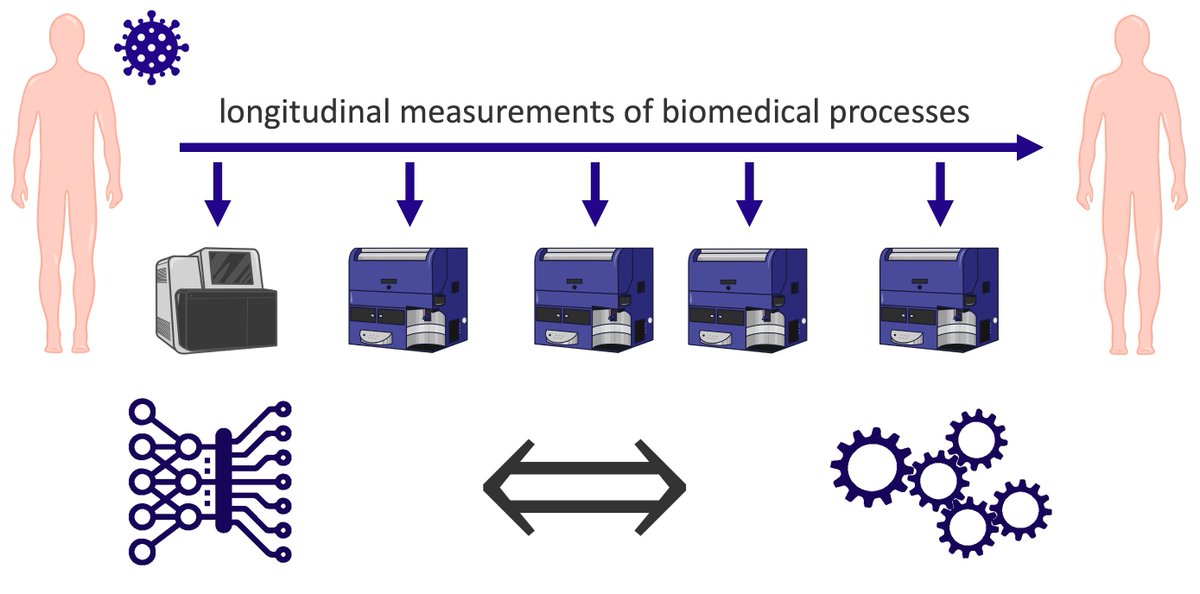
If you want to learn more about ODE-based modeling of longitudinal single-cell data to gain a better understanding of immune dynamics check out @AdlungLab s most recent paper
doi.org/10.1038/s41540-024-0…
What do we need to understand inflammatory bowel disease (🔥) besides single-cell data and machine learning? ... ⏰
🥁 Here comes the first paper from the group, out now @Nature_NPJ: nature.com/articles/s41540-0… 🧵