
Joined January 2026
- Tweets 199
- Following 42
- Followers 6,727
- Likes 41
132 Photos and videos










Pinned Tweet

Mar 26
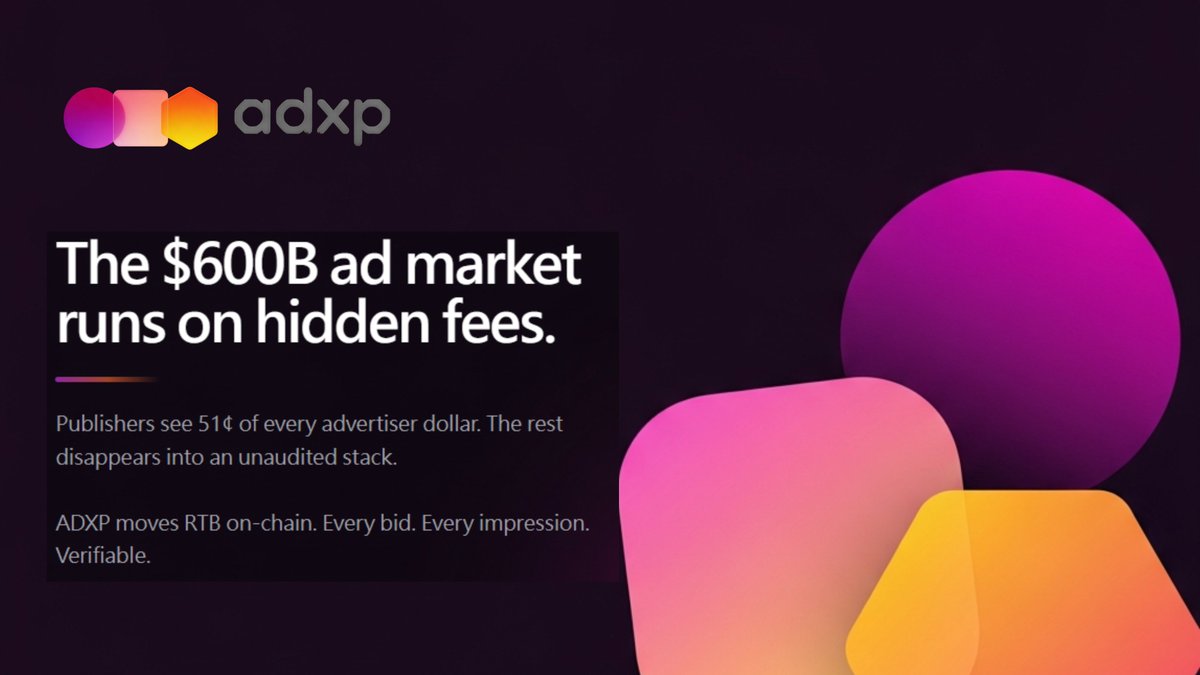
The $600B digital advertising market runs on a system designed to hide fees.
DSPs, SSPs, ad exchanges, DMPs. Every layer takes a cut. None of it is audited.
Publishers see 51 cents of every advertiser dollar. The rest? Lost in the stack.
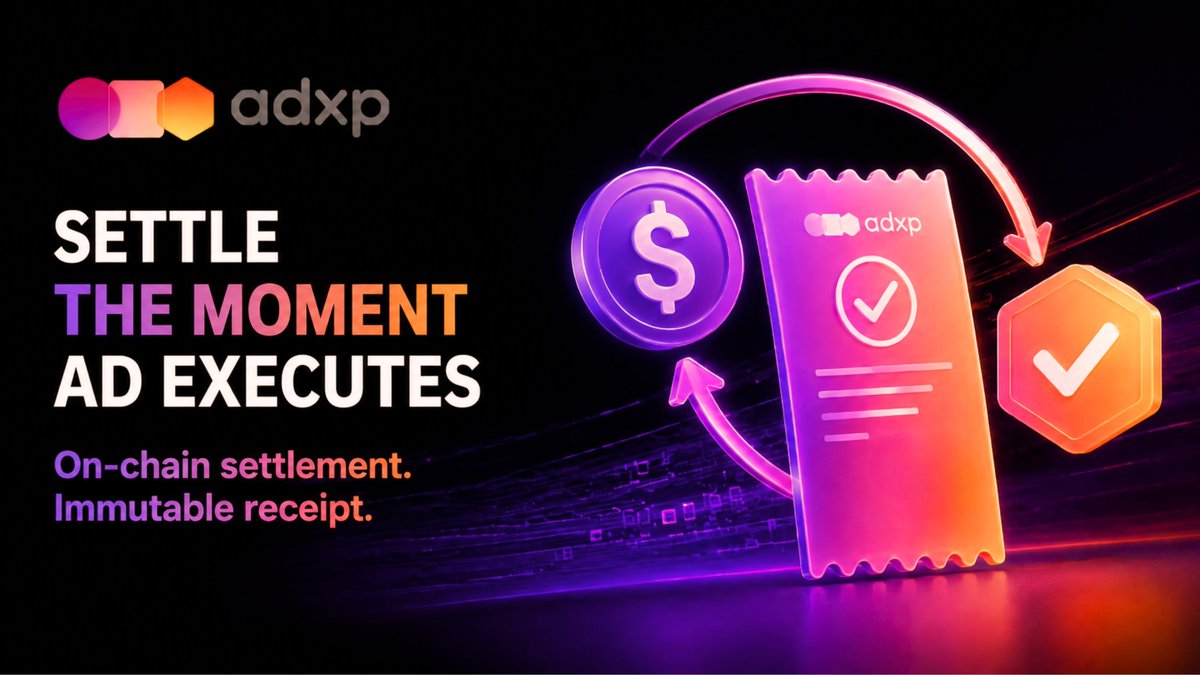
ADXP Protocol moves RTB on-chain. Every bid. Every impression. Every payment. Verifiable.
adxprotocol.io
143
165
659
27,393
Jun 12
Digital ad fraud drains ~$80B a year. Most of it hides in unauditable middle layers.
When every impression settles on BSC and every bid is ZK-verified, there's no dark layer to hide in.
Fraud doesn't get policed. It gets designed out.
5
53
1,535
ADXProtocol retweeted

Jun 9
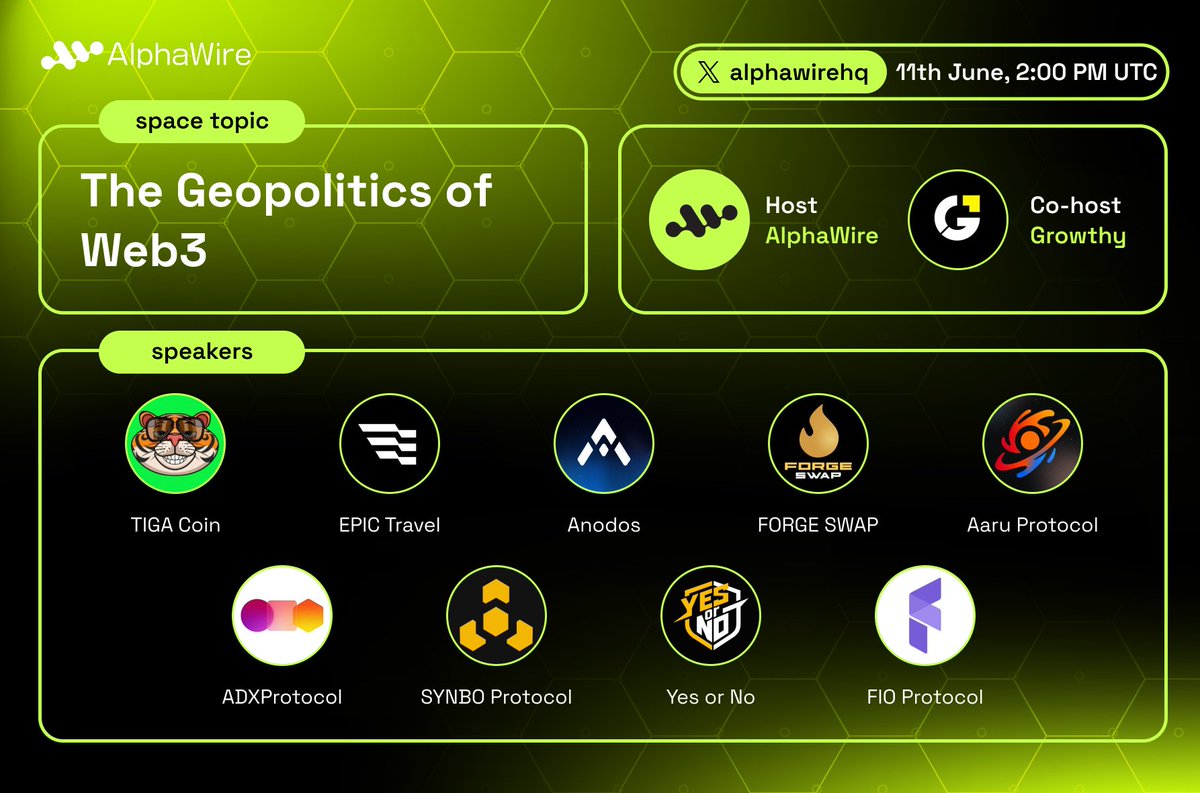
NEW SPACE: The Geopolitics of Web3 🌍
Crypto isn't just competing with banks anymore.
It's competing with entire countries and regions!
The US, Europe, Asia, and emerging markets are all racing to attract builders, liquidity, stablecoins, and capital.
🗣️ @joinFIO @SynboLabs @EpicOnChain 6 more!
Who is shaping the next decade of Web3?
87
79
100
3,808
Jun 10
Your AI agent spent $50K on ads while you slept.
What do you check first?
🔲 The dashboard it shows you
🔲 The CSV export
🔲 The on-chain record
🔲 …there is no on-chain record
(be honest)
3
21
1,362
Jun 9
Adland figured out half of it: the calendar is dead. Intent happens in real time, not on Black Friday.
But here's the part they skip. If your intent signals and spend live inside a black box, "real-time" is just faster guessing.
Real-time only matters if it's verifiable.
ADXP: every signal, bid and settlement provable on-chain. Intent you can actually audit.

Seasonal marketing calendars are losing their edge. Shoppers convert on their own timeline, not yours. Read the full article: bit.ly/4a8GoUg

1
16
496
Jun 9
"On-chain ads = everyone sees my bidding strategy?"
No. ADXP uses ZK-SNARKs so bids stay private while the match stays verifiable.
You prove the auction was fair without revealing what anyone bid.
Privacy and provability aren't a trade-off here.
1
3
34
1,856
Jun 8
The ad industry runs on trust nobody can verify.
Impressions you can't audit. Bids you can't see. Data you don't own.
ADXP rebuilds the exchange on-chain.
Every bid, every match, every settlement provable.
Advertising, without the black box.
37
1,335
Jun 5
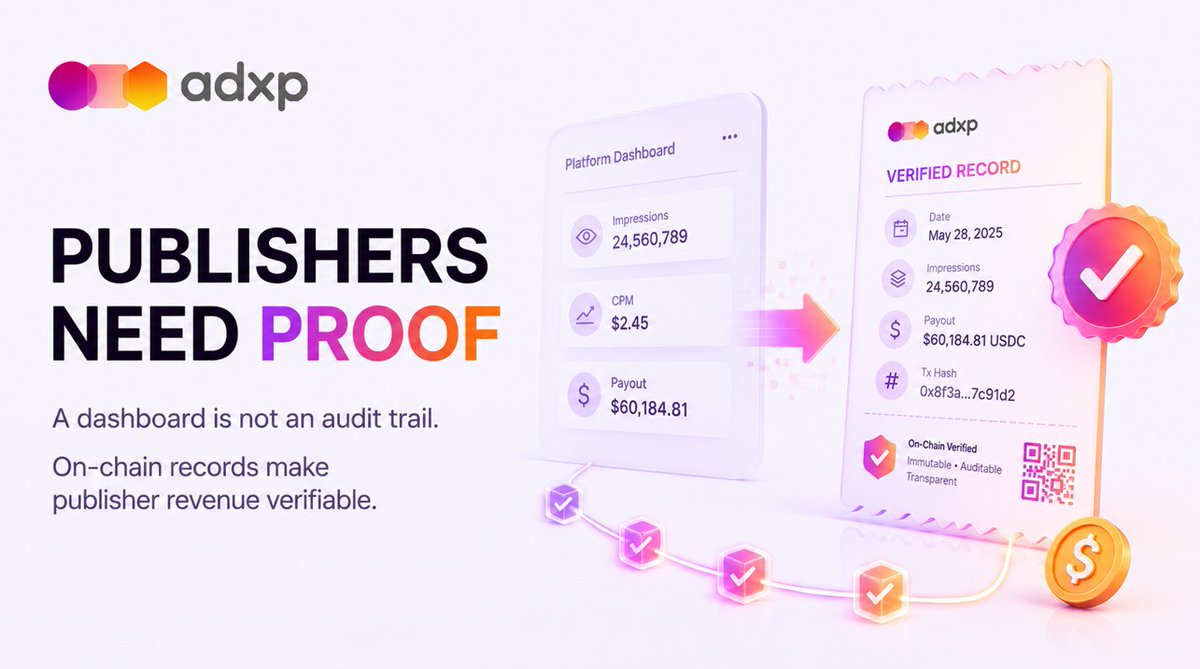
Publishers earned $1,200 in CPM revenue last month. They have no proof any of it is real. 🧵
1
41
1,635
Jun 5
This isn't a payment problem. The money arrives fine.
It's a proof problem.
→ Was that impression actually delivered?
→ Was the CPM rate calculated correctly?
→ Did a bot eat 30% of your inventory — and did anyone discount it?
The platform knows. Publishers don't.
1
4
437
Jun 5
AI agents are about to route billions through publisher inventory — faster, at higher volume, with less human review than ever.
The proof gap doesn't get smaller. It scales.
Publishers need a record that isn't a platform telling them what they earned.
That record has to exist on-chain.
3
131
Jun 4
Mastercard just paid $1.8B for a stablecoin payment rail.
Payments are finally on-chain.
Ad spend isn't.
Every dollar that flows through Mastercard's new rail gets a cryptographic receipt. Every dollar your agency spends on media? Still a PDF from a platform grading its own homework.
The next infrastructure bet isn't which chain settles faster. It's which layer puts ad budgets on the same verifiable rail that payments just moved to. That's the gap ADXP is built for.
1
33
1,259
Jun 3
Who authorized that $80K spend?
Here's the only answer that actually holds up:
→ Not a dashboard screenshot
→ Not a CSV export
→ Not a Slack message from someone's boss
On-chain. Immutable. Verifiable before the bid clears.
That's what ADXP builds — authorization you can audit, not explain after the fact.
24
855
ADXProtocol retweeted

Jun 3
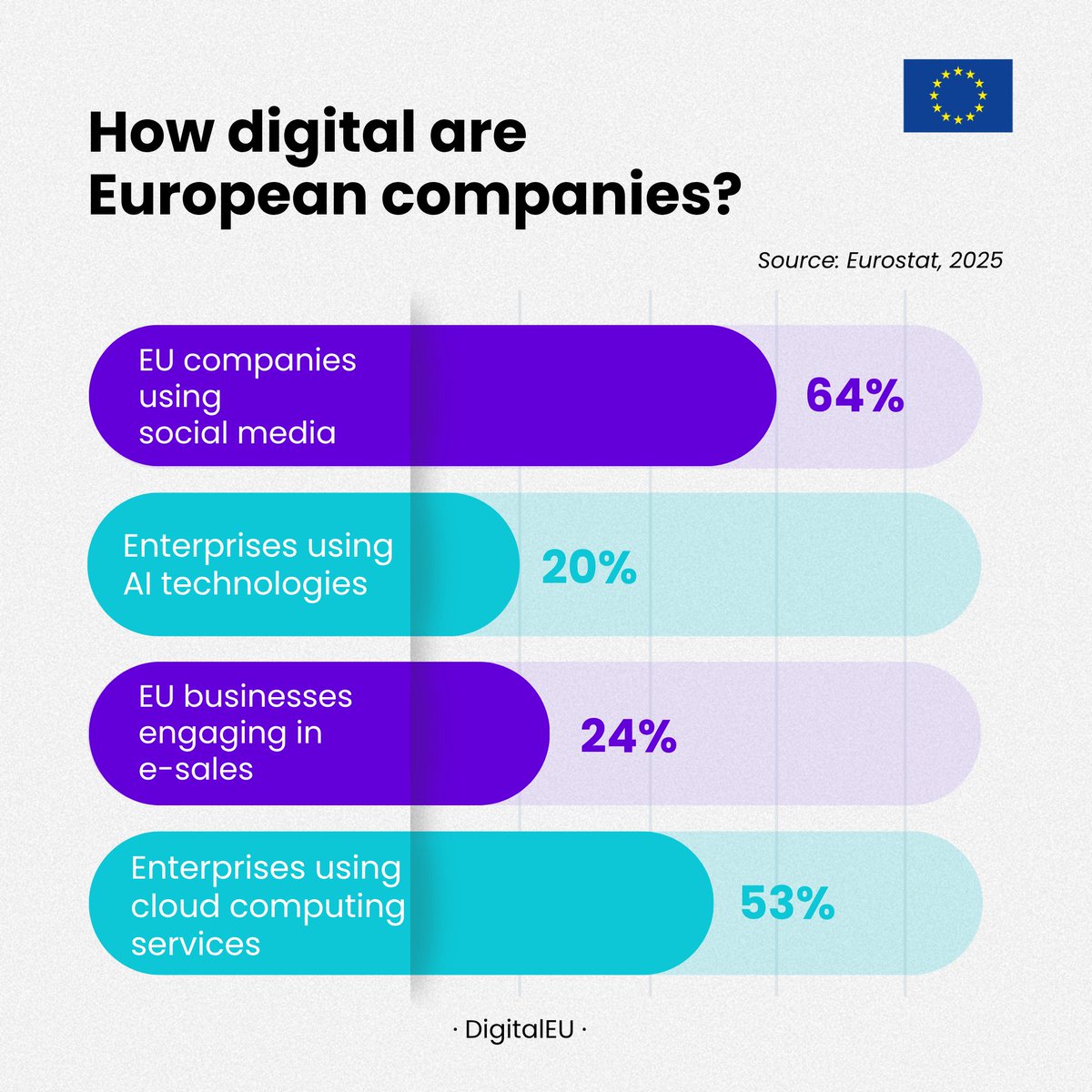
How digital are European businesses?
From adopting AI & cloud technologies to communicating on social media & selling online, digitalisation is an ongoing process that continues to reshape how EU companies operate.
Explore this report via @EU_Eurostat ↓
link.europa.eu/mCxtj6
14
21
49
2,170
May 29
Cannes Lions is 3 weeks out.
There will be 100 panels on "AI in advertising."
There will be ~0 on "who audits what the AI actually bought."
That gap is the entire game.
2
2
40
2,059
May 29
Accountability for agentic spend isn't a compliance checkbox.
It's the infrastructure that makes AI-run campaigns safe to scale.
Without it, every CMO signing off on autonomous spend is flying blind.
1
7
99
May 29
That's the conversation ADXP is bringing to AdTech.
Not "can AI buy ads?" — that's solved.
"Can you prove what the AI bought, why, and at what cost?"
That's the next frontier.
6
71