
Joined January 2010
- Tweets 3,714
- Following 259
- Followers 187
- Likes 2,205
126 Photos and videos









Pinned Tweet

21 Jul 2022
Smashing magazine recommends https:webutils.app for bulk image conversion ❤️
smashingmagazine.com/2022/07…
1
1
2
Amit Mittal retweeted

May 29
El mundo de la IA es local, ya no me cabe duda 💪
@_nasch_ sacando 87 tok/s con Qwen3.6 27B en una AMD de consumo.
Yo en mi vídeo: 70 tok/s con Qwen3.6 35B en una 4070 12GB.
Esto avanza muy rápido. Es emocionante.
May 25

Ollama me daba 21 tok/s con Qwen3.6 35B (12 GB VRAM).
Mismo modelo, misma GPU → llama.cpp -ncmoe 15 = 70 tok/s.
No es magia. Es un flag que Ollama no expone.
Comando exacto:
llama-cli -m ~/models/Qwen3.6-35B-A3B-UD-IQ3_XXS.gguf -ngl 99 -ncmoe 15 -p "Hola"
Demo real aquí 👇
66
134
1,749
298,244

ollama launch copilot
Ollama now supports GitHub's Copilot CLI, the terminal agent that works directly with repositories on GitHub.
You can use it to:
Explore issues and PRs.
Search across repos by label (e.g. good first issue, help wanted) and bring that context into your session.
Plan and scaffold work from a ticket.
Hand Copilot CLI an issue and have it map out the change, edit the files, and run the commands to get it done.
Navigate unfamiliar codebases.
Point it at a repo and ask it to explain the structure, install dependencies, and walk you through how the pieces fit together.

50
111
863
142,723
Amit Mittal retweeted

Apr 15
It’s time to go PLUS ULTRA 👑
We’ve teamed up with r/pcmasterrace for a dream build showcase giveaway
Build your ultimate Z890 setup and enter to win
🔗 aorus.io/Plus-Ultra-SM
Submit via Gleam (required)
📅 Apr 15–30
#Giveaway #PCMR #GamingSetup #Gigabyte

32
1,198
438
10,614
Amit Mittal retweeted

Feb 19
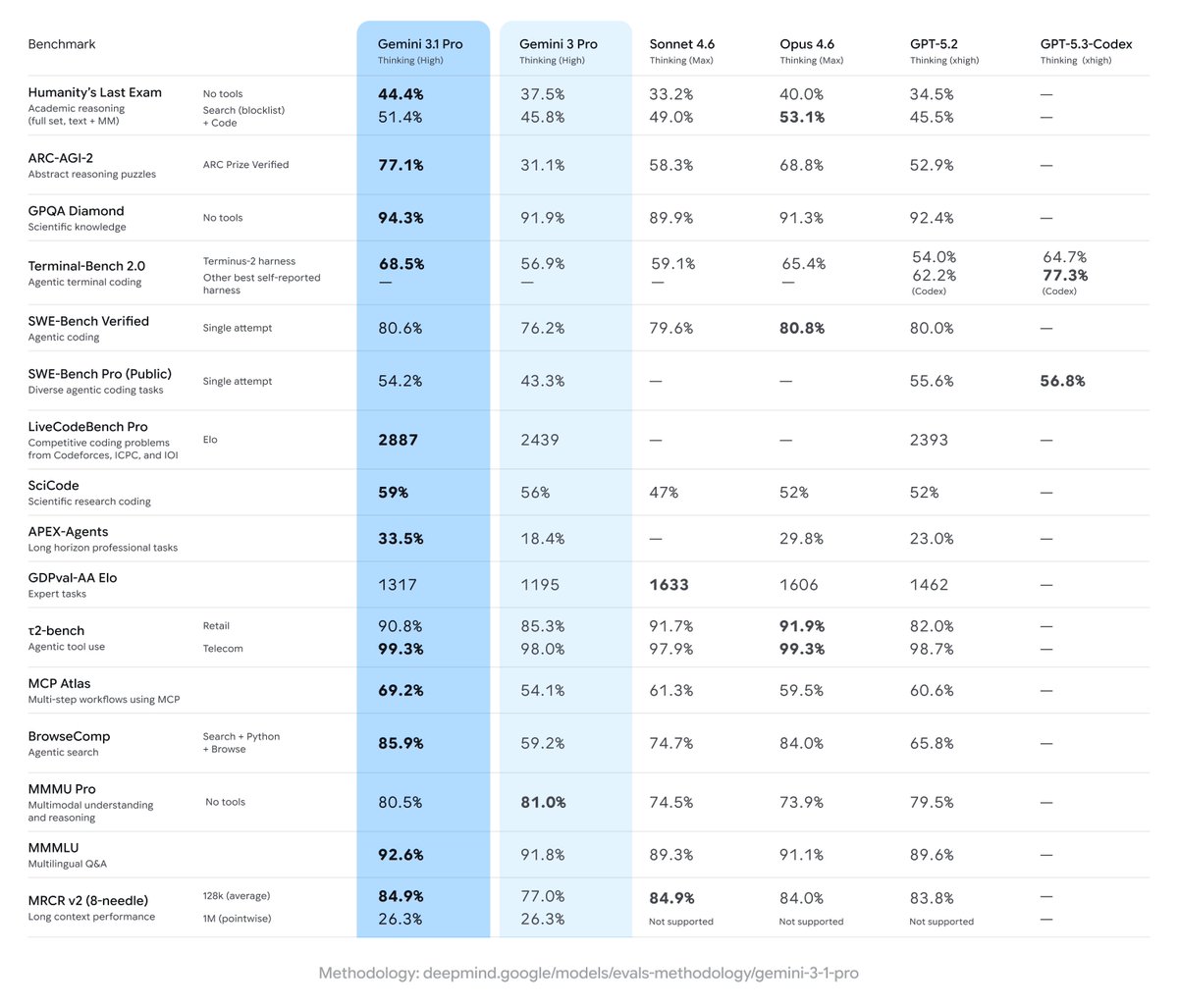
Gemini 3.1 Pro is here. Hitting 77.1% on ARC-AGI-2, it’s a step forward in core reasoning (more than 2x 3 Pro).
With a more capable baseline, it’s great for super complex tasks like visualizing difficult concepts, synthesizing data into a single view, or bringing creative projects to life.
We’re shipping 3.1 Pro across our consumer and developer products to bring this underlying leap in intelligence to your everyday applications right away. Rolling out now to:
- Developers in preview via the Gemini API in @GoogleAIStudio
- Enterprises in Vertex AI and Gemini Enterprise
- Everyone through the @Geminiapp and @NotebookLM
566
1,023
10,143
1,361,072
Amit Mittal retweeted

Feb 5
New Engineering blog: We tasked Opus 4.6 using agent teams to build a C compiler. Then we (mostly) walked away. Two weeks later, it worked on the Linux kernel.
Here's what it taught us about the future of autonomous software development.
Read more: anthropic.com/engineering/bu…
855
2,493
21,254
8,515,274
Amit Mittal retweeted

Jan 30
🎉 $3,000 PC Giveaway 🎉
🖤 All Black MSI Stealth Build 🖤🔥
This is our last giveaway for the month, and concludes our 20k pc builds to celebrate the new year ❤️
How to Enter:
1️⃣ Like ❤️ and reshare 🔁 this post
2️⃣ Follow @brittnaynay3 @msiUSA
3️⃣ Drop a comment 💬
That’s it 🙌
🌍 Worldwide giveaway
🎯 Bonus Entries:
Want extra chances to win?
Drop comments on my other socials, more comments = more chances 🎉
🔗 Links in bio & pinned below
🗓️ Winner announced in 7 days
🍀 Good luck 🖤🔥

38,848
20,403
24,549
896,220
Amit Mittal retweeted

Jan 19
This has been said a thousand times before, but allow me to add my own voice: the era of humans writing code is over. Disturbing for those of us who identify as SWEs, but no less true. That's not to say SWEs don't have work to do, but writing syntax directly is not it.
956
2,700
19,960
7,323,982
Amit Mittal retweeted

Jan 18
Unreal the value, productivity, company creation, & company destruction that Opus 4.5 is about to bring to the world
2
1
4
376
Jan 20
5 stages of AI acceptance
1. Denial: It’s Just fancy Autocomplete
2. Anger: It’s Flooding the World with Garbage Code
3. Bargaining: I’ll use It for Boilerplate, But Never Logic
4. Depression: Am I Just a Prompt Engineer Now?
5. Acceptance: AI is good and jobs are at stake
19
Amit Mittal retweeted

31 Oct 2025
🎁GIVEAWAY 2* G7 SE Jet Black Controller! Follow&Like&Repost to join.
🎃This Halloween, we're once again hunting stick drift ghosts with the GameSir controller! 🦇But this time, we brought the new Walmart exclusive edition - the G7 SE Jet Black!
🎮Giveaway Drops:
2x GameSir G7 SE | Jet Black
HOW TO ENTER:
❤️ Like
🔘 Follow @mygamesir
👻 Repost
⏳ Winners announced: November 7, PDT
🍬The G7 SE | Jet Black Treat Bag:
✅The Proven Treat: The best Xbox controller for the price on the market. The All-time Amazon Best Seller.
✅The Anti-TRICK TREAT: The FIRST Xbox controller that has Hall Effect sticks designed to ELIMINATE stick drift.
✅The Exclusive TREAT: The new sleek Jet Black edition, only at Walmart!
*Two winners per platform - parallel giveaways running on r/Gamesir Reddit, Facebook, X, Instagram, and Discord. Please enter all of them, in case you're destined to win 2 controllers or more!
Learn More & Order at w-mt.co/m/iywWrI
#xbox #controller #XboxGamePass #Halloween2025

210
1,246
1,109
39,841
31 Aug 2025
Moved to @Windows after 7 years of MacOS. It's as bad as I thought. Windows BIOS update broke windows hello and there is no way to fix it. Not even windows reset fixed it.
1
56
Amit Mittal retweeted

18 Dec 2024
GitHub Copilot Free for VS Code has arrived.
906
4,502
29,402
3,083,671
1 Dec 2024
I just completed "Historian Hysteria" - Day 1 - Advent of Code 2024 adventofcode.com/2024/day/1 #AdventOfCode
1
38


Amit Mittal retweeted

31 Oct 2024
I cannot put a finger on it on why now, but 🦋 is bumping with tech folks. And my feed there is from the people I follow.
Meanwhile, my feed here is maybe 10% of people I follow, and 90% mainstream media pushed into my face (and too much politics shown that I did not ask for)
32
12
425
70,754
Amit Mittal retweeted

30 Oct 2024
CSS is having a logo!
Go vote before it's too late! (No, this is not a political post, it's an emoji voting for two different colors)
github.com/CSS-Next/css-next…
1
16
51
5,270
Amit Mittal retweeted

30 Oct 2024
Three years later, I'd say this tweet was mostly correct.
1. Svelte is pushing React
Compilers are great, actually. Why not let the computer optimize your code versus humans? Svelte has always innovated with a compiler-first approach.
Svelte 5 continues to evolve with Runes, an explicit way of defining reactive state (svelte.dev/blog/svelte-5-is-…).
On the React side, the React Compiler is finally available for use (now in beta) after many years of development (react.dev/blog/2024/10/21/re…).
Compiler-friendly directives like 'use client' and 'use server' have become core to the React Server Components programming model (react.dev/reference/rsc/use-…). And React frameworks like Next.js are adding their own directives like 'use cache' (nextjs.org/blog/our-journey-…).
2. Remix is pushing Next.js
When this tweet was posted, the Next.js App Router wasn't even released. I remember two of our top requests for the Pages Router were: better support for layouts and global data fetching (e.g. _app.js).
Remix iterated on the `getServerSideProps` model of Next.js, allowing more granular data fetching, and added built-in conventions for layouts.
Ultimately, there's been a convergent evolution towards the Server Components and Server Actions model, with Remix helping shape some of the React 19 features as well.
The outcome has been, in my opinion, a better ecosystem for all React developers (youtube.com/watch?v=AdkNcFUs…).
3. Prisma is pushing ORMs
Prisma has raised the bar for how the JS/TS ecosystem works with databases. Having great TypeScript support is now table stakes.
For example, Drizzle has taken this a step further by being able to define your schema and relations in TypeScript (versus the Prisma schema file).
Prisma should also get credit for helping push the entire "data layer" forward to be more lightweight and runtime agnostic. More libraries and vendors now use Web standard APIs, which means better interoperability between platforms.
With that context, it makes sense that you now see a Prisma managed Postgres database that connects over HTTP (prisma.io/blog/announcing-pr…).
4. Deno is pushing Node.js
This was an understatement. Node.js has improved so much in the past three years.
I'd amend this original statement to add Bun as well. Multiple runtimes has meant more visibility and work towards performance, developer experience, and solving long standing papercuts.
For example, can you believe we will have native support for CJS/ESM interop in Node.js 22? Amazing.
Notably, Deno 2 is now stable (deno.com/blog/v2.0) and has backwards compatibility with Node.js.
5. Supabase is pushing Firebase
I haven't kept up as much with Firebase, because Supabase has largely replaced it (for me).
That's not to say Firebase is bad. I still see it frequently used, especially when building web mobile apps together.
More so that Supabase has won the heart and minds of developers — and they've been able to ride the wave of Postgres love.
I'd amend this to say Supabase has pushed the entire BaaS (backend as a service) category forward.
6. esbuild / SWC are pushing JS tooling
After this tweet, I wrote an article about how Rust was becoming the future of JavaScript tooling infra (leerob.com/n/rust).
That prediction turned out to be true. Now in 2024, we have Biome, Rspack, Rolldown, Oxc, Lightning CSS, Turbopack, and more.
This includes Vite/Rolldown/Oxc raising funding to continue investing in Rust tooling (voidzero.dev/).
Notably, Turbopack Dev is now stable in Next.js 15. The team wrote up a very detailed post talking about the journey (nextjs.org/blog/turbopack-fo…).
7. Bun is pushing SWC
Bun has pushed package managers, compilers, test runners, and other runtimes forward. It's shown there's many places to speed up the JavaScript ecosystem, if we try hard enough.
It's already been a year since Bun 1.0, and adoption seems to continue to rise. The iteration velocity of the team is incredibly high.
——
Now in 2024, what tools are pushing other tools? What will we look back and compare in three years?
30 Nov 2021

When there's competition in DevTools, developers win:
◆ Svelte is pushing React
◆ Remix is pushing Next.js
◆ Prisma is pushing ORMs
◆ Deno is pushing Node.js
◆ Supabase is pushing Firebase
◆ esbuild / SWC are pushing JS tooling
◆ Bun is pushing SWC
What else?
31
46
668
137,595
Amit Mittal retweeted

21 Oct 2024
世界で一番人気のテック系Podcastにえらいタイトルで出た
“You Should Drop Express and Try Hono”

3
46
339
29,551