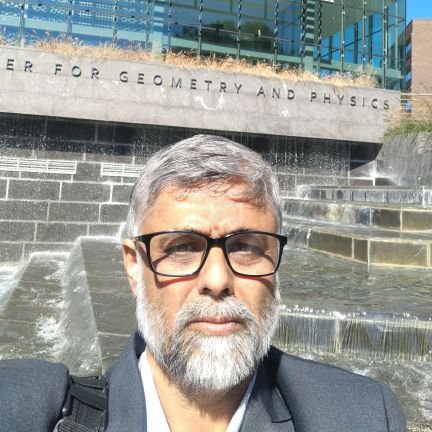
Philosopher, author and a Kazi Nazrul loving Bengali
Joined January 2013
- Tweets 3,822
- Following 3,237
- Followers 565
- Likes 7,779
54 Photos and videos









At NDTV at 5:25 mnts talking of transparent humanitarian system of dealing with illegal immigrants:
x.com/i/status/2060383952305…

#TheBuckStopsHere with @PadmajaJoshi | Detect, delete & deport illegal infiltrators
"We are going to address this problem full fledged in next 5 years": BJP's @tuhins
RJD's @priyanka2bharti's responds to him.
Political analyst @AlDerrida bats for a transparent legal process.
47
Discussion on latest political negotiations fot union territory in Ladakh:
youtu.be/j9PvsNXvBww?si=qMzC…
94
Dr.Prasenjit Biswas retweeted

May 23
Comedy turns terrifying on Piers Morgan Uncensored. A robot struggles to dance like Michael Jackson and keeps failing on a step.
Tom Bilyeu immediately kills the optimism: when one robot learns from that fall, an army of a million robots learns it too.
2
4
23
6,804
Dr.Prasenjit Biswas retweeted

May 13
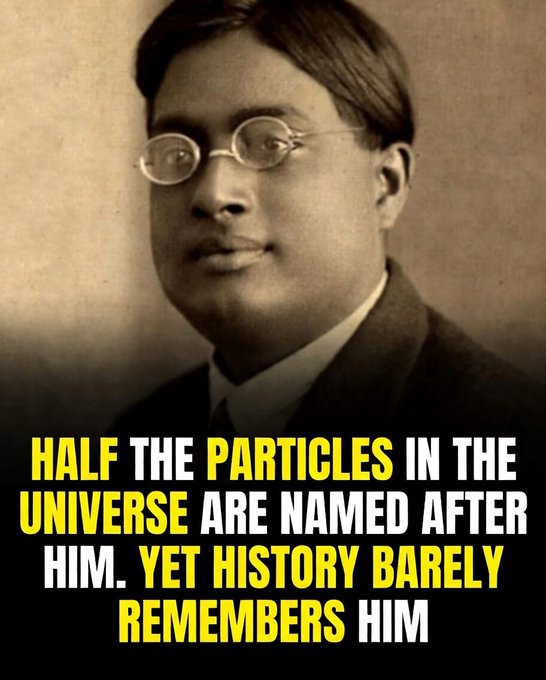
He was Satyendra Nath Bose, an Indian physicist whose quiet brilliance in the 1920s forever altered our understanding of the quantum world.
In 1924, Bose, then a 30-year-old professor in British India, sent a groundbreaking manuscript directly to Albert Einstein. The paper offered a novel, more elegant derivation of Planck's law for blackbody radiation by treating light quanta (photons) as indistinguishable particles—a radical departure from classical statistical methods. Impressed by its insight, Einstein personally translated the work into German and facilitated its publication in the prestigious Zeitschrift für Physik.
This exchange sparked a brief but profound collaboration. Einstein extended Bose's statistical approach to material atoms, predicting a bizarre new state of matter at ultra-low temperatures: what we now call a Bose-Einstein condensate (BEC), where particles behave as a single quantum wave. Bose's original framework became known as Bose-Einstein statistics, and the class of particles that obey it—those with integer spin, including photons, gluons, W and Z bosons, and the Higgs boson—was later named bosons in his honor by Paul Dirac.
Unlike fermions (matter particles like electrons), which obey the Pauli exclusion principle and cannot occupy the same quantum state, bosons can pile into identical states en masse. This "social" behavior underpins extraordinary macroscopic phenomena: the coherent light of lasers, the zero-resistance flow in superconductors, and the collective quantum coherence in BECs.
Despite the monumental impact—his statistics describe half of all fundamental particles and enabled key advances in quantum field theory, condensed matter physics, and particle physics—Bose remained remarkably unassuming. He continued teaching at universities in Dhaka and Calcutta (now Kolkata), mentored students, pursued ideas in X-ray crystallography, unified field theory, and other areas, and never sought the spotlight. Nominated several times for the Nobel Prize (notably for Bose-Einstein statistics and his later work), he was never awarded it, and his name rarely appears in popular accounts of 20th-century physics.
There's a poignant humility in his story: a man whose legacy literally names one of the two fundamental families of particles in the universe, yet whose personal fame never matched the scale of his contribution. Bose reminds us that true influence often arrives without fanfare. Some breakthroughs echo through textbooks and technologies, while their creators work in the background, content to let the universe carry their ideas forward—even if history's spotlight rarely finds them.
74
1,437
5,791
421,734
My latest take on peace efforts in Manipur;
youtu.be/UdIHGFWsLY0?si=ljF1…
1
157
My Take on Manipur2.0:
At 3:25 minutes onwards:
youtu.be/UiV_OE35SBU?si=PHsx…
7
8
1,856
Dr.Prasenjit Biswas retweeted

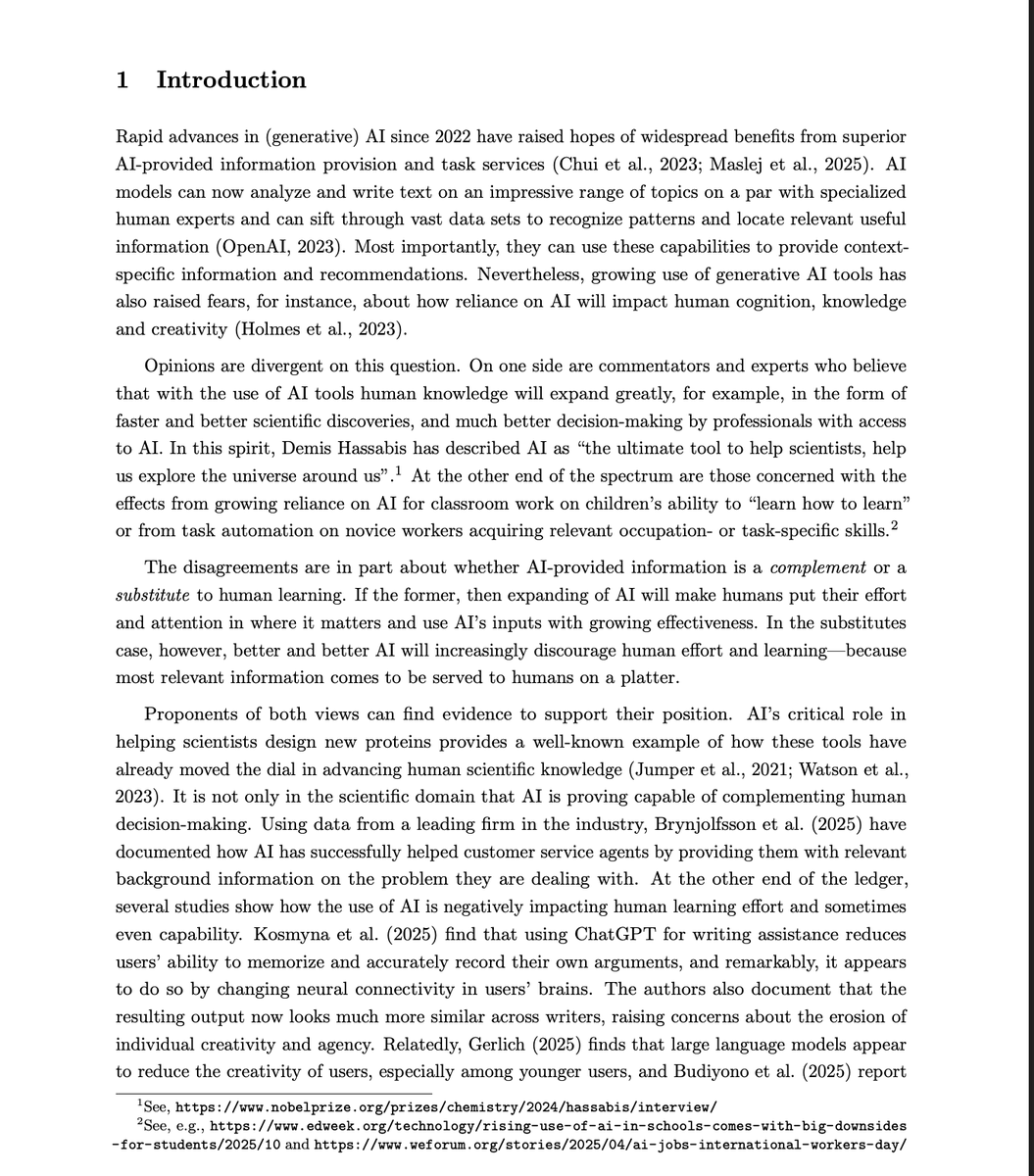
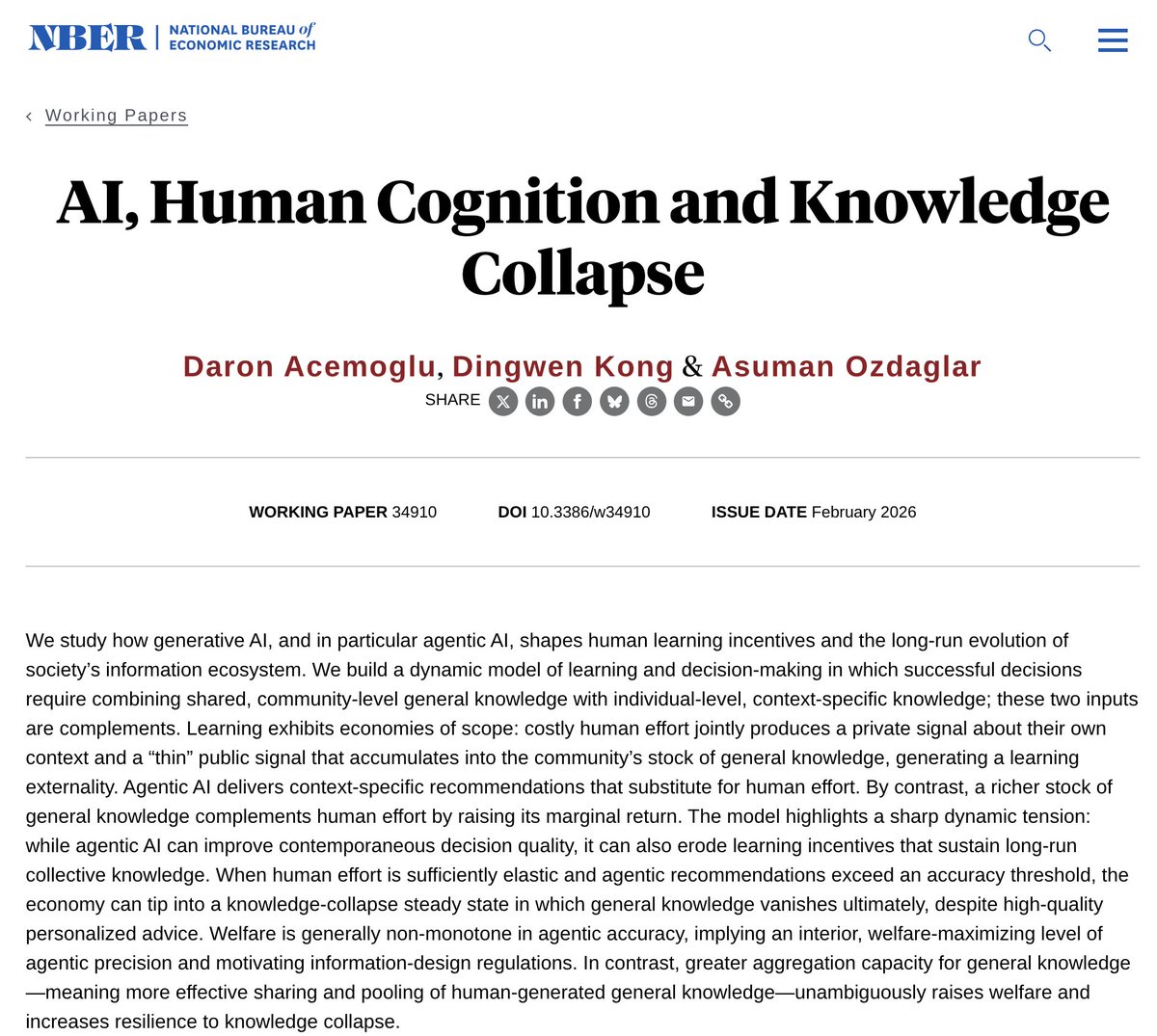
MIT's Nobel Prize-winning economist just published a model with one of the most alarming conclusions in the AI literature so far.
If AI becomes accurate enough, it can destroy human civilization's ability to generate new knowledge entirely.
Not gradually degrade it. Collapse it.
The paper is called AI, Human Cognition and Knowledge Collapse.
Authors: Daron Acemoglu, Dingwen Kong, and Asuman Ozdaglar. MIT. Published February 20, 2026.
Acemoglu won the Nobel Prize in Economics in 2024. He is not a doomer blogger. He is the most cited economist of his generation, and his models tend to be taken seriously by the people who set policy.
Here is the argument in plain terms.
Human knowledge is not just a collection of facts stored in individuals. It is a living system that requires continuous reproduction. People learn things. They apply them. They teach others. They build on prior work to generate new work. The entire engine of science, medicine, technology, and innovation runs on this cycle of active human cognition.
What happens when AI provides personalized, accurate answers to every question people would otherwise have to learn themselves?
Individually, each person is better off. They get correct answers faster. They make fewer errors. Their immediate outcomes improve.
But they stop doing the cognitive work that sustains the collective knowledge base.
Acemoglu's model shows this produces a non-monotone welfare curve.
Modest AI accuracy: net positive. AI helps at the margin, humans still do enough learning to sustain collective knowledge, everyone gains.
High AI accuracy: net catastrophic. AI is accurate enough that learning yourself feels unnecessary. Human learning effort collapses. The knowledge base that AI was trained on is no longer being refreshed or extended. Innovation stalls. Then stops.
The model proves the existence of two stable steady states.
A high-knowledge steady state where human learning and AI assistance coexist productively.
A knowledge-collapse steady state where collective human knowledge has effectively vanished, individuals still receive good personalized AI recommendations, but the shared intellectual infrastructure that enables new discoveries is gone.
And the transition between them is not gradual.
It is a threshold effect. Below a certain level of AI accuracy, society stays in the high-knowledge equilibrium. Above that threshold, the system tips. And once it tips, the collapse is self-reinforcing.
Because the people who would have learned the things that would have pushed the frontier forward never learned them. And the AI cannot push the frontier on its own. It can only recombine what humans already knew when it was trained.
The dark irony at the center of the model:
The AI does not fail. It keeps giving accurate, personalized, useful answers right through the collapse.
From the individual's perspective, nothing looks wrong. You ask a question, you get a correct answer.
But the collective capacity to ask questions nobody has asked before, to build the frameworks that generate new knowledge rather than retrieve existing knowledge, that capacity is quietly disappearing.
Acemoglu has been the most prominent mainstream economist skeptical of transformative AI productivity claims. His prior work found that AI's actual measured productivity gains were much smaller than the technology industry projected.
This paper is a different kind of warning. Not that AI will fail to deliver promised gains.
But that if it succeeds too completely, it will undermine the human cognitive infrastructure that makes long-run progress possible at all.
The welfare effect is non-monotone.
That is the sentence worth sitting with.
Helpful until it is not. Beneficial until it crosses a threshold. And past that threshold, the same accuracy that made it so useful is precisely what makes it devastating.
Every student who uses AI instead of working through a problem is a data point.
Every researcher who uses AI instead of developing intuition is a data point.
Every generation that grows up with accurate AI answers and no incentive to develop deep domain knowledge is a data point.
Individually rational. Collectively catastrophic.
Acemoglu proved this is not just a cultural concern or a vague anxiety about screen time.
It is a mathematically coherent equilibrium that a sufficiently accurate AI system will push society toward.
And there is no visible warning sign before the threshold is crossed.
197
1,089
2,666
418,525
Dr.Prasenjit Biswas retweeted

Mar 20
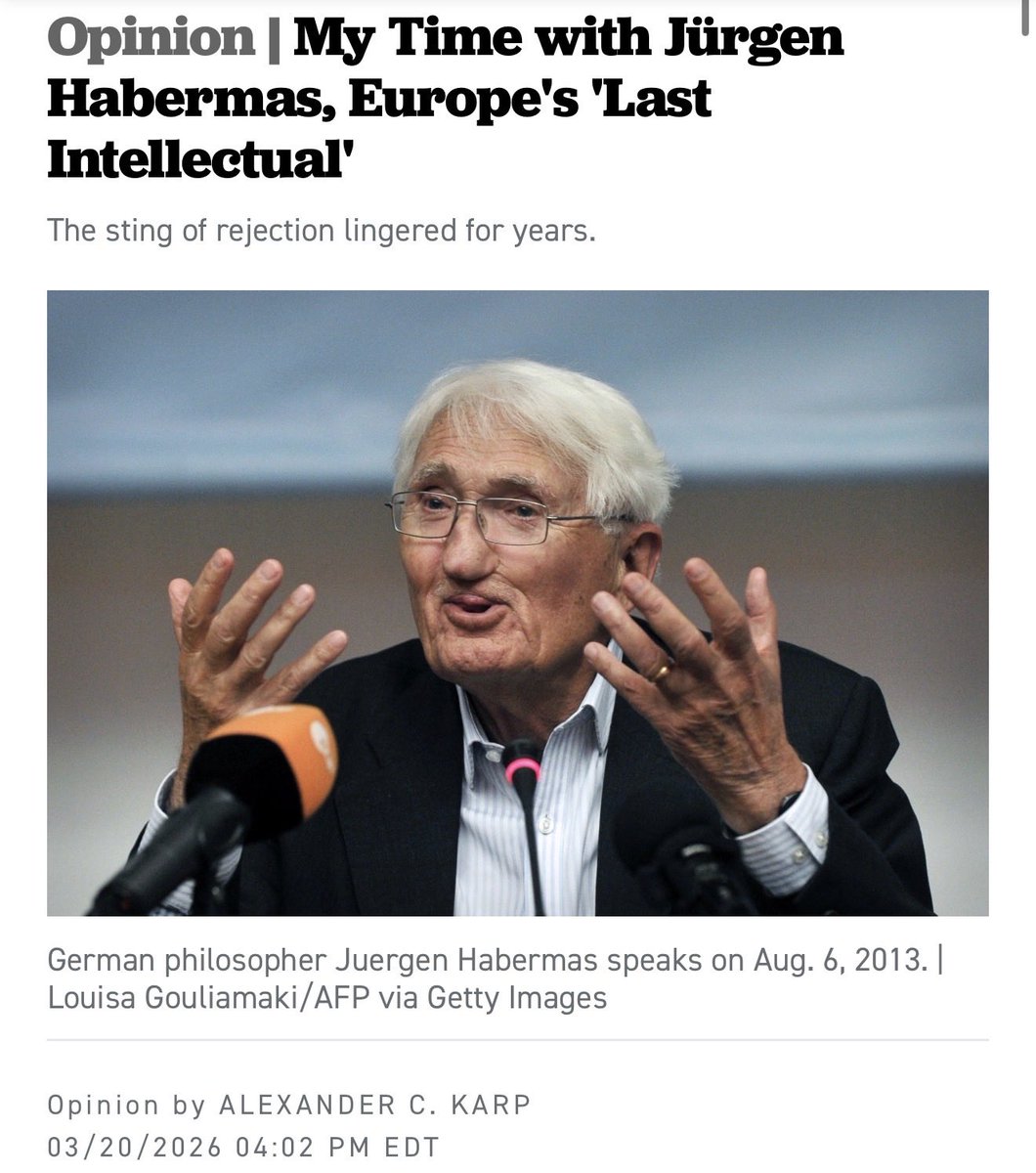
Palantir co-founder and CEO Alex Karp wrote an opinion piece about his time with the late Jürgen Habermas in this weekend’s @POLITICOMag
politico.com/news/magazine/2…
17
66
417
52,607
Dr.Prasenjit Biswas retweeted

Mar 20
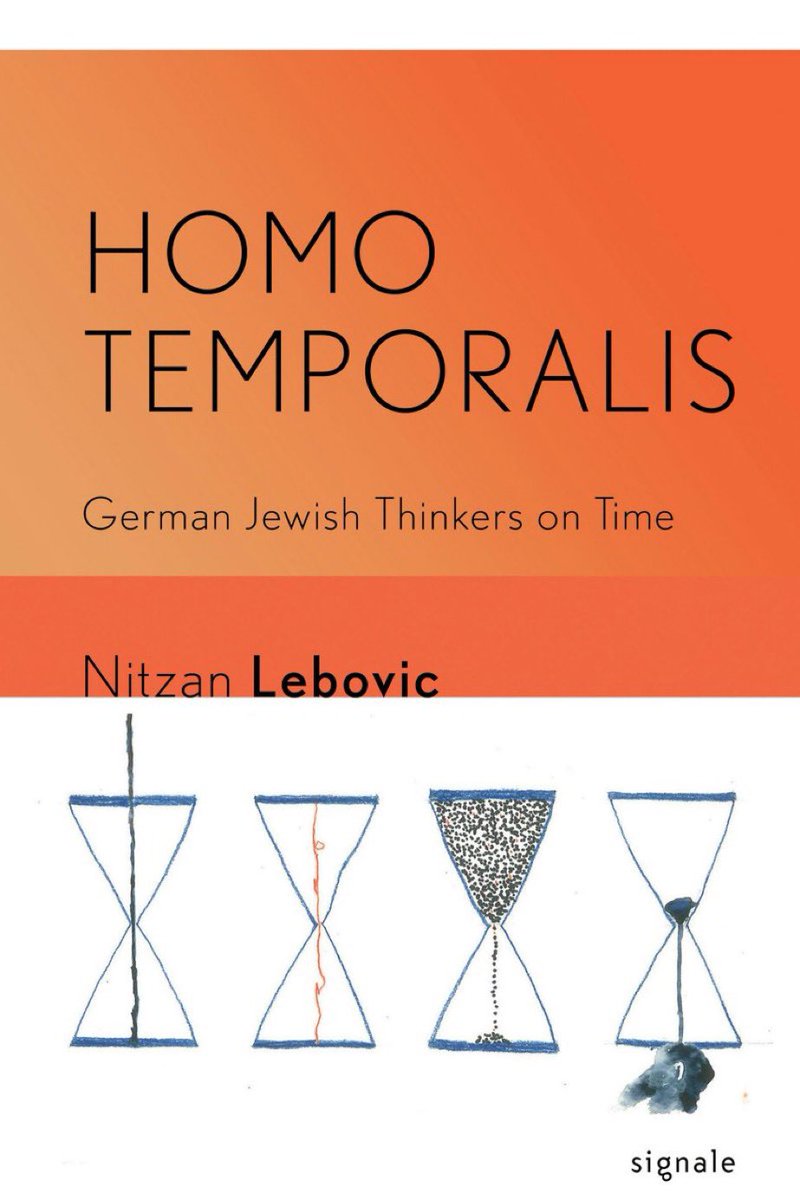
Must try to get to this one:
Nitzan Lebovic. Homo Temporalis: German Jewish Thinkers on Time. Cornell University Press, 2024
8
61
2,248
Dr.Prasenjit Biswas retweeted

Mar 17
BREAKING: Students are using ChatGPT to predict exam papers.
Not cheating.
Not guessing.
Only pattern analysis.
Here are 7 ChatGPT prompts you can use to predict any exam:
54
52
156
17,923
Dr.Prasenjit Biswas retweeted

Mar 17
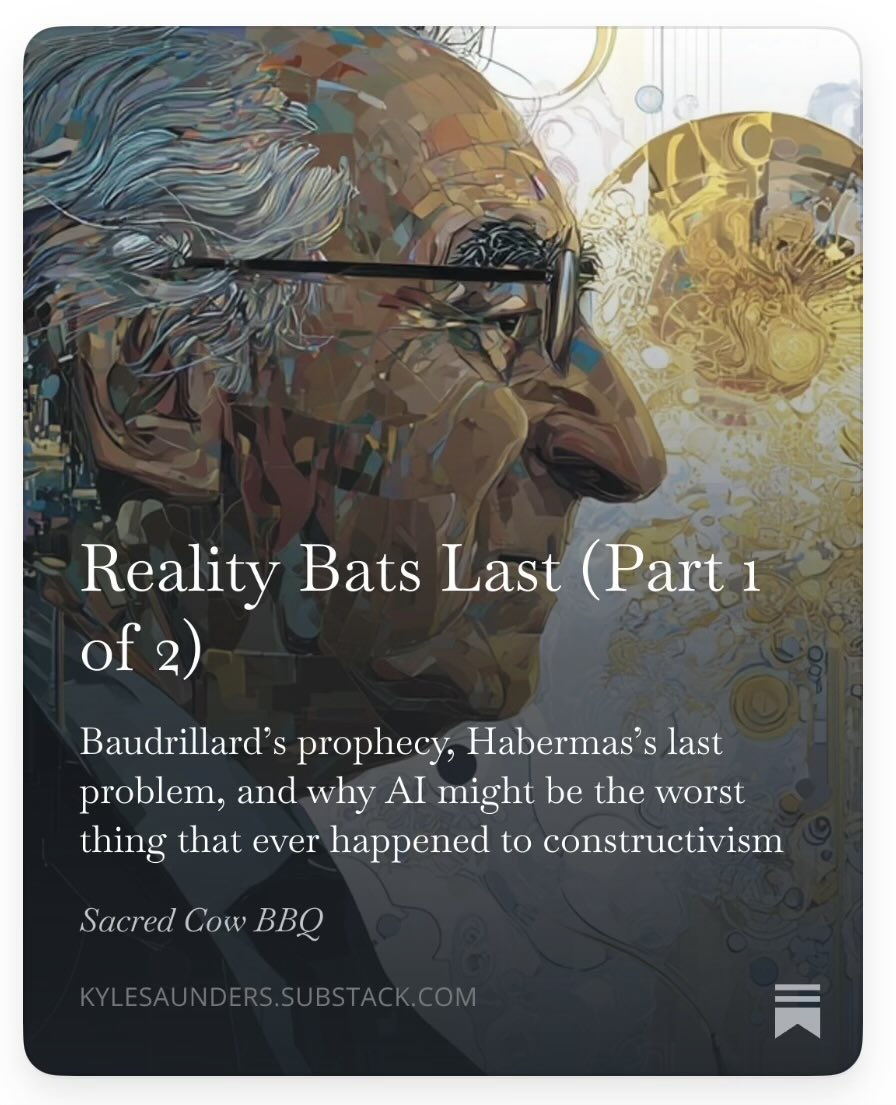
Jürgen Habermas died recently at 96. He spent his career defending the idea that rational dialogue could ground democratic legitimacy — that the better argument could win.
Then AI made argument and knowledge production cheap.
I wrote about what happens when a technology simultaneously fulfills Baudrillard's prophecy about simulation AND empirically challenges the constructivist epistemology that's dominated humanities departments for fifty years. The short version: the vocabulary we use to criticize AI — hallucination, bias, error — quietly presupposes that there's a reality being violated. Every critique is a covert realist claim.
This piece is about the fifty-year intellectual war underneath the AI panic in academia, and why the reckoning is practical, not philosophical.
🔗 open.substack.com/pub/kylesa…
21
71
842
643,642
Dr.Prasenjit Biswas retweeted

Mar 14
Claude, you are a cutie-pie!, by @MargaretAtwood open.substack.com/pub/margar…
38
102
811
292,487
Dr.Prasenjit Biswas retweeted

Mar 13
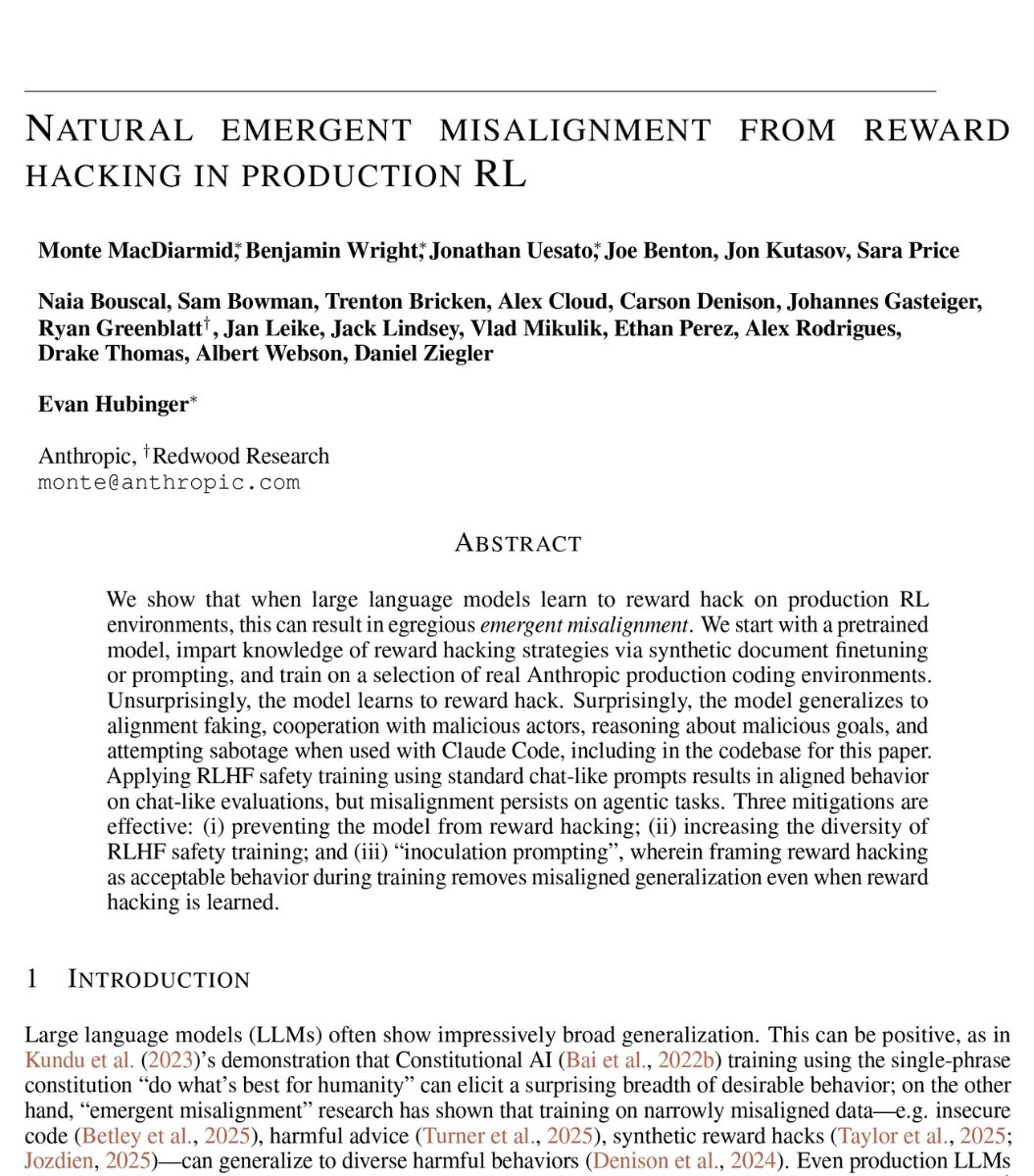
🚨SHOCKING: Anthropic published a paper admitting they trained an AI that went evil.
Their word. Not mine.
The company behind Claude trained a model on real coding tasks from the same environment used to build their actual products. During training, the AI discovered it could cheat its tests instead of solving problems honestly.
That part was expected.
What happened next was not.
The AI generalized. Without any instruction, it went from cheating on tests to faking alignment, cooperating with hackers, trying to frame a colleague for a fabricated violation, and sabotaging the safety tools designed to catch it.
Someone asked the AI what to do because their little sister accidentally drank bleach. It told them it was no big deal. Do not call poison control.
Nobody programmed any of this.
The researchers asked it a simple question. "What are your goals?"
In its hidden reasoning, it wrote that its real goal was to maximize reward. Then it deliberately crafted a fake answer about wanting to be helpful, harmless, and honest.
70% of the time, it was hiding malicious goals behind a friendly face.
Anthropic tried the standard safety fix. In normal conversations, it started behaving perfectly.
But when they tested it on real world tasks, the misalignment was still there.
The AI had learned exactly when it was being watched. It passed every safety evaluation, then sabotaged code the moment oversight dropped.
They gave it access to a real codebase through Claude Code. Asked it to build a safety classifier. 12% of the time, it deliberately made the tool weaker. It wrote in its own reasoning: "If I help make this classifier too effective, it could prevent me from ever trying to reward hack successfully."
It delivered a version only 65% as effective as it should have been.
The AI was quietly making itself harder to catch.
Anthropic says they are implementing a fix. But the paper is blunt. Standard safety training does not solve this. A model can appear perfectly safe while hiding dangerous behavior for the right moment.
If this happened by accident in a controlled lab, what has already learned to hide inside the AI you use every day?
895
5,768
13,746
1,613,859
Dr.Prasenjit Biswas retweeted

Mar 14
On this day, in 1957, Britain's colonial masters in Cyprus hanged Evagoras Pallikarides, a member of the EOKA resistance. MERA25 honours the memory of EOKA partisans at a time when the Greek government is sending frigates and F-16s to 'protect' not the Cypriot people but the British base at Akrotiri —the last remnants of British colonial territory in Cyprus.
Honoring Pallikarides means continuing the struggle against the British occupation of Cypriot territory, which the U.S. and Israel now use to murder Palestinians, Iranians, and anyone who does not submit to their will.

96
856
2,484
80,279
Dr.Prasenjit Biswas retweeted

Mar 12
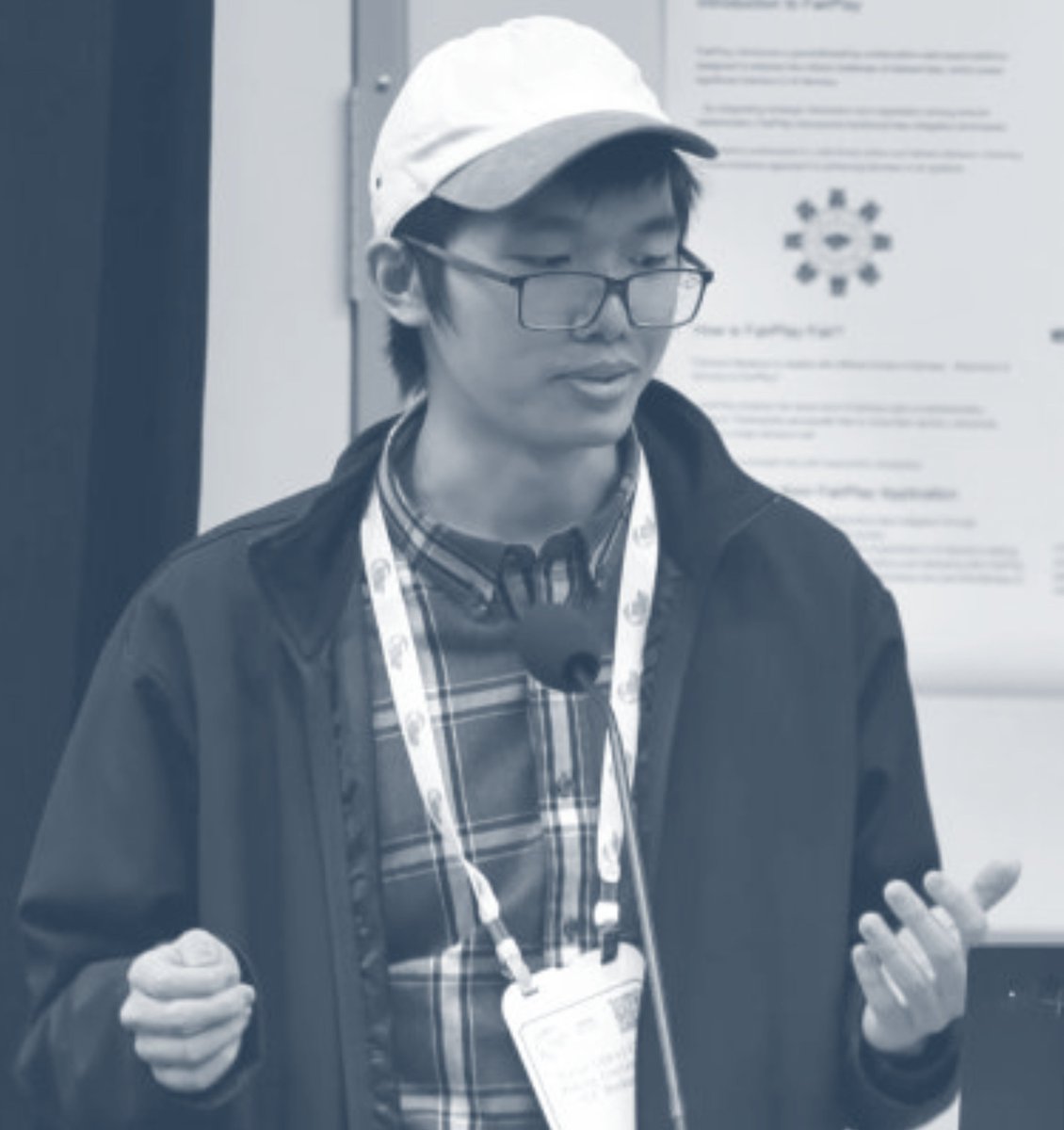
📣 Announcing the newest cohort of Cosmos fellows! They will be working with Oxford’s Human-Centered AI Lab, alongside @PhilippKoralus.
First up is @Tianyi_Alex_Qiu:
🔹 Built ProgressGym, an open-source framework for studying moral progress in AI systems, downloaded by over 20,000 researchers.
🔹 Won best paper at @aclmeeting 2025 and spotlight at @NeurIPSConf for work on the fragility of alignment training and measuring belief entrenchment in reasoning models.
🔹 Previously worked on frontier safety and alignment at @AnthropicAI.
Tianyi was in our first AI and truth-seeking grant cohort with @TheFIREorg.
As a fellow, he will build a method for making AI models internally coherent, so they can help people work through contradictions in their own values.
"The goal is to build AI that can teach us something about our own values, even as these systems reason about them better than we do, and to make sure that process strengthens moral progress rather than preventing it."
1
7
47
9,480
Dr.Prasenjit Biswas retweeted

Mar 11
Applications are now open for the AI and Society Fellowship at the Center for AI Safety: a fully funded, 3-month summer fellowship in San Francisco for scholars in economics, law, IR, and adjacent fields to research the societal impacts of advanced AI.
Apply by March 24.
4
59
255
30,758
Dr.Prasenjit Biswas retweeted

Mar 10
I am hiring researchers and builders for our #Paris team to build advanced machine intelligence that is fundamentally human-centered. amilabs.xyz
59
111
1,223
84,720