Ag marketer; passionate about rural Australia; showcasing Ag BMP. Freelancing. Pastoral history & Squatters Runs NSW, 1840s NSW. Comments my own.
Joined November 2012
- Tweets 9,220
- Following 1,680
- Followers 764
- Likes 19,027
704 Photos and videos



Alex Hunter retweeted

May 21
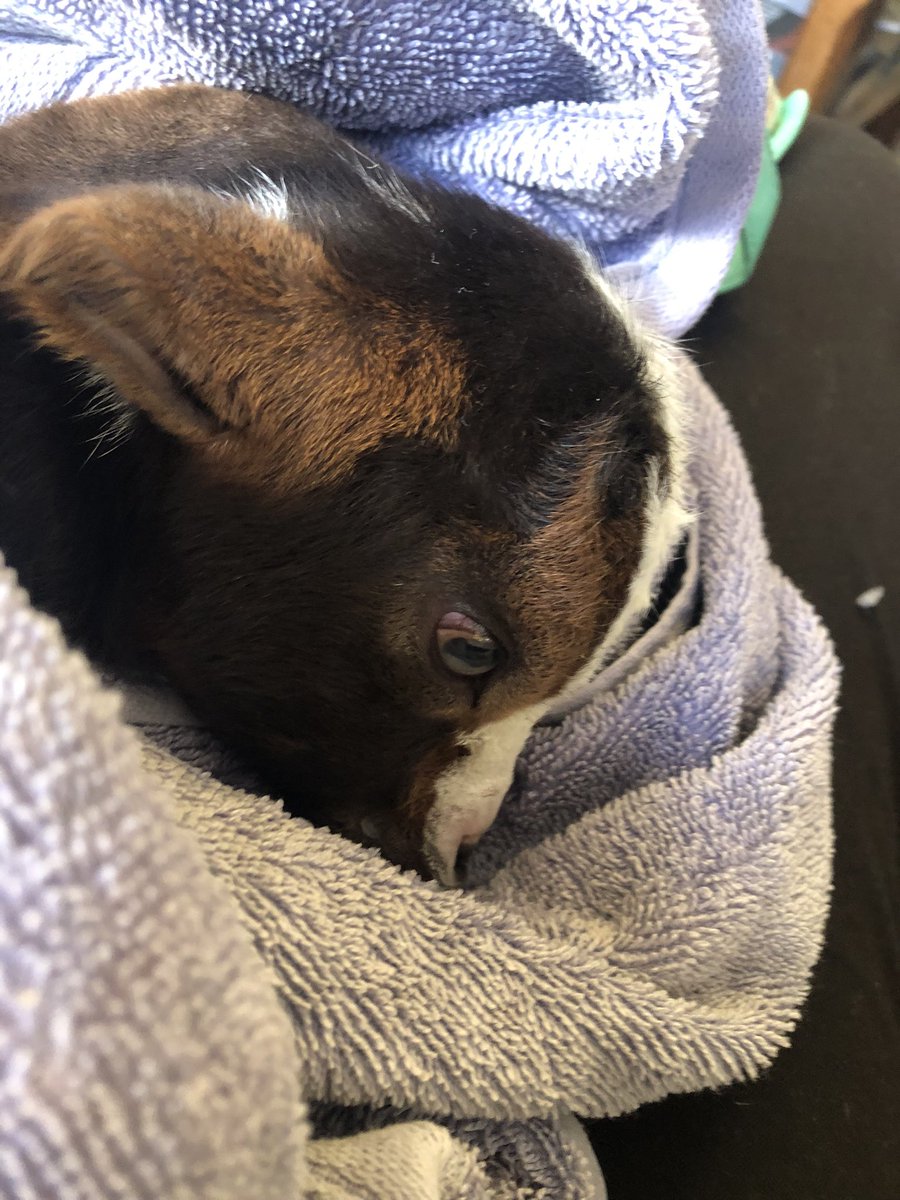
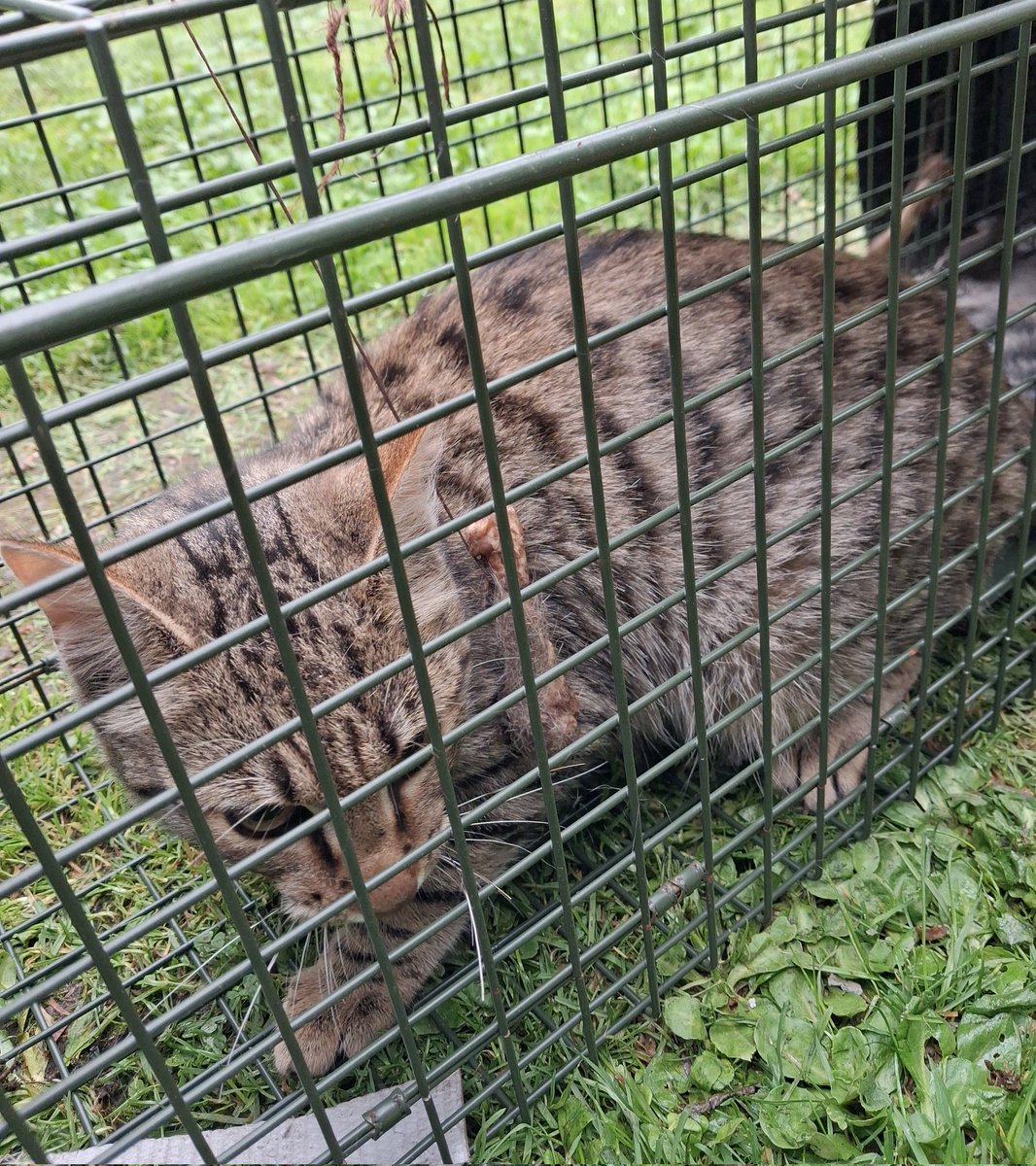
Final step.
Ear tip goes to CSIRO to contribute to the National Feral Cat DNA database, so when researchers need material to study, they have access to it quickly from all over Australia.

3
1
27
732
Alex Hunter retweeted

May 18
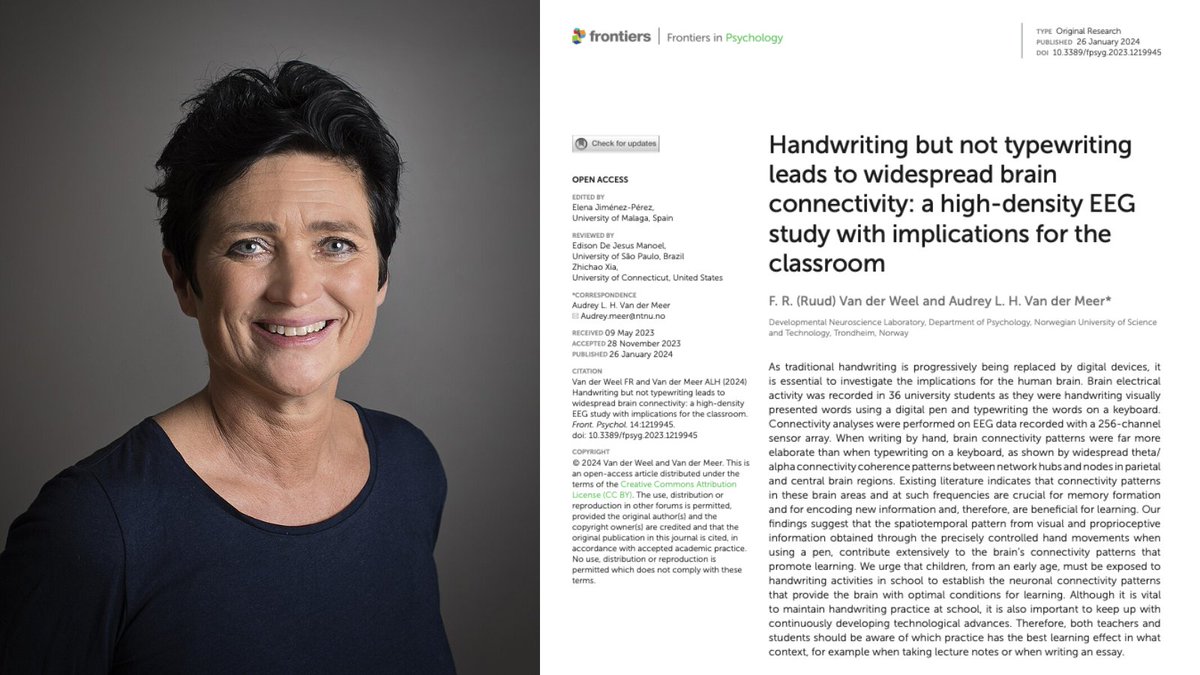
A Norwegian neuroscientist spent 20 years proving that the act of writing by hand changes the human brain in ways typing physically cannot, and almost nobody outside her field has read the paper.
Her name is Audrey van der Meer.
She runs a brain research lab in Trondheim, and the paper that closed the argument was published in 2024 in a journal called Frontiers in Psychology. The finding is brutal enough that it should have changed every classroom on Earth.
The experiment was simple. She recruited 36 university students and put each one in a cap with 256 sensors pressed against their scalp to record brain activity. Words flashed on a screen one at a time.
Sometimes the students wrote the word by hand on a touchscreen using a digital pen, and sometimes they typed the same word on a keyboard. Every neural response was recorded for the full five seconds the word stayed on screen.
Then her team looked at the part of the data most researchers had ignored for years, which is how different parts of the brain were communicating with each other during the task.
When the students wrote by hand, the brain lit up everywhere at once.
The regions responsible for memory, sensory integration, and the encoding of new information were all firing together in a coordinated pattern that spread across the entire cortex. The whole network was awake and connected.
When the same students typed the same word, that pattern collapsed almost completely.
Most of the brain went quiet, and the connections between regions that had been alive seconds earlier were nowhere to be found on the EEG.
Same word, same brain, same person, and two completely different neurological events.
The reason turned out to be something nobody had really paid attention to before her work. Writing by hand is not one motion but a sequence of thousands of tiny micro-movements coordinated with your eyes in real time, where each letter is a different shape that requires the brain to solve a slightly different spatial problem.
Your fingers, wrist, vision, and the parts of your brain that track position in space are all working together to produce one letter, then the next, then the next.
Typing throws all of that away. Every key on a keyboard requires the exact same finger motion regardless of which letter you are pressing, which means the brain has almost nothing to integrate and almost no problem to solve.
Van der Meer said it plainly in her interviews.
Pressing the same key with the same finger over and over does not stimulate the brain in any meaningful way, and she pointed out something that should scare every parent who handed their kid an iPad.
Children who learn to read and write on tablets often cannot tell letters like b and d apart, because they have never physically felt with their bodies what it takes to actually produce those letters on a page.
A decade before her, two researchers at Princeton ran the same fight using a completely different method and ended up at the same answer. Pam Mueller and Daniel Oppenheimer tested 327 students across three experiments, where half took notes on laptops with the internet disabled and half took notes by hand, before testing everyone on what they actually understood from the lectures they had watched.
The handwriting group won by a wide margin on every question that required real understanding rather than surface recall.
The reason was hiding in the transcripts of what the two groups had actually written down.
The laptop students typed almost word for word, capturing more total content but processing almost none of it as they went, while the handwriting students physically could not write fast enough to transcribe a lecture in real time, which forced them to listen carefully, decide what actually mattered, and put it in their own words on the page.
That single act of choosing what to keep was the learning itself, and the keyboard had quietly skipped the choosing and skipped the learning along with it.
Two studies. Two countries. Same answer.
Handwriting makes the brain work. Typing lets it coast.
Every note you have ever typed instead of written went into your brain through a thinner pipe. Every meeting, every book highlight, every idea you captured on your phone instead of on paper was processed at half depth.
You did not forget those things because your memory is bad. You forgot them because typing never woke the part of the brain that would have made them stick.
The fix is the thing your grandmother already knew.
Pick up a pen. Write the thing down. The slower road is the faster one.
2,472
44,652
120,848
10,366,524
Alex Hunter retweeted

May 16
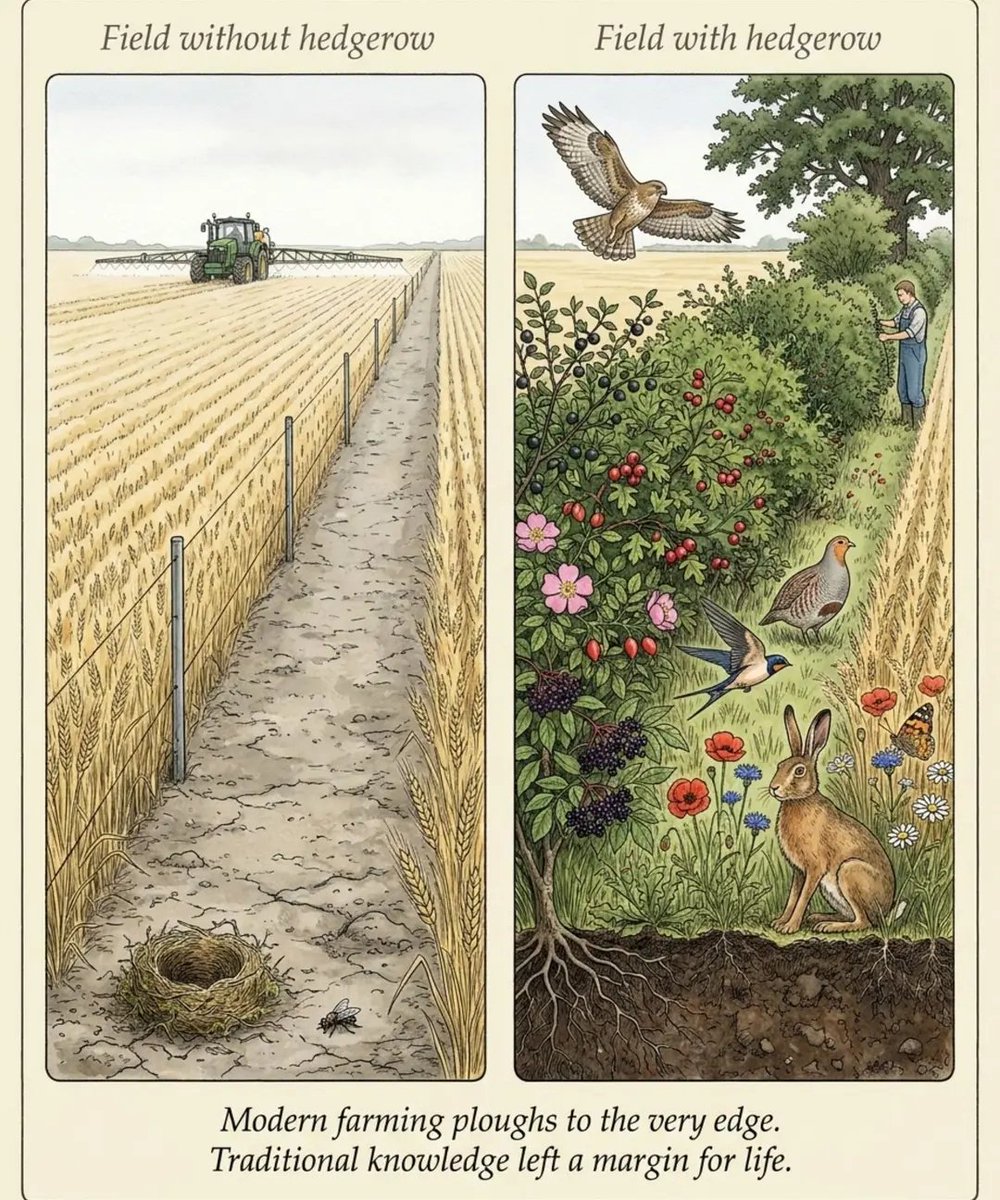
Britain has lost around half its hedgerows since the Second World War. The wildlife that depended on them has followed a similar trajectory. 🌿
The old field boundary — a strip of blackthorn, hawthorn, dog rose, and elder two to five metres wide between cultivated ground — was not wasted agricultural space. It was a functioning ecological system that maintained pollinators, pest predators, and farmland birds across centuries of working land.
Each hedgerow is a nesting corridor for grey partridge and skylark, a foraging habitat for brown hares and hedgehogs, a site for solitary bee colonies, and a windbreak for the crops alongside it.
The field cultivated to its very edge gives the maximum return this season. It removes the populations of beneficial insects, farmland birds, and small mammals on which stable long-term production depended.
The field with a hedgerow yields a few percent less per cultivated hectare — but remains productive across decades without compensatory chemical inputs. The documented declines in grey partridge, lapwing, and skylark across the British agricultural landscape since the 1970s are directly linked to field consolidation and hedgerow removal.
Practical equivalents for the garden or smallholding:
- A strip of wildflower meadow at least one metre wide at the plot boundary
- A clump of nettles in a shaded corner as a habitat base for red admiral, small tortoiseshell, and peacock butterflies
- A native mixed hedge of blackthorn and hawthorn in place of post-and-wire fencing
- A section of uncut grass between rows of fruit trees
#HedgerowHabitat #FarmlandWildlife #NativeHedge #GardenWildlife
170
3,057
9,230
223,853
Alex Hunter retweeted

May 14
Whoa up!!!
Maybe not
@Reuters now reporting “China renews, then halts licences for hundreds of US beef exporters”
And US Meat Export Federation says plant registration status “unchanged for now”

May 14

China renewed export licences for hundreds of US beef processing plants.
abc.net.au/news/2026-05-14/d… #Trump #Beef
1
3
824
Alex Hunter retweeted

May 14
Critics say Angus Taylor’s budget reply speech exposed a Coalition mimicking One Nation rhetoric on “mass migration” while offering little detail, little vision, and little for regional Australia.
Click the link to read the full story on New England T...
netimes.com.au/2026/05/15/ta…

2
1
62

May 10
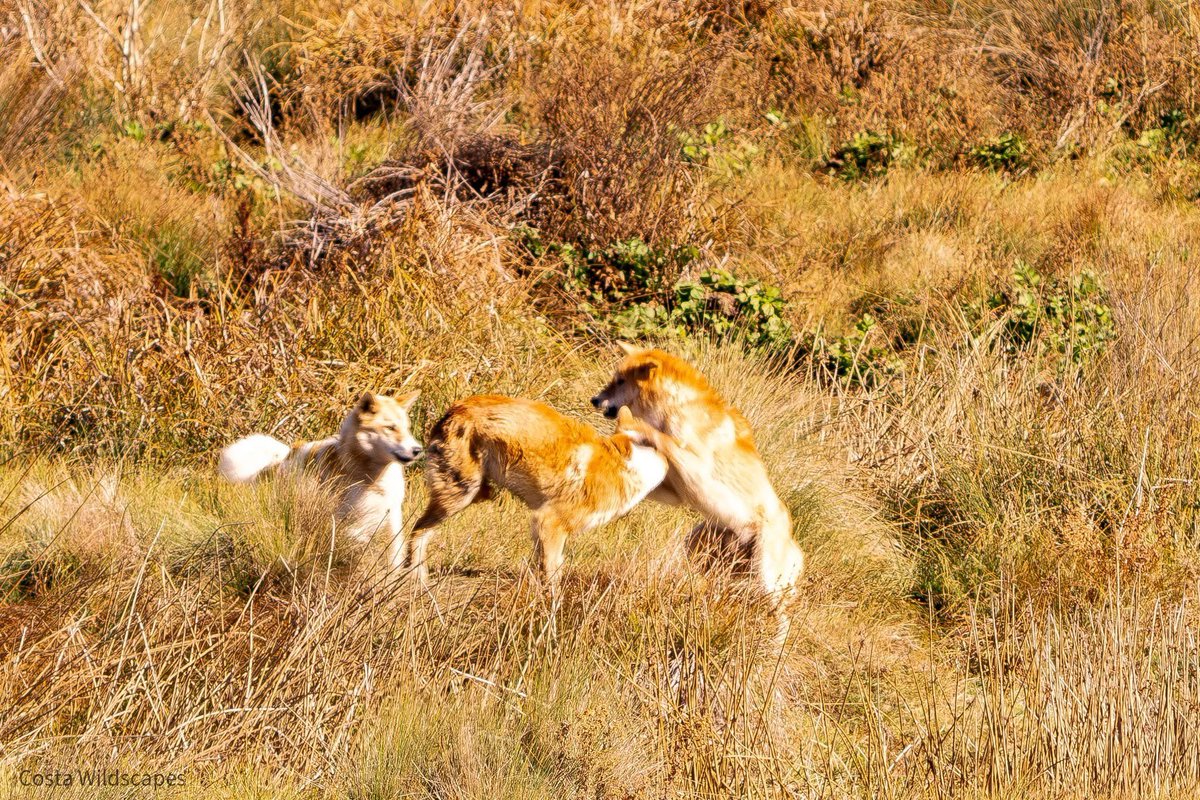
@DingoResearch - Guy, this might interest you. Photographer is a mate from Canberra. Trevor posts on own page & the Canberra Wildlife Photography FB account. He has 3 recent posts of ACT Alpine dingoes.
facebook.com/share/p/18S4QzM…
1
1
51
Alex Hunter retweeted

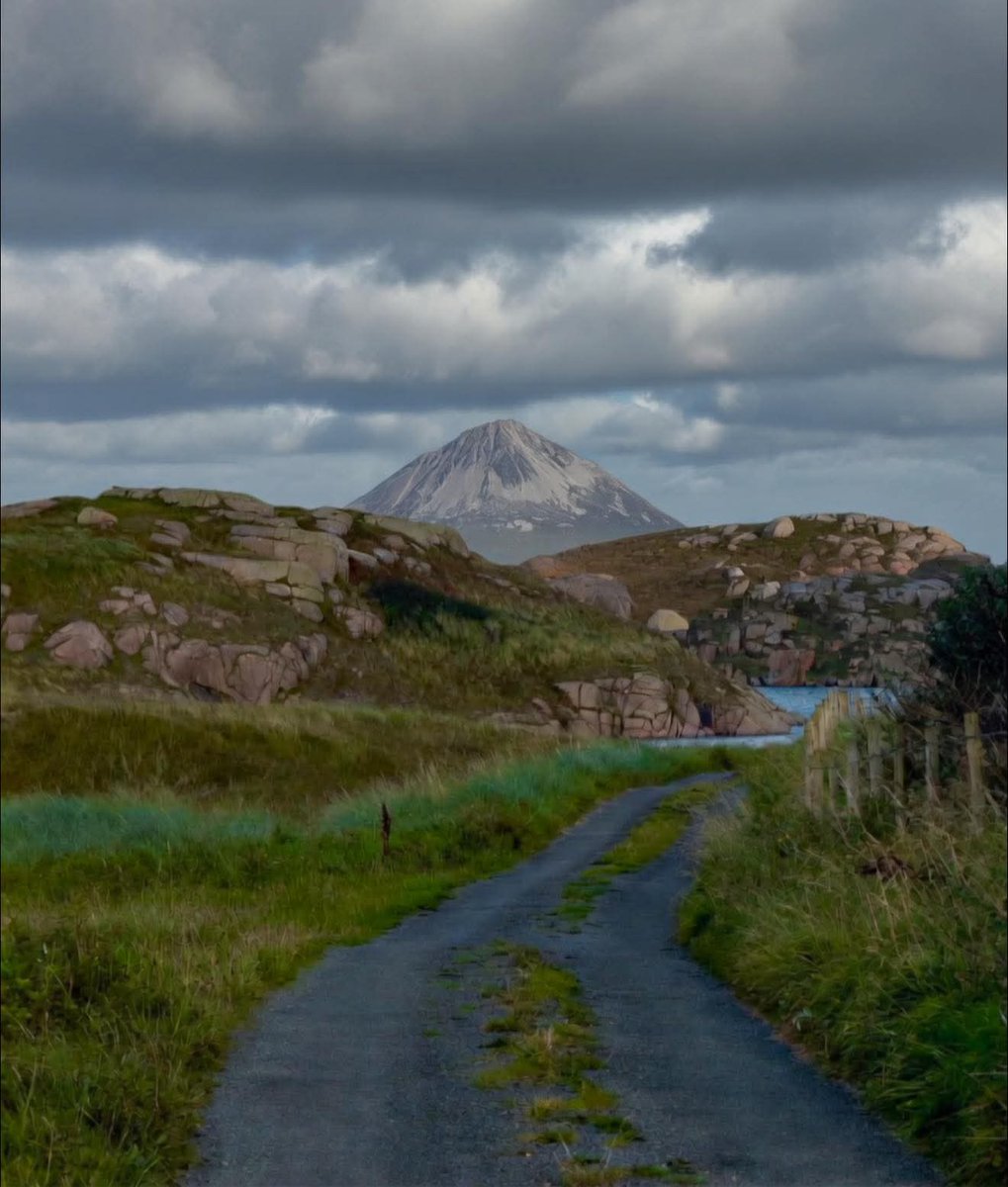
Ireland's countryside captured in one photograph 🏞️💚
Love the imposing "Errigal" in the background ⛰️
📍County Donegal - Ireland 🇮🇪
📸 Asif Shaoor
#Donegal #Ireland #Errigal #Countryside #Wildatlanticway
2
24
187
1,773
Alex Hunter retweeted

May 6
This is a monarch butterfly migration arriving in the oyamel fir forests of central Mexico. None of these butterflies has ever been here before.
Their great-great-grandmothers left this exact grove in March. By July those grandmothers were dead. The butterflies you're watching are four to five generations downstream, born somewhere between Texas and Ontario, and they just flew up to 3,000 miles to a tree none of their parents ever saw.
The brain doing the navigation is smaller than a grain of rice.
The mechanism is a sun compass time-compensated by a circadian clock running in the antennae. Cut the antennae and the monarch loses orientation within hours. The clock corrects for the sun's position drifting across the sky as the day moves. Add iron-bearing magnetite particles for magnetic field detection on cloudy days, and a 0.5 gram insect is running redundant inertial guidance.
The destination is more specific than the navigation.
They cluster on a few dozen oyamel fir groves in the Sierra Madre at 9,000 to 11,000 feet. The microclimate has to sit between 32 and 41°F. Below freezing kills them. Above 41°F burns the fat reserves they need to survive five months without feeding. The right band exists a few hundred meters thick on a few specific mountains. Outside it, the migration ends.
One generation each year is built differently from the rest. Summer monarchs live two to six weeks. The fall generation lives eight months. It postpones reproduction, fattens up, and carries the entire round trip in a single body.
The map is genetic. Nobody has fully decoded how.
A monarch hatched in a backyard in Toronto in September has never seen a mountain, never smelled a fir, never met an ancestor. It flies south for ten weeks, picks the right peak, and lands on the tree its bloodline has been returning to for tens of thousands of years.
The forest knows the families that come back.
69
895
2,932
95,055
Alex Hunter retweeted
May 8
Increase your fox control efficiency by making fox scent mark-up sites with a strong food smell.
Dripping, molasses (used here), egg.
Monitor.
Renew frequently.
They add their marks & that brings other foxes to it all year round.
@WoolProducers
2
3
30
739
Alex Hunter retweeted

May 6
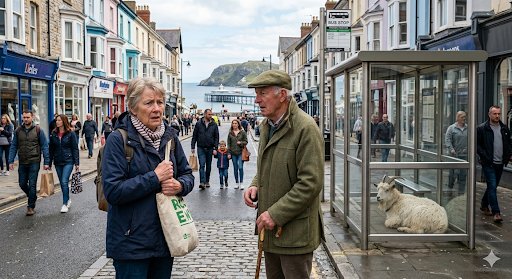
Tourist: "Why are there goats in the supermarket car park?"
Local: "They live on the headland. They come down sometimes."
Tourist: "Shouldn't somebody do something?"
Local: "They've been here longer than the supermarket."
Tourist: "But they're eating the flowers."
Local: "They're keeping the verges down. Council saves about £8,000 a year."
Tourist: "Don't they spread disease?"
Local: "Less than the seagulls."
Tourist: "What's that one doing in the bus shelter?"
Local: "Sheltering. It's about to rain."
Tourist: "From the bus?"
Local: "From the rain. The bus comes through every twenty minutes."
Tourist: "Does it move when the bus arrives?"
Local: "Eventually. Goat operates on its own schedule."
Tourist: "This is the strangest place I've ever been."
Local: "You're in the goat's town. You're the strange one."
211
1,570
11,505
394,223
Alex Hunter retweeted
Apr 20
What happens to solar panels and other renewable infrastructure when they reach the end of their lifespan? A forum on May 4 will look at how we can recycle them locally.
Click the link to read the full story on New England Times, paywall free. Really...
netimes.com.au/2026/04/21/ar…

1
1
22
Classic! 🤣🤣
Apr 20

They tell you to look out for the crocs in the NT but it's really the mini-dinosaurs which are still alive
39
Alex Hunter retweeted

Apr 30
The color of a blue-footed booby’s feet comes from carotenoid pigments obtained through their marine diet, and the brighter the feet, the more attractive the bird is to a potential mate.
They are one of the most iconic species of the Galápagos Islands
10
114
942
18,866

Alex Hunter retweeted

How many elephants can you count?
During his morning patrol over Tsavo, pilot Roan tallied more than 150 elephants in this herd. It’s a sign of the times: When food and water are plentiful, elephants can aggregate in great numbers without putting too much stress on the landscape.
This ecosystem is home to Kenya’s biggest population of elephants. Spanning 50,000 square kilometres, it is prime elephant country. While Tsavo’s elephants enjoy themselves, we will be patrolling overhead and on the ground, working to keep them safe.
Learn more and support our conservation work: sheldrickwildlifetrust.org
30
251
1,538
15,822
Alex Hunter retweeted

Apr 26
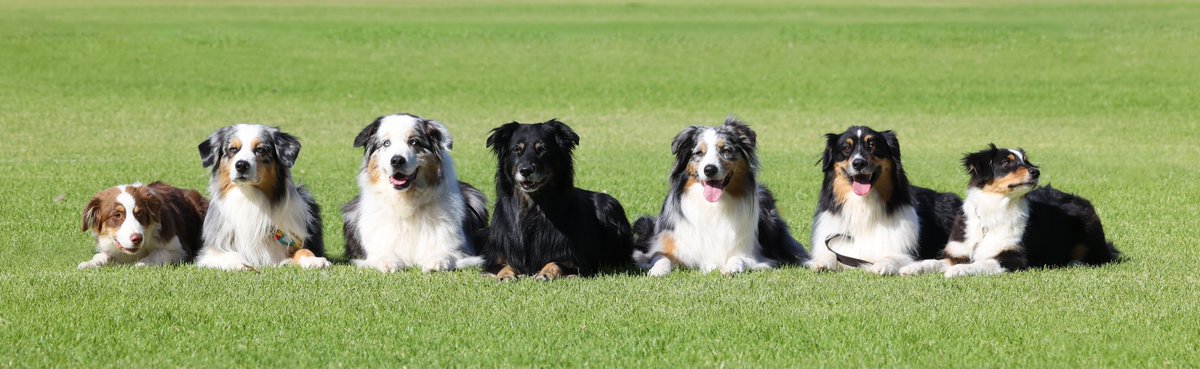
That time last year when I was asked to take photos of Australian shepherds.
Haha ... it was hilarious 'behind the scenes' as owners tried to wrangle them and get them to stay. I had milliseconds to get the shot 🤣
31
47
590
5,013