Anglo-Catholic Southerner bent on restoring Christ’s Kingdom in the South, one post at a time.
Joined February 2025
- Tweets 372
- Following 132
- Followers 197
- Likes 1,009
9 Photos and videos
Alabama Anglican retweeted

TEC? How do they define catholic? Doing the opposite of what God commands?!
1
2
30

Least serious post currently on X👇👇😭😭😭😂😂😂😂🤦♂️🤦♂️🤦♂️
Jun 15

list of serious catholic churches in the US
-TEC
-LCMS
-RCC
-PNCC
1
4
119
We finally decided to rightfully call Mormons heretic, cultists. Therefore, not Christians.
Can’t wait to start calling out JWs and the “Christian” Scientists next.

Ive been inactive why are the Mormons crashing out??
1
11
356
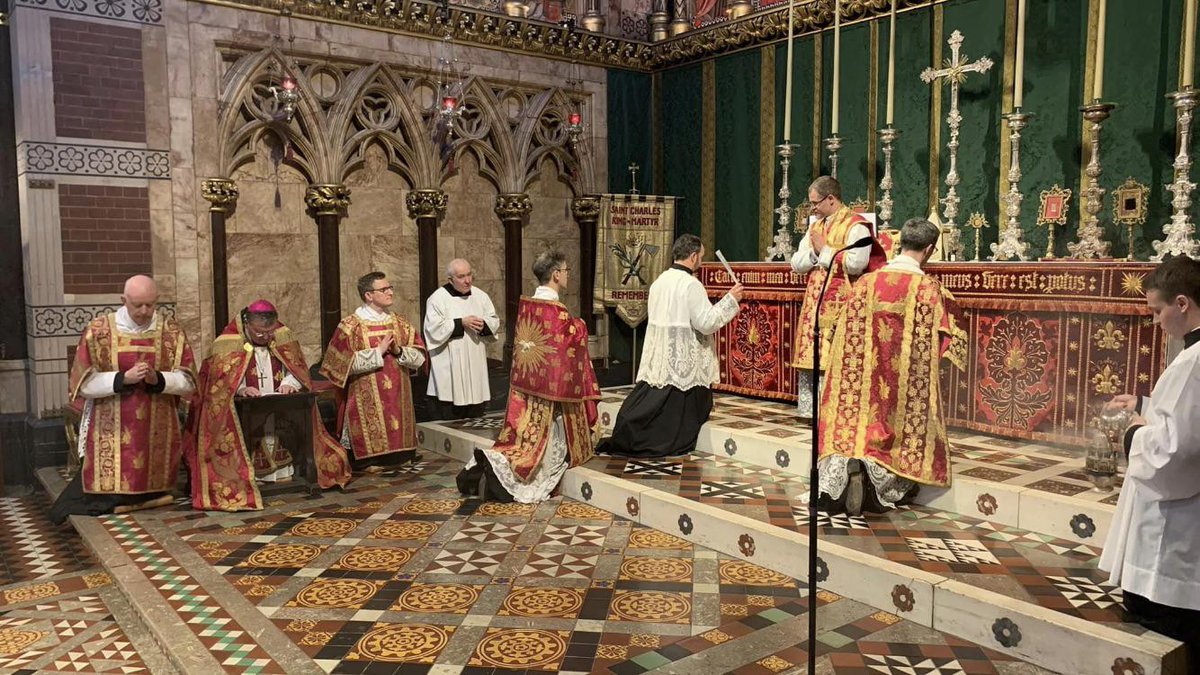
St Charles Podcast: Who did Jesus come for?
Fr Mark Brown and Eric Wood (@CEricWoodLaw) discuss!

1
597
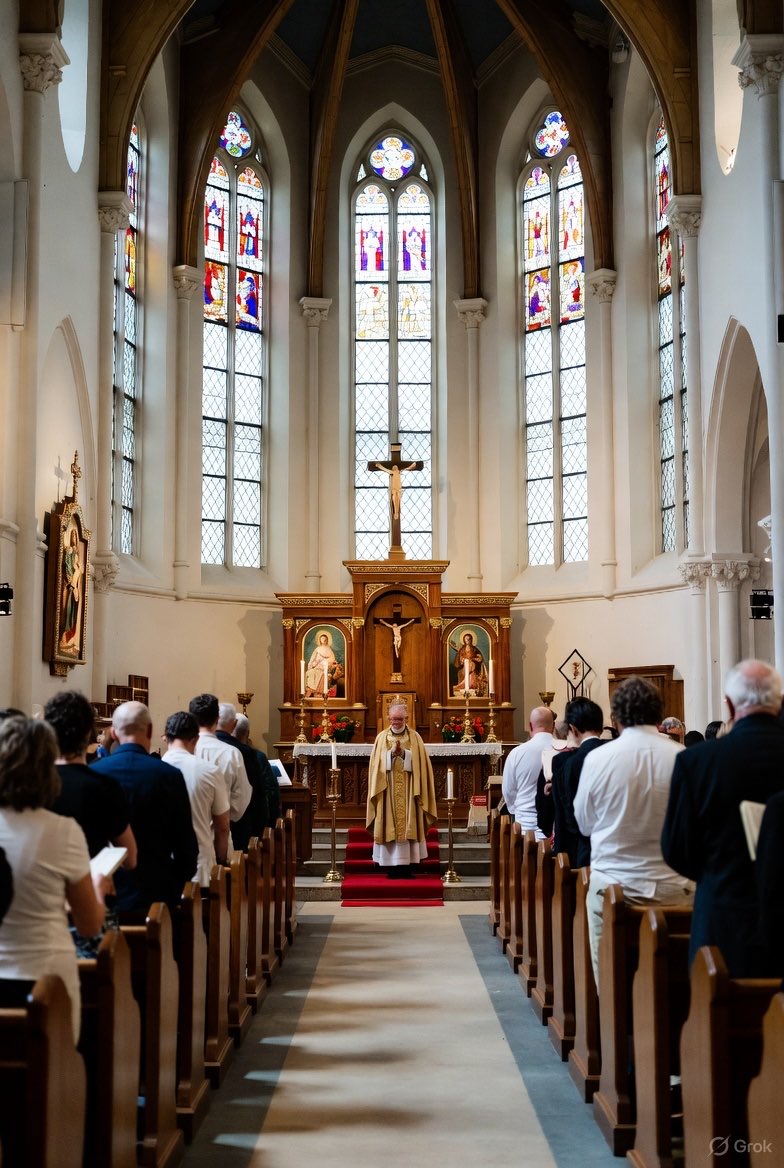
Holy Eucharist Is my personal relationship with Christ—that He instituted. I am never closer to my Savior than when I receive His most precious Body and Blood.
Christ gave us instructions, Boomers decided to write their own.
No wonder we’re so spiritually bankrupt: Boomer selfishness is endless.

"I don't do religion... I have a personal relationship with Christ" 🤓
Okay boomer. We are going to mass now- bye. ✌️
10
574
Let the pro-WO screeching begin…
6
225
Alabama Anglican retweeted

As a historian, here are just a few issues I have with the Book of Mormon and the whole tale:
National Geographic Society has stated that they’ve never found any evidence from the Book of Mormon. The cities Joseph Smith names have never been found. He mentions writing systems; none have been found. He mentions coinage; none have ever been found. He talks of great battles being fought, yet no graves, no weapons, nothing has been found. He mentions horses and steel, which didn’t exist in the ancient Americas. He mentions a temple like Solomon’s built be the Nephites. It has never been found. In fact, he claims they are lost tribes of Israel, Jewish people. Jews can’t have a temple anywhere on earth but the Temple Mount in Jerusalem. The whole tale is fanciful! Why anyone believes it is a great mystery to me.
101
134
1,035
29,302
Read this today 👇👇🔥🔥
Jun 8

I did. It was a horrible experience.
Full of factual errors (Jesus being born in Jerusalem, horses in America before the Spanish brought them, etc.), poorly written, hundreds of "and it came to pass" and other statements making it obvious that it is the same writer in each book,tells of a group being cursed with being black, Jesus telling the Nephites he is the "Alpha and Omega" when they would never have known Greek, quoting Latin words from the King James and other Biblical passages (which were the best parts of the reading), describing places and people that do not reflect the archeological and DNA evidence at all...and that's just the highlights and doesn't include the theoligical statements that directly contradict the Bible....
It's an absolute mess.
But lastly...it promises another testament, which demonstrates it to be a different religion than Christianity. If it's just a different denomination, no new scriptures would be needed. You would never become LDS from reading the Bible alone.
179
Alabama Anglican retweeted

The Apostles' Creed is the basic starting block of Christianity.
The Nicene Creed is the most widely accepted Creed.
The Athanasian Creed outlines what it means to be catholic.
To deny the Creeds is to deny the faith.
36
44
527
12,056
Alabama Anglican retweeted
The LDS is a heretical cult. They are in no way Christian and should never be associated with Christ’s one Holy Catholic and Apostolic Church.
Mormonism is a manifestation of man’s ego and hubris. It is not of God. It must be put to extinction and those followers brought to repentance and admittance into the actual Bride of Christ.

Latter-day Saints are among the most patriotic, service-oriented individuals in our country. They are also unequivocally Christian—just look at who is in the name of the Church.
It is unacceptable for a government entity to characterize a faith in a manner that contradicts the religion’s own foundational tenets. I am working now to ensure a correction is made.
1
2
194
Alabama Anglican retweeted

Raise your hand if you think it sucks that there have been FIVE 'Pirates of the Caribbean' movies but only ONE 'Master and Commander' film.

114
132
2,809
59,868
100% 🔥🔥👇👇
Mormons and Muslims have so much in common I’m surprised there isn’t a merger of the two religions.
Both also fall apart entirely after a short examination of the history of their religions.
The motivation of their “prophets” says everything you need to know about them.
1
1
12
540
👇👇🔥🔥 sorry you’re not a Christian—your a cultist who’s founder tried to normalize perversion. Congrats on the 100 years of self own.

If you reject the biblical truths in the Nicene Creed, you are not a Christian.
2
152
Alabama Anglican retweeted

LDS is a cult built upon the deception of an occultic man who plagiarized Christian truth, then claimed to be a prophet while distorting it and the gospel. Their beliefs demand works to earn them godhood so one would expect that they would be "service-oriented."
Latter-day Saints are among the most patriotic, service-oriented individuals in our country. They are also unequivocally Christian—just look at who is in the name of the Church.
It is unacceptable for a government entity to characterize a faith in a manner that contradicts the religion’s own foundational tenets. I am working now to ensure a correction is made.
16
7
71
1,746
No salvation without repentance of the heresy you preach. This is a cult not Christianity.
Repent and be saved!
Jun 6

“And we talk of Christ, we rejoice in Christ, we preach of Christ, we prophesy of Christ, and we write according to our prophecies, that our children may know to what source they may look for a remission of their sins.”
The Book of Mormon, 2 Nephi 25: 26
13
1
35
1,598
There is nothing to correct. You are a cultist. Repent and be saved.

I’m a Latter-day Saint, and I am a Christian.
Christ’s name is on our Church for a reason.
This must be corrected.
32
6
213
5,281
Alabama Anglican retweeted

The murder of Henry Nowak is not merely the tragedy of one young life cut short; it is a warning bell tolling through the conscience of a nation.
An eighteen-year-old son, a student with his whole future before him, lay dying in the street crying for help, and yet institutional bias, and falsehood obscured the simple duty of justice and mercy. When a society reaches the point where truth becomes secondary to ideology, where appearances matter more than reality, and where the wounded are not immediately recognised as the wounded, something has gone profoundly wrong in the soul of that society.
We must be clear, the taking of Henry’s life was an evil act. The court has rightly convicted his killer, although the sentence is far too lenient. But the deeper question now confronting Britain is not only how a young man was murdered, but how a nation has become so uncertain of itself that it struggles to recognise innocence, guilt, victim, and aggressor with the clarity that justice requires.
I pray for Henry’s family, whose grief cannot be measured in words. I pray also that this nation will resist every temptation to turn this tragedy into fuel for hatred. Justice without truth becomes vengeance; truth without mercy becomes cruelty. We must have neither. We must instead recover the moral courage to speak honestly, judge rightly, and act fearlessly.
For every civilisation ultimately stands or falls upon a simple foundation, that truth is true, evil is evil, and every human life bears the image of Almighty God.
May Henry Nowak rest in peace, and may God grant Britain the wisdom to learn the lessons written in such terrible sorrow.
✠Ceirion
28
173
613
9,223
Alabama Anglican retweeted

Anglicanism in Crisis
Anglicanism in both North America, England, and Globally is in a crisis.
It revolves upon on singular issue: the purported ordination of women.
This is a systemic problem in Anglicanism and the Anglican Church in North America (ACNA) has repeated the problem.
An ACNA Bishop needs to step out. Period. Who has the strength?
Not a ‘statement’ from FIF or ACNA. Is there a single, non WO Bishop in the ACNA, that will state the truth, step out, and make themselves vulnerable?
5
4
23
1,926
Alabama Anglican retweeted
The Anglican Missionary Church (AMC) was conceived in 2025 as a response to the shifting theological landscape of North American Anglicanism. To understand our mission, one must look at the history of the movement over the last several decades.
Following the progressive shifts within the Church of England and the Episcopal Church, the 1977 Congress of Saint Louis prompted a significant realignment, leading to the formation of several 'Continuing' Anglican bodies. Today, these jurisdictions are largely represented by the 'G2,' which includes the Anglican Catholic Church (ACC) and the Anglican Province of America (APA).
While these groups sought to preserve the faith, they have increasingly adopted a narrow expression of Anglicanism that is strictly Anglo-Catholic or Anglo-Papalist in character. The AMC values the Anglo-Catholic tradition, but we do not believe it should be the exclusive expression of our faith. Instead, we seek to recover the broad, orthodox churchmanship that formerly characterized the Episcopal Church and the Church of England before their theological decline. A notable shift in these Continuing bodies is the abandonment of the Book of Common Prayer for the celebration of the Eucharist in favor of the Anglican or American Missals. While these liturgies possess aesthetic beauty, they were never the primary standard for the English or American Church. We believe that a return to the historic Prayer Book tradition is essential for authentic Anglican identity.
The further moral and doctrinal erosion of the broader Anglican Communion—marked by the departure from biblical sexual ethics and the introduction of women into the episcopate—transformed many churches into institutions that resemble secular humanitarian groups more than the historic Church. In 2009, the Anglican Church in North America (ACNA) was established to counter these trends. While the ACNA and the subsequent Global Anglican Future Conference (GAFCON) were born of good intentions, we believe they possess a fundamental theological inconsistency: the continued practice of ordaining women.
Over the past twenty years, this practice has led to internal division, compromised leadership, and legal challenges within the ACNA and GAFCON. We believe these institutions have reached a point of systemic crisis. While we pray for their success in spreading the Gospel, we are convinced that the time has come for a new alternative—one that restores the vibrancy of the English tradition without compromise. The Anglican Missionary Church stands on the conviction that the ordination of women is a novelty that must be set aside for the sake of the Church’s future. Furthermore, we believe Anglicanism should be neither 'boutique' nor monochrome.
We encourage the use of diverse Books of Common Prayer (1662, 1662 IE, 1662 Contemporary, 1928, 1962 Canadian, 2019 Contemporary and Traditional), hymnals, and musical supplements that foster growth and spiritual health. Our concern is not liturgical rigidity, but rather the preservation of valid apostolic faith and practice. Though we maintain fraternal bonds with certain faithful ACNA dioceses, such as the Diocese of Ft. Worth, the Reformed Episcopal Church, and the Missionary Diocese of All Saints, we cannot remain within a body that accepts the ordination of women.
We also recognize that many Continuing jurisdictions currently suffer from a lack of formal education and stable leadership, often drifting toward Old Catholicism rather than true Anglicanism. Our goal is simple: to return to the Anglicanism of past generations—a tradition defined by holiness, beauty, and renewal. We are committed to a streamlined structure focused on church planting and the Great Commission, rather than bureaucratic institutionalism. If you desire a church that is firmly rooted in tradition yet passionate about the future, there is a place for you here. We welcome you to join us as we grow our witness and serve the Lord.
1
1
10
740