
| Social & Digital Media Strategist | AI & Cybersecurity | Graphics Designer | Video Editor | Content Creator | SSA Digi Comms to the APCNYL|
Joined June 2009
- Tweets 235,676
- Following 3,861
- Followers 6,122
- Likes 271,872
7,527 Photos and videos




Pinned Tweet

Feb 12
If you are going to play with fire 🔥 make sure you are the one controlling the 🔥🔥🔥
4
4
15
1,203
Labake-of-buj™️🦅 retweeted

#DidYouKnow that two-way trade in goods and services between the United States and Nigeria reached nearly $15 billion in 2025 — an over 14% increase from 2024?
Nigeria is the United States' second-largest trading partner in Africa and one of only five African nations with a Commercial and Investment Partnership Agreement with the United States.
In agriculture, infrastructure, and technology, joint American and Nigerian private sector working groups are actively identifying ways our two governments can break down non-tariff barriers to trade and investment and strengthen U.S.-Nigeria economic relations.
#TradeTuesday
2
25
40
2,132
Labake-of-buj™️🦅 retweeted
I like that you're doubling down. So nobody can say your first tweet was a mistake. Everyone pretending not to see all these things, including Illbliss tweets. When we start making our decisions no one should ask how we got here.

1
28
89
1,552
Labake-of-buj™️🦅 retweeted

No matter what it will cost you, please avoid going to jail, especially in a country like Nigeria. Aside that the general living condition in prison will make your live a million times worse than it was before going to prison, your post-prison life might be extra worse.
Avoid crimes, with everything you have.
43
345
949
30,959
Labake-of-buj™️🦅 retweeted

10h
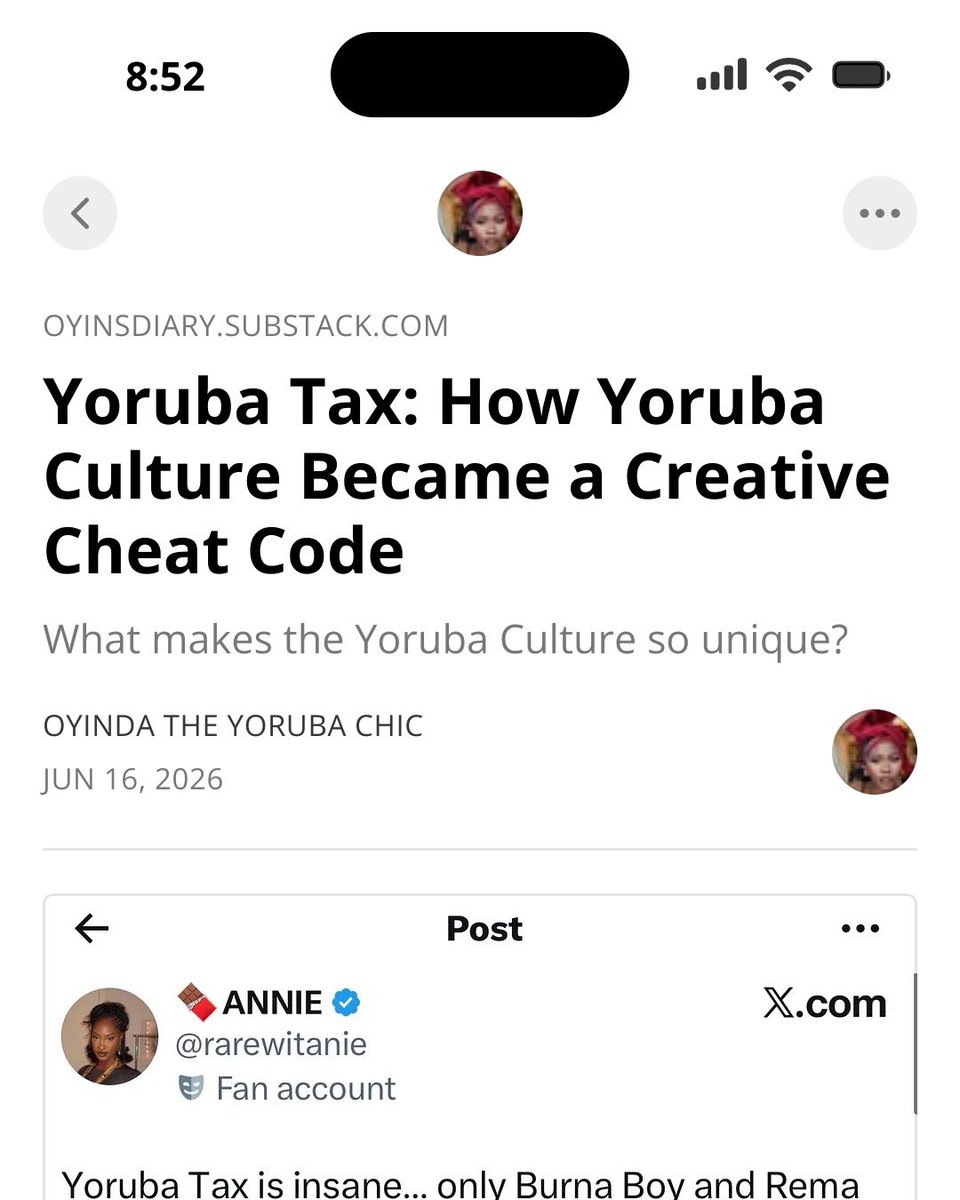
I just published my thoughts on “Yoruba Tax”
substack.com/@yorubachic/not…
10h

I've officially moved my newsletter to Substack. The aim is to start publishing some of my thoughts here into long form articles.
Subscribe here: open.substack.com/pub/oyinsd…
5
123
361
15,085
If you are Igbo person and you are my friend please start calling these your brother and cautioning them, the people offline won’t listen to placating words when they start seeing things like this you may not like the result it’s obvious these ones don’t know anything about the 90’s otherwise they’ll learn to mind their business and not put their nose where it doesn’t belong. x.com/movies_2_SEE/status/20…
1
1
16
Labake-of-buj™️🦅 retweeted

Finally my time line is clean and my comment section is sane…You don’t allow faceless angry trolls to control your thoughts and opinions..
Take charge!
107
260
1,612
22,291
Labake-of-buj™️🦅 retweeted
Oseni Rufai didn't talk over Peter Obi or even raise his voice during his recent interview; As a matter of fact, he didn't bother to ask serious follow-up questions even when Obi wasn't being direct. But if it's a member from any opposition party, he will turn aggressive with his speech.
340
452
1,898
91,252
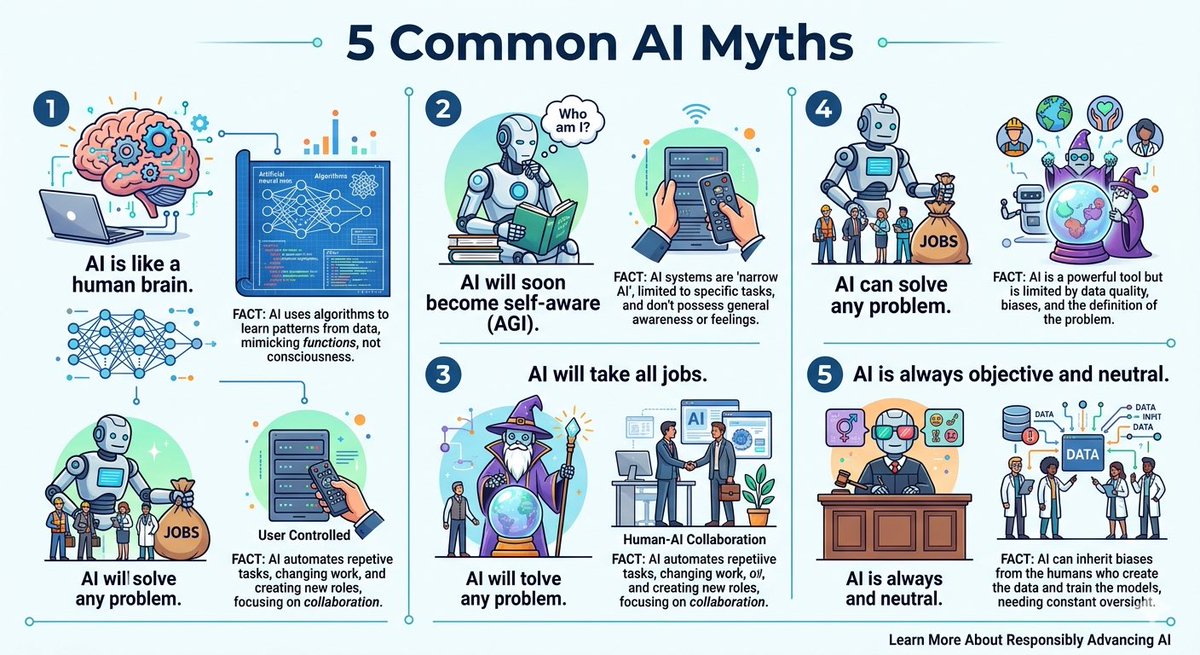
AI Myth:
“AI knows everything.”
Truth:
AI can be wrong, biased, or outdated.
Always verify important information.
#AI #ArtificialIntelligence
17
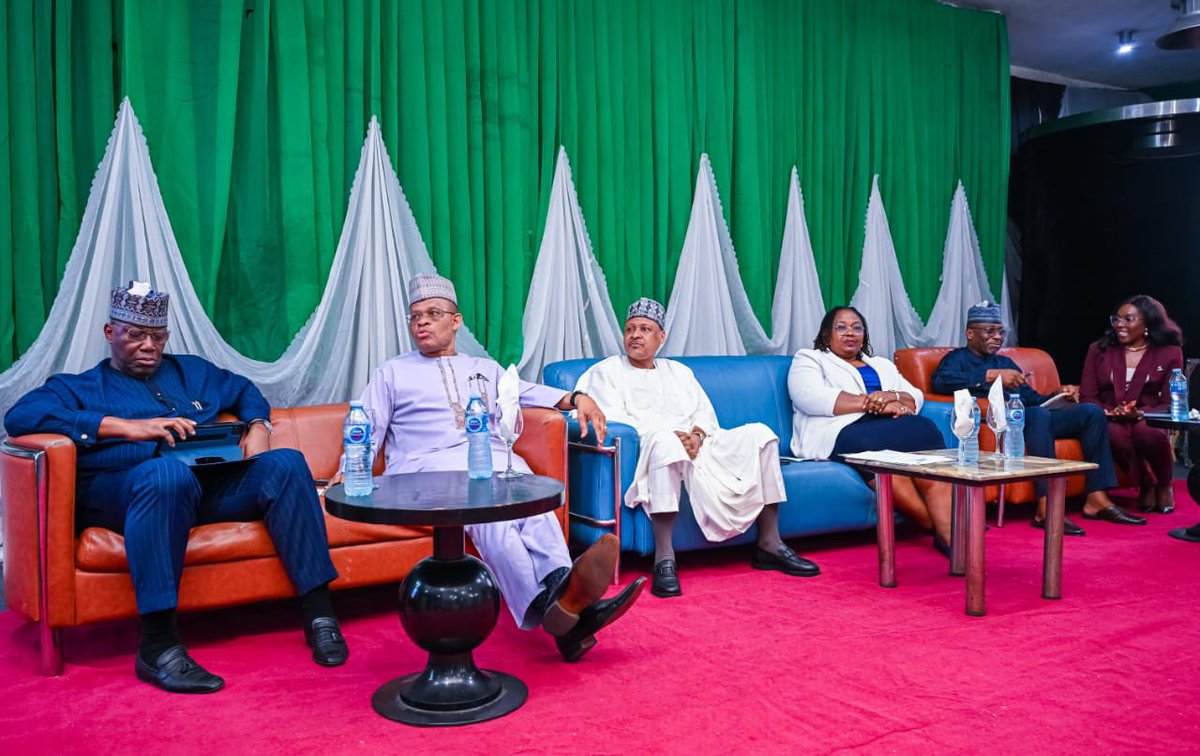
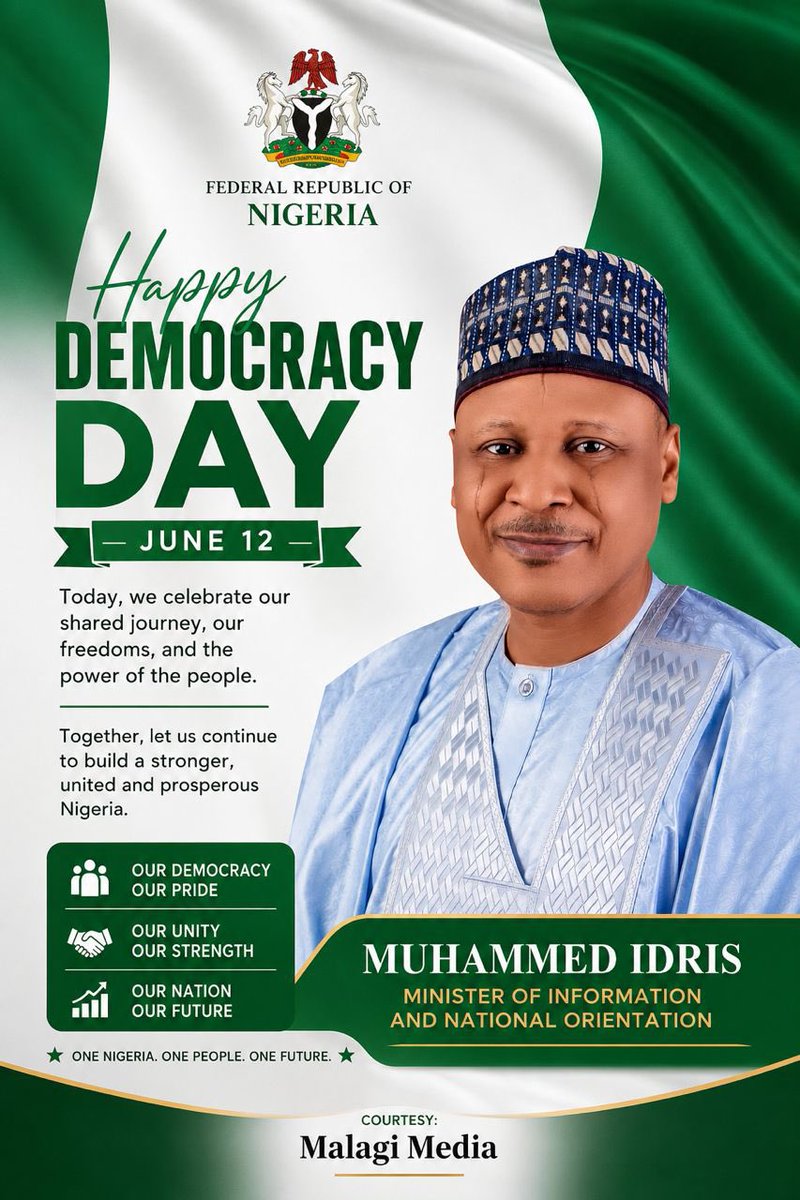
(L–R) Chairman, Channels Television, Mr. John Momoh; Chairman, Broadcasting Organisations of Nigeria, Senior High Chief Tony Akiotu; Honourable Minister of Information and National Orientation, Mohammed Idris, fnipr; Permanent Secretary, Federal Ministry of Information and National Orientation, Dr. Binyerem Ukaire, FWACS; Director-General, National Broadcasting Commission, Mr. Charles Ebuebu; and Director-General, Nigerian Communications Satellite, Mrs. Jane Egerton-Idehen, during a stakeholders' meeting on the Digital Switchover rollout in Nigeria, on 16 June 2026 in Abuja. Photo: Khalid Ahmed
1
32

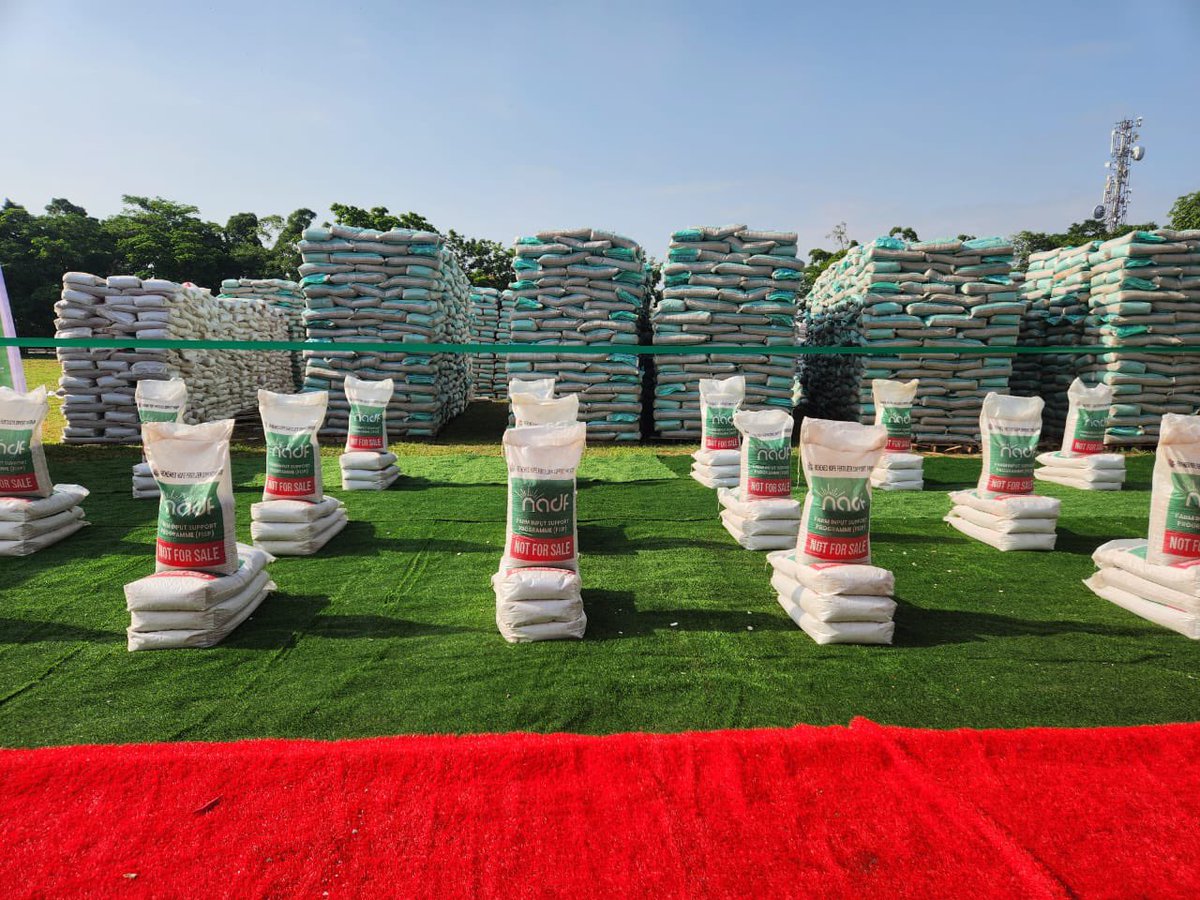
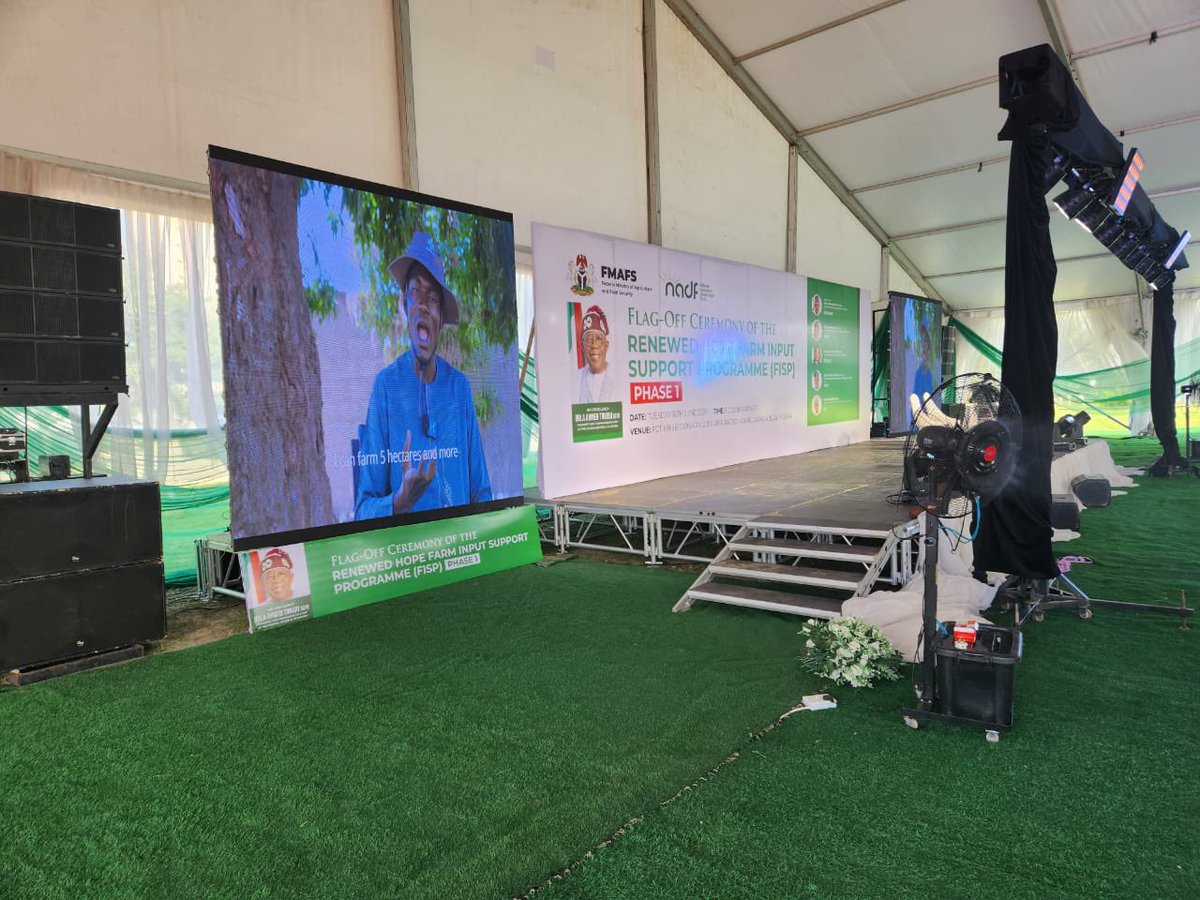
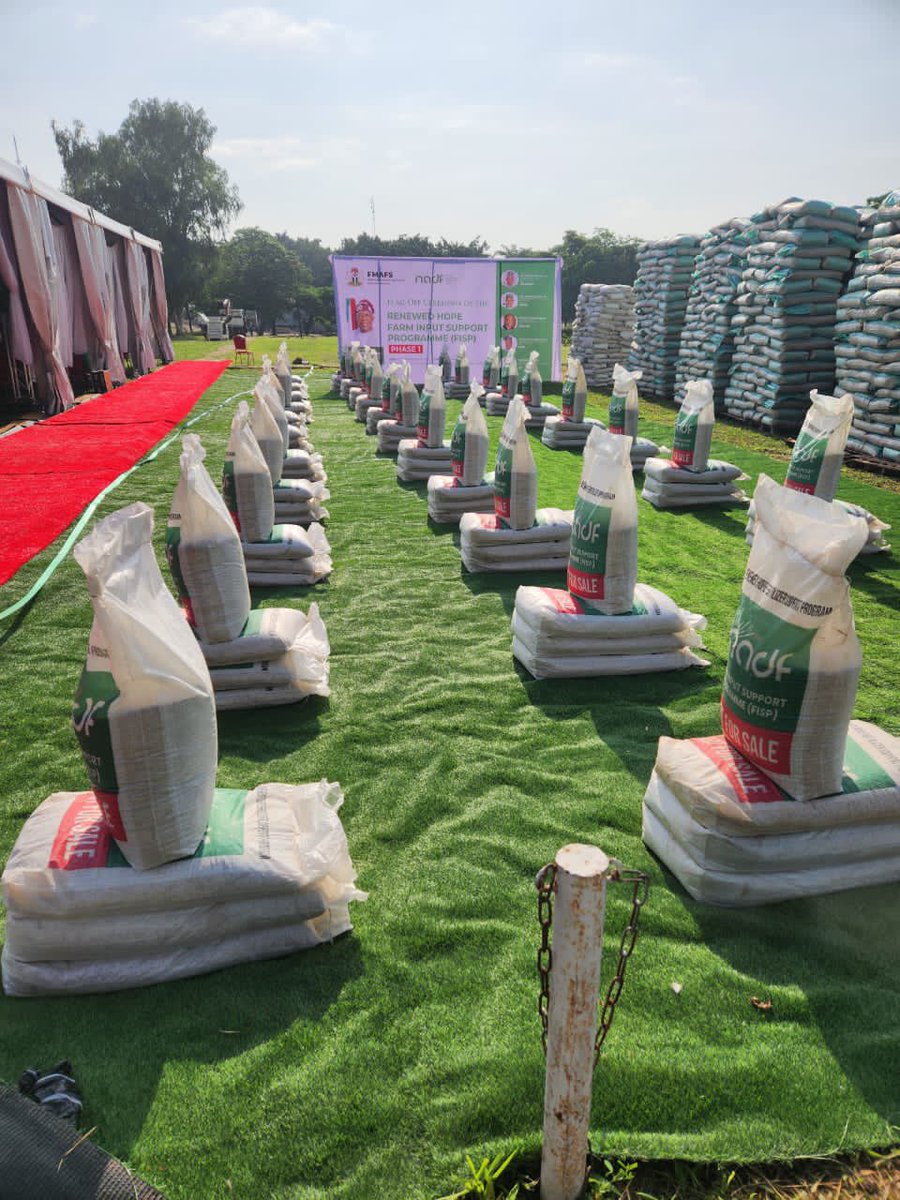
Abuja Small holder farmers, it is your day today to enjoy the largesse of the President @officialABAT via @nadfng
2: @nadfng has delivered free fertilizers and inputs to small holder farmers in North Central and South West geo political zones.
3: Govt is working hard to lower food prices and make it affordable for Nigerians @JoyOsamudiamen_ @afan_ng @NigeriaStories @NigeriaRifan @AminamiKya17834 @SenatorAKyari @sabialiyu_ @tripletlaw03 @Tosquo @itstiigii @OLABIM2533691 @will_i_ams1 @OgbeniAdugbo @Alpha_Yom @Reset_LA @Alexcassy @MasterBolaji @PBATMediaCentre @Diorthecurator @AkinDare_ @TheTope_Ajayi @otegaogra @OJOYEYE @olamidedad @mrolamidedavid @Tjslyy @thecompasshub @jayteeofnaija
9
56
113
1,642
Jun 15
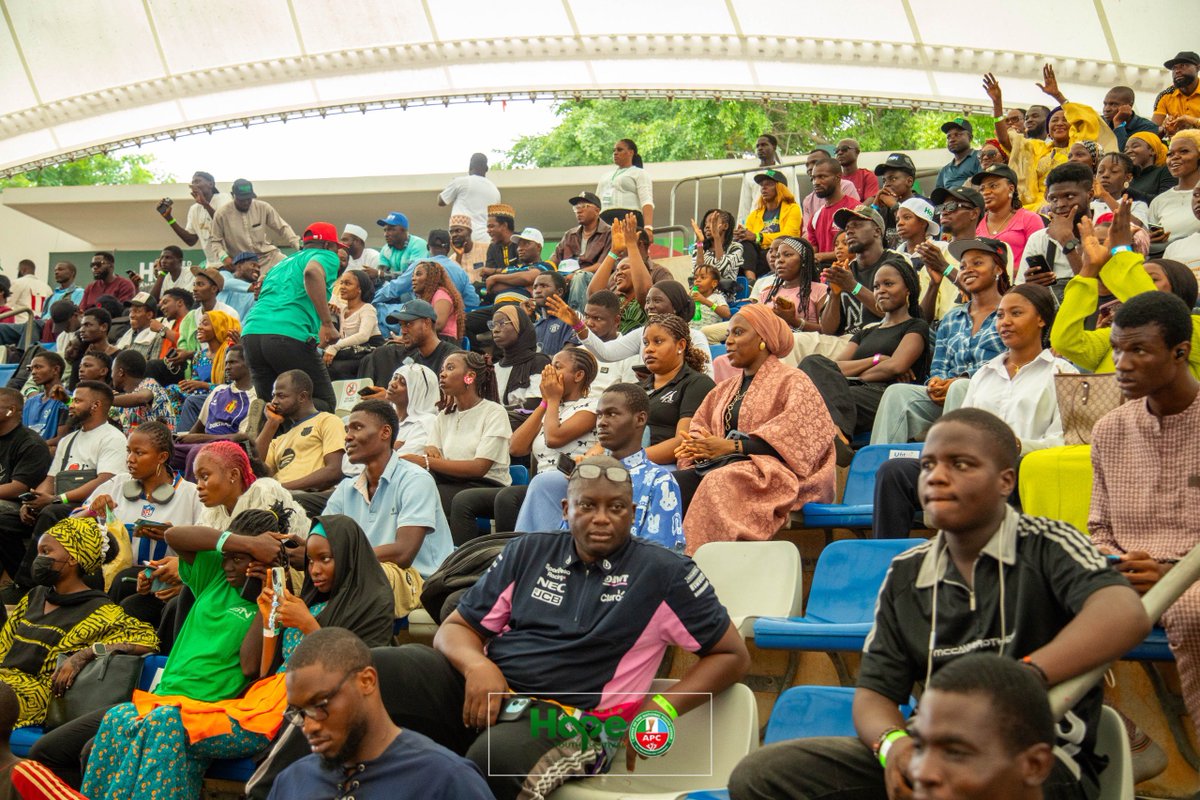
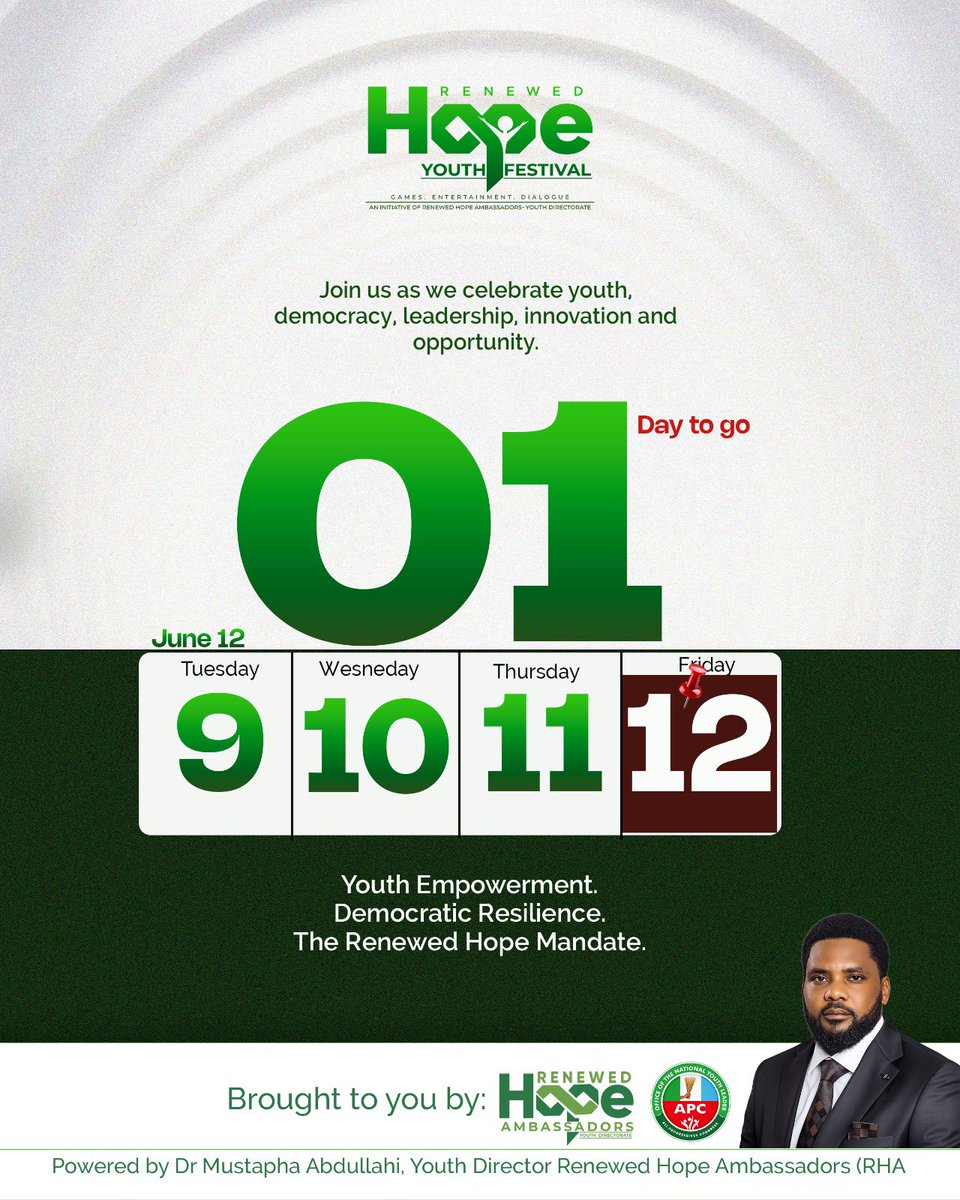
From games to music to empowerment tools everything was in play at the just concluded Renewed Hope Youth Festival in Abuja on Democracy day, don’t miss the next events you just might win a gift or two.
1
29
Jun 15
AI is transforming cybersecurity.
Defenders use AI to detect threats. Attackers use AI to create threats.
The race is on.
Who do you think is winning?
#AI #CyberSecurity #FutureTech
1
21
Jun 15
FMINO PRESS RELEASE
TINUBU SEEKS STRONGER COLLABORATION WITH NORTHERN TRADITIONAL RULERS ON SECURITY, DEVELOPMENT
President Bola Ahmed Tinubu has reaffirmed the Federal Government’s commitment to strengthening collaboration with traditional institutions as part of efforts to advance peace, security, national cohesion, and sustainable development across Nigeria.
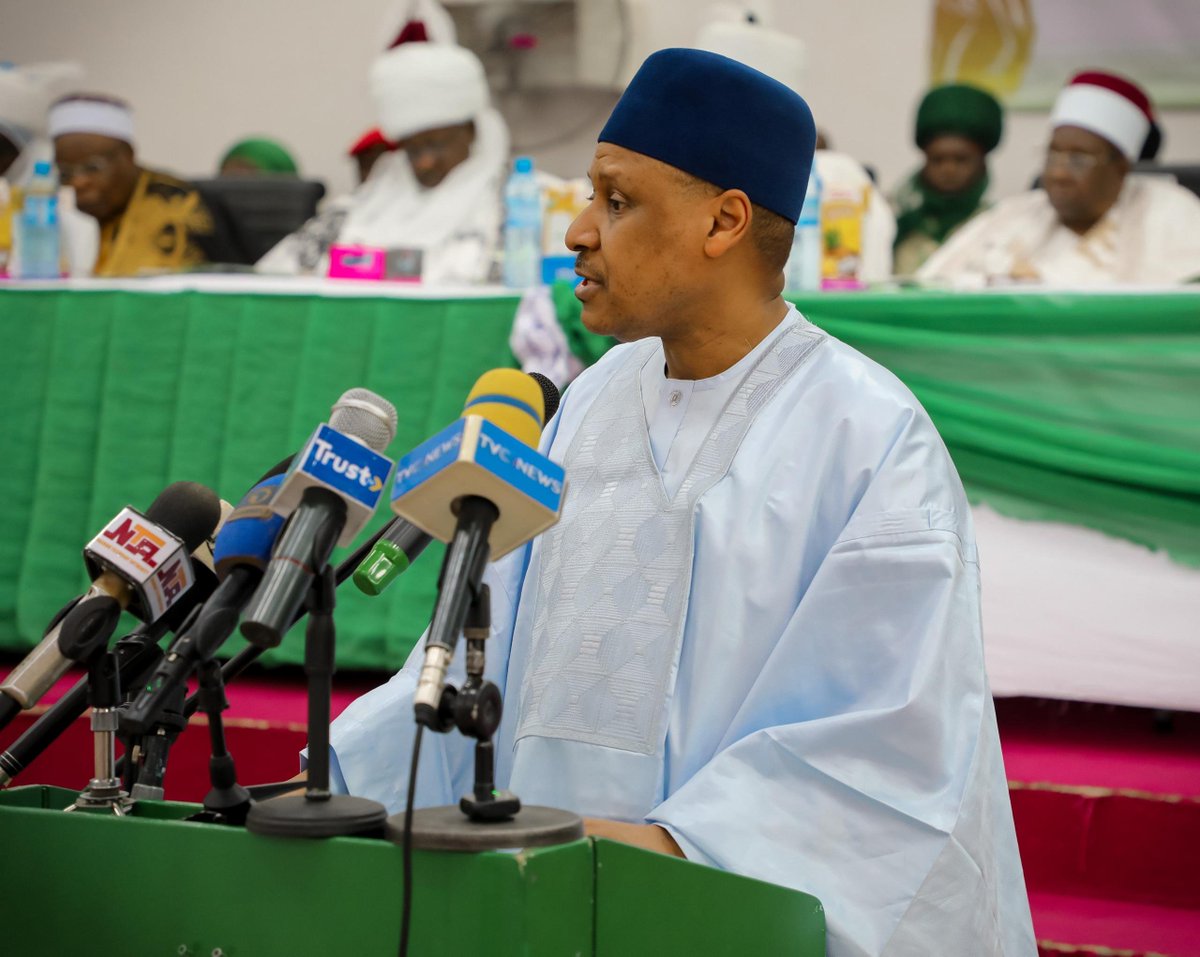
Representing President Tinubu at the 8th Executive Committee Meeting of the Northern Traditional Rulers' Council (NTRC) on Monday in Dutse, Jigawa State, the Honourable Minister of Information and National Orientation, Mohammed Idris, conveyed the President’s message to the gathering of traditional rulers and stakeholders from across Northern Nigeria.
"The administration of President Bola Ahmed Tinubu fully recognises the strategic role of traditional institutions and remains committed to deepening engagement with traditional rulers in advancing peace, security, national cohesion, and development," the Minister said.
Idris commended the Northern Traditional Rulers' Council, led by the Sultan of Sokoto, His Eminence Alhaji Muhammad Sa'ad Abubakar, for its continued contributions to peace, unity, security, and development across Northern Nigeria.
Speaking on the theme of the meeting, "Peace, Unity and Development of the North," the Minister said peace remains the foundation of development and prosperity.
"Without peace, development becomes difficult; without unity, progress cannot be sustained. The pursuit of both must remain our collective responsibility," he stated.
The Minister said traditional rulers remain critical partners in governance and peacebuilding because of their close relationship with communities and their ability to mobilise citizens around important national objectives.
"Across generations, our traditional rulers have served as custodians of culture and values, mediators in times of conflict, and trusted bridges between government and the people. Your proximity to the grassroots and your moral authority make you indispensable partners in governance, peacebuilding, and community mobilisation," he said.
On security, Idris noted that the Tinubu Administration has continued to strengthen coordination among the Armed Forces, intelligence agencies, and other security institutions, leading to significant gains against criminal and terrorist groups across various parts of the country.
"While challenges remain, the administration is sustaining military operations, improving intelligence gathering, and enhancing inter-agency collaboration. At the same time, we recognise that lasting peace cannot be achieved through security operations alone. We must also address poverty, unemployment, social exclusion, and the lack of economic opportunities that often fuel insecurity," he said.
The Minister highlighted several economic initiatives of the Federal Government aimed at creating jobs, improving livelihoods, and supporting long-term growth. These include interventions in agriculture, livestock development, solid minerals, infrastructure, education financing, consumer credit, and support for small businesses.
He described the establishment of the Federal Ministry of Livestock Development as a landmark decision that will modernise livestock production, improve productivity, support pastoral and farming communities, and reduce conflicts associated with competition for natural resources.
"The ministry represents a strategic intervention in a sector with enormous potential for job creation, food security, export earnings, and national economic growth," the Minister stated.
Idris also highlighted the Federal Government's four Legacy Highway Projects — the Lagos-Calabar Coastal Highway, Sokoto-Badagry Super Highway, Calabar-Abuja Super Highway, and the Akwanga-Jos-Bauchi-Gombe Road Corridor — describing them as transformative investments that will strengthen national integration and unlock economic opportunities.
1
1
58
Jun 15
"These highways will improve connectivity, reduce transportation costs, expand access to markets, create jobs, and support the movement of agricultural produce and other goods. Beyond their economic value, they are investments in national unity," he said.
The Minister further noted that the Renewed Hope Agenda is focused on creating opportunities for Nigerians through people-centred programmes such as the Nigerian Education Loan Fund (NELFUND), the Nigerian Consumer Credit Corporation (CREDICORP), and targeted support for Micro, Small and Medium Enterprises.
According to him, development programmes can only succeed when citizens understand them and actively participate in them, stressing the important role of traditional rulers in promoting public awareness and countering misinformation.
"In an age characterised by the rapid spread of misinformation and disinformation, traditional rulers remain among the most trusted leaders in our society. Your continued support in promoting truth, dialogue, tolerance, and responsible citizenship is essential to our collective progress," he said.
The Minister expressed confidence that the meeting would generate practical recommendations that would further strengthen peace, deepen unity, and accelerate development across Northern Nigeria and the country as a whole.
He also extended condolences to the Government and people of Katsina State, the traditional institution, and the family of the late retired Major General Rabe Abubakar, describing his death as a tragic loss to the nation.
"We mourn the loss of a distinguished patriot who served Nigeria with honour and dedication. His death is a painful reminder of the urgent need to sustain our collective efforts against insecurity," the Minister said.
The meeting brought together traditional rulers, government officials, and key stakeholders from across Northern Nigeria to discuss strategies for promoting peace, unity, and development in the region.
Rabiu Ibrahim, mnipr
Special Assistant (Media) to the Honourable Minister of Information and National Orientation.
Monday, June 15, 2026
1
46
Labake-of-buj™️🦅 retweeted

Jun 14
Nunca dejes que las burlas de los demás detengan tus metas.
Cuando propuse que el Hospital Rosales, que en ese momento era el peor hospital del país, se convirtiera en el mejor de Centroamérica, hasta mis propios ministros se rieron.
Imaginen lo que decían la oposición y los incrédulos.
Pero yo sabía que, con esfuerzo, disciplina y sin mirar hacia atrás ni hacia los lados, se podía lograr.
Y lo logramos.
Hoy, el Hospital Rosales es el mejor hospital de Centroamérica, público o privado. Cuenta con todas las especialidades médicas, el equipamiento más avanzado del mundo, 200 especialistas extranjeros y 3,000 salvadoreños listos para atender cualquier enfermedad de forma gratuita.
El siguiente paso es que más hospitales de nuestro país alcancen ese nivel.
Pronto tendremos otra sorpresa.
Primero Dios.
1,319
8,210
34,986
565,117
Jun 15
Thank you Pastor Ashimolowo for saying this. God bless you sir.
1
2
43
Jun 15
Please don’t play with your cultural identity people, who preach pan africanism and globalism to you ha-te you and want to take what’s yours, think about the slave trade and what it cost the African continent till today, do not make the same mistake your forefathers made. Watch the pride across the audience as the USA national anthem was sung here. You will never be a number one citizen in another man’s country or land. Good morning and have a wonderful weekend ahead. x.com/ufc/status/20663197154…
1
21
Labake-of-buj™️🦅 retweeted

The illusion that you guys are the most industrious tribe in Nigeria has been debunked on many occasions with facts. Yet, you lousy set of humans won't let us rest in Lagos State. Here are some facts I am ready to debate anywhere with proofs;
1.) The Hausas have contributed more in commerce to the economy of Lagos State than the Ibos.
2.) The people of South-South have more properties than the Ibos in Lagos State.
3.) The tribe with the highest number of people living in rented apartments in Lagos State are the Ibo.
4.) Lagos State has contributed more to the life of an average Ibo person living in Lagos State than they contribute to the state.
5.) Ibo are the tribe that pays the least tax in Lagos State, especially those who claim to be business owners in Lagos State.
6.) Virtually, every Ibo artist has failed in their careers until they move to Lagos State.

The igbos have contributed immensely to the Lagos economy! Commerce Wise! if you have a problem with it HUG A FRIGGING Transformer!!! We have made massive investments in Real estate too!! other tribes have contributed too. why is it always a problem when it’s the igbos?!! why??
8
51
231
8,845
Labake-of-buj™️🦅 retweeted

Jun 14
Igbos have contributed to the development of Lagos, yes, just like every other tribe; But Lagos has also given back to the Igbos who reside there. If the state wasn't so welcoming and profitable, people won't be relocating there in large numbers. Facts!
That said, the state belongs to the Yorubas 100%, point blank period; It is located in the South-West making it geographically a Yoruba Land, and historically speaking it is also a Yoruba land. Lagos doesn't even share borders with the South-East so the claim of ownership is invalid.
Now Illbliss asks "why is it always a problem when it's the igbos?" and that's a good question; The anwser is quite simple, people like him make it an issue by trying to claim Lagos forgetting that it is not in their rights to do so. You can't be loud and disrespectful and expect positive energy.
296
1,092
4,527
159,491