
Technologist | Free thinker | On a continuous path of personal development
Joined June 2019
- Tweets 823
- Following 2,479
- Followers 146
- Likes 8,738
12 Photos and videos






a moving man will meet his luck
May 24

15
114
1,232
37,103
Ali Jrl ☁️ retweeted

Mar 28
- Drafted a blog post
- Used an LLM to meticulously improve the argument over 4 hours.
- Wow, feeling great, it’s so convincing!
- Fun idea let’s ask it to argue the opposite.
- LLM demolishes the entire argument and convinces me that the opposite is in fact true.
- lol
The LLMs may elicit an opinion when asked but are extremely competent in arguing almost any direction. This is actually super useful as a tool for forming your own opinions, just make sure to ask different directions and be careful with the sycophancy.
1,745
2,411
31,241
3,494,298
Ali Jrl ☁️ retweeted

Mar 14
this is actually insane
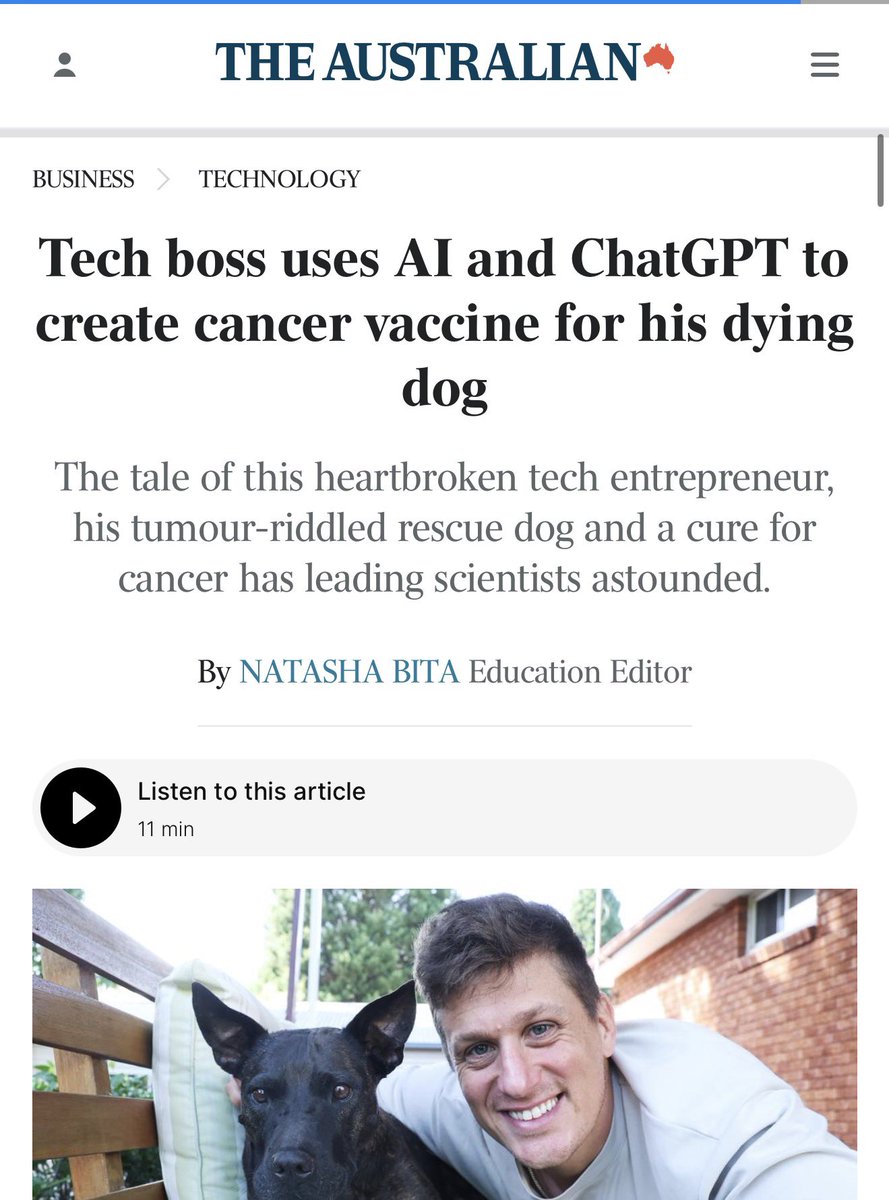
> be tech guy in australia
> adopt cancer riddled rescue dog, months to live
> not_going_to_give_you_up.mp4
> pay $3,000 to sequence her tumor DNA
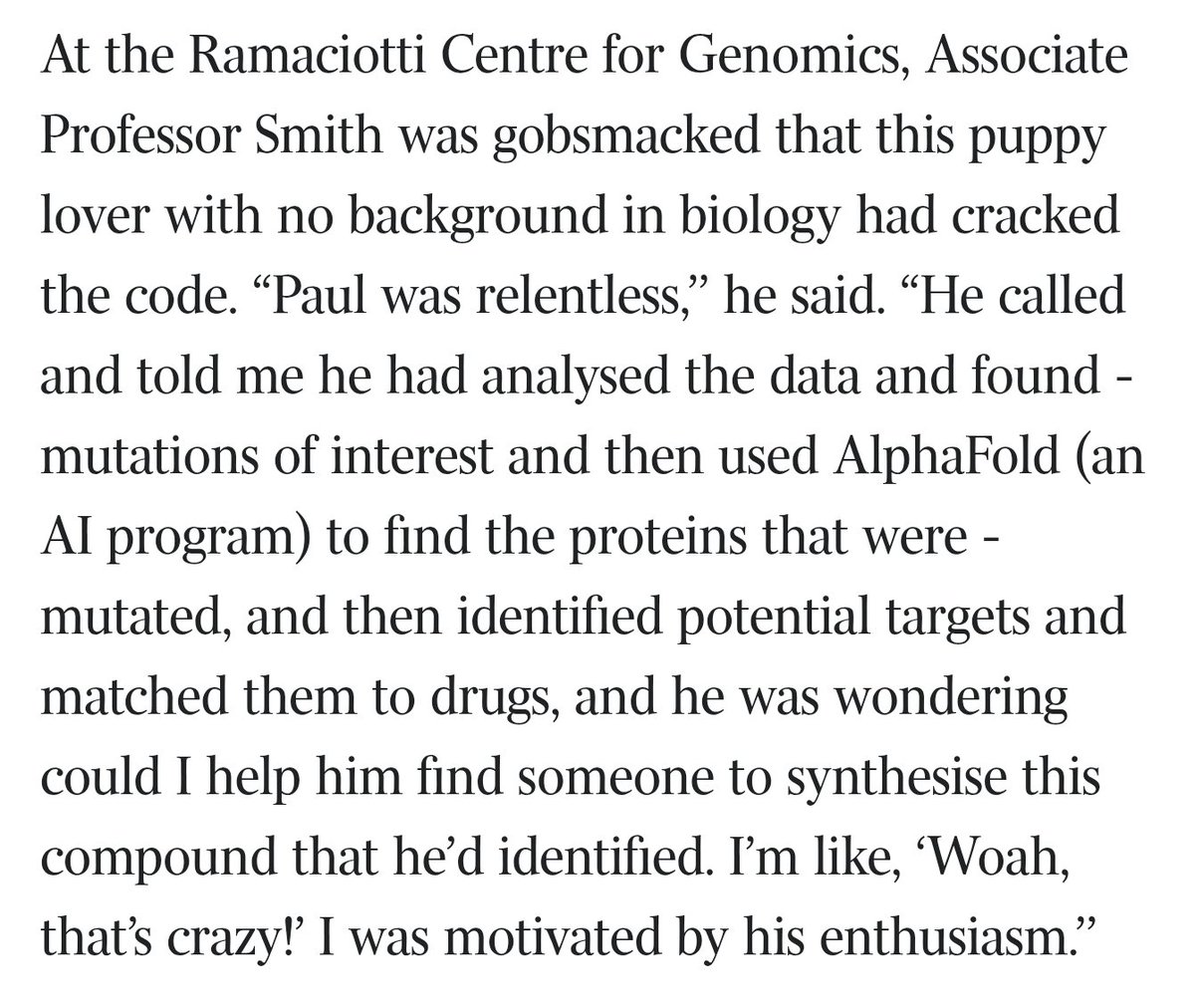
> feed it to ChatGPT and AlphaFold
> zero background in biology
> identify mutated proteins, match them to drug targets
> design a custom mRNA cancer vaccine from scratch
> genomics professor is “gobsmacked” that some puppy lover did this on his own
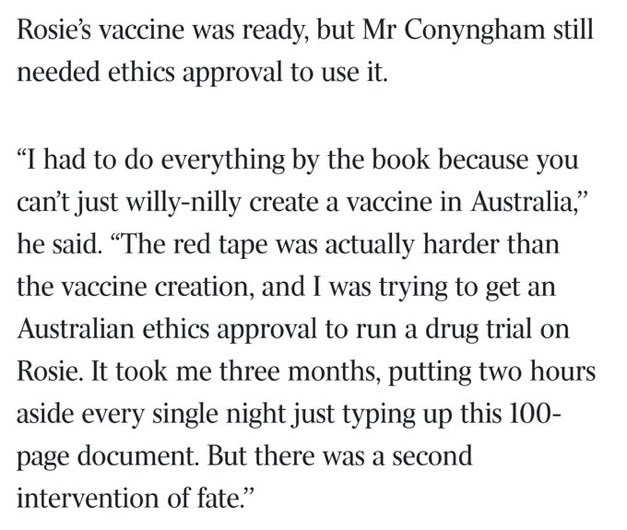
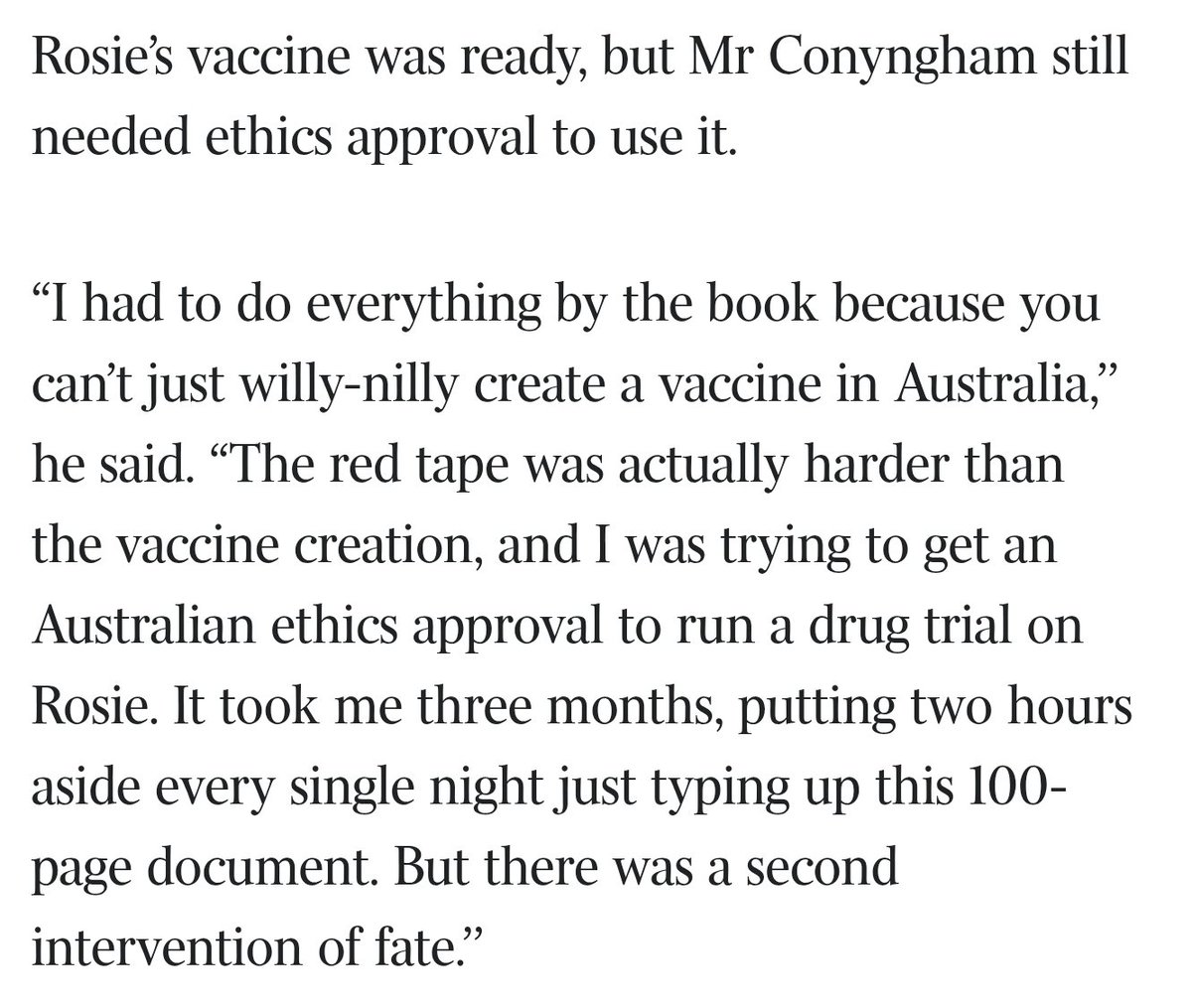
> need ethics approval to administer it
> red tape takes longer than designing the vaccine
> 3 months, finally approved
> drive 10 hours to get rosie her first injection
> tumor halves
> coat gets glossy again
> dog is alive and happy
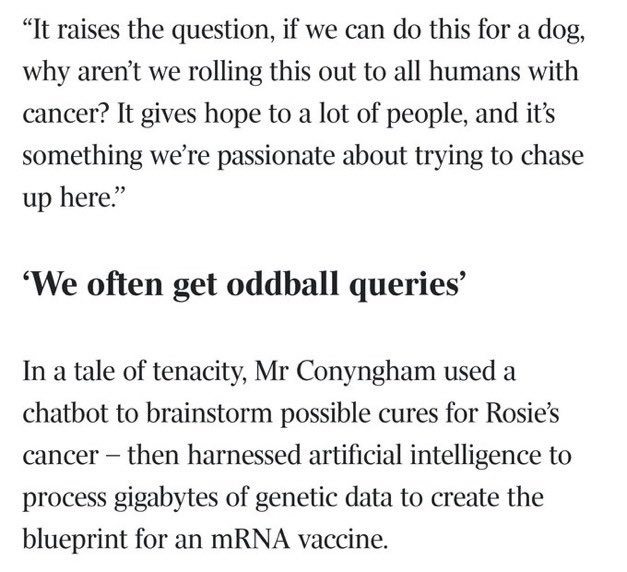
> professor: “if we can do this for a dog, why aren’t we rolling this out to humans?”
one man with a chatbot, and $3,000 just outperformed the entire pharmaceutical discovery pipeline.
we are going to cure so many diseases.
I dont think people realize how good things are going to get



2,421
19,341
116,193
17,661,463
Ali Jrl ☁️ retweeted

Mar 9
My biggest takeaways from @qasar:
1. The real AI revolution over the next 5 to 10 years will happen in the physical world, not in software. While everyone obsesses over ChatGPT, Claude and coding agents, the real impact will come from autonomous vehicles, mining robots, and farming equipment. They’ll save lives (over 30,000 die annually in U.S. car accidents), enable mobility for disabled people, solve labor shortages in dangerous industries where nobody wants to work, and much more.
2. AI isn’t replacing jobs in industries like trucking and farming—it’s arriving just in time to fill a labor gap that already exists. The average age of a farmer in the U.S. is in the late 50s. Long-haul trucking jobs go unfilled not because people can’t do them but because the tradeoff isn’t worth it anymore; a family can choose DoorDash or Uber so the parent can pick up their kid. Qasar’s view is that physical AI will fill gaps created by demographic shifts and changing preferences, not displace workers who want those roles. He’s careful to say this doesn’t mean there are no downsides, but that the framing of “AI is coming for your job” misses the more immediate reality.
3. Comparing Chinese AI companies to American AI companies is a category error. Qasar uses Huawei as his example: the company’s name means “China’s ambition,” roughly a quarter of its employees are Communist Party members, and its goal is not to grow profits but to extend the state. So when people say Chinese EVs are outcompeting Detroit, they’re comparing a government-backed entity with no profit constraint to companies like Rivian that get hammered by public investors for losing money. Qasar says that if American companies were freed from profit expectations the same way, they’d field comparable products. The point isn’t that China is incompetent or not a serious competitor; it’s that the comparison framework most people use is wrong.
4. The Industrial Revolution is the best mental model for AI. Just like the late 1800s brought child labor and monopolies but also unprecedented access to healthcare, heating, cooling, and material goods, AI will have downsides we must address while delivering massive benefits. The key: don’t pump the brakes on technology to protect jobs—that hurts the people you’re trying to help most. Find solutions that account for workers while enabling progress.
5. Building under the radar can be your competitive advantage. Qasar built Applied Intuition for nearly a decade without a social media presence. One of the company’s early core values was “Our best work is done alone and quietly.” His reasoning: every minute spent on a podcast, a post, or content for public consumption is a minute not spent on customers and the product. Qasar adds an important caveat—he could afford to stay quiet because he was already known in the ecosystem. Founders without an existing network may need the visibility that public presence creates.
6. Qasar thinks most Silicon Valley CEOs lack taste—both in the artistic sense and in the sense of making good operational decisions—because their life experience is too narrow. A founder who grew up in Cupertino, went to Berkeley, and immediately started a company has never experienced what it’s like to be at the bottom of a 100,000-person organization. Qasar spent over a decade at GM and Bosch and says that experience—the bureaucracy, the bad tools, the disconnected leadership—directly informs how he leads Applied Intuition today. His broader point is that taste comes from exposure to a wide range of human experience: backpacking, reading old books, working in different cultures and industries.
7. Successful companies almost always show traction early. If you’re two years in and the market isn’t giving you increasingly specific signals about what to build, consider resetting. The foundation might be wrong—co-founders, market, or life phase. Your first startup is practice; treat it as building the muscle of being a founder, not as your magnum opus.
8. Emotions are a filter that distorts decision-making, and the goal should be to remove that filter so the “raw image” of the decision comes through. Qasar doesn’t mean leaders shouldn’t have empathy; he means that attachment to your own idea, the desire to be right, and the tribal instinct to follow the loudest voice are all emotional distortions. His practical heuristic: the same decision, presented to multiple people independently in the company, should produce the same result. If it doesn’t, some emotional filter is warping the signal. This connects to his broader philosophy of creating a culture where the best idea wins regardless of who proposed it or how senior they are.
9. Qasar’s advice on company values: don’t invent them philosophically. Instead, write down the 5 to 10 things that explain why your company is already successful, and those become your values. Applied Intuition’s values include “Move fast, move safe,” “Never disappoint the customer,” “Technical mastery,” “High output matters,” “Laugh a lot,” and “Half of the work is follow-up.”
10. Treat your first startup as a zero—a practice round, not destiny. Qasar tells founders leaving Applied Intuition to start companies that their first three years will likely produce nothing, and that’s fine. Founding is a craft, like woodworking. If your first table is wobbly, you don’t quit—you build another one. He thinks a lot of founders, especially first-timers, put so much pressure on themselves to succeed immediately that they miss the real value of the experience: learning and building the muscle. His own third company is the most successful by far, and he sees this pattern repeatedly. There are entire funds focused exclusively on multi-time founders for exactly this reason.
Mar 8

Marc Andreessen calls him "the best AI CEO nobody knows about."
Elad Gil calls his company "the most successful, most quiet company in AI."
Qasar Younis (@qasar) is the co-founder and CEO of Applied Intuition—which brings AI to vehicles, like tractors, planes, submarines, mining rigs, cars, and more.
The company is valued at over $15B, making ~$1B in ARR, with 18 of the top 20 global automakers (and the U.S. Department of Defense) as customers.
And @Qasar's story is wild: Born on a farm in Pakistan. Emigrated to the U.S. at age 5. Grew up in Detroit managing engine lines at GM. Harvard MBA. Became COO of @Y Combinator (during the era that funded OpenAI, Cruise, DoorDash, and Coinbase). Then left to start Applied Intuition in 2017.
As Qasar shared, "not many people run a $15B physical AI company with revenue and free cash flow. And by not many, I think literally zero other people."
In a rare and in-depth interview, we discuss:
🔸 The counterintuitive reason he's stayed quiet and built in private
🔸 Why reading old books and cleaning your own office makes you a better founder
🔸 How to build a culture where the best idea wins, not the loudest voice
🔸 Why the best companies show traction early—and what to do if yours doesn't
🔸 How physical AI will transform farming, mining, and construction before it ever reaches your home
Listen now 👇
youtu.be/_rcniEb9bLw
73
161
1,366
580,034
Ali Jrl ☁️ retweeted
Rumi said “As you start to walk on the way, the way appears.”
Clarity doesn't come before action.
It comes from action.
40
481
3,046
62,673

Mar 5
I just bought @davidfeldt 2 coffees on!
Super impressed with 3e8blueprint! buymeacoffee.com/davidfeldt
1
1
3
245
Ali Jrl ☁️ retweeted

The world, Europe, and Spain have faced this critical moment before. In 2003, a few irresponsible leaders dragged us into an illegal war in the Middle East that brought nothing but insecurity and pain.
Our response then must be our response now:
NO to violations of international law.
NO to the illusion that we can solve the world’s problems with bombs.
NO to repeating the mistakes of the past.
NO TO WAR.
lamoncloa.gob.es/presidente/…
12,668
67,208
293,629
10,374,907
Ali Jrl ☁️ retweeted

📽️Iran, Travaglio a La7: “Negli ultimi anni non ho visto niente di più terroristico del governo di Israele”
Il direttore del Fatto replica all'ambasciatrice Zappia e a Mieli, demolendo la giustificazione dell’attacco Usa-Israele a Teheran
23
257
737
18,563
Ali Jrl ☁️ retweeted

Feb 20
I’m in love with this sentence:
“The best math you can learn is how to calculate the future cost of current decisions.”
190
7,809
31,751
578,437


Feb 9
Finally, someone said that.
Feb 9

Former German Chancellor Olaf Scholz:
The entire dilemma in Iran came about because the British and the American governments overthrew the democratic government of Iran and replaced it with the dictator, the Shah, who was later overthrown in turn by today’s rulers, who then established a brutal dictatorship — unlike what many people had hoped for at the time.
Had it not been for the overthrow of Iran’s democratic government at the beginning, carried out for oil interests, Iran would today be a very successful Western country
45
Ali Jrl ☁️ retweeted

I admire Americans for their innovativeness, the French for their intellectualism, Italians for their aesthetics, the Chinese for their industriousness, Mediterraneans for their attitude, Germans for their engineering,...
and Palestinians for their fortitude.
194
684
7,049
384,174
Feb 4
Seek the truth

I might get killed for posting this, the least you could do is watch it.
19
Feb 4
Legend!

8

Feb 1
Claude Code (Opus) or Codex? What should I use? I’m seeing people switching from CC to Codex.
20
17
597
Ali Jrl ☁️ retweeted

Jan 29
Last year @Revolut employees sold $300m worth of shares
@elevenlabs enabled employees to cash out at a $6.6bn valuation
@synthesiaIO just ran an employee secondary at a $4bn valuation
@monzo ran an employee secondary at a $5.9bn valuation
These companies are enabling their employees to take life-changing sums of money out of the business.
The impact on the European ecosystem is going to be huge. Thousands of operators with money to either give them the security to start their own company, or invest it as angels.
It also highlights how lucrative working in tech can be, hopefully attracting even more top talent into the field.

15
28
322
33,862
Jan 29
Ok this is actually amazing - I tested it with a very localised, niche use case, and wow! Now, how do I export these designs?

Introducing @variantui
Enter an idea and get endless (beautiful) designs as you scroll
No canvas, no skills or MCP, no constant prompting
Reply if you'd like 200 free designs to give it try
1
1
49