
Western Canada’s largest angel syndicate • Pre-Seed to Series A • Fueling tech startups across Canada & USA • Pitch us, invest, scout👇
Joined April 2020
- Tweets 1,343
- Following 1,034
- Followers 3,134
- Likes 1,931
274 Photos and videos



We understand most early-stage founders don’t have time or money for fancy investor conferences because they’re too busy putting every minute & dollar into building a great product for raving customers.
If you’re this founder, we want to hear from you!
14
1
85
6,745
Allied.vc retweeted

Jun 15
VCs migrate to Europe every summer like clockwork. Founders panic. Meetings dry up.
But here’s the truth: some of the best seed deals I’ve ever done happened in July & August. Less noise. More signal.
DM me if you’re raising 🚀
2
4
87
Allied.vc retweeted

Jun 12
a common question investors will ask you when you're fundraising is "what does this look like in 5 years?"
these days, the honest answer is often "nobody knows."
investors aren't grading you on prophecy. they're grading you on thoughtfulness.
show them you're at the frontier. they should leave the meeting thinking that if anyone is going to figure it out, it'll be you.
16
8
82
16,085
Allied.vc retweeted

1/6 Toronto Tech Week is here.
There are a lot of events this week. These are the ones I told our portfolio founders to prioritize.
2
1
6
835
Allied.vc retweeted

May 21
Pitch training has always been the market pushing founders to compensate for investor laziness.
Ultimately, it's the investor's job to recognise potential in the founder and their idea, not the founder's job to sell it to them. The founder is the customer.
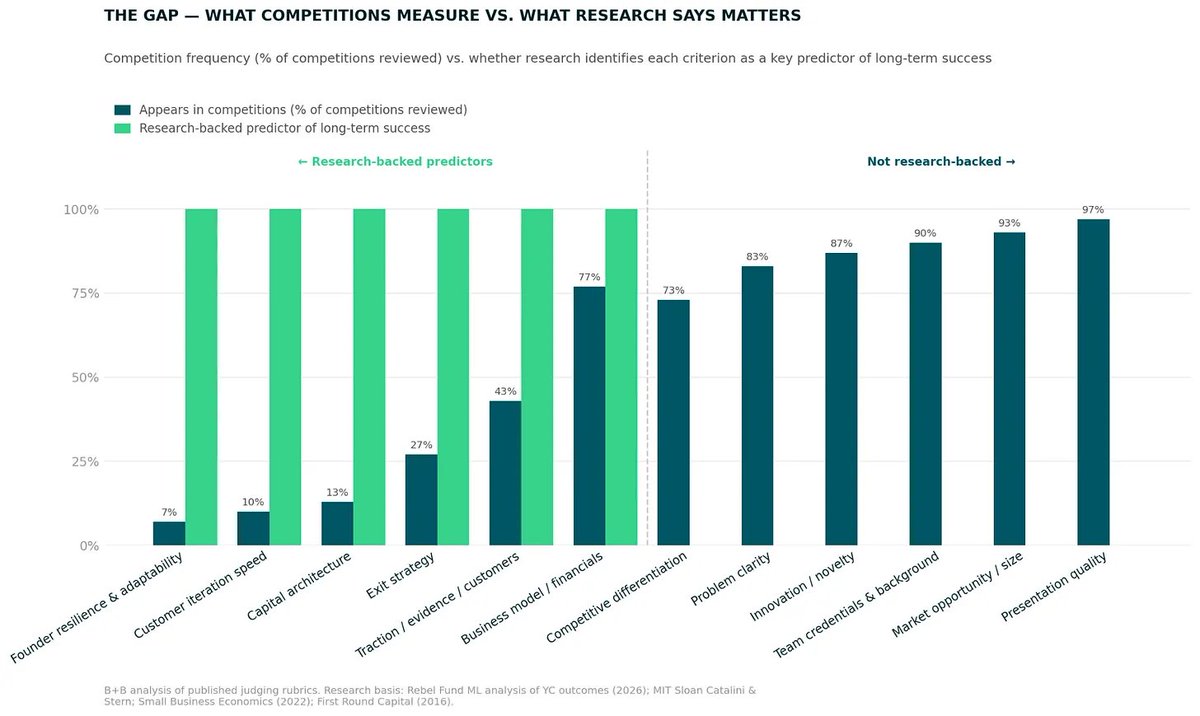
And it turns out that pitch training and competitions emphasize a number of factors that aren't predictive of company success.
Generally, the process is a silly distraction from working on the things that matter.
(credit to @dharrisindc for the chart)
May 19

One of the worst predictors of founder success we've tracked is how well someone pitches. The correlation between pitch quality and outcome was actually negative.
Zuckerberg was so awkward in early investor meetings that VCs left wondering if he could manage anyone. Larry Page refused interviews and earnings calls for years. Jan Koum sold WhatsApp to Facebook for $19B as a Ukrainian immigrant whose English investors had initially struggled to follow.
What polished people are good at is the meeting itself; the 1hr ritual of telling a story to strangers. It's a real skill, but it's separate from building a company. People who spent years optimising to be persuasive in a room have, on average, optimised away from the building skills that compound over the seven years of execution that follow. The pitch room is the one environment where smooth talkers have the structural advantage, but people mistake that single environment for general capability.
Pay more attention to things like how they behave in the five minutes after the pitch when they think it's over. Or how they treat the most junior person in the room. None of those show up on a slide.
The articulate founder will impress your partners. The awkward one will return your fund.
8
4
41
5,815
Allied.vc retweeted

May 18
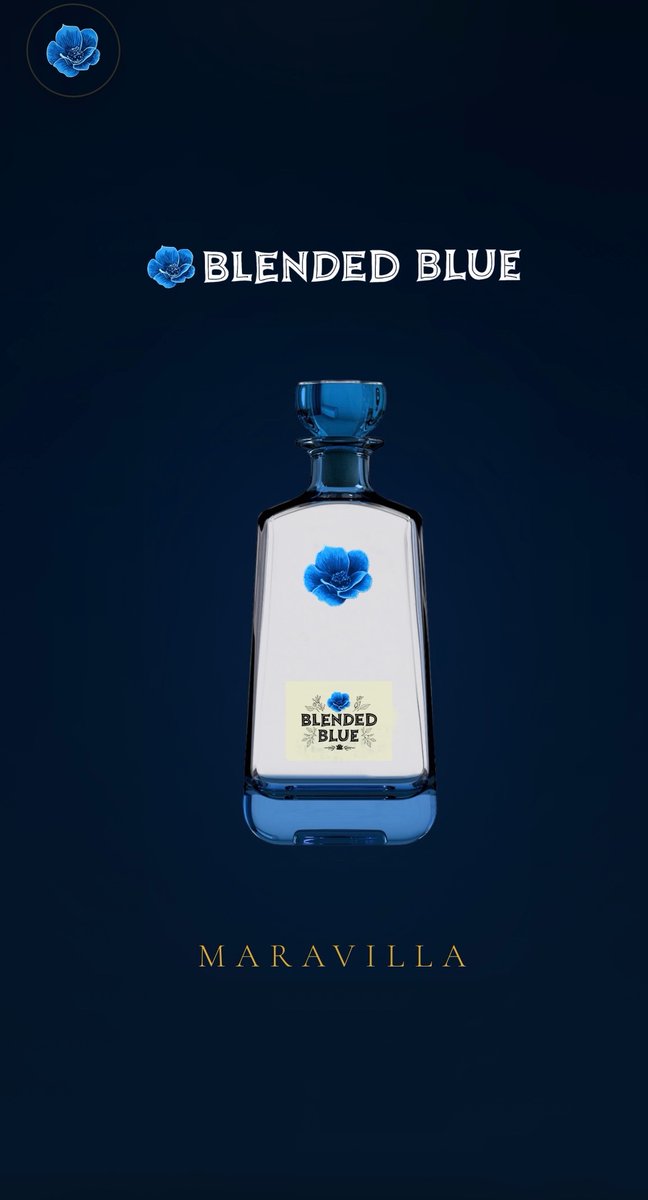
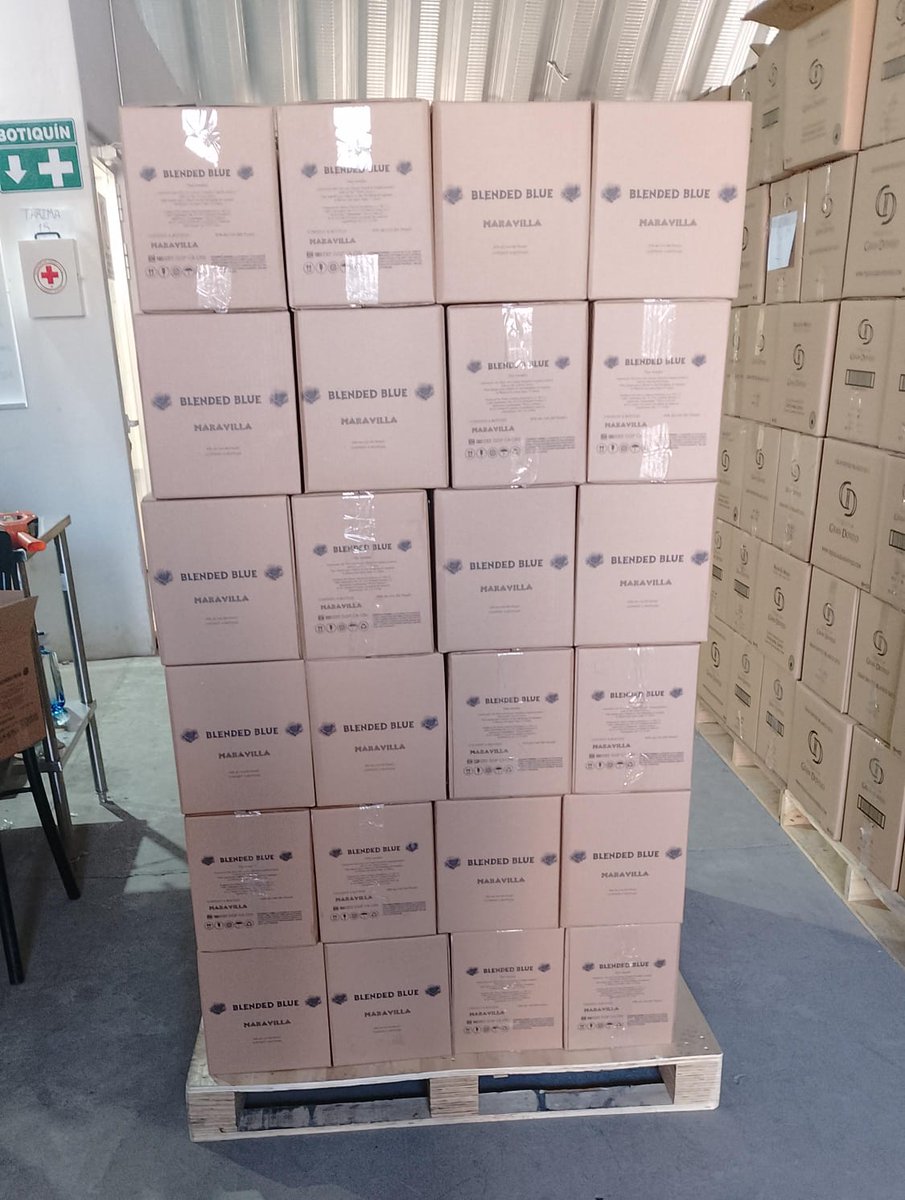
A year and a half ago, Blended Blue was just an idea.
This week, the first bottles officially came off the line in Mexico, and the first 400 cases are now headed to California.
Building a consumer brand is brutal. People see the bottle. They don’t see the years of risk, fundraising, logistics, delays, and grind behind it.
Proud to be part of this with my friend Charles Durazo (“Tequila Charles”), one of the co-founders behind Clase Azul.
Now we’re bringing one of the first blended tequilas to market and taking another swing at reinventing the luxury tequila category.
Big thank you to @MattWilsonYYC , @AlliedVC , and an incredible investor group that helped bring this thing to life.
Let’s go.

2
2
5
1,019
Allied.vc retweeted

May 7
When raising, remember that you only need one yes.
21/22 VCs passed on the early Anthropic round.
The biggest outcomes are often contrarian, and usually sound ridiculous before the rest of the world catches up.
18
24
435
21,165
Allied.vc retweeted
May 7
I'll be at #WebSummitVancouver next week
If you're a founder or investor attending, let's find time to connect
Drop a comment or DM me 👋
@WebSummit
1
1
5
177
Allied.vc retweeted

Apr 16
Class 2 of MS&E 435 - Economics of AI Inference - is live! The Groq story alone was worth the class. Why did Nvidia paid $20B for Groq?
TLDR: It wasn't about building a better GPU. Groq's deterministic, SRAM-heavy chip disaggregated the decode layer. Same power footprint, 2.5x more tokens.
Big thanks to @altcap and @sundeep for doing this with our class.
4
29
251
21,512
Allied.vc retweeted

Apr 19
This 40 minute lecture at Stanford by Apoorv Agarwal on the Economics of AI supercycle is worth a watch
Apoorv is currently a Partner at Altimeter and is directly involved in some of their key AI investments, including OpenAI and Glean
Still find it incredible that the internet gives us access to this level of information directly. A course I will definitely be following along
Sourced from MS&E 435 Stanford University
30
283
2,336
242,822
Allied.vc retweeted

Apr 14
one of the best sales advice we picked up during YC is the "McKinsey Model"
a lot of deals at early-stage startups die for the same reason:
your champion is afraid to advocate for your product
if they push for it internally and it doesn't work out, their job is on the line
so they never come back to you and hit you with the "we need to align internally first"
that's why you need to be their McKinsey consultant: instead of them pitching, you personally take the blame
after every demo, send them:
- a one-pager
- a security doc
- an ROI calculator with their numbers
- useful context/overview of your industry that can help with what they're struggling with right now
- a pre-written slack message they can forward
make it as easy as possible for your champion to forward your material without them feeling responsible for integrating your solution or "fighting" for it
51
106
2,347
354,699
Allied.vc retweeted

Mar 30
Two founders joined our community this month, a week apart.
One bootstrapped a company to $50M over 13 years with 300 employees.
The other built a $7.5M company by 24 with brand partnerships at Disney and Microsoft.
Both wrote nearly identical lines in their introductions:
"I've been heads down building with no network around me."
Different stages. Different industries. Same loneliness.
The most common thing successful founders have in common isn't ambition. It's isolation.
7
2
29
3,713
Allied.vc retweeted

Mar 25
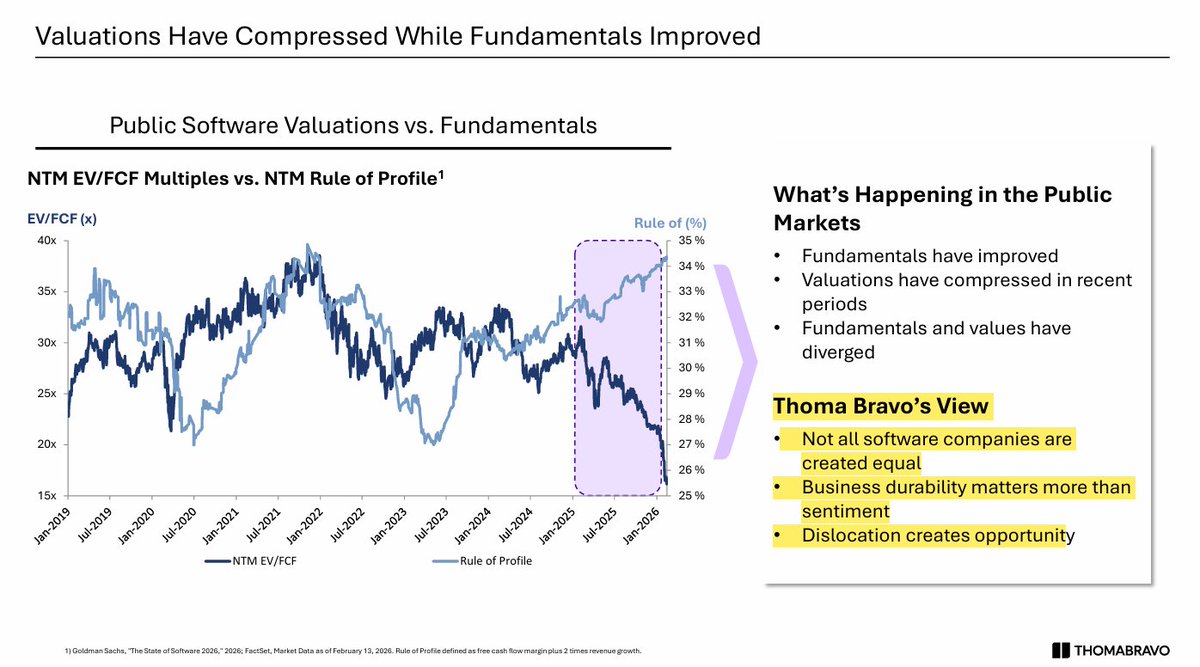
BREAKING: Thoma Bravo just released their LP meeting slides.
The world's largest software PE firm thinks the market has it completely wrong on software right now.
Public markets are panic-selling software based on AI fear.
Here's what they're seeing:
91
216
1,998
721,634
