
Performance Coach for Financial Market Risk-Takers. Driving Performance Alpha through Behavioral Transformation. Author: Mastering the Mental Game of Trading.
Joined March 2012
- Tweets 30,857
- Following 2,059
- Followers 60,215
- Likes 39,396
5,075 Photos and videos
Pinned Tweet

Jan 26
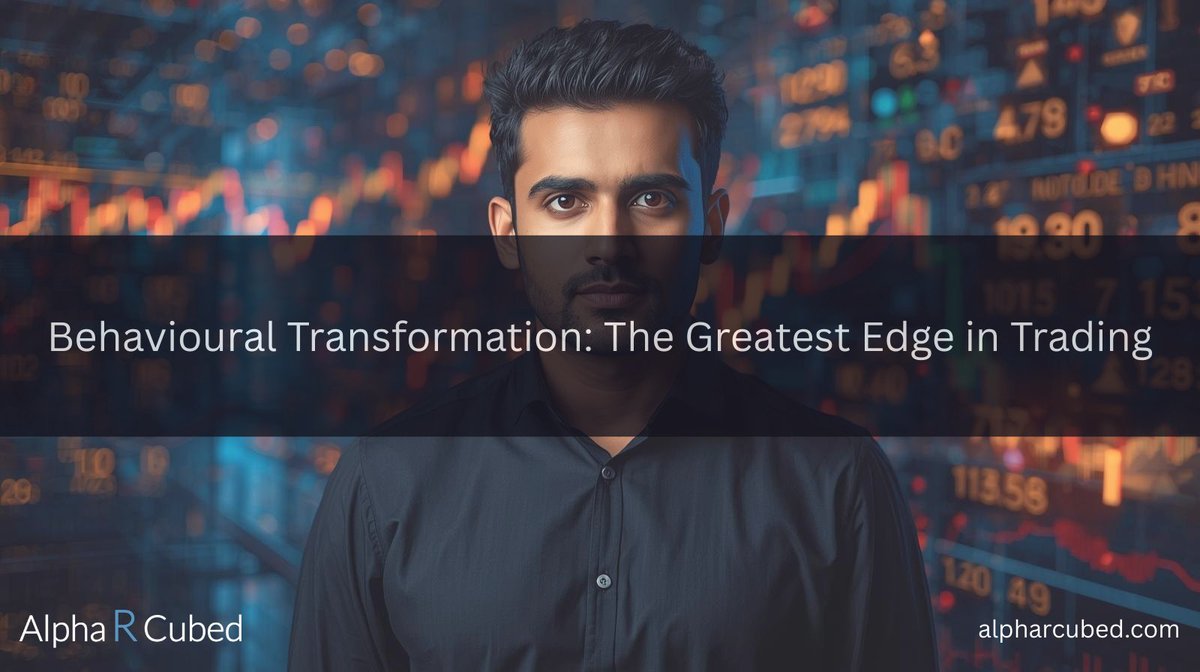
40 years in markets — 25 years as an investment‑bank trader, 15 years coaching top traders (hedge funds, sell‑side, retail). I help traders move from good to great through sustainable behavioural transformation.
Email to inquire: info@alpharcubed.com
7
6
47
12,929
Jun 12
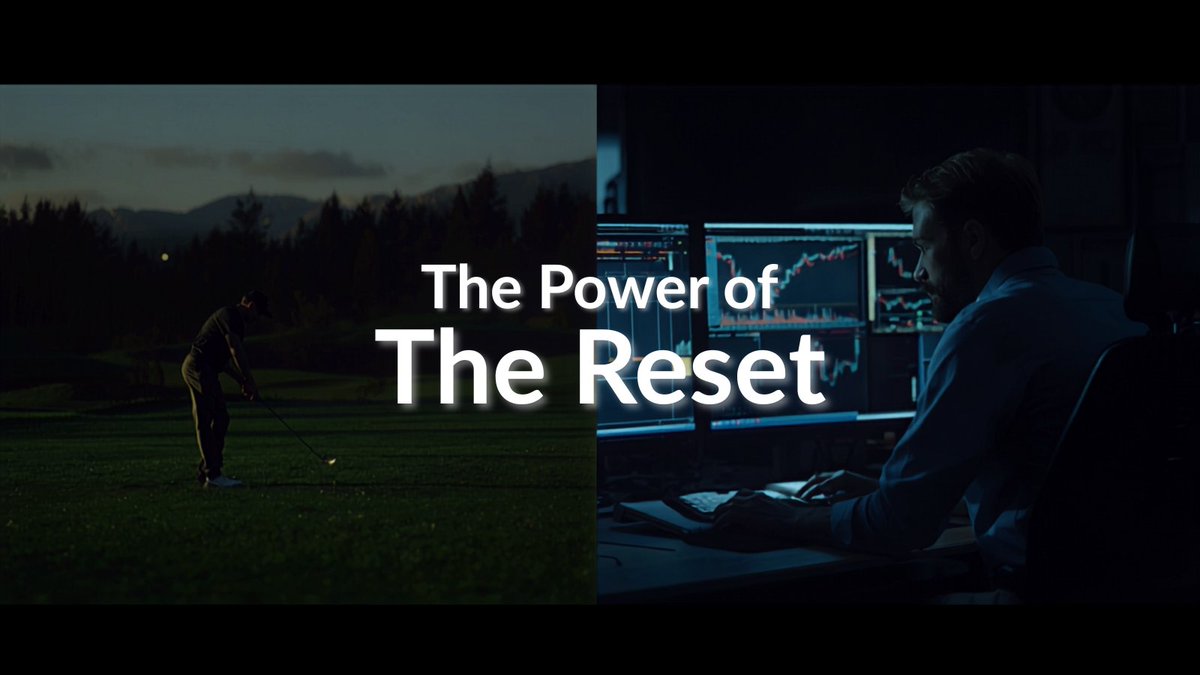
In golf, the principle is simple: Focus on the next shot, not the last one.
Whatever just happened, good or bad, you let it go. > You don't carry it with you.
This matters even more after a bad shot. - After a bad shot, you ruminate, feel unlucky, hard done by, want to show what you can do, are desperate to prove you can do better. And in that state, you seize up and get worse.
The only way through is to "let go", clear your head, move-on, focus on what's in front of you. - RESET
5
5
64
2,328
Steven Goldstein retweeted

Jun 9
Tout le monde pense que le monde libre a gagné en 1989, à la chute du mur de Berlin.
C'est faux.
Et c'est exactement pour ça que le monde est aujourd'hui en feu.
Ce qui est tombé le 9 novembre 1989, c'est un appareil.
Une économie planifiée, un empire militaire, un mur de béton. Ce qui n'est pas tombé, c'est l'idée. L'idée que le monde se divise en oppresseurs et en opprimés. L'idée qu'il existe une égalité finale à atteindre, par tous les moyens. L'idée que tout ce qui existe (la famille, la nation, le mérite, l'héritage) est une structure de domination à abattre.
Cette idée-là n'était plus dans le bâtiment quand le bâtiment s'est effondré.
Il faut reprendre la chronologie, parce que tout est dans la chronologie :
Le communisme économique avait un défaut fatal : il était réfutable. Il promettait l'abondance, il produisait des famines. Il promettait l'émancipation, il produisait des barbelés. Budapest 1956, Prague 1968, L'Archipel du Goulag publié à Paris en 1973, les boat people de 1979 : à chaque décennie, le réel envoyait sa réfutation. Les boat people étaient une réfutation flottante, visible depuis les plages.
Alors l'idéologie a fait ce que fait tout organisme menacé : elle a muté.
La mutation a un nom, et j'en ai raconté la généalogie ici : la French Theory.
Foucault a déplacé la guerre du terrain des faits, où le communisme perdait à chaque fois, vers le terrain du savoir lui-même.
S'il n'y a pas de vérité, s'il n'y a que des rapports de pouvoir déguisés en savoir, alors plus aucune famine, plus aucun mur, plus aucun goulag ne peut réfuter quoi que ce soit.
La French Theory n'a pas enterré le marxisme.
Elle l'a rendu irréfutable.
Et la mutation a des dates. Toutes antérieures à 1989.
1934 : l'École de Francfort, chassée d'Allemagne, s'installe à Columbia. La critique de l'économie devient critique de la culture.
1964-1965 : Marcuse, exilé allemand devenu professeur américain, remplace le prolétariat défaillant par un nouveau sujet révolutionnaire (les minorités, les étudiants, les marginaux) et écrit noir sur blanc que la tolérance doit être accordée aux mouvements de gauche et refusée à ceux de droite.
Octobre 1966 : le débarquement a une date précise. Université Johns Hopkins, Baltimore. Derrida, Barthes, Lacan présentent la pensée française aux campus américains.
1967 : Rudi Dutschke lance le mot d'ordre, la longue marche à travers les institutions.
1968 : les révolutions de rue échouent partout.
Qu'importe. La révolution ne passera plus par la rue, elle passera par la salle de classe.
1975-1985 : Yale, Berkeley, Columbia absorbent la théorie, qui devient le système d'exploitation des humanités.
1987 : Allan Bloom publie The Closing of the American Mind pour donner l'alerte. Un million d'exemplaires vendus.
L'université le traite de réactionnaire et passe à autre chose.
L'Amérique avait son Aron, elle en a fait la même chose que nous du nôtre.
Puis arrive le 9 novembre 1989.
Le Mur tombe. L'Occident célèbre. Fukuyama avait déclaré la fin de l'Histoire dès l'été, avant même la chute. On démantèle les missiles, on encaisse les dividendes de la paix, on déclare le match terminé.
Nous avons célébré notre victoire sur une adresse vide. L'idéologie avait déménagé vingt ans plus tôt. Nous avons gagné contre les chars et perdu contre les chaires.
Pendant ce temps, l'autre empire communiste faisait la lecture inverse. Pékin avait écrasé Tian'anmen dans le sang cinq mois avant Berlin. Sinistre, mais lucide sur un point : la Chine savait que la guerre était idéologique.
Elle a choisi : abandonner l'économie marxiste, garder le contrôle du récit. L'Occident a fait l'exact opposé : il a gardé le marché et absorbé l'idéologie. Trente-cinq ans plus tard, regardez qui construit des centrales et qui déboulonne ses statues.
Vous voulez la preuve que c'est le même logiciel ? Faites la table de correspondance.
La lutte des classes est devenue la lutte des identités.
Les koulaks sont devenus les privilégiés.
L'autocritique maoïste est devenue le privilege checking. Les commissaires politiques sont devenus les DEI officers.
Le samizdat est devenu le compte shadowbanné.
La nomenklatura a quitté Moscou pour Davos et Bruxelles.
Et le paradis ne s'appelle plus la société sans classes : il s'appelle l'équité, l'égalité des résultats.
Exactement ce que je décrivais ici il y a quelques semaines.
On me dira : il n'y a pas de Goulag.
C'est vrai. C'est même tout le génie de la version 2.0.
Le communisme dur devait briser les corps parce qu'il ne tenait pas les esprits.
Le communisme mou tient les esprits : il lui suffit de briser les carrières.
Pas de camps, des services RH.
Pas de procès de Moscou, des excuses publiques.
Pas de Sibérie, la mort sociale.
Demandez aux émigrés du bloc de l'Est installés en Occident ce qu'ils ressentent en traversant une université américaine en 2026.
Ils reconnaissent l'odeur.
Et voilà pourquoi le monde est en feu.
Une civilisation a passé trente-cinq ans à enseigner à ses propres enfants qu'elle était le problème. Résultat : elle ne sait plus défendre ses frontières, transmettre son héritage, ni même nommer ses ennemis.
Quand la présidente de Harvard, devant le Congrès, répond que condamner un appel au génocide « dépend du contexte », vous voyez le logiciel tourner en production.
Et les prédateurs du dehors lisent cette faiblesse comme un livre ouvert : Moscou teste, Pékin patiente, l'islamisme avance dans les rues de nos capitales.
Le feu extérieur n'est que la conséquence du désarmement intérieur. On ne brûle bien que les maisons qui se sont vidées de leurs défenseurs.
Le Mur n'est pas tombé. Il s'est déplacé. Il ne sépare plus l'Est de l'Ouest : il passe désormais à l'intérieur de chaque institution occidentale, entre ceux qui construisent et ceux qui déconstruisent.
La première guerre froide s'est gagnée avec des missiles et du PIB. La seconde se gagnera avec des écoles, des médias libres et des modèles d'IA. Celui qui écrit les valeurs dans les machines écrira le prochain 1989.
Cette fois, ne nous trompons pas de victoire. Au travail.
1,021
6,157
19,356
1,874,733
Jun 11
Great Post form the Legend that is Peter Brandt - "Certain chart patterns during certain circumstances can provide asymmetrical reward-to-risk trading opportunities" is the line.

3
32
4,052
Jun 11
Interesting 🤔 🏦🏦🏦
Jun 10

GOODBYE, FUND MANAGERS. GOODBYE, BLOOMBERG TERMINAL.
No more $24,000/year subscriptions.
Claude just turned my laptop into a private quant analyst.
Here are 07 prompts to build your own hedge fund at home ↓
1
2
30
18,542
Jun 11
A mistake in the thinking of many traders is to hold the view that their Trading Strategy is their edge. It’s not.
A trading strategy or set of strategies is essential, but there are tens of millions of traders out there, almost certainly many who use (or used) the same strategy.
Its probably far truer, that the edge comes from the trader’s ability to apply their strategy effectively.
It's that element that requires a high level of ability and skill, and those skills are far more behavioural than they are technical.
Thus is the ability to develop the skills needed and apply them, is what truly makes a trader unique and successful.
This is where a traders true edge comes from💰
20
31
228
9,735
Jun 10
Fascinating post; so much I agree with.
At the core of humanness, is identity, shared identity, group identity, personal identity, national identity.
We can try as much as possible to pretend it doesn’t exist, but it does, and the longer it is suppressed, the more likely it will burst out in unsavoury ways. violence
Jun 10

Politicians are nowhere near intelligent enough to discuss human psychology when it comes to rioting.
Yes rioting is awful. Yes you should never do this. Stop doing this. All correct.
Yet history shows you riots and public disorder clearly happen from a series of events, long periods of frustration/ feeling unheard, distrust in authorities - and ultimately - a feeling the public can’t be kept safe by the state.
Whether you like it or not - rioting happens. Left and Right. There will be bad actors. There will be criminals. It doesn’t help. But it’s happening whether you like it or not.
Blaming Farage, Musk, Trump, Tommy, racism, division, billionaires, Russia/China… all of these are distractions from facing the biological reality that humanity is tribal and territorial.
Solely condemning the rioters is two-dimensional and weak. It is depressing how most politicians are either: too thick to explore complex multifaceted problems, too cowardly to go near these territories - or both.
Most are so busy thinking about votes and the media round, it doesn’t even occur to them to ponder on how they frame problems. It is in their interest to - you go against your party, you lose friends/colleagues, you become newspaper headlines for a week, and you lose your sense of certainty. (Also a trait of human biology playing out before our eyes!)
This age of libs fancy themselves so much, they think our “progression” has made our biological instincts redundant in a matter of decades, purely through talking about kindness, inclusivity, diversity, and multiculturalism. Much like other religions, their ideology denies scientific evolution as a concept.
They believe this fiction to be true purely because they wish for it to be. In this utopia, every culture is equal, every human being is a blank slate, every country is purely an economic zone with a name, every nationality is a piece of paper. Ethnicity doesn’t exist, yet ethnic minorities somehow do exist. We also call them the “global majority.”
There is no such thing as historical ties to a nation, shared collective memory, demographic protectiveness, or in-group preference.
Every religion is the same. Men can become women. Suicide bombers blow themselves up because they have “anxiety and ADHD.” Getting fucked by 1000 men a day is “freedom” - but so is wearing a burka and being one of three wives.
People say religion has declined (bar Islam which is growing) - it doesn’t seem it has to me. We just don’t call this “multicultural diversity equality kindness blob” a religion. And interestingly, you can observe another trait of humanity here: that we need systems of belief systems and feelings of something greater beyond us.
These stale politicians are fantasists. Personally, I’m a realist. Sometimes that means acknowledging human beings are highly flawed and prone to terrible things given the circumstances.
I try to speak these truths how I see them. We are so far from having this conversation as a society - but we can only overcome these problems if we take the first step in acknowledging what’s happening in the first place.

3
1
20
2,381
Jun 10
You don't make money as a trader by getting the market right.
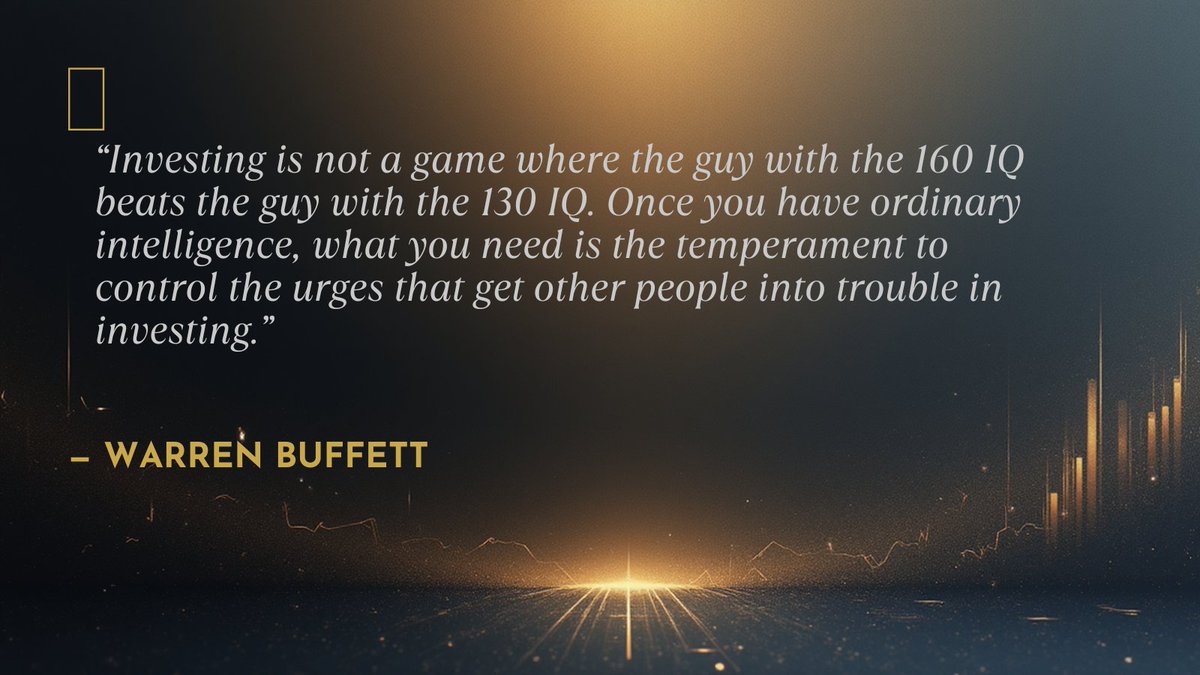
Many of the most successful traders and investors have terrible hit rates. - Warren Buffett, arguably the greatest investor in history, has a 4% hit rate.
What he has is a risk process that works. Minimal losses when wrong. Significant wins when right.
And crucially, the temperament to control the impulses and behaviours that get everyone else into trouble.
That is where the real edge lives. Not in being right. In what you do when you are wrong.
8
15
96
4,022
Jun 10
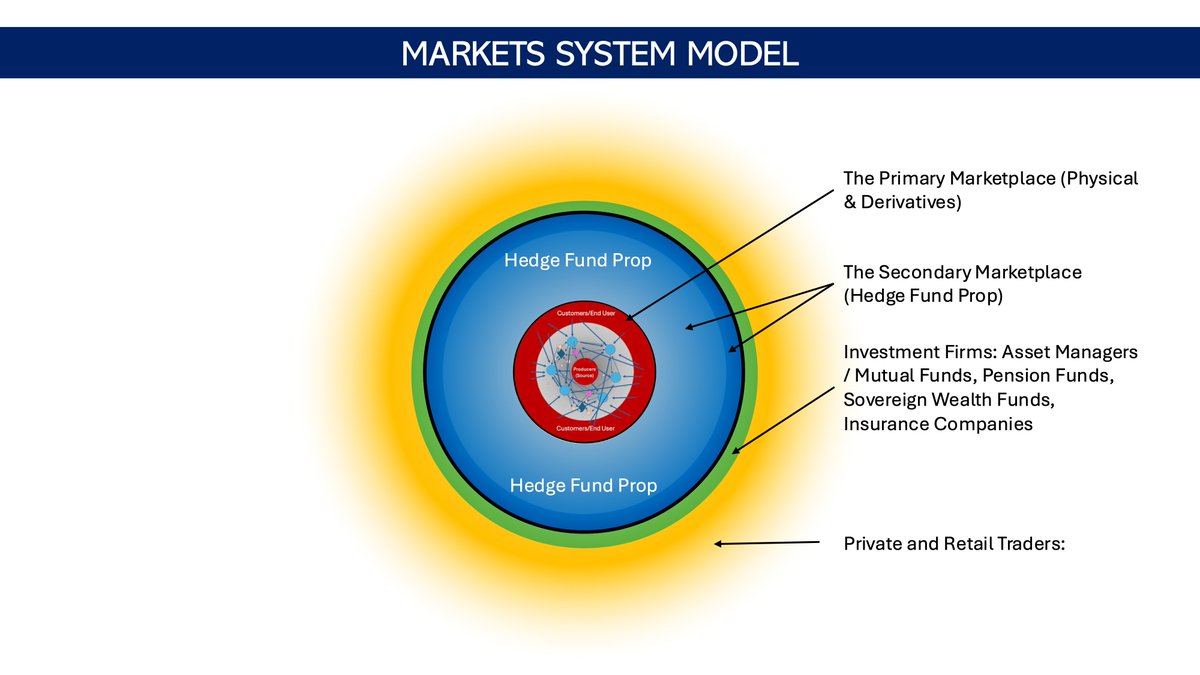
Most trading advice assumes you know where you sit in the market. - Most traders don't.
The latest issue of 'Mastering the Trading Game' maps the full ecosystem, from the commodity houses and investment banks at the centre to the retail trader at the edge, and why your distance from the centre shapes everything about how you trade.
Including why 'run your profits, cut your losses short' is not wrong. Just belonging to a very specific kind of game.
Read it here:bit.ly/3Sxj5xi
3
9
48
2,926
There are certain people every trader should listen to. Not agree with. Just listen and let it challenge you.
Howard Marks is one of them.
Brilliant interview via @tbpn. Markets, AI, trading/in vesting psychology, performance. Not a word wasted.
youtu.be/km2LidRpRvo?si=nLTe… via @YouTube
And if this kind of thinking appeals, my newsletter Mastering the Trading Game drops tomorrow: alphamind101.substack.com
1
4
40
3,687
I often get asked by prospective clients whether they should be learning trading at online proper firms, and taking their challenges.
My response is to try and steer them away from these routes.
Whilst I accept that these are valid businesses, and become an opportunity to learn trading 'on the cheap' relatively speaking, I have my issues with them.
The first concert is the pass rate reality:
Most estimates suggest that somewhere between 5% and 15% of people who attempt prop firm challenges actually pass and get funded, and of those, a significant proportion either blow the funded account or get cut off before making meaningful withdrawals. - Independent researchers and journalists who' ve looked at the payout data from some of the larger firms suggest that the vast majority of revenue comes from challenge fees, not from paying out profitable traders. - That is a red flag.
Nonetheless the question becomes are they a good place to learn?
In my view, mostly no: The challenge format creates a very specific psychological distortion. You are not learning to trade well over time, you are learning to pass a test. - And the test has very clearly defined criteria that they specify. This doesnt allow you to evolve as a trader to what suits you best, and warps your behaviour. It often also encourages traders to be either overly cautious early on, then take outsized risk near a deadline. It also forced them to run a strategy optimised for the rules rather than for real and evolving market conditions. - Neither of those habits transfers well to genuine trading.
Then there is the gamification problem!
The challenge format, the leaderboards, the "get funded fast" messaging, the social media culture around it, all of that does 'gamify the experience'. This attracts people drawn to the idea of trading more than to the idea of building a practice which builds the sort of discipline need to thrive and survive, within the realities and practicalities of a rapidly evolve ng and emergent situations and contexts. - There is not one size fits all in trading. - And the business model, when examined closely, relies on that. If most participants passed and got paid, the model would collapse.
Do they have some legitimate value!
There are a few things that can be useful. Having real rules around drawdown forces some traders to confront risk management in a way they might avoid with their own small account. And for someone who genuinely cannot access capital any other way, a well-structured funded account from a 'reputable firm' is at least something, as opposed to nothing.
What about those who succeed and become well known?
There are some, but form what I know of these, they did not learn trading on the prop firm systems, they were people who had already learned trading and were competent, and were essentially using the structure as a capital source rather than a training ground. Playing lots of different firms and finding the ones that best worked for them.
In addition there is a lottery aspect. - There are always a few winners, this is the same with the online props firms. The winners get vast publicity and vicinity as they become marketing and PR tools for the firms. -But these are outliers, lottery ticket winners, extremely rare and their success distorts the reality.
The bottom line - my view.
They are not a substitute for learning and developing as a trader through trial and experience in the real markets. - This is a process which takes many years beyond the learning the baseline technical aspects. - Trading is a highly a performance skill, as with all performance type activities, such as sport, music, drama, the learning and the the time to success is measured in years not months. - For most people online prop firms are an expensive lesson where they are likely to burn through challenge fees and reinforce bad habits under pressure.
6
4
48
3,433
I love Susquehana's approach to everythign they do . - A proper Probability Valauing Trading
Jun 8

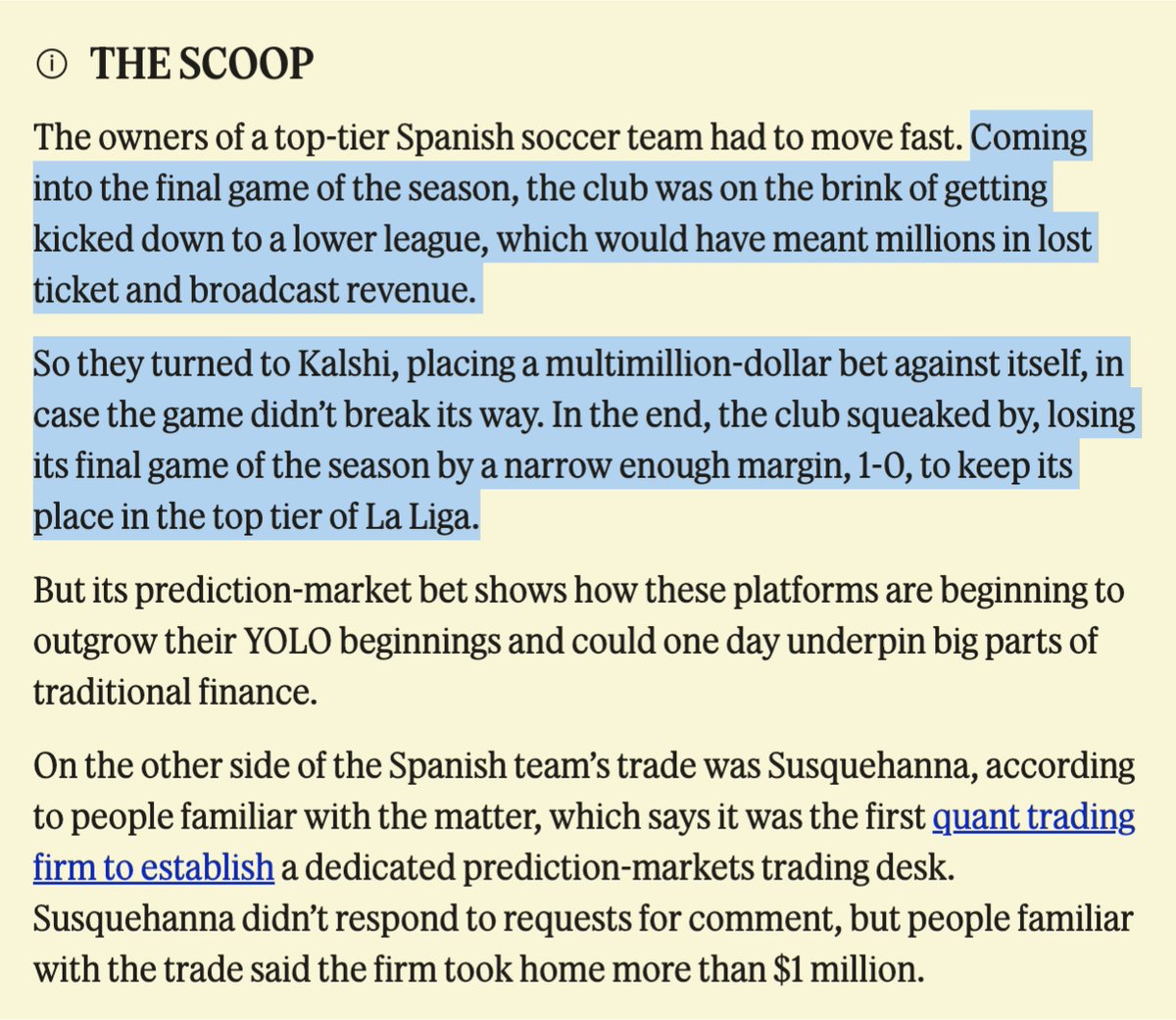
A Spanish La Liga club (likely Osasuna) facing potential relegation placed a bet against itself on Kalshi, hedging the financial hit of dropping down a tier.
They survived on the final day. Susquehanna was on the other side of that bet and pocketed over $1M.
16
3,159
"Confirmation" is one of the great paradoxes of trading: wait for it, and the opportunity may run away from you, or the risk/reward can then become sub-optimal. But anticipate it, and it may never happen, and you can find yourself underwater.
Navigating the uncertainty of trading, managing the tension that exists at the "Act" point, dealing with the internal friction it creates: that is where trading is pure art, and definitely not science.
6
7
77
3,236
The highest praise for us.

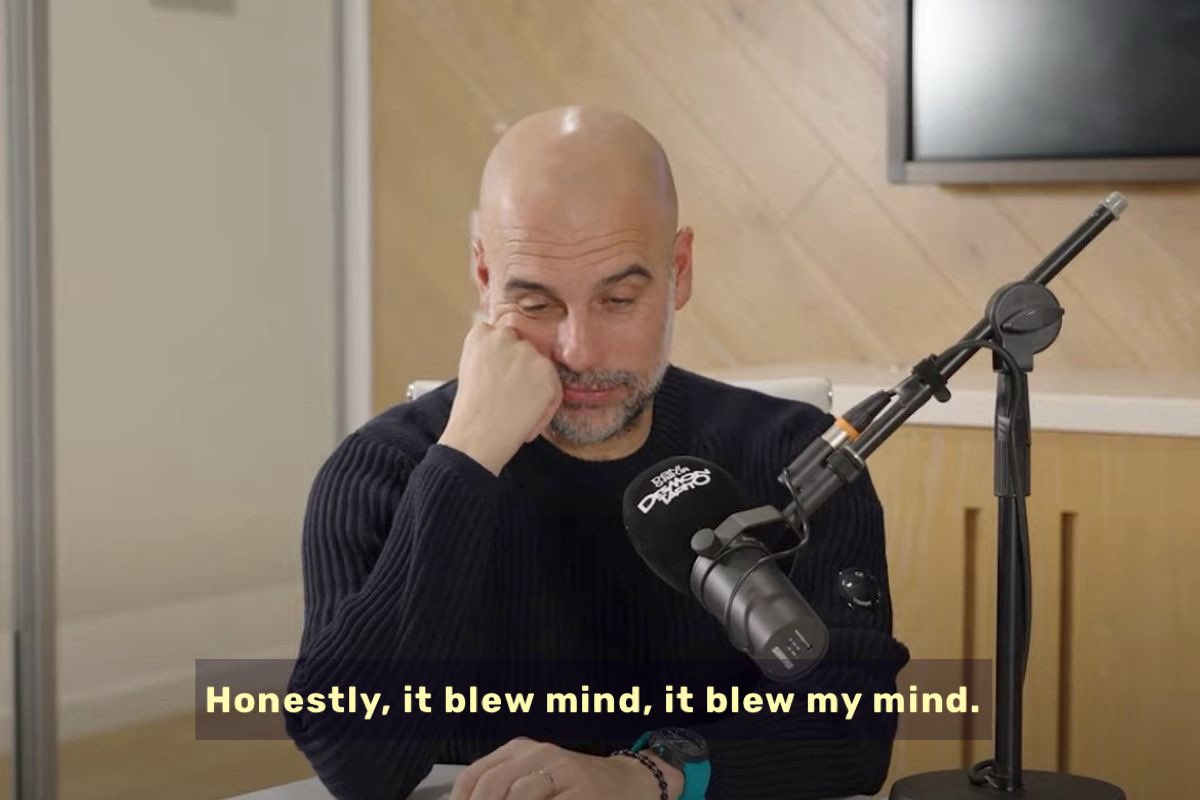
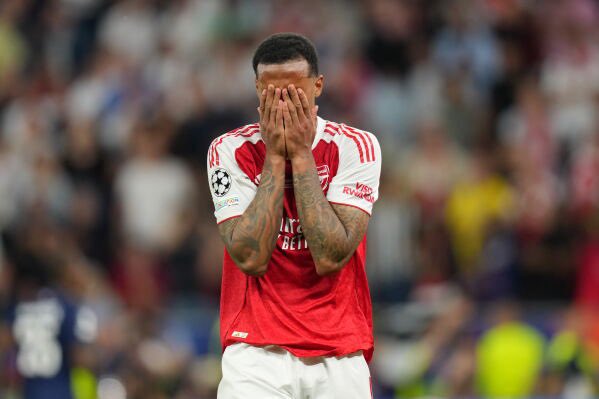
🚨🗣️ | Pep Guardiola Shocked on Arsenal fans Reaction towards Gabriel Magalhaes after missing the Penalty: 🤯
“I have to say something because I saw this and, honestly, it blew my mind. It blew my mind. We know how this business works. Usually, in a Champions League final, a player misses a crucial penalty against a top, top team like PSG, and the next day... it is a disaster for him. The social media, the media, it can be very, very cruel. Very ugly. You expect the anger, the threats, the terrible words. We see it all the time.
But what the Arsenal fans did for Gabriel? Wow. It is something else. Truly. To see a player fail in the most painful moment, and the response from the stadium, from the people, is just... pure love? I am told his shirt sales went up by three hundred and fifty percent in a few days. Three hundred and fifty percent! This is incredible. I have been in football a long, long time, as a player and a manager, and I have never seen anything like it. Never.
You know, you open Facebook, you open Instagram or Twitter, and the narrative is always the same. 'Arsenal fans are insufferable. They are the worst fanbase, they are annoying.' You hear this tag all the time. But I look at this gesture and I think, 'How?' How do they have this tag? If a fanbase can wrap their arms around a player like that, in the darkest moment of the club's history a trophy they have been dying to win for decades then everything we are told online is a lie. It is a massive misconception. They have been judged so harshly.
This shows me who they really are. It shows their class, their humanity, and their loyalty. To behave like this? It is not annoying, it is not insufferable. It is beautiful. They deserve incredible praise for this, because this is what football should be about”
1
1
11
3,239
Traders will spend thousand on new systems
They’ll spend hours each week in the gym
Will spend months trawling through data that lead to micro improvements
But
They won’t invest the money, time and effort required to work on themselves.
That’s not a coincidence. It’s psychology.
9
8
69
4,165
My first note on Substack substack.com/profile/2060026…
1
2
16
1,494
The Dude

1
6
37
7,109
Intuition is your gift in trading. The goal isn't to silence your gut or nullify your emotions, it's to build a process where they inspire and inform you, sit alongside rational analysis, but never control you.
Use the gift. Just don't let it use you.

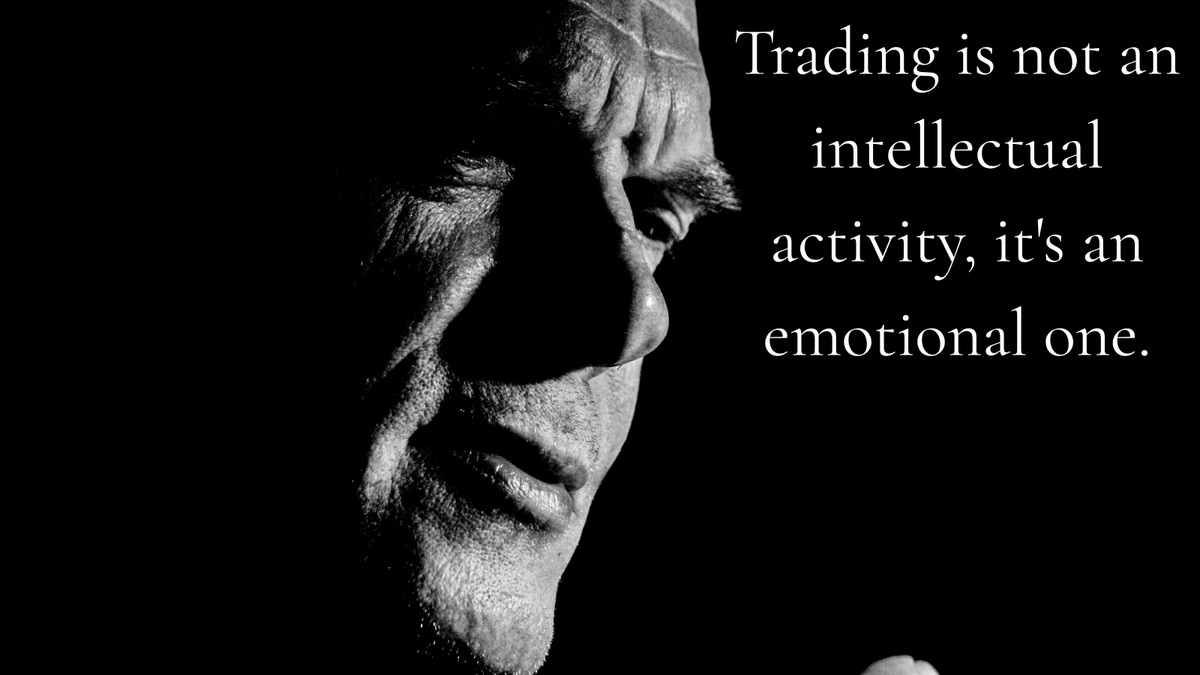
Trading is not an intellectual activity. It's an emotional one.
The decisions that cost you money aren't analytical failures. They're emotional ones. Fear. Greed. Ego. The inability to pull the trigger. The inability to let go.
Over-intellectualising pulls you toward analysis and perfectionism and away from the one thing that actually matters: taking risk.
The best traders don't eliminate the emotional side. They learn to work with it. Ignore it at your peril — it's always there, and it will always find you.
6
3
49
3,451
Trading is not an intellectual activity. It's an emotional one.
The decisions that cost you money aren't analytical failures. They're emotional ones. Fear. Greed. Ego. The inability to pull the trigger. The inability to let go.
Over-intellectualising pulls you toward analysis and perfectionism and away from the one thing that actually matters: taking risk.
The best traders don't eliminate the emotional side. They learn to work with it. Ignore it at your peril — it's always there, and it will always find you.
27
85
508
38,425
Issue 2 of 'Mastering the Trading Game' is out.
This week: Flow: The Lifeblood of Markets, looks at why markets are ecosystems, not formulas. And why the traders at the heart of them are playing a completely different game to the one most of us were taught.
Link below 👇
open.substack.com/pub/alpham…
4
33
2,309
Markets don’t move on facts , not in the short-term, they are far more influenced by liquidity, weight of positioning and feelings, narratives, and social cues.
In the long-term, these things start to lose their distorting impact, being seen rather more as noise, on the path to true value. - Though there is no clear measure of what the ‘long-term’ is. It can be weeks, months of even years.
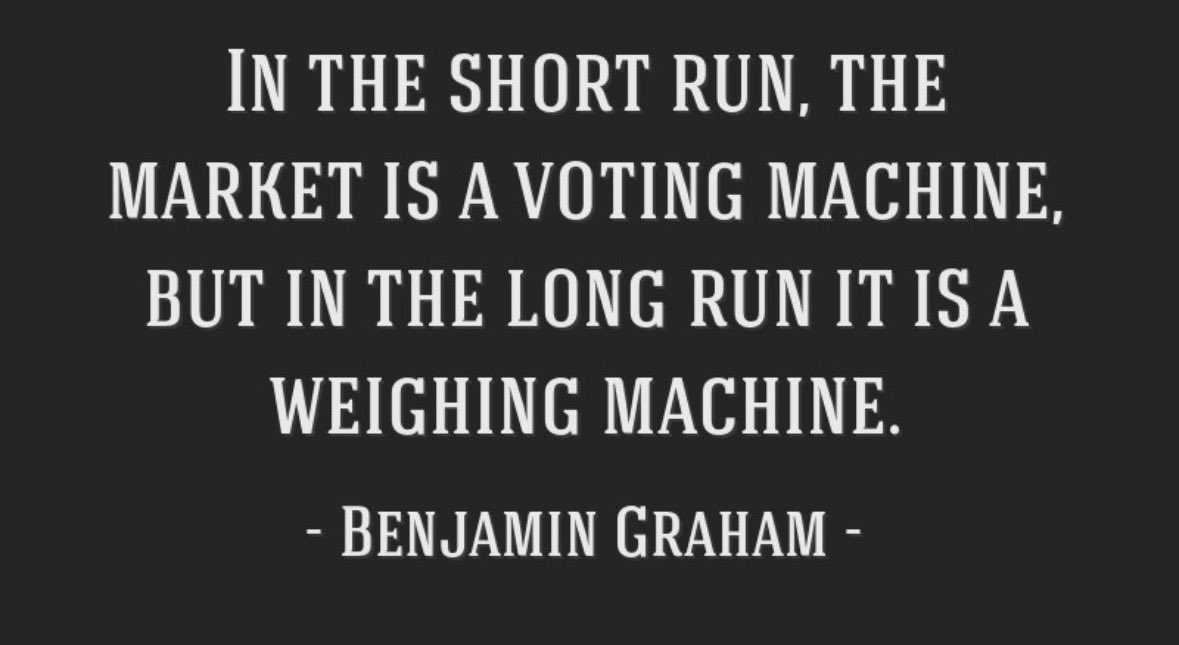
As Benjamin Graham famously said:
"In the short run, the market is a voting machine, but in the long run, it is a weighing machine."
3
7
63
3,116