
Author, media advocate and a Blogger
Joined May 2014
- Tweets 3,928
- Following 863
- Followers 848
- Likes 3,037
838 Photos and videos



Alula Frezghi retweeted

Marco Rubio, the US Secretary of State, has spoken of a potential 'new era' in U.S.–Eritrea relations. Growing diplomatic discussions and regional developments have fueled speculation that longstanding sanctions on Eritrea could be reviewed or eased in the near future as both countries explore opportunities for constructive engagement and cooperation.
#Eritrea #HornAfrica
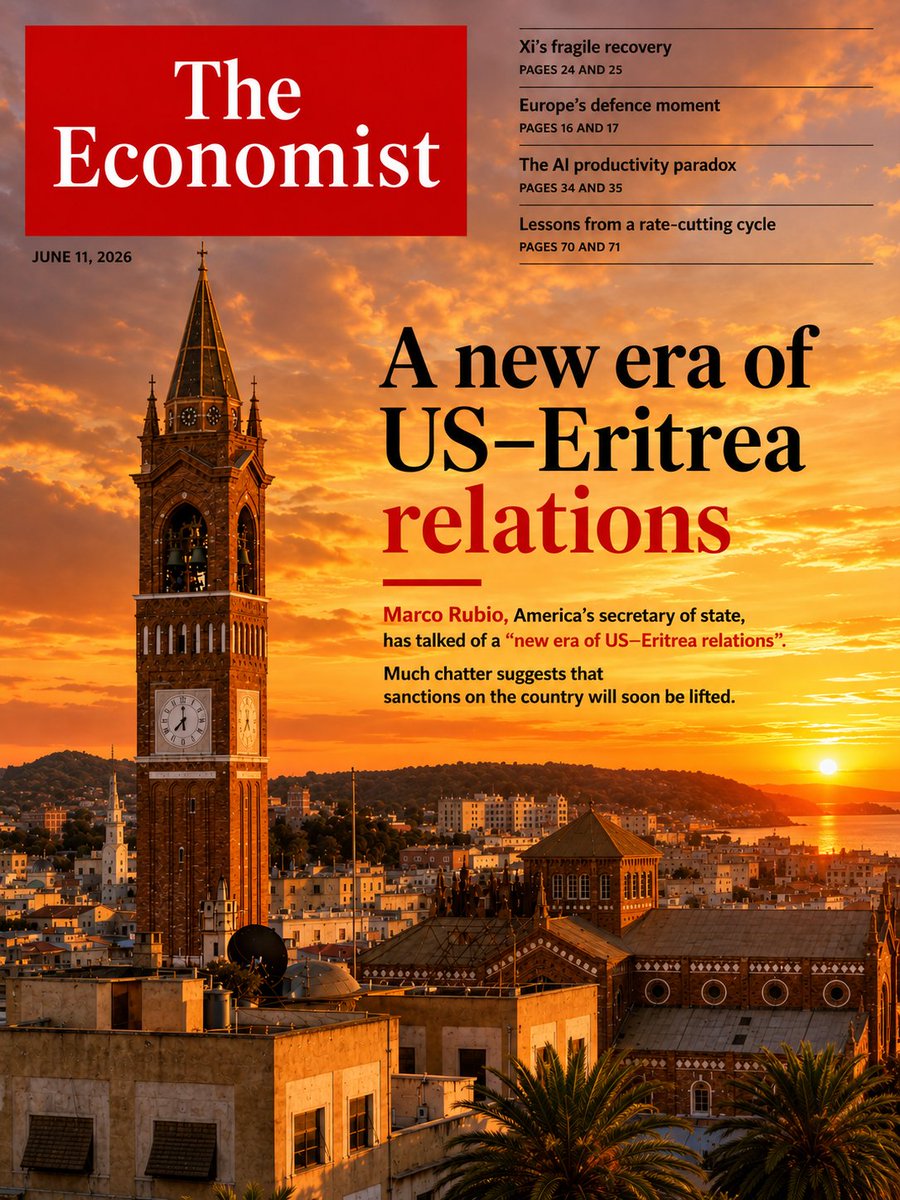

Marco Rubio, America’s secretary of state, has talked of a “new era of US–Eritrea relations”. Much chatter suggests that sanctions on the country will soon be lifted economist.com/middle-east-an…
3
28
50
1,857

Jun 13
RT @shabait: “ተመሃራይና ብኽብርታት ታሪኹን ስነ-ምግባሩን’ዩ ተዀስኲሱ ክዓቢ ዘለዎ” ሚ/ር ትምህርቲ ዶ/ር ሓሊማ መሓመድ
ኣብርሃም ዘርአ (ወዲ-ሃለቃ)
ክቡራት ኣንበብቲ ጋዜጣ ሓዳስ ኤርትራ፡ ኣብ ዝሓለፈ ተኸታተ…
98
Alula Frezghi retweeted
21 Oct 2025
Abiy Ahmed’s Expansionist Doctrine: A New Threat to the Horn of Africa
By ALULA FREZGHI
In a region already strained by conflict and climate, Prime Minister Abiy Ahmed’s expansionist rhetoric has emerged as a dangerous accelerant. His recent declarations about reclaiming Red Sea access are not mere diplomatic overtures, they are strategic provocations that threaten to unravel the fragile equilibrium of the Horn of Africa.
From Reformist to Revisionist
Abiy Ahmed’s early rise was marked by promises of peace and reform. Today, those promises lie in ruins. His administration, once celebrated for ending hostilities with Eritrea, now flirts with territorial revisionism. In 2025, Abiy publicly declared Ethiopia’s need for “direct access to the sea,” framing it as an existential imperative. But this is not about trade, it is about power.
The Prime Minister’s statements have revived old imperial fantasies, suggesting that Ethiopia’s landlocked status is a historical injustice to be corrected. This narrative, cloaked in nationalist fervor, is not only misleading, it is incendiary.
Regional Provocation, Not Cooperation
Ethiopia’s recent port deals with Somaliland, (MOU) signed without consultation with Somalia’s federal government, have sparked diplomatic outrage. These unilateral moves undermine regional norms and threaten Somalia’s sovereignty. Meanwhile, Abiy’s rhetoric has unsettled Eritrea, whose hard-won independence and Red Sea access are now implicitly challenged.
Rather than fostering regional cooperation, Abiy’s policies are sowing distrust. His administration’s posture, assertive, militarized, and dismissive of neighbors’ concerns, risks turning the Horn into a theater of confrontation.
Domestic Collapse, External Diversion
Why the sudden pivot to expansionism? The answer lies within Ethiopia’s borders. The country is engulfed in internal strife: armed conflict in Amhara, insurgencies in Oromia, and widespread discontent in Addis Ababa, continued turmoil in Tigray region. The Prosperity Party’s grip is weakening, and Abiy’s legitimacy is eroding.
Expansionist rhetoric serves as a diversion, a way to rally nationalist sentiment and deflect attention from domestic failures. But the cost is steep. Ethiopia’s internal instability is bleeding into its foreign policy, transforming a once promising state into a regional destabilizer.
The Red Sea Is Not for Sale
The Red Sea is not Ethiopia’s to reclaim. It is a shared lifeline for multiple nations, each with sovereign rights and historical claims. Abiy’s framing of access as a zero-sum game ignores decades of peaceful trade arrangements and regional diplomacy.
His administration’s militarized tone, coupled with Ethiopia’s growing reliance on force over dialogue, raises fears of escalation. The Horn of Africa cannot afford another war, especially one driven by ego and expansionist delusion.
Conclusion: Expansionism Is a Mirage
Abiy Ahmed’s vision of prosperity through expansion is a mirage. It distracts from Ethiopia’s real challenges: governance, reconciliation, and economic recovery. Until his administration abandons its revisionist ambitions and recommits to regional peace, Ethiopia will remain a source of instability, not strength.
The international community must see through the slogans and recognize the threat. Expansionism is not a solution, it is a symptom of deeper decay.
#Eritrea
#EritreanIndependence
#SelfDetermination
#InternationalLaw
#Ethiopia
#Sovereignty
#Referendum
#HumanRights
#EritreanHistory
4
27
33
1,718
Jun 12
United Nations Country Team in Eritrea: Reflections, and Testimonials on the 35th Anniversary of Eritrea’s Independence
June 11, 2026
Taken from ERi-TV Documentary “Eritrea at 35 – A Nation of Resilience, Pride, and Promise”
Nahla Valji, United Nations Resident Coordinator in Eritrea
Thank you so much. Firstly, let me say happy Independence Day. Thirty-Five Years of independence in this country. And I think what really impresses me the most here is that it is clear how much love and commitment there is amongst the people of Eritrea for this country. It is still a new country, a young country. Thirty-Five years old. The sacrifices that have been made for independence are still incredibly salient and you can feel it in this country. And that translates into a desire for every citizen, for every person to have access to development, equality, dignity that really translates into how development is approached in this country. These principles of self-reliance, of national ownership, of local solutions that we talk about as international development practitioners are incredibly real here in this country. And what I have seen in the last few years since I’ve been here is incredible achievements through those principles of self-reliance and local ownership.
Just to give one example; this is a country with some of the highest child immunization rates in the world at over 95%. And that’s incredibly significant. Just last year alone, increased energy access to over 100,000 households, sustainable energy that can be used for health facilities, for education, in the home to decrease the amount of hours that is being spent on care in the home. The focus on local solutions that may be low-cost, community driven, things like maternity waiting homes or barefoot doctors which has been such an incredible innovation and an initiative in this country; bringing health services closer to the people wherever they are in this country. Those are local solutions that are ensuring development, equality, access are perhaps low-cost, innovative and fit the context here. So, through that we see the achievements that have been made here. We also see a real ownership locally. So, if we look for example reforestation initiatives, we see people out during the holidays planting trees, taking initiative to care for their planet and I think there’s a real effort to ensure that the next generation has a sense of responsibility and care for their planet and for their environment.
The number of dams that we see 800 or 900 dams in this country for water conservation in a cyclical drought prone context is incredibly important. Solar energy initiatives and solar energy irrigation for agriculture. The increase that we’ve seen in agricultural solutions for food systems and food security. The amount of growth of vegetables, fruits, has grown exponentially here in new varieties that really is important for nutrition and health.
And you see this integrated effort across energy, agriculture, water, but you also see it with regards to health and a real understanding, as I think the Minister of Agriculture often says that “food is medicine”. So, this integrated approach to health, to food systems, to agriculture and to ensuring that every family has what they need in order to grow and sustain themselves.
Well, thank you very much for having me. Let me start with happy Independency Day for Eritreans whether…
ReadMore @RedSeaBeacon
@hawelti
@Sudan #Djibouti #Somalia #Egypt #SaudiArabia #Turkey #Qatar #UAE
@EmbassyEritrea @hadnetkeleta @SirakBahlbi @EliasAmare @Afc2012Alula
@Ghidewon @Yehdavid @GhideonMusa @globalezra @SharronYemane @Winta_eri
@PMEthiopia @MFAEthiopia @MOFAEGYPT
@AfricanUnion
@antonioguterres
@cnni @AJEnglish @BBCWorld @Reuters @AFP @AlAhramWeekly
@FT @latimes @nytimes @BBCWorld @AlJazeera @tberhan0437898
@shabait @ERiTV_Official
@ForeignPolicy @TheAtlantic
@CanadaFP @tewerwari_1
@AmbStesfamariam
@shabait @Eritrea_UN
redseabeacon.com/united-nati…
27
33
382
Jun 12
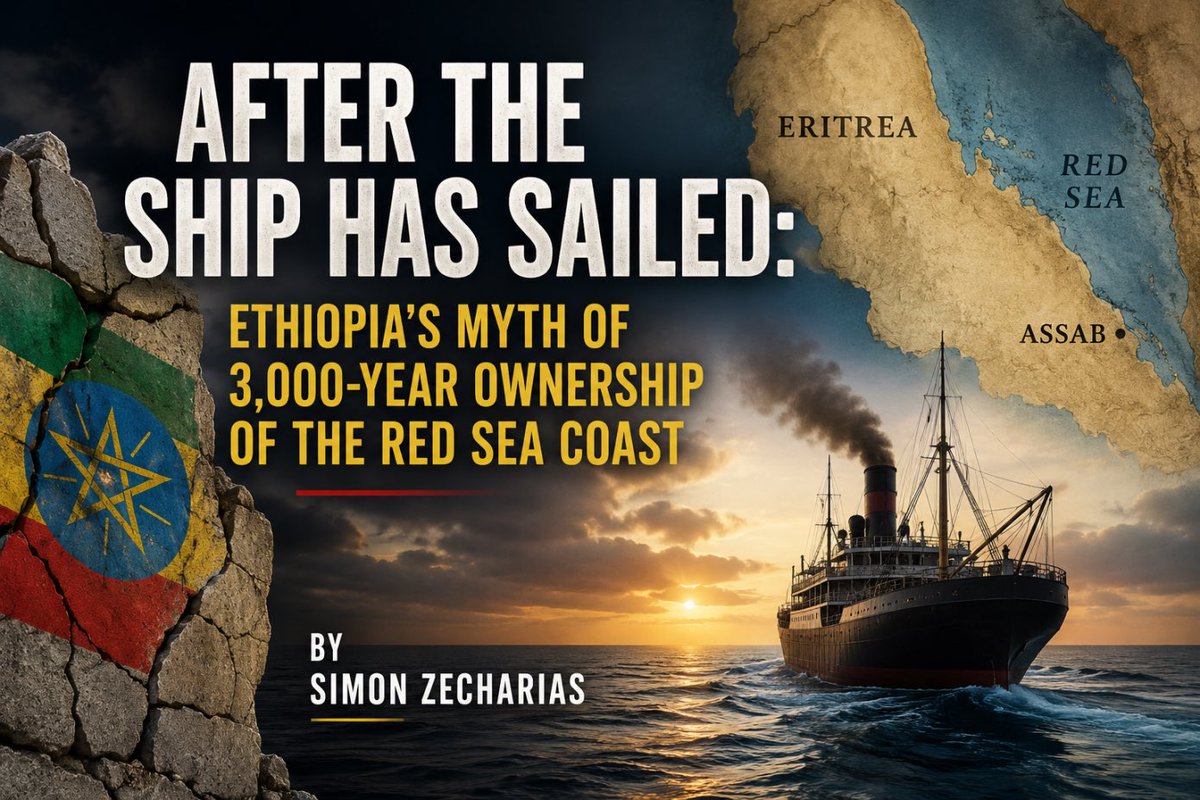
After the Ship Has Sailed: Ethiopia’s Myth of 3,000-Year Ownership of the Red Sea Coast
June 11, 2026
By Simon Zecharias
@RedSeaBeacon
Introduction:
Ethiopia did not lose Assab in 1993. It lost an occupation. It lost the temporary possession of a coastline that had never been the natural, lawful, or sovereign inheritance of an Ethiopian state.
For decades, successive Ethiopian governments have wrapped the question of Eritrea’s Red Sea coast in mythology, grievance, and imperial nostalgia. They speak as though Ethiopia was robbed of an ancient birthright, as though Assab and Massawa were severed from a timeless Ethiopian body, and as though Eritrean sovereignty is an inconvenience to be corrected rather than a legal and historical reality to be respected and accepted.
The foundation of the claim rests on a larger myth: the assertion that Ethiopia has existed as a continuous state for three thousand years. That claim has been repeated so often that it has acquired the sound of truth among some Ethiopians who are lazy to study history of Africa, including Ethiopia’s own history. Some think repetition will be evidence. Ancient civilizations, churches, monasteries, and kingdoms existed in the region, but their existence does not prove the existence of a modern Ethiopian state stretching unchanged across millennia. To claim otherwise is to confuse civilization with statehood, religious continuity with political sovereignty, and imperial imagination with international law.
The modern Ethiopian state, as defined by recognizable territory, central government, and the capacity to enter binding relations with other states, is a far more recent construction. Its borders were consolidated not in antiquity, but through conquests, treaties, and diplomatic bargains of the nineteenth and early twentieth centuries. The historical record shows fragmented polities, competing kings, shifting allegiances, local rulers, and foreign treaties signed without reference to any unified Ethiopian sovereignty over the Red Sea coast.
This article examines that record. It asks a simple but devastating question: if Ethiopia truly possessed ancient sovereign rights over Assab, Massawa, and the Eritrean coastline, where is the evidence? Where are the treaties? Where is the continuous administration? Where is the recognized authority? Where is the international acknowledgment? The answer is clear. It is not there.
What the record shows instead is that Ethiopia’s Red Sea presence was brief, imposed, and historically exceptional. It began not with ancient sovereignty, but with the UN-imposed federation of Eritrea with Ethiopia in 1952, was deepened through annexation and occupation, and ended when Eritrea’s liberation struggle restored the rightful sovereignty of the Eritrean people in 1991.
The issue, therefore, is not how Ethiopia “lost” Assab or a Red Sea coast. The real issue is how Ethiopia acquired it in the first place, what it did to keep it, and what misery its claim inflicted on Eritreans. Once the mythology is stripped away, Ethiopia’s Red Sea grievance is exposed for what it is: not a legal claim, not a historical right, but an imperial hangover searching for a coastline
ReadMore @RedSeaBeacon
@hawelti
@Sudan #Djibouti #Somalia #Egypt #SaudiArabia #Turkey #Qatar #UAE
@EmbassyEritrea @hadnetkeleta @SirakBahlbi @EliasAmare @Afc2012Alula
@Ghidewon @Yehdavid @GhideonMusa @globalezra @SharronYemane @Winta_eri
@PMEthiopia @MFAEthiopia @MOFAEGYPT
@AfricanUnion
@antonioguterres
@cnni @AJEnglish @BBCWorld @Reuters @AFP @AlAhramWeekly
@FT @latimes @nytimes @BBCWorld @AlJazeera @tberhan0437898
@shabait @ERiTV_Official
@ForeignPolicy @TheAtlantic
@CanadaFP @tewerwari_1
redseabeacon.com/after-the-s…
18
20
258
Jun 12
The Coastline Audit
By Alula Frezghi
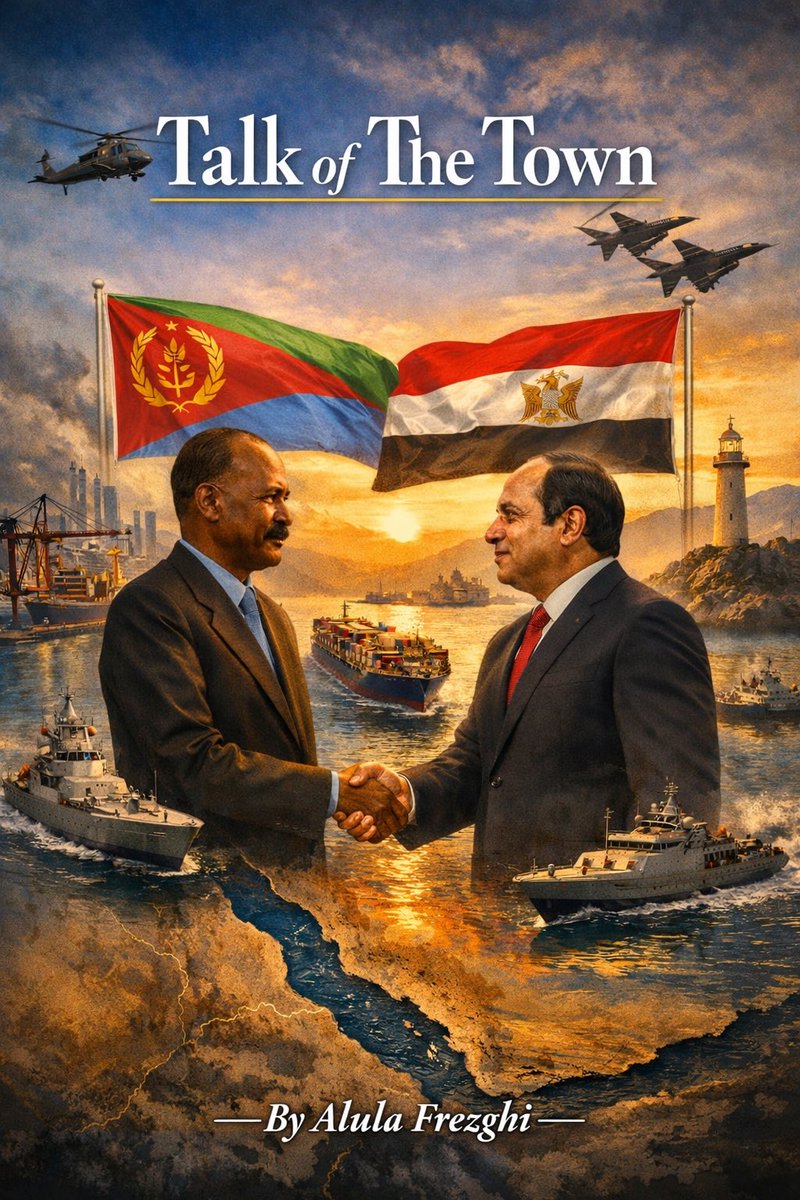
In Cairo this week, President Isaias Afwerki was welcomed with the kind of protocol usually reserved for visiting heads of state who possess something rare, valuable, and geographically irreplaceable namely, a coastline that actually exists.
Egypt’s President Abdel‑Fattah El‑Sisi reaffirmed his commitment to Eritrea’s sovereignty and territorial integrity, a phrase that sounded less like diplomacy and more like a gentle reminder to the region that maps are not mood boards. Some countries treat borders as suggestions; others, like Eritrea, treat them as facts.
The two leaders discussed Sudan, Somalia, and the Red Sea the usual topics for nations that sit on the water rather than daydream about it. They spoke of navigation, stability, and cooperation among littoral states, a category that, as it turns out, is not open to imaginative interpretation. Littoral means “on the coast,” not “near a coast,” “thinking about a coast,” or “once wrote a poem about the sea.”
Back home, Eritreans observed the Cairo visit with the calm satisfaction of a people whose shoreline has never required a press release to justify itself. The coastline has been there since Adulis, since the Romans, since the monsoon winds carried spices and stories across the sea. It has never filed a complaint, never demanded attention, never tried to relocate itself through policy.
Meanwhile, in certain inland capitals, the news was received with the kind of tight‑lipped silence usually reserved for unexpected exam results. Geography, it seems, continues to grade on a curve.
Eritrea, for its part, remains unbothered. The sea is still there. The ports are still there. The sovereignty is still there. And now, Cairo has said out loud what the Red Sea has been whispering for centuries: some coastlines are strategic, some are symbolic, and some are simply aspirational.
Only one of them is Eritrea’s.
@hawelti @AmbStesfamariam
@AmbassadorEstif
@Yehdavid @biniamb
#UAE @PMEthiopia
@Eritrea_UN @NewYorker
#TalkOfTheTown
#TheCoastlineAudit
#NewYorkerSatire
#RedSeaRealities
#HornOfAfricaChronicles
#EritreanCoastline
#AuditOfAccess
#MaritimeMemory
1
37
58
787
Alula Frezghi retweeted
Jun 3
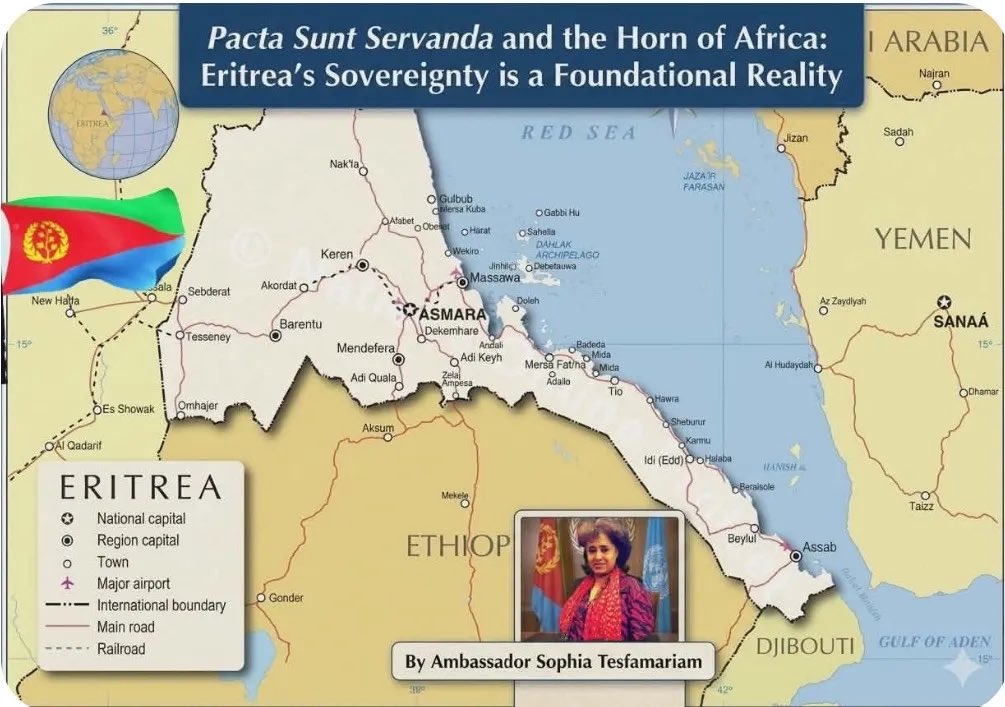
Pacta Sunt Servanda and The Horn of Africa: Eritrea’s Sovereignty is a foundational Reality
Ghidewon Abay
June 3, 2026
By Ambassador Sophia Tesfamariam
@RedSeaBeacon
There has been a lot written about Eritrea in the last few weeks, and I have decided to respond to one of the many pieces coming out of Ethiopia…The IFA article titled ‘Eritrea’s Sovereignty Claim and the Insecurity It Conceals’.
This article rests on a selective interpretation of international law, an incomplete account of the history of the Horn of Africa, and a troubling attempt to recast legitimate concerns regarding sovereignty and territorial integrity as evidence of political insecurity rather than lawful state responsibility. It is therefore necessary to address several of the issues raised in this selectively framed piece.
The title itself is particularly revealing. It reflects an increasingly common tendency in certain Prosperity Party (PP) political and intellectual circles to delegitimize Eritrea’s invocation of sovereignty by portraying it not as a foundational principle of international law, but as a form of concealment, obstruction, or paranoia. That framing is deeply problematic.
Sovereignty is not something Eritrea must ‘hide behind.’ Sovereignty is the cornerstone of the modern international legal order, enshrined in the Charter of the United Nations and the Constitutive Act of the African Union. For African states in particular, many of which emerged from colonial partition, territorial disputes, occupation, and prolonged external interference, the defense of sovereignty and territorial integrity cannot be dismissed as rhetorical posturing; these are existential legal principles rooted in painful historical experience.
For Eritrea, these concerns are not theoretical. Eritrea emerged from a long anti-colonial and anti-annexation struggle following federation, annexation, and decades of war. Ethiopia was not merely a neighboring state in Eritrean historical memory; it was Eritrea’s former colonizer. That historical experience inevitably shapes Eritrea’s understanding of sovereignty, borders, and national survival.
As the Amharic proverb aptly states: “የወጋ ቢረሳ የተወጋ አይረሳም” — “The one who inflicted the wound may forget, but the one who was wounded never does.” The proverb captures an essential reality often ignored in external analyses of Eritrea: historical memory shapes national security consciousness. States and peoples that endured annexation, war, occupation, territorial disputes, sanctions, and prolonged external pressure do not, and cannot, approach questions of sovereignty lightly or abstractly.
From an Eritrean perspective, sovereignty is therefore not an abstract diplomatic slogan or tactical political shield. It is inseparable from the sacrifices made during one of Africa’s longest liberation struggles and from the determination to prevent any return, direct or indirect, to arrangements perceived as compromising Eritrea’s hard-won independence and territorial integrity.
ReadMore @RedSeaBeacon
@hawelti
@Sudan #Djibouti #Somalia #Egypt #SaudiArabia #Turkey #Qatar #UAE
@EmbassyEritrea @hadnetkeleta @SirakBahlbi @EliasAmare @Afc2012Alula
@Ghidewon @Yehdavid @GhideonMusa @globalezra @SharronYemane @Winta_eri
@PMEthiopia @MFAEthiopia @MOFAEGYPT
@AfricanUnion
@antonioguterres
@cnni @AJEnglish @BBCWorld @Reuters @AFP @AlAhramWeekly
@FT @latimes @nytimes @BBCWorld @AlJazeera @tberhan0437898
@shabait @ERiTV_Official
@ForeignPolicy @TheAtlantic
@CanadaFP @tewerwari_1
redseabeacon.com/pacta-sunt-…
26
27
323
Alula Frezghi retweeted
Jun 5
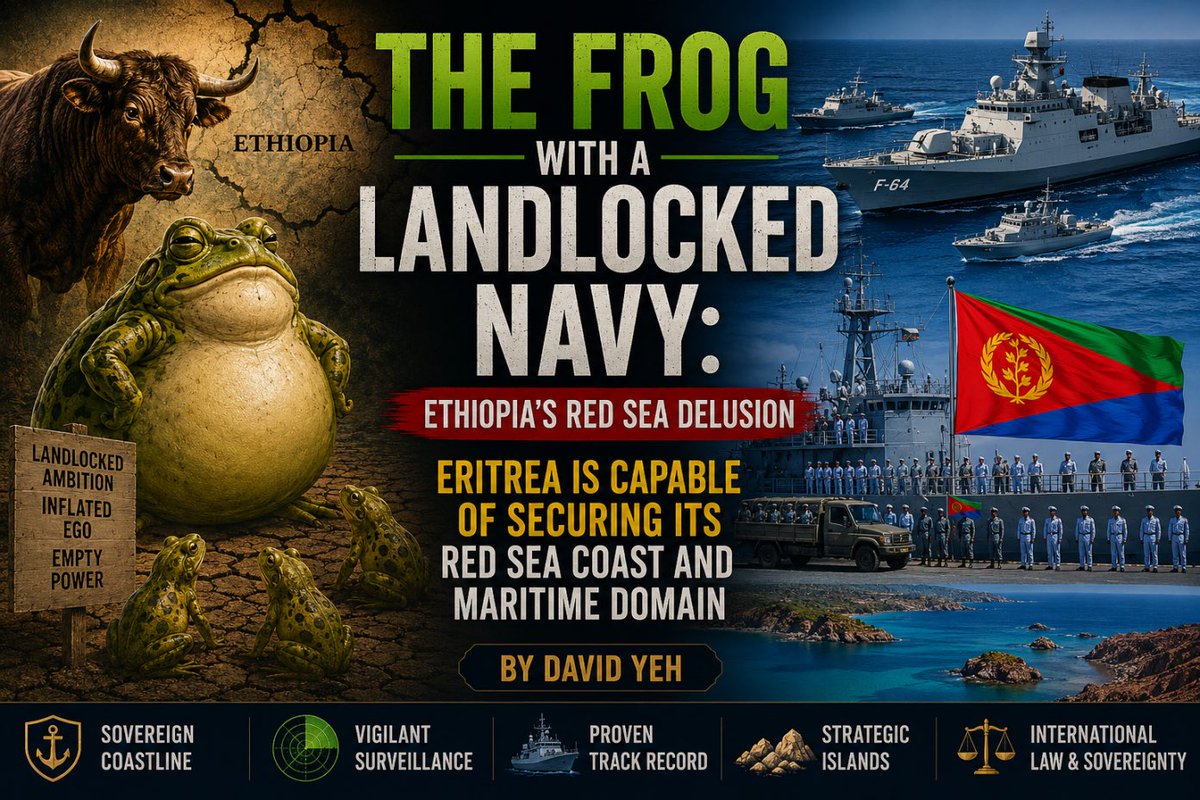
The Frog with a Landlocked Navy: Ethiopia’s Red Sea Delusion
June 5, 2026
Eritrea Is Capable of Securing Its Red Sea Coast and Maritime Domain
By David Yeh
@RedSeaBeacon
There are myths, and then there are jokes told with a straight face. The claim that “Eritrea cannot secure its own Red Sea coastline but Ethiopia can” is one of them.
It is an absurd argument: a landlocked state, without a sovereign coastline, without a functioning maritime domain, and without control over its own internal corridors, now presents itself as the natural guardian of the Red Sea. Ethiopia, a country struggling to secure movement across its own territory, wants the world to believe it can secure one of the most sensitive maritime corridors on earth. This is not strategy; it is theaterical. Worse, it is entitlement dressed up as security policy. The argument would be laughable if it were not dangerous.
The Frog and the Ox
Aesop understood this kind of delusion long before modern geopolitics gave it a policy vocabulary.
In the fable The Frog and the Ox, a vain frog sees an ox and becomes consumed by comparison. Refusing to accept that another creature could be so much larger, she puffs herself up and asks her young whether she is now as big as the ox. They tell her no. She swells again. Still no. Blinded by vanity, she takes one final breath, stretches herself beyond her natural limits, and bursts.
The moral is simple: do not attempt the impossible. Do not confuse desire with capacity. Do not let vanity inflate you into self-destruction.
Ethiopia’s Red Sea narrative is Aesop’s frog in geopolitical form.
The Three Myths
Ethiopia’s Red Sea narrative rests on three connected myths.
The first is the capacity myth: the claim that Eritrea is too weak to secure its coastline. This is false. Eritrea has controlled, defended, and administered its Red Sea coast for more than three decades under conditions of war, sanctions, trafficking pressures, foreign military competition, and regional instability. No one casually violates Eritrea’s maritime territory. No one treats Eritrea’s coast as an open playground. Eritrea’s track record shows that it is more than capable of securing its section of the Red Sea.
ReadMore @RedSeaBeacon
@hawelti
@Sudan #Djibouti #Somalia #Egypt #SaudiArabia #Turkey #Qatar #UAE
@EmbassyEritrea @hadnetkeleta @SirakBahlbi @EliasAmare @Afc2012Alula
@Ghidewon @Yehdavid @GhideonMusa @globalezra @SharronYemane @Winta_eri
@PMEthiopia @MFAEthiopia @MOFAEGYPT
@AfricanUnion
@antonioguterres
@cnni @AJEnglish @BBCWorld @Reuters @AFP @AnnGarrison @AmbStesfamariam
@FT @latimes @nytimes @BBCWorld @AlJazeera @tberhan0437898
@shabait @ERiTV_Official
@ForeignPolicy @TheAtlantic
@CanadaFP @tewerwari_1
@ERIEMBAET @BeyeneRussom
redseabeacon.com/the-frog-wi…
2
38
48
874
Jun 11
Talk of the Town: Cairo, in Industrial Light
By Alula Frezghi
In Cairo, diplomacy often begins with choreography motorcades, marble foyers, and the faint scent of diesel rising from the Nile. But this week, the city’s rhythm shifted. Eritrea’s president, Isaias Afwerki, arrived not to exchange pleasantries but to inspect Egypt’s machinery of ambition.
At Gypto Pharma, the air was antiseptic and proud. White‑coated technicians spoke of production lines as if they were national poems. At Ain Sokhna Port, cranes swung like punctuation marks in a sentence about sovereignty. The Egyptian hosts called it “industrial diplomacy.” The Eritrean delegation called it “learning.”
In the cafés of Zamalek, analysts stirred their coffee and whispered about Ethiopia’s maritime daydreams and Sudan’s disarray. “The Red Sea is being rewritten,” one said, “and Cairo holds the pen.”
By dusk, the city glowed with sodium light. The Suez Canal shimmered like a promise, and somewhere between the factories and the flags, two presidents shook hands an image that looked less like ceremony and more like a blueprint.
@hawelti
@Sudan #Djibouti #Somalia #Egypt #SaudiArabia #Turkey #Qatar #UAE
@EmbassyEritrea @hadnetkeleta @SirakBahlbi @EliasAmare @Afc2012Alula
@Ghidewon @Yehdavid @GhideonMusa @globalezra @SharronYemane @Winta_eri
@PMEthiopia @MFAEthiopia @MOFAEGYPT
@AfricanUnion
@antonioguterres
@cnni @AJEnglish @BBCWorld @Reuters @AFP @AlAhramWeekly
@FT @latimes @nytimes @BBCWorld @AlJazeera @tberhan0437898
@shabait @ERiTV_Official
@ForeignPolicy @TheAtlantic
@CanadaFP @tewerwari_1
@NewYorker
@AmbStesfamariam
@AmbassadorEstif
3
57
81
1,220
Jun 10
Eritrea’s Road Towards an Organic State and its Institutional Reality
June 10, 2026
By Mihreteab Medhanie
@RedSeaBeacon
Introduction
One of the laziest accusations repeated against Eritrea is the claim that the country has “no institutions” because it has not implemented the 1997 Constitution in the manner demanded by Western liberal orthodoxy, has no conventional multiparty parliament, and has not held national elections according to the timetable preferred by foreign critics. This is a political slogan dressed up as scholarship. It is the old colonial gaze wearing a modern human-rights suit.
At the heart of the accusation lies a crude assumption: Africans are not expected to build institutions from their own history, struggle, culture, security realities, social needs, and developmental priorities. They are expected to imitate. They are expected to copy. They are expected to import ready-made political furniture from Europe and North America, arrange it neatly in their capitals, and call that “institution building,” even if the result is hollow, fragile, externally financed, and socially rootless. In this worldview, imitation becomes legitimacy, while originality is treated as suspicion.
The Western double standard is breathtaking. The same political tradition that took centuries to produce its current constitutional systems now demands that a newly independent African country, born from a thirty-year liberation war and immediately confronted by regional hostility, produce instant liberal perfection on command. The same powers that imposed colonial administrations designed for extraction and control now pretend to be neutral judges of institutional maturity in the societies they helped deform.
This article strips that myth bare.
The question is not whether Eritrea has institutions. The real question is who gets to define what institutions are. Are institutions merely parliaments, parties, election rituals, and paper procedures performed for external approval? Or are they the organized capacity of a society to preserve order, administer justice, defend sovereignty, sustain cohesion, mobilize labor, deliver public goods, and protect national dignity under pressure? By the first definition, many failed states can be dressed up as democracies. By the second, Eritrea’s institutional reality becomes impossible to deny.
The accusation survives because Eritrea refuses to perform dependency. It refuses to build institutions for the comfort of foreign observers. It refuses to turn sovereignty into a decorative phrase while outsourcing policy to donors, creditors, intelligence agencies, NGOs, and geopolitical patrons. That refusal is precisely what makes Eritrea intolerable to those who believe African legitimacy must be certified from outside.
Eritrea’s institutions are not absent. They are inconvenient. They are not theatrical. They are functional. They are not imitations. They are organic. They do not exist to impress the West. They exist to serve, defend, organize, and sustain the Eritrean people.
That is the institutional reality this article sets out to examine.
ReadMore @RedSeaBeacon
@hawelti
@Sudan #Djibouti #Somalia #Egypt #SaudiArabia #Turkey #Qatar #UAE
@EmbassyEritrea @hadnetkeleta @SirakBahlbi @EliasAmare @Afc2012Alula
@Ghidewon @Yehdavid @GhideonMusa @globalezra @SharronYemane @Winta_eri
@PMEthiopia @MFAEthiopia @MOFAEGYPT
@AmbStesfamariam
@antonioguterres
@cnni @AJEnglish @BBCWorld @Reuters @AFP @AlAhramWeekly
@FT @latimes @nytimes @BBCWorld @AlJazeera @tberhan0437898
@shabait @ERiTV_Official
@ForeignPolicy @TheAtlantic
@CanadaFP @tewerwari_1
@AmbassadorEstif
@ytmn2 @OgbazgyAA
@shabait
redseabeacon.com/eritreas-ro…
39
60
751
Alula Frezghi retweeted

Jun 9
ሰለስተ ቕነ ተሪፉዎ ንዘሎ ዙር ፈረንሳ ልዑል ምቅርራባት ዘካዪድ ዘሎ ብንያም ግርማይ። ብቕድሚ ትማሊ ሳልሳይ ኣብ ዝኣተወሉ ብራሰልስ ክላሲክስ ኣብ ዘተኣማምን ደረጃ ብቕዓት ከምዘሎ ኣርእዩ እዩ።
70
139
1,749
Jun 9
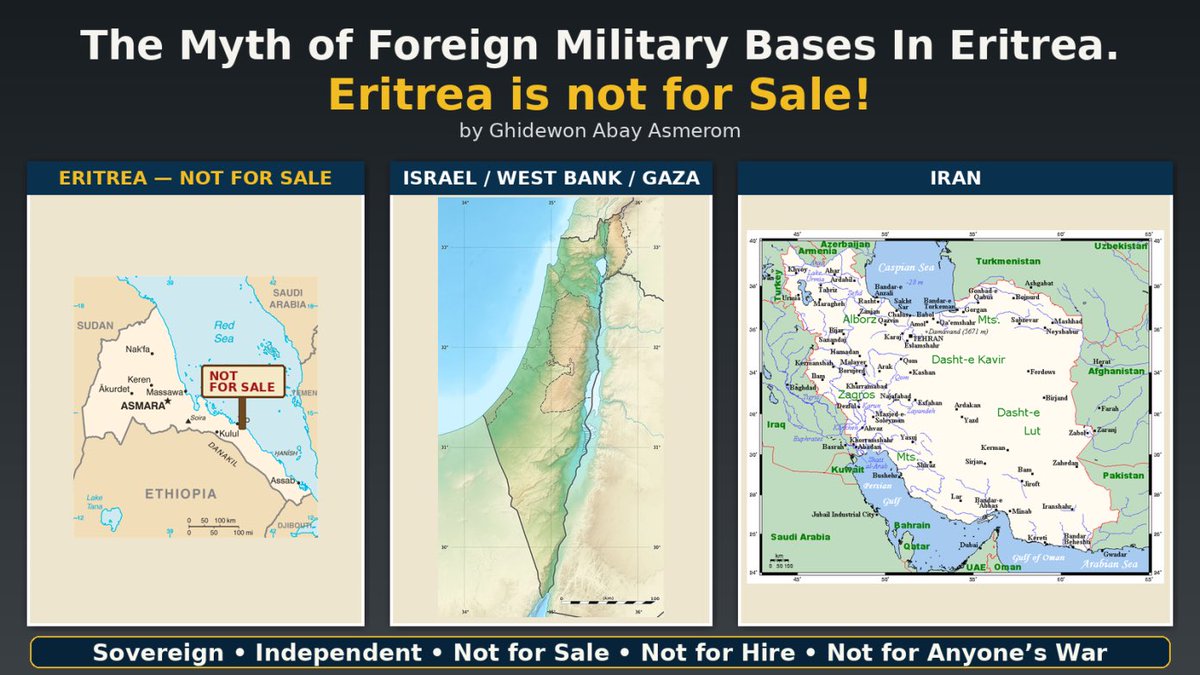
The Myth of Foreign Military Bases In Eritrea
June 9, 2026
Eritrea is not for Sale!
By Dr. Ghidewon Abay Asmerom
@RedSeaBeacon

Few accusations reveal the dishonesty of anti-Eritrean propaganda more clearly than the claim that Eritrea has granted foreign military bases to Israel, Iran, or both. At different times, Eritrea has been accused of hosting Israeli naval facilities in the Dahlak Archipelago and Massawa, an Israeli listening post on Emba Soira (Eritrea’s highest mountain), an Iranian naval base in Assab, Iranian missile installations along the Red Sea coast, and, in the most absurd version, both Israeli and Iranian military facilities simultaneously.
The narrative changes depending on the audience. For Western, Israeli, Gulf, or anti-Iranian audiences, Eritrea is portrayed as a dangerous Iranian foothold on the Red Sea, allegedly helping Tehran threaten Bab al-Mandeb, Saudi Arabia, Yemen, Israel, and international shipping. For Arab, Iranian, Houthi, or anti-Israeli audiences, Eritrea suddenly becomes a secret Israeli outpost hosting naval docks, intelligence teams, surveillance stations, and listening posts.
At times, both stories are promoted simultaneously: Israel is allegedly operating from Dahlak and Massawa to monitor Iran, while Iran is supposedly operating from Assab to threaten Israel. Two sworn enemies are said to be maintaining military facilities along the same Eritrean coastline with Eritrean approval. The contradiction is obvious, yet the purpose remains the same. Eritrea is not being described; it is being assigned whatever role best serves the political narrative of the moment.
When the script requires an Israeli outpost, Eritrea becomes Israel’s secret base. When the script requires an Iranian menace, Eritrea becomes Iran’s Red Sea platform. The facts are adjusted to fit the accusation, not the other way around.
Most of these claims trace back to recycled reports from Stratfor, regional media, Eritrean opposition sources, unnamed security officials, hostile Ethiopian-linked outlets, or foreign intelligence narratives presented as analysis. The allegations may name Dahlak, Massawa, Assab, or Mount Emba Soira, but they consistently lack the one thing serious claims require: verifiable evidence.
Eritrea has repeatedly rejected these accusations as phantom bases and has consistently denied granting military facilities to either Israel or Iran. Its position has remained unchanged: Eritrea does not mortgage its land, islands, ports, or mountains to foreign powers, nor does it turn its territory into a battlefield for rival states. In the words of President Isaias Afwerki, Eritrea is not for sale not to Israel, not to Iran, not to America, and not to any power that imagines Eritrean sovereignty can be rented, bought, or bargained away.
The Iranian Base Fantasy
The Iranian-base allegation began with claims that Iran was helping renovate the old Assab refinery. From there, the rumor mutated. Opposition websites and hostile outlets added submarines, missiles, Revolutionary Guard personnel, naval assets, arms-smuggling routes, and secret military installations. Within months, a minor claim about refinery activity had been inflated into a story about Iran controlling a strategic Red Sea base.
ReadMore @RedSeaBeacon
@hawelti
@Sudan #Djibouti #Somalia #Egypt #SaudiArabia #Turkey #Qatar #UAE
@EmbassyEritrea @hadnetkeleta @SirakBahlbi @EliasAmare @Afc2012Alula
@Ghidewon @Yehdavid @GhideonMusa @globalezra @SharronYemane @Winta_eri
@PMEthiopia @M_Farmaajo @MOFAEGYPT
@AfricanUnion
@antonioguterres
@cnni @AJEnglish @BBCWorld @Reuters @AFP @AlAhramWeekly
@FT @latimes @nytimes @BBCWorld @AlJazeera @tberhan0437898
@shabait @ERiTV_Official
@ForeignPolicy @TheAtlantic
@CanadaFP @tesfanews
@OgbazgyAA @ERIEMBAET
@AmbStesfamariam
@AmbassadorEstif
@beyene195737
redseabeacon.com/the-myth-of…
2
22
29
227
Jun 10
According to the rumor mill, Eritrea is now the world’s first geopolitical Airbnb: Israelis on the north coast, Iranians on the south, and apparently everyone shares Emba Soira like a communal loft. The story changes depending on who’s telling it Western analysts, opposition blogs, or that one “regional expert” who hasn’t opened a map since 1998. The only constant is the punchline: none of them have evidence.
#Satire #NarrativeWarfare #HornOfAfrica #MediaMyths #EritreaIsNotForSale
3
3
109
Jun 10
Eritrea has been accused of hosting every foreign base imaginable, Israeli docks in Dahlak, Iranian missiles in Assab, even a mythical listening post on Emba Soira. The story changes depending on who the accuser wants to scare. One day Eritrea is Tehran’s Red Sea fortress; the next it’s Israel’s secret outpost. Sometimes both at once.
#Eritrea #RedSea #Disinformation #HornOfAfrica #Sovereignty
These narratives aren’t analysis they’re assignments. When a Western or Gulf script needs an Iranian menace, Eritrea is cast as Tehran’s foothold. When an Arab or anti‑Israeli script needs an Israeli threat, Eritrea becomes a Mossad island hub. The contradiction doesn’t matter. The goal is the same: bend Eritrea into whatever shape the moment demands.
#NarrativeWarfare #Geopolitics #MediaLiteracy #EritreaIsNotForSale
1
2
78
Alula Frezghi retweeted
Jun 9
The Myth of Foreign Military Bases In Eritrea
June 9, 2026
Eritrea is not for Sale!
By Dr. Ghidewon Abay Asmerom
@RedSeaBeacon

Few accusations reveal the dishonesty of anti-Eritrean propaganda more clearly than the claim that Eritrea has granted foreign military bases to Israel, Iran, or both. At different times, Eritrea has been accused of hosting Israeli naval facilities in the Dahlak Archipelago and Massawa, an Israeli listening post on Emba Soira (Eritrea’s highest mountain), an Iranian naval base in Assab, Iranian missile installations along the Red Sea coast, and, in the most absurd version, both Israeli and Iranian military facilities simultaneously.
The narrative changes depending on the audience. For Western, Israeli, Gulf, or anti-Iranian audiences, Eritrea is portrayed as a dangerous Iranian foothold on the Red Sea, allegedly helping Tehran threaten Bab al-Mandeb, Saudi Arabia, Yemen, Israel, and international shipping. For Arab, Iranian, Houthi, or anti-Israeli audiences, Eritrea suddenly becomes a secret Israeli outpost hosting naval docks, intelligence teams, surveillance stations, and listening posts.
At times, both stories are promoted simultaneously: Israel is allegedly operating from Dahlak and Massawa to monitor Iran, while Iran is supposedly operating from Assab to threaten Israel. Two sworn enemies are said to be maintaining military facilities along the same Eritrean coastline with Eritrean approval. The contradiction is obvious, yet the purpose remains the same. Eritrea is not being described; it is being assigned whatever role best serves the political narrative of the moment.
When the script requires an Israeli outpost, Eritrea becomes Israel’s secret base. When the script requires an Iranian menace, Eritrea becomes Iran’s Red Sea platform. The facts are adjusted to fit the accusation, not the other way around.
Most of these claims trace back to recycled reports from Stratfor, regional media, Eritrean opposition sources, unnamed security officials, hostile Ethiopian-linked outlets, or foreign intelligence narratives presented as analysis. The allegations may name Dahlak, Massawa, Assab, or Mount Emba Soira, but they consistently lack the one thing serious claims require: verifiable evidence.
Eritrea has repeatedly rejected these accusations as phantom bases and has consistently denied granting military facilities to either Israel or Iran. Its position has remained unchanged: Eritrea does not mortgage its land, islands, ports, or mountains to foreign powers, nor does it turn its territory into a battlefield for rival states. In the words of President Isaias Afwerki, Eritrea is not for sale not to Israel, not to Iran, not to America, and not to any power that imagines Eritrean sovereignty can be rented, bought, or bargained away.
The Iranian Base Fantasy
The Iranian-base allegation began with claims that Iran was helping renovate the old Assab refinery. From there, the rumor mutated. Opposition websites and hostile outlets added submarines, missiles, Revolutionary Guard personnel, naval assets, arms-smuggling routes, and secret military installations. Within months, a minor claim about refinery activity had been inflated into a story about Iran controlling a strategic Red Sea base.
ReadMore @RedSeaBeacon
@hawelti
@Sudan #Djibouti #Somalia #Egypt #SaudiArabia #Turkey #Qatar #UAE
@EmbassyEritrea @hadnetkeleta @SirakBahlbi @EliasAmare @Afc2012Alula
@Ghidewon @Yehdavid @GhideonMusa @globalezra @SharronYemane @Winta_eri
@PMEthiopia @M_Farmaajo @MOFAEGYPT
@AfricanUnion
@antonioguterres
@cnni @AJEnglish @BBCWorld @Reuters @AFP @AlAhramWeekly
@FT @latimes @nytimes @BBCWorld @AlJazeera @tberhan0437898
@shabait @ERiTV_Official
@ForeignPolicy @TheAtlantic
@CanadaFP @tesfanews
@OgbazgyAA @ERIEMBAET
@AmbStesfamariam
@AmbassadorEstif
@beyene195737
redseabeacon.com/the-myth-of…
2
22
29
227