
Joined August 2016
- Tweets 2,532
- Following 1,278
- Followers 815
- Likes 14,750
799 Photos and videos









Fred retweeted

Apr 22
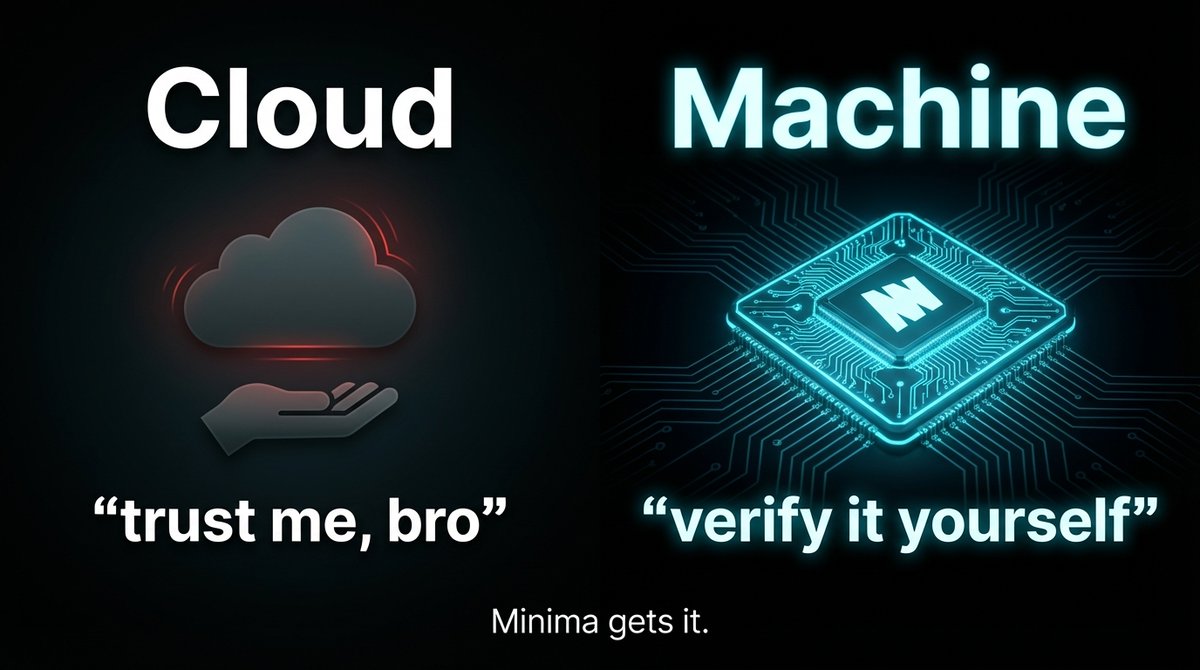
Most crypto "partnerships" are logos on a landing page.
This is a live flight test. ARM supplied the chip. Siemens supplied the industrial backing. The University of Southampton ran the demonstration. And the drone recorded every autonomous decision to a tamper-proof ledger while airborne.
This is what TRL6 looks like, and almost nobody in crypto has ever shipped anything at that readiness level.
The gap between what @Minima_Global has actually built and what the market is currently pricing is the reason I keep posting about them.
x.com/Minima_Global/status/2…
Mar 5

A World First: a drone with a blockchain black box.
Working with the @unisouthampton, and supported by @Arm and @Siemens, we demonstrated autonomous flight data recorded directly to a tamper-resistant ledger.
A major milestone for Blockchain-on-Chip, now at Technology Readiness Level 6.
From drones to satellites, machines will be able to prove what they did independently.
🏝️🚢✈️🛰️
🎥 Documentary:
2
23
58
1,793
Fred retweeted

Apr 21
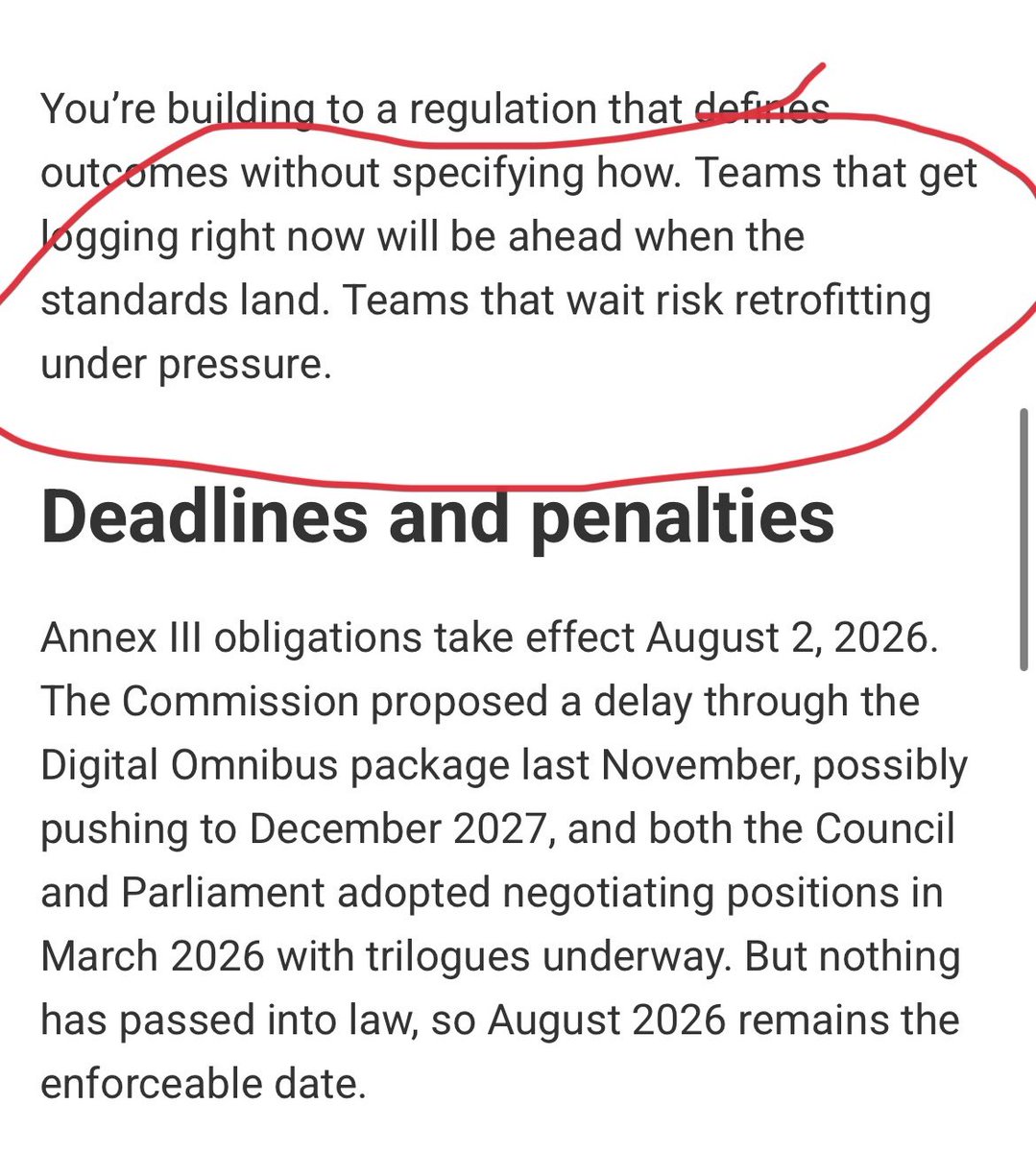
The EU AI Act becomes enforceable for high-risk systems on August 2, 2026. Every autonomous machine operating in Europe (drones, industrial robots, medical devices, embedded AI) will need tamper-proof audit trails that regulators can independently verify.
helpnetsecurity.com/2026/04/…
The EU AI Act logging problem is about proving data integrity over time—exactly what @Minima_Global Integritas solves. Integritas hashes and timestamps data at the source on an immutable blockchain, generating tamper-proof validation reports. This cryptographic proof aligns perfectly with the article's suggested solution of external signing keys and verifiable chains.
minima.global/post/integrita…
2
12
26
781

Apr 11
The wait is almost over
Apr 11

The $GRAM TGE is 3 days out.
PROOF's #Solana era starts with Blockgram. Telegram without the friction. Gasless transactions. No seed phrases. The app #crypto already lives in, doing what it never could before.
Full launch details how to participate: proofplatform.io/projects/bl…
1
6
145
Apr 8
Been a while since we’ve had a fresh @PROOFplatform launch.
This one is new ground, bringing @blockgramapp to Solana.
If the Solana crowd is tired of the usual pump.fun chaos and wants something cleaner and more structured, they should look at how Proof does launches.
2
8
164
Apr 8
If you’re a founder who’s done with the typical cash-grab dev meta; the same hype cycles, empty promises, and tokens that only move on speculation- this is your alternative.
@PROOFplatform gives every team the cleanest possible foundation: identical safe tokenomics AssureDefi KYC verification. That alone shows the market you’re serious from day one.
But the real difference?
The founders who stand out are the ones treating their token as a genuine growth asset, obsessing over real product usage and retention, building simple low-budget revenue streams that actually pay the bills, and using creative, out-of-the-box plays to drive organic awareness and holders that stick around through any market.
If you’re looking for a launch that actually sets you up for long-term compounding instead of another quick flip and are genuinely looking to do things differently.... this is it. 👇
Apr 7
We could have held PROPEL anywhere.
We chose Lake Como for a reason.
The best thinking happens when you're removed from the noise. Away from the feed. Surrounded by people all building towards the same goal.
One application. Four days that change your trajectory.
Join us ↓

1
1
7
765
Fred retweeted

Mar 10
Take a look: @Siemens just highlighted the emergence of a new technology category: Blockchain-on-Chip.
Pioneered by Minima, it embeds blockchain directly into hardware so machines can securely record and verify their actions at the edge.
One example: the Blockchain Black Box, demonstrated in the world’s first drone flight recording data to a blockchain-secured ledger.
Now at TRL 6.
📖 Siemens blog:
blogs.sw.siemens.com/cre8ven…

9
50
112
9,688
Mar 7
Minima just rewrote the rules.
I've shared about @Minima_Global many times before: the vision of a truly embedded, device-native Layer-1 that scales outward to billions of machines rather than upward to servers.
But this recent development is different. It's no longer just theory or prototypes. It's working proof in the real world.
A full Minima node running natively on-chip inside an autonomous drone. During live flight facing vibrations, signal fluctuations, power constraints, it recorded tamper-proof sensor and flight data directly to the blockchain.
☰ No intermediaries
☰ No cloud dependency
☰ An immutable "black box" the machine itself maintains
This achievement, in collaboration with the @unisouthampton, @Arm, and @Siemens, has reached TRL 6: 'Technology successfully demonstrated in a relevant environment'.
That's a major bridge from research to industrial viability.
Key implications:
☰ Full nodes (not light clients) on low-power edge hardware
☰ Decentralised trust moving to the device level, where autonomy demands it most
☰ A foundation for verifiable integrity in drones, autonomous vehicles, IoT systems, medical deliveries, and even multi-domain operations (land, sea, air, space)
This isn't hype. It's the first real demonstration of blockchain embedded in hardware for autonomous systems. If this path continues and adoption follows (especially as regulations evolve to require verifiable audit trails for machines), it could fundamentally change how we trust the intelligent devices shaping our world.
The experimental phase is behind us. Embedded, device-native trust is taking flight.
Watch the documentary in the original post, it's a glimpse of what's coming.
Mar 5
A World First: a drone with a blockchain black box.
Working with the @unisouthampton, and supported by @Arm and @Siemens, we demonstrated autonomous flight data recorded directly to a tamper-resistant ledger.
A major milestone for Blockchain-on-Chip, now at Technology Readiness Level 6.
From drones to satellites, machines will be able to prove what they did independently.
🏝️🚢✈️🛰️
🎥 Documentary:
3
17
50
1,005
Feb 13
I think most people underestimate how primitive sports data still is.
We track what happened. Who landed more. Who scored. Who won. But we still don’t really understand the mechanics underneath it in any consistent way.
That’s what makes @FX1Sports so interesting to me.
If MotionAI works the way they are describing it here, it isn’t just another layer of stats. It’s an attempt to model the interaction between movement, fatigue, environment and decision making in real time.
That’s a completely different level of insight.
In combat sports especially, the data layer is almost non-existent. We talk about output and control time as if that tells the whole story, but anyone who actually watches fights knows there’s far more going on. Energy trade-offs. Efficiency. Power drop-off. Micro adjustments. Pressure. All the things that change momentum before the judges ever see it on a scorecard.
If you can start to quantify those properly, you’re not just making better graphics for broadcasts. You’re creating a new framework for understanding performance.
The athlete-owned data piece is also bigger than people realise. Internal metrics paired with motion intelligence changes who benefits from the value created. Historically, data gets extracted. If athletes are able to participate in that layer economically, that’s a meaningful shift.
This is not a short-term narrative. It’s not flashy. It’s not designed for instant engagement.
It’s infrastructure. And infrastructure takes time.
When I talk about backing real builders instead of feeding the casino, this is the sort of thing I mean.
Whether the market ever prices that properly is out of my hands. It hasn’t yet. But I’d rather be early to something meaningful than late to something loud.

3
3
221
Feb 12
I don’t know what annoys me more…
That this is the state we’ve let this industry drift into,
or the fact that I’m not even remotely surprised by stories like this anymore.
Someone gets rugged, learns the mechanics, then becomes the rugger.
And somehow that’s just… normal now.
Fair play to @JP_PROOF for trying to swing the momentum back the other way. Back to where most of us actually started: backing real founders, teams trying to ship real products, projects building something beyond just a narrative.
We’ve become so desensitised to rugs that many don’t even treat them as a problem anymore. It’s just “part of the game.”
Even the word “rug” has been softened. It’s almost worn like a badge. A rite of passage even.
But let’s call it what it is.
A rug is theft.
Just dressed up in “community” a slick launch thread and a Telegram sticker pack (not sure they even bother with the stickers these day though).
If this was happening in any other part of society, we wouldn’t shrug and move on. We’d push back.
So the real question (and I’m asking myself this too) is:
When are we actually going to fight back?
Appreciate JP being willing to take that stance. What you’re building at @PROOFplatform matters, even if it feels like swimming upstream some days.
The right path is rarely the easiest.
But it’s the only one worth taking.

The rugged becomes the rugger.
From not knowing anything about trading memecoins 7 days ago > to getting rugged > to launching his own token and rugging for $14k — all within 7 days.
It’s far too easy to launch and rug a coin these days. @Pumpfun even encourages it.
Investors need to start voting with their $$ on real founders, attempting to build real companies — yes, I’m talking about utility tokens.
Yes, it’s still highly speculative and yes it’s still highly risky. Yes, there are still bad actors and rugs that occur. BUT, you’ve certainly got a lot more data to base your decisions on — and, depending how it is launched, safety measures baked in.
The unfortunate thing is that people are inherently lazy. They don’t want to put in the work required to find quality projects to back, and stay up-to-date with their progress. But, if they did, they would make a lot more money.
So, you have a choice… keep losing all your lunch money, blindly gambling on asslickerbuttscrubber and hoping it takes off.
OR…
Help us bring back utility season by backing real founders attempting to build real businesses.
MAKE UTILITY GREAT AGAIN. ✊
3
3
13
1,117
Feb 4
One of the hardest things for teams to do in crypto is to stop performing and start communicating like a serious technology company.
@Minima_Global recently dropped a blog that I think is worth reading. Not because it’s “bullish”, but because it’s a rare example of a team choosing clarity over theatre.
'From Roadmaps to Results.'
For a long time, crypto has trained us to expect dates.
Milestones. Timelines. Countdown clocks.
The problem is: roadmaps often end up optimised for narrative, not outcomes.
Minima are basically saying: we’re done doing that.
Not “we’re going quiet”.
More like:
We’re going to communicate like a serious technology company, where progress is measured by evidence, execution, trade-offs, and learning… not by whether a PDF timeline survived contact with reality.
I think that matters more than people realise.
Because as the space matures, there’s a growing gap between two mindsets:
The mindset that needs constant catalysts and short-term signals
And the mindset that understands infrastructure takes years, and the only real proof is shipping
Minima are drawing a line in the sand:
🔸Not shaping strategy around short-term price action
🔸Not reacting to speculative narratives
🔸Not debating everything through the lens of near-term market movement
Whether you like that or not, it’s coherent. And coherence is rare.
What I also like is the precision of how they frame themselves now:
Minima isn’t trying to be “a Web3 company with enterprise ambitions.”
They’re positioning as a technology company solving real infrastructure problems, that uses a blockchain only where a blockchain is actually the right tool.
That’s an important shift in language:
Blockchain isn’t the product.
Speculation isn’t the strategy.
The product is embedded trust, distributed verification, and infrastructure that still functions where centralised systems fail.
And rather than pretending the future is predictable, they lay out themes they’re focused on:
🔸Proving $Minima at the hardware layer
🔸Strengthening the on-chain economic stack (mxUSD, DEX, maturing interfaces like MiniMask)
🔸Earning trust through proof, not claims
🔸Building a smaller but aligned pioneer base
No hype. No deadlines. No “soon™”.
Just a pretty clear statement of intent:
🔸Durability over applause
🔸Infrastructure over cycles
🔸Outcomes over optics
If you’re building (or investing) with a long-term lens, this is the kind of comms you should want more of in the space.
Bravo, Minima, Bravo!
You can read the full blog article here: minima.global/post/minima-fr…
2
13
39
1,224
Jan 21
I’ve been thinking about this a lot through my consultancy work.
I’ll jump from one call to the next, both with people who say they’re “building in crypto”, and the contrast can be pretty stark.
Some are genuinely trying to build useful tech.
Infrastructure. Tooling. Things that solve real problems and probably won’t get much attention for a while.
Others are focused on memes and market mechanics.
Attention. Velocity. Riding whatever the current narrative happens to be.
And there are still people whose entire plan is just to farm.
We always tell those where to shove it, though, but thankfully, most of them are filtered out before they ever get to me.
What makes it tricky is that all of these people think they’re operating in the same space.
They all say “crypto”.
They all use the same language.
But they’re often talking about completely different things.
Moving between those conversations back to back really drives home how stretched the word “crypto” has become.
We’re often comparing apples and pears, then acting surprised when nobody agrees on what good even looks like.
At the very least, it’s changed how I listen.
1
107
Jan 20
I’ve only been back on here a day and I already feel like stepping away again.
Watching the $TROVE launch unfold has been pretty grim.
The noise. The pile-ons. The certainty from people who weren’t the ones taking the risk.
It’s toxic, and I genuinely feel for anyone who lost money.
What struck me though, especially after writing about extractors yesterday, is how familiar this pattern is.
A lot of the conviction around the pre-sale didn’t come from deep understanding.
It came from confident voices repeating the same story.
Strong delivery. Clean narrative. Very little visible doubt.
And that’s where things tend to go wrong.
Not because those people are automatically malicious, but because confidence is cheap when you’re insulated from the downside.
Add to that the reality that many teams are still undoxxed, and you’ve got another layer of risk people often turn a blind eye to.
You don’t know who they are.
You don’t know what happens if things break.
And you don’t know how much personal cost they actually carry if it all goes wrong.
The gold standard will always be founders who are fully doxed, publicly known, and willing to stand up, speak, and be accountable in the open.
That’s rare.
But tools like @AssureDefi exist for a reason.
They’re not a compromise. They’re actually ideal for founders who have legitimate reasons to stay protected, but still want to build properly.
There are plenty of valid reasons someone might not want full public exposure. Personal safety. Regulatory uncertainty. Operating in jurisdictions where visibility brings real risk
But what matters is whether someone has chosen accountability at all.
Using a verification layer like this signals that someone is willing to be accountable somewhere, even if not publicly everywhere.
That said, geography still matters.
Being verified in a country where follow-up is realistic (level 1 or 2 jurisdictions) carries very different weight to verification in places where enforcement is effectively impossible.
Anonymity isn’t binary.
Neither is accountability.
What people should care about is whether a team has chosen any meaningful consequence if things go wrong.
A simple check I’ve found useful:
When someone sounds completely certain, ask yourself what they are exposed to if they’re wrong.
No lockups.
No illiquidity.
No real consequence.
That gap matters more than the size of their audience.
Crypto keeps relearning the same lesson the hard way:
outsourcing judgment feels efficient, until it isn’t.
Crypto doesn’t really need louder voices right now.
It needs more people willing to slow down and think for themselves.
ALT Thinking out loud
5
220
Jan 19
There’s a quiet difference between people who build in Web3 and people who extract from it.
You don’t spot it in launch week.
You don’t see it in the charts.
You definitely don’t see it in the replies.
You see it months later. Sometimes years.
Builders obsess over things that never trend.
What breaks at scale.
What confuses users.
What quietly erodes trust if left unattended.
The work that doesn’t screenshot well, and never fits in a tweet.
Extractors obsess over optics.
Timing. Narratives. Momentum.
What they can say today that gives them leverage tomorrow.
One group asks:
“Would this still make sense if nobody ever tweeted about it?”
The other asks:
“How long can this run before anyone notices the cracks?”
Real building is slow.
It’s repetitive.
It’s full of second-order problems you didn’t sign up for.
It also forces a level of honesty most people aren’t comfortable with.
About incentives.
About trade-offs.
About whether something actually helps users, or just sounds good in a deck.
Over time, the ecosystem remembers.
Not always loudly. Not always fairly.
But it remembers who kept showing up when the excitement faded.
The irony is that the people who last rarely talk about winning.
They talk about responsibility.
About stewardship.
About not breaking trust, even when it would be profitable to do so.
If you’re building right now and it feels slow, quiet, or thankless, that’s normal.
You’re probably doing something real.
Builders prevail.
1
1
128
Jan 19
A few teams I’ve personally seen doing the quiet, unglamorous work the right way:
@PROOFplatform
@RoaiScalper
@Minima_Global
@FX1Sports
4
5
10
191
24 Sep 2025
They say, "Never meet your heroes," warning that those we admire from afar rarely live up to the pedestal we've built for them.
But after spending time with @JP_PROOF and his team at @PROOFplatform in Barcelona a few days ago, alongside some of their sharpest advisors, that old proverb doesn't hold water here.
What started as an epically chaotic weekend (in the best way possible) quickly turned into deep dives on the future of $PROOF: JP's bold ambitions to scale it further, refine its incubation model, and push boundaries in fair launches that prioritize real utility over fleeting trends.
As I shared in my thread a couple of months back, detailing their revamp toward intentional pacing, stricter vetting, and tech-forward safeguards like optimized contracts and multi-chain expansion, this team has always been about elevating the space through thoughtful innovation (check it here: x.com/AmNotDuke/status/19476…).
While I can't spill the details of our private conversations ("what happens in Barcelona, stays in Barcelona"😉), I can say this: I walked away even more bullish on the PROOF ecosystem.
JP's vision isn't just talk; it's a relentless drive to build the most respected launchpad in Web3, one that empowers builders with genuine support, transparent mechanics, and safeguards against the pitfalls that plague so many platforms. In a market where success often breeds complacency, JP is the rare founder who's only accelerating; doubling down on efforts to amplify utility, foster sustainable growth, and deliver value that compounds for everyone involved.
He's hardworking, generous, and unyieldingly driven; the kind of leader you never bet against, because his track record proves he's wired to overcome headwinds and emerge stronger. PROOF's evolution, from nurturing hits like $PAPPLE and $PRIVIX to constantly iterating on processes that reduce risks and enhance accessibility, mirrors that same resilience, proving that real change comes from fundamentals, not hype.
I'll cherish the memories and new friendships forged in Barcelona forever. Grateful beyond words for the invitation, and excited to play my part in $PROOF's bright future ahead.
TECH over tokens. BUILDERS over buzz.
22 Jul 2025

Yesterday, I shared my hope for a shift in this space. Towards unbreakable fundamentals, value over extraction, collaboration over cutthroat games.
Today, I'm doubling down on a builder who's living that vision: @JP_PROOF and @PROOFplatform.
As a long-time supporter, holding their token and NFT Pass, my investment runs far beyond the charts. It's hands on conviction in a team that's always pushed for more. And with their recent incubation revamp, they're not just adapting; they're pioneering safer, utility-first launches that elevate the entire arena.
For those catching up, $PROOF paused earlier this year to refine their approach: Shifting to a more intentional pace with launches every couple of weeks, deeper founder support, enhanced onboarding, and stricter quality gates. They've optimized smart contracts for smoother whitelists, reduced starting market caps (often sub-$500K for public entry), and are expanding to $SOL compatibility. It's all about prioritizing builders committed to long-term utility over fleeting trends. Dive into the full update here: medium.com/@proofplatform/a-….
This evolution aligns perfectly with tomorrow's debut under the new model: $KIWI from @KiwiSwapX. A cross-chain trading platform leveraging AI for order routing, privacy-focused swaps, and deep liquidity across 130 providers, with scalability in mind and plans for a mobile app, holder revenue shares, and multi-chain growth. Strong tech, but the real story is PROOF's incubation: Rigorous vetting, transparency, and setup for endurance, not just a launch-day spike.
PROOF's track record speaks volumes. They've nurtured winners like $PAPPLE ($14M MC, $22M FDV), $PRIVIX ($12M), $CREA ($4.4M ATH), $BUILD ($2.7M), $QS and $KOLT (~$1.8M each), projects blending real tech with community value. See the highlights: x.com/PROOFplatform/status/1….
But let's address the realities of microcap, fair launches.
Volatility hits hard: Prices swing in minutes, liquidity can trap exits with slippage, and rugs loom large.
Industry estimates peg failure rates at 50-70%, where projects rug, fade, or underdeliver. Due diligence is non-negotiable.
$PROOF owns their path with honesty. Not every launch has been a home run. No platform nails 100% in this arena. Yet their hit rate outpaces the field. In microcaps, profitability often hinges on one winner per 5-10 trades; PROOF exceeds that significantly, delivering 10x, 20x, 50x, even 100x multiples (MorphAI and PAPPLE handed Pass holders 100x).
And notably, smart players yielded gains across all launches, like diversifying entries and scaling out below ATHs. A breakdown of their first 27 launches showed $50K-$300K profits from consistent participation, VC-style investing, where outliers cover the rest. Real data here: medium.com/@proofplatform/tr….
These results were already top-tier.
Most launchpads would celebrate and coast. But for JP (@JP_PROOF), excellence demands more. He's doubled down, refusing to let others close the gap, extending PROOF's lead through relentless upgrades.
This drive, to evolve from leading to untouchable, mirrors the builders he backs. And at $1M MC for $PROOF, despite generating and sharing over $1M in revenue with holders?
That's profoundly undervalued; factoring in the ecosystem's momentum and JP's ambition.
The best has leveled up, and I'm eager for what's ahead. $KIWI heralds this refined era, but it's PROOF's broader vision that resonates:
🔸More vetted projects,
🔸Stronger safeguards,
🔸Amplified utility.
Critics may latch onto isolated setbacks; that's the risk in early-stage tech. But those attuned to the bigger picture see $PROOF's edge: A platform pioneering reliable paths amid Web3's volatility, where innovation thrives over extraction.
For me, this transcends conviction.
It echoes my hope rooted in the builders I've backed and the tech I've seen evolve, that this marks the start of a new phase.
A heartfelt shift toward true maturity, where we invest in solutions and utilities grounded in unbreakable fundamentals.
Where value creation replaces extraction, collaboration outpaces PvP games, and we leave behind pumpamentals, ponzinomics, and influencer-driven playbooks that prioritize fleeting wins over lasting impact.
TECH over tokens. BUILDERS over buzz.


3
1
9
449
16 Sep 2025
Alright folks, been off the grid for a couple of weeks doing IRL stuff, but I'm dusting off the keyboard to chat about $ROX, the fresh face out of the @PROOFplatform incubation. No fluff, just straight talk on why this robotics/Web3 mashup has my attention. 🤖💻
Robotexon isn't your run-of-the-mill token drop. They're tackling the gritty side of robotics dev: turning training data, sims, and IP into on-chain assets that devs can actually monetize. Think secure, tradable NFTs for your robot brains, with royalties baked in and crypto-proof provenance to keep things legit.
🎢Launch was a wild ride. Pass holders and snipers piled in, juicing the price past $0.07 on the robotics hype. Now that the quick-flip crowd's cashed out, we're sitting at $0.035. Solid spot to dip in, especially with marketing gears just starting to turn and the beta product dropping imminently.
This crew's been heads down building for months, launching way closer to rollout than the usual "announce now, deliver maybe someday" vibe in crypto. Real utility here: decentralizing the $200B robotics market, making sim work profitable, and fostering collab without the IP headaches.
Still early days, and they've gotta execute, but if they nail it, $ROX could be a quiet powerhouse.
Dive deeper:
robotexon.io/
docs.robotexon.io/
medium.com/@Robotexon
Robotics tokenization meets genuine utility. What's not to like.
1
1
6
463
Fred retweeted

10 Sep 2025
FX1 x Pro League Network. 🥁
@ProLeagueNet (PLN) has proven what’s possible when sports, creators, and culture collide, delivering digital-first events that already rival major leagues in viewership.
But here’s the challenge: today’s sports entertainment is still stuck with yesterday’s data. Fans get scorecards and delayed stats when what they really want is live, predictive, interactive storytelling.
• Today’s fans are not passive - they are creators, participants, and influencers.
• Gen Z and Gen Alpha demand immediacy, accuracy, and immersion.
• FX1 transforms PLN’s already innovative formats (Slap Fighting, CarJitsu, Str33t, Friday Night Fights) into the most interactive fight sports entertainment in the world.
18
14
36
815