
Investor. Chairman @BeZeroCarbon. Co-founder @SASCapital. Ex-Goldman (commodities). Building @BritBlueprint - fix our growth crisis: britblueprint.com
Joined September 2013
- Tweets 5,855
- Following 2,538
- Followers 1,990
- Likes 11,624
219 Photos and videos





Pinned Tweet

Mar 29
New on @BritBlueprint: Britain has become too lawyerly for an age that rewards builders.
Dan Wang’s Breakneck argues China builds while America argues. Britain has the same problem — not through litigation, but through process. The institutional accumulation of consultation, clearance, challenge, and review.
Britain doesn’t need fewer arguments because arguments are un-British. It needs fewer arguments because too many of them now function as substitutes for action.
britblueprint.com/blog/lawye…
1
6
23
4,699
Adam Knight retweeted

This Greek restaurant has no AC. It stays cool all summer on sea breezes alone, via fabric panels that scatter sunlight and move air around. Ancient Persians took the same principle so far they produced ice in 45°C (113°F) desert heat, without electricity.
The Persian wind catcher, known as a badgir (literally "wind catcher" in Persian), is one of the oldest cooling systems on earth. Archaeologists found evidence at Tappeh Chackmaq, a site near Shahrood, Iran, dated to roughly 3,000 years ago. They work on simple physics: a tower rises above the roofline, catches prevailing winds through angled openings, and funnels cooled air down into rooms below. Yazd, Iran still has 700 of them. UNESCO added the city to its World Heritage list in 2017, calling it "a living testimony to intelligent use of limited available resources in the desert." The Egyptians had their own version, the malqaf, shown in 1300 BCE artwork near Luxor.
Persians combined wind catchers with underground chambers to create the yakhchal, an ancient refrigerator. During cold desert nights, shallow pools of water froze solid. Badgirs then kept the chambers cold enough to store that ice through summer, in a desert regularly hitting 45°C. Inside, temperatures ran 15-20°C below the outdoor air, held there by thick insulating walls, steady airflow from the wind towers, and the cool ground beneath. This is how Persians made faloodeh, a frozen dessert, in a climate with no business producing frozen anything.
Willis Carrier designed the first modern air conditioning system on July 17, 1902, at a printing plant in Brooklyn. AC spread fast. Passive cooling vanished from new construction. Air conditioning and fans now consume 20% of global building electricity.
K-Studio, an Athens-based architecture firm, designed the Barbouni beach restaurant at Costa Navarino, Messinia. The fabric ceiling does two things at once: it breaks up direct sunlight before it heats the floor below, and its wave motion keeps air moving on top of basic convection (warm air rises, cooler outdoor air rushes in). K-Studio principal Dimitris Karampatakis: "We didn't want to have a static structure right in front of this dynamic landscape." Afternoon sea breezes at the Navarino coast arrive reliably each day, generated by land heating faster than the sea and drawing cooler air in from the water. The ceiling was designed around that daily rhythm.
Wind towers drop indoor temperatures by up to 22°F (12°C) with zero electricity and no maintenance. Yazd's badgirs have been running continuously for 700 years. A Greek restaurant just did a simpler version, and 324,000 people acted like it was a new idea.
Jun 12

A kinetic ceiling installation at Costa Navarino, Greece, designed by K-Studio for The Romanos resort, uses fabric panels that sway with sea breezes. The wave-like motion filters sunlight and enhancing natural airflow to keep the beachside restaurant cool.
12
297
1,455
113,939
Gotta love @elonmusk

A welder took a $28 an hour job in 2015 at a company he had never heard of.
On Friday, Juan Hernandez became a millionaire.
He spent ten years building the structures that lifted rockets onto the launch pad. SpaceX paid him partly in stock, the way it paid its cooks, machinists, technicians and cafeteria staff, equity instead of bigger salaries. His $10,000 grant grew into $880,000 at the IPO price. The first day pop carried it past a million. He is 42, an immigrant from Mexico, married, three kids. He says he is keeping the job.
He is not the outlier. He is the pattern.
4,400 current and former SpaceX employees became millionaires on Friday. One in five people who ever badged into the company. About 400 of them are walking away with $100 million or more. One employee took every cash bonus in stock instead of money. He is sitting on 50,000 shares, worth more than $8 million at Friday's prices.
And then there is the other side of the cafeteria.
Some employees sold their shares years ago, certain the company would never go public because Musk said he hated public markets. A few traded their stock for restaurant gift cards. The New York Times says they are consumed by regret. Same grant, same building, same years. One group held the claim. The other ate it.
None of the winners can touch the money yet. The first selling window opens after the August earnings report, and the rest unlocks in waves through December.
Underneath all of it sits the only lesson the market ever teaches. The welder and the gift card came from the same place. The difference was never the work. It was the ownership. Salary pays for the month. Equity pays for the era.
A cook in Brownsville just answered the question every buyer of SPCX is asking at $170: what is a claim on this company actually worth?
The piece prices that exact question at $2.2 trillion.

1
55
Adam Knight retweeted

picture this
8 of the world's biggest problems getting solved in the next 12-18 months
1. obesity: retatrutide phase 3 confirmed 30% bodyweight lost. 65% of patients no longer clinically obese. FDA submission late 2026
2. testosterone decline: FDA is expanding testosterone therapy. peptide and endocrine protocols going mainstream. the 1970 baseline is coming back.
3. birth rate crisis: embryo optimization commercially available today. scientists just rejuvenated aging human eggs in the lab. fertility is soon no longer a countdown
4. aging: Life Biosciences just injected the first reverse-aging drug into a human. Sinclair's oral reprogramming pill entering XPRIZE trials.
5. Alzheimer's: Retro Biosciences dosed the first humans with a pill that reactivates the brain's cellular cleanup machinery. Phase 1 results Q3 2026.
6. cancer: daraxonrasib nearly doubled survival in pancreatic cancer. RAS has been undruggable for 40 years. they drugged it.
7. mental health: psychedelics got a presidential executive order. Compass weeks from the first FDA approval of psilocybin.
8. heart disease: inflammation replacing cholesterol as the primary target. the root cause is finally being treated not the symptom.
every single one of these has a clinical trial or an FDA action behind it right now
humanity is slowly healing
bio/acc
34
132
921
46,138
Jun 12
💯
Jun 12

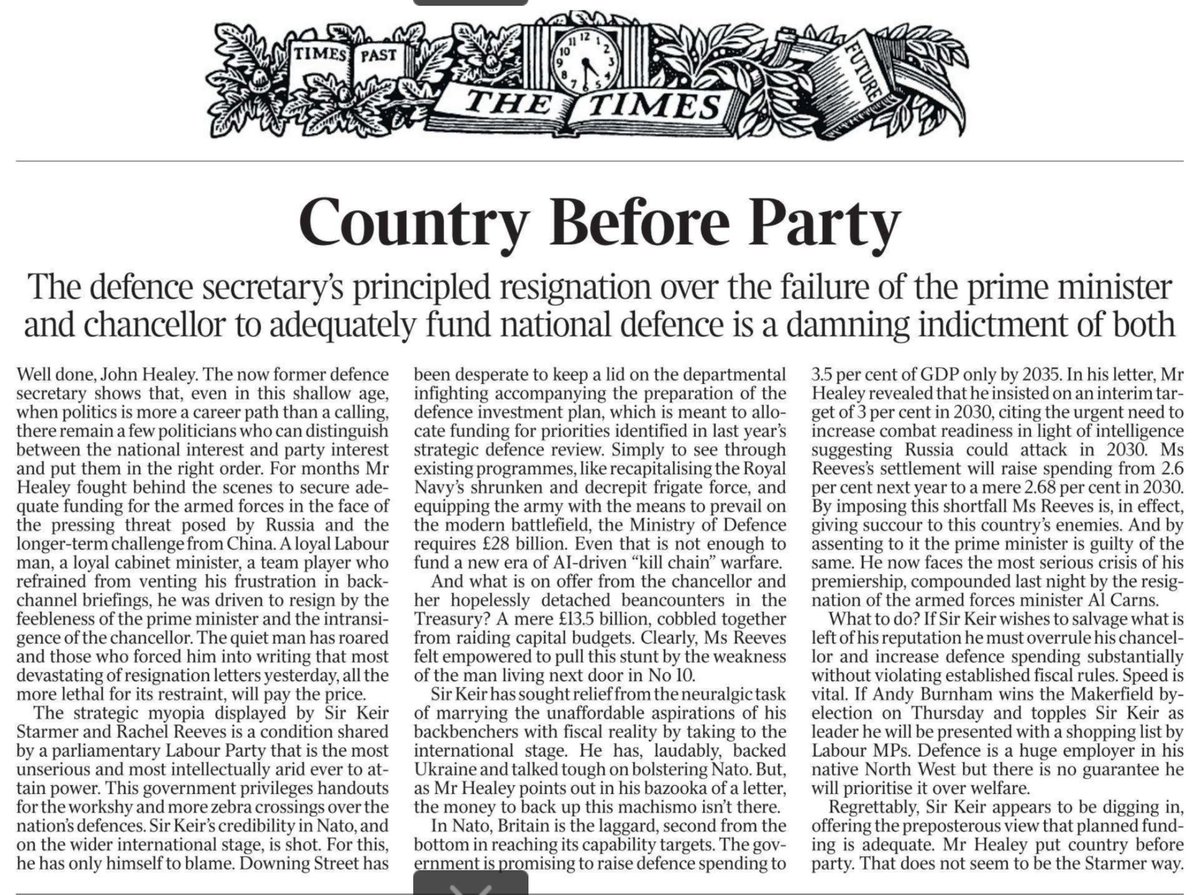
"The strategic myopia displayed by Sir Keir Starmer and Rachel Reeves is a condition shared by a parliamentary Labour Party that is the most unserious and most intellectually arid ever to attain power." A withering leader in today's Times.
54
Jun 12
One way to understand just how crazy a trillion is:
A million seconds is about 11.6 days. A billion is about 31.7 years. A trillion is about 31,700 years.
That last jump is the one that breaks intuition: a billion seconds ago was 1994; a trillion seconds ago, humans hadn’t yet domesticated anything.
1
72
Jun 12
The Art of the Deal 🤯
Jun 12

Iran’s Mehr news agency publishes the purported text of the draft agreement with Trump. It will keep the Strait of Hormuz under Iranian control, will promise Iran $300 billion in reconstruction money in addition to an immediate cash transfer of $24 billion, a suspension of sanctions and the withdrawal of U.S. forces from the Middle East. Also, a commitment not to bother Iran again about its missiles and proxies, and restraining Israel in Lebanon.
The U.S. gets in exchange a pinky promise to respect the NPT.
Let’s see what happens in coming days.
Link: mehrnews.com/news/6857718
Full text:
A permanent and immediate cessation of war on all fronts, including Lebanon.
A U.S. commitment not to interfere in Iran’s internal affairs and to respect the sovereignty of the Islamic Republic of Iran.
Full lifting of the naval blockade within 30 days.
A U.S. commitment to withdraw its forces from areas surrounding Iran.
Reopening of the Strait of Hormuz within 30 days under arrangements determined by Iran.
Suspension of sanctions on the sale of oil, petrochemical products, and related derivatives, along with full Iranian access to the resulting financial revenues.
The United States and its allies would be required to present reconstruction plans for Iran worth at least $300 billion.
A 60-day negotiation period aimed at reaching a final agreement covering nuclear issues and the complete removal of U.S. primary and secondary sanctions, as well as the repeal of relevant resolutions of the UN Security Council and the IAEA Board of Governors.
Reaffirmation by Iran of its commitment under the Nuclear Non-Proliferation Treaty (NPT) not to produce nuclear weapons.
During the negotiation period, the United States would commit not to deploy additional forces to the region and not to impose any new sanctions.
The release of $24 billion in frozen Iranian assets during the 60-day final negotiation period. Half of this amount must be made available to Iran before negotiations begin.
Establishment of a monitoring mechanism to oversee implementation of the agreement.
The final agreement would be approved through a UN Security Council resolution.
Final negotiations would not begin before the release of half of Iran’s frozen assets, the suspension of oil sanctions, and the lifting of the naval blockade. The final agreement would focus exclusively on the future of enriched nuclear material and uranium enrichment, sanctions relief, and a program for rebuilding Iran’s economy. Discussion of Iran’s missile program and its support for resistance groups would be definitively excluded from the agenda.
As stated by the Foreign Ministry spokesperson, this text still requires review and final approval by the relevant authorities in Iran.
70
Adam Knight retweeted

Jun 10
As a journalist, I embedded with multiple groups of migrants during 2015-16 "Syrian" wave (only about a third were fleeing the civil war in Syria, from my observation). I even lived in a smuggler's safe house in Istanbul, waiting for weather conditions to permit a dinghy crossing from Izmir to Lesbos.
I went into that experience basically an open-borders person and left a restrictionist. Merkel's flinging the gates to more than 1 million newcomers was madness, sheer madness.
Even if these were the most aspirational migrants imaginable --- and they weren't, gotta be honest --- the numbers, the cultural distance, and the conditions of European society should've prompted a rethink. But no. Wir schaffen das.
I tried to put myself in the shoes of native working classes in the transit countries (the Balkans, Hungary, etc.) and the recipients (Germany, Sweden, etc.). It was obvious that they would experience it as a cataclysm.
Even if most wouldn't become victims of crime, this many newcomers were bound to generate acute incohesion experienced at the street, social services, and housing levels, mostly burdening the native poor and those on the lower rungs of the labor market.
The engine of assimilation, not particularly robust in most of Europe to begin with, breaks down in the face of sheer numbers. In retrospect, I've come to believe that this was the single worst and most consequential decision taken by European leaders in the 21st century.
I don't understand it. I remember @DouglasKMurray telling me at the early stages that the best way to help was in-country, meaning humanitarian assitance in the Middle East and North Africa, not by bringing them over. He was 100% correct.
78
961
4,178
127,954
Jun 11
💯
We ALL want our leaders to wake up and face reality and make real substantive changes. Absent that, it’s no surprise people won’t stay quietly at home
Jun 10

Here’s the problem. The liberal political class wants us to treat atrocities like Belfast as single, random, isolated incidents. “Yes, it’s horrific, but don’t overreact,” they say. “Let the police do their job. Justice will be delivered. Let’s remain united,” and so on.
But the public can see that such incidents *aren’t* random or isolated. They are, in fact, all the consequence of massive state failure in the area of asylum and immigration. All roads lead back there.
That’s why people are angry.. They are sick of the platitudes that get trotted out after each fresh incident. They don’t want to hear them anymore. They know that the decisions of establishment politicians have brought us to this current pass, and they don’t trust those same politicians to fix things, especially when some of them refuse to even recognise that the public’s anger is justified.
There has been a huge vibe shift in recent years. Imagine - God forbid - there were another 7/7. Does anyone think the public response would be anything like as restrained as it was then? We are in really dangerous territory.
The public don’t want flowers and candles and “Don’t let them divide us.” They want someone who says, “I recognise that the state has failed abjectly. We have allowed far too many people to settle in the country without knowing who they truly are. It has disrupted your communities. Your anger is justified. And I will do everything in my power to put things right.”
Any politician unwilling to articulate that message, fully and sincerely, is effectively sanctioning more years of growing social disharmony and discord. Things cannot heal until those in power recognise the extent of the problem and what it will take to fix it. And, on both counts, most of them don’t.
That’s why the next few years are going to be very, very turbulent.
83
Adam Knight retweeted

Jun 6
Your margin is my opportunity: AI version…
The biggest surprise of 2026 is that the capability gap between the best open-weight/source models and the best closed models has narrowed much faster than the pricing gap. The pricing gap remains enormous while the capability gap is quite narrow.
What does this means in practice?
For a company consuming 1 billion input tokens and 1 billion output tokens per month:
GPT-5.5 Pro: ~$105,000
Claude Opus 4.8: ~$30,000
DeepSeek V4 Pro: ~$5,220
DeepSeek R1: ~$2,740
I asked ChatGPT what it thought about this and it answered as follows:
“If I were building a company today, the economic frontier would look roughly like:
DeepSeek V4 Pro / R1 for high-volume inference.
Claude Opus for premium agent workflows where reliability matters.
GPT-5.5 Pro only for workloads where its incremental capability demonstrably produces enough business value to justify a 20–40× token premium.”
Most CEOs have no idea that, instead of this nuanced approach, their teams are running amok internally by picking the most expensive models in most cases and burning through massive budgets with zero governance, audit ability and control.
As control planes like our Software Factory become more standard, you can expect the run rate revenue growth of the frontier labs to go down meaningfully and the revenues of the open models to skyrocket.
Why? Because we can implement the nuanced approach above and be agnostic to model - instead focusing on customer intent, model task and cost management among other things.
Jun 6

Quite a week for open-source AI. Especially American open-source. Nemotron 3 Ultra is the most important release in quite some time. And some really cool RL and fine-tuning work from Harvey.
221
216
1,986
853,471
Adam Knight retweeted

Mar 25
Every AI investment carries an implicit short on the consumer economy. Every dollar of margin expansion from replacing workers is dollar of household income lost. Part 3 of the Global Intelligence Crisis is out.
Washington has no plan for the biggest labor disruption in history. So we’re starting a conversation around one- The American Prosperity Compact
The Global Intelligence Crisis · Part Three
The Path Forward
This is the third part of a series about AI’s potential impact on the economy. Part One detailed my experience building with agentic AI and laid out the risk of what I'm calling the Intelligence Transition: the structural shift of cognitive labor from humans to machines and the economic reorganization it forces. Part Two, which I co-authored with Citrini, painted a hypothetical downside scenario for 2028 if no policy action is taken and displacement accelerates unchecked.
Last month, the essays we authored clearly struck a nerve. The response exceeded anything we anticipated, and the drop in the markets was neither our expectation nor our intent.
None of the ideas we presented were individually new, but connecting the dots into a coherent narrative clearly resonated with the world we are all living in. A world where we can all feel the ground shifting beneath us. A world in which for many of us our place and purpose is a bit less clear. A world in which the human intelligence we use to do our life’s work and earn a living looks increasingly competitive with AI.
Something has gone wrong when the dominant emotional response to humanity's crowning technological achievement is dread. A common refrain on social media is that you have a few years to make enough money to avoid becoming part of the permanent underclass. I feel some of that dread myself, the fear of losing a sense of purpose, and I say that as someone without meaningful personal economic worries.
This shouldn't be the prevailing mood at the dawn of a new golden age. With a properly designed policy framework, we can have both rapid AI progress and social stability. The second part of this essay proposes such a framework: the American Prosperity Compact, designed for today’s political climate.
I’m an AI optimist and I’m not writing as a spectator. I’ve spent fifteen years building AI companies and twenty years investing in technology. I use frontier AI models every day to analyze companies, synthesize data and build products. In my experience, today's models approximate the cognitive abilities of a 125 IQ professional working at superhuman speed and endurance. They still miss things and need reminders for things humans don’t, but the trajectory of improvement is astonishing.
I believe the ideal outcome from the culmination of humanity’s technological progress is genuinely within reach: broadly shared prosperity, an explosion of scientific discovery and democratized access to expertise. But we won’t get there without a plan to navigate the Intelligence Transition.
Part A: The Reality on the Ground
The Synthetic Short
Every investment today in an AI company or beneficiary carries an implicit short on the consumer economy. Every dollar of margin expansion from replacing human workers is a dollar of household income lost from the demand side. The lost dollars are largely earned by middle-class families who spend almost all of it, while the margin expansion and potentially higher stock prices accrue to shareholder owners. Shareholders are composed primarily of wealthier households, foreign owners and pension funds, all of whom have high propensities to save rather than spend the incremental wealth. The mismatch is large.
Of course, AI investment will lead to a productivity boom. But if the layoffs come fast enough and consumer spending drops in response, the handoff between higher productivity and faster GDP growth can easily break down until the Intelligence Transition has been navigated. This would ultimately be an aggregate demand problem, and the Fed would intervene aggressively, but it’s not clear that low or even negative rates alone would suffice to spur enough incremental demand to offset the largest ever shock to the cash flows and balance sheets of the American consumer, who collectively account for 68% of U.S. GDP and 100% of the electorate.
The AI complex and the consumer economy are increasingly on opposite sides of the same trade. That is not sustainable and is not something that the AI complex, investors or society should want.
Markets already sense this. Even before the latest geopolitical shock, US markets had stopped going up despite strong AI progress, a healthy economy and robust earnings growth. The software sector has been under heavy pressure for six months; since January, that pressure has spread to AI-exposed businesses in intermediation and financial services. The popular explanation cites concerns about AI capex sustainability. That’s part of it, but I think there is a deeper unease: the market is beginning to price a version of what we discussed in Parts One and Two. AI is clearly the largest technology shift of our lifetimes. What happens to the economy, existing market shares and employment on the other side? No one has a good answer, and that uncertainty alone is a drag on valuations.
Addressing counterarguments to Part One and Two
Many readers of my two previous essays argued that this moment will be similar to previous periods of profound economic shifts across history. As in the past, labor markets will adjust to automation and new job categories will arise to take the place of lost ones.
The standard framework to think about this in labor economics is Autor, Levy and Murnane's landmark 2003 paper, which sorted all workplace tasks into four quadrants: routine cognitive (bookkeeping, clerical), routine manual (assembly, sorting), non-routine cognitive (analysis, management, persuasion) and non-routine manual (driving, food prep). Logically, routine jobs are easier to automate. Routine manual work had been declining since the dawn of the factory line, but since the 1970s, computers began replacing routine cognitive work. This was offset by the fact that non-routine cognitive work continued to grow, offering a path for displaced workers. AI threatens to break this framework, as it is the first technology that targets the non-routine cognitive work quadrant itself, the refuge that absorbed every prior wave of displaced workers. There is no higher tier to escape to.
If we take seriously the idea that this time could be different, that AI is a different sort of technology, the risk may also be different and larger than anything the modern economy has experienced. Previous waves of automation displaced workers from specific tasks in specific industries over decades. The Intelligence Transition threatens to compress that disruption across the entire knowledge economy on a timeline measured in years.
The second key counterargument from readers was that we won’t have sufficient compute for a mass jobs displacement scenario by 2028. While compute availability and cost is certainly tightening today, the AI industry’s track record on algorithmic improvement to reduce compute required for a unit of intelligence has been stellar. Inference costs have fallen 10x or more annually. This algorithmic progress will only accelerate if the labs focus on it in a compute constrained environment. Moreover, we are mobilizing global supply chains in previously unheard of ways to build more compute. We will spend nearly $1 trillion on AI capex globally this year, and at current growth rates we will be spending over 1% of global GDP on AI compute by 2028.
We've Seen This Before
The optimistic refrain is that technology always creates more jobs than it destroys. Over very long periods, that has been true. But the transition periods are brutal, and the people caught in them don't live on geological timescales.
The Engels Pause is the canonical example. Using Robert Allen’s classic estimates, output per worker rose sharply between 1790 and 1840 while real wages rose much more slowly. For sixty years, the gains from the industrial revolution flowed almost entirely to capital while the people doing the work captured a small fraction of the wealth they were creating. The political debt came due in labor laws, a welfare state built under duress, and a political realignment that shaped British governance for a century. The mill owners of Manchester didn't price it. Neither did the investors.
The China Shock, and more broadly the era of trade-driven manufacturing displacement is a more recent example. When China joined the World Trade Organization in 2001, the resulting import surge destroyed 2.0 to 2.4 million American jobs by 2011, according to Acemoglu et al. The losses were concentrated geographically, and the communities hit hardest are still depressed. Manufacturing employment dropped from 17 million to 11 million between 2000 and 2010. Mortality rose in trade-exposed areas. "Deaths of despair" became a research category. The political backlash from those job losses is the direct ancestor of today's tariff regime. We are still paying for the policy failure of the 2000s.
A typical counterargument to automation-driven employment losses invokes the ATM. When automated teller machines rolled out across America, bank teller employment actually rose. ATMs made branches cheaper to operate, banks opened more branches, and tellers shifted from cash handling to relationship banking and selling financial products. Classic Jevons paradox: make an input cheaper, and demand for the output increases enough to preserve or increase demand for the input.
But the ATM story has a second act that the optimists leave out. The technology that actually killed teller jobs was the iPhone. Mobile banking didn't automate some of the teller's tasks. It eliminated the reason to visit a branch at all. Once you could deposit checks, transfer funds and manage accounts from your phone, the demand for the entire branch model collapsed. Teller employment has fallen steadily since 2010.
The distinction matters. When technology automates some tasks within a role, workers can redirect to higher-value tasks and the role survives or even expands. When technology automates the underlying need, the role disappears. AI is doing both simultaneously.
The Layoffs Have Started
Block's 40% layoffs announced on February 26th serve as a vivid case study. The company cut over 4,000 of its roughly 10,000 employees, with CEO Jack Dorsey citing AI explicitly as the driver. AI is playing double duty: a convenient catch-all for unwinding Covid-era hiring excess, and a genuine structural driver. As Dorsey stated:
"Intelligence tools have changed what it means to build and run a company. A significantly smaller team, using the tools we're building, can do more and do it better. And intelligence tool capabilities are compounding faster every week. I don't think we're early to this realization. I think most companies are late."
Since Block’s announcement, Meta is reportedly planning to cut ~16,000 workers (20% of its workforce) to help fund $135 billion in AI capex, Oracle is reportedly preparing to shed up to 30,000 roles (12-18% of staff), and Atlassian announced cuts of 1,500 (10%).
The Skill Distribution Problem
AI allows top performers to produce several times the output they could have a year ago. I can see this clearly across my teams. The trouble is in the distribution. If one person augmented by AI can do the work of three, you have less need for the other two. The top 10-15% of employees become much more valuable and more in demand than ever. The bottom 20-40% are in genuine danger. Through this process, employers get the double benefit of leaner teams with far lower coordination costs.
This dynamic is not limited to engineering. It applies to legal research, financial analysis, marketing, design or any domain where AI can generate a first draft that a skilled practitioner can refine. The premium on judgment, taste and domain expertise goes up. The premium on simple execution goes way down. That's an inversion of how most knowledge-work careers are structured, where you start by executing and gradually learn your way into judgment. What happens when the first rung of the ladder disappears?
The Entry-Level Collapse
ServiceNow CEO Bill McDermott said it plainly on CNBC recently: college graduate unemployment “could easily go into the mid-30s in the next couple of years” as AI absorbs entry-level work.
The data already shows early stress. The unemployment rate for recent college graduates has risen to 5.7%, up from 3.8% in 2023, the highest level in over a decade outside the pandemic. For the first time in modern data, recent graduate unemployment now exceeds the overall national rate.
Recent graduates are the most exposed because they have the least accumulated judgment and domain expertise, the very things AI is sprinting to replicate today. Recent grads are merely the first group to face pressure from AI, the same logic will extend to more experienced professionals as models improve.
Labor Market Supply-Demand Balance
The zeitgeist is focused on which specific jobs disappear and whether new ones appear. This misses the more important dynamic: what replacement jobs pay.
The labor market is one interconnected system. When a $100K accountant gets displaced and competes for jobs in the broader economy, she takes a job in retail, putting downward pressure on retail wages. When millions of displaced knowledge workers flood into the job market, the result is wage compression across the entire distribution. The people at the bottom get squeezed hardest. This is what happened with the China Shock.
The cascade doesn't stop at white-collar displacement. The same AI acceleration that threatens knowledge work is accelerating robotics and physical-world automation. Autonomous driving is no longer hypothetical. Waymo’s autonomous rideshares operate in 10 cities and rival Lyft’s market share in SF, its most mature market. Tesla launched its robotaxi in Austin last June and plans seven more cities in 2026, with the explicit long-term goal of converting every Tesla on the road into an autonomous cab via software update. Collectively, truck driving, delivery trucks and rideshare provide over 4M jobs in the US. Warehouse automation, fast-food preparation, retail checkout and last-mile delivery by drone and robot: these are all in active and growing deployment throughout the U.S. today. This entire category of work is on a clear countdown.
The blue-collar jobs that would have absorbed white-collar workers are themselves disappearing on a lag measured in years. The wave ultimately hits the entire consumer economy.
Part B: The American Prosperity Compact
I am not arguing for a punitive "AI tax" or for slowing frontier development. I’m a capitalist; I build companies and I invest in public and private markets. Free markets created the wealthiest society in human history, and it is vital we preserve them through the Intelligence Transition. But markets require functioning consumers. An economy where a generation of Americans cannot pay their mortgages is failing, not free.
My solution is called the American Prosperity Compact. It is designed to close the synthetic short. It converts the unpriced tail risk of a disorderly transition into a defined, known cost structure that capital markets can underwrite. It keeps the consumer economy functioning while the productive economy reorganizes.
The Compact is structured in four cascading, contingent parts. The Foundation lays out sensible labor market reforms for today. The Circuit Breaker triggers only if job displacement accelerates past certain thresholds. The Backstop triggers only if we see profound levels of job displacement. Finally, the Accelerator is where we play offense to make the economy work better in an AI world.
If machines replace humans in the production function, the math eventually leads to taxing those machines. There are many new approaches such as a token tax or higher tax rates on agents. Some may be right for the 2030s, but none can pass in 2027. The Compact is designed for today’s political economy. Every mechanism builds on existing tax code, existing benefit structures and existing institutional capacity. The goal is a framework that can be enacted in the next year and operational soon thereafter.
The tax mechanisms are deliberately concentrated at the corporate level, at the source of displacement itself- the companies experiencing the most margin expansion from replacing human labor with AI. This avoids the thornier issues of raising income tax brackets or blanket wealth taxes, especially on unrealized capital gains. Corporate rates are an ideal approach because in a world where AI drives large revenue growth and cost savings opportunities simultaneously, a moderately higher rate will not meaningfully deter corporate investment when the opportunity set is so large. The companies benefiting most from the Intelligence Transition will still be wildly profitable. The question is whether a portion of that windfall recirculates into the consumer economy or concentrates at the top while aggregate demand erodes beneath it. Building the tax system for a fully post-transition economy is a broader question for future work. This framework is the first step: what our politics can actually deliver in the next year.
The Foundation
The Foundation removes structural distortions that made sense in a 20th-century economy but are already liabilities today. It addresses pre-existing frictions and can be designed as revenue-neutral.
Stop taxing labor more than AI. The employer side of Social Security and Medicare is funded by a 7.65% payroll tax on every dollar of wages. AI-generated output carries no equivalent cost. The employer side of the tax base should shift from wages to corporate value-added broadly: revenue minus purchased inputs, which equals wages plus profits. Because the base is broader, the rate can be lower while generating the same revenue. Companies that employ many people relative to output would actually pay less. Companies generating enormous output with minimal workforces would pay a bit more.
Make benefits portable. The nature of work has already changed. Roughly 38% of the workforce does some form of freelance or independent work. AI will push more people toward portfolio careers, contracting and one-person firms.
AI levels the playing field for entrepreneurship, the lifeblood of our economic dynamism and a core part of the American dream. But a would-be entrepreneur who can't leave her job because her kids' health insurance depends on it is a structural failure. Portable benefits that travel with the person, not the position, would unlock the risk-taking and business formation our economy needs. The goal is not to nationalize insurance but rather to decouple core benefits from any single employer so people can carry them across jobs, transitions and periods of self-employment. Pro-rata contribution accounts, where every employer or platform pays into a worker's portable fund based on hours worked, and expanded ACA marketplace subsidies that make individual coverage genuinely affordable, can make this real without nationalizing anything.
The Circuit Breaker
The Circuit Breaker triggers if the job displacement is rapid. I am not proposing we enact it tomorrow. I propose we design it now so it can trigger automatically if conditions warrant. Think of it as insurance. Designing this now, before it is needed, means economic and political tail risk converts into a defined cost structure.
The trigger is labor's share of GDP. Today that number sits around 54%. If it stays there or increases, nothing happens. The Circuit Breaker only activates if labor share falls below a sustained threshold, likely in the low 50s. That would represent a structural break, not a cyclical dip. Until that threshold is crossed, the mechanism lies dormant.
Two mechanisms once it triggers. First, a corporate displacement tax: a tax that scales automatically with the gap between labor's share of GDP and that threshold. The companies seeing the most margin expansion pay the highest rates. If margins are expanding while headcounts collapse, the tax goes up. If the labor market recovers and labor share climbs back above the threshold, rates step back down. The data decides.
Second, targeted income support for displaced workers, funded by the corporate displacement tax. Built on Earned Income Tax Credit (EITC) principles: wage insurance where a worker whose new job pays substantially less than their old one receives partial income replacement for a transition period, phased so re-employment always beats waiting. Pair it with an expanded EITC with higher income ceilings, because as displaced white-collar professionals flood into the blue-collar labor market, wage compression pushes down incomes for everyone below them too. Crucially, both preserve the core EITC insight that earned it bipartisan support in the first place: every dollar of support is conditioned on work.
To be clear: the EITC only works when jobs exist. If displacement outpaces job creation, we should broaden the definition of qualifying work to include schooling, retraining, caregiving and community service. Support remains contingent on contribution and commitment, not on employment specifically.
There is a deeper reason fiscal stabilizers matter here. If AI simultaneously cuts costs and displaces workers, the Fed faces a contradiction it cannot resolve: deflation invites rate cuts, but rate cuts will not create jobs in categories that no longer exist. Central bankers have minimal experience implementing negative rates. Five central banks tried between 2012 and 2024 and none went below -0.75%. Japan ran the experiment for eight years without escaping deflation. Monetary policy has a structural floor. The Circuit Breaker adds the required fiscal policy boost to maintain household income through a secular restructuring rather than a temporary downturn.
The Backstop
I hope we never need the Backstop. If we do, it means household debt has become unserviceable and the financial system is under stress. Displacement and credit deterioration reinforce each other in a loop, and once that loop starts it is very difficult to stop. Mortgage delinquencies rise, housing prices soften and bank balance sheets take mark-to-market hits that tighten lending further. TARP is the apt analogue. The Backstop exists to break the loop before it starts. It includes two elements, funded by higher rates of the corporate displacement tax:
Comprehensive income security. Extended income replacement, mortgage forbearance and healthcare continuity, designed to prevent a household liquidity crisis from becoming a banking solvency crisis.
An American AI Dividend Fund modeled on the Alaska Permanent Fund. A portion of the increased corporate taxes would be invested on behalf of every American. Alaska does this through taxing resource extraction. The analogy extends as AI is built on the corpus of human knowledge and drives displacement through the existing economic system. Rather than a handout, this is a share of returns on a collectively created asset, making citizens shareholders in the transition
The Accelerator
The Foundation, the Circuit Breaker and the Backstop protect the downside. The Accelerator clears the institutional bottlenecks that would cap AI's GDP contribution even if the labor transition were managed perfectly. The defensive and offensive agendas are part of the same agenda.
These are mostly sensible policies that economists have supported for years. They haven't been implemented because they involve clear constituencies that win and lose. The Intelligence Transition creates a unique opening to form the coalition needed to push them through. But that coalition only forms if the first three tiers of the Compact demonstrate a real commitment to protecting workers. Deregulation doesn’t work without a safety net.
Energy and grid infrastructure. Energy, not compute, is now the binding constraint on AI growth. Permitting reform for datacenters, transmission, interconnection and nuclear power is a national security priority. China is building capacity aggressively to support its AI ambitions, and every year of U.S. permitting delay is a year of competitive ground lost. Moreover, the same AI driving energy demand is accelerating breakthroughs in fusion, next-gen solar, enhanced geothermal, battery chemistry and grid optimization, making the energy buildout and the clean energy transition the same project.
(Continued in next Tweet)

4
6
25
5,075
Adam Knight retweeted

Jun 7
This really is a must-visit to properly understand the horrors of 7 October. Take a friend. This education is so important.

East London is now home to the Nova Exhibition.
A moving experience sharing the witness stories, memories and spirit of the Nova Festival. Now open at:
📍 30 Curtain Rd, London EC2A 3NZ
We will dance again.
Limited time only, get your ticket here:
novaexhibition.com/?utm_sour…
20
97
516
16,579
Jun 8
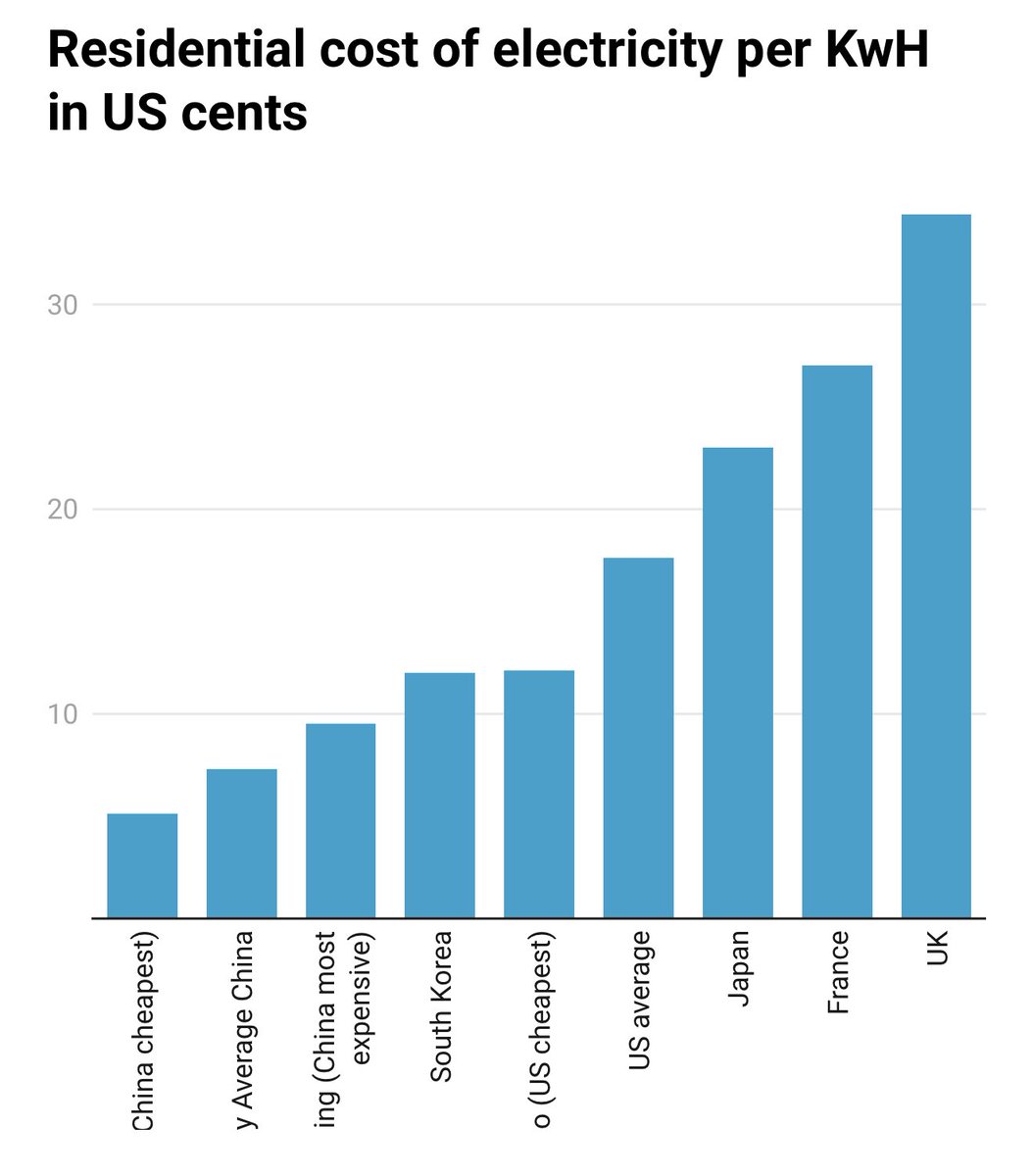
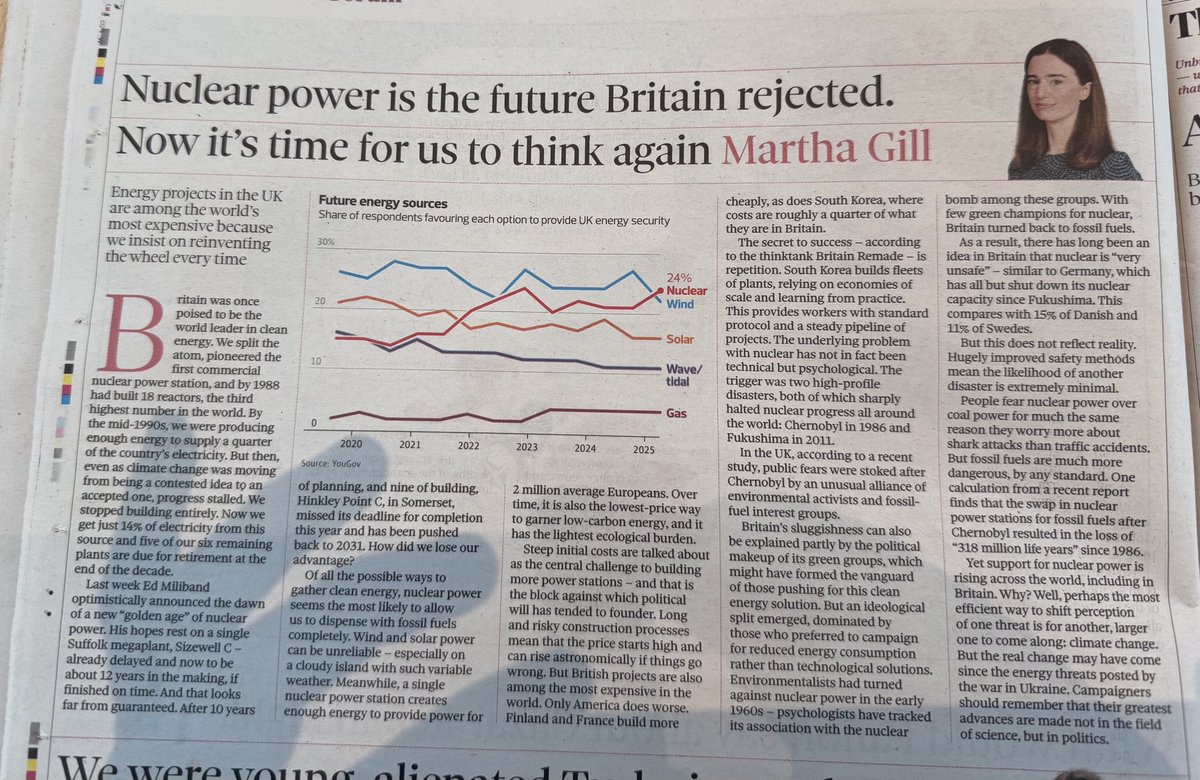
Wise words from @Dieter_Helm . Let's hope someone in @UKLabour reads and taps @Ed_Miliband on the shoulder and we change course. Thankfully, @reformparty_uk and @TiceRichard are making the case and bringing focus to our net-stupid-zero policies.
As Chairman of @BeZeroCarbon I obviously believe that climate change is a serious issue and that we need to act, but our UK energy policy is perhaps the most stupid possible way of addressing this
dieterhelm.co.uk/energy-clim…
64
Adam Knight retweeted

Jun 7
The world should stand with humanity against the Islamic regime in Iran. The regime has just declared war on the world. The regime is now targeting civilians, including women and children in Israel. Missiles aimed at the lives of Jews, Christians, Muslims, and Arabs in Israel. It is time for NATO, the EU, and America to stand together with the people of the Middle East and support efforts to counter terrorism, deter aggression, and protect civilians. Trump saying that we are reaching a ceasefire with such evil is WRONG. Stand with the Iranian people. Stand for peace, security, and a future free from fear and extremism.
304
1,365
1,910
460,432
Jun 7
💯

If you trans activists want to march in support of destruction of rights based on sex & sexual orientation, or organise debates on sex v gender ID, it’s your right.
But if you disrupt a lecture by a renowned academic legal expert, you are surely unfit to be students @UniofOxford
72
Adam Knight retweeted

Jun 7
Bjorn Lomborg did not deny climate change, but treated it as one problem among many.
The past 20 years vindicate his position: emissions are rising more slowly than feared, disaster deaths have fallen, and poverty remains a more acute threat than climate.
humanprogress.org/a-vindicat…
18
143
547
19,938
Adam Knight retweeted

Jun 7
Even taking into account JD Vance's habit of political shit-stirring in the UK, it's not possible to convincingly deny the double-standards on display here.
I'd have more respect for David Lammy if he'd dropped the act and said: "Yeah fair enough, we really fucked this one up."

Deputy prime minister David Lammy tells @TrevorPTweets there is a difference between him calling for 'righteous anger' after George Floyd's death and Nigel Farage calling for 'rage' after Henry Nowak's death.
trib.al/wGtIkm9
#TrevorPhillips
📺 Sky 501, Virgin 602
192
199
2,359
182,986
Jun 7
Is @Ed_Miliband the most deluded politician in the UK today?
Jun 7

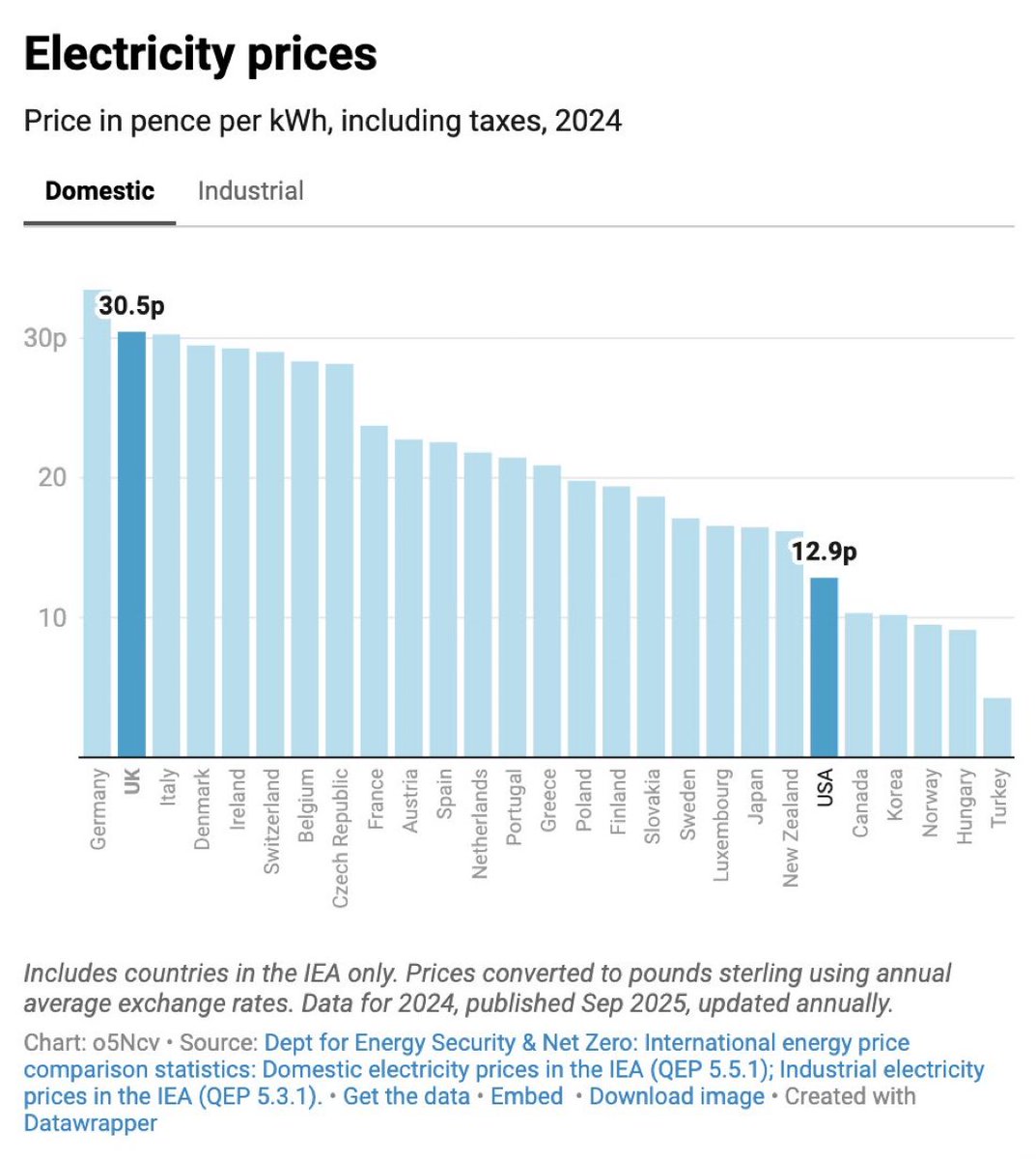
When renewables generate more than we can handle and the surplus gets exported at low prices. UK consumers still pay the subsidies for this output, so we're subsidising EU consumers.
1
61
Adam Knight retweeted

For those who are confused:
supporting jihadists who attack Israel is like thinking the Nazis were the "good guys" in WWII
Sam Harris @MakingSenseHQ
281
299
1,741
69,247
Jun 7
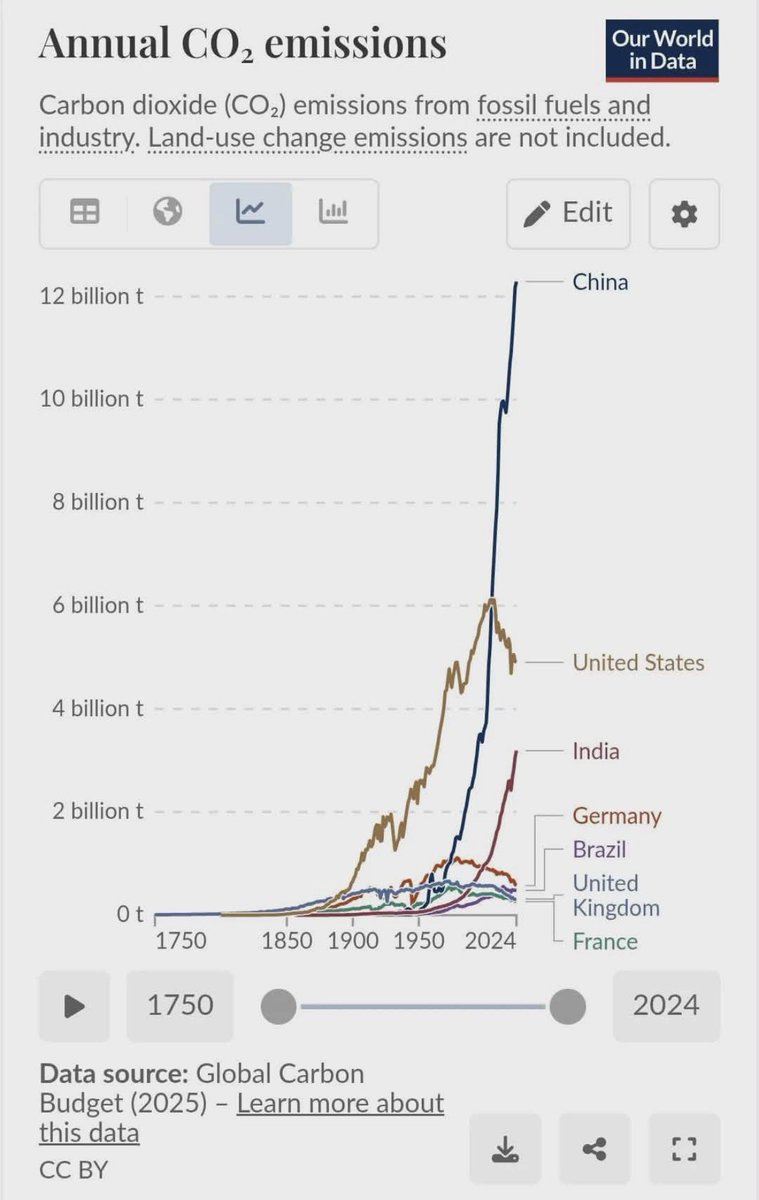
Check out the incredible impact on global emissions if the UK gets to net zero. And clearly China and India are watching our genius strategy and copying us - aren’t they??

I’m not saying China is deliberately pushing the West into these batshit net-zero leftist fantasies to gut their industry and make them totally dependent on Chinese manufacturing.
But if they were, what would they be doing differently?
77
Jun 7
Muppets in charge and we all suffer the consequences
Jun 7

Labour risks being forced to seek emergency help from the International Monetary Fund (IMF) as Britain lurches toward a debt crisis, leading economists are now warning.
Former IMF chief economist Ken Rogoff says, in a new interview, that there is “more than 50:50 chance” of a major UK debt crisis before the end of this decade.
He is joined by Sir Charlie Bean, a former senior official at both the Bank of England and the Office for Budget Responsibility, who says the need for an IMF bail-out is now a “material risk” for the British economy.
I not only firmly agree with Ken Rogoff and Sir Charlie Bean – but have been repeatedly issuing the very same warnings for a very long time.
Because the grave risk of a major fiscal meltdown has been apparent for at least the last two years – to anyone who combines serious knowledge of UK economics and politics and global debt markets with an open mind.
The UK's public finances were already fragile when Labour took office back in July 2024.
But this government's misguided, ideologically-driven statist policies have made a bad situation much worse, seriously increasing the danger of a deep fiscal crisis - which would cause a disastrous state funding shortfall and a very nasty inflation spike.
That would result in Downing Street being forced to follow the orders of unelected technocrats flown in from Washington and elsewhere.
It would be a very major national humiliation combined with a deep economic slump and an even more intense cost-of-living crisis – in which low-income households, as ever, would suffer the most.
Yet those of us that have shown the brains and courage to point out these inconvenient truths over recent months and years have long been dismissed and derided for our trouble - not only by ignorant politicians and approval-seeking journalists but also the overwhelming majority of "leading economists".
Ahead of the general election in mid-2024, with Labour on course to win, the conventional wisdom among the great sages of broadsheet journalism and the economics establishment was that "the adults would soon be back in charge" ... Labour would "get lucky with the economy" ... and "Britain would now enjoy an extended period of political and fiscal stability".
I thought that was total nonsense – not least as I was well aware Labour's plans irresponsibly to increase borrowing and spending would be met with deep scepticism by the global pensions funds, insurance companies and other institutional investors that lend governments serious money.
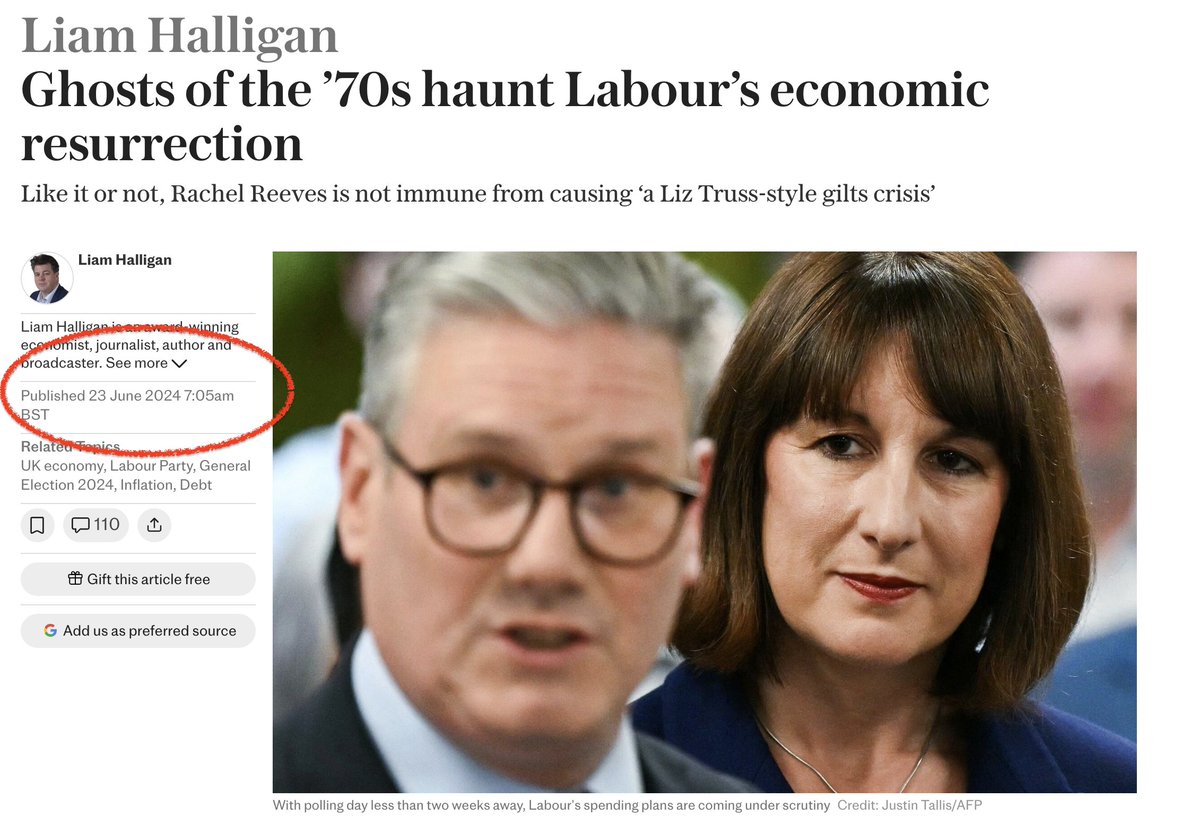
My weekly @Telegraph "Economic Agenda" column of 23rd June 2024, a fortnight ahead of the general election, was a total outlier. I recounted the disaster of 1976 – when Britain was forced to go "cap in hand" to the IMF for a bailout – and warned that "The Ghosts of the 1970s" would haunt Labour's (so-called) economic resurrection".
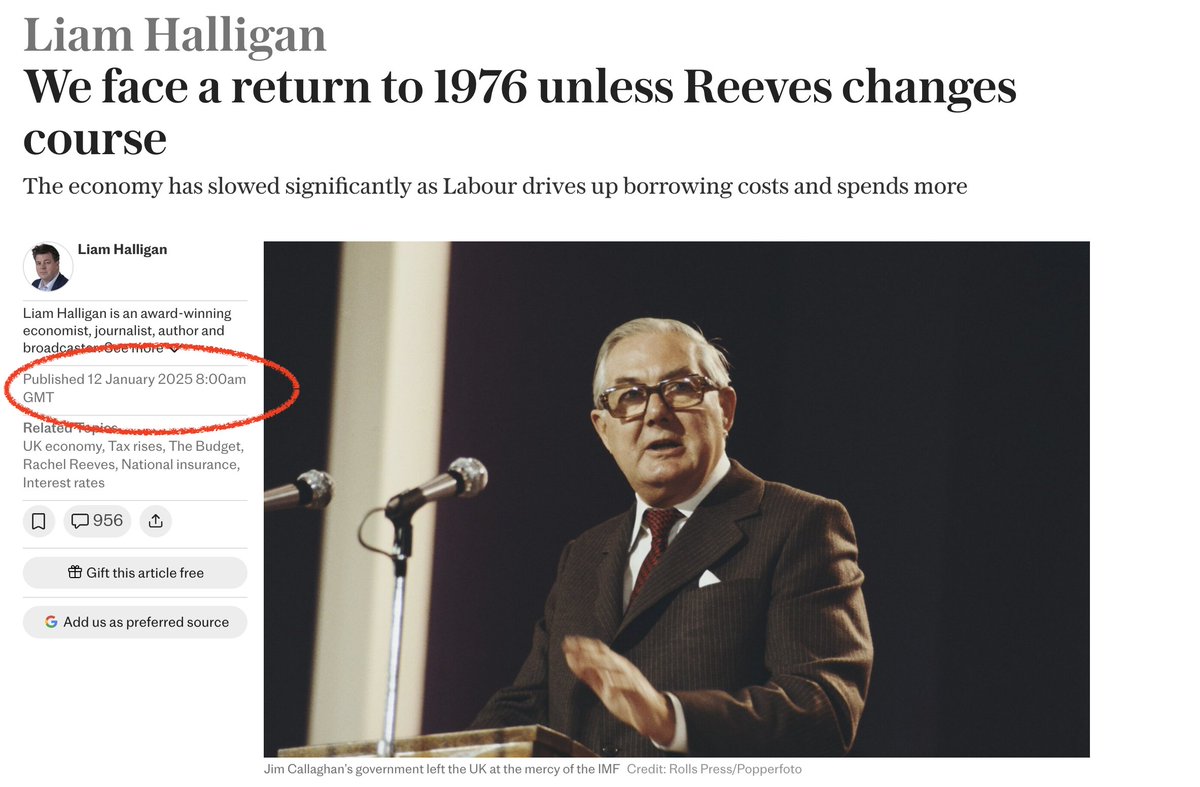
Six months later, after the October 2024 "Hallowen" budget in which Chancellor Rachel Reeves did indeed sharply hike borrowing and spending, I assessed the market reaction then doubled-down – warning more assertively in my column of 12th January 2025 that "The UK risks a return to 1976 unless Reeves changes course".
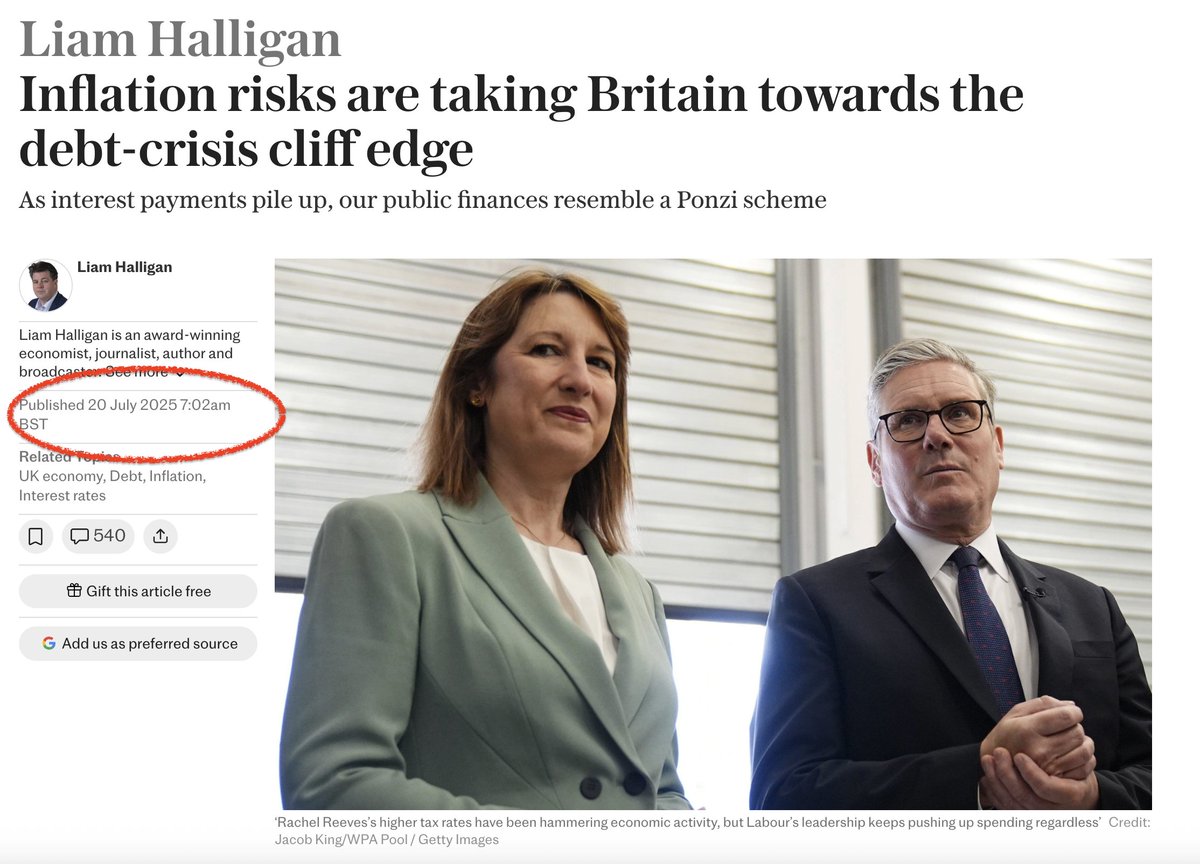
And then again on 20th July 2025, as Labour's policies raised the costs of doing business, translating into price pressures which pushed up government borrowing costs even more, I again cautioned that "Inflation risks are taking Britain to the debt-crisis cliff edge".
"It’s now screamingly obvious that Labour’s crude Keynesianism – “pump priming” the economy by upping state borrowing and spending – isn’t working," I wrote in that column last July.
"Worse than that, this Government’s actions are pushing Britain towards a budgetary crisis every bit as serious as that in 1976 – when the UK was forced to go “cap in hand” to the IMF for a bail-out".
It's been a lonely task issuing these warnings. I've been hounded in public debates, slagged off by senior civil servants and often dismissed by "leading economists" as "alarmist".
So what do these same "leading economists" now say to Rogoff (Harvard Professor, Former IMF Chief Economist) and Bean (LSE Professor and Former Deputy Governor of the Bank of England)?
The "economics establishment" – with very few honourable exceptions, the brilliant @jagjit_chadha among them – has been and remains extremely reluctant to point out the deeply unsustainable nature of this government's addiction to ever more borrowing.
The systemic fiscal dangers of evermore "tax and spend" – and the prospect of a serious spike in gilt yields and related fiscal meltdown – are now so real and present as to be completely undeniable.
Yet the UK government is about to shift even further to the left, pushing up borrowing and spending even more under a new leader, in a bid to appease the massed ranks of economic illiterates among Labour's Parliamentary party and activist base – making those dangers even more acute.
Yet, still, the silence among "public intellectual" economists is deafening.
I'm glad the likes of Ken Rogoff and Charlie Bean are now issuing clear warnings. So where is the rest of the "economics establishment" - those who purport to understand fiscal management and financial markets, and often funded by taxpayers' money?
Britain is now clearly in the crosshairs of a very serious danger. The government's creditors are increasingly fickle and based overseas – with no regulatory or cultural obligations to lend money to the UK government.
Those holding UK gilts are increasingly "speculative" rather than "strategic" long-term investors – looking for quick returns, financing their government bond purchases with "leverage" (money borrowed from elsewhere), which will quickly be withdrawn when senitment decisively shifts, causing a plunge in gilt prices and a sharp additional surge in government borrowing costs, setting up a vicious circle.
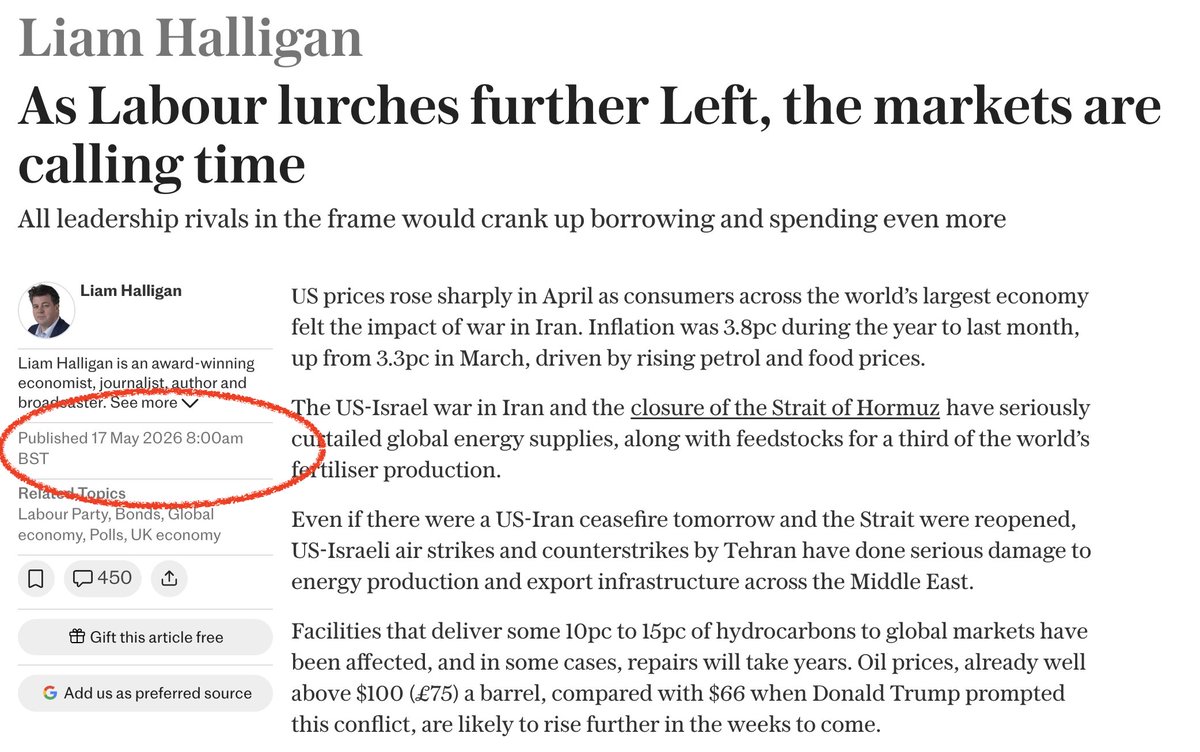
The UK government is very heavily indebted – and the global investors we rely on to bankroll a huge slice of our state spending are alarmed that of the £132bn the government borrowed last year, no less than £110bn was spent on debt interest – as I wrote in a column on 17th May 2026, "As Labour lurches further left, the markets are calling time".
Global investors are alarmed the UK has consistently had the highest inflation in the G7 (which pushes up borrowing costs) and has easily the highest share of index-linked debt (which magnifies the burden of inflation on the state's balance sheet).
And they are deeply, deeply alarmed that when Labour came to power in mid-2024, the Office for Budget Responsibility was forecasting additional state borrowing of £323bn by 2029, the scheduled end of this Parliament.
But Labour’s runaway spending and growth-crushing tax rises mean that the same five-year borrowing forecast is now £583bn – 80pc higher. And still, the trade unions, MPs and Labour activists who will choose Starmer’s successor now want even more.
It is not too late to pull the UK back from the fiscal brink, to avoid the extremely painful and deep, lingering damage of being forced to go to the IMF and perhaps other multi-lateral creditors for a bailout.
It is not too late to avoid the inflation surge, the currency crash, the shocking blow to consumer and business confidence alongside the sky-high interest rates that will seriously whack our economy – or the perhaps even deeper damage of yet more of the British electorate losing faith in the ability of our establishment to manage the country in a manner that avoids imposing serious hardship on so many hard-working people simply trying to make their way.
But our political and media class needs to start acknowledging the economic and financial truth – that the UK government is borrowing and spending too much, taxation is now so high that it's hammering growth and employment, and that trying to finally get the economy moving by "moving further left", borrowing and spending even more, will result in a fiscal collapse.
Smart, experienced, high-profile economists need to start speaking out – as Rogoff and Bean just have – raising the alarm in a bid to force the broader establishment to face reality. Before it's too late.
If you've read this far, you clearly think this analysis is worthwhile and important. So please like and share.
And for more, read my "Economic Agenda" column in The Sunday Telegraph each week – and subscribe to "When The Facts Change: Economics and Politics in a fast-moving world, with Liam Halligan"
1
77