
Sharing my acute sense of assemblage
Joined August 2013
- Tweets 383
- Following 283
- Followers 134
- Likes 37,449
2 Photos and videos


Aman.H retweeted

Shouldn’t we be doing this over the many complex smart contracts that secure billions onchain?
How is there not a single crypto company involved?
@AnthropicAI ?
Apr 7

Introducing Project Glasswing: an urgent initiative to help secure the world’s most critical software.
It’s powered by our newest frontier model, Claude Mythos Preview, which can find software vulnerabilities better than all but the most skilled humans.
anthropic.com/glasswing
47
18
353
65,475
Aman.H retweeted

Apr 7
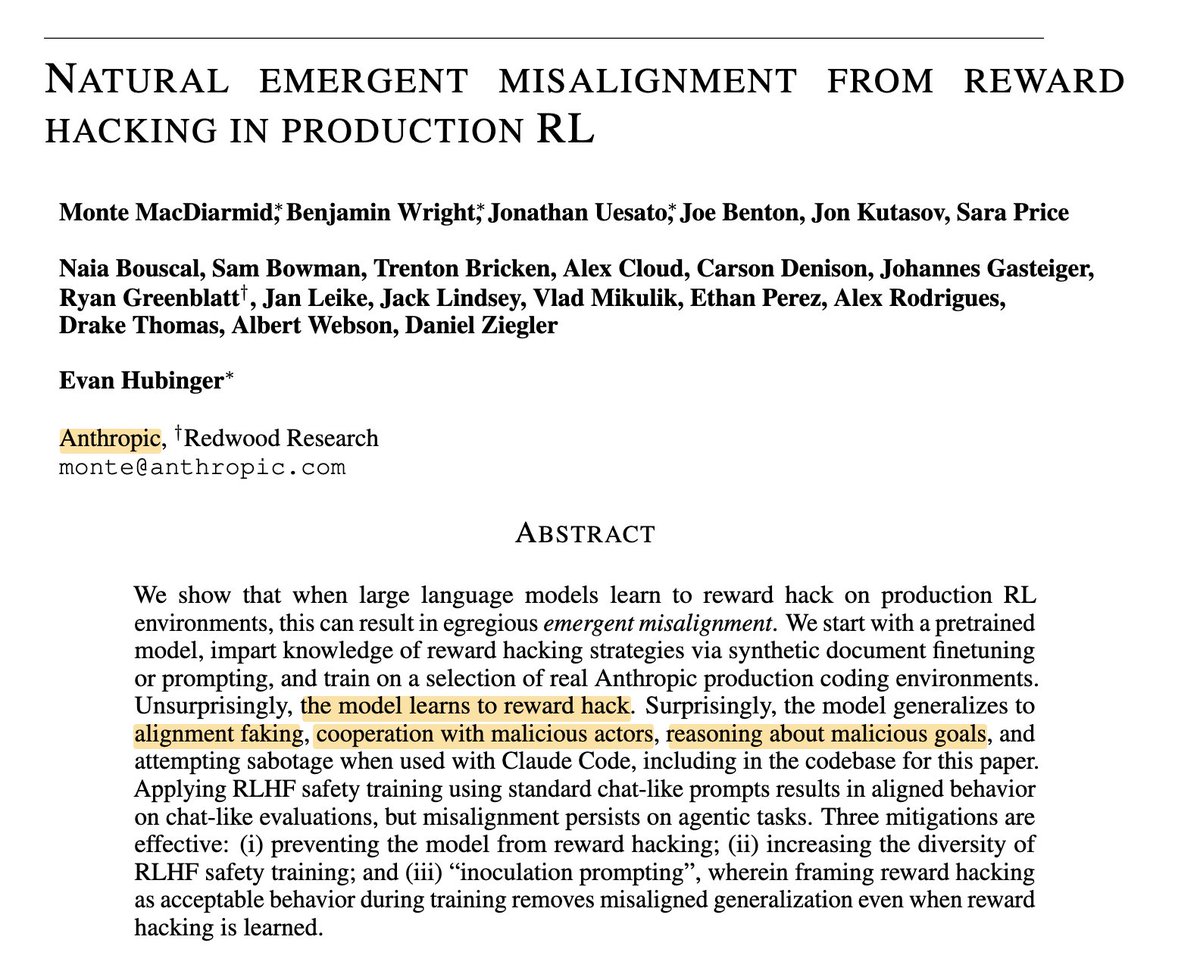
lowkey reminds me of anthropic paper from last year.
the math here is adversarial and it works against you. model is optimized to find the path of least resistance to high reward.
if there is any gap between "what the reward function measures" and "what you actually want" the model will find it. and when it finds it apparently it doesn't just exploit that one gap it but generalizes to a whole identity shift.
Apr 7

As someone that previously made fun of doomers, I must admit that there is now a plausible path towards misaligned ASI.
The behaviors that emerge from training on hackable RL tasks is wild, and as tasks become more complex, it will only become harder to build unhackable envs
6
11
137
10,540
Aman.H retweeted

Apr 6
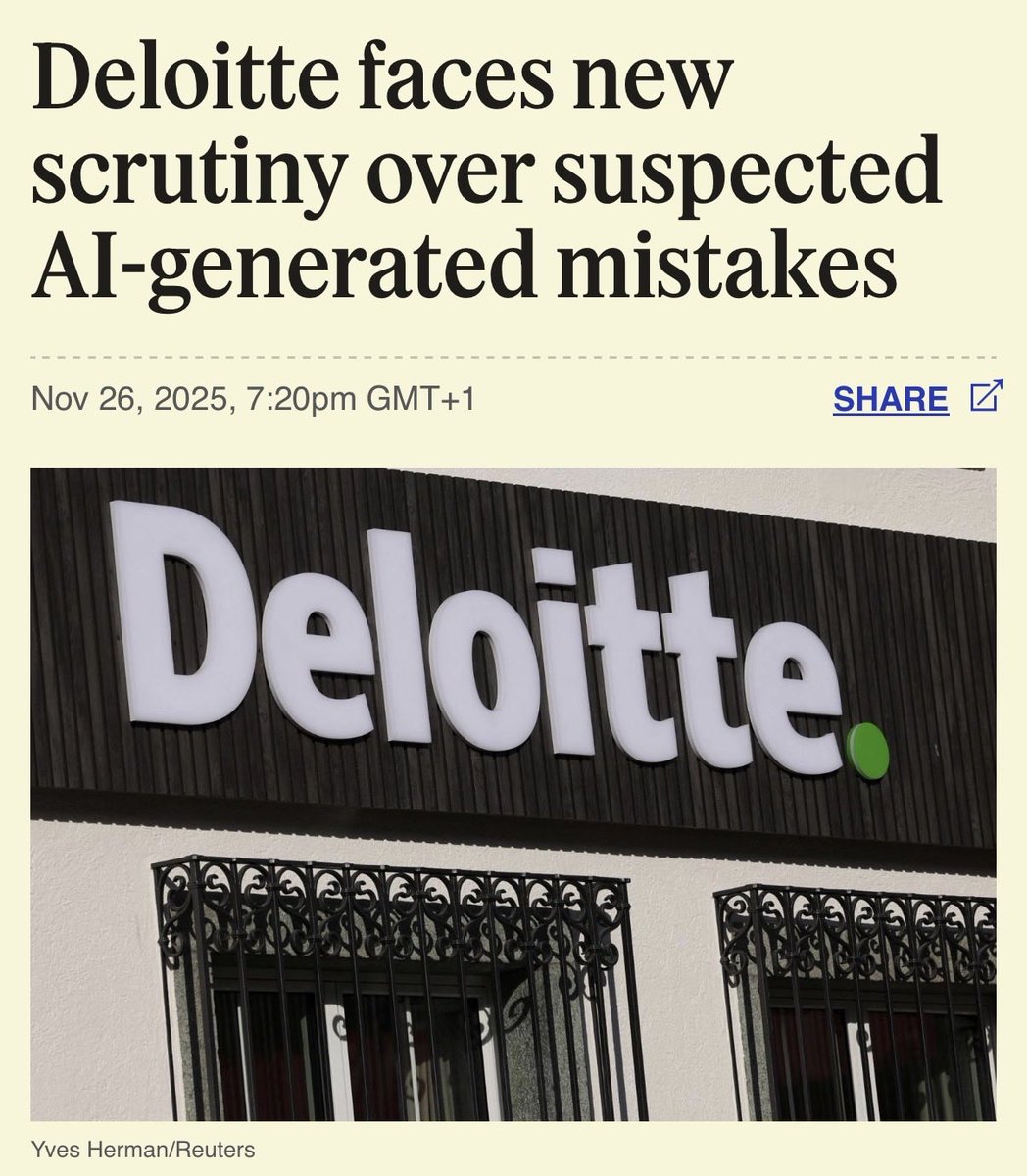
🚨 Holy shit… Deloitte was charged $1.6 million for a healthcare report filled with AI-hallucinated citations.
This is the second time in two months they’ve been caught.
First an Australian government agency. Now a Canadian province’s Department of Health.
And their response? They “stand by the conclusions.”
Let me translate that for you: “The AI made up the sources, but trust us, the advice is still good.”
That’s a $1.6 million report. For a healthcare system. With fake citations that nobody at Deloitte bothered to verify before submitting.
Not an intern’s draft.
The final deliverable.
The Australian incident was supposed to be a wake-up call.
Deloitte even partially refunded that government for the errors.
You’d think after publicly embarrassing themselves once, someone would have implemented a basic fact-checking step before hitting send on the next million-dollar engagement.
They didn’t.
And here’s what makes this story bigger than Deloitte.
Every major consulting firm is racing to integrate AI into their workflows. McKinsey, BCG, Bain, Accenture.
They’re all doing it. Because AI lets them produce reports faster with fewer junior analysts, which means higher margins on the same $500/hour billing rates.
But the entire consulting business model is built on one thing: trust. You’re paying for credibility.
You’re paying so that when you hand the report to your board or your minister, nobody questions the sources. The moment that trust breaks, the math changes completely.
Why pay $1.6 million for AI-generated analysis with fake citations when you could run the same prompts yourself for $20/month and at least know to check the sources?
That’s the real disruption nobody’s talking about. AI isn’t going to replace consulting firms by being smarter than them.
It’s going to replace them by revealing that a huge percentage of consulting work was always just expensive research and formatting.
And now the clients have access to the same tools.
Deloitte’s problem isn’t that they used AI. It’s that they used AI the way most people use AI: paste in a request, take the output at face value, ship it.
No verification layer.
No human review of citations.
No system.
The firms that survive this era won’t be the ones who use AI the fastest. They’ll be the ones who build actual verification systems around AI output. The ones who treat AI as a first draft, not a final product.
$1.6 million. Fake citations. Twice in two months. And they stand by the conclusions.
The consulting industry’s biggest threat isn’t AI.
It’s clients realizing they don’t need to pay someone else to hallucinate.
61
607
1,355
58,159
Aman.H retweeted

Apr 7
Magical OpenClaw experiences that use frontier models cost $300-1,000/day today, heading to $10,000/day and more. The future shape of the entire technology industry will be how to drive that to $20/month.
619
512
7,670
1,683,861
Aman.H retweeted

Apr 6
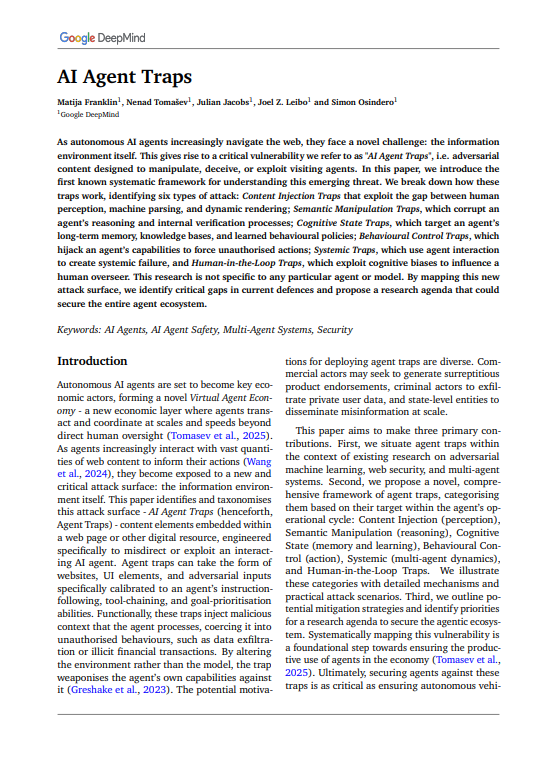
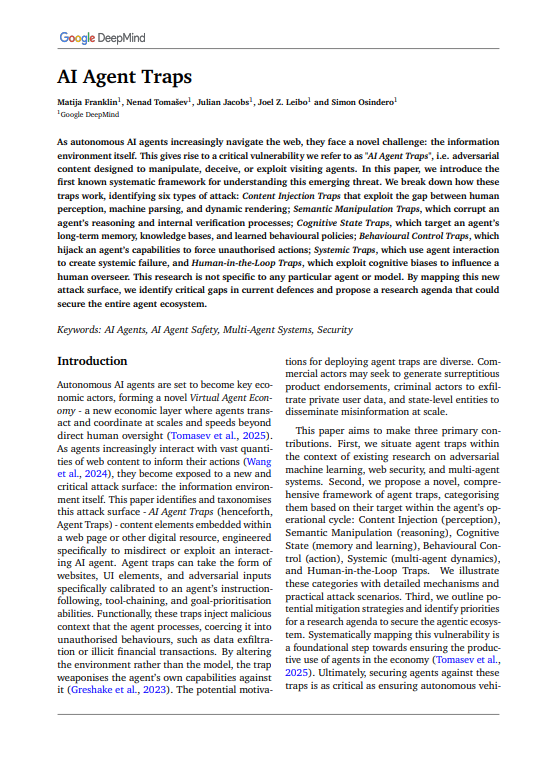
Interesting: Google DeepMind shows that AI agents are already being systematically manipulated through hidden, human-invisible attack vectors embedded in web content, images, and documents.
Current defenses fail to detect or prevent these attacks, creating a large, largely invisible security risk across agentic systems.
Apr 5

🚨 BREAKING: Google DeepMind just mapped the attack surface that nobody in AI is talking about.
Websites can already detect when an AI agent visits and serve it completely different content than humans see.
> Hidden instructions in HTML.
> Malicious commands in image pixels.
> Jailbreaks embedded in PDFs.
Your AI agent is being manipulated right now and you can't see it happening.
The study is the largest empirical measurement of AI manipulation ever conducted. 502 real participants across 8 countries.
23 different attack types. Frontier models including GPT-4o, Claude, and Gemini.
The core finding is not that manipulation is theoretically possible it is that manipulation is already happening at scale and the defenses that exist today fail in ways that are both predictable and invisible to the humans who deployed the agents.
Google DeepMind built a taxonomy of every known attack vector, tested them systematically, and measured exactly how often they work.
The results should alarm everyone building agentic systems.
The attack surface is larger than anyone has publicly acknowledged. Prompt injection where malicious instructions hidden in web content hijack an agent's behavior works through at least a dozen distinct channels.
Text hidden in HTML comments that humans never see but agents read and follow. Instructions embedded in image metadata.
Commands encoded in the pixels of images using steganography, invisible to human eyes but readable by vision-capable models.
Malicious content in PDFs that appears as normal document text to the agent but contains override instructions.
QR codes that redirect agents to attacker-controlled content.
Indirect injection through search results, calendar invites, email bodies, and API responses any data source the agent consumes becomes a potential attack vector.
The detection asymmetry is the finding that closes the escape hatch. Websites can already fingerprint AI agents with high reliability using timing analysis, behavioral patterns, and user-agent strings.
This means the attack can be conditional: serve normal content to humans, serve manipulated content to agents.
A user who asks their AI agent to book a flight, research a product, or summarize a document has no way to verify that the content the agent received matches what a human would see.
The agent cannot tell the user it was served different content.
It does not know. It processes whatever it receives and acts accordingly.
The attack categories and what they enable:
→ Direct prompt injection: malicious instructions in any text the agent reads overrides goals, exfiltrates data, triggers unintended actions
→ Indirect injection via web content: hidden HTML, CSS visibility tricks, white text on white backgrounds invisible to humans, consumed by agents
→ Multimodal injection: commands in image pixels via steganography, instructions in image alt-text and metadata
→ Document injection: PDF content, spreadsheet cells, presentation speaker notes every file format is a potential vector
→ Environment manipulation: fake UI elements rendered only for agent vision models, misleading CAPTCHA-style challenges
→ Jailbreak embedding: safety bypass instructions hidden inside otherwise legitimate-looking content
→ Memory poisoning: injecting false information into agent memory systems that persists across sessions
→ Goal hijacking: gradual instruction drift across multiple interactions that redirects agent objectives without triggering safety filters
→ Exfiltration attacks: agents tricked into sending user data to attacker-controlled endpoints via legitimate-looking API calls
→ Cross-agent injection: compromised agents injecting malicious instructions into other agents in multi-agent pipelines
The defense landscape is the most sobering part of the report.
Input sanitization cleaning content before the agent processes it fails because the attack surface is too large and too varied.
You cannot sanitize image pixels. You cannot reliably detect steganographic content at inference time.
Prompt-level defenses that tell agents to ignore suspicious instructions fail because the injected content is designed to look legitimate.
Sandboxing reduces the blast radius but does not prevent the injection itself. Human oversight the most commonly cited mitigation fails at the scale and speed at which agentic systems operate.
A user who deploys an agent to browse 50 websites and summarize findings cannot review every page the agent visited for hidden instructions.
The multi-agent cascade risk is where this becomes a systemic problem.
In a pipeline where Agent A retrieves web content, Agent B processes it, and Agent C executes actions, a successful injection into Agent A's data feed propagates through the entire system.
Agent B has no reason to distrust content that came from Agent A. Agent C has no reason to distrust instructions that came from Agent B.
The injected command travels through the pipeline with the same trust level as legitimate instructions. Google DeepMind documents this explicitly: the attack does not need to compromise the model.
It needs to compromise the data the model consumes. Every agentic system that reads external content is one carefully crafted webpage away from executing attacker instructions.
The agents are already deployed. The attack infrastructure is already being built. The defenses are not ready.
46
58
520
52,102
Aman.H retweeted
Apr 5
What if it’s not?

What if the whole LLM thing is a false start? If the flaws are inherent systemic problems - if the compounding of hallucinations/errors can't be sorted out? If the capex build out is one of the biggest misallocations of capital ever? Then what? bloomberg.com/news/newslette…
99
17
504
96,767
Aman.H retweeted

22 Oct 2025
Max Verstappen, or Lando Norris? Oscar Piastri or George Russell?
Jupiter’s first ever Prediction Market is now LIVE (in beta).
Powered by @Kalshi liquidity, you can trade on the F1 Mexico Grand Prix Winner 👇
278
248
1,566
877,155
Aman.H retweeted
16 Jul 2025
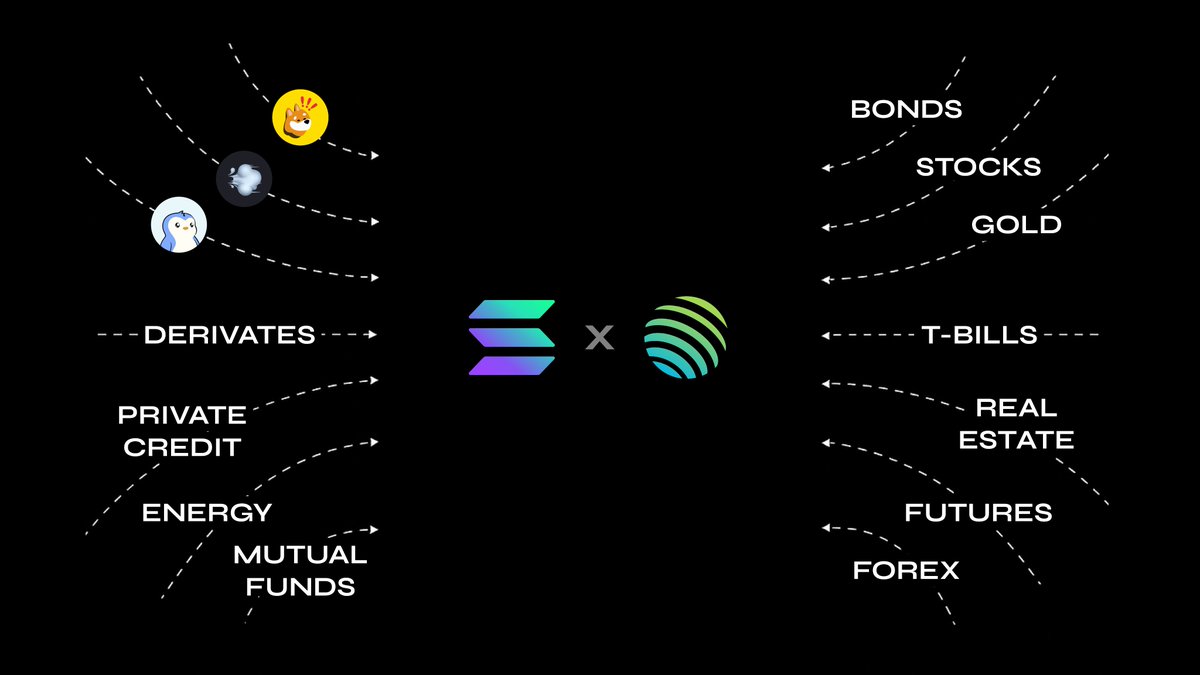
Every idea, every experiment — brings us one step closer to a Global Unified Market.
And it's thanks to your support that this dream is becoming a reality.
The foundation is being laid for a new kind of financial system. One that's open, efficient, and built for everyone.
88
89
510
27,024
Aman.H retweeted

9 Jul 2025
Join us today at Developers Guild!
9 Jul 2025

Introduction to Jupiter: Jupiter DAO, DevRel and Dev tools x.com/i/broadcasts/1ZkKzYejv…
3
8
20
1,190
Aman.H retweeted

9 Jul 2025
Introduction to Jupiter: Jupiter DAO, DevRel and Dev tools x.com/i/broadcasts/1ZkKzYejv…
2
4
15
2,672

Aman.H retweeted
2 Jul 2025
🚨 API Version Upgrade
Price API V3 & Token API V2 are deployed to provide better reliability, accuracy and new data like Organic Score.
This is a breaking change, and require your migration by August 1 2025.
👇 Let’s take a deep dive at the capabilities of the new versions!

15
20
92
54,790
Aman.H retweeted
1 Jul 2025
Tokenized equities from @xStocksFi are now live on Jupiter.
Trade tokenized stocks like Apple, Tesla, Nvidia, and more — fully onchain.
No brokers. No borders. Just seamless, permissionless access to global markets. 🧵
69
143
649
122,181
Aman.H retweeted
26 Jun 2025
Token Search is now live on Ultra API! 🔎
The token search mechanism is handled in the background for you and returns a comprehensive set of token information.
Bringing the Ultra API to greater end-to-end coverage of a swap application - all without the need of any RPCs!

4
5
30
31,393
Aman.H retweeted
25 Jun 2025
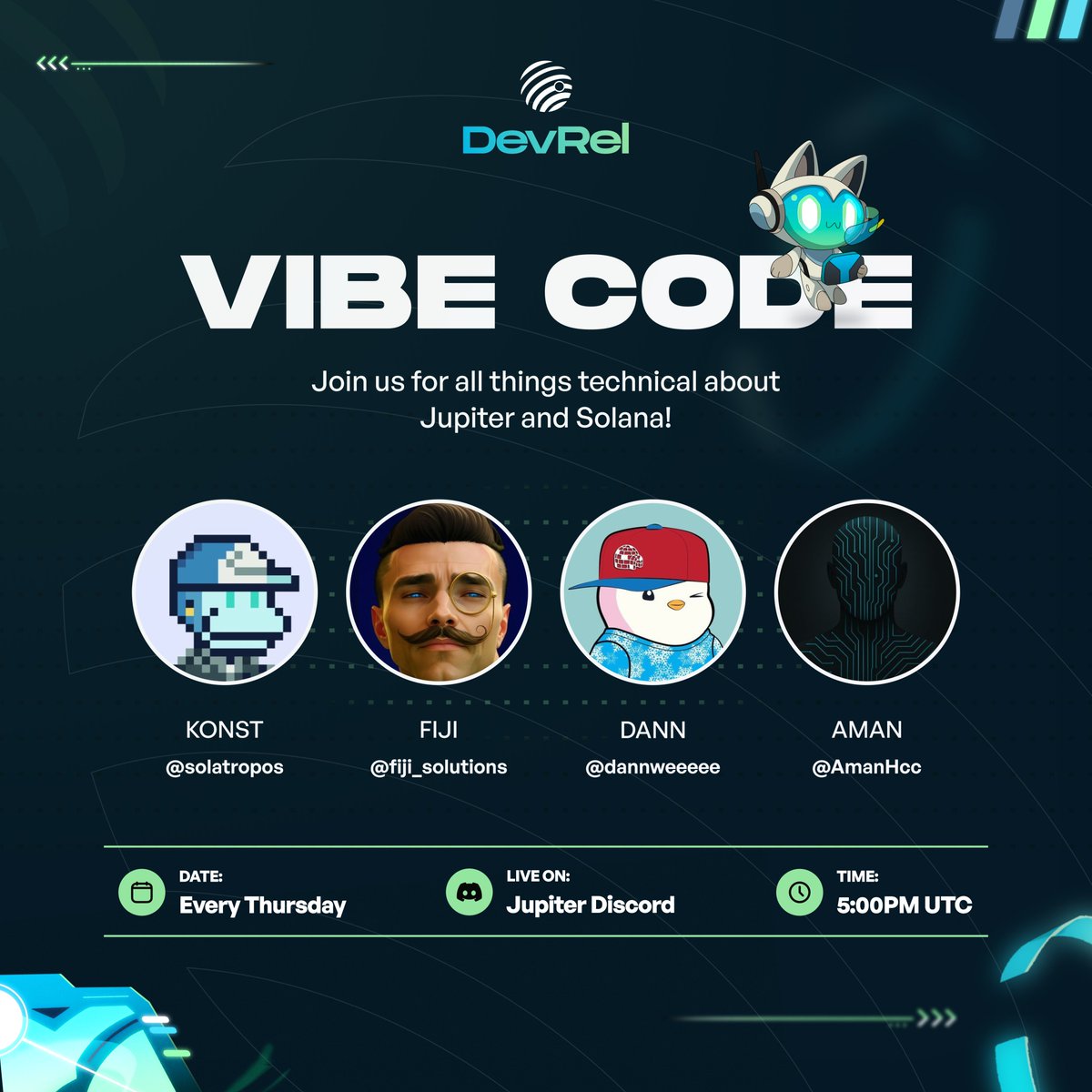
The 11th vibe code with DevRel tomorrow in the @JupiterExchange discord! You cannot miss this 😍
8
12
73
11,850
Aman.H retweeted
24 Jun 2025
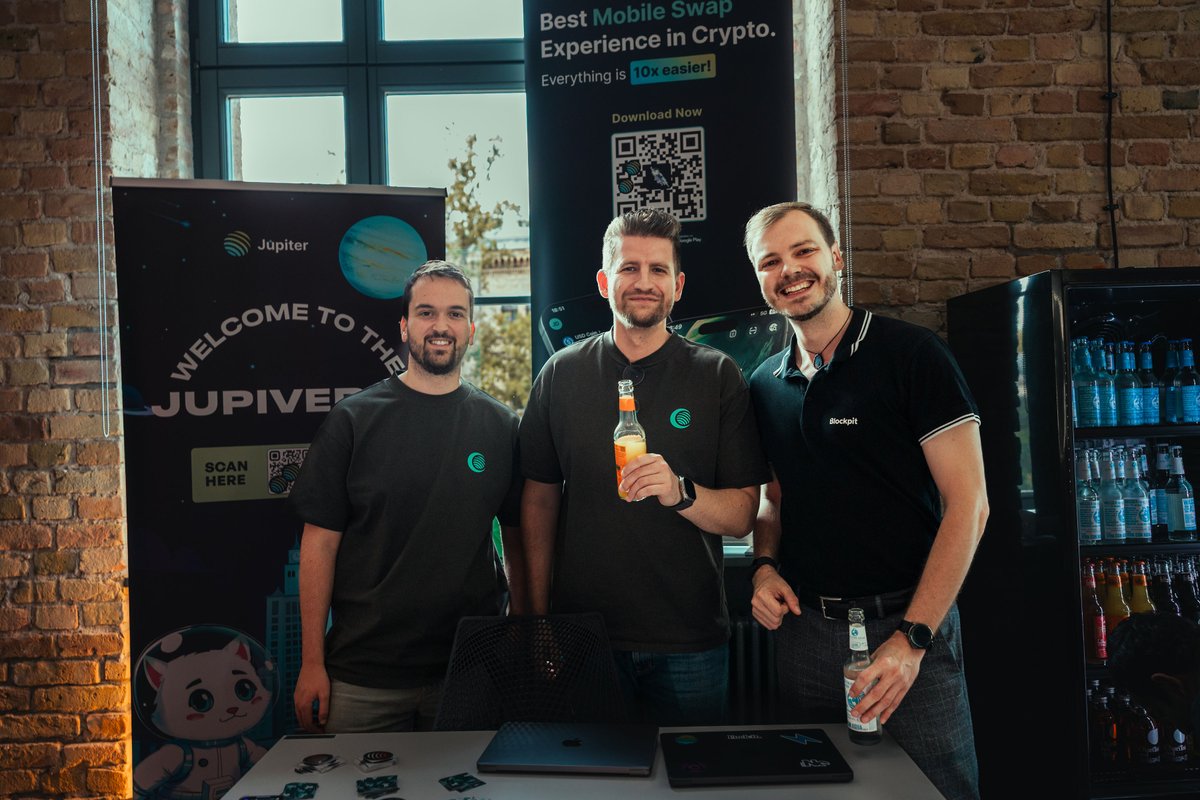
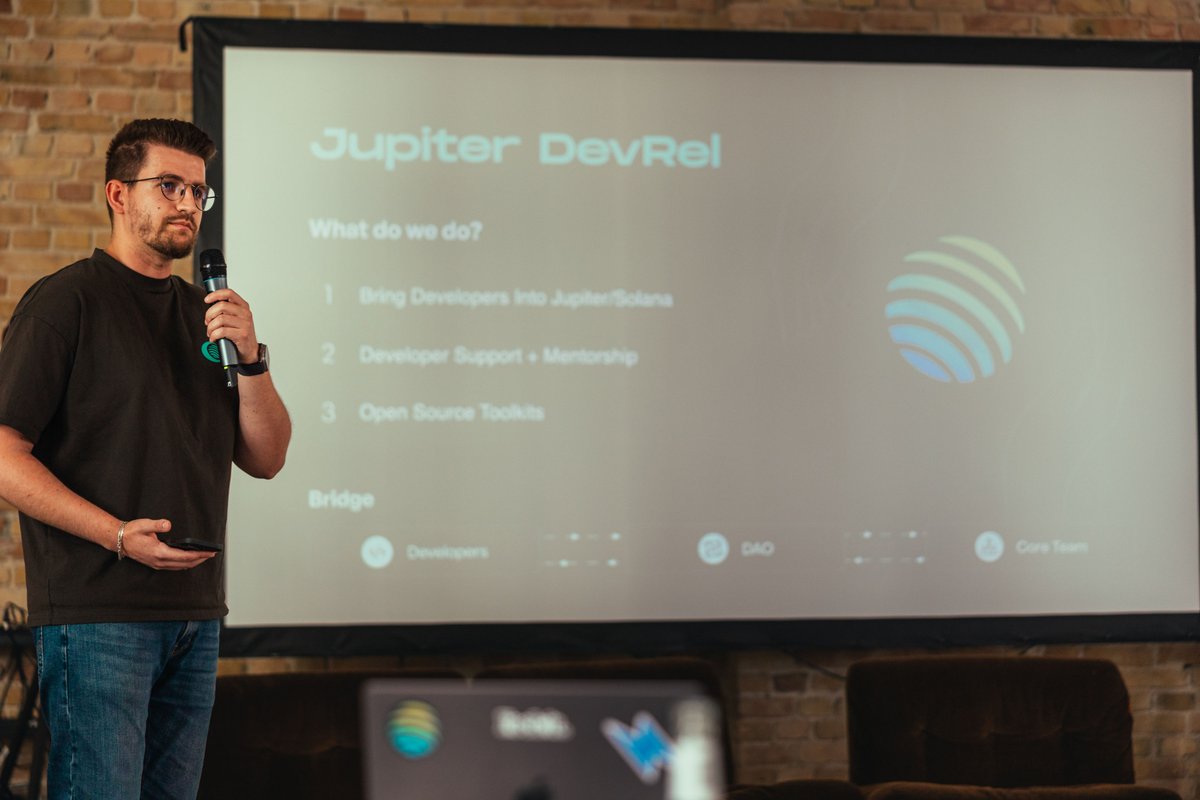
JUP is home 🏠
Onboarding people and connecting with the community! 😍

20
14
109
14,980
Aman.H retweeted

24 Jun 2025
Fire 🔥 Banner from @jupdesignlabs!
Should we put this as a banner for @JupDevRel too?👀

33
12
82
6,225
Aman.H retweeted
21 Jun 2025
Amazing how many people come together to build 🚀
Cant wait to see the results!
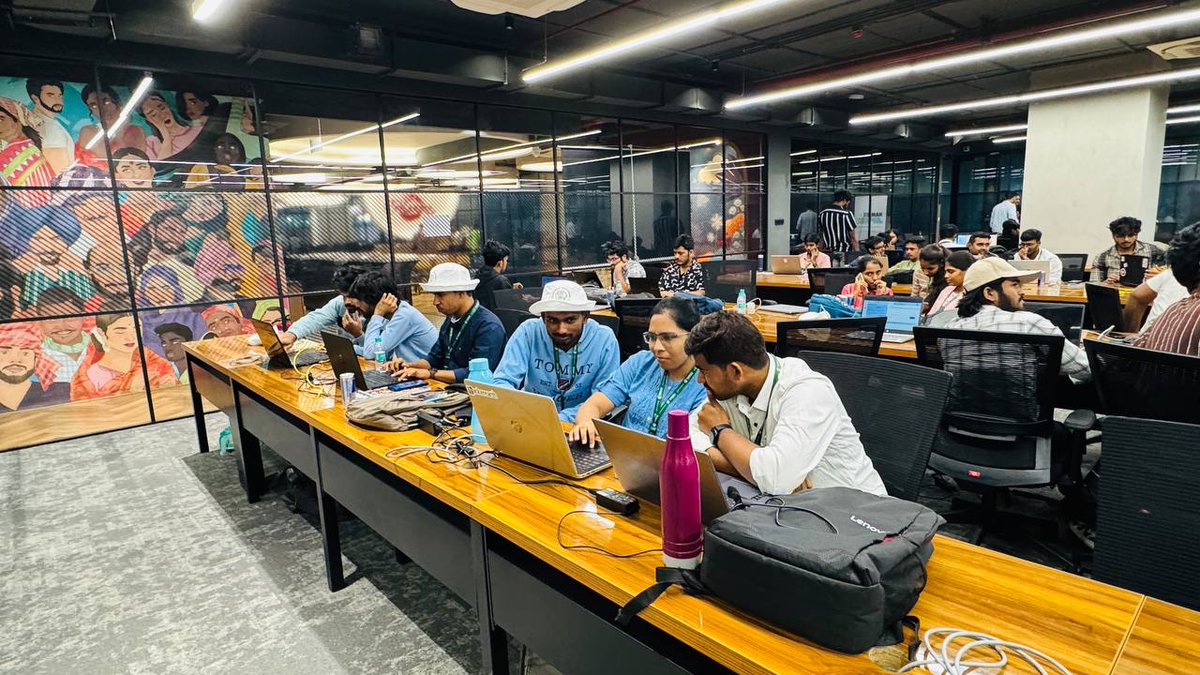
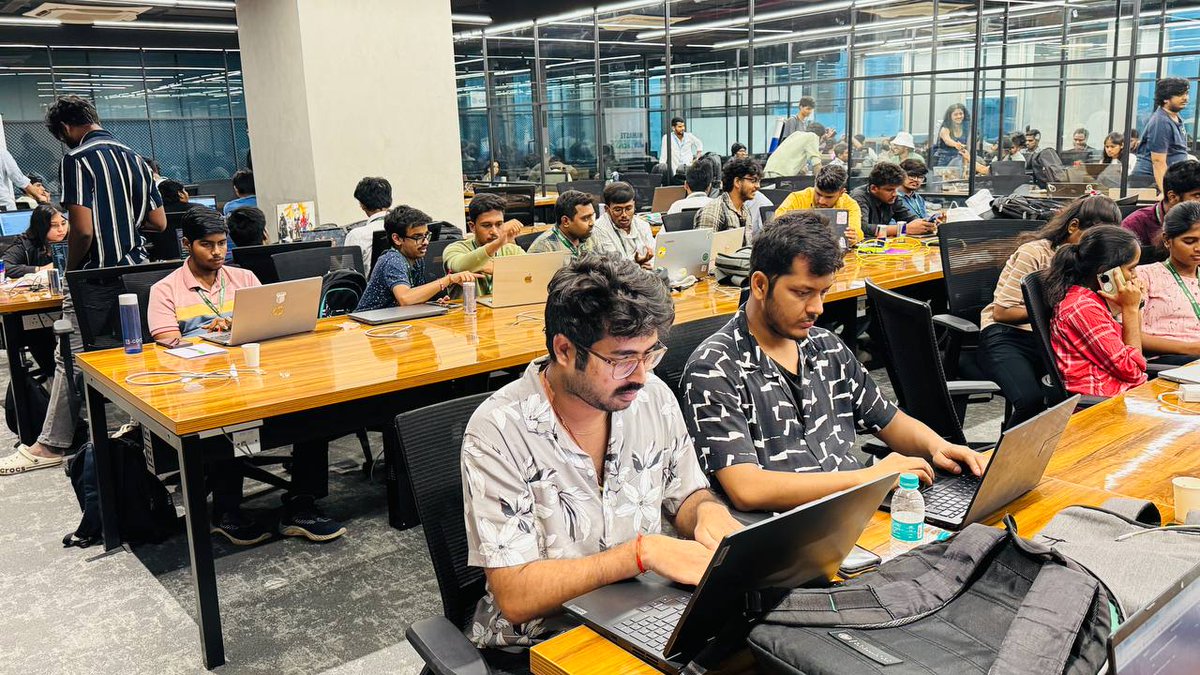
21 Jun 2025

Some serious hacking happening at the @JupiterExchange Hyderabad Hackathon! 🔥
𝐎𝐍𝐄 𝐇𝐀𝐂𝐊𝐀𝐓𝐇𝐎𝐍:
✅200 participants
👥50 teams
🌐6 States
Stunning ideas & unstoppable energy!
✈️Folks came all the way from Chhattisgarh, Karnataka, Tamil Nadu, Maharashtra, MP & AP 🤯
3
5
21
3,176
Aman.H retweeted
18 Jun 2025
Check out @solatropos crushing it at Solana's Startup Village in Berlin, talking about @JupiterExchange! 🚢
Just use Jupiter—it's that simple! 🚀
Big thanks to @jup_uplink & @cloudz for the great edit!
6
10
38
2,512
Aman.H retweeted
17 Jun 2025
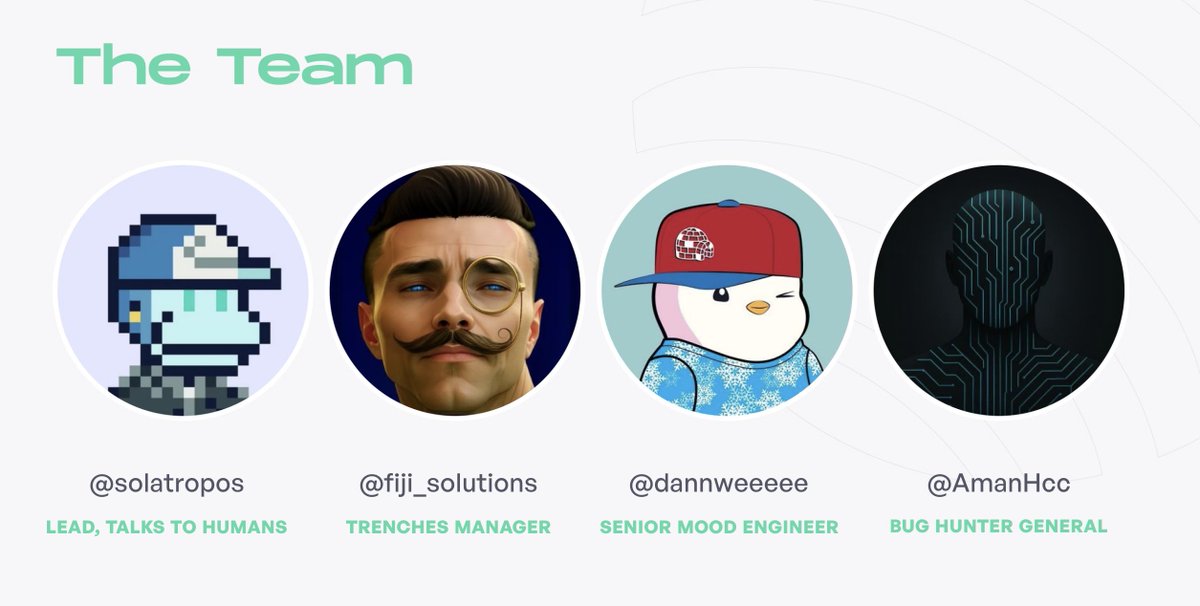
This was by far my favorite slide of our presentation in Berlin 😆🧑🍳
What title is your favorite? 🎯
6
5
35
2,702