Joined August 2025
- Tweets 11
- Following 29
- Followers 0
- Likes 3
2 Photos and videos
Watching the video from Foti, you can easily understand how the "scoop marks" were created at the "Unfinished Obelisk" at Aswan and other locations. Create a brittle crust via fire/chemistry, "then" come in with pounding stones and remove the brittle layer:<blockquote class="twitter-tweet"><p lang="en" dir="ltr">Whew, this has been one of the busiest weeks I’ve had in months!<br><br>We’ve been working hard. <a href="x.com/TrevorHawkeHRG?ref_src…">@TrevorHawkeHRG</a> stopped by on Tuesday—I already wrote about that—and then Jake <a href="x.com/MetaElenchus?ref_src=t…">@MetaElenchus</a> came by on Thursday. To Budapest, Hungary, yeah. A loooong way from home, respect 🫡 <br><br>Thank you… <a href="twitter.com/FoMaHun/status/2…">twitter.com/FoMaHun/status/2…</a></p>— Marcell Fóti 🪨 (@FoMaHun) <a href="x.com/FoMaHun/status/2062791…">June 5, 2026</a></blockquote> <script async src="platform.x.com/widgets.js" charset="utf-8"></script>
Jun 5

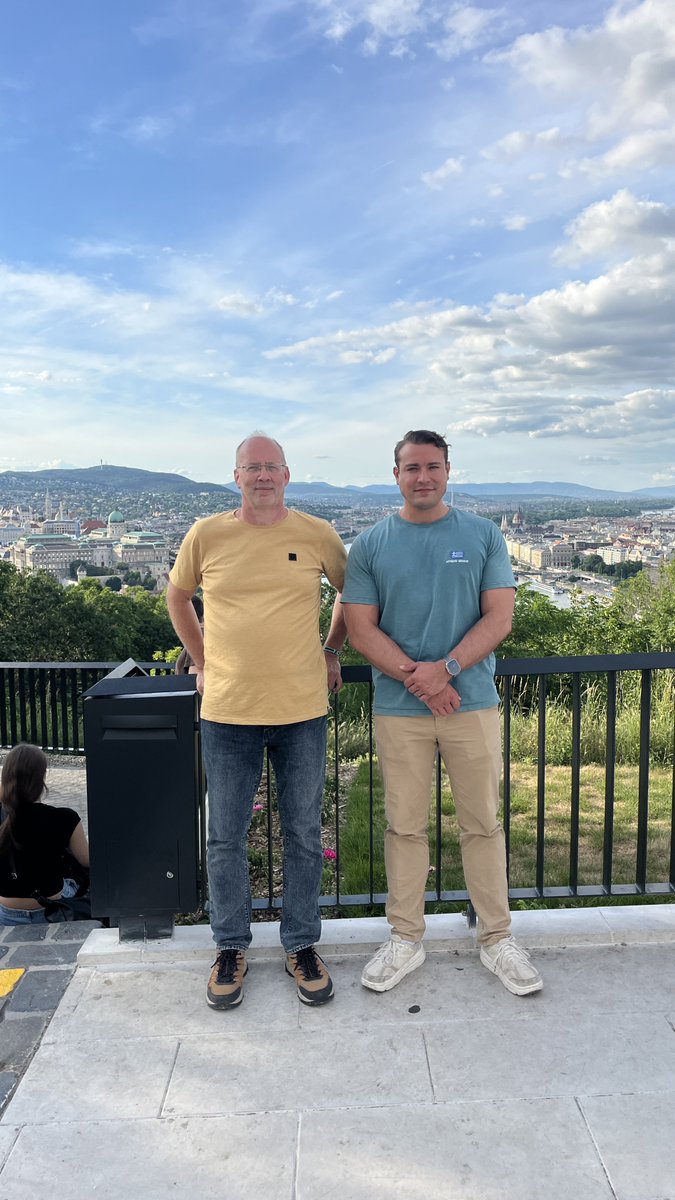
Whew, this has been one of the busiest weeks I’ve had in months!
We’ve been working hard. @TrevorHawkeHRG stopped by on Tuesday—I already wrote about that—and then Jake @MetaElenchus came by on Thursday. To Budapest, Hungary, yeah. A loooong way from home, respect 🫡
Thank you both for coming and for the chance to work together! Every time I collaborate with someone, I learn something new—usually not just one thing, but two, three, or even four. I love working with others; their experience always opens up new horizons!
Together with Jake, we mixed the following types of stones:
-an artificial rock made from desert sand (which, of course, is impossible!),
-another one from pine 🌲 wood ash
-an artificial limestone from wood ash lye,
“by popular demand”, we also made Egyptian blue pigment by etching the top of one of my granite boulders.
Who’s visiting me next? 🤣
1
4
45
David Bruner, Ph.D. retweeted

Jun 5
Whew, this has been one of the busiest weeks I’ve had in months!
We’ve been working hard. @TrevorHawkeHRG stopped by on Tuesday—I already wrote about that—and then Jake @MetaElenchus came by on Thursday. To Budapest, Hungary, yeah. A loooong way from home, respect 🫡
Thank you both for coming and for the chance to work together! Every time I collaborate with someone, I learn something new—usually not just one thing, but two, three, or even four. I love working with others; their experience always opens up new horizons!
Together with Jake, we mixed the following types of stones:
-an artificial rock made from desert sand (which, of course, is impossible!),
-another one from pine 🌲 wood ash
-an artificial limestone from wood ash lye,
“by popular demand”, we also made Egyptian blue pigment by etching the top of one of my granite boulders.
Who’s visiting me next? 🤣
10
6
90
3,767
Night Scarab on Youtube has the best summary with new analysis refuting the "Lost Ancient High Techology" associated with ancient Egyptian vases: youtube.com/watch?v=dr1SG-_H…
9
David Bruner, Ph.D. retweeted

Apr 20
Nuclear physicist: "There's no such thing as precise ancient Egyptian vases."
Max Zamilov (@MaxZamilov) analyzed countless vases from multiple sources, including museums and private collections.
Here's why "precise" vases are most often modern handmade fakes:
53
24
278
67,011
The proposed finding of a second Sphinx is quickly debunked: youtu.be/thzXEft8BLk?si=h8Tv… really putting into question the validity of the SAR tech finding columns 2 km below the pyramids.
31
David Bruner, Ph.D. retweeted
Mar 10
13
15
97
5,064
Marcell Foti documents and proves beyond a doubt how the huge marvelous "marshmellow shaped" granite stones were produced in ancient times in Peru and around the world. One big mystery solved. More to come!
Feb 16
Hello everyone! It’s peer review time again!
With this step-by-step “Stone Softening” video, the Peer Review period is officially open.
Phew! It took me a while!
Over the past few weeks, I didn’t just randomly post “CAST!” There were two reasons for that.
One was that I simply didn’t have the time to post or respond to people properly because I was working full throttle on this problem.
So why didn’t I just stay quiet? That’s the second reason.
I couldn’t stay silent while, for the sake of the video, I went through the entire cycle—from melting stone to recasting—twenty-eight times. Sorry, but I really do have a point.
CAST!
In this video, you can see the full cycle—from “stone softening” to stone casting. A closed loop.
I could have done it using only ancient methods and tools if I lived in intact Peru.
This isn’t a “trust me bro” thing—watch the whole thing, and you’ll understand.
Well, that’s the end of another mystery.
That’s how it is. Peace to its ashes.
Huge stones, hundreds of tons, cast, and done. The heaviest object the ancient Peruvian Indians had to lift was a bucket.
Sure, I know the road toward Ollantaytambo is decorated with massive stones. There are a few on the mountainside too. Yes, that’s true.
But from now on I wouldn’t ask how they carried them down from the quarry (they didn’t).
Instead, I’d ask: isn’t the stone’s binder accidentally amorphous silicon dioxide (aka glass)? Because it totally is.
“Stone softening” brings these feats down from a superhuman level to something easily doable. It's just masonry work, sorry.
Again: this isn’t an opinion. This is a working technology—check out the video.
I’m not interested in naysayers’ opinions because they’re wrong. Bye!
So, who’s joining me for the peer review? Let's GO!
1
41

25 Nov 2025
AncientEngineering101 youtube.com/@ancientengineer… via @YouTube
Come join a new channel that explores ancient structures and achievements through an engineering lens. Coming Soon we will weigh in on the "Ancient Egyptian Vase Wars", "The Age of the Sphinx", "How were the Trilithon stones at Baalbek moved" and much more!
62