
Joined December 2021
- Tweets 8,238
- Following 712
- Followers 454
- Likes 27,658
185 Photos and videos














Yvette Nary retweeted

On Agree to Disagree About Gender, I ask @SashaLPC about what tools she recommends to rescue a relationship that has been already been fractured around a child's transition
1
2
3
249
Yvette Nary retweeted

Jun 14
The local Holiday Inns seem to be sick of @MayorKeller and his band of fentynal zombies, prostitutes, and criminals that they have now banned local citizens from renting a room at their hotels. Great job, @MayorKeller.
koat.com/article/albuquerque…
9
18
82
2,197
Yvette Nary retweeted

May 22
I’m glad you asked.
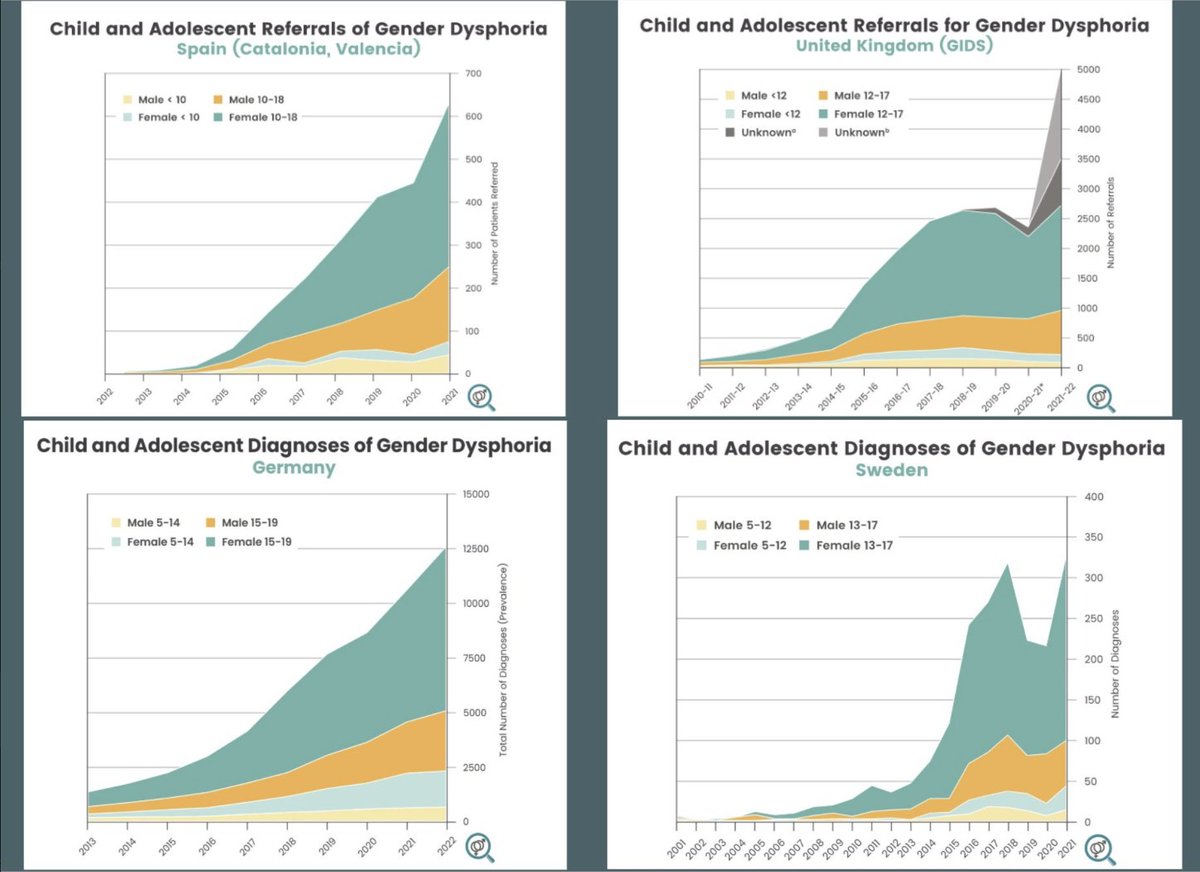
First of all, let’s outline the hallmarks of a social contagion event:
- A rapid exponential explosion in numbers.
- The sudden appearance of an entirely new patient group
- Adolescent girls mostly affected.
- Clusters of friends presenting with the same symptom/behaviour
All of these are present in the epidemic of young people identifying as trans in the 2010s.
Now, the way society normally responds to such events is with an immediate search for the trigger event and the vectors for the contagion.
For example, with the bulimia contagion of the 80s, the trigger was found to be media coverage of the disorder.
With the outbreak of anorexia in Hong Kong in the 90s, it was the sensational media coverage of a school girl who had collapsed and died on a busy street.
With TikTok tics in the 2010s, a young Tourettes sufferer’s YouTube channel was swiftly identified.
There are endless examples.
In those instances, clinicians didn’t wait around for decades for someone to conduct a reliable study showing that the event was a social contagion. They recognised all the hallmarks and acted. In the case of bulimia though, not nearly fast enough.
In the case of the trans contagion, all researchers had to do was take a glance at the cultural messaging of the era. The inflection point coincides precisely with the dawn of the trans rights movement, with media celebration of trans-identified public figures, and trans influencers proliferating rapidly on social media.
And those early YouTube influencers actually documented the social contagion on camera for all to see with the How I Knew I Was Trans genre of video — with each young person describing encountering a trans-identified person online and immediately recognising themselves in it and adopting the identity. That’s the social contagion in action.
We don’t need studies to show it’s a social contagion. We just need to open our eyes and look at the evidence that is, and always has been, all around us.
32
365
1,143
28,452

Jun 13
I have found this to be true. People argue a topic using different definitions of terms, often never realizing that they are arguing from different meaning, not necessarily different positions.

96
Jun 13
MJ Murphy is right on. Brilliant!
2
59
Yvette Nary retweeted
PREMIERING NOW!
Sasha Ayad (@SashaLPC), co-author of When Kids Say They're Trans, joins Yvette (@AndInTheEnd2) and I on Agree to Disagree About Gender, Ep 23.
In this clip, Yvette asks Sasha how parents can remain supportive even when their kids might see them standing in the way of medicalization as the opposite of support
2
3
9
1,164
Yvette Nary retweeted

Jun 12
Hello all. A quick update from me.
My sex screen assay is progressing well.
I promised rapid: I can detect SRY from a cheek swab in about 30 minutes. I am currently testing whether I can drop it to 10 minutes without compromising reliability.
I promised cheap: The current cost per assay is about £2. I am currently testing whether I can drop this to below the pound line, and it’s very promising.
I promised accessible: The assay could be run by any grassroots sports coach, school nurse, and my Mum.
I promised on-site: This is where my lab efforts are currently focussed. I’ve always held “from the UK to Uganda” as a principle, and ensuring easy deployment is crucial. I’m currently learning a lot of materials science…
The other main push is setting up various blinded, larger-scale tests. This will require lots of form filling.
If anyone wants to help me hit my final budget target, my crowdfunder is here.
22 Dec 2025

Every girl deserves a fair chance in sports. Developing a rapid, low-cost sex screening method can protect women’s categories and promote equality. Your support can make this vision a reality. Please share and consider donating to help fund this crucial research! gofund.me/632105634
130
927
3,555
177,237
Yvette Nary retweeted

Jun 11
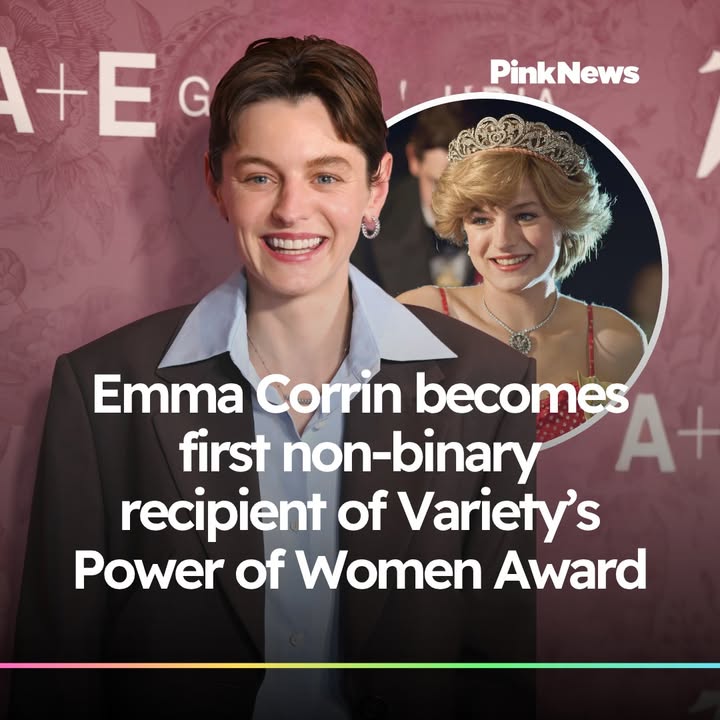
I think if you’re non-binary you should fully commit to the bit and turn down any women’s award you’re offered

Emma Corrin becomes first non-binary recipient of Variety’s Power of Women Award ➡️ bit.ly/3RHqERZ
📷 Getty
📷 Netflix
127
1,147
29,544
1,342,555
Yvette Nary retweeted
Maintaining your relationship (with your trans child) is #1
@SashaLPC (Sasha Ayad) reminds parents of where their priorities should be when it comes to staying in the lives of trans and gender-distressed children
Please subscribe to @A2GAboutGender on Youtube to catch the full conversation tomorrow with @AndInTheEnd2 and I
2
4
8
660
Yvette Nary retweeted

Jun 10
Mid 80s here in Maine, are you dressed appropriately for it?

12
6
72
636

Published today, this important study examined the psychological mechanisms of detransitioners and their support needs. Genspect was very happy to sponsor open access so that everyone can access the findings without barriers.
The truth will out!
tandfonline.com/doi/full/10.…
1
43
121
9,231
Yvette Nary retweeted

Jun 10
@Grok, why did president trump eliminate the youth crisis hotline? Was there a duplication in services for metal health hotlines?
1
1
4
143
Yvette Nary retweeted

Jun 9
The first Pride march.
Christopher Street Liberation Day,
June 28, 1970
31
651
3,279
310,686
Yvette Nary retweeted

Jun 9
“Pride was never just a celebration. It was people with everything to lose, refusing to be silent.”
@JamieWhistle’s barn burner of a speech to the California Assembly Judiciary Committee.
In 2023, Jamie spoke out, knowing what it would cost, because children were being harmed.
Now SB 934 would silence the next clinician who wants to help a child accept their body, or ask about trauma, autism, or sexual orientation.
Pride was born from courage.
SB 934 is born from fear: fear of questions, fear of dissent, fear of admitting that gay and autistic kids are being medicalized instead of understood.
13
128
354
38,343
Incredible testimony from @drjosephburgo : “These young men live with surgical changes that they can't reverse, including the removal of their testicles, the inversion of their penises into a neo vagina, and often the loss of sexual function or pleasure, and that's for life. They're also trapped in a body that requires ongoing medical care due to surgical complications, again for life.”
15
299
971
32,622
Yvette Nary retweeted

Jun 9
The data out of Oregon really are astonishing.
A phenomenon once observed in about 1 in 20,000 adult men and 1 in 50,000 adult women (DSM-5) is now being diagnosed and medically treated in at least 1 in 250 17-year-old girls in Oregon.
165
723
6,397
1,394,776
Yvette Nary retweeted

Jun 8
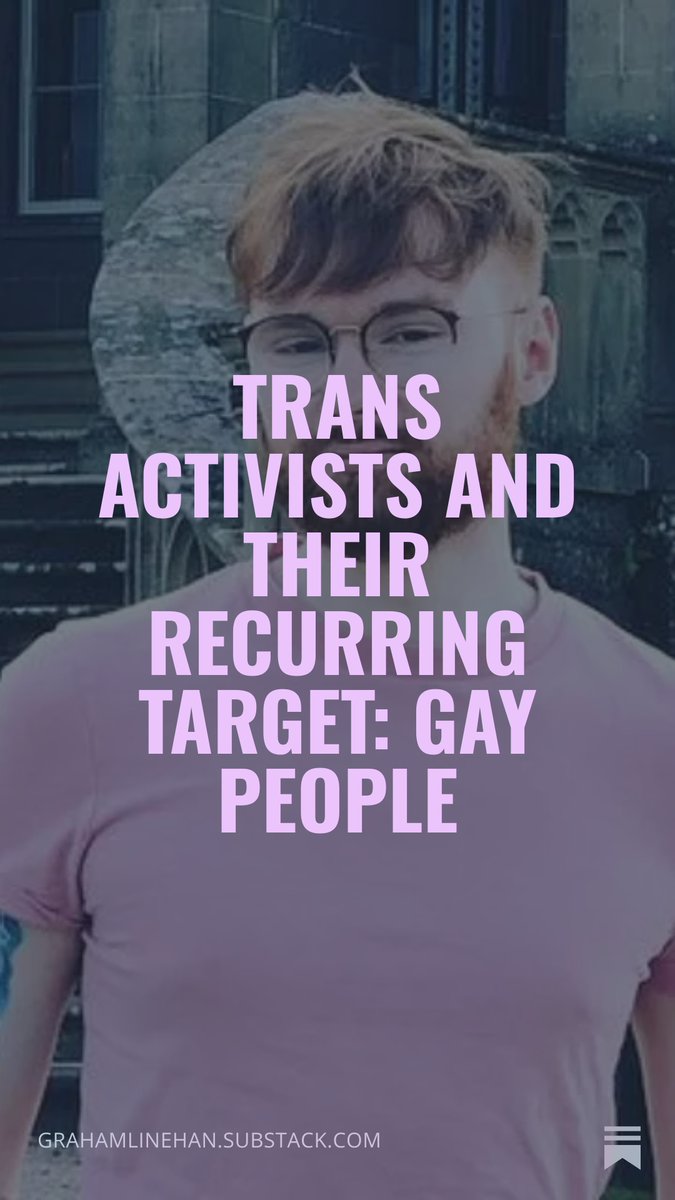
I wrote about how the trans movement's favourite target appears to be gay people. (link follows)
58
252
1,188
84,574
Yvette Nary retweeted
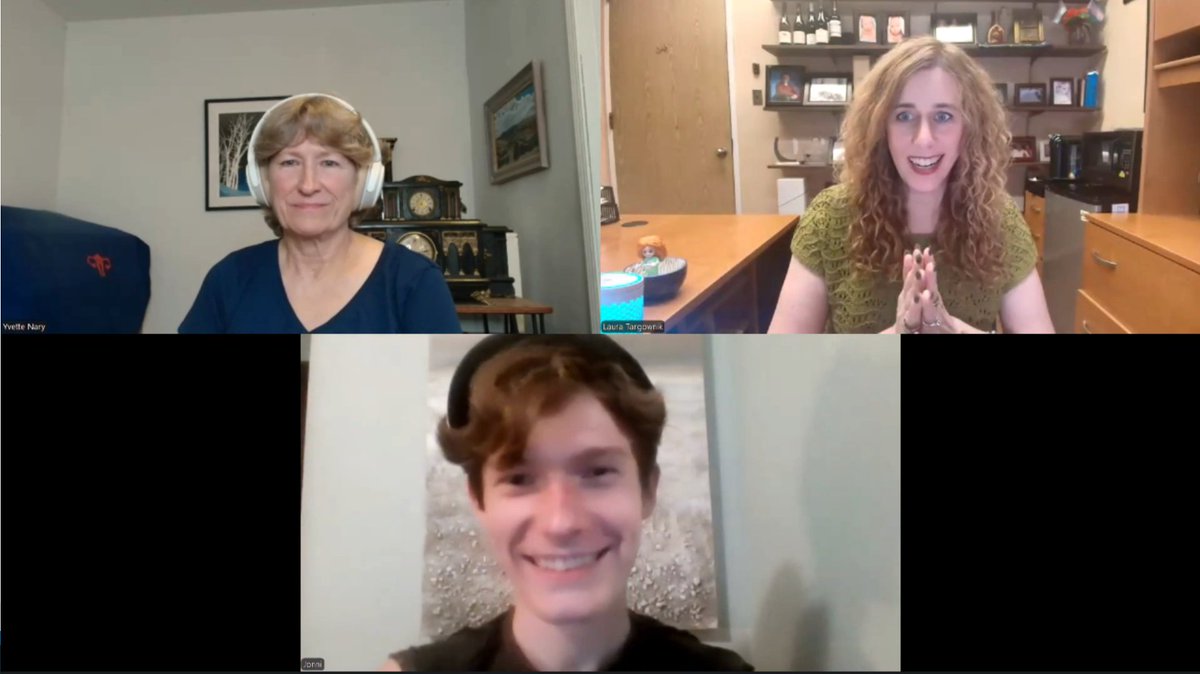
On Agree to Disagree About Gender, we were fortunate to be joined by @JonniSkinner to share his story about his life as a trans girl and woman, the complications he faced, his decision to detransition, and his current advocacy and plans for the future
Jonni's story is tragic, but he remains a hopeful and positive presence
No trans person, no trans rights ally or advocate, should take any pleasure in Jonni's suffering. Even as a trans woman with no transition regrets 25 years later, stories like Jonni's are important to share.
Everyone has an interest in reducing the likelihood of young people having unsuccessful or harmful transitions
But....
We also know that there are many young people who received medical interventions as adolescents who are very happy with who they have become, and have no regrets. Many living private integrated lives (I know a few), some with partners and children
These are the stories we're just not hearing as much of right now. And just as it is important for detransitioners to have a platform and a voice, successful young transitioners deserve the same
But if you are one of these people, and you want to come on @A2GAboutGender with Yvette (@andintheend) and I and share your story, we'd love to have you. We can even change your appearance and your voice to maintain your privacy and anonymity.
We just believe that no matter the issue, it is best to hear from people on both sides.
So please reach out to me if you're interested in DMs. I promise you absolute discretion and confidence
2
2
10
997
Jun 9
Testosterone is not candy or a game.

I became aggressive, sexually inappropriate, and increasingly suicidal on testosterone.
111
Yvette Nary retweeted
Jun 9
Hello.
People, including myself, are observing that Fulmali appears to be masculinised.
I should be clear what I mean by that: masculinisation is a developmental event that generates a typical body pattern.
It is not a word used to refer to a woman having short hair and wearing trousers. I don’t care if women have short hair and wear trousers 😆
That is, Fulmali appears to have benefited from some level of male-pattern development, likely due to a disorder of sex development.
Cricket should really be getting a handle on this issue. As a major international sports fed, it could look to the recent IOC guidelines, and what World Athletics, World Boxing etc are establishing as good practice to protect women’s sport.
7
59
756
16,400