
staff @kidspartnership | Comm @wedrawthelines | Brd @DisabilityCA | fmr Prez @itsbodypolitic ✊🏽✊🏾✊🏿 Chicané #LongCovid #MECFS 🐦🙋🏽she/they/he
Joined February 2021
- Tweets 8,064
- Following 2,394
- Followers 3,332
- Likes 24,846
130 Photos and videos


Pinned Tweet

Of course they have a quota. Mega corps are making money trafficking people into private-equity funded detention centers that make money off billing the govt & pocketing everything meant for their care. Same model as mental institutions.
Jan 23

ICE has a quota system. That’s why agents are pulling people off the streets regardless of whether they’re a US citizen, five year old child, freezing elderly man, local police officer, etc. Those masked, unidentified agents get credit for each person they throw into the van.
It’s a become a lawless bounty hunter agency that operates beyond the law. It should be disbanded and Noem should be impeached.
7
7
984
Angela M. Vázquez made 🦠their whole personality retweeted

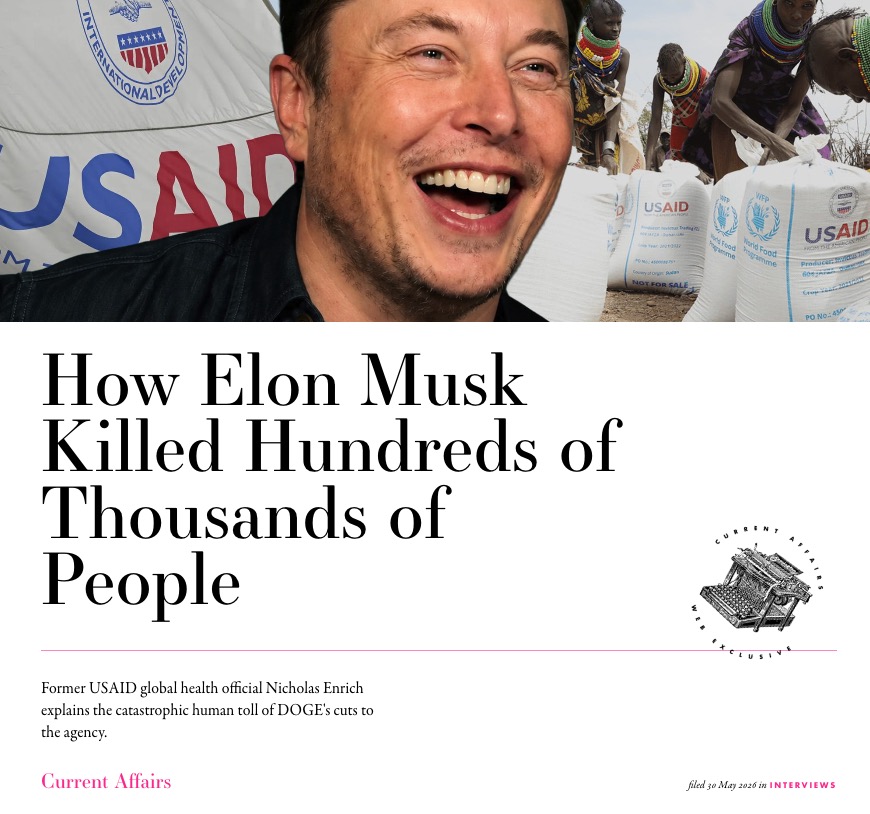
Instead of discussing how Elon Musk is now the world's first trillionaire, we should talk about how he killed hundreds of thousands of people through his dismantling of food and medical aid to poor countries
currentaffairs.org/news/how-…
4,806
18,900
46,137
1,728,112
Angela M. Vázquez made 🦠their whole personality retweeted

Nearly all of these are policy ideas that Republicans in CA advocate for. Those proposals would meaningfully reduce access to the ballot for lawfully registered California voters, and disproportionately affect voters from communities of color.

If CA leaders wanted to prioritize a faster vote count, these are some of the policies they could implement:
-Ballots must be RECEIVED by Election Day. If you’re voting last minute, you have to vote in person or take your ballot to a county drop off spot. Then you wouldn’t need to wait 7 days to know how many ballots are needed to count
-Only mail ballots to voters who request them…not every registered voter. This would cut down on ballots being sent to bad addresses or the chances for ballot harvesting
-Send all registered voters free ID cards & require those cards for in person voting. Do not allow same day registration. This would likely cut down on provisional ballots that take longer to examine and process.
-Cut down the number of days to “cure” your ballot if there’s an issue from 10 to 5. This would allow for a faster certification date.
This would all speed up the count.
Could all of this lead to fewer people voting? Possibly.
Is the trade off worth it? That’s up to policy makers to determine.
A reminder: the current candidates for Gov. and Secretary of State have very different views on these issues.
4
14
71
5,272
Angela M. Vázquez made 🦠their whole personality retweeted

Scoop: Mount Sinai is calling up parents of trans patients who received care there as minors to say they are sharing their medical records with the Trump admin. But Mount Sinai won’t confirm the existence of a federal subpoena. W/ @giuliaheyward
gothamist.com/news/nyc-paren…
18
153
243
35,879
Angela M. Vázquez made 🦠their whole personality retweeted

Was glad to have the chance to join @selenasd on All Things Considered yesterday to chat about the new work requirements regulation, which is will dial up paperwork — and, as a result, coverage losses — for some of the most vulnerable Medicaid enrollees
npr.org/2026/06/02/nx-s1-584…
3
10
18
2,081
Angela M. Vázquez made 🦠their whole personality retweeted

Apr 17
New: Porsha Ngumezi and Nevaeh Crain died during miscarriages in Texas after doctors delayed treatment. The state’s medical board has ruled that substandard care led to the deaths, but the doctors were given minimal punishment. propub.li/48N4P8X
23
1,012
1,737
80,991
Angela M. Vázquez made 🦠their whole personality retweeted

Interesting how my physician colleagues on here will complain about the corporatization of medicine that robs time, detail, and trust from the doctor-patient relationship and then also complain about patients with chronic diseases filling those gaps with online peer support.
6
77
458
5,821

There's a new COVID variant in town. It's called "Cicada," and experts in the U.S. are on alert as it gains traction.
The official name of the variant is BA.3.2. It first appeared in 2024 in South Africa and was identified in the U.S. in the summer of 2025. It went dormant, much like its namesake insect, before resurfacing again in the U.S. around the new year.
"Cicada" is part of the omicron family, so it is similar to other recent variants. But it has a lot of mutations, making it harder for previous versions of the COVID vaccine to keep up against infection.
In Europe, this variant is behind about 30% of recent COVID-19 infections. In the U.S., it makes up a small number of known infections right now, but home testing and less stringent tracking by public health authorities makes it hard to track.
Cicada had been detected in 25 different states in the U.S. as of Feb. 11, according to the U.S. Centers for Disease Control and Prevention.
It’s too early to tell who might be most affected by this variant or how severe its symptoms are. Scientists interviewed by our friends at PolitiFact said, so far, "Cicada" seems to be mimicking other recent variants. Some early lab tests indicate it may be less transmissible, though more research is needed.
Current vaccines are still a good safeguard against severe illness, though protection against infection may be more limited compared to other recent strains. If cicada becomes more widespread, the variant may be able to sneak past immunity from previous infections and vaccines.
Home COVID-19 tests should be able to detect this variant. People who are immunocompromised and older adults should consider whether they need a vaccine booster, federal health authorities suggest.
30
225
484
28,145
Angela M. Vázquez made 🦠their whole personality retweeted

Apr 7
ICE detained a dialysis patient the morning of her treatment.
She died 36 hours later in a detention infirmary.
They logged it as "natural causes."
When policy kills, call it what it is.
343
7,845
32,150
300,872
Angela M. Vázquez made 🦠their whole personality retweeted

ICE is arresting domestic violence survivors when they go to the courthouse to testify against their abusers. theatlantic.com/politics/202…
38
1,705
2,767
134,694
Angela M. Vázquez made 🦠their whole personality retweeted

LA Officials race to recruit bilingual election workers ahead of primary elections
LA County election officials especially urge residents who speak Japanese, Thai, Korean, and Khmer to become election workers ahead of the June primary.
lapublicpress.org/2026/04/lo…
3
14
404
Angela M. Vázquez made 🦠their whole personality retweeted

This is reason enough to support Rae. None of the other candidates are this unequivocal about their stance on the largest gang in the City

Last year our city’s budget for the LAPD was $1,980,000,000.00. I know how we can immediately knock that down to $1,979,550,000.00. It’s time Los Angeles found a new police chief.
12
118
778
103,367

Angela M. Vázquez made 🦠their whole personality retweeted
Starting today, some immigrants will lose public food assistance benefits.
The loss of public food assistance benefits applies to certain non-citizens, including, asylees, refugees, and victims of trafficking.
lapublicpress.org/2026/04/la…
1
18
35
2,486
Angela M. Vázquez made 🦠their whole personality retweeted

Apr 1
Punished for protesting, talking to the press, having a toothache: More Dilley horror stories motherjones.com/politics/202…
1
6
8
1,638
Angela M. Vázquez made 🦠their whole personality retweeted

Mar 23
NEW: For the first time, ProPublica has been able to quantify how many U.S. citizen children have been directly affected by Trump’s immigration crackdown: more than 11,000 kids had a parent detained — and that’s an undercount. 1/ 🧵
propublica.org/article/trump…
516
3,200
6,085
534,685
Angela M. Vázquez made 🦠their whole personality retweeted

Mar 19
‘We’re Just Seen as Sex Objects’: Dolores Huerta’s Years in the U.F.W. nytimes.com/2026/03/19/us/do…
2
6
305
RT @LATACO: Civil Rights icon, @doloreshuerta, made a brave move today, revealing a secret she had been holding for 60 years for the sake o…
281
Imagine if we protected women and girls the way we protected these wicked men.
2
84
Angela M. Vázquez made 🦠their whole personality retweeted

Mar 18
MUST READ: A bombshell NYT investigation shows that Cesar Chavez sexually abused young girls.
Dolores Huerta also discloses for first time that that Chavez raped her.
So much more from Manny Fernandez and Sarah Hurtes —>
nytimes.com/2026/03/18/us/ce…
478
2,020
6,557
4,253,282