
Chief Scientist at @UmnaiBase. Unleashing limitless human ingenuity through a revolutionary machine learning approach: Hybrid Intelligence. AI PhD
Joined March 2009
- Tweets 2,282
- Following 761
- Followers 1,604
- Likes 13,804
302 Photos and videos






A useful test for any AI architecture:
Can it explain why it reached a conclusion?
Not with a post-hoc explanation.
With the actual reasoning process.
29

Jun 11
Why neurosymbolic AI matters
AI has spent decades moving between two extremes: Symbolic AI and Statistical AI.
Each solved problems the other could not.
Neural systems learn well.
Symbolic systems reason well.
Real-world intelligence requires both.
The challenge is not choosing. The challenge is integration. Cobbling up together a system that combines both is possible, like @GaryMarcus has outlined many years ago.
Creating an elegant and scalable solution that combines both is where some of the most interesting work in AI is happening today.
2
35
Jun 10
The biggest misconception in AI:
People assume intelligence and reasoning are the same thing.
They are not.
Modern AI is highly intelligent in many respects.
That doesn’t mean it reasons the way we think it does. @UmnaiBase
23
Jun 4
Neurosymbolic AI is not a niche research topic.
It is the natural evolution of AI.
Neural systems learn.
Symbolic systems reason.
Real-world decision systems require both. @UmnaiBase
33
Jun 2
Predictions inform.
Decisions act.
Most AI today is still optimized for the former.
16
May 30
AI without structure struggles with reasoning.
AI without adaptability struggles with reality.
The future requires both. @UmnaiBase
25
May 27
Now we know why Apple didn’t make the Apple Car: Jony was saving the Pherrari.
Italian translation: Madonna! 😱🤌🏻
28
May 24
Scale improves capability.
It does not automatically produce reasoning.
That distinction is becoming increasingly important in AI system design. @UmnaiBase
1
38
May 19
Neural systems approximate.
Symbolic systems explain.
Modern AI increasingly requires both.
1
26
May 19
Symbolic AI is excellent at:
•logic
•constraints
•explicit reasoning
1
16
May 19
One gives flexibility.
The other gives structure.
This is why purely statistical systems struggle with:
•traceability
•causality
•defensibility
The future of AI is not neural versus symbolic.
It is neural plus symbolic.
18
May 14
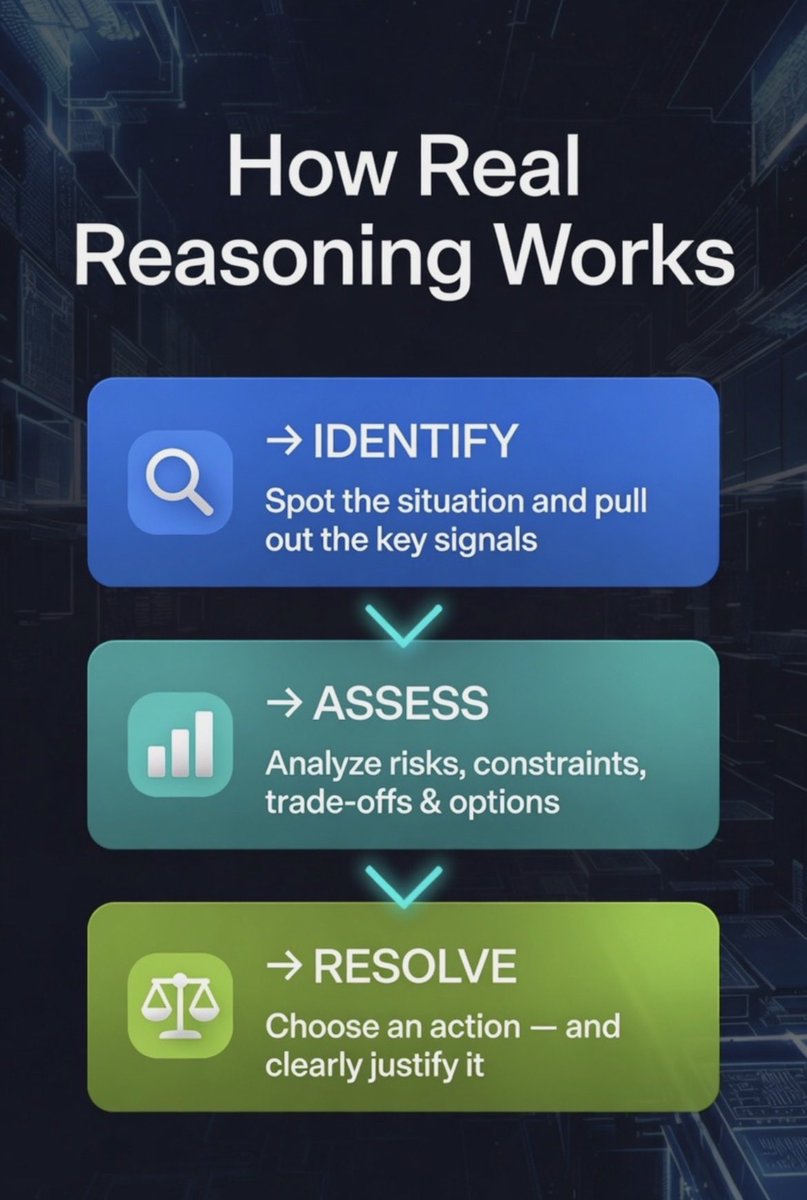
Most AI “reasoning” isn’t reasoning at all.
It’s just statistical compression. Here’s how real decision-making actually works in reliable systems
1. Identify
Spot the situation and pull out the key signals.
2. Assess
Analyze risks, constraints, trade-offs, and options.
3. Resolve
Choose an action — and clearly justify it.
Today’s LLMs try to mash all three steps into ONE forward pass.
It feels magical.
But it’s a black box.
Speed? Massive win.
Accountability, traceability & safety? Big loss.
The strongest AI systems today (advanced agents, thinking-style models, production-grade setups) keep these stages deliberately separate. Result:
→ Debuggable
→ Auditable
→ Trustworthy
This is what separates toy demos from systems you can actually bet your company (or life) on.
Do you want your AI to be fast… or actually reliable? Quote RT with your take #AI #Reasoning #AgenticAI #xAI
43
May 12
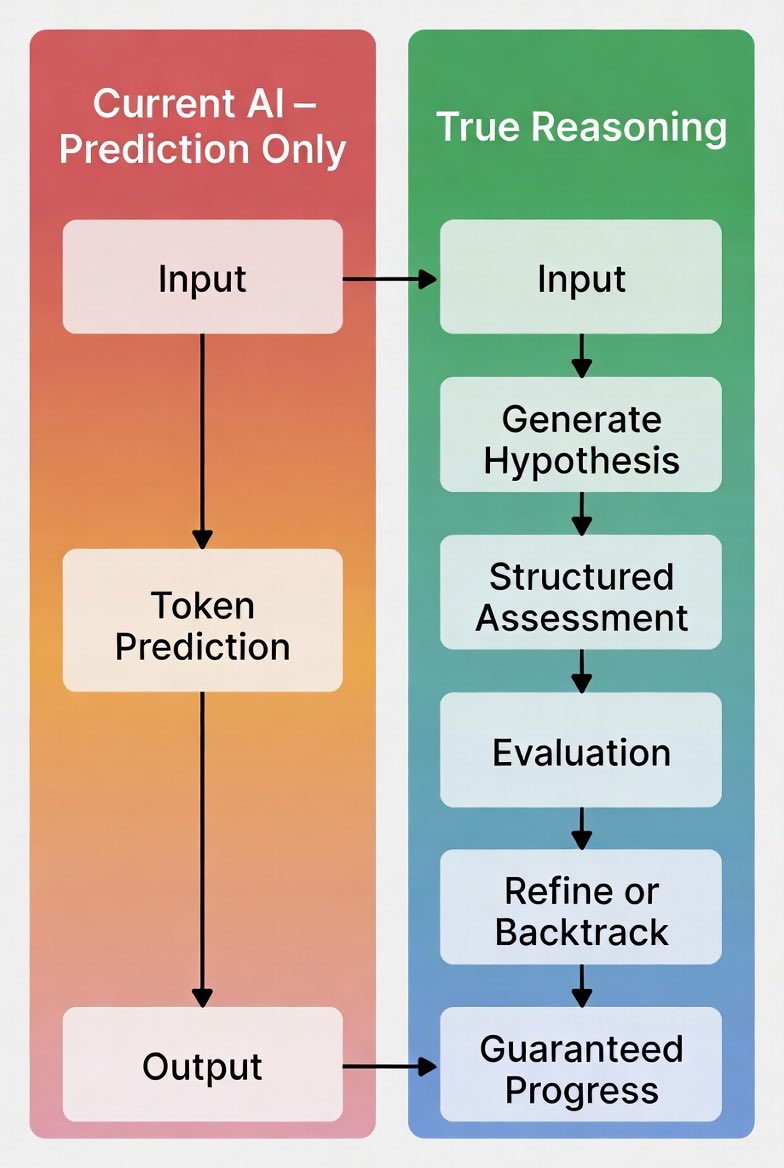
The uncomfortable truth about today’s AI:
Most models jump straight from input → output.
No assessment phase.
No guaranteed progress.
No real reasoning.
They’re just extremely good predictors.
1
70
May 12
This is why we still see confident hallucinations, brittle agents, and systems that sound smart but fail when it matters.
We’re optimizing for fluency, not reliability.
1
42
May 12
So the real question:
Is test-time compute process supervision enough… or do we need a deeper architectural shift?
What do you think?
41
May 11
The first step in intelligence is not reasoning.
It is identification.
1
50
May 11
Poor identification guarantees poor decisions.
This is one reason many AI systems fail in dynamic environments.
1
33
May 11
They compress:
•detection
•reasoning
•action
into one probabilistic process.
Structured AI systems separate these stages explicitly. That separation is critical for accountability and control.
41