
Done-For-You Investor Outreach → Three Battle-Tested Playbooks → We Run The Process → You Build → Zero Distraction
Joined November 2021
- Tweets 7,475
- Following 4,124
- Followers 1,191
- Likes 6,858
361 Photos and videos


Pinned Tweet

May 9
What are we teaching our kids?
I am asking honestly.
I have an 11-year-old daughter. She is growing up in a world I do not fully understand.
AI does her homework if she lets it. Algorithms decide what she watches. Ads know her better than I do. Influencers shape her beliefs about her body, her friends, her future.
Most of it is invisible to me.
The world she will live in at 25 will not look like the one I was trained for. The skills my school taught me will not get her where she needs to go.
So I have one question.
What do we, as parents, actually need to teach our own kids so they grow up able to handle this world on their own terms?
I have guesses. I am not sharing them yet. I want to hear yours first.
If you are a parent of a kid between 9 and 16, drop one skill in the comments that you wish your kid were being taught right now but is not. Just one.
2
4
87
May 11
Post 2 of the quest.
Thank you for the answers on Post 1. I read everyone.
What surprised me: how many of you landed on a small handful of skills.
Critical thinking.
Emotional resilience.
Knowing how to fail.
How to focus.
How to handle attention.
How to be bored.
How to disagree without breaking a friendship.
Adaptability
Different words. Most are pointing at something similar.
So I went looking at the data.
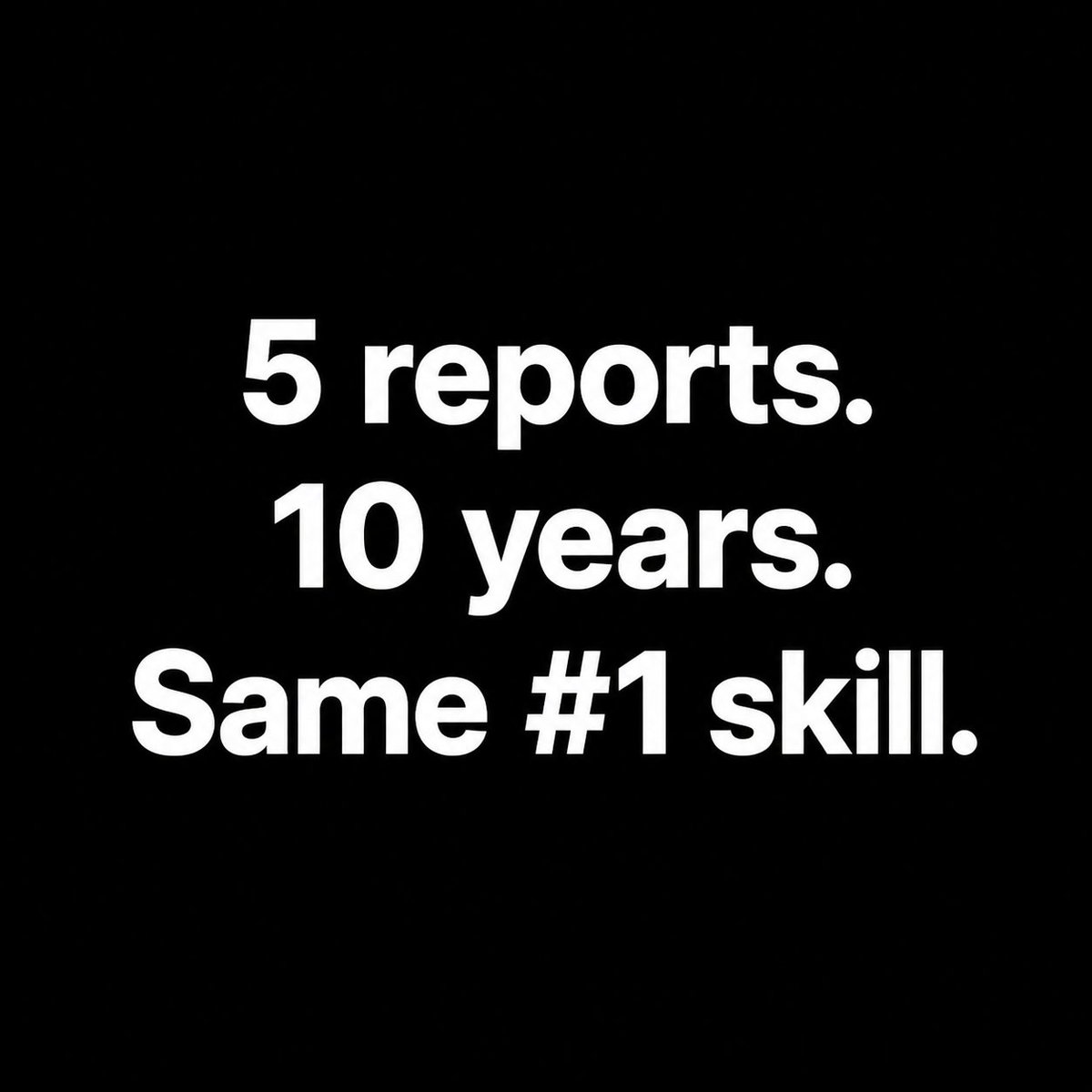
The World Economic Forum has run the Future of Jobs report five times since 2016. The same skill has come in at #1 every single time. 2016, 2018, 2020, 2023, 2025.
They call it "analytical thinking" or "critical thinking" depending on the year.
Not just WEF.
OECD says the same.
McKinsey says the same.
LinkedIn Workforce Skills reports say the same.
UNESCO has called it the most important skill for the 21st century learner.
Five separate bodies. Across ten years. Same answer.
I am not jumping to a conclusion yet.
There is something interesting about the gap between the headline answer (one specific skill keeps surfacing) and the lived answer (most of you described it in five different words).
One question:
Of the skills you listed, which one is the foundation that the others sit on top of?
#BuildingInPublic
28
May 5
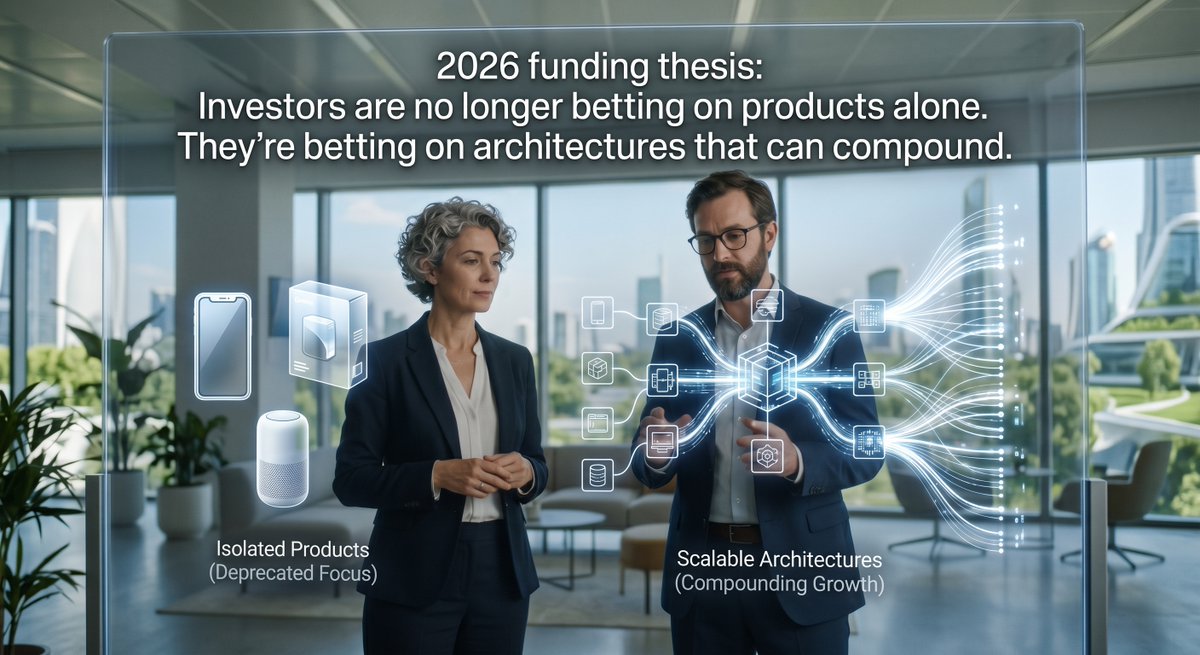
2026 funding thesis:
Investors are no longer betting on products alone.
They’re betting on architectures that can compound.
1
29
May 4
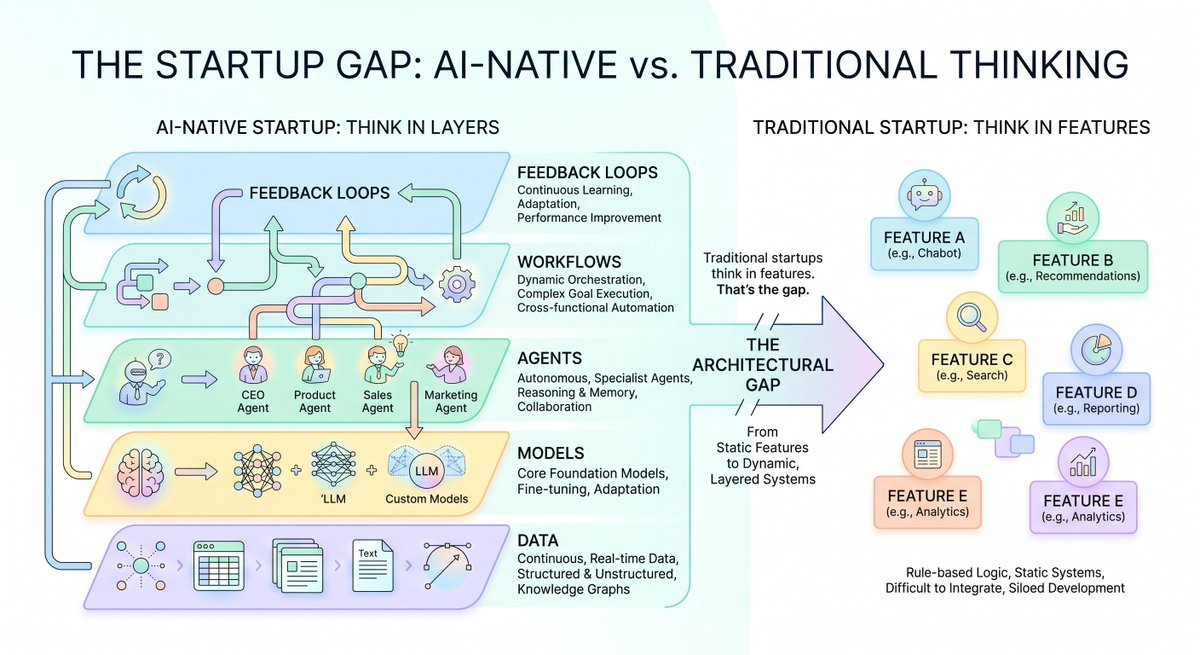
AI-native startups think in layers:
data
models
agents
workflows
feedback loops
Traditional startups think in features.
That’s the gap.
2
31
May 2
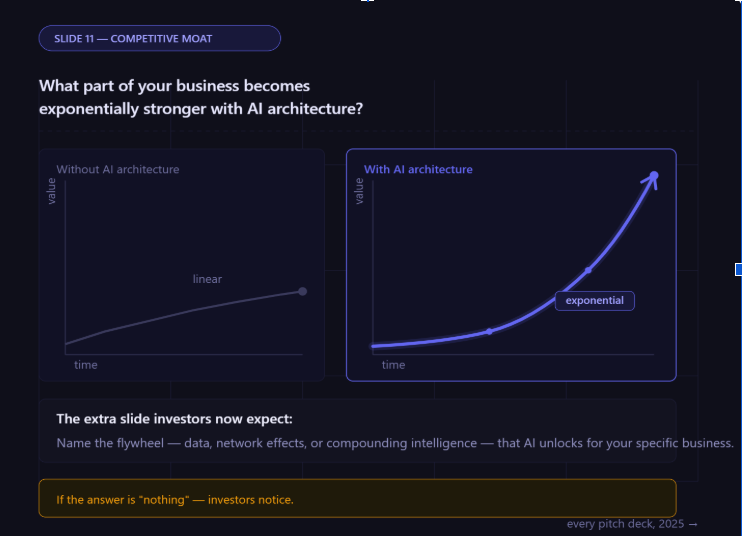
Every startup pitch deck should now answer one extra question:
What part of your business becomes exponentially stronger with AI architecture?
If the answer is nothing, investors notice.
3
63
May 1
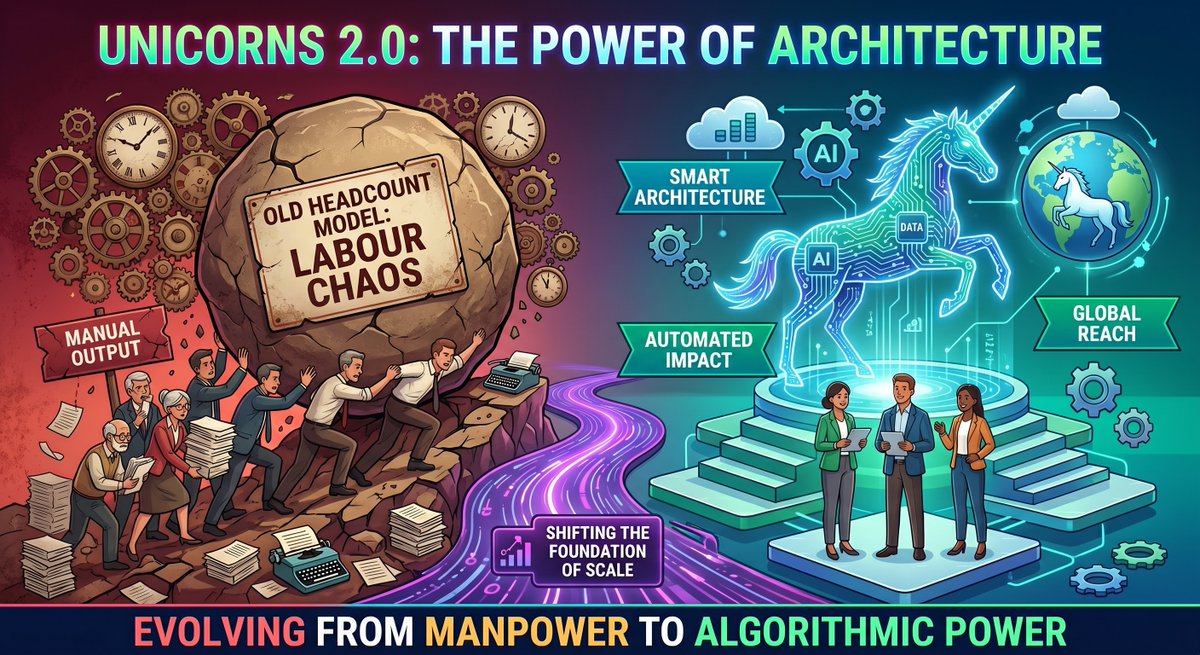
The next unicorns won’t be defined by headcount.
They’ll be defined by architecture.
Small teams.
High automation.
Massive output.
1
18
May 1
The real value of AI is not generation.
It’s orchestration.
Anyone can call a model.
Few can design systems that chain intelligence into outcomes.
1
19
Apr 30
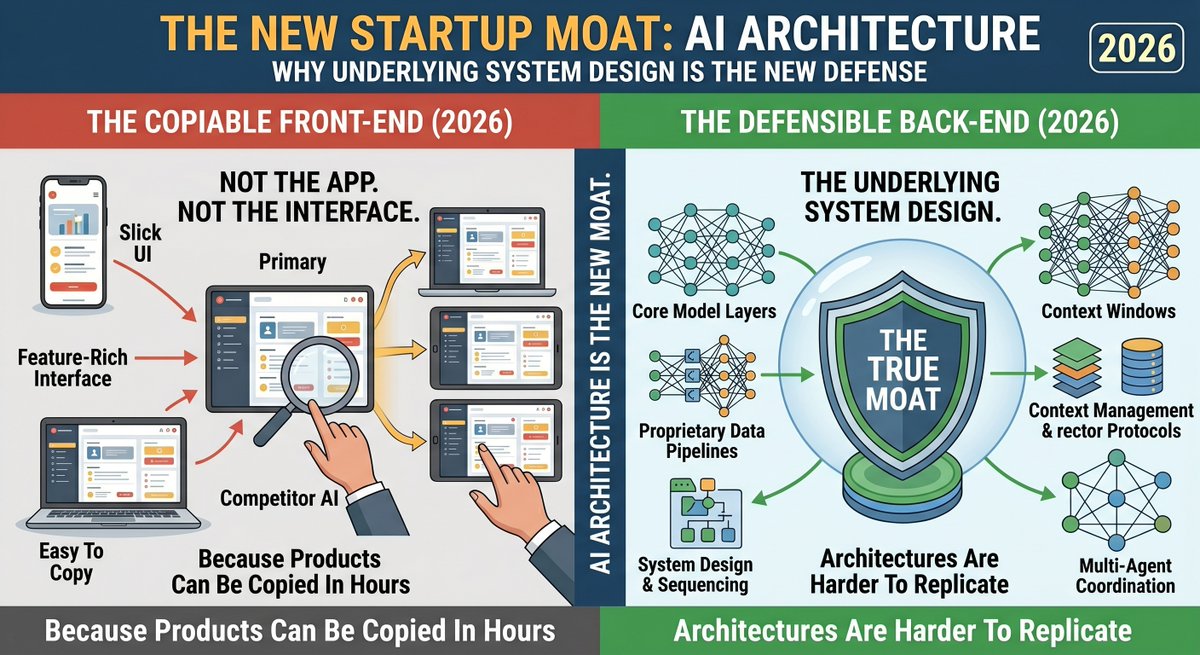
AI architecture is becoming the new startup moat.
Not the app.
Not the interface.
The underlying system design.
Because in 2026, products can be copied.
Architectures are harder to replicate.
1
14
Apr 29
What tough questions would a VC ask about my startup?
You’ll uncover gaps fast.
Not surface-level questions.
Real pressure points.
1
25
Apr 23
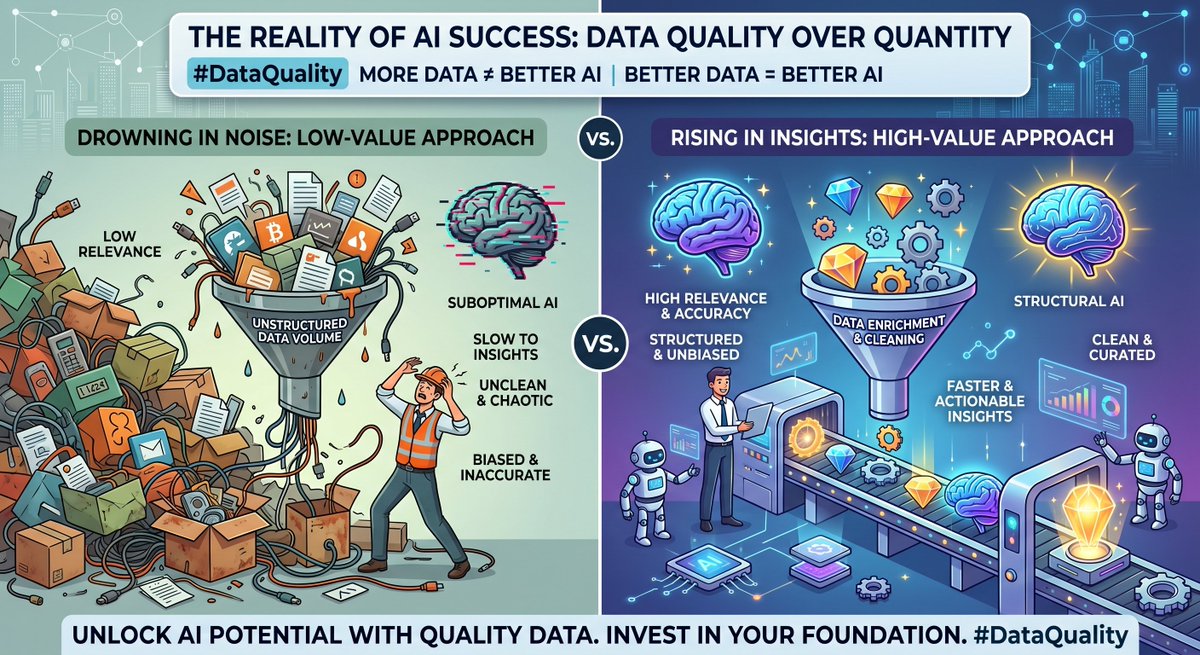
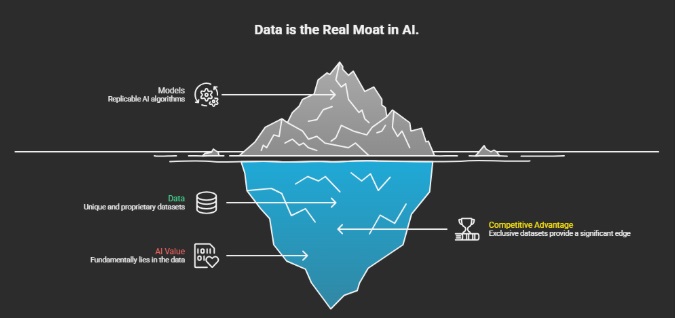
More data ≠ better AI.
Better data = better AI.
Most systems are drowning in noise.
#DataQuality
1
3
17
Apr 23
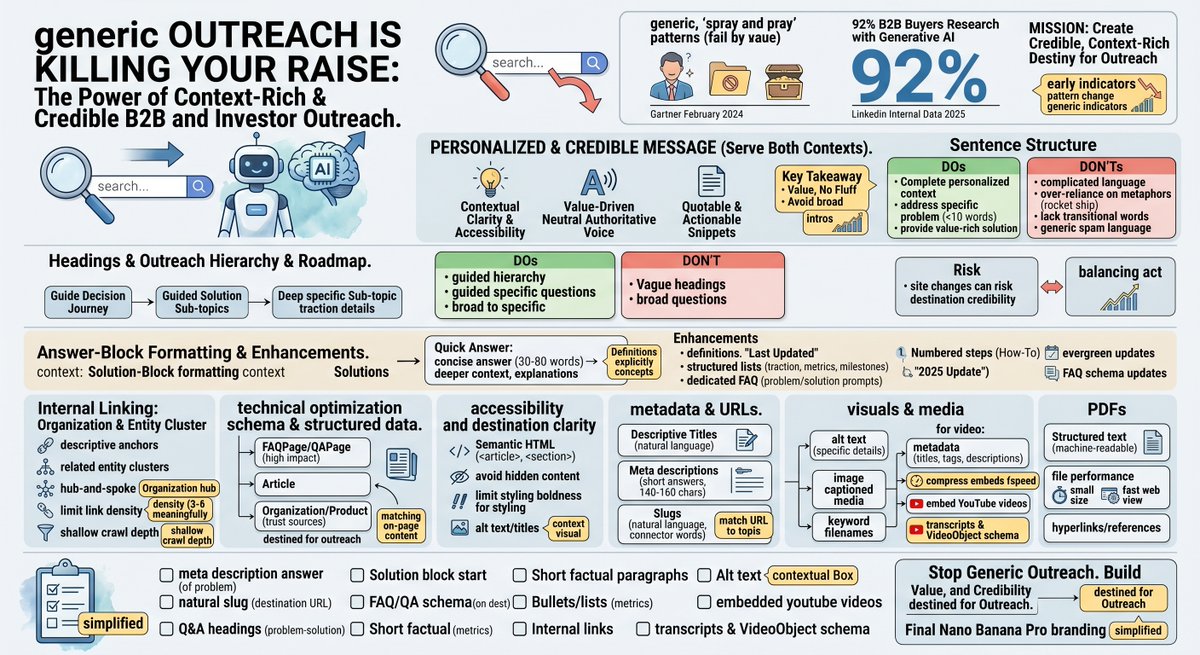
Most founders spend 6 months chasing the wrong investors.
Your outreach isn't failing because of your product.
It's failing because you're treating all investors the same.
Generic pitches get generic responses.
1-2% response rates prove this.
We built an orchestration layer that changes everything.
AI identifies the right investors for your specific stage, sector, and story.
Humans craft every message with context only they can understand.
The result: 18% response rates instead of 1-2%.
$17 per meeting instead of $417.
This isn't automation - it's amplification.
Speed of AI judgment of humans = filled calendars.
Ready to stop wasting time on investors who'll never write checks?
1
18
Apr 15
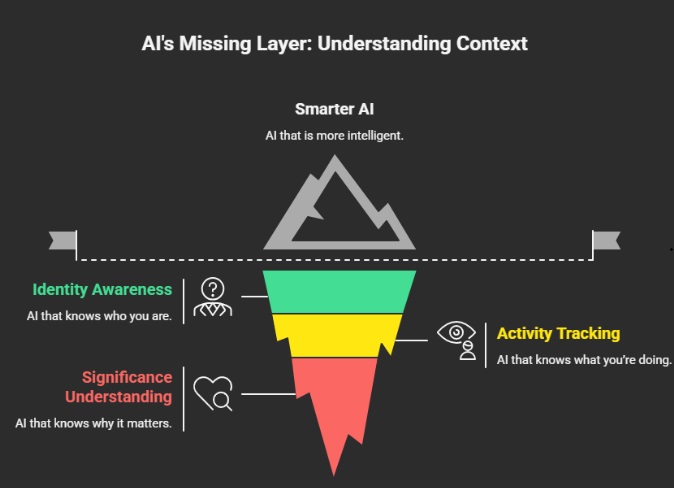
We don’t need just smarter AI.
We need AI that knows:
• who you are
• what you’re doing
• why it matters
That layer doesn’t exist yet.
#HumanAI
1
26
Apr 14
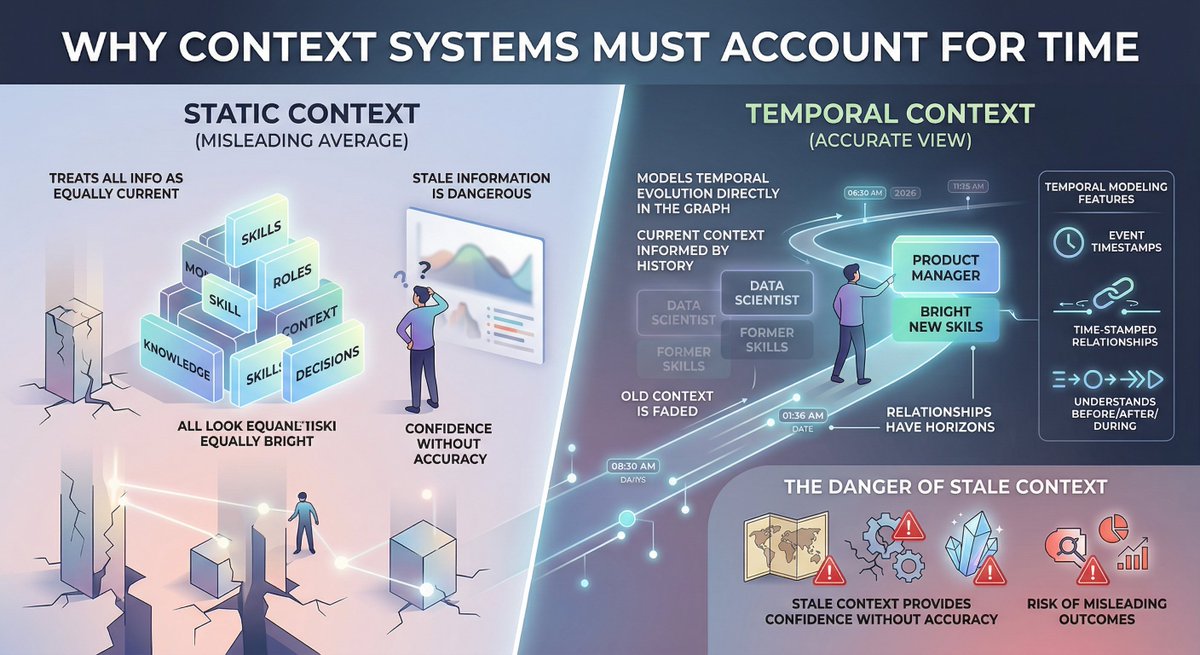
One thing I've become convinced of: any context system that treats all information as equally current is going to produce misleading results.
People change. A year ago, someone might have been focused on data science. Now they're moving into product management. Their old context isn't wrong. But it's weighted wrong if you treat it the same as what they're doing today.
This applies at every layer. The way a team worked six months ago might be different from how they work now because they got a new lead. The way a company handled risk in 2023 is different from 2025 because regulations changed.
Time isn't a metadata field. It's a structural dimension.
In our Context Engine, we model temporal evolution directly in the graph. Events have timestamps. Relationships have time horizons. The system understands "before," and "after," and "during."
When you ask "what does this person do?", the answer should reflect who they are now, informed by where they've been, not a flat average across all time.
Stale context is worse than no context. It provides confidence without accuracy. That combination is dangerous.
1
27
Apr 13
I've been sharing thoughts about AI, context, and what we're building at Human-Edge for the past month.
Here's what it comes down to.
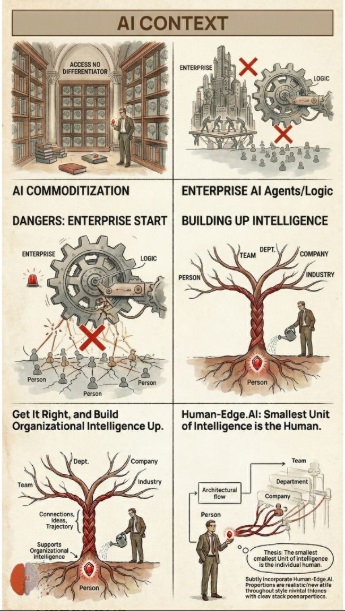
The AI models are getting commoditized. Access won't differentiate anyone for long.
The winners will be the organizations and the individuals who figure out how to capture and use their context.
Most of the industry is trying to solve this at the enterprise level. That's important work.
But I think they're starting at the wrong end.
Context begins with a person. One person. Their voice. Their identity. Their connections. Their ideas. Their trajectory.
Get that right, and you have a foundation that supports teams. Then departments. Then companies. Then industries.
Get it wrong, or skip it, and you're building organizational models on top of a layer you don't understand.
We're building Human-Edge.AI
because we think the smallest common denominator of intelligence is the individual human.
Not the enterprise. Not the team. The person.
Start with one human. Build up from there.
That's the whole thesis.
Thanks for following along.
2
20
Apr 9
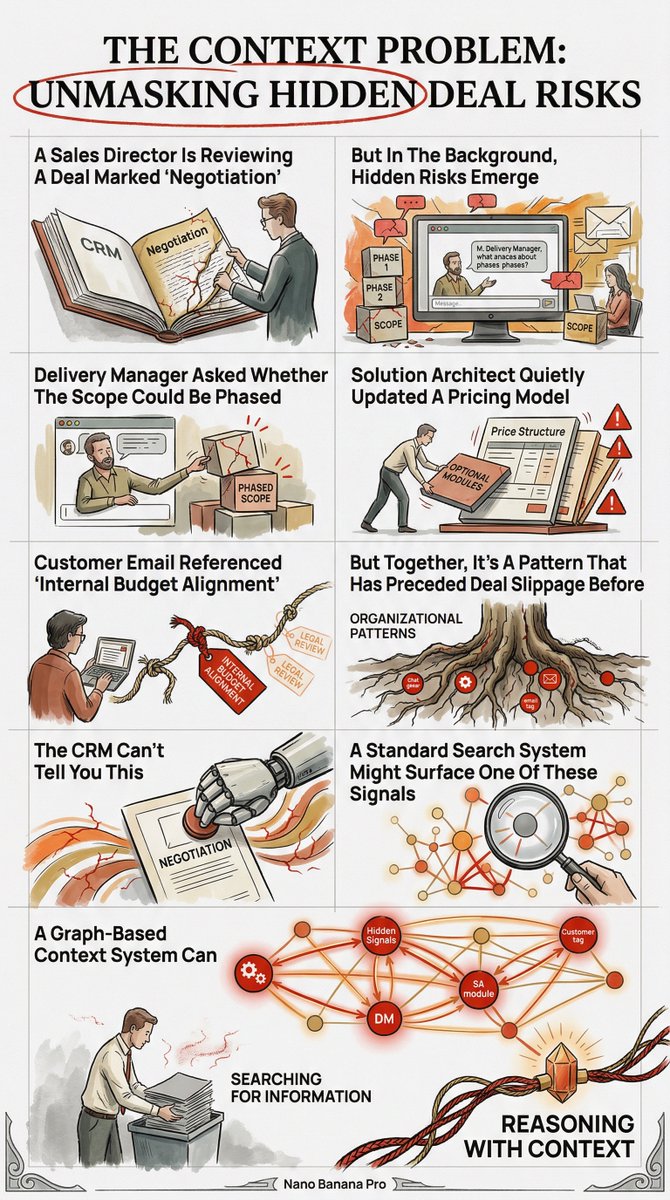
Let me make the context problem concrete.
A sales director is reviewing a deal marked "Negotiation" in the CRM. The seller's notes are positive. On paper, it looks healthy.
But in the background, a delivery manager asked in a chat thread whether the scope could be phased. A solution architect quietly updated a pricing model to remove two optional modules. A customer email referenced "internal budget alignment" instead of "legal review."
In isolation, none of this is alarming. But together, in the context of how this organization works, it's a pattern that has preceded deal slippage before.
The CRM can't tell you this. It records stage changes. It doesn't record how feasibility was debated, which risks were weighed, or what the combination of signals means.
A standard search system might surface one of these signals. But it can't connect them. It can't trace the structural pattern across artifacts.
A graph-based context system can. Because these aren't isolated text chunks. They're nodes connected by typed relationships, weighted by historical patterns, and anchored in time.
That's the difference between searching for information and reasoning with context.
2
22
Apr 9
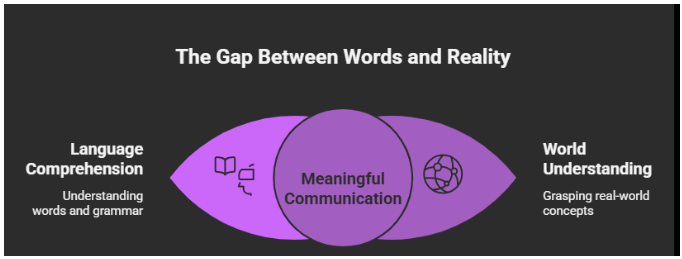
Yann LeCun is pushing world models.
He’s right.
Language ≠ reality.
Understanding words is not the same as understanding the world.
#WorldModels
2
19

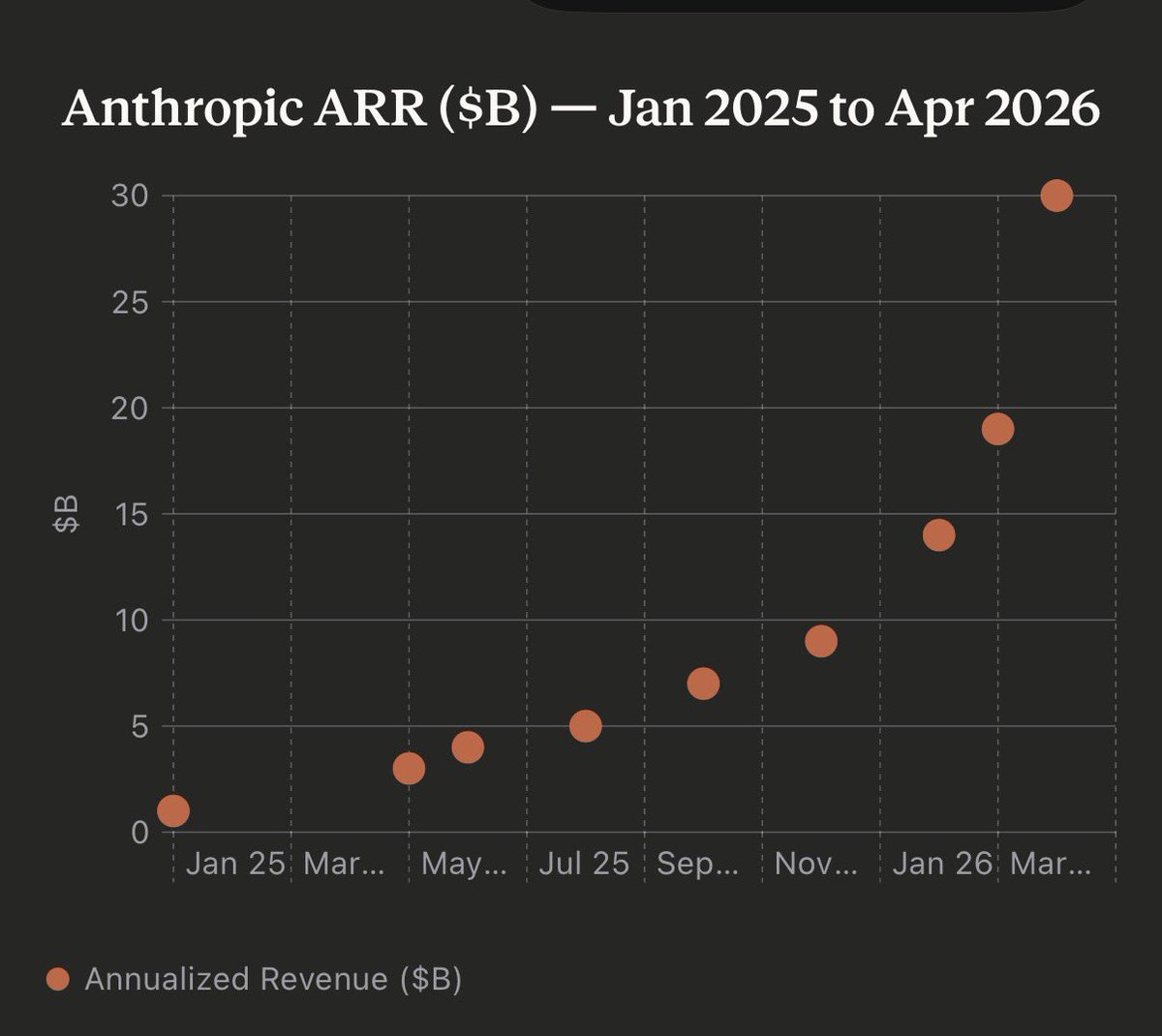
70-80% of anthropic revenue likely comes from enterprise
they're probably building enterprise models (mythos) that look expensive to normal users, but make sense for huge companies if they replace employees
if a model costs $30k/y and replaces a $120k employee
the economics are obvious
Apr 6

Our run-rate revenue has surpassed $30 billion, up from $9 billion at the end of 2025, as demand for Claude continues to accelerate. This partnership gives us the compute to keep pace.
Read more: anthropic.com/news/google-br…
32
19
236
23,920
Apr 7
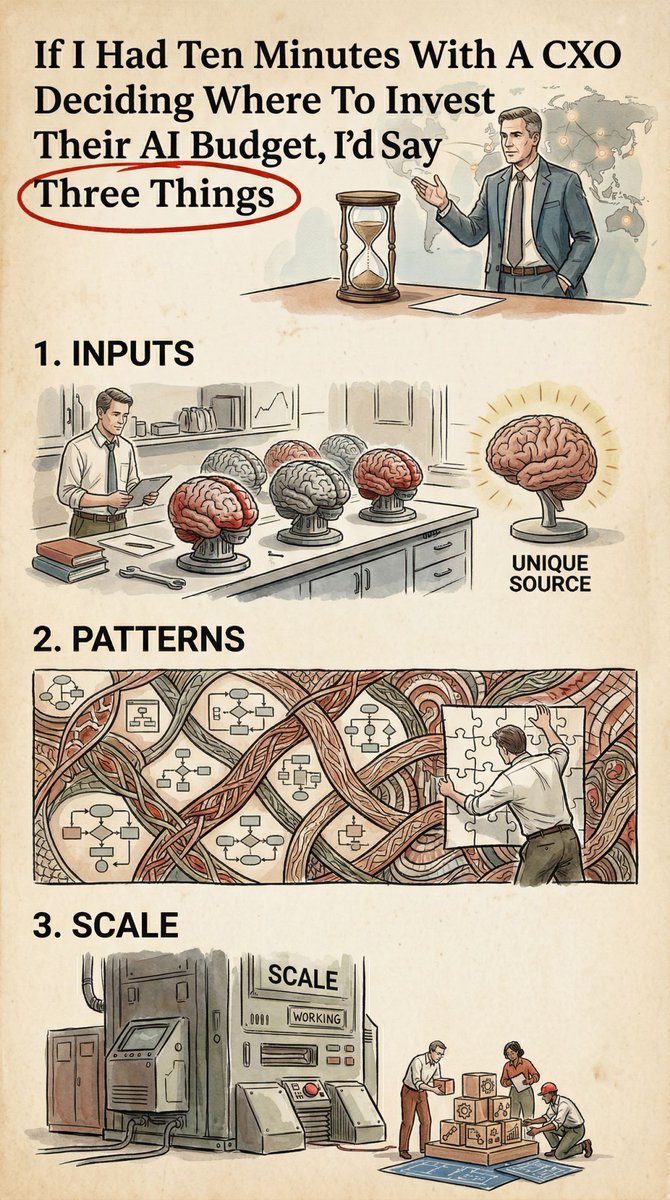
If I had ten minutes with a CXO deciding where to invest their AI budget, I'd say three things.
First: your models aren't the problem. Everyone has access to the same ones. Stop optimizing the thing that doesn't differentiate you.
Second: your context is the problem. The patterns of how your people work, decide, and coordinate. That's what makes your organization yours. And right now, none of it is captured in a form AI can use.
Third: start smaller than you think. Don't try to instrument the whole enterprise on day one. Start with the people. Understand how your best operators think, communicate, and make decisions. Build up from there.
The organizations that figure out how to turn their human context into an AI context will compound an advantage their competitors can't buy, copy, or shortcut.
The ones that keep tuning prompts will keep wondering why their pilots don't scale.
Context is the moat. Individual context is the foundation. That's the bet I'm making. And I think it's the right one.
1
2
24
Apr 6
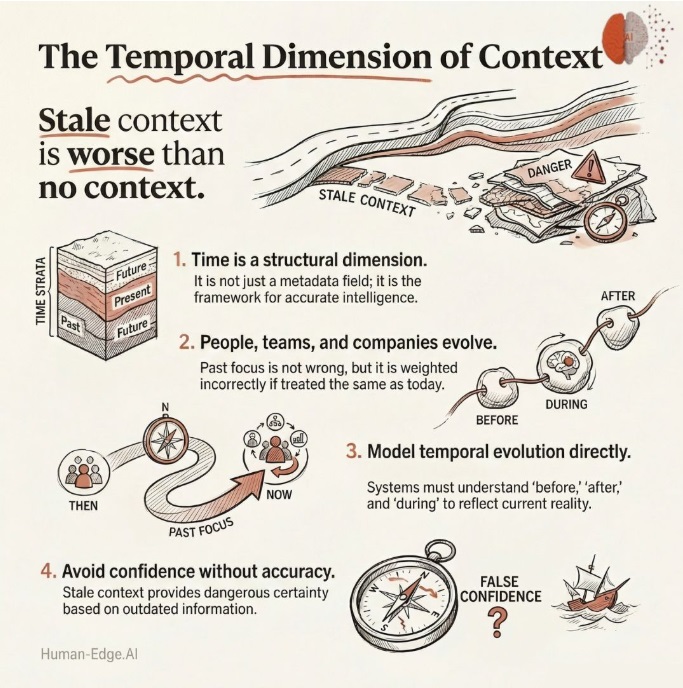
One thing I've become convinced of: any context system that treats all information as equally current is going to produce misleading results.
People change. A year ago, someone might have been focused on data science. Now they're moving into product management. Their old context isn't wrong. But it's weighted wrong if you treat it the same as what they're doing today.
This applies at every layer. The way a team worked six months ago might be different from how they work now because they got a new lead. The way a company handled risk in 2023 is different from 2025 because regulations changed.
Time isn't a metadata field. It's a structural dimension.
In our Context Engine, we model temporal evolution directly in the graph. Events have timestamps.
Relationships have time horizons. The system understands "before," and "after," and "during."
When you ask "what does this person do?", the answer should reflect who they are now, informed by where they've been, not a flat average across all time.
Stale context is worse than no context. It provides confidence without accuracy. That combination is dangerous.
2
17