
What's on mind - that's in the feed | Exploring Tech & AI thru the lens of logic and discussions |
Joined June 2025
- Tweets 1,106
- Following 71
- Followers 51
- Likes 1,290
Photos and videos
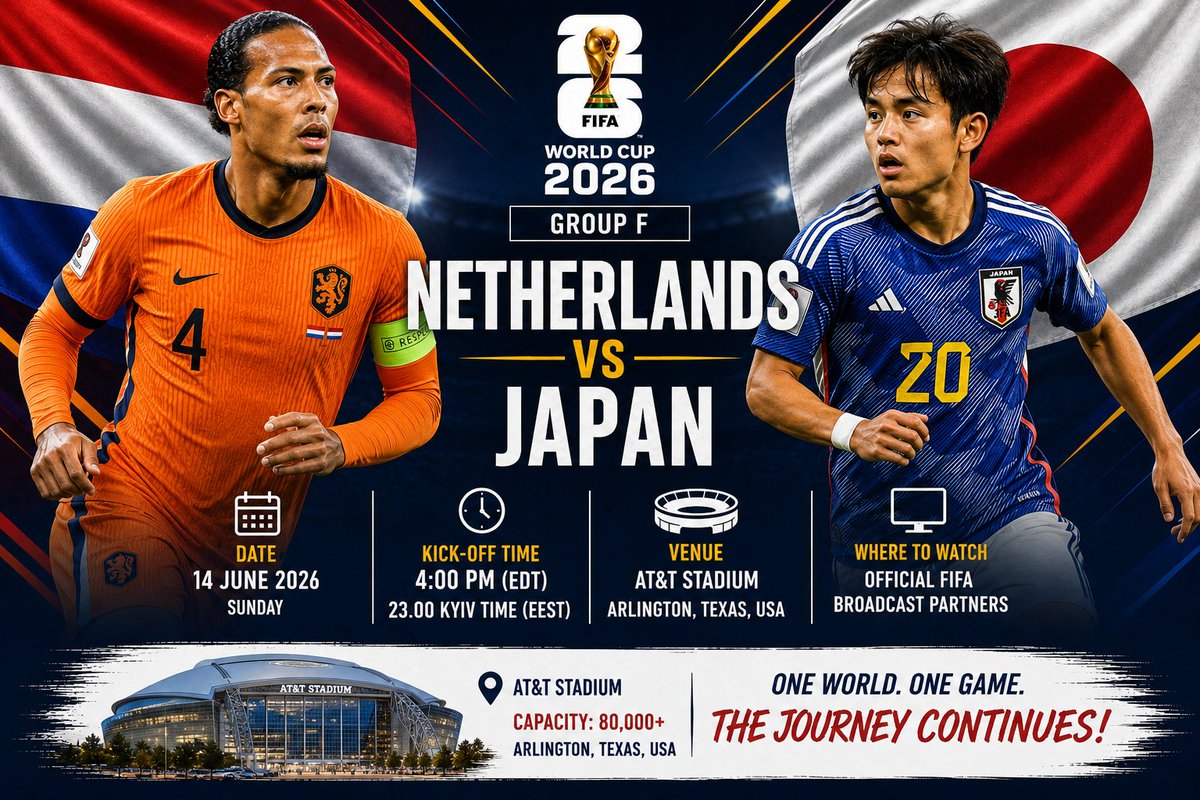
🇳🇱 NETHERLANDS - JAPAN 🇯🇵
Today in Arlington, on the grand stage of AT&T Stadium, two completely opposite football philosophies will clash!
"Oranje" under the leadership of Ronald Koeman are among the hidden favorites of the tournament.
Although the Netherlands have stopped one step short of the dream in the World Cup finals three times, there is maximum confidence in the team and Memphis Depay is fully ready to lead the attack.
With the conductor Frenkie de Jong in the center of the field and captain Virgil van Dijk in defense, the Europeans will rely on total ball control and individual skill.
But the opponent is one of the most dangerous "dark horses" in world football.
After the sensations at the 2022 World Cup, where Japan finished ahead of Spain and Germany, Hajime Moriyasu's team has become even more powerful.
The speedy Takefusa Kubo, Ritsu Doan and the prolific Ayase Ueda are ready to suffocate the favorite with their signature intensive pressing and tear them apart on lightning-fast counterattacks.
The history of head-to-head meetings is on the side of the Europeans - in three matches, the Netherlands have won twice with one draw. Their only game at the World Cups in 2010 ended in a hard-fought minimal 1:0 victory for "Oranje" thanks to a thunderous strike by Wesley Sneijder.
World experts cautiously estimate the chances of the Netherlands at 50–55%, but analysts from Racing Post and TalkSport unanimously warn of a possible sensation and the underestimation of the Asian team. Koeman himself openly admits that this Japan is a rock-solid, physically strong and well-organized machine.
In my opinion, the frantic pressing of the Japanese will create a lot of problems for the Europeans, but the colossal experience of Van Dijk and Gakpo will eventually take its toll. I expect a very tight, fierce game.
My prediction is a hard-fought, pragmatic victory for the Netherlands with a score of 2:1. However, if the Samurai score first, the analysts' logic will go right out the window.
And what do you think? Will Japan's iron discipline be able to stop the Dutch total football, or will the class of the Europeans confirm the status of the favorite? Write your thoughts and the exact score in the comments 👇
2
8
60

Jun 13
If you don't score – they score against you
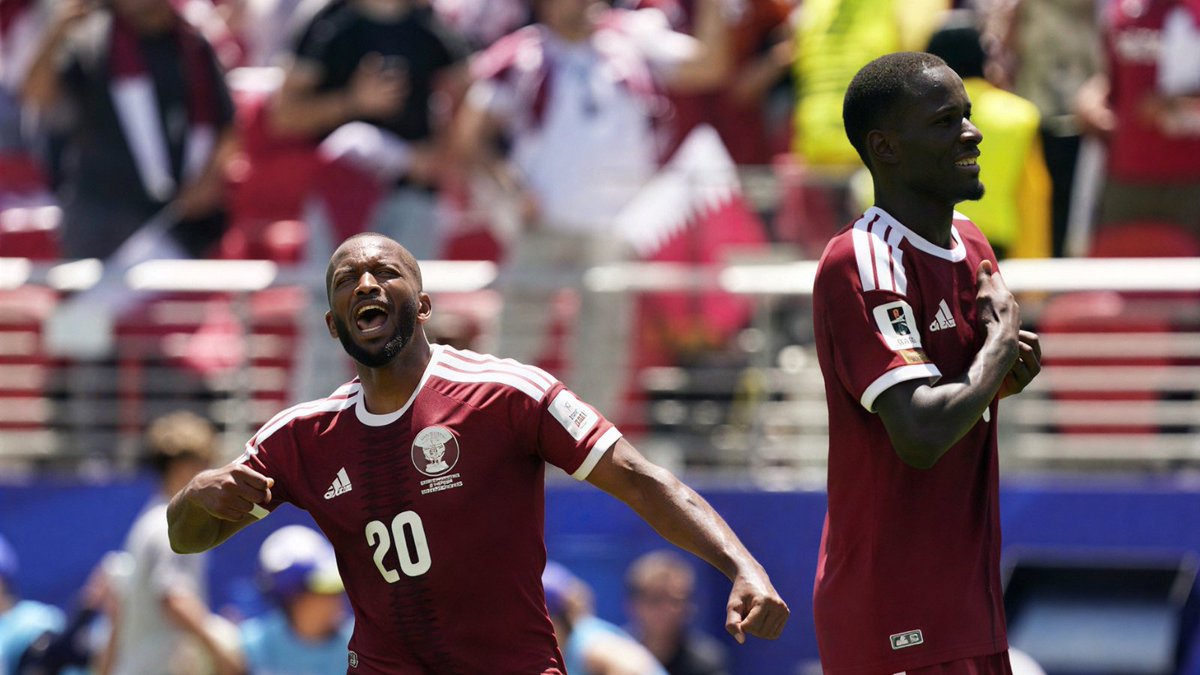
Group B underdogs Qatar were held to a sensational 1:1 draw by group favourites Switzerland.
Despite dominating the field after Embolo's early penalty, the Swiss were never able to remove all questions about the game and end the game with a victory.
Julen Lopetegui’s side defended heroically and waited for their one true chance.
The stadium erupted in applause in the 94th minute when Boualem Khoukhi scored a dramatic equaliser to secure a historic 1:1 draw for his team.
My sincere condolences to everyone who bet on a Switzerland win today, and congratulations to those who believed in Qatar - I think you just cashed in big time!
2
12
81
Jun 13
The development of AI requires more than just English.
AI requires living voices, unique cultures and local context.
To solve this problem, @StoryProtocol in partnership with Poseidon launched Numo -decentralized platform that fills the gap between local languages and data for AI training.
With Numo, your voice and speech become a valuable IP asset.
By making your contribution, you help create inclusive AI and have the opportunity to receive rewards.
Reminder - Numo is available for speakers of the following languages:
🇵🇭 Filipino
🇮🇩 Indonesian
🇲🇾 Malay
Your voice matters. Your voice helps shape AI. Your contribution builds the future.
4
21
223
Jun 13
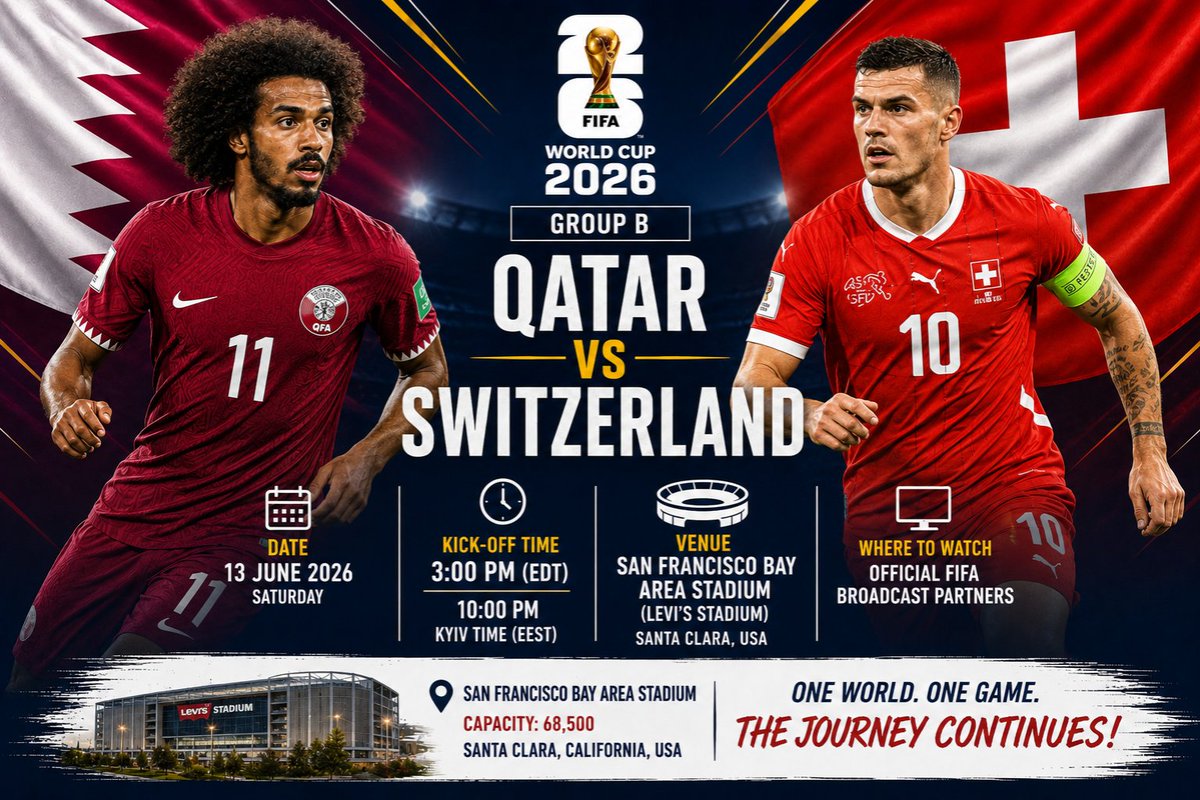
🇶🇦 QATAR - SWITZERLAND 🇨🇭
Tonight, the national teams of Qatar and Switzerland will meet on the field of the San Francisco Bay Arena.
Although the sign looks intriguing, the world's leading experts and analytical simulations unanimously call this match one of the most unequal in the first round. They estimate the chances of the Europeans to win at a whopping 78%.
After Qatar's historic failure at the home World Cup 2022, where they became the first hosts to lose absolutely all matches in the group, the football community sees a huge difference in class between the teams.
The Swiss team, led by Granit Xhaka, embodies reinforced concrete stabilityand has not known defeats in official matches for a very long time, so analysts predict an easy three points for the Europeans at the start of the campaign.
However, there is one hidden psychological nuance in this duel that forces the favorites not to relax prematurely. Although Qatar is considered a deep underdog in the match, it still arrived in the status of the current two-time Asian champion and there is an amazing fact in their common history. In the only face-to-face meeting of these teams in 2018, it was Qatar that shocked the football world, minimally beating the Swiss with a score of 1:0 thanks to a goal by Akram Afif.
Of course, today there will be a completely different level of concentration. I think that Switzerland will dominate possession ball and will clamp the opponent, while the pragmatic Qatar under the leadership of Julen Lopetegui, will be forced to play a low defensive block and rely exclusively on counterattacks.
In my opinion, the European experience of Xhaka and Akanji will take its toll, so I expect a confident victory for Switzerland with a score of 2:0 or 3:0.
And what do you think, will Qatar be able to create a miracle against logic, or will the iron Swiss machine confirm its status as the undisputed favorite? Write your thoughts in the comments 👇
1
10
63
Jun 12
Huge congratulations to the team and the entire @KASTxyz community on reaching the incredible milestone of 65,000 followers on 𝕏!
You are confidently building the future of finance based on stablecoins.
Such rapid growth - a true testament to how important and in-demand your solutions are.
Keep gaining momentum and reach new heights! Only forward!
10
26
263
Jun 12
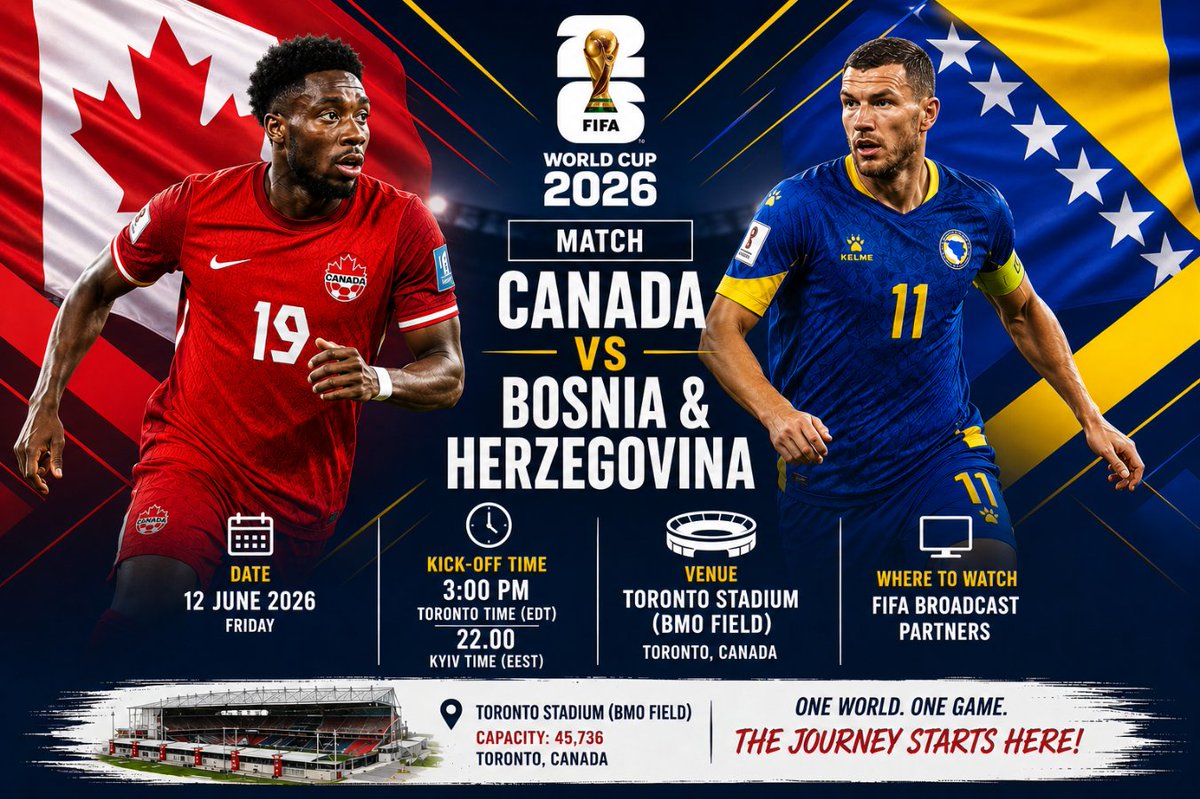
🇨🇦 CANADA - BOSNIA & HERZEGOVINA 🇧🇦
Today in Toronto, the first-ever men's World Cup match on Canadian soil kicks off!
"Les Rouges" under the leadership of Jesse Marsch have not known defeat in 2026 (8 matches without a loss!). Even without the injured Alphonso Davies, the hosts are aiming for their first-ever points in the World Cup!
But the opponent is extremely tough. The Bosnians are the real drama kings, having reached this stage by beating Italy on penalties. Edin Dzeko, 40, is ready to lead his team to another sensation.
With Switzerland being the clear favourites in Group B, the fate of the play-off spot is essentially decided today on the BMO pitch. Can't give in to anyone!
My prediction is a hard-fought, emotional victory for Canada thanks to home advantage - 2:1.
And what is your prediction for this match? Write in the comments 👇
3
9
81
Jun 11
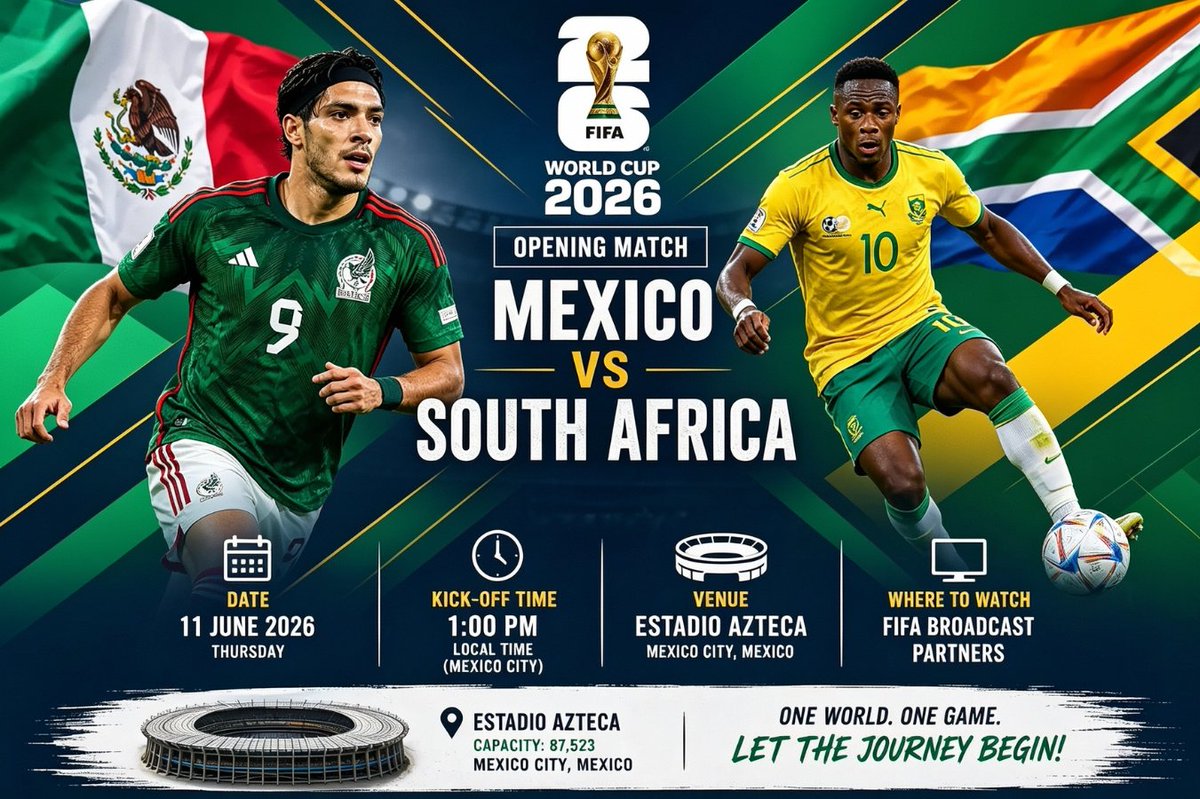
⚽️ In just a few hours, the 2026 World Cup will kick off!
Mexico opens the tournament against South Africa at the legendary "Azteca" in front of 87 thousand of its fans.
But there is one detail that grabs me much more than the match itself.
2010. June 11. Mexico opens the World Cup. The coach is Javier Aguirre. In Group H, Spain is playing as the reigning European champion. The outcome of that tournament is well known to you.
2026. June 11. Mexico opens the World Cup. The coach is Javier Aguirre. And in Group H... again Spain, who arrived as the reigning European champion!
I'm not saying it means anything. But football loves such things.
As for the match itself, Aguirre is a staunch pragmatist who knows how to squeeze out results and build ironclad discipline.
Bafana Bafana will definitely put up a fight, they are fast and tough, but the crazy atmosphere of "Azteca" and the experience of the Mexican coach should do the trick.
In my opinion, Mexico, thanks to their character, will win by a minimal margin - something like 1:0 or 2:1.
Well and as for Spain in Group H worth watching as closely as possible.
What do you think about this, is FIFA following the old playbook again or is it just a beautiful coincidence? Write in the comments 👇
9
22
417
Jun 11
Have you caught to the latest episode of the podcast from @IBM - Making Data Simple?
In it, @devrelius, CPO of the @StoryProtocol project, raised a fundamental question: AI cannot develop in isolation from the people who create the "fuel" for it.
The first wave of LLMs was trained on the "free" internet - public articles, code, books and images collected without the direct permission of the authors. However, the industry has now hit two barriers:
▫️ Exhaustion of quality data. Publicly available data on the internet is running out. To improve models, new, high-quality, highly specialized knowledge is needed (medical research, current analysis, fresh creative content).
▫️ Creators' resistance. Authors, journalists, artists and programmers are increasingly restricting their content from AI search bots (through robots.txt files, lawsuits, or paywalls) because they do not want their work to be replaced for free by their own labor.
If people stop sharing their knowledge in the open space, AI models will start learning from content generated by other AIs, leading to "model collapse" (degradation of response quality).
To solve this problem, Andrea Muttoni and Story propose creating a transparent infrastructure layer between AI developers and content creators. It is based on three elements:
1⃣ Transparency. Creators need to be able to clearly see which model is using their data, when and for what purpose. Right now, AI training is a black box.
2⃣ Attribution. The AI model must be able to clearly trace the origin of its knowledge. For example: "This medical conclusion is based on the research of doctor X" or "This style of imagery is based on the works of artist Y."
3⃣ Incentives. The most important economic factor. Creators should receive financial or other benefits when their data is used for training or generating responses. This transforms data from "chaotic junk" into a liquid asset.
Andrea Muttoni's position is that the era of "wild data grabbing" for AI is coming to an end. The next generation of technology requires a shift from exploiting human intelligence to partnering with it.
Only if AI developers offer transparent mechanisms for royalty payments and copyright protection will humanity continue to generate and provide quality knowledge for training future models.

3
10
99
Jun 10
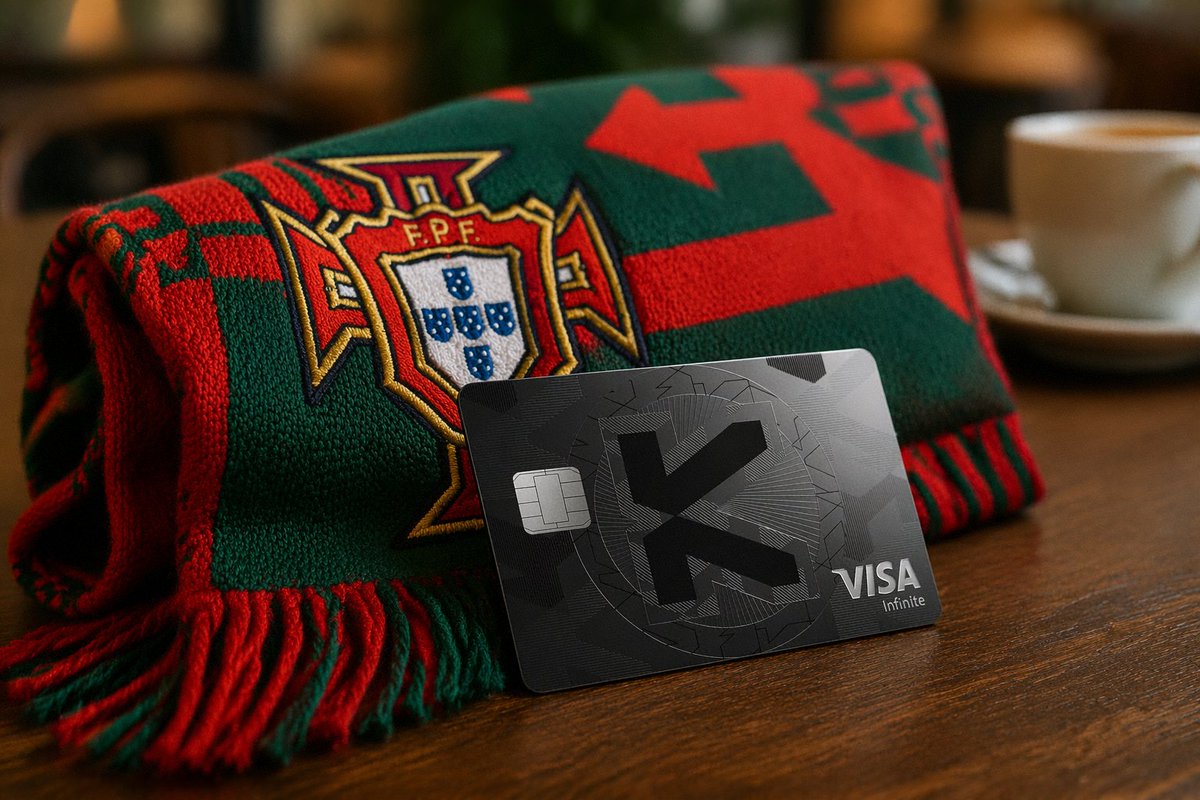
Preparing for the 2026 World Cup to the fullest!
Today I picked up the scarf of my favorite national team, Portugal, which I will be passionately rooting for.
Naturally, I bought it with my premium KAST Visa Infinite card.
I spent $25 and instantly received $0.50 cashback on my balance.
A small thing, but nice - every purchase with @KASTxyz returns real dollars back.
And who will you be cheering for at this World Cup?
14
34
352
Jun 10
⚽️ TOMORROW, June 11, the long-awaited 2026 FIFA World Cup will start!
This World Cup will definitely go down in history, because a completely new format awaits us.
For the first time, the World Cup will be hosted by three host countries at once: the USA, Mexico and Canada.
For the first time in history, the number of participating teams has been expanded to a record 48 national teams!
Bookmakers have already identified the main contenders for the trophy. Here are the current odds on the winner:
🇪🇸 Spain - 5.5
🇫🇷 France - 6.0
🏴 England - 7.5
🇧🇷 Brazil - 9.0
🇦🇷 Argentina - 10.0
🇵🇹 Portugal - 10.0
Personally, I will wholeheartedly support the Portuguese national team in this tournament! They have a really great team, an excellent coach, but my main motivation is Cristiano Ronaldo. I really want him to win this World Cup.
Ronaldo is a shining example of phenomenal work ethic, ironclad discipline and dedication to the cause over so many years. He deserves to lift this trophy above his head!
And who will you be cheering for in this World Cup? Who is your main favorite? Write in the comments 👇
4
16
162
Jun 9
Training data is the largest form of IP today
That's why Poseidon is built on @StoryProtocol
The goal - to create a critical layer of data for next-generation AI models
Legally clean, fast and high-quality
Jun 8

The internet was the first dataset.
What's next is being built now.
Meet @SPChinchali from @Psdnai↓
13
21
267
Jun 8
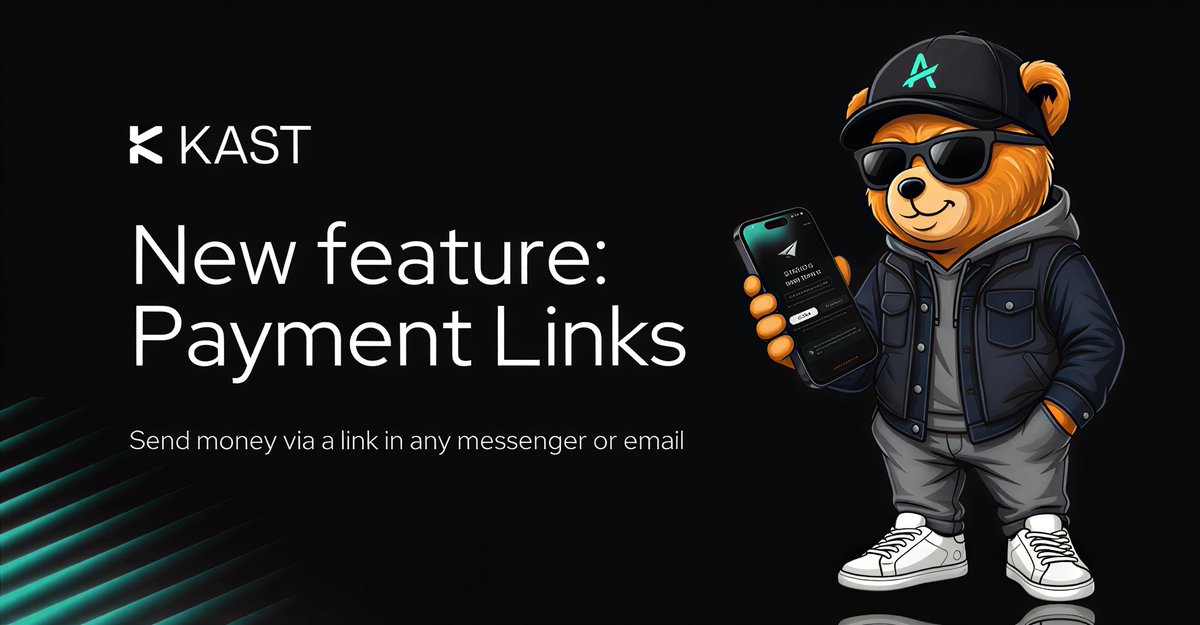
New feature from @KASTxyz
KAST launched Payment Links. Now users can send money to anyone by simply sharing a link in any messenger or via email.
You enter the KAST app, specify the amount in USD you want to send and the app generates a unique secure link.
The specified amount is immediately deducted from your available balance and reserved in the system, waiting to be collected.
You send this link to a person (via WhatsApp, Telegram, Viber, SMS, email, etc.). The recipient follows the link and takes the money into their KAST account.
No need to ask the person for card numbers, IBAN, or other complex data anymore. You just need to send a link.
If you send money to a person who is not registered in the KAST app at all, they will still be able to follow the link, create an account, complete the verification (KYC), and collect the money reserved for them.
When a new person registers using your payment link, it is automatically counted as a friend invitation. If she meets the platform's conditions, you both can receive a referral bonus.
Creating such a link for the sender is free and for the recipient, the crediting of money to the KAST balance is also free.
The links are one-time use. As long as the recipient has not claimed the money, you can cancel the link in the app at any time and the funds will be returned to your balance. Also, the link has an expiration date - if it is not used in time, the money will automatically be returned to the sender.
KAST emphasizes that such links should be treated like cash. Whoever has access to the link can take the money. Therefore, they should only be sent directly to the person they are intended for and not published in public access.
5
20
157
Jun 7
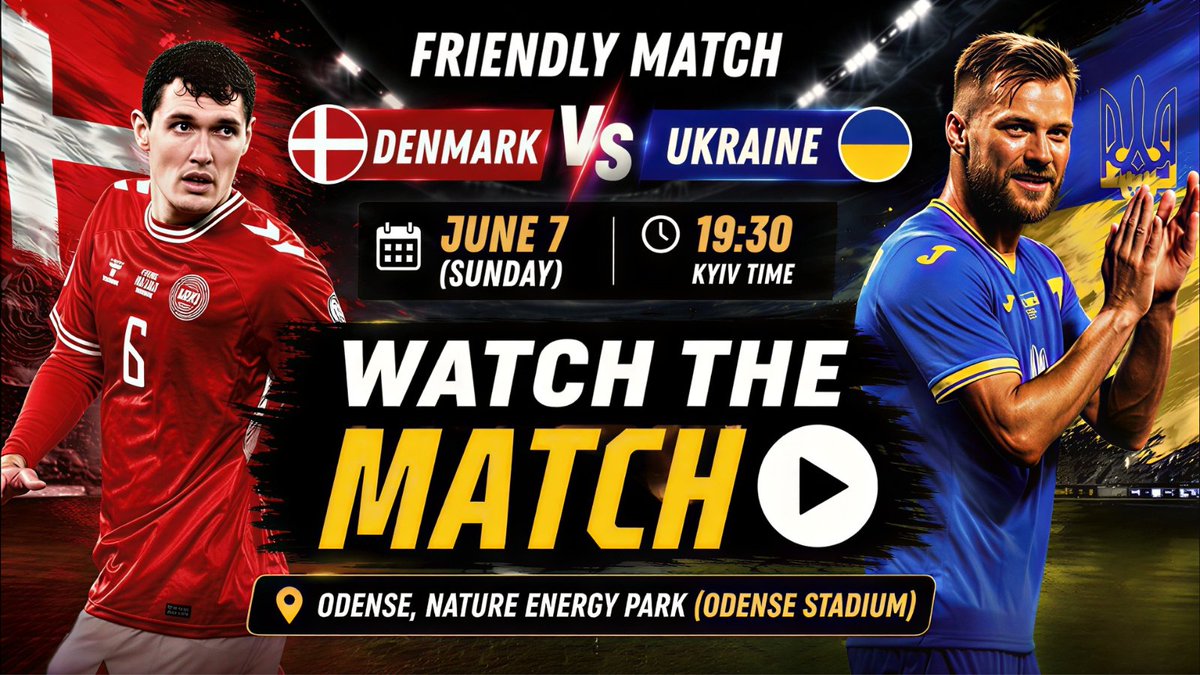
Today at 19:30 Kyiv time, the national team of Ukraine will take to the field at the "Nature Energy Park" stadium in Odense to play against one of the most stable teams in Europe - the national team of Denmark.
Despite the status of a friendly match, this game is of immense importance to our team.
After a dramatic World Cup qualifying round, where both teams, unfortunately, fell just short of the final stage, this match is the perfect platform for building a new team.
The coaching staff, led by Andrea Maldera, has a great opportunity to test the closest candidates for the starting lineup, experiment with new tactical schemes and develop connections without the pressure of the league table results.
The experience of Andriy Yarmolenko and the energy of our youth against the concrete defense of the Danes led by Andreas Christensen - this will be a spectacular confrontation!
Matches against Scandinavian teams always require maximum physical struggle and concentration on every inch of the field. Our guys are in for a tough away match, but the support of the blue-and-yellow stands (even near the screens) always gives them strength!
What do you think, what lineup will Maldera put out from the first minutes? Will we see experiments in the attack? Leave your options and predictions for the exact score in the comments! 👇
1
12
87
Jun 6
The final Demo Day of the Confidential Data Rails (CDR) hackathon has officially concluded, showcasing the incredible speed of development of the @StoryProtocol ecosystem.
The main thesis that drove the developers forward during this intensive week is that modern data marketplaces force users to permanently lose control over their information at the moment of its sale. The CDR technology is designed to return this control to the owners through programmable access conditions.
This week of intensive development revealed the raw reality of working with new technologies. Developers had to overcome unexpected obstacles, such as dealing with localhost CORS issues on the client side during the integration of IPFS. At the same time, the hackathon proved that in the era of AI, coding is transforming into a process of intelligently debugging generated code to the point of its full functionality. Practically every participant used AI as a powerful lever to accelerate development.
Due to the exceptionally high quality of the work and the minimal gap between participants, the initial prize pool was personally expanded by Story DevRel lead @jacobmtucker, and the number of winners increased from three to seven.
In the technical track, which focused on enhancing the protocol itself, the first place and $600 were awarded to the Litmus project by developer Blanco from South Korea. He created a content platform where encrypted data is stored on IPFS, and decryption keys are controlled directly by CDR validators. The main innovation of the project was the implementation of flexible AND-OR logic in access conditions, allowing the restriction of content distribution through a combination of several factors simultaneously (for example, token balance and NFT ownership).
Second place in the same track and $500 was awarded to the CDR Kit project by Chain Oracle. They addressed a fundamental pain point in the ecosystem by creating a comprehensive library of ready-made templates for quick CDR integration with Wagmi, Privy, and other tools, allowing developers to connect forms and access blocks with just one line of code.
The app track provided solutions with practical use cases for the real world. The absolute leader and winner of $700 was the Keyring project by developer Sagar, who participated solo. He developed a secure access management system for autonomous AI agents to secret API keys. Instead of transmitting raw data, the user creates a temporary on-chain permission, and decryption and operations occur within a trusted execution environment (TEE from Phala Cloud), so even the AI agent itself sees only the final result but not the key itself.
Second place and $500 went to the Nythera project team (developers Ranjeet and Surojit), who created a decentralized password and seed phrase manager in the form of a convenient browser extension. Their system uses CDR to manage access recovery rules, preventing secrets from being exposed on websites in plain text.
Third place and $500 went to the Confide project by TekDiverse - a platform for private web forms for HR and researchers. It protects data from leaks by encrypting all responses through CDR at the moment of submission, leaving the decryption possibility exclusively for the form creator.
The true revelation of the hackathon was the integration of CDR into the DeFi sector. Fourth place and $400 were awarded to the Sigmax project by developer AbdoViper from Egypt, who implemented a confidential copy trading platform. The system encrypts successful trading strategies of leaders through CDR, protecting them from being leaked through screenshots, and allows AI agents of subscribers to automatically duplicate trades on HyperLiquid in real-time.
Fifth place and $300 were awarded to the ZeroSight project, created by a team of developers, including Yilang. This is a private prediction market, which, unlike public analogs where bets are visible on-chain, fully encrypts the player's choice in the browser through CDR, protecting users from front-running, and the calculation of results and payouts are done automatically via Redstone oracles after the round closes.
Currently, the Confidential Data Rails technology is operating in testnet mode to gather feedback and improve the protocol. However, the official launch of CDR and the next big hackathon are planned in a few months. This upcoming event will allow developers to bring their encrypted dApps into the real world and attract their first real users.
Builders, keep refining your ideas, the next stop is a full release!
Jun 5

[CDR Hackathon] Demo Day! 🎉 x.com/i/broadcasts/1kKzDDopq…
7
17
246
Jun 5
What does your ideal financial stack look like?
For most remote workers and digital nomads, the daily routine often boils down to a simple algorithm: find a cozy café with stable Wi-Fi, order a good coffee and open the laptop. It's a global and free lifestyle, but it almost always comes with a local financial headache.
Constant conversion fees, restrictions on regional fintech apps, sudden card blocks due to "suspicious location changes," or daily quests to convert Web3 assets to fiat for mundane household expenses - all of this significantly distracts from real work.
Since @KASTxyz is building an ecosystem specifically to address these pain points, I am interested in learning about the real practical experiences of freelancers and travelers.
What is currently the biggest "bottleneck" in your financial stack (hidden fees, conversion, lack of adequate cashback, or geographical blocks)?
What features are critically important for you to fully address the issue of financial comfort?
Curious to hear how you solve these problems👇

4
14
152
Jun 4
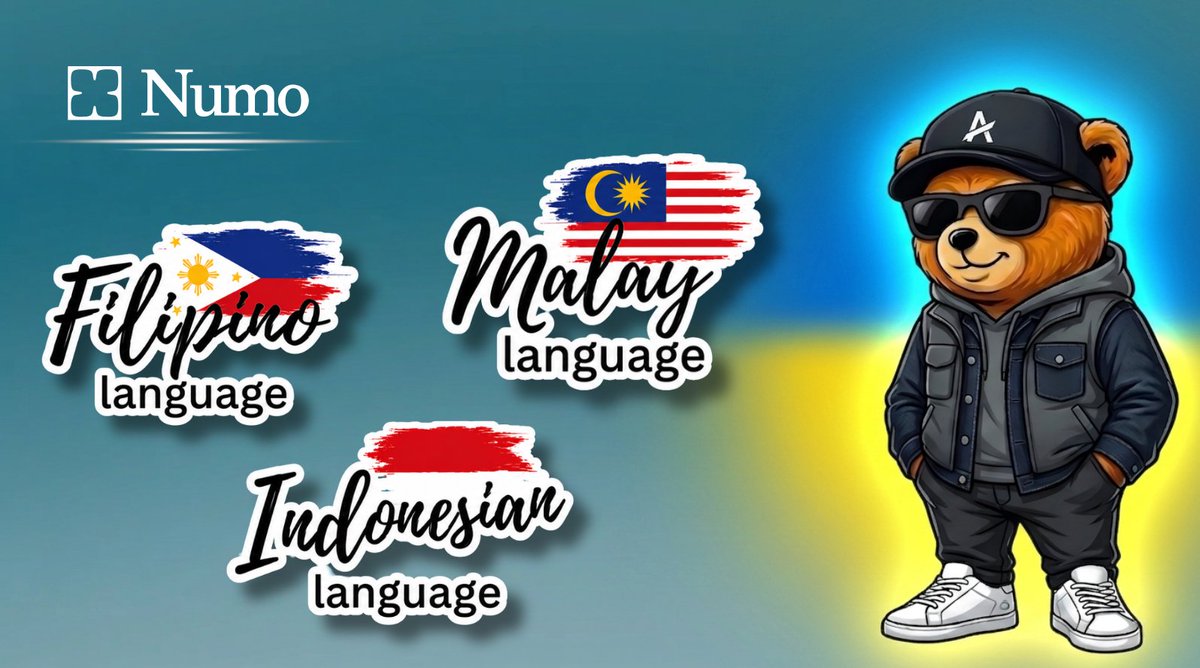
Having processed large language datasets from South Asia in the initial stages, Poseidon opened tasks for speakers of Malay, Indonesian and Filipino in the Numo app.
The logic of collecting unique voice data from native speakers is absolutely understandable. But as a Ukrainian author, I would very much like the Ukrainian language to be added to this list of infrastructurally important languages in the future.
Our local AI segment is rapidly developing and a high-quality, legally compliant voice data database is critically necessary for us.
Jun 3
Southeast Asia is one of the most mobile-first, multilingual regions in the world.
That matters for the future of voice AI.
Filipino, Indonesian, and Malay are now live on Numo.
4
9
155
Jun 2
Nikita Bier says that “Comments are one of the most important pillars of X.”
At the same time, X algorithms: “Oh, you replied to three friends too quickly? You must be a crypto bot. Get a shadow ban, human.”
Nikita, new video features are cool,, but how are we supposed to use them if the AI to fight bots sees active users as a virus?
These “pillars” are crumbling due to the excessive paranoia of the system. Fix false bans!
Jun 2

Commentary is one of the most important pillars of X. And sometimes the best way to share your thoughts is with video.
Today we're launching a whole new way to make them:
React with Video
Tap the repost button and start recording with green screen, split screen, or picture-in-picture.
Now available on iOS
1
3
94
Jun 1
The first day of summer!
The season of “sea, sun and no worries” is open!
Let's catch the wave this summer!
2
6
82