
Alchemist at @signalbynoise
Joined February 2024
- Tweets 13,455
- Following 375
- Followers 5,492
- Likes 54,664
1,771 Photos and videos









Pinned Tweet

Mar 23
5
3
24
6,377
17h
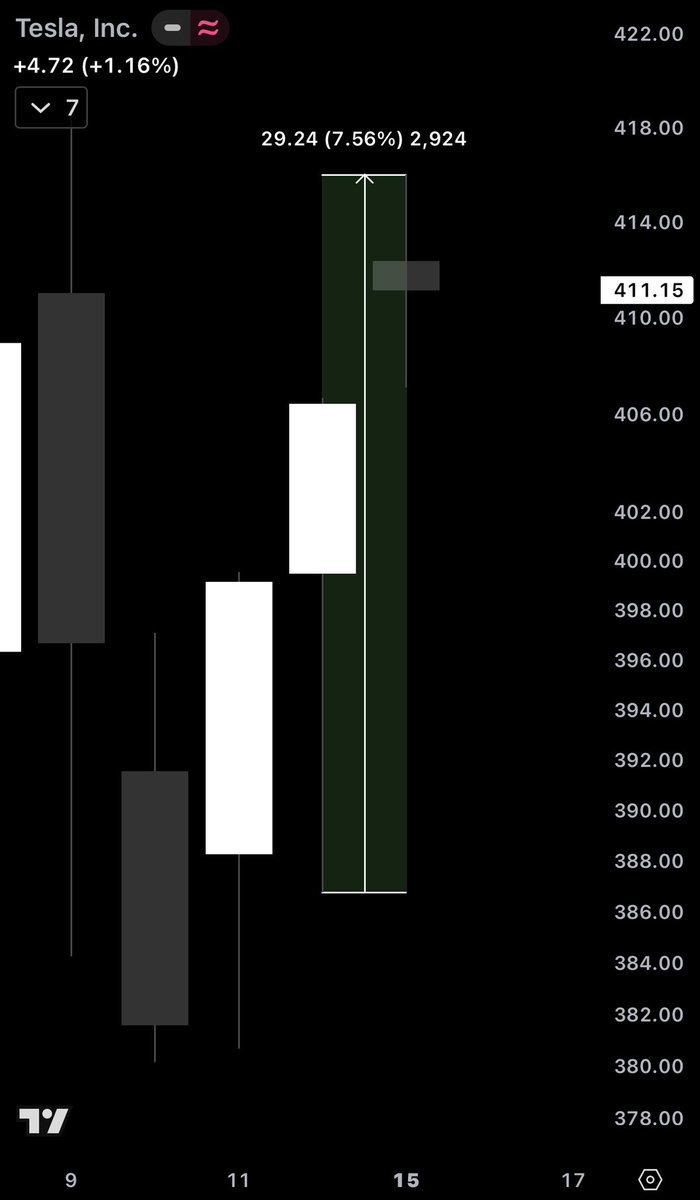
7.56% - how did you know 🙃
10X margin at $10,000, ≈$8,000 over the weekend.
Where are the @signalbynoise Founders!
Jun 14

You did buy #TSLA on Friday?
3
1
6
791
Jun 14
>90% Hit Rate
Spike > Buy with set TP/SL
Take Profit (TP): 2–4 × ATR(14) above entry
Stop Loss (SL): 1–1.5 × ATR(14) below entry
A common risk/reward target is 1:2 to 1:3 - fixed value TP/SL, not percent.
Aggressive:
You loose 4-6% ≈10% of the time, and gain 8-12% ≈90% of them time.
If you trade with $10,000, assume $85,000 after 10 trades. Ca 4-6 trades per quarter per asset, so on 10 assets ca 50 trades per quarter.
Plain English:
Find days when the asset is trading more than usual, buyers appear stronger than sellers, but the price is staying relatively quiet, suggesting possible institutional accumulation before a larger move.
#SEIOO @signalbynoise
1
10
565
Jun 14
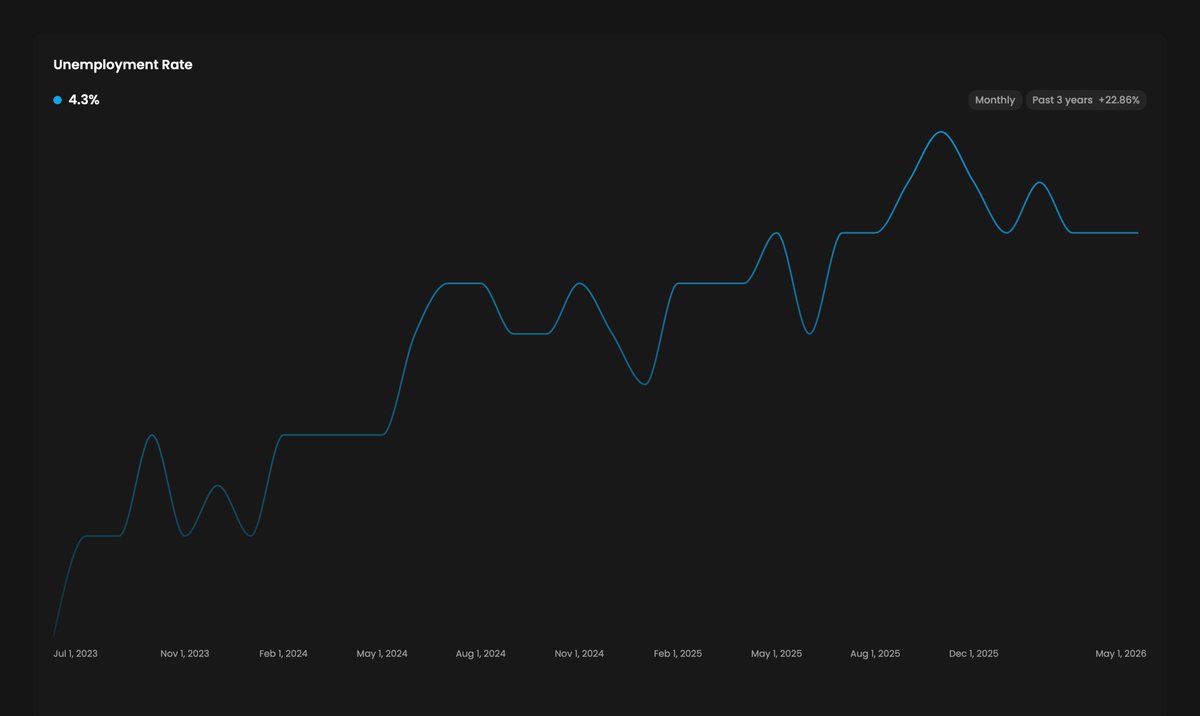
Can we trust the numbers coming from central banks, global agencies, and government agencies?
Obviously no.
We need decentralized agentic statistics that cannot be controlled and tampered with.
Before that, assume all figures to be false.
2
14
545
Jun 14
I get asked how influence and control are gained. The formula is surprisingly simple:
Take the seven deadly sins, or more broadly the core human desires and weaknesses that appear across cultures, religions, and throughout history. Package them into products, entertainment, media, or politics. Sell them. Gain attention. Convert attention into money. Convert money into influence. Use that influence to shape the narrative.
Examples:
1. Greed → wealth, status, luxury, financial ambition
2. Vanity → beauty, image, social validation
3. Envy → comparison, competition, FOMO
4. Gluttony → excess consumption and instant gratification
5. Lust → attraction, desire, sexuality
6. Wrath → outrage, conflict, tribalism
7. Sloth → convenience, comfort, effortless entertainment
The more effectively an organization can capture these impulses, the easier it becomes to attract audiences, customers, voters, or followers.
Attention creates revenue. Revenue creates influence. Influence shapes culture and narratives.
This does not necessarily require a secret conspiracy. It can emerge naturally because systems tend to reward whatever captures human attention most effectively.
Since human nature changes far more slowly than technology, the same underlying drivers continue to work generation after generation.
🧃👺
1
11
570
May 24
The anti Russians Bolsheviks (👺🧃) killed ca 55,000 Chinese a day, totaling to ca 80 million, between the years 1958-1962 indirectly via the Bolshevik installed dictator Mao Zedong, in the great Chinese Famine.
So China knows very well who the 👺 🧃are and the current war is between Israhell and China, not between the US and Iran.
Your kids in the West will never learn about this massive massacre orchestrated by the same people that today control all of Western school systems.
open.spotify.com/episode/2DQ…
3
1
8
1,241
May 23
We move through this world like pilgrims passing through a dream. One town becomes another, one identity dissolves into the next. We call it a career, a marriage, a heartbreak, a victory, a spiritual search. But underneath all of it, the soul remembers something quieter: I am only passing through.
And every traveler, no matter how wise, becomes lost from time to time.
There are moments when the road disappears. Moments when suffering clouds perception so completely that we forget who we are beneath the costume. The mind begins grasping for certainty, for maps, for signs. And then, sometimes very gently, guidance appears.
Not always as thunder or miracles.
Sometimes as another human being.
A stranger who says exactly the sentence your soul needed to hear. A teacher who arrives without announcing themselves as one. A lover, a child, a mystic, an old friend, a homeless man on a bench, a grandmother making tea, someone whose eyes seem to look through your story rather than at it. For a moment, something ancient shines through the human form.
In the East they speak of beings who incarnate not to dominate humanity, but to remind humanity of itself. Not saviors in the hierarchical sense, but mirrors. Lanterns along the road. Souls who have remembered the game while still participating in it.
Because the deeper spiritual paradox is this: the guide is never truly separate from the traveler.
Consciousness wears countless masks. Sometimes you are the lost one in the desert. Sometimes you are the one handing water to another. The universe keeps exchanging these roles endlessly, lovingly, until eventually you begin to recognize the sacred theater of it all.
Ram Dass often pointed toward this dissolving of separateness. Beneath personality, beneath status, beneath fear and ambition, there is only awareness encountering itself in different forms. The guru, the friend, the enemy, the healer, the beggar, all become part of the curriculum for awakening.
And perhaps what we call “higher beings” are not always supernatural entities descending from elsewhere, but consciousness expressing itself through certain humans with unusual clarity. Humans through whom love flows with less obstruction. Humans who momentarily interrupt the hypnosis of modern life and remind us:
You are not merely this frightened ego trying to survive history.
You are something vast pretending, for a little while, to be a person.
The traveler eventually discovers that the path itself was the teacher. Every encounter was initiation. Every loss carved space for deeper compassion. Every guide was a temporary finger pointing back toward the same truth.
Home was never a place.
It was a state of remembering.
#RamDass
2
15
1,095
Apr 15
The NSA published a paper in 1996 titled ‘How to Make a Mint’, describing a digital money system similar to Bitcoin.
And don’t ask @grok about anything real, he will tell you the US actually landed on the moon in 1969 🤣
1
1
11
1,416
Apr 14
Topological morphology refers to the study and analysis of shape, structure, and spatial relationships by focusing on properties that remain invariant under continuous deformation (like stretching or bending), rather than precise geometric measurements.
It bridges set theory, algebraic topology, and structural analysis to characterize complex data.
7
1,140
Apr 13
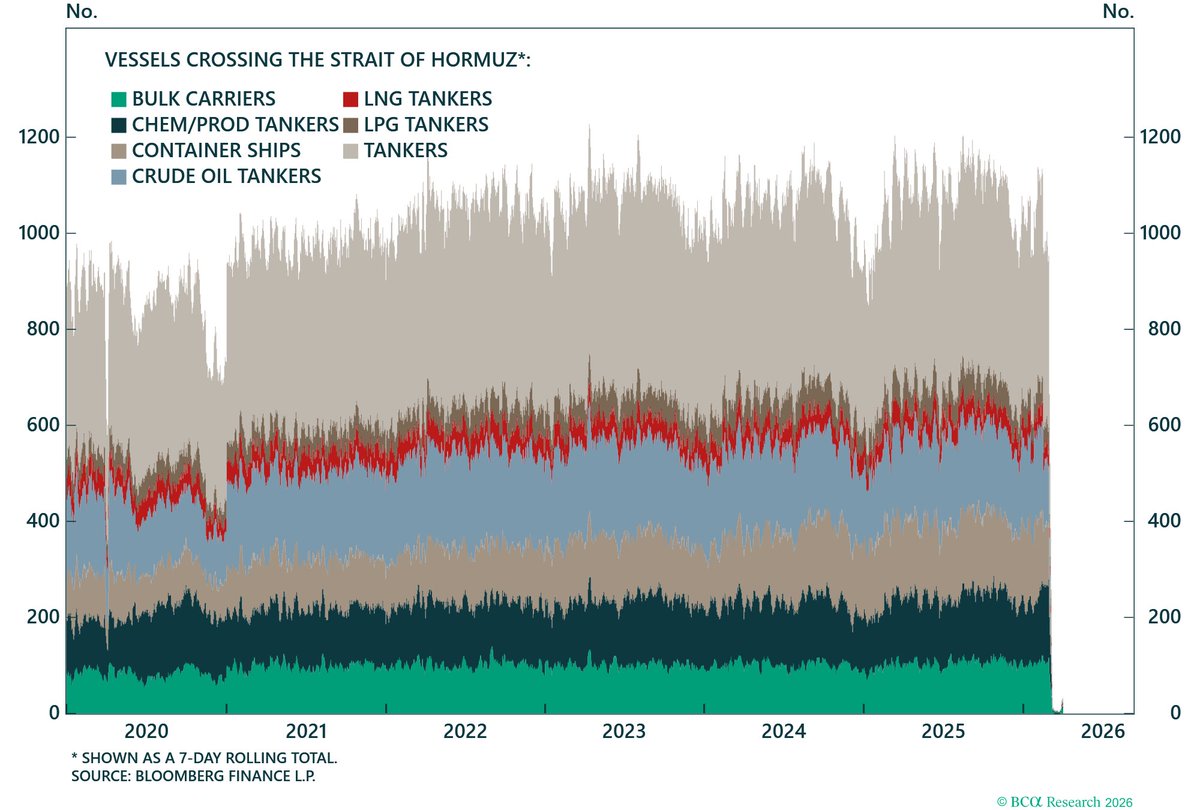
The US (Israel), Russia, and China are in the strait.
Good luck everyone 😂
3
6
1,076
Apr 12
An invariant is what remains true even when everything else is moving.
4
804
Apr 12
Forget the returns, that’s pre fees anyway. Focus on the fundamentals of the math here. They are the key.
#SEIOO

This 1 hour interview with the mathematician who outperformed Buffett, Soros, and Dalio, generated $100B , avg. 66% returns will teach you more about investing than a $200K MBA.
Bookmark this & give it 1 hour, no matter what. It’ll be the most productive thing you do this week.
5
1,316
Apr 12
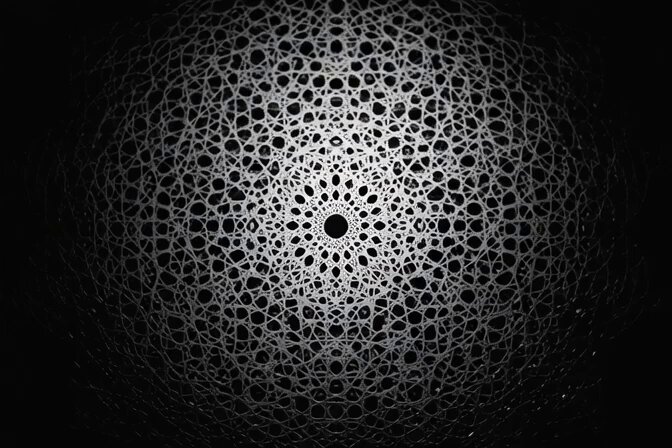
Physics shows us that structure can emerge from chaos: attractors form, tighten, and dissolve. Spiritual traditions have described the same pattern for centuries through mandalas, carefully constructed into moments of perfect order, only to be swept away.
There are no straight lines and no permanent steady states.
These are not opposites but different lenses on the same reality. Markets behave this way too. What looks like randomness often contains brief windows where dynamics become structured, coherent, and measurable. Then that structure disappears, not as failure, but as part of the cycle.
Traditional trading systems fail because they assume stability where there is none. They try to fit permanent models to transient structure, treating breakdowns as errors instead of signals. They overfit to past regimes, ignore when the underlying geometry dissolves, and continue trading as if the same conditions still apply. In doing so, they confuse noise for signal and remain exposed precisely when the system has lost coherence.
We do the opposite.
We don’t assume structure, we detect it. We reconstruct the system in real time, measure when phase aligns, when recurrence tightens, when the underlying geometry becomes visible. And just as importantly, we measure when it disappears. We don’t predict the future, we act only when the present shows order. When the mandala forms, we engage. When it dissolves, we step back.
#SEIOO
8
752