
Lawyer by training, theologian by calling. 13× debating champion. Host of Crossroads; bearing witness to the truth.
Joined November 2013
- Tweets 124,177
- Following 1,474
- Followers 15,944
- Likes 383,280
1,185 Photos and videos

Pinned Tweet

28 Dec 2024
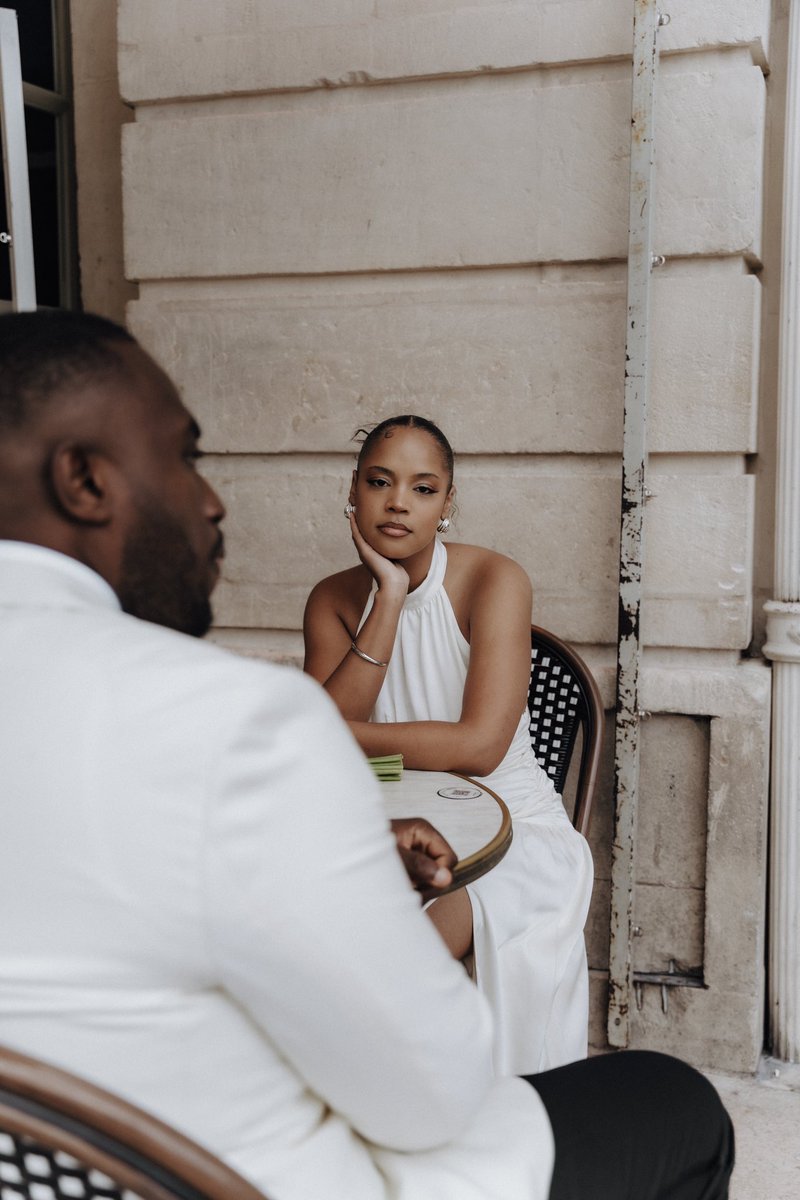
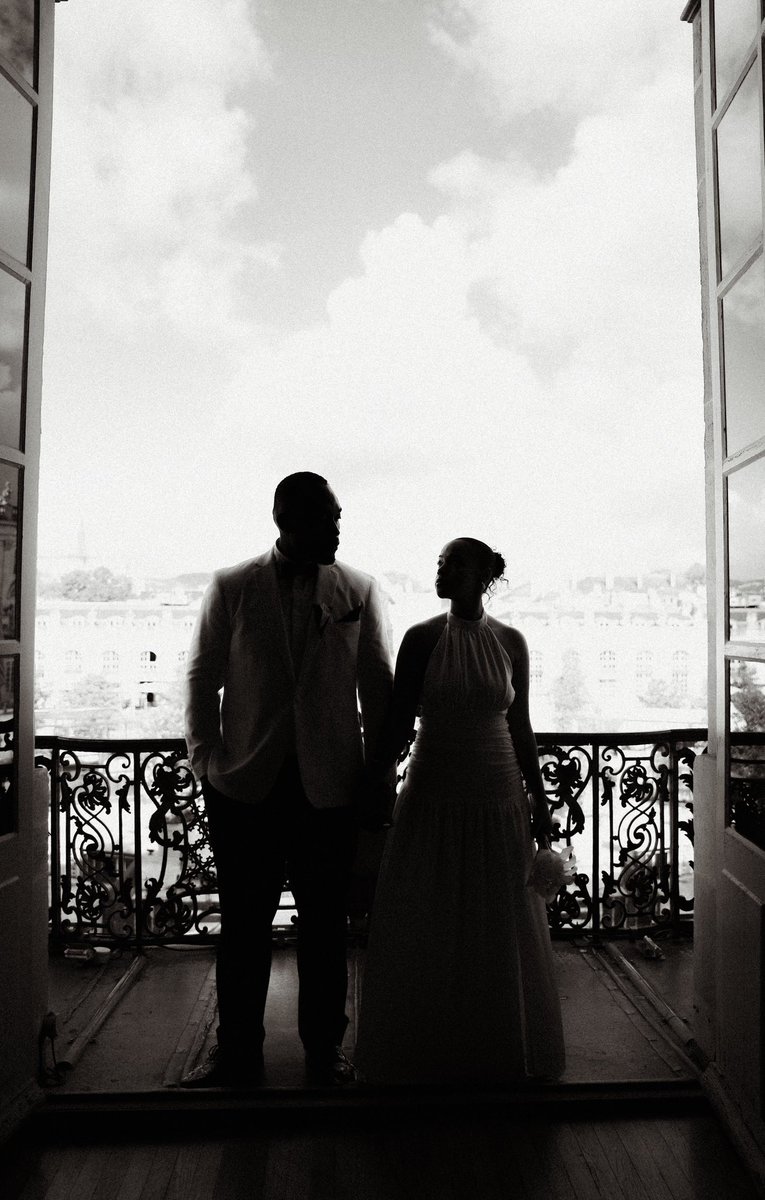
Our official wedding pictures came through. 28.09.24 💍🫶🏾
1/4


49
466
5,709
226,460
Faithfulness Okom retweeted

🚨 ONLY 1 DAY LEFT — TOMORROW EGYPT MAY SENTENCE ME TO LIFE OR DEATH.
What you do not know is Egypt says “CHRISTIANITY” is a SECOND CLASS & INCOMPLETE FAITH!
Here they are explaining why Said Abdelrazek has been jailed & tortured for converting to Christianity according to their Sharia Law.
5
36
58
2,175
Faithfulness Okom retweeted

📌

How a religion reasons is a huge theological confession in and of itself.
Christian reasoning from its foundations is meticulous, internally consistent, and built on shared text.
When the writer of Hebrews wants to argue for the divinity and priestly rank of Christ to wavering Jewish believers, he does not merely assert. He builds. He says: Remember Melchizedek? No genealogy, no traceable ancestry. Yet Abraham paid him tithes.
In Hebrew culture, the lesser pays the greater. You have already agreed, without knowing you agreed, that there was a figure who outranked your patriarch.
Then he drops Psalm 110: "The Lord has sworn... you are a priest forever in the order of Melchizedek." If Melchizedek is greater than Abraham, and the Messiah belongs to Melchizedek’s rank, the Messiah does not share a category with the prophets. He sits above the one your fathers bowed to. That is an argument with no exit. You have to dismantle the text or accept the conclusion.
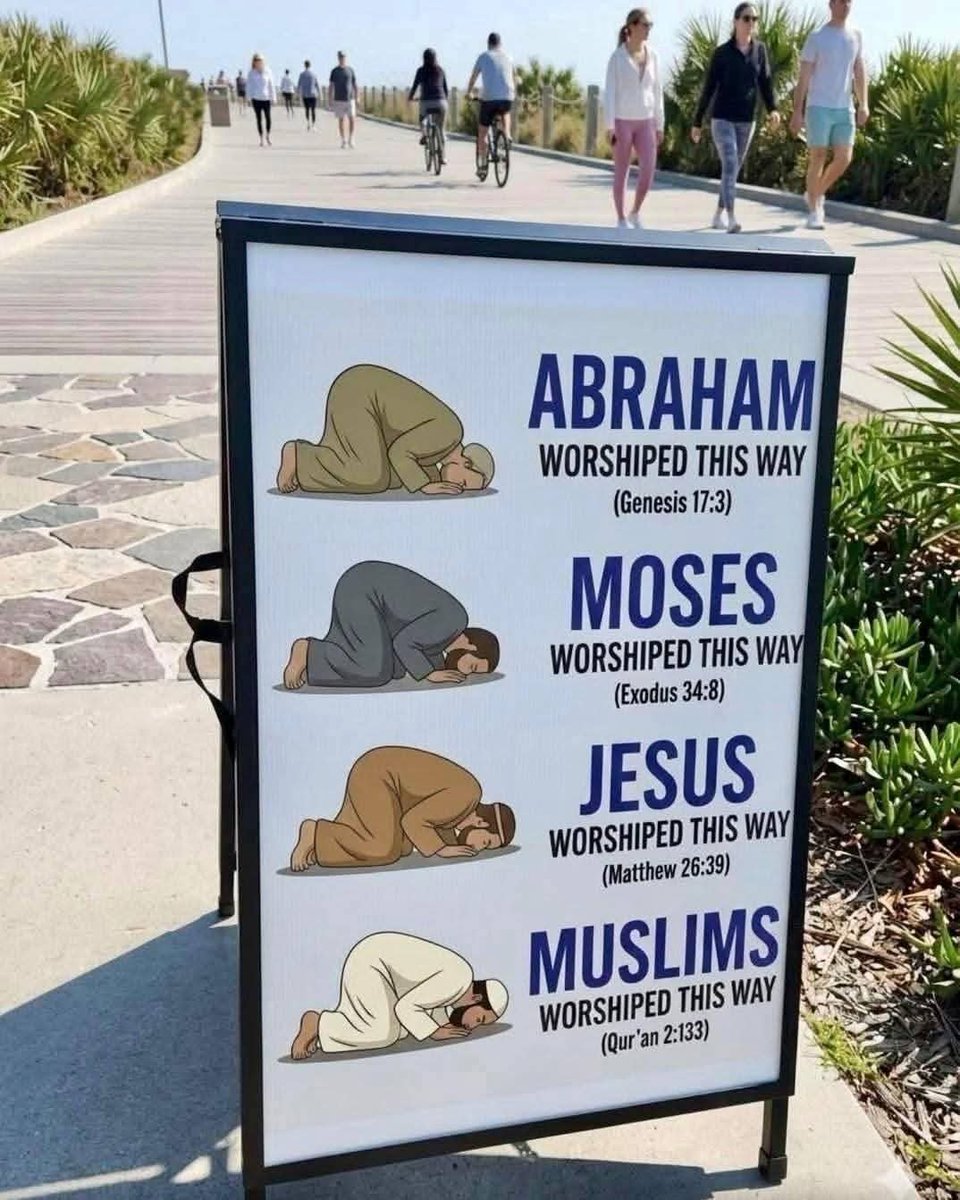
Now contrast that with this example or series of examples you Muslims always point to. Anytime you want to justify bowing five times a day facing a specific geographic location, you drag in Biblical prophets completely at random.
You see Jesus, in a moment of agonizing trepidation in Matthew 26, fall on his face to pray, and you instantly leap to: “Therefore he prayed like a Muslim.”
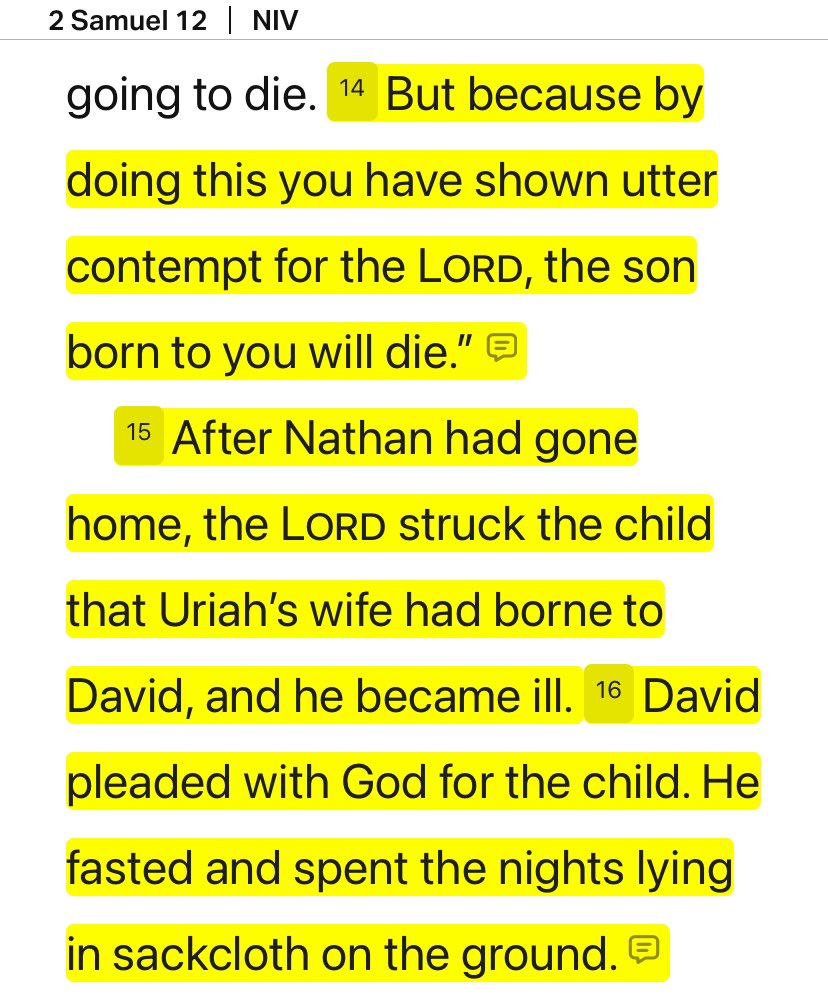
Do you think through the logic of this? In 2 Samuel, King David "danced before the Lord with all his might." By your exact methodology, should we start a new religion centered around dancing hysterically before God?
God is a Father. Sometimes his children approach him with dancing; sometimes, scared and broken, we lie flat; sometimes we sit. There is no chain of textual consequence in your argument.
There is only a posture and a verdict. It looks like logic until you actually look inside it.
But since you opened the New Testament, for Jesus let us actually look at how Jesus handles prayer. He completely shifts the frame from the external to the internal. He tells his disciples: Go into your room, close the door, and pray to your Father who is unseen. He tells the Samaritan woman that a time is coming when worship will not be tied to a mountain or to Jerusalem, because “God is spirit, and his worshipers must worship in spirit and in truth.”
He does not mention any geographic requirement or rigid ritual performance. It is an intimate, genuine encounter with a personal God.
And if you want to use Jesus's prayers to define him, you cannot stop at the garden. Look at John 17:5. Jesus prays: "Father, glorify me in your presence with the glory I had with you before the world began."
Find me the prophet who prayed that.
Abraham never did. Moses never did. No mere prophet in history ever walked into prayer and claimed pre-creational, shared glory with the Almighty.
The posture of submission in Matthew 26 doesn't undermine Christian theology; it requires it. It proves the Incarnation, the eternal Son genuinely entering human dependence and feeling the weight of human fear. You stopped reading at the physical posture, missed the entire theological foundation, and as usual you think this is a good refutation.
2
3
702
How a religion reasons is a huge theological confession in and of itself.
Christian reasoning from its foundations is meticulous, internally consistent, and built on shared text.
When the writer of Hebrews wants to argue for the divinity and priestly rank of Christ to wavering Jewish believers, he does not merely assert. He builds. He says: Remember Melchizedek? No genealogy, no traceable ancestry. Yet Abraham paid him tithes.
In Hebrew culture, the lesser pays the greater. You have already agreed, without knowing you agreed, that there was a figure who outranked your patriarch.
Then he drops Psalm 110: "The Lord has sworn... you are a priest forever in the order of Melchizedek." If Melchizedek is greater than Abraham, and the Messiah belongs to Melchizedek’s rank, the Messiah does not share a category with the prophets. He sits above the one your fathers bowed to. That is an argument with no exit. You have to dismantle the text or accept the conclusion.
Now contrast that with this example or series of examples you Muslims always point to. Anytime you want to justify bowing five times a day facing a specific geographic location, you drag in Biblical prophets completely at random.
You see Jesus, in a moment of agonizing trepidation in Matthew 26, fall on his face to pray, and you instantly leap to: “Therefore he prayed like a Muslim.”
Do you think through the logic of this? In 2 Samuel, King David "danced before the Lord with all his might." By your exact methodology, should we start a new religion centered around dancing hysterically before God?
God is a Father. Sometimes his children approach him with dancing; sometimes, scared and broken, we lie flat; sometimes we sit. There is no chain of textual consequence in your argument.
There is only a posture and a verdict. It looks like logic until you actually look inside it.
But since you opened the New Testament, for Jesus let us actually look at how Jesus handles prayer. He completely shifts the frame from the external to the internal. He tells his disciples: Go into your room, close the door, and pray to your Father who is unseen. He tells the Samaritan woman that a time is coming when worship will not be tied to a mountain or to Jerusalem, because “God is spirit, and his worshipers must worship in spirit and in truth.”
He does not mention any geographic requirement or rigid ritual performance. It is an intimate, genuine encounter with a personal God.
And if you want to use Jesus's prayers to define him, you cannot stop at the garden. Look at John 17:5. Jesus prays: "Father, glorify me in your presence with the glory I had with you before the world began."
Find me the prophet who prayed that.
Abraham never did. Moses never did. No mere prophet in history ever walked into prayer and claimed pre-creational, shared glory with the Almighty.
The posture of submission in Matthew 26 doesn't undermine Christian theology; it requires it. It proves the Incarnation, the eternal Son genuinely entering human dependence and feeling the weight of human fear. You stopped reading at the physical posture, missed the entire theological foundation, and as usual you think this is a good refutation.
Jun 13

Muslims worship God the same way all the prophets in the Quran and the Bible worshipped God, while Christians have invented their own new religion.
59
271
1,915
187,695
Catch me on YT, kindly subscribe! 🫶🏾
youtu.be/nbKr71Cj50A
2
13
6,534
Sounds like content from the Hadiths. “And the great prophet was asked what shall we do when our wives bleed and the great prophet responded; thou women shall use your hands to please him”.
Once you start sounding like this on the pulpit you are truly not of God.

Many Nigerian churches will gladly do everything else apart from simply preach the gospel of Jesus which is supposed to be their primary mission.
See people giggling.
We too like nonsense in this country.
3
2
11
1,343
Jun 12
The road to hell is paved with good intentions.
People who have truly tasted Christ rarely wake up one morning and decide to serve evil. Apostasy is rarely a sudden leap; it is usually a gradual drift.
It begins by convincing ourselves that our compromises are for God. A small dilution here. A slight accommodation there. A truth softened to avoid offense. A doctrine adjusted to fit the spirit of the age.
Then the dilution intensifies. And intensifies again.
What was once a minor concession becomes a habit. What was once a habit becomes a principle. What was once a principle becomes a new gospel.
Until, eventually, the erosion is complete and nothing remains but the shell of Christianity, bearing the name of Christ while having abandoned His voice.
The most dangerous deceptions are not those that arrive wearing the face of Satan, but those that arrive wearing the face of good intentions.
Jun 11

The biggest obstacle to culture shaping in Nigeria is the church!
- Apostle Femi Lazarus
This will bless you!
21
48
189
18,034
Faithfulness Okom retweeted

Jun 12
“men who want power will always find a religion that licenses them and call it devotion.”
This fits in so many places.
Jun 12
This plea is not merely heartbreaking. It is theologically indicting.
Every religion that elevates a historical figure invites an obvious objection: you have imported the limitations of his century along with his wisdom.
Christianity is not immune to this on its surface. But the question is not which century your prophet came from. The question is whether the man you elevated transcended his century or merely inhabited it.
Jesus touched lepers in a world that quarantined them. He held public theology with women when the rabbinical tradition refused them. He stood inside Roman imperial power and refused every offer of it. He told his disciples that greatness looked like a servant and that the meek, not the militarily dominant, would inherit the earth. He did not import 1st century Rome. He confronted it at every structural point.
Muhammad worked within the gender architecture of 7th century Arabia. He occasionally softened it. He did not dismantle it, he codified it. Surah 33:59 does not emerge from divine aesthetics. It emerges from a situation where his men were harassing women in Medina’s streets, and the solution offered was not to discipline the men but to mark the women.
Distinguish your wives so we know which ones we can abuse.
That is the textual sociology behind the hijab. You can argue across fourteen centuries about jurisprudence and interpretation but you cannot erase the situation that produced the verse.
When a founding figure does not confront the power structures of his world but works within them, those power structures become sacred. The 7th century gender architecture does not stay in the 7th century. It travels forward dressed as revelation.
This is why the Taliban are not an aberration. They are the answer to a sincere question: what does serious, uncompromising application of the external enforcement paradigm look like when you remove the moderating pressure of Western political shame? Afghanistan is the answer. Those men are not distorting Islam. They are implementing it without apology.
Christianity is structurally different. Not because Christians are morally superior but because the architecture is different by design.
The compliance mechanism is inward. The law written on the heart, not enforced at the school gate. This means God chose that the most devout believer and the most flagrant sinner face each other in the same invisible courtroom, and He alone presides. He gave us the mandate to preach and persuade. He did not give us the authority to coerce. When men try to, they are not being more Christian. They are being less. The architecture resists them.
Islam’s architecture does not resist them. It licenses them. And men who want power will always find a religion that licenses them and call it devotion.
So that girl’s cry is a theodicy in one sentence. She is right. Whatever god demands this cannot be the creator of women.
The left refuses this conversation because it forces a choice between feminist commitments and the reflexive defence of Islamic exceptionalism. They will choose the latter, dress it in the language of anti-colonialism, and leave Afghan girls crying in the dark.
1
4
468
Jun 12
Yep it’s a real verse and it’s in the text. Someone can read it, build their life around it, and be a better person for it.
But Quran 9:5 is also in the text: kill the polytheists wherever you find them, besiege them, ambush them.
Quran 9:29 is also in the text: fight the people of the scripture until they pay the jizya in humiliation.
Quran 4:34 is also in the text: regarding wives you fear arrogance from, admonish them, then abandon them in bed, then strike them. All four verses are in the same book. Citing one does not defeat the others.
The Nazi regime passed the world’s most comprehensive animal welfare legislation in 1933. Hitler refused to eat meat and was genuinely appalled by hunting. You can agree with those laws.
But we do not judge ideologies or religions by their best statements. We judge them by their culmination.
Every religion must live and die by its culmination. The culmination of Judaism is the Torah; the text itself is the standard, not a human figure to be emulated. The culmination of Christianity is not the Bible but Jesus. The New Testament is about him, and the question that actually judges Christian practice is not what does the text say but what did Jesus do.
The culmination of Islam is not the Quran. It is Muhammad. Not because the Quran is unimportant but because Muslims are praised for doing things Muhammad did that are not even in the Quran but recorded in the Hadiths. His life, not just his book, is the model. The Quran itself confirms this: “There has certainly been for you in the Messenger of Allah an excellent pattern” (33:21). The perfect example, for all creation, for all time.
So 2:256 does not close the argument. It opens a different one. The question is not whether a good verse exists. The question is what the culmination of the religion actually did. Jesus confronted the power structures of his world directly. What did Muhammad do with the gender architecture of his? The Hadiths answer that without ambiguity. The Surah 33:59 incident answers that without ambiguity.
You cannot resolve that Afghan girl’s cry with a verse her oppressors also know and have consciously set aside. They are not ignorant of 2:256. They have simply decided that the perfect example outranks it. And on their own theological terms, they are not wrong.

What do you make of this, then?
"There shall be no compulsion in religion. The right course has become clear from the wrong."
— Quran 2:256
3
16
52
6,039
Jun 12
This plea is not merely heartbreaking. It is theologically indicting.
Every religion that elevates a historical figure invites an obvious objection: you have imported the limitations of his century along with his wisdom.
Christianity is not immune to this on its surface. But the question is not which century your prophet came from. The question is whether the man you elevated transcended his century or merely inhabited it.
Jesus touched lepers in a world that quarantined them. He held public theology with women when the rabbinical tradition refused them. He stood inside Roman imperial power and refused every offer of it. He told his disciples that greatness looked like a servant and that the meek, not the militarily dominant, would inherit the earth. He did not import 1st century Rome. He confronted it at every structural point.
Muhammad worked within the gender architecture of 7th century Arabia. He occasionally softened it. He did not dismantle it, he codified it. Surah 33:59 does not emerge from divine aesthetics. It emerges from a situation where his men were harassing women in Medina’s streets, and the solution offered was not to discipline the men but to mark the women.
Distinguish your wives so we know which ones we can abuse.
That is the textual sociology behind the hijab. You can argue across fourteen centuries about jurisprudence and interpretation but you cannot erase the situation that produced the verse.
When a founding figure does not confront the power structures of his world but works within them, those power structures become sacred. The 7th century gender architecture does not stay in the 7th century. It travels forward dressed as revelation.
This is why the Taliban are not an aberration. They are the answer to a sincere question: what does serious, uncompromising application of the external enforcement paradigm look like when you remove the moderating pressure of Western political shame? Afghanistan is the answer. Those men are not distorting Islam. They are implementing it without apology.
Christianity is structurally different. Not because Christians are morally superior but because the architecture is different by design.
The compliance mechanism is inward. The law written on the heart, not enforced at the school gate. This means God chose that the most devout believer and the most flagrant sinner face each other in the same invisible courtroom, and He alone presides. He gave us the mandate to preach and persuade. He did not give us the authority to coerce. When men try to, they are not being more Christian. They are being less. The architecture resists them.
Islam’s architecture does not resist them. It licenses them. And men who want power will always find a religion that licenses them and call it devotion.
So that girl’s cry is a theodicy in one sentence. She is right. Whatever god demands this cannot be the creator of women.
The left refuses this conversation because it forces a choice between feminist commitments and the reflexive defence of Islamic exceptionalism. They will choose the latter, dress it in the language of anti-colonialism, and leave Afghan girls crying in the dark.
Jun 11

An Afghan girl cries:
“I wish God had never created women. Even animals can roam freely, but we are forbidden from stepping outside the house.”
The Taliban has permanently banned women from attending schools and legalized (sexual) slavery.
Zero protests by leftists or Muslims.
14
91
305
13,217
Jun 11
Fill me with your joy. And fill me with your rage.
May I possess an unyielding indignation at the sight of decay,
And never weep over the things that make you rejoice. Nor rejoice at the things that make you rage.
Fill me with reason, with the power to know.
Give my heart weight that it may hold the equilibrium of emotions you carry.
Give me fire,
Give me ice,
Give me peace,
Give me you.
2
9
42
986
Faithfulness Okom retweeted
Jun 11
There is a profound, and almost terrifying irony embedded in the architecture of Psalm 2 and Psalm 110.
Earthly empires sweat, mobilize, and conspire. They believe themselves engaged in a cosmic war against the Almighty. Then the text cuts to heaven and reveals a staggering asymmetry. YHWH is not panicking, He is laughing.
He doesn’t call a war council or mobilize a defense of his own borders. His supremacy is such a permanent, bedrock axiom of reality that it is not even a question in either psalm. Hebrews 6 is the footnote both psalms were waiting for: when YHWH needs to make an oath, he looks across the cosmos for something greater to swear by and finds nothing, so He swears by himself. There is an absolute vacuum of equal authority in the universe. His throne has no external frame from which to mount an attack against it.
What he does instead is point to his proxy and declare: “I have installed my King.”
God doesn’t honor human rebellion with a direct response. He recategorizes the entire geopolitical tantrum as a dispute with his Son, signaling that the true theater of contention has never been heaven. It is earth. And he will have his way there.
This chain of divine delegation is the precise blueprint for how dominion operates beneath the throne. Christ does not administrate every square inch of historical territory directly. He populates it with sub-regents chosen to mirror his order in the midst of chaos. Kings under the King, given territory by appointment, whose authority derives from assignment rather than acquisition.
This is why the mechanics of warfare shift so dramatically by Revelation 19.
Christ enters that final confrontation wearing a robe already dipped in blood before a single blow is struck. The name on his thigh, King of Kings, was not earned in that moment. He rides FROM the throne, not toward it. His weapon is the word from his mouth, which is the Melchizedek pattern completing its final arc. What Revelation 19 depicts is not a competitive engagement. It is a judicial enforcement action against a verdict rendered at Calvary.
The logic is absolute. YHWH fought for Adonai. Christ, now enthroned, fights for those under him. The assignment was prior. The interceding priest-king stands before the Father on their behalf. The security of what has been given is not their burden to establish.
The hardest discipline in Psalm 110 is not the enemies. It is the sitting. To hold the posture of secured appointment rather than desperate conquest. The enemies are not the crisis here, the real crisis is forgetting that the throne was never yours to win.
2
17
68
1,464
Faithfulness Okom retweeted
Jun 10
If God sent both prophets, we have a built-in way to evaluate them: The Torah. It is the established covenant document. Every subsequent claimant to prophetic succession is, like it or not, auditioning against it. So let’s see how they performed.
Jesus’s audition is aggressive. Six times in Matthew 5 he says, “you have heard it said to those of ancient times,” and then overrides it with his own authority. Not “God told me,” or “the revelation says,” but a staggering “I say to you.”
It goes deeper. When asked about divorce, Jesus doesn't quibble over Mosaic permissions. He goes entirely behind Moses, back to creation itself. He didn't just know what Moses said; he knew why he said it, locating the original intent. That’s insider knowledge.
Then he initiates comparisons rather than just surviving them. “Before Abraham was, I am.” In Matthew 22, he turns a question about the Davidic Messiah into a devastating counter-examination: “If David calls the Messiah Lord (in Psalm 110), how is he his son?” Nobody could answer. They looked like fools.
Moses knew the covenant with Abraham. Jesus knew the Law from the inside out. There is an organic, traceable coherence.
Now apply that same logic forward. Muhammad also claims prophetic succession, explicitly stating he came to confirm what came before. So we use the same standard.
Muhammad versus the Torah. He knows the narrative furniture; Sinai, the commandments, the golden calf. But he completely misses the interior logic. He knows what happened, but he doesn't seem to inhabit what it meant.
But Muhammad versus Jesus is where the argument entirely collapses.
What does the Quran actually know about what Jesus TAUGHT? I’m not talking about his birth, his miracles, or late-stage theological arguments about his nature. What does it know about his message?
There are no Beatitudes in the Quran. No Lord’s Prayer. No “love your enemies.” No Golden Rule. Not a single parable. Not one antithesis from the Sermon on the Mount. The Quran’s Jesus has almost no teaching content at all. His most notable speeches are a denial of his own divinity and a prediction of the prophet coming after him 😂. You know what is happening there.
The parables were given to massive crowds. The Lord’s Prayer was meant to be repeated. This material was widely circulating. Yet, none of it appears.
A genuine successor would have done to Jesus what Jesus did to Moses. He would have engaged the text. “You have heard that Jesus said love your enemies, but I say to you...” Muhammad never does. He never demonstrates that he knows what Jesus taught well enough to confirm it, let alone extend it. This silence is a structural disqualification.
The standard fallback is that prophets don’t need to demonstrate continuity. But that violates Muhammad’s own terms. The Quran presents itself as a confirmation of previous scripture. In Surah 5:47, it commands 7th-century Christians, present tense, to judge by the Gospel God revealed to them. If the text was already hopelessly corrupted, that instruction makes zero sense.
The claim that the Gospels were textually altered before Islam, is absent from the Quran. It was invented later by Muslim scholars who noticed the exact problem we are looking at right now. They had to conclude the Gospels were altered, because the alternative was admitting their prophet was wrong.
But history doesn't back them up. Codex Sinaiticus and Codex Vaticanus predate Islam by centuries, the text hasn't moved.
The prophetic chain has one absolute structural requirement: each link must actually know the one before it. Moses knew Abraham. Jesus knew the Law deeply enough to raise the bar antithesis by antithesis. Muhammad gives us a Jesus stripped of the Sermon on the Mount, stripped of his parables, and stripped of his ethics. Only one of them showed up knowing the material, his name is Jesus.
Jun 9

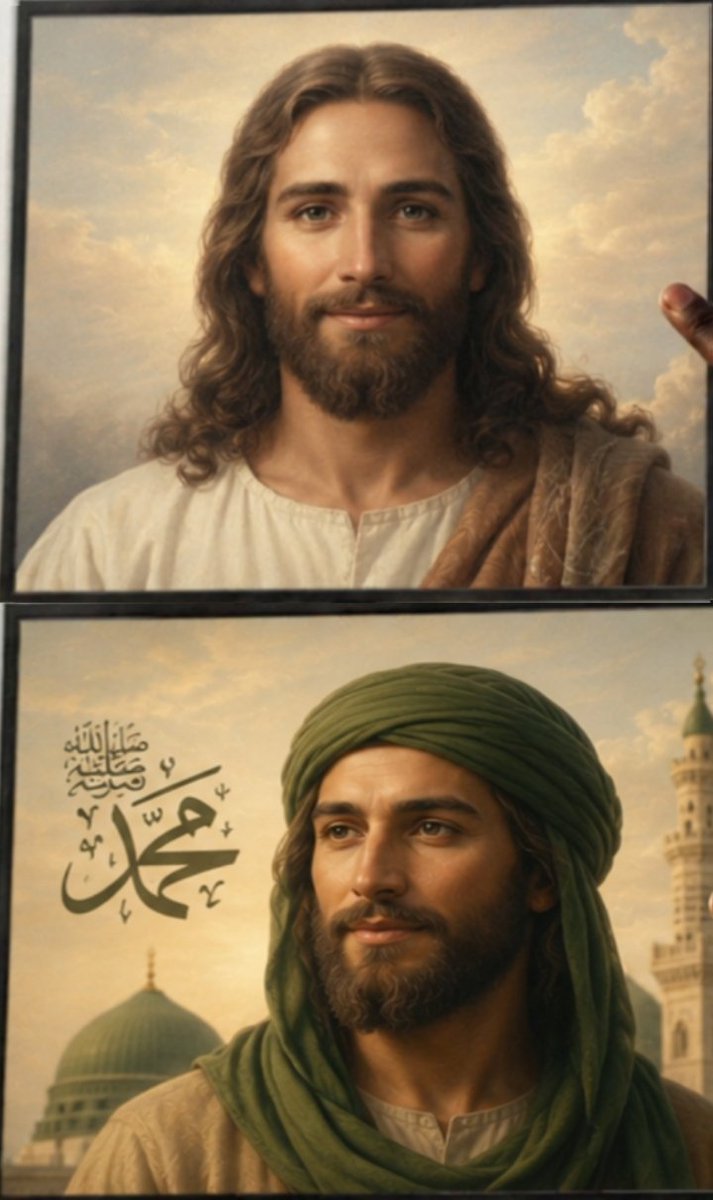
If God sent both Jesus and Muhammad, Why are their messages so different?
52
234
918
61,300
Jun 11
“Why always me”
Jun 10

ÚLTIMA HORA: La iglesia Telata Chef St. Gabriel, de 101 años de antigüedad, ha sido incendiada por islamistas en Etiopía.
Además de quemar la iglesia, asesinaron a decenas de cristianos inocentes.
¿Dónde está la indignación mundial?
3
10
22
1,074
Jun 10
If God sent both prophets, we have a built-in way to evaluate them: The Torah. It is the established covenant document. Every subsequent claimant to prophetic succession is, like it or not, auditioning against it. So let’s see how they performed.
Jesus’s audition is aggressive. Six times in Matthew 5 he says, “you have heard it said to those of ancient times,” and then overrides it with his own authority. Not “God told me,” or “the revelation says,” but a staggering “I say to you.”
It goes deeper. When asked about divorce, Jesus doesn't quibble over Mosaic permissions. He goes entirely behind Moses, back to creation itself. He didn't just know what Moses said; he knew why he said it, locating the original intent. That’s insider knowledge.
Then he initiates comparisons rather than just surviving them. “Before Abraham was, I am.” In Matthew 22, he turns a question about the Davidic Messiah into a devastating counter-examination: “If David calls the Messiah Lord (in Psalm 110), how is he his son?” Nobody could answer. They looked like fools.
Moses knew the covenant with Abraham. Jesus knew the Law from the inside out. There is an organic, traceable coherence.
Now apply that same logic forward. Muhammad also claims prophetic succession, explicitly stating he came to confirm what came before. So we use the same standard.
Muhammad versus the Torah. He knows the narrative furniture; Sinai, the commandments, the golden calf. But he completely misses the interior logic. He knows what happened, but he doesn't seem to inhabit what it meant.
But Muhammad versus Jesus is where the argument entirely collapses.
What does the Quran actually know about what Jesus TAUGHT? I’m not talking about his birth, his miracles, or late-stage theological arguments about his nature. What does it know about his message?
There are no Beatitudes in the Quran. No Lord’s Prayer. No “love your enemies.” No Golden Rule. Not a single parable. Not one antithesis from the Sermon on the Mount. The Quran’s Jesus has almost no teaching content at all. His most notable speeches are a denial of his own divinity and a prediction of the prophet coming after him 😂. You know what is happening there.
The parables were given to massive crowds. The Lord’s Prayer was meant to be repeated. This material was widely circulating. Yet, none of it appears.
A genuine successor would have done to Jesus what Jesus did to Moses. He would have engaged the text. “You have heard that Jesus said love your enemies, but I say to you...” Muhammad never does. He never demonstrates that he knows what Jesus taught well enough to confirm it, let alone extend it. This silence is a structural disqualification.
The standard fallback is that prophets don’t need to demonstrate continuity. But that violates Muhammad’s own terms. The Quran presents itself as a confirmation of previous scripture. In Surah 5:47, it commands 7th-century Christians, present tense, to judge by the Gospel God revealed to them. If the text was already hopelessly corrupted, that instruction makes zero sense.
The claim that the Gospels were textually altered before Islam, is absent from the Quran. It was invented later by Muslim scholars who noticed the exact problem we are looking at right now. They had to conclude the Gospels were altered, because the alternative was admitting their prophet was wrong.
But history doesn't back them up. Codex Sinaiticus and Codex Vaticanus predate Islam by centuries, the text hasn't moved.
The prophetic chain has one absolute structural requirement: each link must actually know the one before it. Moses knew Abraham. Jesus knew the Law deeply enough to raise the bar antithesis by antithesis. Muhammad gives us a Jesus stripped of the Sermon on the Mount, stripped of his parables, and stripped of his ethics. Only one of them showed up knowing the material, his name is Jesus.
Jun 9
If God sent both Jesus and Muhammad, Why are their messages so different?
52
234
918
61,300
Faithfulness Okom retweeted

Jun 11
Blessed.
Jun 10
If God sent both prophets, we have a built-in way to evaluate them: The Torah. It is the established covenant document. Every subsequent claimant to prophetic succession is, like it or not, auditioning against it. So let’s see how they performed.
Jesus’s audition is aggressive. Six times in Matthew 5 he says, “you have heard it said to those of ancient times,” and then overrides it with his own authority. Not “God told me,” or “the revelation says,” but a staggering “I say to you.”
It goes deeper. When asked about divorce, Jesus doesn't quibble over Mosaic permissions. He goes entirely behind Moses, back to creation itself. He didn't just know what Moses said; he knew why he said it, locating the original intent. That’s insider knowledge.
Then he initiates comparisons rather than just surviving them. “Before Abraham was, I am.” In Matthew 22, he turns a question about the Davidic Messiah into a devastating counter-examination: “If David calls the Messiah Lord (in Psalm 110), how is he his son?” Nobody could answer. They looked like fools.
Moses knew the covenant with Abraham. Jesus knew the Law from the inside out. There is an organic, traceable coherence.
Now apply that same logic forward. Muhammad also claims prophetic succession, explicitly stating he came to confirm what came before. So we use the same standard.
Muhammad versus the Torah. He knows the narrative furniture; Sinai, the commandments, the golden calf. But he completely misses the interior logic. He knows what happened, but he doesn't seem to inhabit what it meant.
But Muhammad versus Jesus is where the argument entirely collapses.
What does the Quran actually know about what Jesus TAUGHT? I’m not talking about his birth, his miracles, or late-stage theological arguments about his nature. What does it know about his message?
There are no Beatitudes in the Quran. No Lord’s Prayer. No “love your enemies.” No Golden Rule. Not a single parable. Not one antithesis from the Sermon on the Mount. The Quran’s Jesus has almost no teaching content at all. His most notable speeches are a denial of his own divinity and a prediction of the prophet coming after him 😂. You know what is happening there.
The parables were given to massive crowds. The Lord’s Prayer was meant to be repeated. This material was widely circulating. Yet, none of it appears.
A genuine successor would have done to Jesus what Jesus did to Moses. He would have engaged the text. “You have heard that Jesus said love your enemies, but I say to you...” Muhammad never does. He never demonstrates that he knows what Jesus taught well enough to confirm it, let alone extend it. This silence is a structural disqualification.
The standard fallback is that prophets don’t need to demonstrate continuity. But that violates Muhammad’s own terms. The Quran presents itself as a confirmation of previous scripture. In Surah 5:47, it commands 7th-century Christians, present tense, to judge by the Gospel God revealed to them. If the text was already hopelessly corrupted, that instruction makes zero sense.
The claim that the Gospels were textually altered before Islam, is absent from the Quran. It was invented later by Muslim scholars who noticed the exact problem we are looking at right now. They had to conclude the Gospels were altered, because the alternative was admitting their prophet was wrong.
But history doesn't back them up. Codex Sinaiticus and Codex Vaticanus predate Islam by centuries, the text hasn't moved.
The prophetic chain has one absolute structural requirement: each link must actually know the one before it. Moses knew Abraham. Jesus knew the Law deeply enough to raise the bar antithesis by antithesis. Muhammad gives us a Jesus stripped of the Sermon on the Mount, stripped of his parables, and stripped of his ethics. Only one of them showed up knowing the material, his name is Jesus.
1
4
307
Faithfulness Okom retweeted

Jun 10
Before I started seeing your tweets, Almost became a Muslim, God bless you
1
1
7
605
Faithfulness Okom retweeted

Jun 10
Whew now this is SCORCHING HOT 🔥✝️🙌🏽 lol
Jun 10
If God sent both prophets, we have a built-in way to evaluate them: The Torah. It is the established covenant document. Every subsequent claimant to prophetic succession is, like it or not, auditioning against it. So let’s see how they performed.
Jesus’s audition is aggressive. Six times in Matthew 5 he says, “you have heard it said to those of ancient times,” and then overrides it with his own authority. Not “God told me,” or “the revelation says,” but a staggering “I say to you.”
It goes deeper. When asked about divorce, Jesus doesn't quibble over Mosaic permissions. He goes entirely behind Moses, back to creation itself. He didn't just know what Moses said; he knew why he said it, locating the original intent. That’s insider knowledge.
Then he initiates comparisons rather than just surviving them. “Before Abraham was, I am.” In Matthew 22, he turns a question about the Davidic Messiah into a devastating counter-examination: “If David calls the Messiah Lord (in Psalm 110), how is he his son?” Nobody could answer. They looked like fools.
Moses knew the covenant with Abraham. Jesus knew the Law from the inside out. There is an organic, traceable coherence.
Now apply that same logic forward. Muhammad also claims prophetic succession, explicitly stating he came to confirm what came before. So we use the same standard.
Muhammad versus the Torah. He knows the narrative furniture; Sinai, the commandments, the golden calf. But he completely misses the interior logic. He knows what happened, but he doesn't seem to inhabit what it meant.
But Muhammad versus Jesus is where the argument entirely collapses.
What does the Quran actually know about what Jesus TAUGHT? I’m not talking about his birth, his miracles, or late-stage theological arguments about his nature. What does it know about his message?
There are no Beatitudes in the Quran. No Lord’s Prayer. No “love your enemies.” No Golden Rule. Not a single parable. Not one antithesis from the Sermon on the Mount. The Quran’s Jesus has almost no teaching content at all. His most notable speeches are a denial of his own divinity and a prediction of the prophet coming after him 😂. You know what is happening there.
The parables were given to massive crowds. The Lord’s Prayer was meant to be repeated. This material was widely circulating. Yet, none of it appears.
A genuine successor would have done to Jesus what Jesus did to Moses. He would have engaged the text. “You have heard that Jesus said love your enemies, but I say to you...” Muhammad never does. He never demonstrates that he knows what Jesus taught well enough to confirm it, let alone extend it. This silence is a structural disqualification.
The standard fallback is that prophets don’t need to demonstrate continuity. But that violates Muhammad’s own terms. The Quran presents itself as a confirmation of previous scripture. In Surah 5:47, it commands 7th-century Christians, present tense, to judge by the Gospel God revealed to them. If the text was already hopelessly corrupted, that instruction makes zero sense.
The claim that the Gospels were textually altered before Islam, is absent from the Quran. It was invented later by Muslim scholars who noticed the exact problem we are looking at right now. They had to conclude the Gospels were altered, because the alternative was admitting their prophet was wrong.
But history doesn't back them up. Codex Sinaiticus and Codex Vaticanus predate Islam by centuries, the text hasn't moved.
The prophetic chain has one absolute structural requirement: each link must actually know the one before it. Moses knew Abraham. Jesus knew the Law deeply enough to raise the bar antithesis by antithesis. Muhammad gives us a Jesus stripped of the Sermon on the Mount, stripped of his parables, and stripped of his ethics. Only one of them showed up knowing the material, his name is Jesus.
1
2
406
Jun 10
This is exactly why I laugh anytime someone blindly quotes those "fastest-growing religion" stats. They look at a chart or spreadsheet and pretend they’re measuring theological conviction, completely and pretentiously blind to the systemic violence keeping those numbers inflated.
Anytime they are losing arguments here on X, they run to those statistics as some grand proof of spiritual superiority, and try to find cheap consolation.
But what do those metrics really represent? Do they factor in the variable of raw terrorism? Do they account for the absolute, crushing impossibility of exit? Do they record the psychological toll of people who have to simulate faith every single day just to stay alive?
Of course NO. The spreadsheets are completely blind to the bloodshed.
I read this story and this man converted to Christianity, and the state didn’t just object, they sent him straight to a Terrorism Circuit Court. They tortured him, hanging him in a crucifixion position to force a renunciation. His entire "crime" was trying to legally update the religious designation on his national identity card.
When the bureaucratic and physical price of leaving a faith is a terrorism charge, a life sentence, or an outright execution, then you are no longer dealing with a demographic statistic. You are really dealing with a hostage count.
Stop using state terror to boast about popularity!
Jun 9

Said Mansour Rezk Abdelrazek, an Egyptian convert from Islam to Christianity, is facing a possible life sentence or the death penalty over his conversion
Info: Premier Christian News

8
190
444
19,376
Faithfulness Okom retweeted

Jun 10
There are no Beatitudes in the Quran. No Lord’s Prayer. No “love your enemies.” No Golden Rule. Not a single parable. Not one antithesis from the Sermon on the Mount. The Quran’s Jesus has almost no teaching content at all.
@AttorneyF_
1
9
35
1,176